Complete Guide to Edamiya Hachiman Shrine (Kitahiroshima Town, Hiroshima Prefecture) | History, Cultural Properties, and Access Information
Edamiya Hachiman Shrine, located in Oasa, Kitahiroshima Town, Yamagata District, Hiroshima Prefecture, is a historically significant shrine associated with Kikkawa Motoharu, a famous general of the Sengoku period. It houses numerous valuable cultural properties, including its main hall, designated as a Hiroshima Prefecture Important Cultural Property, and conveys the history and culture of the Geihoku region to the present day. This article provides a detailed introduction to Edamiya Hachiman Shrine, including its history, highlights, access methods, and surrounding tourist information.
About Edamiya Hachiman Shrine
Edamiya Hachiman Shrine is located in the heart of Oasa, Kitahiroshima Town, in the Geihoku region of northwestern Hiroshima Prefecture. It has long been revered by the local people as the “Guardian Shrine of Miwa-sho Oasa Sansho.” Situated approximately 1.5 kilometers south of the Surugamaru Castle ruins, it has a history of playing an important role as the tutelary shrine of the Oasa Honjo Soryo family.
Even today, it remains a center of local faith, exuding a solemn atmosphere amidst its tranquil surroundings. Within the grounds are a bronze statue of Yoshikawa Motoharu and a large stone known as Funaishi (Ship Stone), inviting visitors into a world of history.
History of Edamiya Hachiman Shrine
From Founding to the Middle Ages
The origins of Edamiya Hachiman Shrine are ancient, with its name appearing in a deed of transfer from Yoshikawa Tsunetaka in 1319 (Gen’ō 1), confirming its existence at least during the late Kamakura period. This document is an important historical record indicating that the Yoshikawa clan ruled this region for generations.
In 1374 (Ōan 7), a pair of wooden guardian lion-dogs were dedicated by the Yoshikawa family. These lion-dogs are still preserved as an important cultural property of Hiroshima Prefecture and are valuable relics that convey the state of faith in the medieval period.
In 1441 (Kakitsu 1), the construction of the treasure hall is confirmed by a ridge beam inscription, indicating that the shrine was developed into a considerably large-scale shrine by the mid-Muromachi period. ### The Sengoku Period and Kikkawa Motoharu
The most important event in the history of Edamiya Hachiman Shrine is the reconstruction of the main hall in 1575 (Tensho 3). This reconstruction was carried out by Kikkawa Motoharu, a renowned general of the Sengoku period, and his eldest son, Motonaga.
Kikkawa Motoharu was born the second son of Mori Motonari and, after succeeding the Kikkawa clan, made a significant contribution to establishing hegemony in the Chugoku region. While governing the Geihoku region, Motoharu devoted himself to the protection and restoration of local shrines and temples. The reconstruction of the main hall of Edamiya Hachiman Shrine was part of this effort.
This reconstruction occurred 17 years after the construction of the main hall of Ryuzan Hachiman Shrine, demonstrating the Kikkawa clan’s process of developing local religious centers.
From the Edo Period Onward
During the Edo period, Edamiya Hachiman Shrine continued to attract the faith of local residents as the guardian shrine of the Oasa region. Even after the Meiji-era separation of Shinto and Buddhism, it continues to play a vital role as a spiritual pillar of the region to this day.
Architecture of the Main Hall of Edamiya Hachiman Shrine, a Hiroshima Prefecture Important Cultural Property
Characteristics of the Three-Bay Nagare-zukuri Style
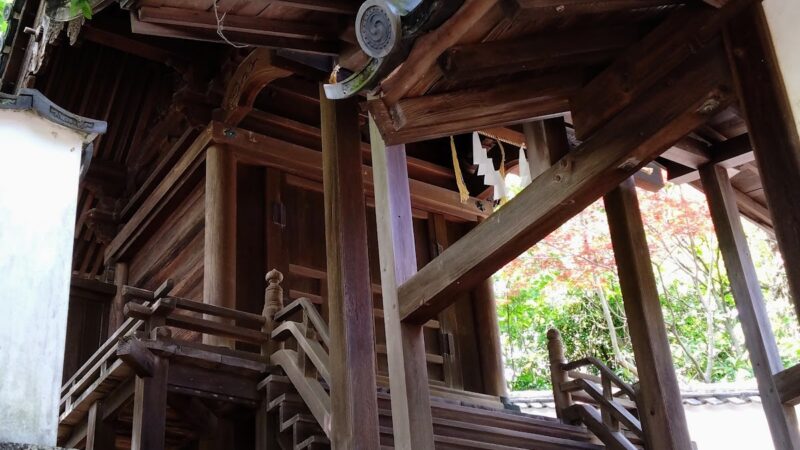
The main hall of Edamiya Hachiman Shrine is a valuable building designated as a Hiroshima Prefecture Important Cultural Property. Its architectural style is called “Sangensha Nagare-zukuri,” characterized by three bays between pillars on the front of the main building.
The Sangensha Nagare-zukuri is one of the most prestigious styles of shrine architecture. Viewed from the front, there are three bays, the widest in the center and slightly narrower on both sides. The roof is in the “Nagare-zukuri” style, extending long forward and featuring elegant curves.
Copper Plate Roof
The current main hall has a copper plate roof, but this is a result of later restorations. It is highly likely that it was originally covered with cypress bark or persimmon bark, and that it was later changed to more durable copper plates. The copper plates have aged beautifully, developing a unique verdigris color and a distinctive character.
Architectural Details
The details of the main hall showcase the finest architectural techniques of the Sengoku period. The structural members supporting the roof, known as kumimono, are adorned with intricate carvings, and the kaerumata (frog-leg brackets) feature plant and animal motifs.
Traces of coloring remain, suggesting that it was once brightly colored. These decorations speak to the authority and deep faith of the Kikkawa clan.
Architectural Historical Value
The clear construction date of 1575 (Tensho 3) is extremely important for architectural history research. As an example of shrine architecture from the late Sengoku period, it is a valuable asset not only in Hiroshima Prefecture but also throughout the Chugoku region.
As a building associated with Kikkawa Motoharu, it is also an important historical document for understanding his architectural philosophy and technical level.
Other Cultural Properties
A Pair of Wooden Komainu (Hiroshima Prefecture Important Cultural Property)
This pair of wooden komainu, donated by the Kikkawa family in 1374 (Oan 7), is an important cultural property of the branch shrine Hachiman Shrine, alongside the main hall. As komainu from the early Muromachi period, they are among the oldest in Hiroshima Prefecture.
Although the wooden komainu have weathered over time, they are valuable artifacts that convey the sculptural techniques and religious beliefs of the time. Currently, they are not usually on public display for preservation purposes.
Ridgepole Inscription
A ridgepole inscription from the construction of the treasure hall in 1441 (Kakitsu 1) remains, serving as an important historical document supporting the history of the shrine. The inscription records the circumstances of its construction and the names of those involved, providing clues to the social conditions of the time.
Statue of Kikkawa Motoharu
A bronze statue of Kikkawa Motoharu stands on the shrine grounds. This bronze statue was erected to honor Motoharu, the benefactor who rebuilt the main shrine, and depicts his dignified figure. For visitors to Edamiya Hachiman Shrine, this statue serves as a symbolic representation of history, allowing them to feel closer to the place.
Funaishi (Boat Stone)
Within the shrine grounds lies a large stone called “Funaishi” (Boat Stone). Named for its resemblance to a boat, it has been treated as sacred since ancient times. Local legends claim that this stone possesses special powers.
Highlights of Edamiya Hachiman Shrine
Tranquil Grounds
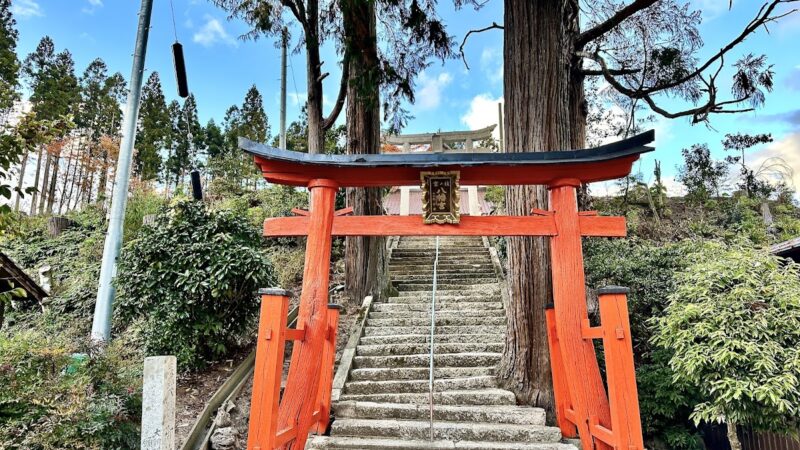
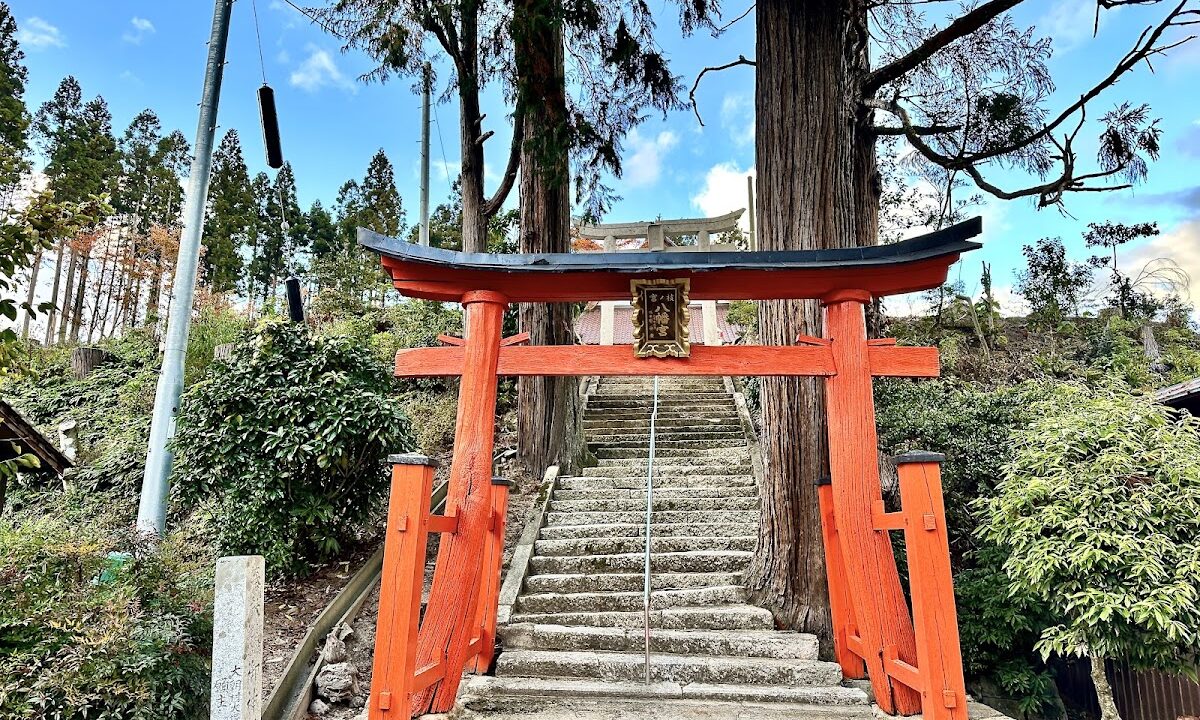
The grounds of Edamiya Hachiman Shrine are a quiet space surrounded by trees. As you proceed along the approach, you are enveloped in a solemn atmosphere, far removed from the hustle and bustle of the city. Experiencing the changing seasons while worshipping is one of the shrine’s charms.
In spring, cherry blossoms bloom; in summer, lush greenery covers the grounds; in autumn, the autumn leaves are beautiful; and in winter, the snowscape adds to the grandeur.
A Space to Feel History
You can see the main hall, a Hiroshima Prefecture Important Cultural Property, up close and experience architectural techniques from over 400 years ago. The grounds, dotted with historical artifacts such as the statue of Kikkawa Motoharu and the Funaishi stone, have the feel of a history museum.
For history buffs, this is a valuable place to trace the footsteps of Kikkawa Motoharu, a warlord of the Sengoku period, and the Kikkawa clan.
Photo Spots
The elegant appearance of the main hall makes for excellent photo opportunities. Especially when photographed from a diagonal angle, the beautiful curves of the nagare-zukuri roof stand out. The angle combining the statue of Kikkawa Motoharu and the main hall is also popular.
You can also enjoy taking photos with seasonal flowers and autumn leaves. However, please be mindful of proper etiquette and avoid disrupting worshippers.
Basic Information about Edamiya Hachiman Shrine
Location/Address
6 Oasa, Kitahiroshima-cho, Yamagata-gun, Hiroshima Prefecture 731-2104 (or Oasa Edamiya)
Deity Enshrined
The main deity enshrined is Hachiman Okami (Emperor Ojin). Hachiman is worshipped nationwide as a god of war and a god of national protection.
Shrine Rank/Designation
- Main Hall: Hiroshima Prefecture Important Cultural Property
- Pair of Wooden Komainu (Guardian Dogs): Hiroshima Prefecture Important Cultural Property
Visiting Hours
The shrine grounds are generally open for free worship. However, it is recommended to refrain from visiting at night or in the early morning.
Admission Fee
Free
Parking
Parking is available on the shrine grounds or nearby. Please check on-site for details.
Access Methods
Access by Car
From Hiroshima City
- Head north on National Route 54 from central Hiroshima City
- Travel time: Approximately 1 hour 15 minutes to 1 hour 30 minutes
Using the Hamada Expressway
- Approximately 5 minutes by car from the Hamada Expressway “Oasa Interchange”
- From Hiroshima, take the Chugoku Expressway to the Hamada Expressway via the “Chiyoda Interchange”
Car Navigation Settings
- Address Search: Oasa, Kitahiroshima-cho, Yamagata-gun, Hiroshima Prefecture
- Facility Name Search: Edamiya Hachiman Shrine
Access by Public Transportation
From JR Hiroshima Station
- Take a bus bound for “Oasa” from Hiroshima Bus Center
- Travel time: Approximately 70 to 80 minutes
- After getting off at the “Oasa” bus stop, walk for approximately 10 to 15 minutes
Notes
- Since the number of buses is limited, it is recommended to check the timetable in advance.
- Service may be reduced on holidays and during winter.
Distance from Nearest Major Facilities
- Approximately 2 kilometers from Oasa Interchange
- Approximately 1 kilometer from Kitahiroshima Town Hall Oasa Branch
- Approximately 15 kilometers from Michi-no-Eki “Mai Road IC Chiyoda”
Nearby Tourist Spots
Surugamaru Castle Ruins
This is the site of a mountain castle located approximately 1.5 kilometers north of Edamiya Hachiman Shrine. It was the residence of the Kikkawa clan, and remains of a Sengoku period mountain castle still exist. A hiking trail is maintained, and the castle ruins offer a panoramic view of Oasa town. For history buffs, a visit to both Edamiya Hachiman Shrine and this castle is recommended.
Ryuzan Hachiman Shrine
This shrine has a main hall built by Kikkawa Motoharu in Eiroku 1 (1558), 17 years before the reconstruction of the main hall of Edamiya Hachiman Shrine in Tensho 3 (1575). This shrine is also designated as an Important Cultural Property of Hiroshima Prefecture and, as a shrine associated with Yoshikawa Motoharu, stands in contrast to the Edamiya Hachiman Shrine.
The Townscape of Oasa
Oasa in Kitahiroshima Town is a town that has flourished since ancient times as a transportation hub connecting the Sanyo and Sanin regions. Even today, the townscape retains its historical atmosphere, making it a pleasant place to stroll. You can see shops selling local specialties and traditional buildings.
Tengushide Grove (National Natural Monument)
Kitahiroshima Town is home to a grove of Tengushide trees, designated as a national natural monument. Tengushide is a rare plant characterized by its unique tree shape. It’s a must-see spot for nature enthusiasts.
Yawata Plateau
This plateau area, located in the northern part of Kitahiroshima Town, is known for its beautiful natural scenery and as a production area for highland vegetables. It’s cool in the summer and a popular summer resort.
Roadside Station “Toyohira Donguri Village”
This roadside station offers local specialties and fresh vegetables from Kitahiroshima Town. It also has a restaurant where you can enjoy dishes made with local ingredients. It’s about a 20-minute drive from Edamiya Hachiman Shrine.
Nearby Gourmet Information
Oasa Soba
The Oasa area of Kitahiroshima Town has long been known as a soba (buckwheat noodle) producing region. Handmade soba noodles made with locally harvested buckwheat flour are fragrant and flavorful. There are several soba restaurants in the Oasa area, each offering its own unique taste.
Geihoku Region Local Cuisine
In the Geihoku region, you can enjoy local cuisine that utilizes mountain produce. Dishes such as mountain vegetable dishes, river fish dishes, and game dishes using wild boar and venison are characterized by their simple yet deeply flavorful taste, which you can’t find in the city.
Locally Grown Vegetables
Kitahiroshima Town is at a high altitude, and the large temperature difference between day and night results in the growth of sweet vegetables. Summer vegetables, especially tomatoes, cucumbers, and bell peppers, are highly regarded and can be purchased at roadside stations and direct sales outlets.
About Kitahiroshima Town
Geography and Climate
Kitahiroshima Town is located in the northwestern part of Hiroshima Prefecture, almost in the center of the Geihoku region. It is the largest town or village in Hiroshima Prefecture in terms of area, and is characterized by its basin-like topography surrounded by high mountains.
Winter brings snowfall, and ski resorts are open. Summers are relatively cool, making it a popular summer resort.
History and Culture
It has flourished since ancient times as a transportation hub connecting the Sanyo and Sanin regions. During the Sengoku period, it was under the rule of the Mori and Kikkawa clans, and many historical legacies remain.
Traditional performing arts such as Kagura are still passed down today, forming the region’s cultural identity.
Local Specialties
- Soba Noodles: Oasa Soba is famous even within Hiroshima Prefecture.
- Highland Vegetables: Vegetable cultivation takes advantage of the high altitude.
- Apples: Geihoku region is also known as an apple producing area.
- Kagura Masks: Passed down as traditional crafts.
Manners and Precautions for Visiting Shrines
Basic Manners for Visiting Shrines
- When passing through the torii gate: Bow before entering the shrine grounds.
- How to walk on the approach: Walk along the edge of the approach, as the center is considered the path for the gods.
- How to purify your hands and mouth at the purification fountain: If there is a purification fountain, purify your hands and mouth before praying.
- How to pray at the main hall: Two bows, two claps, and one bow is the basic etiquette.
Precautions for Photography
- The main hall is a cultural property; please do not touch or climb on it.
- Please be considerate of other worshippers.
- Photography may be prohibited during festivals, etc.
Clothing
- There are no specific dress code requirements, but it is desirable to dress appropriately for a sacred place.
- As it is located in a mountainous area, please prepare clothing appropriate for the season.
- In winter, there is snow, so please take precautions against the cold and wear non-slip shoes.
Other Precautions
- Please take all your trash with you.
- Please refrain from eating and drinking on the shrine grounds.
- Please pray quietly and avoid loud conversations.
- If you are bringing a pet, please keep it on a leash and be sure to clean up after it.
Annual Events at Edamiya Hachiman Shrine
Annual Grand Festival
The annual grand festival is held every autumn. Local people gather, and sometimes Kagura (sacred dance) performances are offered. The detailed schedule may vary from year to year, so it is recommended to check before visiting.
New Year’s Visit
Local people visit the shrine for their first shrine visit of the new year. You can offer your New Year’s prayers in a peaceful atmosphere.
Visitor Voices and Reviews
The following are some comments from people who have actually visited Edamiya Hachiman Shrine.
- “The main hall, a Hiroshima Prefecture Important Cultural Property, is magnificent, and I was deeply moved to see Sengoku period architecture up close.”
- “There is a bronze statue of Kikkawa Motoharu, making it a place where you can feel the romance of history.”
- “It’s a quiet and peaceful shrine, and I felt like my soul was being cleansed.”
- “The boat-shaped stone in the precincts was impressive, and it had a power spot-like atmosphere.”
- “Access is a little inconvenient, but it’s a shrine worth visiting.”
For History Researchers and Architecture Enthusiasts
Edamiya Hachiman Shrine is a shrine of high academic value in the following respects:
Architectural Historical Value
- Clear construction date: 1575 (Tensho 3)
- Excellent example of the Sanmasha Nagare-zukuri style
- A concrete example of construction projects by Kikkawa Motoharu
- Demonstrates the level of shrine construction technology at the end of the Sengoku period
Value as Historical Material
- Inscribed in the Kikkawa Tsunetaka deed of transfer from 1319 (Gen’ō 1)
- Dedication of wooden guardian lion-dogs in 1374 (Ōan 7)
- Ridgepole inscription from 1441 (Kakitsu 1)
- Shows the relationship between the Kikkawa clan and the local community
Potential Research Themes
- Changes in local shrines from the medieval to early modern periods
- The Kikkawa clan’s religious policies and regional control
- Forms of faith in the Geihoku region
- Shrine construction projects by Sengoku daimyo
Seasonal Highlights
Spring (March-May)
During cherry blossom season, cherry blossoms bloom on the shrine grounds, creating a beautiful landscape in harmony with the main hall. In the season of fresh greenery, the vibrant green of the trees creates a refreshing atmosphere.
Summer (June-August)
The shrine grounds, covered in deep green, are filled with cool air. Because Kitahiroshima Town is at a higher altitude, it is cooler than Hiroshima City, making it a comfortable place to visit and escape the summer heat.
Autumn (September-November)
The autumn foliage season is one of the most beautiful times to visit Edamiya Hachiman Shrine. The contrast between the colorful trees and the main shrine is magnificent, making it ideal for photography. The annual festival is often held during this time.
Winter (December-February)
The shrine grounds, covered in snow, exude a solemn atmosphere of silence. The snow-covered main shrine is exceptionally beautiful. However, due to the snow, adequate equipment is necessary when visiting.
Summary
Edamiya Hachiman Shrine is a historically significant shrine located in Oasa, Kitahiroshima Town, Hiroshima Prefecture. With a long history dating back to the Kamakura period, the main hall, rebuilt in 1575 by the renowned Sengoku period generals Kikkawa Motoharu and his son Motonaga, is designated as an Important Cultural Property of Hiroshima Prefecture.
The shrine boasts a beautiful three-bay nagare-zukuri architectural style, wooden guardian lion statues donated in 1374, a statue of Kikkawa Motoharu, and a boat-shaped stone, offering numerous points of interest. The tranquil grounds provide a peaceful retreat from the hustle and bustle of the city, allowing for a peaceful and serene visit.
Access is convenient, approximately a 5-minute drive from the Hamada Expressway’s Oasa Interchange. Nearby, you’ll find numerous historical sites associated with the Kikkawa clan, such as the Surugamaru Castle ruins and Ryuzan Hachiman Shrine, making for an enjoyable historical stroll.
When visiting Kitahiroshima Town, be sure to stop by Edamiya Hachiman Shrine and reflect on the 400+ year history of the main hall and the footsteps of the Sengoku period warriors. You’ll be able to fully enjoy the unique charm of the Geihoku region, where history and nature are in harmony.