Hokkaido Shrine Complete Guide | A Thorough Explanation of History, Benefits, Worship Methods, and Seasonal Charms
Hokkaido Shrine is the largest shrine in Hokkaido, located adjacent to Maruyama Park in Chuo Ward, Sapporo City. It is beloved by many worshippers as the guardian shrine of Hokkaido. With a history intertwined with the development of Hokkaido during the Meiji era, it attracts many visitors throughout the year, especially during New Year’s and cherry blossom season. This article provides a detailed explanation of Hokkaido Shrine’s history, enshrined deities and benefits, worship methods, access information, and seasonal charms.
What is Hokkaido Shrine?
Hokkaido Shrine is a shrine located in Miyagaoka, Chuo Ward, Sapporo City, Hokkaido. Formerly a Kanpei Taisha (Grand Imperial Shrine), it is currently designated as a Beppyo Jinja (Special Shrine) by the Association of Shinto Shrines. Its vast grounds, approximately 180,000 square meters, are surrounded by the Maruyama Primeval Forest, maintaining a tranquil atmosphere despite its urban location.
Founded in 1869 (Meiji 2) as the guardian deity of Hokkaido’s development, Hokkaido Shrine has a history intertwined with Hokkaido’s growth and is affectionately known as “Jingu-san” by the locals. Approximately 1.8 million people visit the shrine annually, boasting the highest number of visitors in Hokkaido, especially during the New Year’s pilgrimage.
History of Hokkaido Shrine
Founding and Sapporo Shrine Era
The history of Hokkaido Shrine is closely intertwined with the Hokkaido development policies of the Meiji era. In 1869 (Meiji 2), by imperial decree of Emperor Meiji, a ceremony for the “consecration of Hokkaido” was held in Tokyo, and the three pioneering deities (Okunitama-no-kami, Onamuchi-no-kami, and Sukunahikona-no-kami) were enshrined. This is the origin of Hokkaido Shrine.
Initially founded as “Sapporo Shrine,” the shrine building was constructed at its current location in Maruyama in 1871 (Meiji 4). It is said that Yoshitake Shima, the first governor of Hokkaido’s development, selected the current location based on the principles of feng shui. The Maruyama site, situated on a hill overlooking Sapporo, was chosen as a sacred place surrounded by abundant nature.
Promotion to Kanpei Taisha (Grand Imperial Shrine)
Throughout the Meiji era, Sapporo Shrine played a crucial role as a spiritual pillar of Hokkaido’s development. In 1899 (Meiji 32), it was ranked as a Kanpei Shosha (Minor Imperial Shrine), and in 1915 (Taisho 4), it was promoted to Kanpei Taisha (Grand Imperial Shrine). This was one of the highest ranks for a shrine, demonstrating Sapporo Shrine’s importance in Hokkaido.
Renaming to Hokkaido Jingu (Hokkaido Grand Shrine)
In 1964 (Showa 39), it was decided to enshrine Emperor Meiji, and consequently, the shrine’s name was changed from “Sapporo Shrine” to “Hokkaido Jingu.” This renaming further clarified its position as the guardian shrine of all of Hokkaido. The enshrinement of Emperor Meiji was intended to commemorate his achievements in the development of Hokkaido.
Deities and Blessings
Four Deities
Hokkaido Shrine enshrines the following four deities:
Okunitama-no-kami
The deity of the land of Hokkaido. Revered as the protector of the land and the god of national development and industrial growth. As the guardian deity of national management and pioneering projects, this deity has been a spiritual pillar of Hokkaido’s development.
Onamuchi-no-kami
Another name for Okuninushi-no-kami, known as the god of nation-building. Also worshipped as the god of matchmaking, business prosperity, and medicine/pharmaceuticals, this deity protects all aspects of people’s lives.
Sukunahikona-no-kami
A deity who worked with Onamuchi-no-kami in nation-building, known as the god of medicine, hot springs, and incantations. Furthermore, he is also worshipped as the god of sake brewing and is considered a guardian deity of industrial development.
Emperor Meiji
This deity was added to the shrine in 1964 (Showa 39). He is enshrined as the emperor who achieved the Meiji Restoration and laid the foundation for modern Japan, and also for his contributions to the development of Hokkaido.
Benefits
Hokkaido Shrine is believed to offer a variety of benefits, including the following:
- Good Fortune and Prosperity: Prayers for success when starting something new
- Business Prosperity: Prayers for the development and success of a business
- Matchmaking: Prayers for finding a good partner and smooth interpersonal relationships
- Protection from Misfortune and Directional Misfortune: Prayers for warding off misfortune and removing directional misfortunes
- Prayers for Safe Childbirth and Conception: Prayers for safe childbirth and being blessed with children
- Traffic Safety: Prayers for safety during travel and daily traffic
- Academic Success: Prayers for academic improvement and passing exams
- Family Safety: Prayers for the health and peace of the family
In particular, because it enshrines the three pioneering deities, it is characterized by many visitors coming to pray when starting a new business, moving, or making other new beginnings.
Highlights of the Shrine Grounds
Main Hall
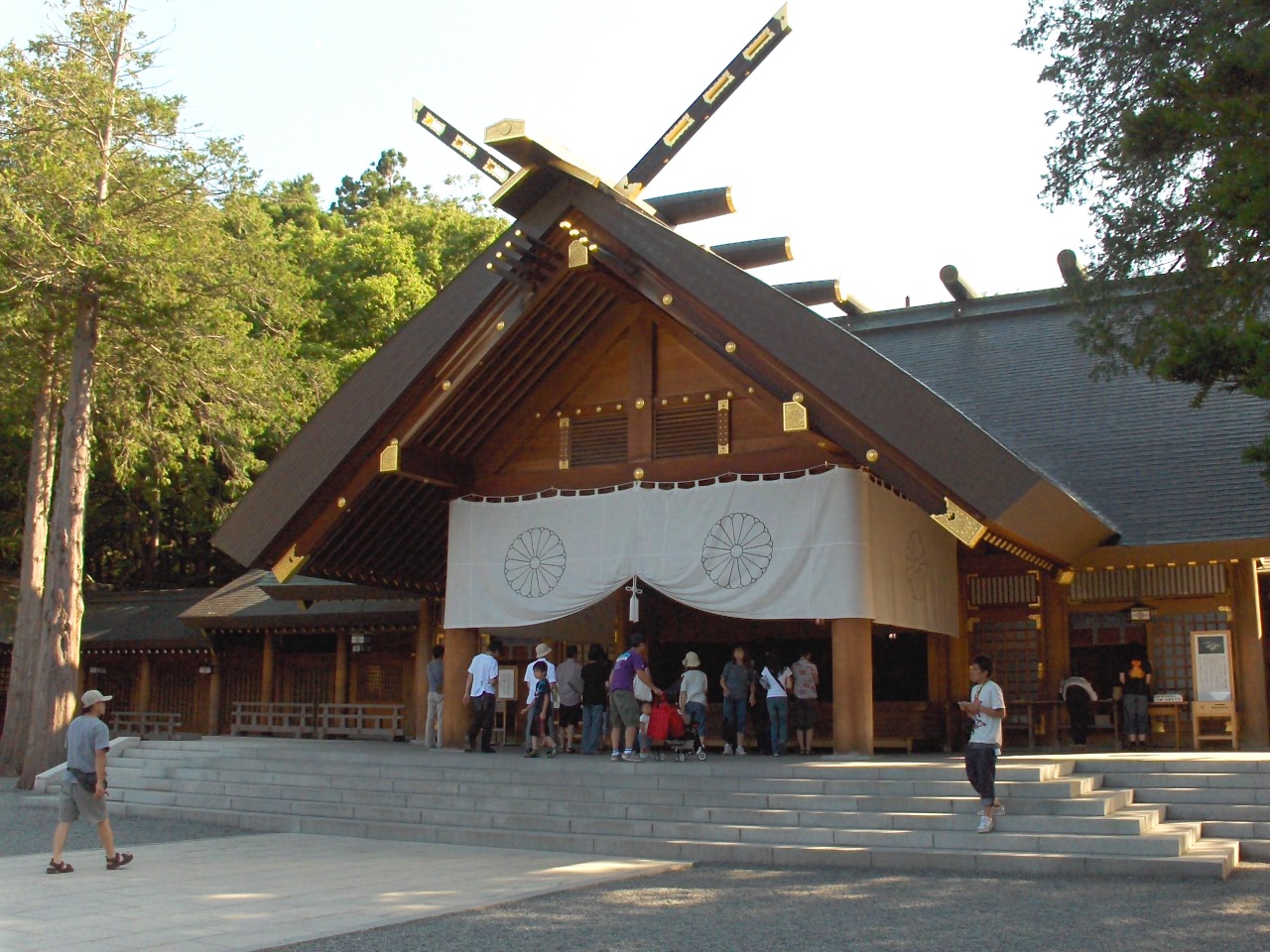
The main hall of Hokkaido Shrine is a magnificent building based on the Shinmei-zukuri style. The current shrine building was rebuilt in 1974 and boasts a robust construction designed to withstand Hokkaido’s harsh climate. Worshippers perform the ritual of two bows, two claps, and one bow in front of the main hall.
Main Approach (Park Entrance Torii Gate)
The main approach, starting from the Maruyama Park side, is the most prestigious approach to Hokkaido Shrine. Passing through the large torii gate, you are enveloped in a sacred atmosphere, surrounded by towering trees over 100 years old on both sides. In spring, it becomes a tunnel of cherry blossoms, attracting many visitors.
Second Torii Gate (Maruyama Zoo Side)
The approach from the second torii gate, near Maruyama Zoo, is also popular. This is a relatively gentle slope, making it easy for families and the elderly to use.
Third Torii Gate (West Side)
The third torii gate, located on the approach from the Miyanomori side, is known as the quietest approach. It is frequently used by locals for daily worship, offering a peaceful atmosphere for worship. ### Kaitaku Shrine
The Kaitaku Shrine, a subsidiary shrine within the grounds, enshrines the spirits of 37 individuals who made significant contributions to the development of Hokkaido. It enshrines pioneers such as Yoshitake Shima, making it an important place to experience Hokkaido’s history.
Hotaki Shrine
Another subsidiary shrine, the Hotaki Shrine, enshrines the guardian deities of agriculture, livestock farming, and fisheries. It attracts the faith of people praying for the industrial development of Hokkaido.
Jingu Kaikan and Shrine Office
The Jingu Kaikan hosts wedding ceremonies and various prayers. The shrine office offers goshuin (stamped seals), amulets, and fortune slips, and is bustling with visitors.
How to Worship and Manners
Basic Worship Etiquette
Here’s how to properly worship at Hokkaido Jingu.
1. Bowing at the Torii Gate
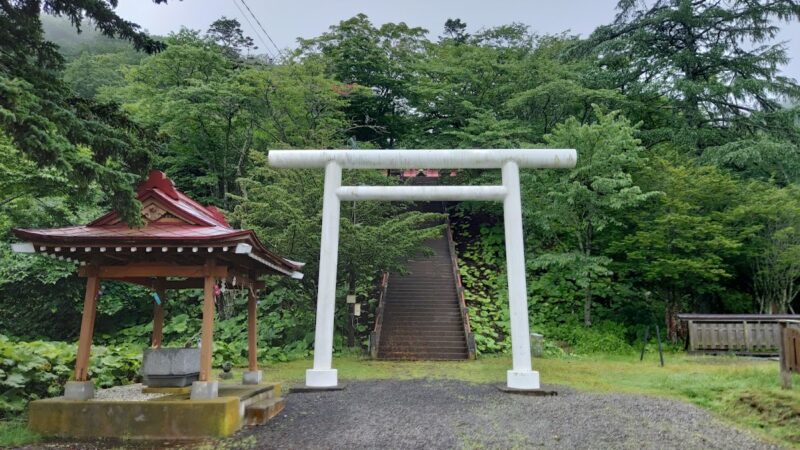
Before passing through the torii gate, stop and bow slightly. This is a gesture of respect for entering the sacred area.
2. How to Walk Along the Approach to the Shrine
The center of the approach is called “Seichu” and is considered the path of the gods. It is considered polite for worshippers to walk along the sides.
3. Purification at the Water Basin
Before proceeding to the main shrine, purify your body and mind at the water basin.
- Hold the ladle in your right hand and purify your left hand.
- Switch the ladle to your left hand and purify your right hand.
- Switch the ladle back to your right hand, receive water in your left hand, and rinse your mouth.
- Purify your left hand once more.
- Hold the ladle upright and purify the handle with the remaining water.
- Return the ladle to its original position.
4. Worship at the Main Shrine
- Gently place your offering in the offering box.
- Ring the bell if there is one.
- Two bows: Bow deeply twice.
- Two claps: Clap your hands twice.
- One bow: Bow deeply once at the end.
Attire for Worship
For regular worship, there are no particular restrictions as long as the attire is clean and modest. However, if you are receiving a prayer, the following attire is preferable.
- Men: Suit or jacket required
- Women: Suit, dress, or traditional Japanese attire
- Avoid: Sandals, shorts, or revealing clothing
Photography Etiquette
Photography is generally permitted on the shrine grounds, but please observe the following:
- Photography inside the main hall is prohibited
- Refrain from taking photos during prayers or ceremonies
- Be considerate of other worshippers
- Avoid using tripods during crowded times
Goshuin (Shrine Seals), Amulets, and Fortune Slips
Goshuin (Shrine Seals)
At Hokkaido Shrine, in addition to the main shrine’s goshuin, you can also obtain goshuin for the subsidiary shrines, Kaitaku Shrine and Hotaki Shrine. Goshuin are available at the shrine office from 9:00 AM to 5:00 PM (times may vary depending on the season). The offering fee is usually around 300 to 500 yen.
Original goshuin notebooks are also available, and beautiful notebooks featuring the Hokkaido Shrine crest and seasonal landscapes are popular.
Amulets
Hokkaido Shrine offers a variety of amulets.
- Good Fortune Amulet: For praying for success when starting something new
- Matchmaking Amulet: For finding a good partner and smoothing interpersonal relationships
- Traffic Safety Amulet: For praying for safety when driving or cycling
- Academic Success Amulet: For passing exams and improving academic performance
- Safe Childbirth Amulet: For praying for a safe childbirth for pregnant women
- Exorcism Amulet: For protection against misfortune during unlucky years
Particularly popular are amulets featuring Hokkaido animals such as the Ezo squirrel and the long-tailed tit.
Fortune Slips
Fortune slips can be drawn for 100 to 200 yen each. Hokkaido Shrine’s fortune slips contain detailed fortune explanations, and many people cherish them as a guide for their lives.
Annual Events and Festivals
Hokkaido Shrine holds various festivals and events throughout the year.
New Year’s Visit (January 1st-3rd)
As Hokkaido’s largest New Year’s visit spot, approximately 800,000 people visit during the first three days of the year. The shrine remains open all night from New Year’s Eve to New Year’s Day, bustling with worshippers celebrating the new year. Numerous food stalls are also set up, allowing visitors to enjoy the New Year’s atmosphere.
Setsubun Festival (February 3rd)
On Setsubun, a bean-throwing ceremony is held, with men and women born in the year of the current zodiac sign throwing beans. Lucky beans are also distributed within the shrine grounds, attracting many worshippers seeking good fortune.
Annual Festival (June 15th)
The Annual Festival is the most important festival at Hokkaido Shrine. A traditional festival continuing since 1872 (Meiji 5), it features solemn Shinto rituals.
Sapporo Festival (Hokkaido Shrine Festival) (June 14th-16th)
Held in conjunction with the Annual Festival, the Sapporo Festival is a symbol of early summer for Sapporo residents. The festival features a procession of portable shrines and floats, and Nakajima Park is lined with numerous stalls, creating a lively atmosphere for many citizens.
Shichi-Go-San (around November 15th)
In autumn, many families visit for Shichi-Go-San prayers. This traditional event, praying for the healthy growth of children, remains popular with many families.
Oharai (June 30th, December 31st)
Twice a year, a Shinto ritual is held to purify and cleanse away the sins and impurities accumulated over the past six months. It is a traditional ritual where sins and impurities are transferred to paper effigies (hitogata) for purification.
Seasonal Attractions
Spring (March-May)
Spring at Hokkaido Shrine is particularly famous for its cherry blossoms. From late April to early May, approximately 1,400 cherry trees, including Ezo-yamazakura and Somei-yoshino varieties, bloom in profusion. The cherry blossom tunnel in Omotesando is breathtaking and attracts many visitors.
Since plum blossoms bloom at the same time as the cherry blossoms, enjoying both simultaneously is a unique feature of Hokkaido. Many people enjoy cherry blossom viewing in conjunction with Maruyama Park, and the style of cherry blossom viewing around a Genghis Khan barbecue has become a spring tradition in Sapporo.
Summer (June-August)
In summer, Hokkaido Shrine, with its beautiful fresh greenery, is an oasis in the city, attracting people seeking respite from the heat. The Sapporo Festival in mid-June is the biggest event, and the entire city is enveloped in a festive atmosphere.
The trees in the shrine grounds are covered in deep green, and visiting amidst the sound of cicadas allows you to feel the richness of nature even in the city.
Autumn (September-November)
In autumn, Hokkaido Shrine is also known as a famous spot for autumn foliage. From mid- to late October, maple and rowan trees change color, dyeing the shrine grounds in red and yellow.
It’s also the season for Shichi-Go-San (a traditional Japanese rite of passage for children), and the shrine grounds are adorned with children in their finest attire. Visiting the shrine in the crisp autumn air offers a refreshing and cleansing experience.
Winter (December-February)
Hokkaido Shrine, covered in snow during winter, is enveloped in a sacred and tranquil atmosphere. While the approach to the shrine is cleared of snow, the surrounding primeval forest is covered in deep snow, creating a landscape that feels like another world.
From New Year’s Eve to New Year’s Day, many worshippers visit the shrine despite the harsh sub-zero temperatures. The shrine grounds, illuminated by snow lanterns and paper lanterns, are enchanting, offering a unique Hokkaido winter experience.
Access Information
Access by Public Transportation
Using the Subway
The easiest way to access the shrine is via the Tozai Subway Line.
- Get off at Maruyama Park Station on the Tozai Subway Line, approximately 15 minutes on foot.
- From Exit 3, go through Maruyama Park to Omotesando.
By Bus
If using JR Bus:
- From JR Sapporo Station, take JR Bus routes “En14” or “En15”.
- Get off at the “Jingumae” bus stop.
Access by Car
From Sapporo City
- Approximately 15 minutes by car from central Sapporo.
- From National Route 230 towards Miyanomori.
From New Chitose Airport
- Approximately 1 hour and 15 minutes by car.
- Via the Hokkaido Expressway.
Parking Information
Hokkaido Shrine has two parking lots for visitors.
- Parking Lot 1: Near the west entrance, approximately 170 spaces
- Parking Lot 2: Near the east entrance, approximately 70 spaces
Parking is free, but it becomes extremely crowded during the New Year’s visit period (January 1st-3rd) and the Sapporo Festival, so using public transportation is recommended. During these periods, surrounding roads also become congested, so allow ample time for travel.
Visiting Hours and Admission Fees
Opening Hours
The opening hours of Hokkaido Shrine vary depending on the season.
- January 1st – January 7th: Open 24 hours
- February 1st – March 31st: 7:00 AM – 4:00 PM
- April 1st – October 31st: 6:00 AM – 5:00 PM
- November 1st – December 31st: 7:00 AM – 4:00 PM
- December 31st – January 1st: Open all night
Admission Fee
Entry to the temple grounds is free. However, a donation is required in the following cases:
- Prayer Ceremony: ¥5,000~
- Goshuin (Shrine Stamp): ¥300~¥500
- Amulet: ¥500~¥1,500
- Fortune Slip: ¥100~¥200
Nearby Tourist Spots
Maruyama Park
Maruyama Park, adjacent to Hokkaido Shrine, is a place of relaxation for Sapporo residents. It attracts many visitors in spring as a cherry blossom viewing spot and in summer as a forest bathing spot. Maruyama Zoo is also adjacent, making it ideal for family sightseeing.
Maruyama Zoo
Sapporo City Maruyama Zoo, located within Maruyama Park, is one of Hokkaido’s leading zoos. It houses many popular animals, including polar bears and red pandas. It’s a popular spot, often visited in conjunction with a visit to Hokkaido Shrine.
Hokkaido Shrine Tongu
Tongu, located at Minami 2-jo Higashi 3-chome, Chuo-ku, Sapporo, is the place where the portable shrine is carried during the Sapporo Festival. This shrine is open to visitors at any time and is easily accessible as it is located in the city center.
Okurayama Observatory
Okurayama, which was used as the ski jumping venue for the 1972 Sapporo Olympics, remains a popular observatory today. It offers a spectacular panoramic view of Sapporo city and is approximately a 10-minute drive from Hokkaido Shrine.
Frequently Asked Questions
How long does it take?
For a normal visit, 30 minutes to an hour is a good guideline. If you plan to stroll around the grounds or collect a Goshuin (shrine stamp), it’s best to allow 1.5 to 2 hours.
Are pets allowed?
Pets are allowed on the shrine grounds if they are in a carrier bag or cart. However, please do not let them out near the main hall.
Is it wheelchair accessible?
Many parts of the shrine grounds are paved, making it accessible by wheelchair. However, there are some slopes and steps, so we recommend being accompanied by an assistant. Barrier-free restrooms are also available.
Is a reservation necessary for prayers?
Regular prayers do not require a reservation; you can apply at the reception desk on the day of your visit. However, reservations are required for weddings and large group prayers.
What are some things to keep in mind when visiting in winter?
Since the roads around Hokkaido Shrine are often icy in winter, we recommend wearing non-slip shoes. Also, be sure to dress warmly, especially if you will be outdoors for an extended period, such as during New Year’s visits.
Summary
Hokkaido Shrine is an important shrine embodying the history and culture of Hokkaido, and a must-visit spot when sightseeing in Sapporo. The enshrined deities, who convey the pioneering spirit of the Meiji era, the beautiful nature that changes with the seasons, and the solemn atmosphere of the shrine offer a deeply moving experience for visitors.
Hokkaido Shrine shows different faces depending on the season, from the bustling atmosphere of New Year’s and cherry blossom season to the quiet winter grounds. By reflecting on history and offering prayers in quiet contemplation, you can feel the strength and gentleness inherent in the land of Hokkaido.
When you visit Sapporo, be sure to stop by Hokkaido Shrine. Away from the hustle and bustle of the city, you’ll be able to spend a precious time refreshing your mind and body in a sacred space surrounded by abundant nature.