Takigami Shrine (Hokkaido) Complete Guide | History, Goshuin (Shrine Seals), Access, and Highlights Explained in Detail
Takigami Shrine, located in Takigami-cho, Monbetsu-gun, Hokkaido, is a historical shrine founded during the pioneering era of the Taisho period. It enshrines deities including Amaterasu Omikami and has been revered as a guardian deity of the region. This article comprehensively introduces information useful for those planning a visit to Takigami Shrine, including its detailed history, the origins of its enshrined deities, highlights within the grounds, information on goshuin (shrine seals), and access methods.
Basic Information on Takigami Shrine
Takigami Shrine is located in Takigami-cho, Monbetsu-gun, in the inland area of the Okhotsk region of Hokkaido.
Location and Contact Information
- Address: 33 Sakuru Genya, Takinoue-cho, Monbetsu-gun, Hokkaido 099-5614, Japan
- Telephone: 01582-9-2227
- FAX: 01582-9-4413
Shrine Rank and Festivals
- Former Shrine Rank: Village Shrine
- Annual Festival Date: September 10th
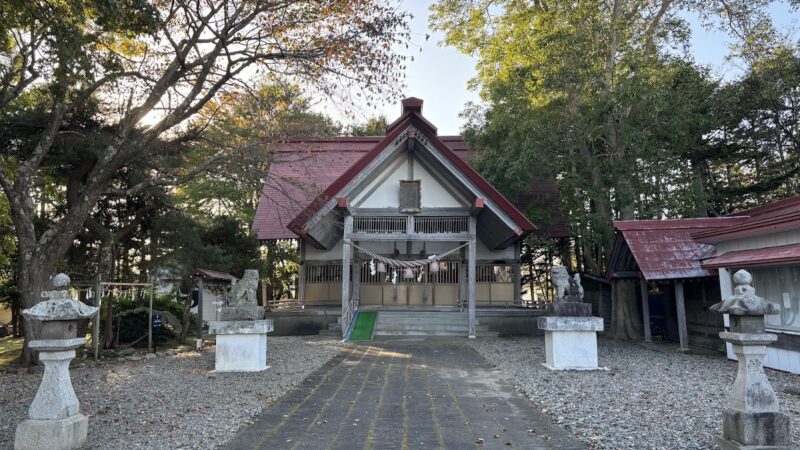
- Shrine Building Style: Shinmei-zukuri
- Shrine Building Area: 41 tsubo
- Shrine Grounds Area: 9288 tsubo
- Number of Parishioner Households: Approximately 1200 households
The Shinmei-zukuri style of shrine building is an ancient Japanese architectural style, exemplified by Ise Grand Shrine, and is a fitting style for a shrine that enshrines Amaterasu Omikami as its principal deity.
History of Takigami Shrine
Founding History (Taisho Era)
The history of Takigami Shrine began in September 1913 (Taisho 2). The shrine was founded on the former Shibetsu-dori high ground, as a guardian deity of pioneering. As the development of Hokkaido intensified, a shrine was needed as a spiritual anchor for the settlers and a place to pray for the peace and security of the region.
Initially, the shrine enshrined two deities: Amaterasu Omikami and Toyouke-hime no Okami. These deities are the highest gods in Japan, enshrined in the Inner and Outer Shrines of Ise Grand Shrine, and provided spiritual support to those undertaking the difficult task of pioneering.
Development during the Showa Era
In 1937 (Showa 12), the shrine building was constructed, giving it the appearance of a proper shrine. During this period, as the development of Takinoue Town progressed and the population increased, the importance of the shrine also grew.
Later, Ōyamatsumi-no-Mikoto was invited and enshrined together with the other deities, bringing the total number of enshrined deities to three. Ōyamatsumi-no-Mikoto is known as the god of mountains and was revered as an object of prayer for the safety and prosperity of those engaged in forestry in the forestry-rich area of Takinoue.
In the Showa period, its establishment as a village shrine was officially recognized, and it established its position as a religious center in the local community.
Major Renovations in the Heisei Period and Connection with Ise Grand Shrine
In October 1994 (Heisei 6), the current shrine building was constructed. This was a major turning point for the shrine.
Furthermore, it is noteworthy that in January 1995, Takigami Shrine received over 22 stones of wood from Ise Grand Shrine, including a timber for the main sanctuary and one torii gate for the Takihara Narabinomiya sub-shrine. Such a gift from Ise Grand Shrine is the highest honor for a shrine and demonstrates the deep connection between Takigami Shrine and Ise Grand Shrine. These bestowed materials are still carefully used on the shrine grounds, allowing visitors to feel the sacred energy of Ise Grand Shrine.
During the Heisei period, the shrine was also established as a religious corporation, laying the foundation for modern shrine management.
About the Deities
Takigami Shrine has three main deities, as well as deities enshrined in the offering hall.
Amaterasu Omikami
She is the supreme deity in Japanese mythology and a goddess revered as the sun goddess. Considered the ancestral deity of the Imperial Family, she is enshrined at the Inner Shrine of Ise Grand Shrine. She is worshipped as a god who grants all kinds of wishes, including national peace and security, abundant harvests, and good fortune.
Toyouke-hime no Mikoto
She is the goddess who presides over food and grains, and is the enshrined deity of the Outer Shrine of Ise Grand Shrine. As the god of agriculture and food, she was a particularly important figure in Hokkaido during the pioneering era. She is deeply revered by people who pray for abundant harvests, industrial development, and stability in clothing, food, and shelter.
Oyamatsumi no Mikoto
He is known as the god of mountains and the guardian deity of forests. Later enshrined together with other deities, he has a deep connection to the rich forest resources around Takinoue Town. He is revered as an object of prayer for safety in forestry, protection from natural disasters, and regional prosperity.
Deities Enshrined in the Heiden (Offering Hall)
The Heiden also enshrines Ōkuninushi-no-Mikoto and Ōmononushi-no-Mikoto. Ōkuninushi-no-Mikoto is known as the enshrined deity of Izumo Taisha Shrine and is worshipped as the god of matchmaking, business prosperity, and medicine. Ōmononushi-no-Mikoto is revered as the god of nation-building and the guardian deity of agriculture, commerce, and industry.
Highlights of the Shrine Grounds
Long Stone Staircase and Shrine on a Hilltop
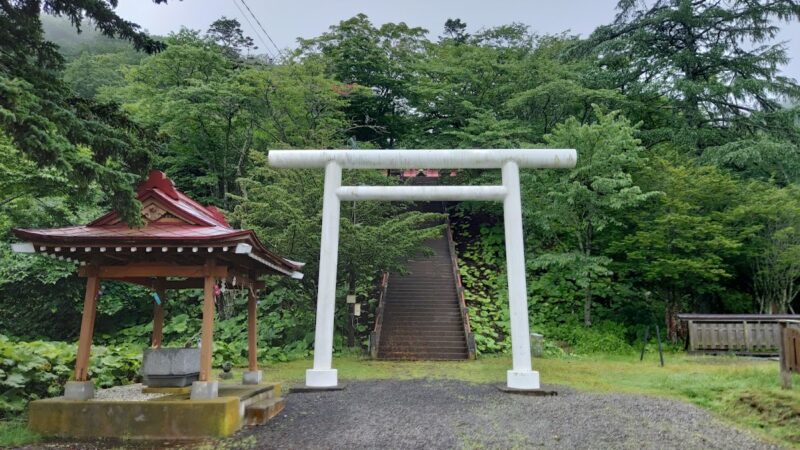
One of the most striking features of Takigami Shrine is the long stone staircase leading to the approach. Climbing these steps, which lead to the shrine perched on a hilltop, brings a sense of purity to visitors. At the top of the stairs, a beautiful Shinto-style shrine awaits visitors.
From the hilltop, you can overlook the town of Takigami, making it an excellent location to visit while feeling the history of its development.
Vermilion-painted Arched Bridge
A beautiful vermilion-painted arched bridge is situated within the shrine grounds, adding color to the landscape. The arched bridge serves as a boundary separating the sacred realm from the secular world, and encourages visitors to prepare themselves for entering a sacred space.
Subsidiary Shrines and Shrines within the Grounds
Within the grounds of Takigami Shrine, there are also subsidiary shrines such as the Prince Shotoku Shrine and the Sankei Tenmangu Shrine. The Prince Shotoku Shrine is revered as the guardian of architecture and crafts, while the Sankei Tenmangu Shrine is revered as the god of learning, each attracting its own unique devotion.
Well-maintained Grounds
During renovations in the Heisei era, the shrine buildings and other facilities within the grounds have been newly renovated. The compact yet beautifully arranged grounds give visitors the first impression of a “beautiful shrine,” providing a quiet and peaceful atmosphere.
Tourist Attractions Around Takigami Shrine
Takigami Park and Shibazakura (Moss Phlox)
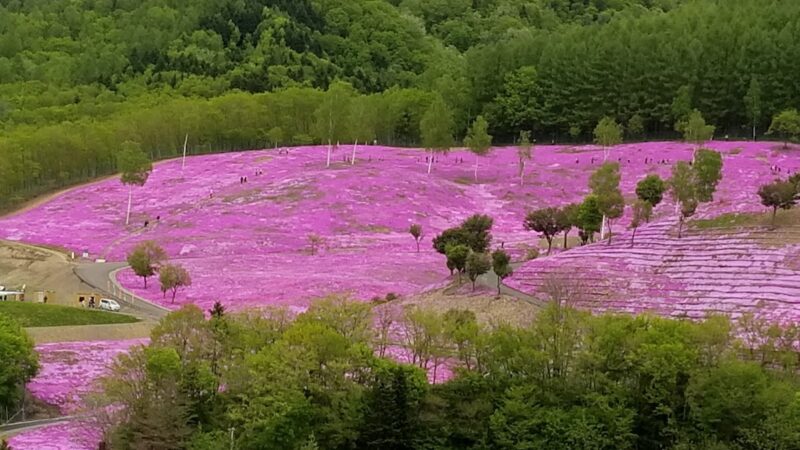
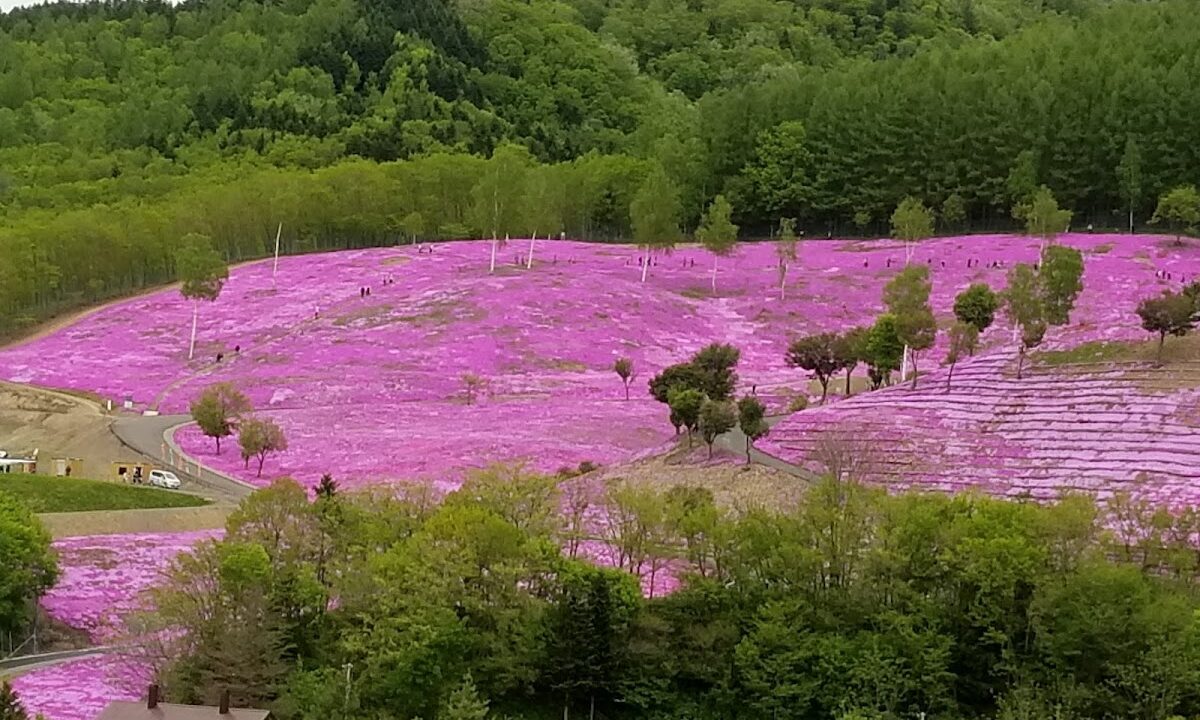
Takigami Park is located very close to Takigami Shrine. This park is nationally known as one of Hokkaido’s premier spots for moss phlox, and every year from mid-May to early June, approximately 100,000 square meters of hillside are covered in a pink carpet.
The beautiful scenery of the moss phlox can also be enjoyed from the shrine, and during the blooming season, many tourists visit the park to combine shrine visits with moss phlox viewing.
Kinsenkei Gorge
Near Takinoue Shrine is Kinsenkei Gorge, known as a famous spot for autumn foliage. The beauty of the gorge created by the clear waters of the Shokotsu River is breathtaking, and especially in autumn, the colorful leaves color the gorge, captivating visitors. It is an excellent location to enjoy the beauty of nature in conjunction with a shrine visit.
Shokotsu River and Sakuru River
The confluence of the Shokotsu River and Sakuru River, which flow through the central part of Takinoue Town, forms the town’s geographical feature. Just downstream from this confluence is the Rainbow Dragon Waterfall (formerly known as “Taki”), which gives rise to the place name “Takinoue” (above the waterfall). The pristine natural environment of the mountains and waters makes it a fitting location for the Takinoue Shrine.
Mount Teshio
Behind Takinoue Town rises Mount Teshio, a popular destination for hiking and trekking. This mountain, at an elevation of 1,558 meters, is a spot where you can experience the magnificent nature of Hokkaido.
Goshuin Information
You can receive a Goshuin (shrine stamp) at Takinoue Shrine. A Goshuin serves as proof of your visit and is an important way to document your connection with the shrine.
Goshuin Reception
Goshuin are available at the shrine office. However, the office is not always open, so if you want to be sure to receive a Goshuin, it is recommended to call ahead to confirm.
- Contact Information: 01582-9-2227
Features of the Goshuin (Shrine Seal)
The Goshuin of Takinoue Shrine features the shrine’s name and date of visit written in ink, along with the shrine’s seal. Simple yet dignified, this Goshuin is cherished as a memento of the visit.
Access Methods
Access by Public Transportation
If using Dohoku Bus:
- Get off at the “Takinoue Sakaemachi” bus stop, approximately 5 minutes on foot.
Access to Takinoue Town is generally by bus from Monbetsu City or Asahikawa City. However, since the number of buses is limited, it is important to check the timetable in advance.
The nearest station is Maruseppu Station (JR Sekihoku Main Line), but since Takinoue Town is quite a distance from the station, access by private car or rental car is practically more convenient.
Access by Car
From Asahikawa:
- Head north on National Route 273, approximately 2 hours 30 minutes.
From Monbetsu:
- Head south on National Route 273, approximately 1 hour.
From Sapporo:
- Take the Hokkaido Expressway via Asahikawa, approximately 4 hours.
While the shrine has parking spaces for visitors, during peak tourist seasons such as the moss phlox season, we recommend using nearby public parking lots.
Navigation System Settings
Address Search: 33 Sakuru Genya, Takinoue-cho, Monbetsu-gun, Hokkaido
Phone Number Search: 01582-9-2227
Manners and Points for Visiting a Shrine
Proper Etiquette for Visiting a Shrine
- Bow before passing through the torii gate: This is a courtesy before entering the sacred area.
- Purify yourself at the water basin: Purify your left hand, right hand, and mouth in that order.
- Walk along the edge of the path: The center is considered the path of the gods.
- Etiquette at the main hall: The basic procedure is two bows, two claps, and one bow.
Best Time to Visit
Spring (May-June): This is the season when moss phlox blooms, and it is the most popular time for tourists. You can enjoy both shrine visits and flower viewing at the same time.
Summer (July-August): This is a time when the fresh greenery is beautiful and the weather is mild.
Autumn (September-October): The annual festival is held on September 10th. The autumn foliage in Kinsenkei Gorge is also at its peak during this time.
Winter (November-March): While there is snow and the cold is severe, you can experience a sacred atmosphere enveloped in silence.
Clothing and Items to Bring
Formal attire is ideal for visiting the shrine, but if you are also sightseeing, clean and understated clothing is acceptable. Comfortable walking shoes are recommended as you will be climbing stone steps.
If visiting in winter, be sure to take thorough precautions against the cold. Hokkaido winters are extremely cold, and temperatures can drop below -20 degrees Celsius, especially in inland areas like Takinoue Town.
History and Culture of Takinoue Town
Origin of the Town Name
The name Takinoue Town originates from the fact that the town is located upstream of a waterfall (the current Nijiryu Falls) just below the confluence of the Shokotsu River and Sakuru River, which flow through the town. The name was chosen to complement the Takishita district located downstream.
History of Development
The development of Takigami Town began in earnest from the late Meiji period to the Taisho period. With abundant forest resources, forestry flourished, and timber harvesting and transportation became the main industry. The founding of Takigami Shrine also took place against this backdrop of development.
Modern Takigami Town
Present-day Takigami Town is nationally known as a tourist destination for moss phlox, and agriculture (especially mint cultivation) and forestry are its core industries. Although the population is declining, it is a town that is attractive for its rich natural environment and warm community.
Takigami Shrine and the Local Community
Connections between Parishioners and the Community
Takigami Shrine has approximately 1200 parishioners and functions as a spiritual pillar of the local community. Annual events, including the annual festival, are important opportunities for local residents to gather and serve as a place for intergenerational exchange.
Annual Events
Annual Festival (September 10th): The most important festival of the year, featuring a portable shrine procession and offering ceremonies.
New Year’s Visit (January 1st-3rd): The shrine is bustling with many worshippers praying for happiness in the new year.
Shichi-Go-San (November): A traditional event celebrating the growth of children.
Through these events, the shrine plays a role in passing on local culture and traditions to future generations.
The Position of Takigami Shrine in Hokkaido’s Shrine Culture
Shrines in Hokkaido have a different historical background from those in Honshu. Many were founded during the pioneering period after the Meiji Restoration, established as a spiritual support for pioneers and a place to pray for safety and prosperity in their new land.
Takigami Shrine is a typical example of such a Hokkaido shrine, and by inviting the deities of Ise Grand Shrine, it embodies the desire of our ancestors to maintain traditional Japanese Shinto beliefs even in the distant northern land.
As a shrine belonging to the Hokkaido Association of Shinto Shrines, Takigami Shrine plays an important role in preserving the religious and cultural identity of the region.
Visitor Feedback
Visitors who have actually visited Takigami Shrine have shared the following impressions:
- “The view from the hilltop at the top of the long stone staircase is wonderful.”
- “The newly renovated shrine buildings are beautiful, and I was able to worship with a refreshing feeling.”
- “I visited during the moss phlox season, and I was moved to see the flower fields from the shrine.”
- “I was able to worship slowly in a quiet and peaceful atmosphere.”
- “Knowing that materials bestowed from Ise Grand Shrine were used made me feel even more grateful.”
Summary
Takigami Shrine is a historical shrine that has attracted the faith of the people of Takigami Town for over 100 years since its founding in 1913 (Taisho 2). It enshrines three deities: Amaterasu Omikami, Toyouke-hime no Mikoto, and Oyamatsumi no Mikoto, and has been cherished as a guardian deity of pioneering and a place to pray for the peace and security of the region. Thanks to its beautifully maintained grounds, a major renovation during the Heisei era, the honor of being a gift from Ise Grand Shrine, and its proximity to surrounding tourist attractions such as moss phlox and Kinsenkei Gorge, Takinoue Shrine is a fascinating destination for visitors.
When visiting the Okhotsk region of Hokkaido, be sure to visit Takinoue Shrine and spend some quiet, sacred time reflecting on the history of its development. Climbing the long stone steps and overlooking the town of Takinoue from the shrine on the hilltop will surely be a memorable experience.
We hope that through your visit to the shrine, you will experience traditional Japanese culture and find peace of mind.