Shizunai Shrine (Hokkaido) Complete Guide | History, Deities, Goshuin (Shrine Seal), and Access Information
Shizunai Shrine, located in Shizunai Miyuki-cho, Shinhidaka-cho, Hidaka-gun, Hokkaido, is a historical shrine formed during the Meiji and Taisho periods. It was created by the merger of two shrines, Ebisu Shrine and Emperor Jimmu Shrine, and has long been revered as a guardian deity of the region. This article provides detailed information useful for visitors, including the history of Shizunai Shrine, its enshrined deities, highlights of the grounds, goshuin (shrine seal), annual festival, and access methods.
Shizunai Shrine, located in Shizunai Miyuki-cho, Shinhidaka-cho, Hidaka-gun, Hokkaido, is a historical shrine formed during the Meiji and Taisho periods. ## Basic Information about Shizunai Shrine
Location: 5-7-28, Shizunai Miyuki-cho, Shinhidaka-cho, Hidaka-gun, Hokkaido
Phone Number: 0146-42-1459
Deities Enshrined:
- Emperor Jimmu
- Kotoshironushi-no-kami
Shrine Rank: Former Village Shrine
Annual Festival Date: September 15th
Shizunai Shrine is located north of the Shinhidaka Town Hall, in the heart of the former Shizunai town center. It is a beloved shrine among local residents and attracts many worshippers.
History of Shizunai Shrine
Origin of Ebisu Shrine
The existence of Ebisu Shrine is indispensable when discussing the history of Shizunai Shrine. Ebisu Shrine is said to have been founded during the Kansei era (1789-1801), making it one of the oldest centers of worship in the Shizunai region.
The shrine’s records from 1867, “The Origin of Shimi-chari Chinju Ebisu Daijingu,” contain an interesting legend about the founding of Ebisu Shrine. According to this record, “In the past, before the settlement of the land, when the locals were pulling their nets into the sea, they obtained a radiant and brilliant object. Its form was like that of a god, and the locals revered and believed in it, and their prayers for a successful fishing season were always answered.” This suggests that the shrine’s origins lie in a fisherman pulling a shining divine image from the sea and enshrining it.
This divine image was worshipped as Kotoshironushi-no-kami (Ebisu-sama) and garnered fervent devotion from the local people as the guardian deity of fishing and business prosperity. Considering the history of the Shizunai region’s development centered on fishing, the significant role played by Ebisu Shrine becomes clear.
Founding of the Emperor Jimmu Shrine
Meiji 4 (1871) was founded. As the development of Hokkaido intensified, shrines dedicated to Emperor Jimmu as the guardian deity of the settlement were built throughout the region, and the Emperor Jimmu Shrine in Shizunai is one of them. It played a role as a spiritual pillar in the settlement area, in conjunction with the Meiji government’s Shinto policies.
Merger in 1919
In 1919 (1919), Ebisu Shrine and the Emperor Jimmu Shrine merged to form “Shizunai Shrine.” This merger established the current form, with Kotoshironushi-no-kami and Emperor Jimmu as the enshrined deities.
The background to this merger was the shrine reorganization policy implemented during the Taisho era. Amidst the nationwide consolidation of small shrines, the Shizunai region also aimed to create a stronger spiritual pillar for the community by unifying its centers of faith.
Development since the Showa Era
During the Showa era, Shizunai Shrine further developed as a central presence in the local community. Through the post-war reconstruction period, the period of rapid economic growth, and up to the present day, it continues to be supported by many parishioners as the guardian deity of the region.
The shrine grounds have also been improved, and the magnificent shrine buildings and torii gates seen today are a testament to the deep faith and service of the local residents.
About the Enshrined Deity
Emperor Jimmu
Emperor Jimmu, considered the first emperor of Japan, is revered as a god who laid the foundation of the nation. During the development of Hokkaido, he was enshrined in various locations as a guardian deity for pioneering new lands. At Shizunai Shrine, he played an important role as a spiritual pillar for the pioneers.
Kotoshironushi-no-Kami
Kotoshironushi-no-Kami is a son of Ōkuninushi-no-Kami and is a deity commonly known as “Ebisu-sama.” He is widely worshipped as the god of fishing, business prosperity, and maritime safety, and has long been revered, especially in the Shizunai region, where fishing was once a thriving industry.
As a god who brings good fortune, many worshippers still visit the shrine today to pray for business prosperity and family safety.
Connection to Awaji Island
Researching the history of Shizunai Shrine reveals a connection to Awaji Island, offering a very interesting historical background.
The worship of Kotoshironushi-no-Kami originally had deep ties to Nishinomiya Shrine and the Ebisu worship of Awaji Island in Hyogo Prefecture. During the Hokkaido pioneering era, many immigrants came to the Shizunai region from various parts of Honshu, and it is believed that some of them were from Awaji Island.
The fact that they brought their homeland’s faith to the northern land and founded the Ebisu Shrine to pray for safety in fishing and a bountiful catch is the origin of the present-day Shizunai Shrine. This kind of cultural connection between Honshu and Hokkaido is one of the characteristics of shrines in Hokkaido, and Shizunai Shrine is a prime example.
It is said that the chief priest will kindly and thoroughly explain this connection, so it would be a good idea to ask about the historical background when you visit.
Highlights of the Shrine Grounds
Torii Gate
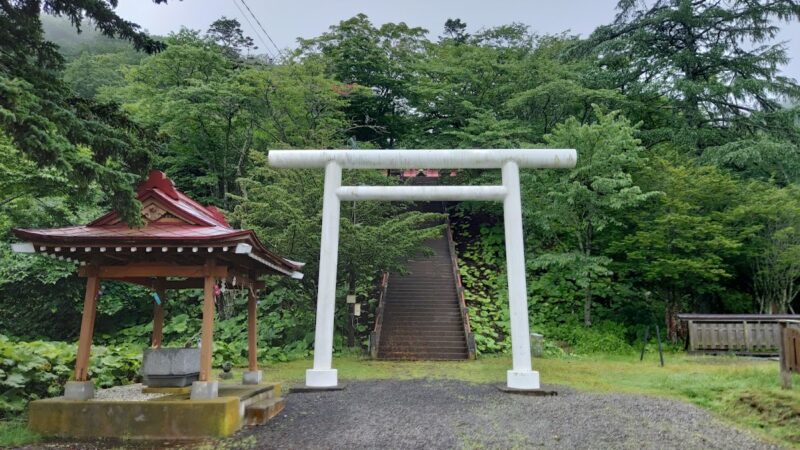
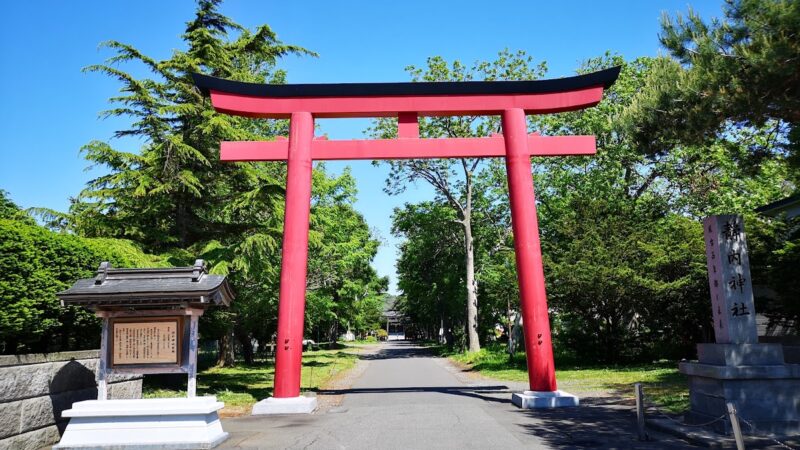
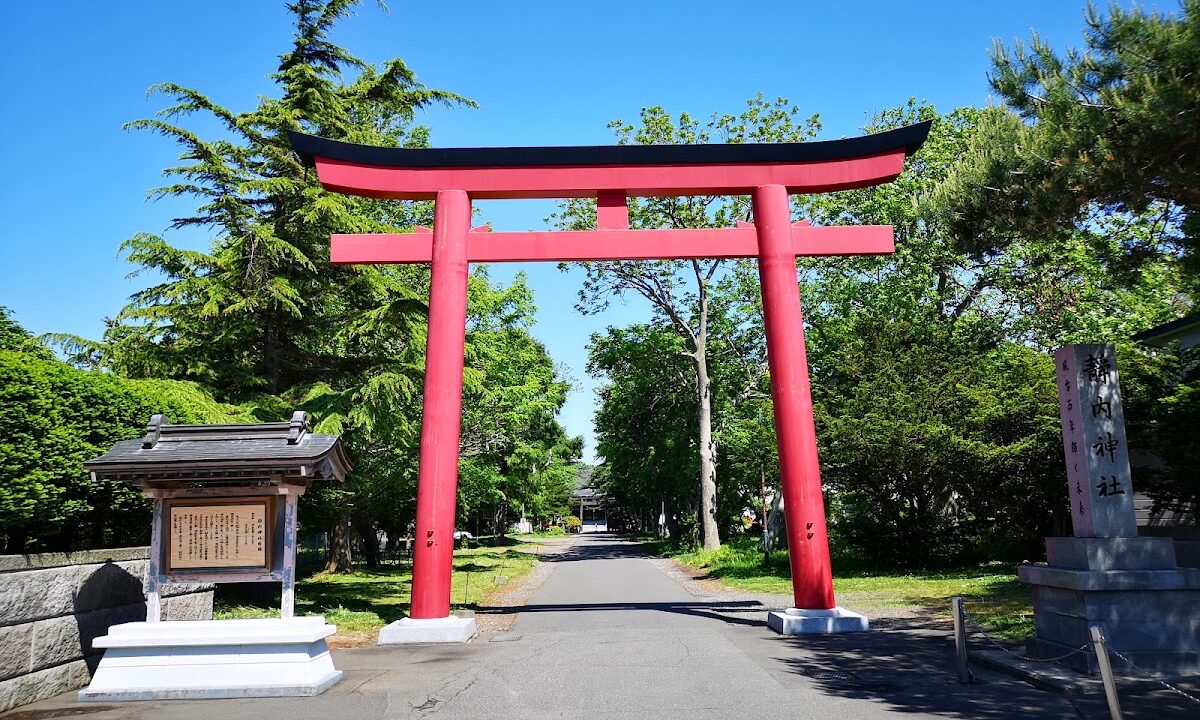
A magnificent torii gate stands at the entrance to Shizunai Shrine. Although the shrine is located in the city, passing through the torii gate envelops you in a tranquil atmosphere, and a sacred space unfolds, far removed from the hustle and bustle of everyday life. The dignified presence of the torii gate inspires a sense of reverence in visitors.
Shrine Buildings
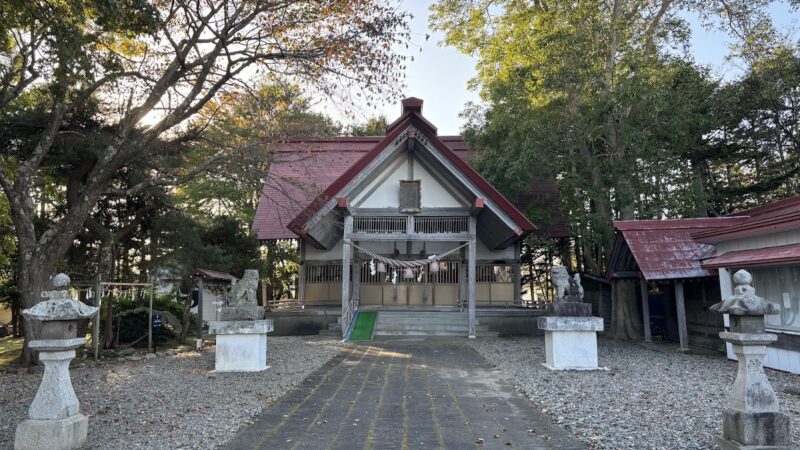
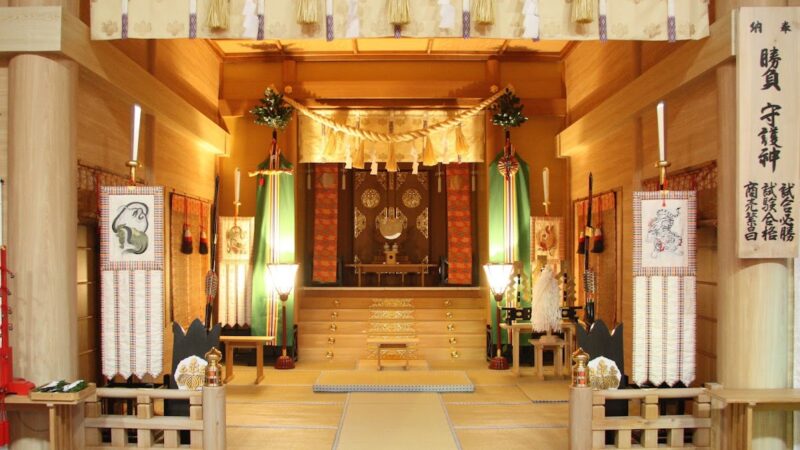
The main hall and worship hall are traditional wooden shrine buildings, boasting a magnificent scale for a shrine in Hokkaido. The shrine’s construction is meticulous, reflecting the deep faith of the local people.
You can quietly offer your prayers in front of the main hall. Especially early in the morning, there are fewer people, making it a recommended time to pray in a peaceful atmosphere.
Komainu (Guardian Dogs)
Komainu are placed throughout the shrine grounds, guarding the sacred area. Each of the two komainu has a distinctive expression, warmly welcoming visitors.
Trees on the Shrine Grounds
Many trees are planted on the shrine grounds, allowing you to experience the beauty of nature throughout the seasons. The fresh green of spring, the deep green of summer, and the autumn foliage are particularly beautiful, each displaying a different face in each season.
The shrine grounds, surrounded by trees, exude a tranquil atmosphere, providing a calm environment for prayer. It’s a precious space where you can forget the hustle and bustle of the city and connect with the gods amidst nature.
Shrine Office
There is a shrine office on the grounds where you can receive Goshuin (shrine stamps) and request various prayers. The chief priest and other Shinto priests are known for their kindness and for providing thorough explanations about the history and origins of the shrine.
About Goshuin (Shrine Seals)
Goshuin are available at Shizunai Shrine.
Goshuin are popular among many visitors as proof of worship and as a tangible memento of their connection with the shrine. Shizunai Shrine’s goshuin includes the shrine’s name and the date of visit, along with the shrine’s seal.
When receiving a goshuin, please note the following:
- Bring your goshuincho (stamp book): It is customary to have the goshuin written directly in your goshuincho.
- Worship before going to the office: It is polite to worship at the main hall first before receiving a goshuin.
- Prepare the offering: Generally, 300 to 500 yen is appropriate.
- Use polite language: Politely request, “May I receive a Goshuin (temple/shrine stamp)?”
Since the shrine office may be unattended, it is recommended to call ahead to confirm if you definitely want to receive a Goshuin.
Annual Festival and Regular Events
Annual Festival (September 15th)
The annual festival of Shizunai Shrine is held every year on September 15th. The annual festival is the most important festival for the shrine, a Shinto ritual to express gratitude for the past year and pray for peace in the future.
On the day of the annual festival, a solemn ceremony is held by the Shinto priests, and many parishioners and local residents attend. A portable shrine procession and offering ceremonies may also take place, and the entire community is enveloped in a festive atmosphere.
Other Annual Events
In addition to the annual grand festival, Shizunai Shrine holds the following annual events:
- New Year’s Day Festival (January 1st): A festival to celebrate the new year and pray for peace throughout the year.
- Setsubun Festival (around February 3rd): Bean-throwing and other rituals are performed to pray for protection against evil.
- Kinensai Festival (February 17th): A spring festival praying for a bountiful harvest.
- Natsugoshi no Oharae (June 30th): A Shinto ritual to purify and cleanse away the impurities accumulated over the past six months.
- Niinamesai Festival (November 23rd): An autumn festival expressing gratitude for the harvest.
- Toshikoshi no Oharae (December 31st): A Shinto ritual to purify and cleanse away the impurities accumulated over the past year.
Participating in these events allows for a deeper understanding of traditional Japanese culture and the spirit of Shinto.
Prayers and Sorrows
Shizunai Shrine accepts prayers for various life milestones and wishes.
Main Prayers
- First Shrine Visit: Reporting the birth of a baby to the gods and praying for healthy growth
- Seven-Five-Three Ceremony: Celebrating a child’s growth and praying for their future health
- Exorcism: Warding off misfortune during the unlucky year and praying for a peaceful year
- Family Safety: Praying for the health of all family members and peace in the home
- Business Prosperity: Praying for the development and prosperity of business
- Traffic Safety: Praying for the blessing of a car and protection from traffic accidents
- Prayer for Success: Praying for success in entrance exams and qualification tests
- Prayer for Safe Childbirth: Praying for the health of the pregnant woman and fetus, and for a safe childbirth
If you wish to have a prayer performed, we recommend making a reservation by phone in advance. While same-day registration may be possible, it’s not guaranteed due to the priest’s schedule. Therefore, reservations are recommended to ensure you receive a prayer service.
Access Methods
Access by Car
Shizunai Shrine is most easily accessible by car.
- From New Chitose Airport: Approximately 2 hours (via National Route 235)
- From Sapporo city center: Approximately 2 hours 30 minutes (via the Hokkaido Expressway and Hidaka Expressway)
- From Tomakomai City: Approximately 1 hour 30 minutes (via National Route 235)
It’s easy to find if you aim for the Shinhidaka Town Hall; the shrine is located north of the town hall. There is parking space for visitors on the shrine grounds, but congestion is expected during events such as the annual festival, so it’s recommended to visit with plenty of time to spare.
Access by Public Transportation
If using JR:
- The JR Hidaka Main Line was discontinued in 2021, so access by train is not possible.
If using the bus:
- You can use the Donan Bus route buses.
- Take the bus bound for “Shizunai” from Tomakomai Station (approximately 2 hours).
- Get off at the “Shizunai” bus stop and walk for about 10 minutes.
Since the number of buses is limited, we recommend checking the timetable in advance.
Nearby Tourist Attractions
When visiting Shizunai Shrine, why not also visit the nearby tourist attractions?
- Nijukken-dori Cherry Blossom Avenue: Known as Japan’s longest cherry blossom avenue, approximately 3,000 cherry trees bloom in spring (about 10 minutes by car from the shrine).
- Shizunai Onsen: A hot spring facility where day trips are also possible (about 5 minutes by car from the shrine).
- Shinhidaka Town Museum: A facility where you can learn about the history and culture of the region.
- Hidaka Racehorse Hometown Information Center: A facility where you can experience the thoroughbred culture of the Hidaka region.
Guidelines for Visiting Shizunai Shrine
Etiquette for Visiting Shrines
There are basic manners for visiting shrines. When visiting Shizunai Shrine, please observe the following etiquette.
- Bow before the Torii Gate: The torii gate is the entrance to the sacred area. Bow before passing through the gate.
- Walk along the edge of the path: The center of the path is considered the path of the gods. It is polite to walk along the edge. 3. Purify yourself at the water basin: If there is a water basin, purify your hands and mouth.
- Etiquette in front of the main hall:
- A slight bow
- Quietly place your offering in the offering box
- Ring the bell if there is one
- Two bows, two claps, one bow (bowing deeply twice, clapping twice, bowing deeply once)
- Bow when leaving the torii gate: When leaving the shrine, turn around and bow.
Attire for worship
Everyday clothes are fine, but please wear clean clothing that is respectful to the gods. If you are receiving a prayer, slightly more formal attire is desirable.
Photography
Photography is generally permitted on the shrine grounds, but you should refrain from taking pictures inside the main hall or during Shinto rituals. If you are unsure, please check with a Shinto priest.
Shizunai Shrine and the Hokkaido Shrine Association
Shizunai Shrine belongs to the Hidaka Branch of the Hokkaido Shrine Association. The Hokkaido Shrine Association is the governing body for shrines throughout Hokkaido, and its activities include supporting shrine operations, training Shinto priests, and promoting Shinto culture.
The Hokkaido Shrine Association’s website features information on shrines throughout Hokkaido, including Shizunai Shrine, making it a useful resource for gathering information before visiting. It also provides various information on Shinto culture, such as the basics of Shinto rituals, explanations of annual events, and information on Gagaku (ancient Japanese court music).
The Relationship Between Shizunai Shrine’s Parishioners and the Community
Shizunai Shrine is a community-oriented shrine supported by many parishioner families. Parishioners are local residents who worship the shrine’s guardian deity and support its maintenance and operation.
The parishioner families in the Shizunai area support the shrine in various ways, including managing annual events such as the grand festival, cleaning and maintaining the shrine grounds, and maintaining the shrine buildings. This strong connection with the local community is a major characteristic of Shizunai Shrine and the reason why it has played a role as a spiritual pillar of the region throughout its long history.
About Shinhidaka Town
Shinhidaka Town, where Shizunai Shrine is located, was formed in 2006 through the merger of Shizunai Town and Mitsuishi Town. It is one of the central towns in the Hidaka region and is nationally known as a thoroughbred horse breeding area.
Characteristics of Shinhidaka Town:
- Racehorse Breeding Area: One of Japan’s leading thoroughbred breeding areas, having produced many famous horses.
- Famous Cherry Blossom Spot: The Nijukken-dori cherry tree-lined avenue has been selected as one of “Japan’s 100 Best Roads” and “Japan’s 100 Best Cherry Blossom Spots.”
- Abundant Nature: Facing the Pacific Ocean and surrounded by mountains, it boasts a rich natural environment.
- History and Culture: Historical sites of Ainu culture and historical buildings from the pioneering era remain.
Shizunai Shrine is located in the heart of Shinhidaka Town, where such history and culture thrive, and plays an important role as the town’s spiritual pillar.
Summary
Shizunai Shrine is a shrine in Shinhidaka-cho, Hidaka-gun, Hokkaido, with a history of being formed by the merger of two shrines: Ebisu Shrine and Emperor Jimmu Shrine. It enshrines Kotoshironushi-no-kami and Emperor Jimmu as its principal deities. The traditions of Ebisu Shrine, which have continued since the Kansei era, and the history of Emperor Jimmu Shrine from the Meiji period merged, resulting in the current Shizunai Shrine in 1919 (Taisho 8).
The shrine’s charm lies in its intriguing historical background with ties to Awaji Island, its tranquil grounds surrounded by trees despite being in an urban area, its magnificent torii gate and shrine buildings, and its warm, community-rooted atmosphere.
The shrine also offers Goshuin (shrine stamps), and the chief priest is known for his kind and thorough explanations of the shrine’s history. When visiting Shinhidaka-cho, be sure to visit Shizunai Shrine and experience the history of Hokkaido’s development and the local faith.
The annual festival is held on September 15th, so visiting around this time will allow you to feel the shrine’s vitality and connection to the community even more strongly. In spring, the nearby Nijukken-dori cherry tree-lined street is also magnificent, so visiting during cherry blossom season is highly recommended.