Complete Guide to Ishikari Hachiman Shrine (Ishikari-cho, Ishikari-gun) | History, Deities, Access, and Goshuin Information
Located in Benten-cho, Ishikari City, Hokkaido, Ishikari Hachiman Shrine is a historic shrine founded in 1858 (Ansei 5) as the guardian shrine of Ezo (Hokkaido). As the former Ishikari County shrine, it has attracted the faith of the local community and remains a beloved spiritual center for the citizens of Ishikari. This article provides a detailed guide to Ishikari Hachiman Shrine, including its history, enshrined deities, highlights within the grounds, goshuin (shrine stamps), and access information.
Basic Information on Ishikari Hachiman Shrine
Location: 1 Benten-cho, Ishikari City, Hokkaido
Former Shrine Rank: Gosha (Village Shrine)
Deities Enshrined: Hondawake-no-mikoto, Ukanomitama-no-mikoto
Annual Festival Date: September 15th
Founded: Ansei 5 (1858)
Ishikari Hachiman Shrine is located in Benten-cho, near the mouth of the Ishikari River, and is situated in the center of the former Ishikari Town (now Ishikari City). The current Benten-cho area of Ishikari City flourished as a trading hub on the left bank of the Ishikari River from the Edo period to the Meiji period, and the history of the shrine is closely linked to the development of Ishikari.
Founding and History of Ishikari Hachiman Shrine
Founding Circumstances in Ansei 5
The founding of Ishikari Hachiman Shrine dates back to Ansei 5 (1858), during the late Edo period. At that time, Ishikari was a territory directly controlled by the shogunate (tenryo) and was positioned as an important base for the development of Ezo (Hokkaido).
The story begins when Kikuchi Okura Shigekata, the chief priest of Hakodate Sōsha Hachiman-gū (present-day Hakodate Hachiman-gū), requested the Hakodate Magistrate to establish a subsidiary shrine of our Hachiman-gū in Ezo and construct a shrine as the general guardian deity of Ezo. This request was granted, and in 1858 (Ansei 5), Ishikari Hachiman-gū was built in Kawahigashi-machi, Ishikari-machi (present-day Hachiman-chō, Ishikari City).
The original construction site was on the right bank of the Ishikari River, and the shrine buildings were constructed around the present-day Hachiman-chō area. This location was near the mouth of the Ishikari River and was a bustling area for fishing and trade.
Development in the Meiji Era
In 1870 (Meiji 3), the sacred object was inspected by the Jingikan (Department of Shinto Affairs), and a certificate was issued. This officially recognized Ishikari Hachiman Shrine as a formal shrine.
In August 1874 (Meiji 7), following discussions between Hokkaido Development Commission officials and townspeople, the shrine was relocated to its current location in Benten-cho on the left bank of the Ishikari River. During this relocation, Inari Okami, which had been enshrined at the current location, was added as a co-deity, and Ukanomitama-no-Mikoto was added as a principal deity. The relocation to Benten-cho is thought to have been a result of considering the Ishikari River’s flooding and the development of the region.
In 1875 (Meiji 8), Ishikari Hachiman Shrine was ranked as a Gosha (village shrine) of Ishikari County. Gosha was a rank given to major shrines within a county under the modern shrine ranking system, signifying recognition as a central shrine in the Ishikari region.
In 1901 (Meiji 34), the main hall and other shrine buildings were newly constructed, completing the shrine’s appearance.
From the Taisho Era to the Post-War Period
In 1915 (Taisho 4), Ishikari Hachiman Shrine was designated a shrine receiving offerings of sacred food and cloth from the government. This indicated that the shrine would receive offerings of sacred food and cloth from the government, further increasing its status and importance.
After the war, with the enactment of the Religious Corporations Law, Ishikari Hachiman Shrine started anew as a religious corporation. Even today, it remains the guardian shrine of the region, attracting the faith of the citizens of Ishikari.
About the Enshrined Deity
Hondawake-no-Mikoto
Hondawake-no-Mikoto is the divine name of Emperor Ojin, the 15th emperor, and is enshrined as Hachiman-sama in Hachiman shrines throughout Japan. Known as a god of war and victory, he is believed to bestow blessings for military success, protection from misfortune, and industrial prosperity.
Since Ishikari Hachiman Shrine was founded as a subsidiary shrine of Hakodate Sōsha Hachiman-gū, Homudawake-no-Mikoto was enshrined as the main deity. For the people undertaking the difficult task of developing Ezo (Hokkaido), the protection of Hachiman, the god of war, must have been a source of spiritual support.
Ukanomitama-no-Mikoto
Ukanomitama-no-Mikoto is a deity known as Inari-sama, and is believed to bestow blessings of abundant harvests, business prosperity, and industrial development. “Uka” means grain or food, and “tama” represents spirit.
When the shrine was relocated to Benten-chō in 1874 (Meiji 7), Inari Ōkami, which was located at the current site, was enshrined alongside it, and Ukanomitama-no-Mikoto was added as a deity. Ishikari was a town that prospered through fishing, primarily salmon fishing, and trade, and it is thought that the faith in Inari-sama, who prayed for industrial prosperity, was strong there.
Highlights of the Shrine Grounds
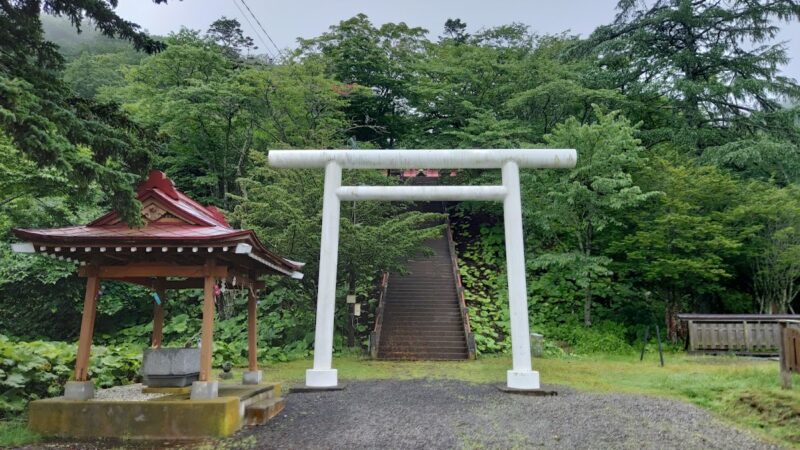
Torii Gate and Approach
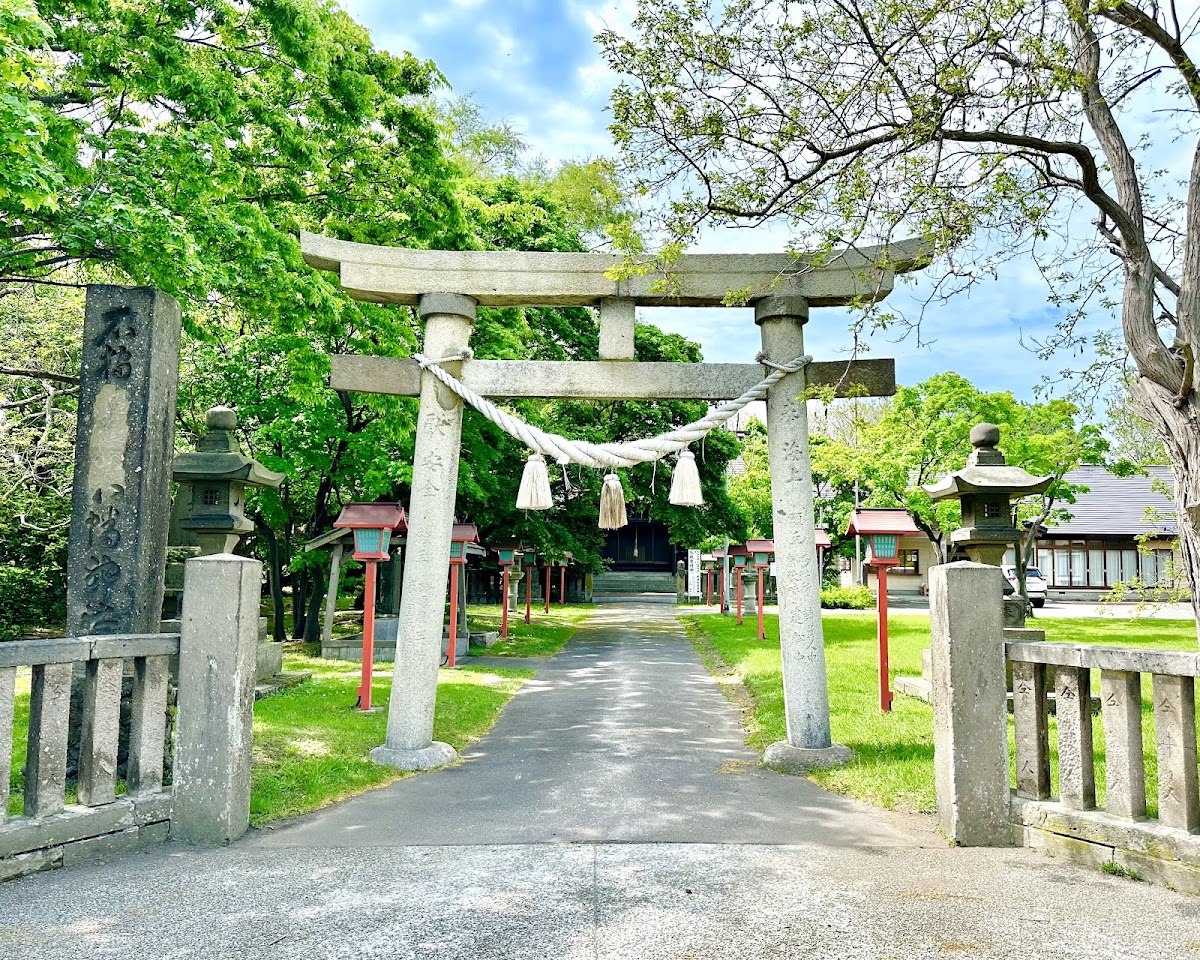
The torii gate of Ishikari Hachiman Shrine is registered as one of the cultural properties that make up the Japan Heritage site “A Unique Space Woven from the Dreams of Men Who Crossed the Rough Seas – Kitamae Ship Port Towns and Shipowner Settlements.” It is a valuable cultural asset that conveys the history of Ishikari, which prospered from the Kitamae ship trade.
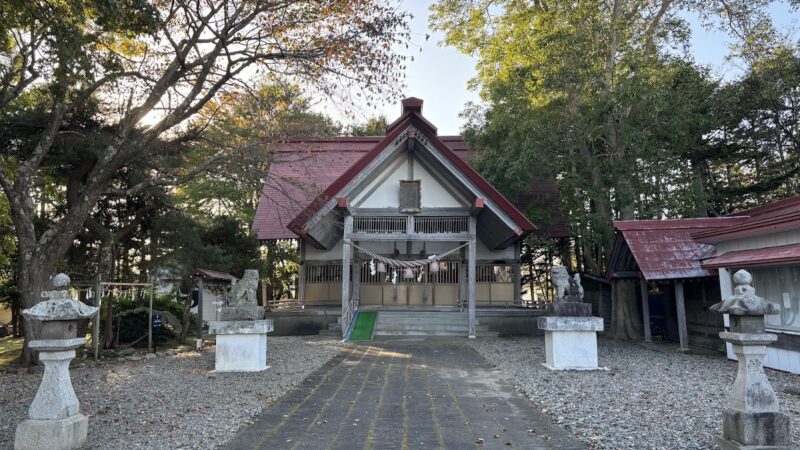
Passing through the torii gate, a quiet approach surrounded by trees continues. The shrine grounds are not particularly large, but are enveloped in lush greenery, creating a tranquil atmosphere far removed from the hustle and bustle of the city.
Shrine Buildings
The current shrine buildings have been maintained through several repairs since their construction in 1901 (Meiji 34). Both the main hall and the worship hall feature architectural characteristics typical of Hokkaido shrines, and are robust structures capable of withstanding the harsh winter climate.
Inside the worship hall, numerous votive tablets and ema (votive paintings) from throughout history are displayed, reflecting the deep faith of the local residents over many years.
Shrine Grounds and Stone Monuments
Within the shrine grounds is a shrine dedicated to Inari Okami. This is a remnant of the Inari Shrine that was located in Benten-cho before the relocation in 1874 (Meiji 7), and is an important part of the region’s history.
Furthermore, stone monuments and memorials marking the history are scattered throughout the grounds, allowing visitors to learn about the achievements of those who contributed to the development of Ishikari and the history of the shrine.
Seasonal Scenery
The grounds of Ishikari Hachiman Shrine offer beautiful scenery throughout the four seasons. Cherry blossoms bloom in spring, the greenery becomes lush in summer, and autumn leaves color the grounds. In winter, a tranquil landscape covered in snow unfolds, making it worthwhile to visit throughout the year.
Annual Festival and Events
Grand Festival (September 15th)
The Grand Festival of Ishikari Hachiman Shrine is held every year on September 15th. The annual grand festival is the most important festival for the shrine, a time to express gratitude for the past year and pray for the prosperity of the community.
During the grand festival, Shinto rituals are solemnly performed, and many parishioners and devotees attend. While it was once a lively festival with a portable shrine procession and numerous stalls, it continues to preserve its traditions, albeit on a smaller scale.
New Year’s Visit
Ishikari Hachiman Shrine is a popular spot for New Year’s visits for Ishikari residents. From New Year’s Day to the third day, it is bustling with worshippers praying for safety throughout the year, family well-being, and business prosperity.
Compared to other large shrines, the grounds are less crowded, allowing for a more relaxed visit. It is recommended for those who want to welcome the new year in a peaceful atmosphere.
Other Annual Events
In addition to New Year’s visits, Ishikari Hachiman Shrine holds Shinto rituals in accordance with Hokkaido’s annual events, such as Setsubun Festival, Shichi-Go-San (children’s festival), and exorcism. As a shrine that accompanies local people through important life events, it continues to play a vital role.
About Goshuin (Shrine Seals)
Ishikari Hachiman Shrine offers Goshuin. Goshuin are popular among many visitors as proof of worship and as a memento of their connection with the shrine.
Goshuin can be obtained at the shrine office, but since the chief priest may be absent, it is recommended to contact the shrine in advance. If you bring your Goshuincho (seal book), the shrine will write it for you directly.
The Goshuin features the calligraphy of “Ishikari Hachiman Shrine” and the shrine’s seal, creating a simple yet dignified design. Those collecting Goshuin should definitely consider obtaining one from Ishikari Hachiman Shrine.
Access Information
Access by Public Transportation
If using JR
The nearest station is Ishikari Futomi Station on the JR Hakodate Main Line, but the shrine is approximately 15km away, making walking difficult. We recommend taking a taxi or bus from the station.
If using the bus: Take the Hokkaido Chuo Bus bound for Ishikari from Sapporo Station or Sapporo Terminal, get off at the “Honmachi” bus stop, and it’s about a 5-minute walk. Since bus service is limited, we recommend checking the timetable in advance.
Access by car:
From Sapporo: Head north on National Route 231 (Ishikari Kaido) to Ishikari city center. The journey takes approximately 40-50 minutes from central Sapporo.
Parking: The shrine has parking spaces for visitors. It may get crowded during events such as the annual festival, but parking is usually not a problem.
Nearby Tourist Attractions:
When visiting Ishikari Hachiman Shrine, we recommend also visiting nearby tourist attractions.
Honmachi District, Ishikari City: This was the former center of Ishikari town, where you can enjoy historical buildings and the scenery of the Ishikari River estuary.
Ishikari Lighthouse
A white lighthouse standing at the mouth of the Ishikari River, offering magnificent views of the Sea of Japan.
Ishikari Beach
A vast sandy beach facing the Sea of Japan, known for its beautiful sunsets.
Hamanasu Hill Park
A treasure trove of coastal plants, where Japanese roses bloom profusely in early summer.
Ishikari Roadside Station “Ai Road Atsuta”
A popular spot where you can purchase fresh seafood and local agricultural products.
Ishikari Hachiman Shrine and Kitamae-bune Trade
Ishikari City, where Ishikari Hachiman Shrine is located, flourished as a port of call for Kitamae-bune trade from the Edo period to the Meiji period. Kitamae-bune were merchant ships that operated on the Sea of Japan route connecting Osaka and Hokkaido, transporting seafood such as kelp, herring, and salmon to Honshu, and rice, salt, and daily necessities to Hokkaido.
Ishikari is particularly famous for salmon fishing, and salmon caught in the Ishikari River were highly prized as “Ishikari salmon.” It is said that shipowners and merchants of the Kitamae-bune (northern trade ships) visited Ishikari Hachiman Shrine to pray for safe voyages and business prosperity.
The fact that the torii gate of Ishikari Hachiman Shrine is registered as a component cultural property of the Japan Heritage site “An Otherworldly Space Woven from the Dreams of Men Who Crossed the Rough Seas: Kitamae-bune Port Towns and Shipowner Settlements” is due to this historical background. Visiting the shrine allows one to reflect on the former prosperity of Ishikari, which flourished through the Kitamae-bune trade.
History of Ishikari and Ishikari Hachiman Shrine
Ishikari’s history is ancient, beginning in the Ishikari River basin, which the Ainu people called “Ishikari” (winding river). During the Edo period, it became a trading base for the Matsumae Domain, and salmon and kelp fishing flourished under the contract system.
When Ishikari became a direct territory of the shogunate during the late Edo period, it was positioned as an important base for the development of Ezo (Hokkaido). The founding of Ishikari Hachiman Shrine dates precisely to this period. After the establishment of the Hokkaido Development Commission, many immigrants from Honshu came to Ishikari, and fishing, agriculture, and commerce flourished.
In the Meiji era, Ishikari County was established, and Ishikari Town became the county’s center. Ishikari Hachiman Shrine, as a local shrine, was a center of worship for the entire Ishikari County.
In the Showa era, the center of Ishikari shifted inland, and the Honmachi district lost its former vibrancy, but Ishikari Hachiman Shrine continues to exist as a spiritual center for the community.
Manners and Etiquette for Visiting the Shrine
When visiting Ishikari Hachiman Shrine, please observe basic shrine visiting manners.
How to Pass Through the Torii Gate
The torii gate is the entrance to the sacred area. Before passing through the torii gate, bow once and proceed while avoiding the center of the path (the path of the gods).
Ritual of Purification
Purify your body and mind at the purification fountain. Take the ladle in your right hand and purify your left hand, then switch the ladle to your left hand and purify your right hand. Switch the ladle back to your right hand, receive water in your left hand, rinse your mouth, and finally hold the ladle upright to purify the handle.
Ritual of Worship
At the front of the main hall, worship using the ritual of two bows, two claps, and one bow. Place your offering, ring the bell, bow deeply twice, clap twice, pray sincerely, and finally bow deeply once.
Behavior on the Shrine Grounds
The shrine grounds are a sacred place. Avoid making loud noises or littering. Photography is often permitted, but it is considered good manners to refrain from taking pictures inside the shrine or during religious ceremonies.
The Future of Ishikari Hachiman Shrine
Ishikari Hachiman Shrine is a venerable shrine with a history of over 160 years since its founding. Even amidst declining population and depopulation, its value as the local guardian deity and a cultural asset that tells the history of the Kitamae-bune trade remains unchanged.
In recent years, interest in Ishikari Hachiman Shrine has increased due to its registration as a Japan Heritage site and the movement to rediscover local history. Ishikari City, local residents, and shrine officials are working together to maintain the shrine and pass on its history.
Visiting Ishikari Hachiman Shrine means experiencing the history of Hokkaido’s development, the prosperity of the Kitamae-bune trade, and the history of the local people’s faith. Why not take some time to pray in the tranquil grounds and reflect on the hardships and wishes of our ancestors?
Summary
Ishikari Hachiman Shrine is a historic shrine founded in 1858 (Ansei 5) as the general guardian shrine of Ezo (Hokkaido). Originally built on the right bank of the Ishikari River as a subsidiary shrine of Hakodate Sōsha Hachiman-gū, it was relocated to its current location in Benten-chō in 1874 (Meiji 7). It enshrines Homudawake-no-Mikoto and Ukanomitama-no-Mikoto, and is believed to bestow blessings for military success, protection from misfortune, abundant harvests, and business prosperity.
As the former Ishikari County shrine, it has garnered local faith and is an important cultural asset that conveys the history of Ishikari, which prospered through the Kitamae-bune trade. The shrine grounds are a tranquil space surrounded by trees, offering beautiful scenery throughout the seasons.
The annual festival is held on September 15th, and it is also a popular spot for New Year’s visits. Goshuin (shrine stamps) are available and are popular as souvenirs of visits.
While access is most convenient by car, it can also be reached by bus from Sapporo. There are many other tourist attractions nearby, such as Ishikari Lighthouse and Ishikari Beach, which are recommended to visit in conjunction with the shrine.
Visit Ishikari Hachiman-gū and experience the history of Hokkaido’s development and the local faith. In the tranquil temple grounds, you can find peace of mind and spend precious time reflecting on the wishes of our ancestors and our own aspirations as people living in the present day.