Complete Guide to Omori Inari Shrine | History, Goshuin (Shrine Seals), Access, and New Year’s Visit Information [Omori-cho, Hakodate City]
Omori Inari Shrine, located in Omori-cho, Hakodate City, Hokkaido, is a venerable shrine with a history of approximately 350 years. Its location facing Omori Beach makes it a popular spot for viewing the first sunrise of the year, and it continues to be cherished by local residents. This article provides detailed information you should know before visiting, including the history of Omori Inari Shrine, its goshuin (shrine seals), festivals, and access methods.
About Omori Inari Shrine
Omori Inari Shrine is an Inari shrine located at 22-6 Omori-cho, Hakodate City, Hokkaido. It belongs to the Hokkaido Shrine Association and is revered as a guardian deity of the Daimon district in Hakodate City. The vermilion torii gate and shrine buildings are beautiful, and the grounds are enveloped in a refreshing atmosphere.
Deity and Divine Virtues
The deity enshrined at Omori Inari Shrine is Inari Okami (Ukanomitama-no-kami). Inari Okami has been revered since ancient times as the god of abundant harvests, business prosperity, family safety, and industrial development.
Many worshippers visit the shrine, especially those praying for business prosperity and success, and it enjoys strong faith from local shopkeepers and business owners. It is also a popular place for local residents to pray for family safety and traffic safety.
History of Omori Inari Shrine
Origin and Estimated Date of Founding
The exact year of Omori Inari Shrine’s founding is lost due to the repeated large fires that struck Hakodate. However, the founding period can be estimated from existing historical materials.
The name “Omori” appears on an old map from 1669, and a ridge beam inscription indicating “rebuilt in 1846” remains. Therefore, it is estimated that Omori Inari Shrine was founded approximately 350 years ago, during the early to mid-Edo period.
This period coincided with the beginning of Hakodate’s (then Hakodate) development as a trading hub for the Matsumae Domain. It is believed that the Inari faith, praying for abundant harvests and business prosperity, took root alongside the development of the region and the growth of commerce.
History of Repeated Fires and Relocation
Hakodate is known as a city that suffered numerous large fires from the Edo period to the Meiji period. Omori Inari Shrine also suffered damage from fires many times throughout its history.
In 1874, the shrine was rebuilt at its former site, the current location at 8-3 Omori-cho. However, in 1907 (Meiji 40), the shrine buildings were destroyed in a great fire that struck Hakodate. Subsequently, in 1910 (Meiji 43), it was relocated to its current location at 22-6 Omori-cho, where it remains today.
This relocation gave Omori Inari Shrine its current location facing Omori Beach, making it a symbolic presence in the region with its beautiful ocean views.
350 Years of Walking Together with the Community
Omori Inari Shrine has walked hand in hand with the development of Hakodate. From its development as a commercial city during the Edo period, to the opening of the port after the Meiji Restoration, and up to the present day, it has always been worshipped as the guardian deity of the lives of the local residents.
Its history of overcoming numerous disasters and being rebuilt repeatedly with the support of the local people speaks to the deep connection between Omori Inari Shrine and the local community.
Highlights of the Shrine Grounds
Vermilion Torii Gate
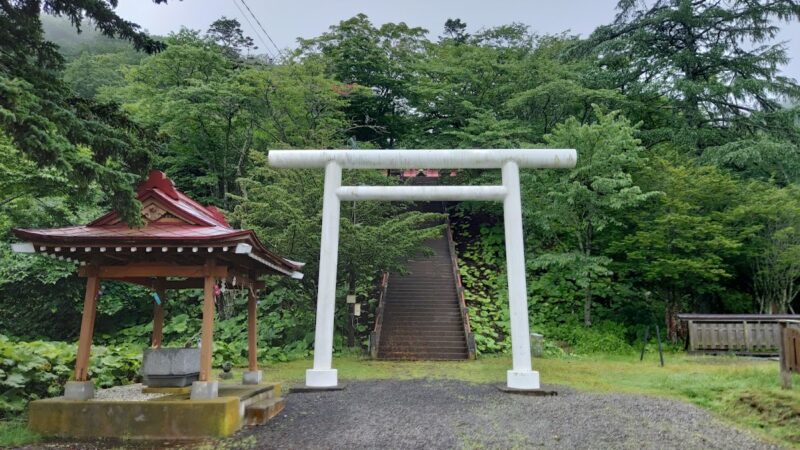
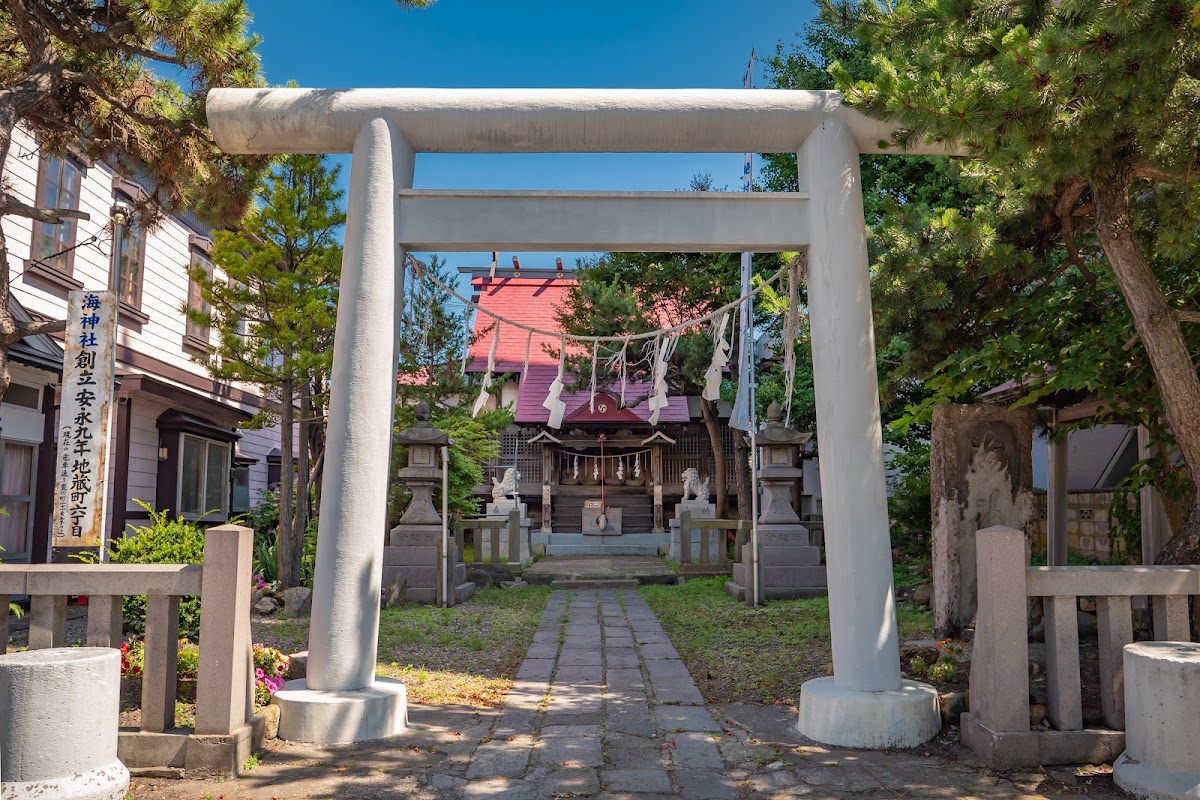
At the entrance to Omori Inari Shrine stands a vermilion torii gate, a symbol of Inari shrines. This vibrant vermilion color is considered a symbol of protection against evil and abundance, guiding worshippers into the sacred precincts.
Passing through the torii gate, a path leads to the shrine grounds, enveloped in a pure and serene atmosphere, creating a sense of serenity despite its urban location.
Shrine Building
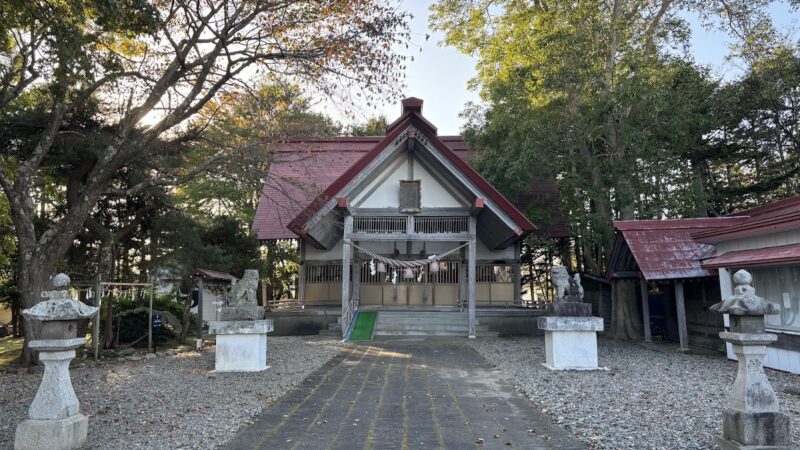
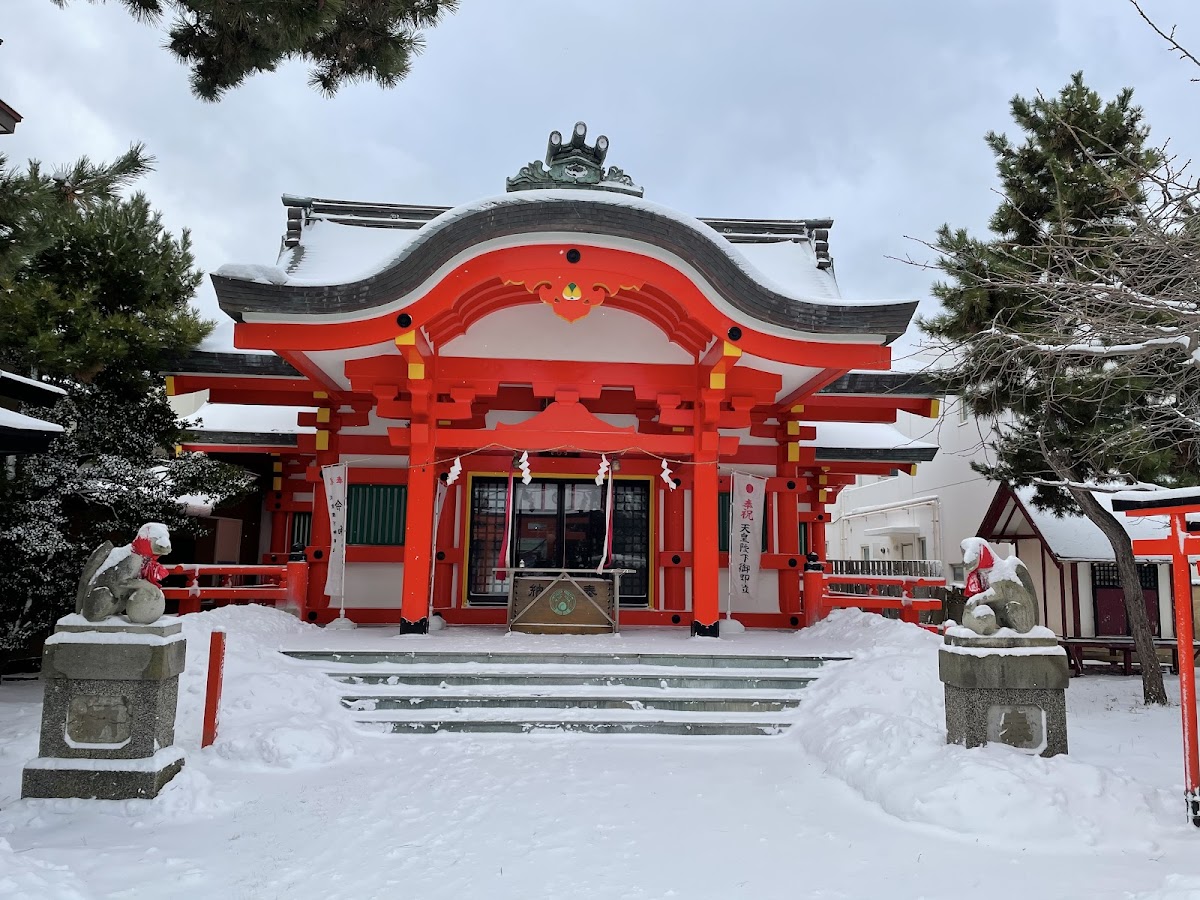
The current shrine building was constructed after the relocation in 1910 (Meiji 43) and follows traditional shrine architectural styles. The beautiful vermilion-based building exudes a sense of dignity and refinement, even in its relatively close proximity to Hakodate Station in the city center.
A plaque bearing the words “Omori Inari Shrine” welcomes worshippers.
Komainu (Guardian Dogs)
A pair of komainu (guardian dogs) stand within the shrine grounds. While fox statues are common at Inari shrines, Omori Inari Shrine employs traditional komainu to protect the sacred area. These komainu quietly watch over worshippers, preserving the sacred space.
Water Basin
A water basin for purification is located on the shrine grounds. It is recommended to follow the proper etiquette for worship by purifying your hands and mouth at the basin before proceeding to the main hall.
While it may be unusable in winter due to freezing, it offers a unique seasonal experience characteristic of Hokkaido shrines.
Shrine Office
The shrine office is located on the grounds and handles the issuance of Goshuin (shrine stamps) and the acceptance of various prayer requests. Shrine priests and shrine maidens are available at the office to answer visitors’ questions.
Goshuin Information
About Goshuin Issuance
Omori Inari Shrine offers Goshuin to visitors. Goshuin are proof of worship and important records of your connection with the shrine.
Goshuin are available at the shrine office; if you bring your Goshuincho (stamp book), it will be written directly for you. The offering fee is approximately 300 to 500 yen, similar to most shrines (however, this may change, so it is recommended to confirm during your visit).
Goshuin Design
The goshuin at Omori Inari Shrine features the shrine’s name and the date of visit written in ink, followed by a red seal. Its simple yet dignified design makes it popular among goshuin collectors.
Special goshuin may be offered depending on the season or festivals, so it is recommended to check the official social media accounts (Instagram, Facebook) for the latest information.
Goshuin Issuance Hours
Goshuin issuance hours are the same as the shrine office’s opening hours. Generally, this is from 9:00 AM to around 5:00 PM, but it may not be possible due to festivals or the absence of priests.
To ensure you receive a goshuin, it is recommended to call in advance (0138-22-2637).
Annual Events and Festivals
New Year’s Visit and First Sunrise
Omori Inari Shrine, located facing Omori Beach, is known as a popular spot for viewing the first sunrise of the year. On New Year’s Day, it is bustling with worshippers who come to witness the first sunrise.
Its location, allowing visitors to immediately make their first shrine visit after watching the sunrise over the Pacific Ocean, makes it a particularly popular spot for New Year’s visits in Hakodate. Many worshippers visit to pray for happiness in the new year, marking a refreshing start to the year.
Annual Grand Festival
Omori Inari Shrine holds its annual Grand Festival once a year. This is the most important festival for the shrine, where gratitude is offered to the enshrined deities and prayers are offered for the peace and prosperity of the region.
During the Grand Festival, Shinto rituals are solemnly performed, and many local residents and worshippers attend. Since the festival dates may vary from year to year, it is recommended to check the official website or social media.
Other Annual Events
At Omori Inari Shrine, various Shinto rituals are held throughout the year, including New Year’s visits, Setsubun festivals, summer purification rites, and autumn grand festivals. These events are important opportunities to preserve local traditions and deepen the bond with worshippers.
Access Information
Basic Information
Address
22-6 Omori-cho, Hakodate City, Hokkaido 040-0034
Phone Number
0138-22-2637
Nearest Station
Approximately 7 minutes on foot from Matsukaze-cho Station on the Hakodate City Tram
Access from Hakodate Station
Walking Distance
Approximately 2.5 km from Hakodate Station, about 30 minutes on foot. This is a suitable distance for a stroll while enjoying the streets of Hakodate.
By Tram
Take Hakodate City Tram Line 2 or 5 from Hakodate Station tram stop and get off at “Matsukaze-cho” tram stop. It’s about a 7-minute walk from there. The total travel time, including tram ride and walking, is approximately 15 minutes.
By Car
From Hakodate Station, head east on National Route 278 for about 6-7 minutes. The location is easily accessible by following the road along Omori Beach.
Parking
Omori Inari Shrine has parking spaces for visitors, but the number of spaces is limited. During busy periods such as New Year’s Day and the annual festival, we recommend using public transportation.
There are also coin-operated parking lots nearby, which can be used if the shrine’s parking lot is full.
Nearby Tourist Attractions
There are many Hakodate tourist attractions around Omori Inari Shrine.
Omori Beach
Omori Beach, which stretches out in front of the shrine, is a beautiful coastline with views of Mount Hakodate. It is also known as a famous spot for sunsets and is perfect for a stroll.
Hakodate Morning Market
Near Hakodate Station, the Hakodate Morning Market offers fresh seafood and local delicacies. It’s perfect for a meal after visiting the shrine.
Goryokaku
Goryokaku, a representative tourist spot in Hakodate, is also about a 10-minute drive away.
Mount Hakodate
The night view from Mount Hakodate, considered one of the world’s three greatest night views, is a must-see when visiting Hakodate.
Manners and Etiquette for Visiting Shrines
Basic Etiquette for Visiting Shrines
When visiting a shrine, please observe the following basic etiquette:
- Bow Before Passing Through the Torii Gate
Bow before entering the sacred area, in front of the torii gate. It is considered best to walk along the side of the path, as the center is considered the path of the gods.
- Purify Yourself at the Water Basin
Purify your hands and mouth at the water basin. Hold the ladle in your right hand, purify your left hand, switch the ladle to your left hand and purify your right hand, then switch it back to your right hand, receive water in your left hand, and rinse your mouth. Finally, hold the ladle upright and purify the handle.
- Worship at the Main Hall
The basic ritual in front of the main hall is “two bows, two claps, one bow.” Bow deeply twice, clap twice, and finally bow deeply once.
Regarding Attire
Unless you are receiving a special prayer, everyday clothing is acceptable for worship. However, please be mindful that this is a sacred place and dress cleanly and appropriately.
Hakodate in winter is very cold, so we recommend taking adequate precautions against the cold.
Regarding Photography
Photography is generally permitted on the shrine grounds, but photography inside the shrine buildings or during ceremonies may be discouraged. Please check with the shrine office if you have any questions.
Also, please be considerate of other worshippers and take photos quietly.
The Charm of Omori Inari Shrine
A Quiet Space in an Urban Area
Omori Inari Shrine is located in the city center, relatively close to Hakodate Station, yet its grounds are enveloped in a tranquil atmosphere. It is a precious space where you can escape the hustle and bustle of the city and pray in peace.
The Beautiful Scenery of Omori Beach
Omori Beach, which stretches out in front of the shrine, boasts a beautiful coastline with Mount Hakodate in the background. A stroll along the beach after visiting the shrine allows you to enjoy the natural beauty of Hakodate.
Especially during sunrise and sunset, you can enjoy spectacular views.
A Warmth Rooted in the Community
Omori Inari Shrine, which has walked hand in hand with the community for over 350 years, is deeply loved by the local residents. Visiting the shrine will allow you to feel the warmth of the local community.
As Part of Hakodate Sightseeing
For tourists visiting Hakodate, Omori Inari Shrine is a spot where you can experience Hakodate’s history and culture. Visiting not only major tourist spots but also local shrines allows you to discover the multifaceted charm of Hakodate.
Frequently Asked Questions
Q1: What are the visiting hours for Omori Inari Shrine?
A1: While entry to the shrine grounds is generally free, the shrine office is open from approximately 9:00 AM to 5:00 PM. If you wish to receive a Goshuin (shrine stamp) or prayers, it is recommended to visit within these hours. However, these hours may change due to Shinto rituals or the schedules of the priests, so it is best to confirm by phone beforehand.
Q2: How crowded is it during the New Year’s visit?
A2: The shrine is very crowded from the time of the first sunrise of the New Year until midday. It is especially crowded around sunrise, as many people come to see the first sunrise. If you want to avoid the crowds, it is recommended to visit in the afternoon or after the first three days of the New Year.
Q3: Is it guaranteed that I will receive a Goshuin? **
A3: You can generally receive a Goshuin (temple/shrine stamp) during the hours the shrine office is open. However, there may be times when we are unable to provide it due to religious ceremonies or priests being out, so if you wish to be sure to receive one, we recommend calling ahead to confirm.
Q4: Is there parking available if I come by car?
A4: There is parking space for visitors, but the number of spaces is limited. During busy periods such as New Year’s Day and the annual festival, it is highly likely that the parking lot will be full, so we recommend using public transportation. You can also use nearby coin-operated parking lots.
Q5: Can I receive prayers?
A5: Yes, we accept various prayers. Prayers for family safety, business prosperity, traffic safety, and protection from evil are available. If you wish to receive prayers, we recommend contacting us by phone (0138-22-2637) in advance to discuss the date, time, and content of the prayer.
Q6: Are there any precautions to take when visiting in winter? **
A6: Winters in Hakodate are very cold, and there is often snowfall. We recommend taking thorough precautions against the cold and wearing non-slip shoes when visiting the shrine. The purification fountain may be unusable due to freezing. Also, the area along Omori Beach can be very windy, so wind protection is necessary.
Q7: Is the route from the nearest Matsukaze-cho Station to the shrine easy to follow?
A7: It’s about a 7-minute walk from Matsukaze-cho Station to Omori Inari Shrine, and the route is relatively easy to follow. Head towards National Route 278 (the road along Omori Beach) from the station, and you’ll see the shrine’s vermilion torii gate when you reach Omori Beach. Using a smartphone map app should prevent you from getting lost.
Summary
Omori Inari Shrine is the guardian deity of Omori-cho, Hakodate City, with a history of approximately 350 years. Its history of overcoming numerous large fires and walking hand-in-hand with the community speaks to the deep bond between the shrine and the local community.
With its beautiful location facing Omori Beach, its appeal as a spot to watch the first sunrise of the year, and its tranquil atmosphere despite being in an urban area, Omori Inari Shrine is a must-visit spot when visiting Hakodate.
Its convenient access, just about 15 minutes by tram from Hakodate Station, is another attractive feature. When sightseeing in Hakodate, why not visit Omori Inari Shrine, a place deeply rooted in the community, in addition to the major tourist spots, and experience Hakodate’s history and culture more deeply?
For those who collect Goshuin (shrine stamps), those who want to enjoy the first sunrise of the year, and those who want to discover the hidden charms of Hakodate, Omori Inari Shrine is a shrine I wholeheartedly recommend.
When you visit, quietly put your hands together in prayer while imagining how this shrine, with its history of over 350 years, has walked hand in hand with the community. You will surely have a refreshing and cleansing experience for your soul.