Akagami Shrine (Matsumae Town) Complete Guide: A Thorough Explanation of History, Deities, and Access
Akagami Shrine, located at 383 Akagami, Matsumae-cho, Matsumae-gun, Hokkaido, is a historical shrine dating back to the Genroku era. This article provides detailed information useful for visiting Akagami Shrine, including its history, enshrined deities, festival dates, and access methods.
Basic Information about Akagami Shrine
Akagami Shrine is a shrine belonging to the Hokkaido Shrine Association, and its former rank was Village Shrine. It is located in the Akagami district of Matsumae-cho, on the right bank of the Akagami River, adjacent to Matsumae Town Kojima Elementary School.
Location and Access
Location: 383 Akagami, Matsumae-cho, Matsumae-gun, Hokkaido 049-1643
Phone Number: 01394-2-2032
Akagami Shrine is located in the Akagami district, northeast of the center of Matsumae-cho. Located in a corner of the continuous settlements of Mogusa, Shizuura, and Akagami from north to south, it is a beloved center of local faith.
Access by car is convenient; it takes about 15 minutes to reach the shrine by heading north on National Route 228 from Matsumae city center. If using public transportation, you will need to use the Hakodate Bus routes, but since the number of buses is limited, it is necessary to check in advance.
Deities and Divine Virtues
Akagami Shrine enshrines two deities.
Oyamatsumi-no-Okami
Oyamatsumi-no-Okami is a mountain god appearing in Japanese mythology. In the Kojiki and Nihon Shoki, he is said to be a god born from the divine creation of Izanagi-no-Mikoto and Izanami-no-Mikoto. He is worshipped as the guardian deity of mountains and forests, and as the patron deity of a wide range of industries including agriculture, fishing, and commerce.
As a deity that brings blessings from the mountains, it is believed to bestow divine virtues such as abundant harvests, business prosperity, and family safety.
Ukanomitama-no-Mikoto
Ukanomitama-no-Mikoto is a widely known god of grain, the principal deity of Inari shrines. “Uka” means food, and this deity is revered nationwide as a god of abundant harvests, business prosperity, and industrial development.
In particular, it is deeply revered by people engaged in agriculture and commerce, and is cherished as a god that brings abundant harvests and prosperity.
History and Origins of Akagami Shrine
Founding Date and Early History
The founding date of Akagami Shrine is unknown, but it has long been a shrine that has attracted local faith. Originally, it was located in a place called Meotoishi in Akagami Village, formerly Kojima Village, but it is said to have been moved to its current location due to its unsuitable position.
Reconstruction during the Genroku Era
The shrine buildings were rebuilt in Genroku 5 (1692). This period coincided with the reign of Tokugawa Tsunayoshi, the 5th shogun of the Edo shogunate. Even in Ezochi (Hokkaido), which was under the rule of the Matsumae Domain, the settlement of Japanese people progressed, and shrines and temples were being developed.
Disaster and Reconstruction in Genji 1 (1864)
In Genji 1 (1864), the shrine suffered significant damage from a typhoon, with all of its buildings being destroyed. However, in September of the same year, thanks to the efforts of local residents, new shrine buildings and a torii gate were constructed, and the shrine was re-established.
This rapid reconstruction demonstrates how important Akagami Shrine was to the community.
Establishment of Shrine Rank during the Meiji Era
On October 20, Meiji 9 (1876), Akagami Shrine was designated a village shrine. In the Meiji era’s shrine system, village shrines were positioned as central shrines in the local community and were officially recognized, prestigious shrines.
Shrine Architecture and Grounds Features
Shrine Architecture
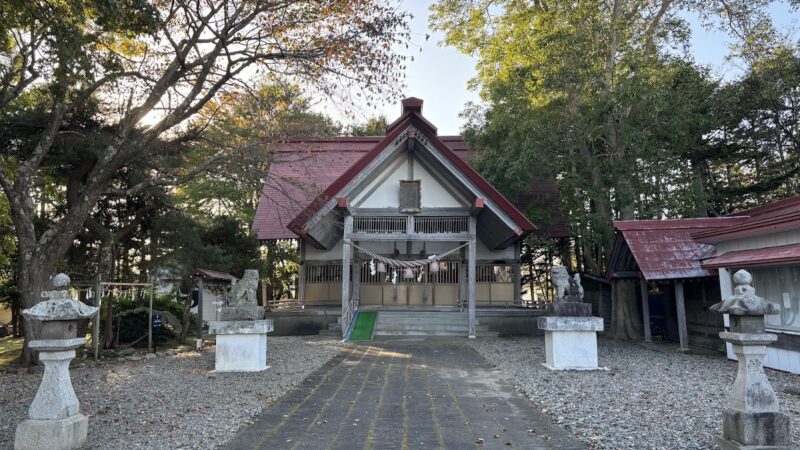
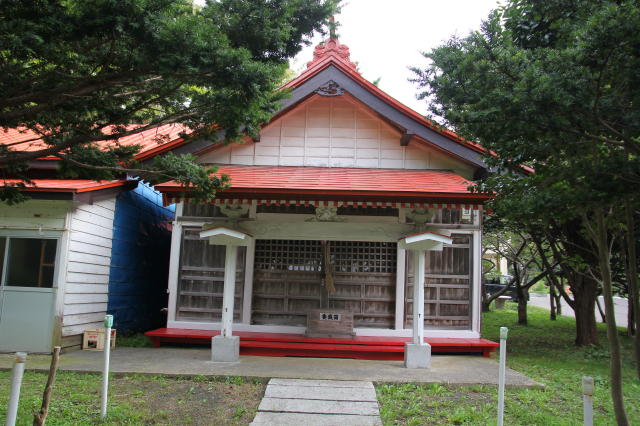
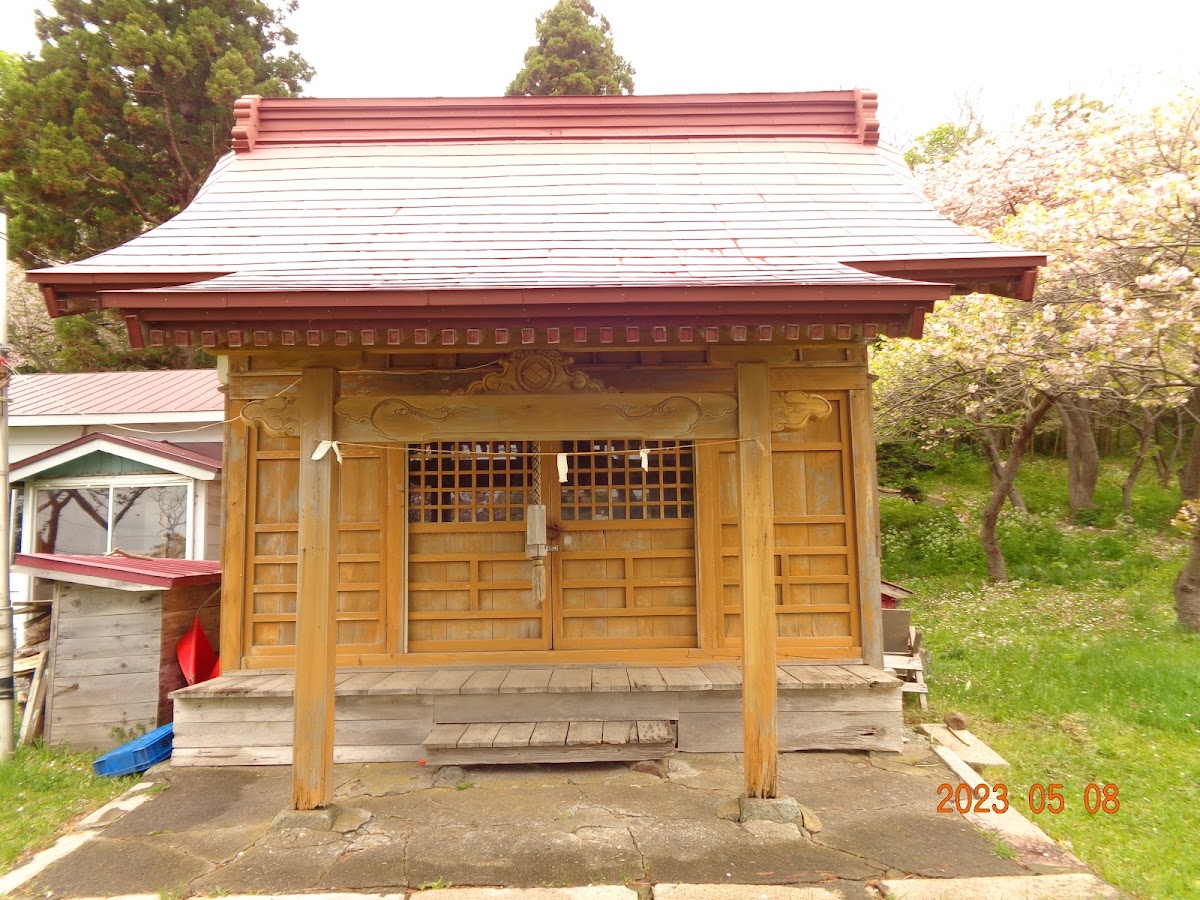
The shrine building of Akagami Shrine is constructed in the Nagare-zukuri style. Nagare-zukuri is a style where the front of the roof extends long to cover the portico, and it is one of the most common styles in Japanese shrine architecture.
The curved roof is beautiful, and it also has the practical function of protecting worshippers from rain and snow. It can be said to be an architectural style well-suited to Hokkaido’s harsh climate.
Grounds Environment
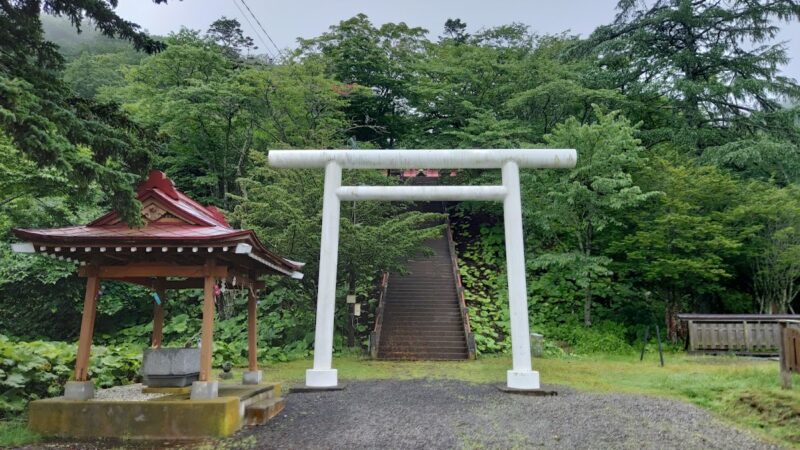
Akagami Shrine is located on a small hill on the right bank of the Akagami River. Surrounded by abundant nature, it offers a quiet and peaceful atmosphere for worship.
From the grounds, you can see the Akagami settlement and the Sea of Japan, making it a place where you can feel the history and nature of the region.
Annual Festival and Events
Annual Festival Date: June 12th
The annual festival of Akagami Shrine is held every year on June 12th. This festival is the most important ceremony at the shrine, where gratitude is offered to the enshrined deity and prayers are offered for peace and prosperity in the community.
June is the season when agricultural work intensifies, making this festival particularly important for praying for a bountiful harvest. Local residents gather, and traditional Shinto rituals are performed.
Other Annual Events
In addition to the annual festival, seasonal Shinto rituals are held, such as the New Year’s Day Festival (January 1st) and the Autumn Harvest Thanksgiving Festival. These events are important opportunities to deepen the bonds of the local community.
About Matsumae Town and Akagami District
History of Matsumae Town
Matsumae Town is a historic town that flourished as the only castle town in Hokkaido. As the base of the Matsumae Domain, it was the political, economic, and cultural center of Ezo (Hokkaido) throughout the Edo period.
Even today, numerous historical buildings and sites remain, such as Matsumae Castle (Fukuyama Castle) and Teramachi, making it an important region for understanding Hokkaido’s history.
Characteristics of the Akagami District
The Akagami district is a fishing village located in the northeastern part of Matsumae Town. Facing the Sea of Japan, it is blessed with abundant fishing grounds. In this naturally rich environment, where the Akagami River flows, people have lived their lives since ancient times.
There are various theories about the origin of the district name “Akagami,” but some suggest it is related to the red rocky terrain or to “Kami,” meaning a sacred place.
Hokkaido Shrine Association and Shrine Network
About the Hokkaido Shrine Association
Akagami Shrine belongs to the Hokkaido Shrine Association. The Hokkaido Shrine Association is a religious corporation that encompasses shrines throughout Hokkaido. As a regional branch of the Association of Shinto Shrines, it oversees approximately 600 shrines in the prefecture.
The Shrine Association engages in a wide range of activities, including supporting the management and operation of shrines, training Shinto priests, and promoting Shinto culture.
Other Shrines in Matsumae Town
Besides Akagami Shrine, Matsumae Town is home to many other shrines. There are a total of 26 shrines (including subsidiary shrines, monuments, and abandoned shrines), such as Matsumae Shrine, Shirakami Shrine, and Matsumae Inari Shrine, each functioning as a center of local faith.
These shrines are also valuable cultural assets that convey the rich history and culture of Matsumae Town.
Manners and Precautions for Visiting Shrines
Basic Worship Etiquette
- Bow before passing through the torii gate: As a sign of respect before entering the sacred area, bow before the torii gate.
- Walking along the approach: The center of the approach is considered the path of the gods, so it is polite to walk along the sides.
- Purifying at the water basin: If there is a water basin, purify your left hand, then your right hand, and then your mouth.
- Etiquette at the main hall: The basic procedure is two bows, two claps, and one bow. Quietly place your offering, ring the bell if there is one, bow deeply twice, clap twice, and finally bow once.
Precautions When Visiting
Akagami Shrine is adjacent to Kojima Elementary School, so consideration for school staff and students is necessary when visiting. Especially during weekdays, please visit quietly and be careful not to enter the school grounds.
During winter, there is snow, so please be careful of your footing and wear appropriate clothing.
Nearby Tourist Attractions
Matsumae Castle (Fukuyama Castle)
Matsumae Castle, located about 20 minutes by car from Akagami Shrine, is the only Japanese-style castle in Hokkaido. In spring, approximately 10,000 cherry trees of about 250 varieties bloom, making it nationally known as a “famous cherry blossom viewing spot.”
Matsumae Clan Residence
This theme park recreates the townscape of Matsumae during the Edo period. Fourteen buildings, including samurai residences, merchant houses, and guardhouses, line the streets, allowing visitors to experience life at that time.
Shirakami Cape
This cape, located at the southernmost tip of Hokkaido, offers views of Aomori Prefecture across the Tsugaru Strait. It features a lighthouse and observation deck, providing magnificent ocean views.
About Akagami Shrine and Akagami Shrine in Akita Prefecture
While search results often include information about Akagami Shrine Goshado in Oga City, Akita Prefecture, it is a completely different shrine from the Akagami Shrine in Matsumae Town.
The Akagami Shrine in Akita Prefecture is famous for its 999 stone steps and the Namahage legend, while the Akagami Shrine in Matsumae Town is a historic village shrine in Hokkaido, each possessing its own unique history and beliefs.
Care should be taken not to confuse the two.
The Charm and Significance of Visiting Akagami Shrine
A Faith Rooted in the Community
Akagami Shrine, though an ancient shrine with an unknown founding date, has overcome numerous difficulties, including reconstruction during the Genroku era and restoration in the first year of the Genji era, to preserve the local faith to this day.
This history speaks to the deep faith of the people of the Akagami district and the strong sense of community centered around the shrine.
A Space Where Nature and History Harmonize
Akagami Shrine, nestled on the banks of the Akagami River, is a place where Hokkaido’s rich nature and the history of Matsumae Town harmonize. By offering prayers in the tranquil grounds, you can escape the hustle and bustle of everyday life and find inner peace.
Prayers for Abundant Harvests and Industrial Development
The two enshrined deities, Oyamatsumi-no-Okami and Ukanomitama-no-Mikoto, are gods deeply connected to people’s livelihoods, including agriculture, fishing, and commerce. The shrine continues to play an unchanging role as a place of prayer for the development of local industries and the stability of people’s lives.
Planning a Visit to Akagami Shrine
Recommended Time to Visit
Spring to Early Summer (May-June): The fresh greenery is beautiful, and visiting around the annual festival on June 12th is highly recommended.
Autumn (September-October): The autumn foliage is beautiful, and the weather is stable, making it ideal for visiting the shrine.
Winter: While the shrine amidst a snowy landscape has its own charm, caution is necessary due to snow and icy roads.
Matsumae Sightseeing Combined with Shrine Visit
Combining a visit to Akagami Shrine with historical sightseeing in Matsumae Town will make for a more fulfilling trip. You can spend a day immersed in Hokkaido’s history and culture by visiting Matsumae Castle, Teramachi (temple district), and the Matsumae Clan Residence.
Matsumae Town is also rich in seafood, with many restaurants where you can enjoy fresh seafood. Enjoying local cuisine after your visit is highly recommended.
Summary: The Value and Future of Akagami Shrine
Akagami Shrine (Matsumae Town) is an ancient shrine with an unknown founding date. However, it underwent reconstruction in 1692 (Genroku 5), restoration in 1864 (Genji 1), and was designated a village shrine in 1876 (Meiji 9), making it a historically significant shrine.
The shrine enshrines Oyamatsumi-no-Okami and Ukanomitama-no-Mikoto as its deities, and is revered by the local people for its divine blessings of abundant harvests, business prosperity, and family safety.
Located in a tranquil setting on the right bank of the Akagami River at 383 Akagami, Matsumae-cho, Matsumae-gun, it features a distinctive nagare-zukuri style shrine building. The annual festival is held on June 12th and is an important local event.
Belonging to the Hokkaido Shrine Association, it is one of Matsumae-cho’s 26 shrines and a valuable presence that conveys the region’s history and culture to the present day.
Akagami Shrine symbolizes the history of Hokkaido, the culture of Matsumae-cho, and the bonds of the local community. By offering prayers in the quiet grounds and reflecting on its long history, you can feel something important for us living in the modern age.
When visiting Matsumae-cho, be sure to visit Akagami Shrine and experience its history and charm.