Shirafu Daijingu Shrine Complete Guide | The Charm and Visiting Information of a Historic Shrine in Fukushima Town, Hokkaido
Shirafu Daijingu Shrine, located in the Shirafu district of Fukushima Town, Matsumae District, Hokkaido, is a historic shrine dating back to the Edo period. Perched on a hill surrounded by giant cypress trees, this shrine has long been cherished by the local community. This article provides detailed information useful for visiting Shirafu Daijingu Shrine, including its history, enshrined deities, highlights within the grounds, and access methods.
What is Shirafu Daijingu Shrine?
Shirafu Daijingu Shrine is located in Shirafu, Fukushima Town, Matsumae District, Hokkaido, and belongs to the Hokkaido Shrine Association. The shrine grounds are situated on a hill about 100 meters inland from National Route 228, and are characterized by a tranquil atmosphere surrounded by giant cypress and yew trees.
Basic Information about the Shrine
Location: Shirafu, Fukushima-cho, Matsumae-gun, Hokkaido
Former Shrine Rank: Village Shrine
Founded: Kanbun 6 (1666)
Deity Enshrined: Amaterasu Omikami is the main deity.
Shirafu Grand Shrine was originally founded as “Shinmei-sha” and renamed “Shirafu Grand Shrine” in October of Meiji 9 (1876). Afterward, it was designated a village shrine and developed as a central shrine in the region.
History of Shirafu Grand Shrine
Founded in the Edo Period
The history of Shirafu Grand Shrine dates back to Kanbun 6 (1666). In that year, it was built by Matsumae Mimasaka-no-kami Kagehiro of the Matsumae Domain. The Matsumae Domain was a powerful daimyo family that ruled southern Hokkaido and played a crucial role as the center of the Japanese government in Ezo (present-day Hokkaido).
From its founding, the shrine has received a calligraphic plaque and a banner inscribed by the former lord, Matsumae Iwamatsu, demonstrating its deep connection to the domain. These offerings are valuable cultural artifacts that attest to the shrine’s high status.
Support from the Domain
Throughout the Edo period, Shirafu Grand Shrine received generous protection from the Matsumae Domain. As an annual offering for religious ceremonies, Matsumae Kumagoro Hiroaki, the former lord of the domain, bestowed 4 sho (approximately 1.85 liters) of rice and 1 ryo of gold annually. This support continued until 1850 (Kaei 3) and was a vital source of funding for the shrine’s operation and the execution of its festivals.
After the domain’s support was discontinued in 1850 (Kaei 3), the villagers of Shirafu Village began cooperating in holding festivals and repairs, and the shrine developed into one deeply rooted in the community.
Renaming and Shrine Rank in the Meiji Era
Following the reform of the shrine system after the Meiji Restoration, in October 1876 (Meiji 9), the shrine, previously known as “Shinmei-sha,” was renamed “Shirafu Daijingu.” At the same time, it was designated a village shrine, clarifying its official status.
A village shrine is one of the ranks of shrines under the modern shrine ranking system, positioned as the central shrine of each village. Shirafu Daijingu came to play an important role in the community as a spiritual center for Shirafu Village.
Fire and Reconstruction in the Showa Era
On January 2, 1942 (Showa 17), Shirafu Daijingu suffered a major disaster when its main hall was destroyed by fire. The fire at the beginning of the new year was a great shock to the community, but thanks to the efforts of the villagers, a new Shinmei-zukuri style shrine hall was completed on October 15th of the same year.
This reconstruction in just nine months demonstrated the deep faith the people had in the shrine and the strong sense of community at the time. The Shinmei-zukuri style is a style of shrine architecture exemplified by Ise Grand Shrine, and was chosen as a fitting style for a shrine dedicated to Amaterasu Omikami.
About the Deity
The deity enshrined at Shirafu Grand Shrine is Amaterasu Omikami, the supreme deity in Japanese mythology. Amaterasu Omikami is the deified sun goddess and is revered as the ancestral deity of the Imperial Family.
Divine Virtues of Amaterasu Omikami
Amaterasu Omikami is believed to possess the following divine virtues:
- National Security: Protects the peace and prosperity of the nation
- Family Safety: Watches over the health and happiness of the family
- Abundant Harvest: Brings abundant harvests
- Good Fortune and Prosperity: Opens up good fortune and invites blessings
- Protection from Evil: Protects against disaster
For the people of the Shirafu district, who have lived in the harsh natural environment of Hokkaido, faith in Amaterasu Omikami, the sun goddess, was an object of heartfelt prayer for peace and prosperity in their lives.
Highlights of the Shrine Grounds
First Torii Gate and Approach
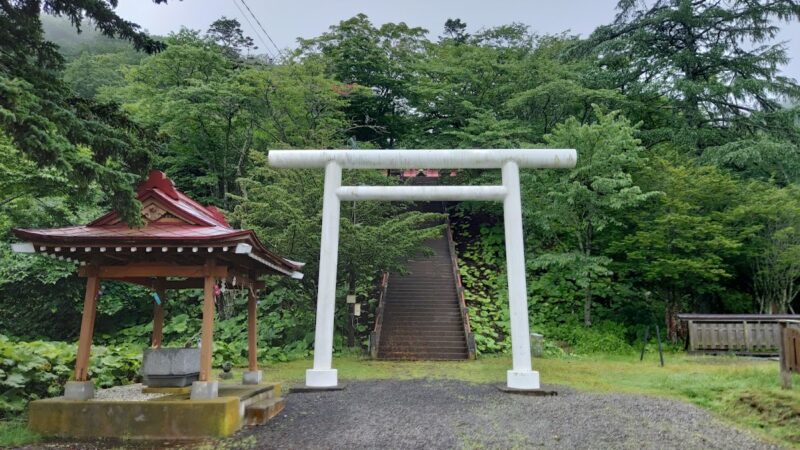
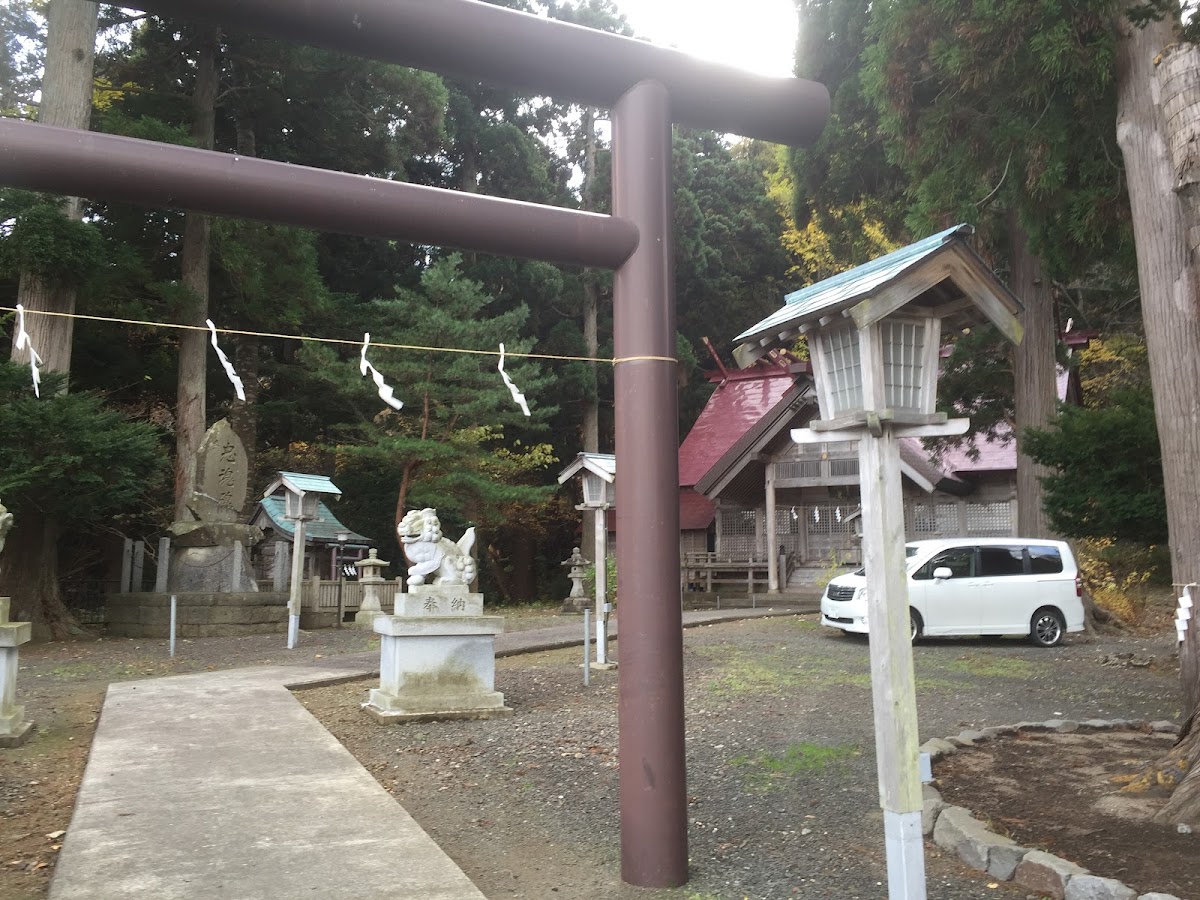
As you turn towards the mountains from National Route 228, the first thing you’ll see is the beautiful brown first torii gate. Passing through this gate, the approach leading to the sacred area begins. The approach continues uphill, utilizing the natural terrain. ### Stone Steps
The approach to the shrine features unique stone steps made of round stones encased in concrete. This construction method, commonly seen at shrines in Hokkaido, is designed to withstand winter freezing and the weight of snow. Climbing the steps allows you to appreciate the surrounding nature.
Giant Cypress and Yew Trees
Particularly impressive within the shrine grounds are the giant cypress and yew trees. These trees, estimated to be hundreds of years old, are living witnesses to the shrine’s long history. The particularly large yew tree exudes an overwhelming presence that captivates visitors.
In Hokkaido, the yew tree is also known as “Ichii” and has long been revered as a sacred tree. Its deep green leaves and red berries add color to the shrine grounds throughout the seasons.
Shrine Building
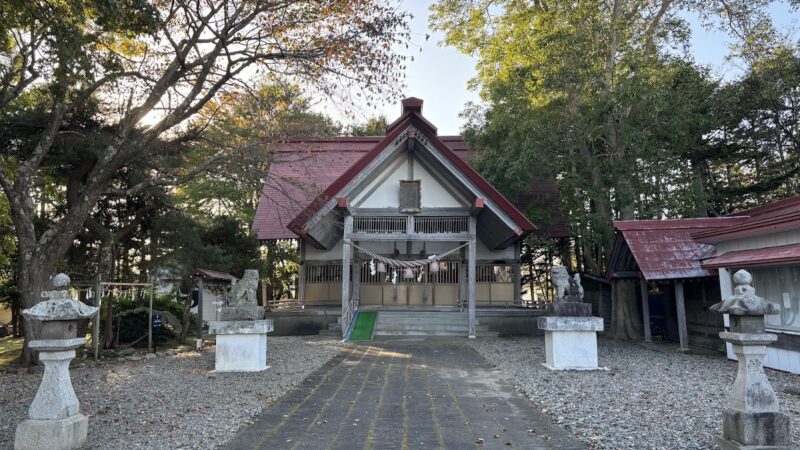
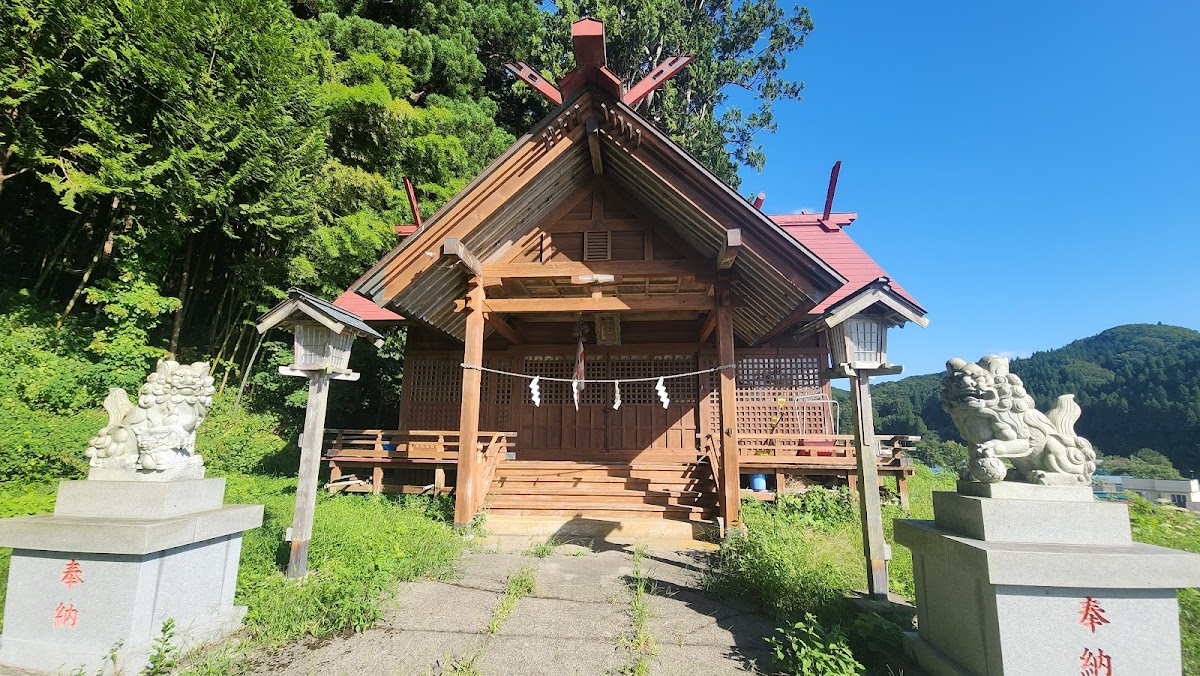
The shrine building, rebuilt in 1942, employs the Shinmei-zukuri architectural style, the same style used at Ise Grand Shrine. The Shinmei-zukuri style is characterized by its gabled roof, flat entrance structure, and simple yet serene appearance with chigi (ornamental roof finials) and katsuogi (decorative roof beams).
The worship hall (haiden) has a warm, woody feel, welcoming visitors warmly. The main sanctuary (honden) is located behind the worship hall, creating a solemn atmosphere.
Annual Events and Festivals
At Shirafu Grand Shrine, various festivals and Shinto rituals are held throughout the year. These events are important opportunities to preserve local traditions and deepen community bonds.
Main Annual Events
New Year’s Day Festival (January 1st): A festival celebrating the New Year and praying for peace throughout the year.
Spring Grand Festival: A festival celebrating the arrival of spring and praying for a bountiful harvest.
Autumn Grand Festival: A festival expressing gratitude for the harvest and repaying divine blessings.
Great Purification Ceremony (June & December): A Shinto ritual to cleanse away the sins and impurities accumulated over the past six months.
These festivals are attended by local residents who offer gratitude and prayers to the gods through traditional Shinto rituals.
Access Information
Access by Car
Access to Shirafu Grand Shrine is most convenient by car.
From Hakodate City: Head south on National Route 228, approximately 1 hour 30 minutes.
From Matsumae Town: Head north on National Route 228, approximately 30 minutes.
From Kikonai Town: Via National Route 228, approximately 1 hour.
From National Route 228, follow the signs for the Shirafu area and head approximately 100 meters towards the mountains. You will see the shrine’s torii gate. There is parking space on the shrine grounds, but it can get crowded during festivals.
Access by Public Transportation
If using public transportation, you can use Hakodate Bus routes. However, since the number of buses is limited, it is recommended to check the timetable in advance.
It is possible to access the shrine on foot from the nearest bus stop, but it is a bit of a distance, so it is important to plan with plenty of time to spare.
Manners and Etiquette for Visiting a Shrine
Basic Etiquette for Visiting a Shrine
- Bow before passing through the torii gate: This shows respect for entering the sacred area.
- Walk along the edge of the path: The center is considered the path of the gods.
- Purify yourself at the water basin: Purify your left hand, then your right hand, then your mouth.
- Etiquette in front of the main hall: Two bows, two claps, and one bow is the basic procedure.
Attire for Visiting a Shrine
There are no specific dress code requirements, but clean and subdued attire is desirable, reflecting the feeling of visiting a deity. Formal attire is especially appropriate when attending a festival.
Nearby Tourist Attractions
When visiting Shirafu Grand Shrine, you can also visit nearby tourist attractions.
Highlights of Fukushima Town
Seikan Tunnel Memorial Museum: A facility where you can learn about the history and technology of the world’s longest undersea tunnel.
Yokozuna Chiyonoyama & Chiyonofuji Memorial Museum: A memorial museum honoring two Yokozuna (grand champion sumo wrestlers) from Fukushima Town.
Iwabe Coast: A scenic spot with unique rock formations and a beautiful coastline.
Matsumae Area
Heading south from Shirafu, you’ll find Matsumae Town, known for its cherry blossoms. It boasts numerous historical sights, including Matsumae Castle and the Matsumae Clan Residence.
The Charm of Shirafu Grand Shrine
The Weight of History
Founded in 1666 (Kanbun 6), Shirafu Grand Shrine has a history of over 350 years, making it one of the oldest shrines in Hokkaido. Its deep connection with the Matsumae Domain and its history of recovery from fire speak to the strong faith of the people in this region.
Harmony with Nature
Surrounded by giant cypress and yew trees, the shrine grounds are a space where nature and faith are in harmony. The ability to worship while experiencing the changing seasons is a charm not found in urban shrines.
A Faith Rooted in the Community
From the Edo period to the present day, Shirafu Grand Shrine has been a spiritual support for the people of the Shirafu district. It remains a cherished center of the local community.
Visitor Voices
Visitors to Shirafu Grand Shrine have shared the following impressions:
“It’s a quiet shrine on a hill, and the grounds, surrounded by giant trees, were filled with a sacred atmosphere.”
“The historical shrine buildings and well-maintained grounds were impressive.”
“Even though it’s just a short distance from the national highway, it felt like a different world, incredibly quiet.”
Its Place in Hokkaido’s Shrine Culture
While many shrines in Hokkaido were founded during the pioneering period after the Meiji Restoration, Shirafu Grand Shrine is a historical shrine founded during the Kanbun era of the Edo period. Located in the heart of Japanese culture in Hokkaido during the Matsumae Domain era, it is a valuable site that conveys the state of faith at that time.
Relationship with the Hokkaido Association of Shinto Shrines
Shirafu Grand Shrine belongs to the Hokkaido Association of Shinto Shrines and, as part of the Hokkaido Shinto shrine network, strives to preserve traditional Shinto culture. The Hokkaido Association of Shinto Shrines oversees approximately 600 shrines in Hokkaido, and is responsible for the maintenance and management of shrines, the training of Shinto priests, and the dissemination of Shinto culture.
Shirafu Grand Shrine in the Four Seasons
Spring
As the snow melts, the trees in the shrine grounds begin to bud. The Spring Grand Festival is held to celebrate the arrival of the new season.
Summer
The lush green grounds provide cool shade. This is a beautiful season with the deep green of the yew trees.
Autumn
Autumn leaves color the shrine grounds, and the Autumn Grand Festival, giving thanks for the harvest, is held. Visiting the shrine in the crisp autumn air is a special experience.
Winter
The shrine grounds, covered in snow, are the epitome of silence. The contrast between the white snow and the evergreen yew trees is beautiful, further enhancing the sacred atmosphere.
Summary
Shirafu Grand Shrine is a historic shrine founded in 1666 (Kanbun 6), located in the Shirafu district of Fukushima Town, Hokkaido. It has deep ties to the Matsumae Domain and has attracted the faith of local people since the Edo period.
The shrine grounds, situated on a hill surrounded by giant cypress and yew trees, are a sacred space where nature and faith harmonize. The Shinto shrine building, rebuilt after surviving a fire in 1942 (Showa 17), presents a pure and serene appearance befitting the enshrinement of Amaterasu Omikami.
Despite its location easily accessible from National Route 228, Shirafu Grand Shrine possesses a tranquility and solemnity that feels like another world. It is a shrine you should definitely visit when traveling to southern Hokkaido. Why not visit this shrine, which boasts a history of over 350 years, and experience traditional Japanese religious culture while offering a peaceful prayer?