Complete Guide to Shirikishinai Hachiman Shrine | A Hakodate Ancient Shrine with 400 Years of History and Preservation of Matsumae Kagura
Located in Oomacho, Hakodate City, Hokkaido, Shirikishinai Hachiman Shrine is a venerable shrine with over 400 years of history, founded in 1616 during the early Edo period. It houses a Kagura (traditional dance) association that preserves Matsumae Kagura, a nationally designated Important Intangible Folk Cultural Property, and has been carefully preserved as a center of local faith and culture to this day.
This article comprehensively introduces all the information you need to know before visiting Shirikishinai Hachiman Shrine, including its detailed history, enshrined deities, highlights within the grounds, information on Goshuin (shrine stamps), and access methods.
History and Origins of Shirikishinai Hachiman Shrine
From Founding to the Edo Period
According to shrine records, Shirikishinai Hachiman Shrine was founded in Genna 2 (1616), during the reign of Emperor Go-Mizunoo, the 108th emperor. This was the year after the death of Tokugawa Ieyasu, and a time when the Edo Shogunate was being established. It is an extremely old shrine in Hokkaido and has played an important role as a center of faith in Ezo (Hokkaido) since the time of the Matsumae Domain.
After its founding, Shirikishinai Hachiman Shrine underwent numerous renovations to reach its present state. The main repairs recorded in the shrine’s records are as follows:
- Tenna era (1681-1684): First repair
- Kyoho era (1716-1736): Second repair
- Meiwa era (1764-1772): Third repair
- Bunsei era (1818-1830): Fourth repair
- Bunkyu 2nd year (1862), March: Second repair
These records show that the shrine was carefully maintained and managed by the local people throughout the Edo period.
Changes from Meiji to Showa
With the arrival of the Meiji era, Shirikishinai Hachiman Shrine was positioned within the modern shrine system.
In Meiji 9th year (1876), it was designated a Gōsha (village shrine). A “Gōsha” (village shrine) was one of the ranks of shrines under the old shrine ranking system, given to shrines revered as the guardian shrine of a county or several villages. This officially recognized Shirikishinai Hachiman Shrine as an important shrine in the region.
Further development occurred during the Taisho era:
- September 1915 (Taisho 4): Designated as a “Heihaku Kyōshin Shrine” (shrine receiving offerings from the government).
- 1921 (Taisho 10): Reconstruction of the main hall, offering hall, and worship hall completed.
- Same year: The offering hall and portable shrine hall completed.
A Heihaku Kyōshin Shrine is a shrine that receives offerings from the local governor (then the governor of Hokkaido) during religious ceremonies (the cost of cloth offered to the gods), which also indicated the shrine’s status.
During the Showa era, the shrine adapted to the changes in the post-war religious corporation system:
- Showa 21 (1946): Completed procedures under the Religious Corporations Act
- Showa 26 (1951): Registered as a religious corporation
Modern Era (Heisei and Beyond)
Even after the start of the Heisei era, Shirikishinai Hachiman Shrine continued to improve its facilities and preserve its traditions.
In Heisei 4 (1992), with the approval of the Association of Shinto Shrines, the shrine’s name was officially changed to “Shirikishinai Hachiman Shrine.” Until then, it was sometimes called “Shirikishinai Shrine,” but this name change made it clear that it was a shrine dedicated to Hachiman worship.
In Heisei 10 (1998), the offering hall was completely renovated, modernizing the ritual facilities.
Then, in Heisei 28 (2016), the shrine reached the significant milestone of its 400th anniversary, and a grand 400th anniversary festival was held. At this commemorative festival, the traditional Matsumae Kagura dance was performed, attracting many worshippers.
Deities and Divine Virtues
The deity enshrined at Shirikishinai Hachiman Shrine is Homudawake-no-Mikoto. Homudawake-no-Mikoto is the divine name of Emperor Ojin, the 15th emperor, and is the principal deity worshipped at Hachiman shrines and Hachiman shrines throughout Japan.
About Hachiman Faith
Hachiman faith is one of the most widely practiced forms of Shinto in Japan, with an estimated 44,000 Hachiman shrines and Hachiman shrines nationwide. Hachiman is revered as a god of war and military prowess, as well as a god of agriculture and industrial development.
In Hokkaido, Hachiman faith was brought by immigrants from Honshu, and was established in various locations as a guardian deity of the newly settled areas. Shirikishinai Hachiman Shrine is one of the oldest Hachiman shrines among them.
Divine Virtues
The divine virtues bestowed upon those who visit Shirikishinai Hachiman Shrine include the following:
- Victory and Good Fortune: As a god of war, it bestows the strength to overcome difficulties.
- Safety at Sea and Abundant Catch: As the guardian deity of the Shirikishinai area, where fishing is thriving.
- Family Safety and Prosperity of Descendants: As the local guardian deity, it protects the happiness of families.
- Industrial Development: As the god of industrial development, it watches over the development of the region.
As a Place of Transmission of Matsumae Kagura
One of the major characteristics of Shirikishinai Hachiman Shrine is that it has a Kagura (Shinto ritual dance) organization that transmits Matsumae Kagura, a nationally designated important intangible folk cultural property.
What is Matsumae Kagura?
Matsumae Kagura is a form of Kagura that has been transmitted mainly in the Matsumae region of southern Hokkaido, and its origins are said to date back to the Middle Ages. It is a valuable folk performing art that developed uniquely in Hokkaido while drawing on the traditions of Kyoto Kagura.
Designated as a National Important Intangible Folk Cultural Property in 1975, it is protected as a representative traditional performing art of Hokkaido.
Shirikishinai Hachiman Shrine Kagura Association
Shirikishinai Hachiman Shrine has an organization called the “Shirikishinai Hachiman Shrine Kagura Association,” where local people inherit the techniques of Matsumae Kagura and perform it as an offering at the annual festival and special Shinto rituals. Areas with Kagura associations run by private citizens are limited, and the Shirikishinai area is known as a particularly thriving area for Matsumae Kagura.
The activities of the Kagura Association go beyond merely preserving traditional performing arts; they strengthen the bonds of the local community and serve as a place for the transmission of culture across generations.
Main Kagura Dances Performed
Matsumae Kagura, performed as an offering at annual festivals and other events, includes a variety of performances. Representative examples include:
- Chitose: A celebratory dance performed at the beginning of Kagura.
- Suzugami: An elegant dance using Kagura bells.
- Sanbaso: A dance praying for a bountiful harvest.
- Yamagami: A powerful dance dedicated to the mountain god.
- Shishimai: A lion dance to ward off evil spirits.
Each of these dances possesses unique movements and music, inviting viewers into a sacred world.
Highlights of the Shrine Grounds
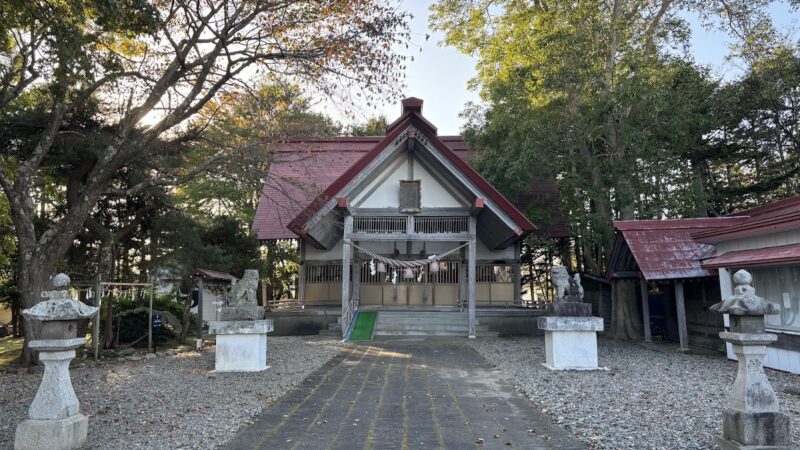
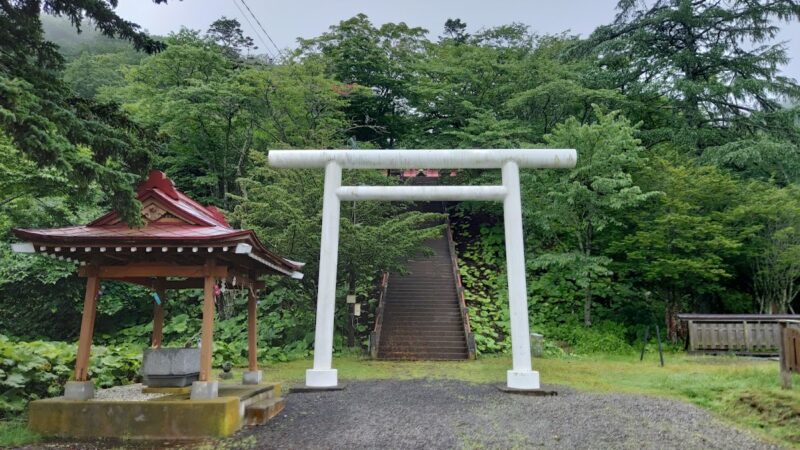
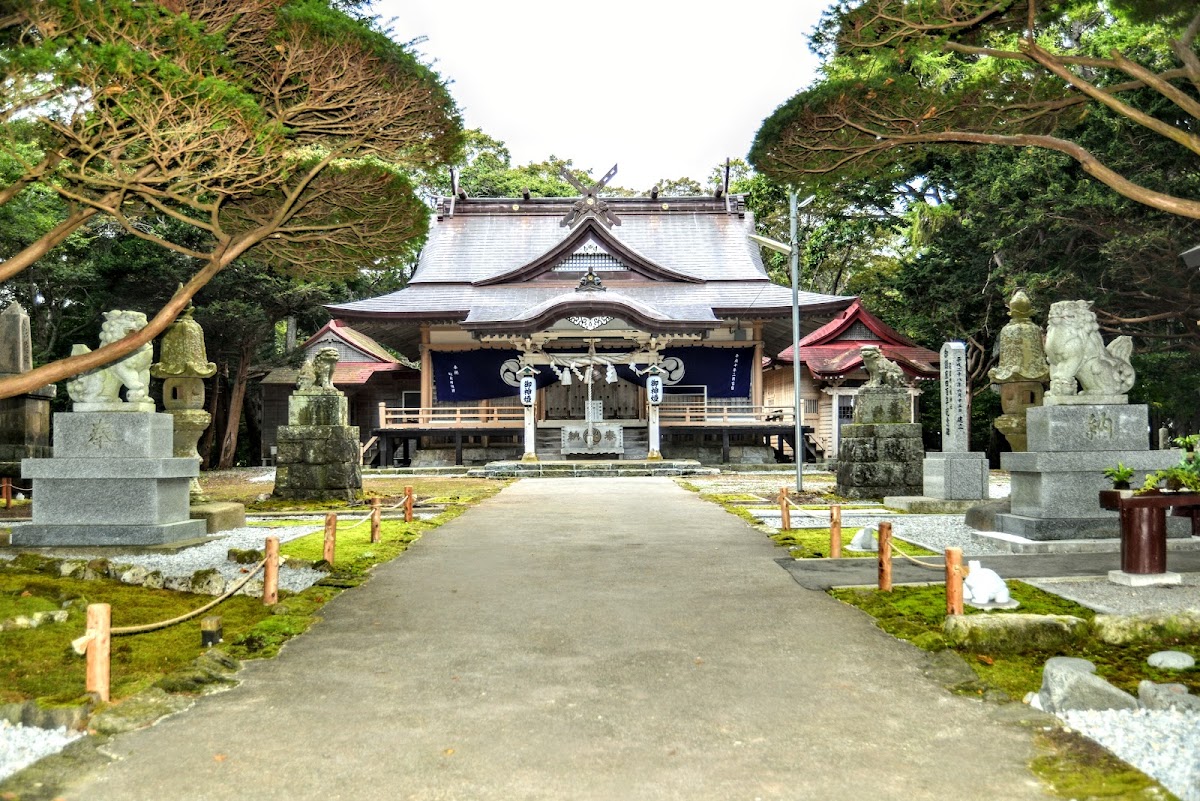
The grounds of Shirikishinai Hachiman Shrine are a tranquil space surrounded by forest, yet maintain a beautifully cared-for environment.
Shrine Buildings
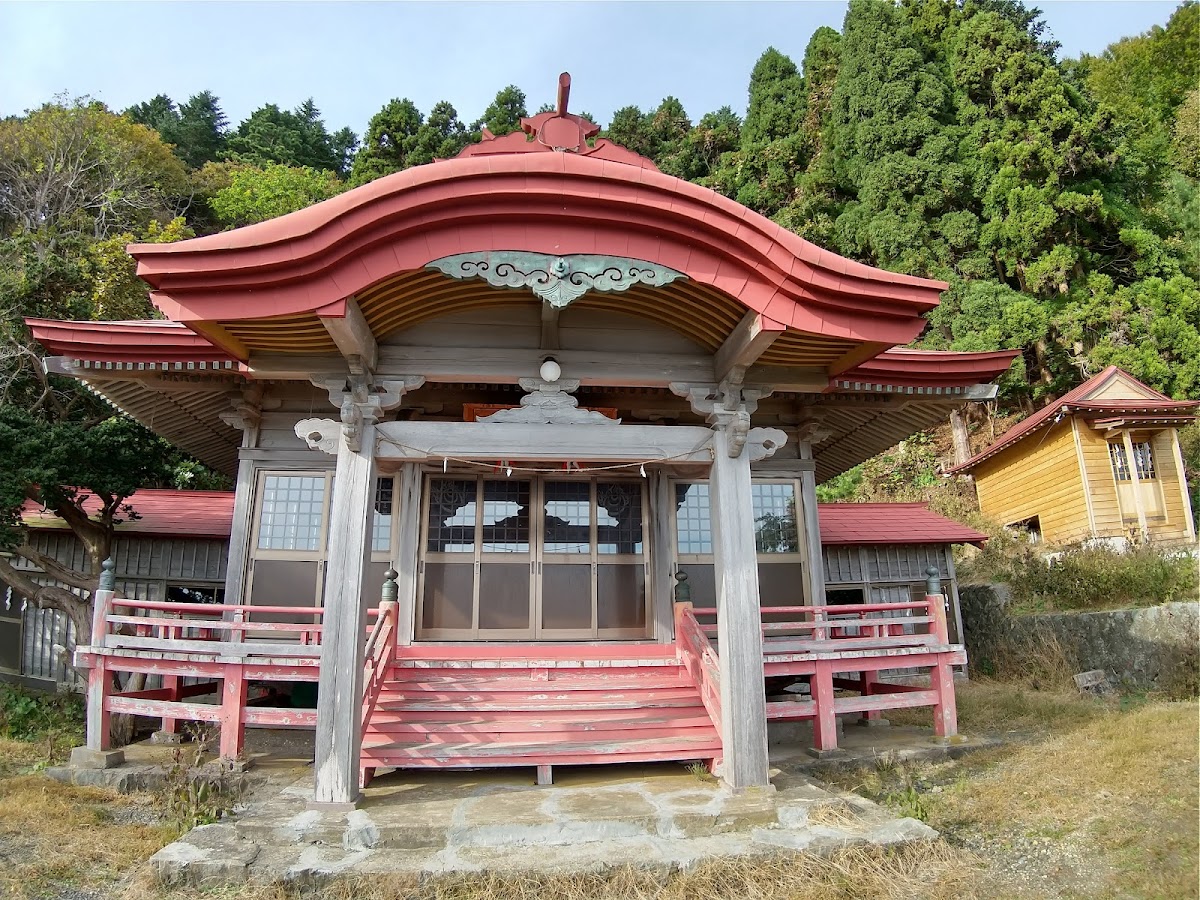
The current main hall, offering hall, and worship hall were rebuilt in 1921 (Taisho 10), giving them a history of over 100 years. While maintaining the style of traditional shrine architecture, they are also adapted to the climate of Hokkaido.
The Preparation of Offerings and the Portable Shrine Hall
The Preparation of Offerings is a facility that was completely renovated in 1998. It is where the offerings used in religious ceremonies are prepared. The Portable Shrine Hall carefully stores the portable shrines used in annual festivals and other events.
The Shrine Office and Rest Area
In front of the shrine office, there is a space where worshippers can rest, and beautiful flowers are planted according to the season. Worshippers praise the friendly and helpful staff, creating a warm and welcoming atmosphere.
Nature within the Shrine Grounds
Various trees and flowers are planted within the shrine grounds. Particular emphasis is placed on cultivating hydrangeas, which bloom beautifully in early summer. However, wild deer inhabit this area, and in the past, planted flowers and trees were sometimes eaten by deer. Currently, measures such as fences are in place to protect and cultivate the plants.
These ingenious methods of managing the shrine grounds are one of the interesting topics to discuss when visiting a shrine.
Annual Festivals and Regular Events
Shirikishinai Hachiman Shrine holds various rituals throughout the year.
Annual Festival
The annual festival of Shirikishinai Hachiman Shrine is the most important annual event for the shrine. During the festival, the traditional Matsumae Kagura dance is performed, and local people gather to offer their gratitude to the gods. It is held over two days, the eve of the festival and the main festival, and includes a portable shrine procession.
The timing of the annual festival sometimes coincides with the Hakodate Port Festival fireworks display, enveloping the entire area in a festive atmosphere.
Monthly Festivals
Monthly festivals are held regularly, praying for daily peace and the well-being of the community. While not as large-scale as the annual festival, the monthly festivals are carefully preserved as fundamental shrine rituals.
Summer Pilgrimage
In recent years, a new pilgrimage custom called “summer pilgrimage” has also been adopted. The Summer Pilgrimage is a period of worship held from June 30th to July 31st, and Shirikishinai Hachiman Shrine participates as one of the shrines in the “Summer Pilgrimage Southern Hokkaido Shrine Tour,” which includes several shrines in the southern Hokkaido region.
During the Summer Pilgrimage period, special goshuin (shrine stamps) are sometimes given out, making it popular with worshippers who enjoy visiting shrines.
Other Annual Events
- New Year’s Day Festival: A festival celebrating the start of the new year
- Setsubun Festival: A festival to ward off evil spirits and invite good fortune
- Shichi-Go-San Pilgrimage: A pilgrimage to celebrate the growth of children
- Great Purification Ceremony: A Shinto ritual held in June and December to purify sins and impurities
Goshuin Information
Shirikishinai Hachiman Shrine gives out goshuin. It is a shrine that attracts attention from people who enjoy visiting shrines and collecting goshuin as a hobby.
About the Issuance of Goshuin
Goshuin are given out at the shrine office. Many visitors comment on the kind and helpful service provided by the beautiful wife of the shrine’s staff, creating a warm and welcoming atmosphere for receiving a Goshuin (shrine stamp).
The Goshuin features the shrine’s name and date of visit written in ink, along with the shrine’s seal. Pre-printed Goshuin are sometimes available, so it’s recommended to check before your visit.
Special Goshuin
During special periods such as annual festivals and summer pilgrimages, limited-edition Goshuin may be offered. Especially during the “Summer Pilgrimage to Southern Hokkaido Shrines,” visiting multiple shrines may earn you special commemorative gifts.
Manners for Receiving a Goshuin (Shrine/Temple Stamp)
- Please complete your prayers before receiving your Goshuin.
- Having your Goshuincho (stamp book) ready will make the process smoother.
- Please prepare the offering (money to be paid) in advance.
- Don’t forget to express your gratitude to the Shinto priest or chief priest.
Access and Basic Information
Location
Address: 194 Ōma-chō, Hakodate City, Hokkaido 041-0522
Shirikishinai Hachiman Shrine is located in Ōma-chō, approximately 30km east of the center of Hakodate City. Situated in the Shirikishinai district of the former Esan Town, it is revered as the guardian deity of a region where fishing is thriving.
Phone Number
TEL: 0138-84-2719
For inquiries regarding visits, Goshuin, prayers, etc., please contact the above phone number.
Access by Public Transportation
Using Hakodate Bus:
- Nearest bus stop: “Kami-Ōma” (Hakodate Bus)
- Approximately 3 minutes on foot from the bus stop
Take a Hakodate Bus bound for Esan from Hakodate Station or Yunokawa Onsen and get off at the “Kami-Ōma” bus stop. The shrine is about a 3-minute walk from the bus stop.
Access by Car
The shrine is located about 30km east of central Hakodate on National Route 278 (Esan National Highway), approximately 40 minutes by car.
From Hakodate Airport: Approximately 50 minutes
From JR Hakodate Station: Approximately 40 minutes
From Yunokawa Onsen: Approximately 30 minutes
There is parking available at the shrine, so you can visit by private car.
Visiting Hours
The shrine grounds are generally open for free visits. If you wish to receive a Goshuin (temple/shrine stamp) or receive prayers at the shrine office, we recommend calling ahead to confirm.
General guidelines:
- Visiting hours: From sunrise to sunset
- Shrine office hours: Approximately 9:00 AM to 5:00 PM (Please note that staff may be absent, so prior contact is recommended)
About the Shirikishinai area
The Shirikishinai area, where the Shirikishinai Hachiman Shrine is located, is a thriving fishing region in the eastern part of Hakodate City, facing the Tsugaru Strait.
Origin of the place name
It is believed to originate from the Ainu words “Shirikishi” (edge of the land) or “Shirikishinai” (river at the edge of the land). The name describes the geographical feature of the area jutting out into the Tsugaru Strait.
Regional characteristics
The Shirikishinai area is a settlement that has prospered from fishing since ancient times, and is rich in marine products such as kelp and squid. It is also known as a region where Matsumae Kagura (a type of Shinto ritual dance) is popular, and it is a valuable area where private Kagura groups are active.
Although it’s located away from the center of Hakodate city, it enjoys a quiet and naturally rich environment, offering a peaceful atmosphere for a leisurely visit.
Nearby Tourist Attractions
Here are some nearby spots to visit in conjunction with your visit to Shirikishinai Hachiman Shrine.
Mount Esan
Mount Esan, an active volcano, is 618 meters high, and you can see plumes of smoke rising from near the summit. Hiking trails are well-maintained, and in spring, clusters of azaleas bloom beautifully.
Minami Kaigan Onsen
This is a rare natural open-air bath where hot spring water gushes from the rocky shore. Bathing is only possible at low tide, offering a unique bathing experience amidst nature.
Todohokke Area
Enjoy restaurants serving fresh seafood and the beautiful coastal scenery. Seafood such as kelp and squid are especially exquisite.
Information on Social Media
Shirikishinai Hachiman Shrine actively shares information on Instagram.
Instagram: @shiri_kishi_nai_hachi_man
This Instagram account features beautiful photos showcasing the daily life of the shrine, including seasonal scenery, festivals, Matsumae Kagura performances, and flowers blooming on the grounds. With over 1,000 followers, it’s a popular and beloved account.
Checking their Instagram before your visit will give you an idea of the current state of the shrine and upcoming events. Anyone can easily follow them, so please feel free to do so if you’re interested.
Posts often include hashtags such as “#OnTheShrineGrounds,” “#MakingTheShrineGroundsAHealingSpace,” “#MatsumaeKagura,” and “#ShiriKishiNaiHachimanShrineKaguraAssociation,” conveying the shrine’s charm.
Points and Manners for Visiting
Here are some points to keep in mind when visiting ShiriKishiNai Hachiman Shrine.
Etiquette for Visiting a Shrine
- Bow before passing through the torii gate: This is a courtesy before entering the sacred area.
- Purify yourself at the water basin: Purify in the order of left hand → right hand → mouth → left hand.
- Worship at the main hall: Two bows, two claps, and one bow is the basic procedure.
- Bow after worship: Turn around and bow once as you leave the torii gate.
Attire
No special attire is required, but clean clothing that reflects the sacred nature of the place is desirable. Especially if you are receiving prayers, please dress appropriately and not too casually.
Photography
Photography is generally permitted within the shrine grounds, but there may be restrictions, such as inside the shrine buildings or during religious ceremonies. If unsure, please check with a Shinto priest.
Posting on social media is welcome, but please be considerate of the privacy of other worshippers.
Summary
Shirikishinai Hachiman Shrine boasts a history of over 400 years, having been founded in 1616. It is one of Hokkaido’s most historically significant shrines, preserving the Matsumae Kagura, a nationally designated Important Intangible Folk Cultural Property.
While located a little distance from the center of Hakodate, this allows for a quiet and peaceful atmosphere for worship. The shrine grounds, surrounded by forest, are meticulously maintained, allowing visitors to enjoy the beauty of nature throughout the seasons.
The Matsumae Kagura performance at the annual festival offers a valuable opportunity to experience the region’s traditional culture firsthand. The warm atmosphere of the shrine office and the offering of Goshuin (shrine stamps) will also create lasting memories of your visit.
When visiting Hakodate or the southern Hokkaido region, be sure to extend your trip to Shirikishinai Hachiman Shrine and experience the atmosphere of this shrine steeped in history and tradition. It will surely be a memorable worship experience.