Complete Guide to Kumausu Shrine | The Charm and Visiting Information of a Historic Shrine in Sakura, Otaru City
Kumausu Shrine, located in the Sakura district of Otaru City, Hokkaido, is a venerable shrine with a history of over 200 years, dating back to the late Edo period. From its elevated grounds, it offers a panoramic view of Ishikari Bay, conveying the history of Otaru’s sea, which once prospered from herring fishing. This article comprehensively introduces useful information for visiting Kumausu Shrine, including its history, enshrined deities, access methods, annual festival, and goshuin (shrine stamp) information.
Basic Information about Kumausu Shrine
Location: 5-26-10 Sakura, Otaru City, Hokkaido
Deities Enshrined:
- Ukanomitama-no-Okami
- Omononushi-no-Okami
- Sarutahiko-no-Okami
Shrine Rank: Former Village Shrine
Annual Festival Day: First Sunday of July
Affiliation: Hokkaido Shrine Association
Kumausu Shrine is located at the end of the road leading uphill from the Sakura Rotary, with its grounds situated at the top of a long slope. While not particularly large, it is a beloved local shrine known for its excellent views, with the beautiful Ishikari Bay stretching out beyond the torii gate after climbing the stairs.
History and Origin of Kumausu Shrine
Founded in the Late Edo Period
The history of Kumausu Shrine dates back to Bunka 12 (1815). At that time, the Otaru coast was thriving due to herring fishing, and fishermen built an Inari shrine on the slope of the present-day Ginrinso (former Inomata Residence) to pray for abundant herring catches and safety at sea. This was the beginning of Kumausu Shrine.
Herring fishing was a central industry of the Hokkaido economy from the Edo period to the Meiji period, and the area around Otaru, in particular, prospered to the point where luxurious fishing huts called “herring palaces” were built. Kumausu Shrine was born as a place of faith for these people who lived in harmony with the sea.
Relocation and Ranking as a Village Shrine in the Meiji Era
In Meiji 3 (1870), Kumausu Village was officially established at the location of the shrine. Then, in 1875 (Meiji 8), it was ranked as a village shrine, establishing its position as a central shrine in the region. Around this time, the shrine moved to the vicinity of the former Kumausu Elementary School.
Furthermore, in 1879 (Meiji 12), it was moved again to the east side of the former Kumausu Elementary School. This period marked the beginning of the full-scale development of Hokkaido, and as the number of settlers increased, the shrine also moved repeatedly along with the development of the region.
Renaming and Merger in the Taisho Era
1913 (Taisho 2) was a significant turning point for Kumausu Shrine. In this year, Konpira Shrine was merged with Kumausu Shrine and its shrine building was moved to its current location. At the same time, its name was changed from “Inari Shrine” to “Kumausu Shrine”.
This renaming made its character as the guardian shrine of the Kumausu district, bearing the name of the region, even clearer. The deity Ōmononushi-no-Ōkami, enshrined at Konpira Shrine, was also enshrined, establishing the current system of three enshrined deities.
Development of the Shrine Grounds in the Showa Era
In 1962 (Showa 37), the shrine grounds were expanded, and in 1971 (Showa 46)**, the current shrine building was constructed in conjunction with the reconstruction of National Route 5. This period coincided with the high economic growth era, a time when urban infrastructure development was progressing in Otaru.
To this day, Kumausu Shrine has been carefully preserved as a spiritual center for local residents and as a cultural asset that conveys the history of Otaru.
Enshrined Deities and Benefits
Kumausu Shrine enshrines three deities, each offering different benefits.
Ukanomitama-no-Ōkami
Kumausu Shrine is known as the principal deity of Inari Shrines and is the god of food. It is believed to bring blessings of abundant harvests, business prosperity, and industrial development. Since Kumausu Shrine was originally founded as an Inari Shrine, it is enshrined as the main deity.
Ōmononushi-no-Ōkami
This deity resides on Mount Miwa in Yamato and is believed to bring blessings of maritime safety, safe navigation, business prosperity, and matchmaking. This deity was enshrined together from Konpira Shrine and has been worshipped as a protector of maritime safety for fishermen engaged in herring fishing.
Sarutahiko-no-Ōkami
Known as the god of opening paths, it is believed to bring blessings of traffic safety, protection from misfortune, and good fortune. It is considered auspicious to visit when starting a new business or at a turning point in life.
Thanks to these three deities, Kumausu Shrine is revered as a shrine offering a variety of blessings, including maritime safety, abundant catches, business prosperity, traffic safety, and good fortune.
Origin of the Place Name Kumausu
There are several theories regarding the origin of the unique place name “Kumausu.”
Ainu Language Origin Theory
The most plausible theory is that it originates from the Ainu language. “Kuma-ushi” is believed to come from the Ainu word “kuma-us(i),” meaning “place with trap bows.” It is thought that the name originated from the fact that the Ainu people once set up trap bows for hunting in this area.
Topographical Origin Theory
Another theory suggests that “Kuma” means “corner” or “bend,” and “Usu” means “inlet” or “bay.” This theory is also plausible given the inlet-like topography of the Kumausu area.
Historical Name
Until the war, Funahama-cho, Sakura-machi, and Boyodai in Higashi-Otaru were known as “Kumausu Village” and formed one of the districts of Asari Village. Even today, the river flowing before Sakura Avenue in front of the Hiraiso Tunnel is called the “Kumausu River,” and the place name remains.
Highlights of the Shrine Grounds
Long Approach and Stairs
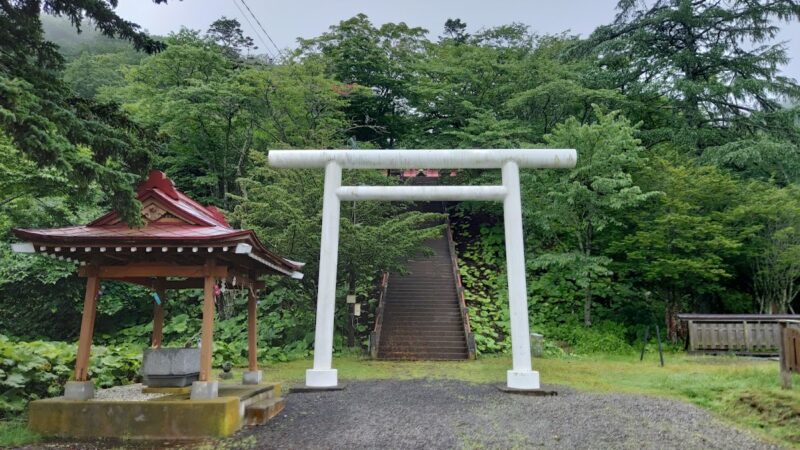
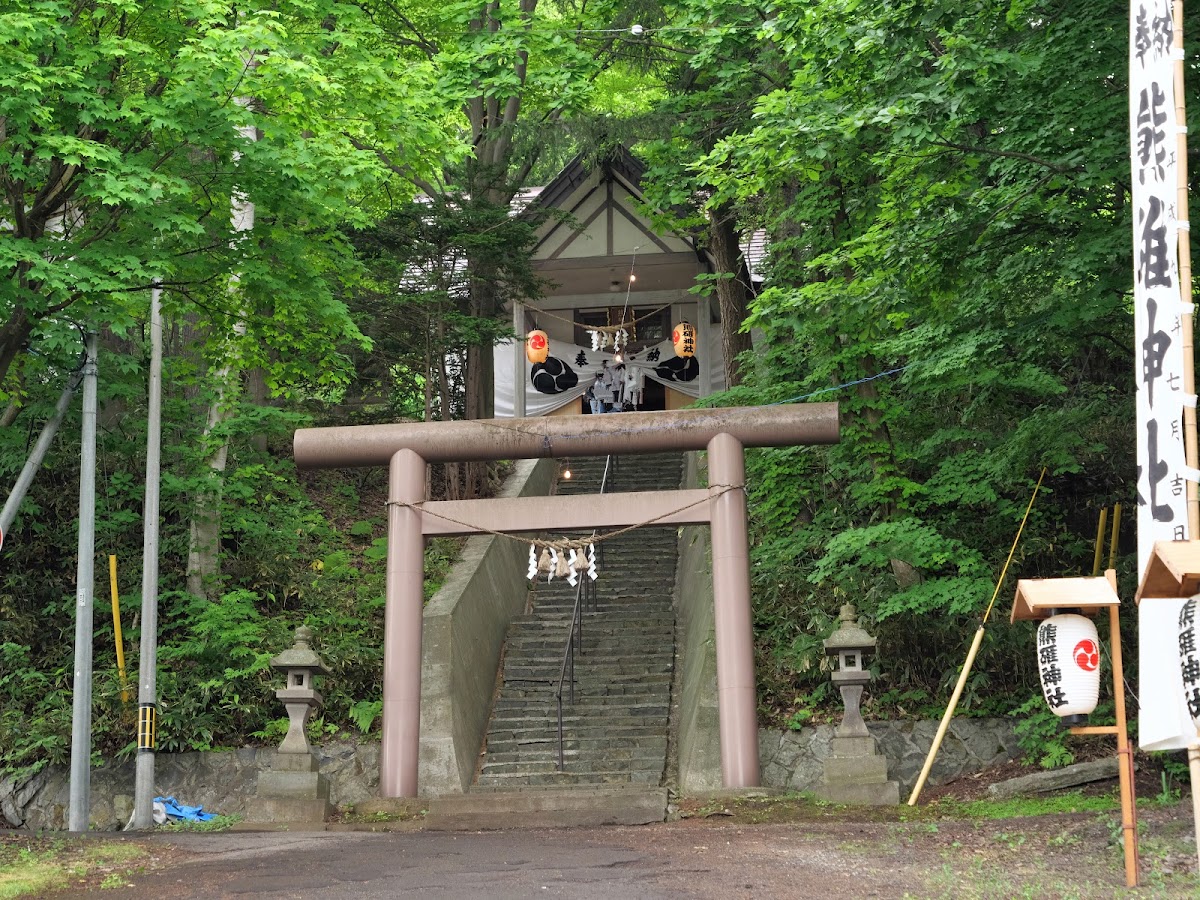
One of the characteristics of Kumausu Shrine is its location on a hill. From the Sakura Rotary, you climb a slope and then a set of stairs to reach the shrine grounds. Walking along this approach, you can experience a sense of shifting your mind from everyday life to a sacred space.
In autumn, the autumn leaves are beautiful, and the approach is enveloped in a wonderful atmosphere that reflects the changing seasons. The shrine grounds at the top of the stairs are tranquil, a space that makes you forget the hustle and bustle of the city.
A Stunning View of the Sea Beyond the Torii Gate
The greatest attraction of the shrine grounds is undoubtedly the view of Ishikari Bay seen beyond the torii gate. As you climb the stairs, the blue sea stretching out beyond the gate comes into view. On a clear day, you can see all the way to the horizon, allowing you to reflect on the history of Otaru’s sea, which once prospered from herring fishing.
This view is unique to Kumausu Shrine, which was founded to pray for safety at sea, and leaves a deep impression on visitors.
Shrine Building and Grounds
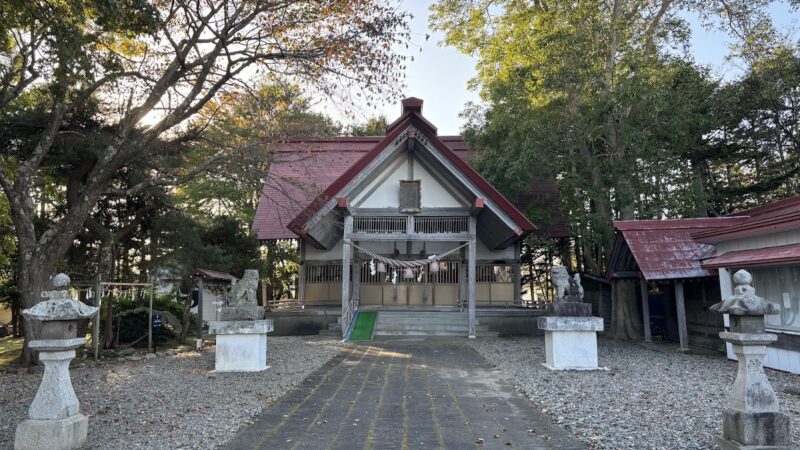
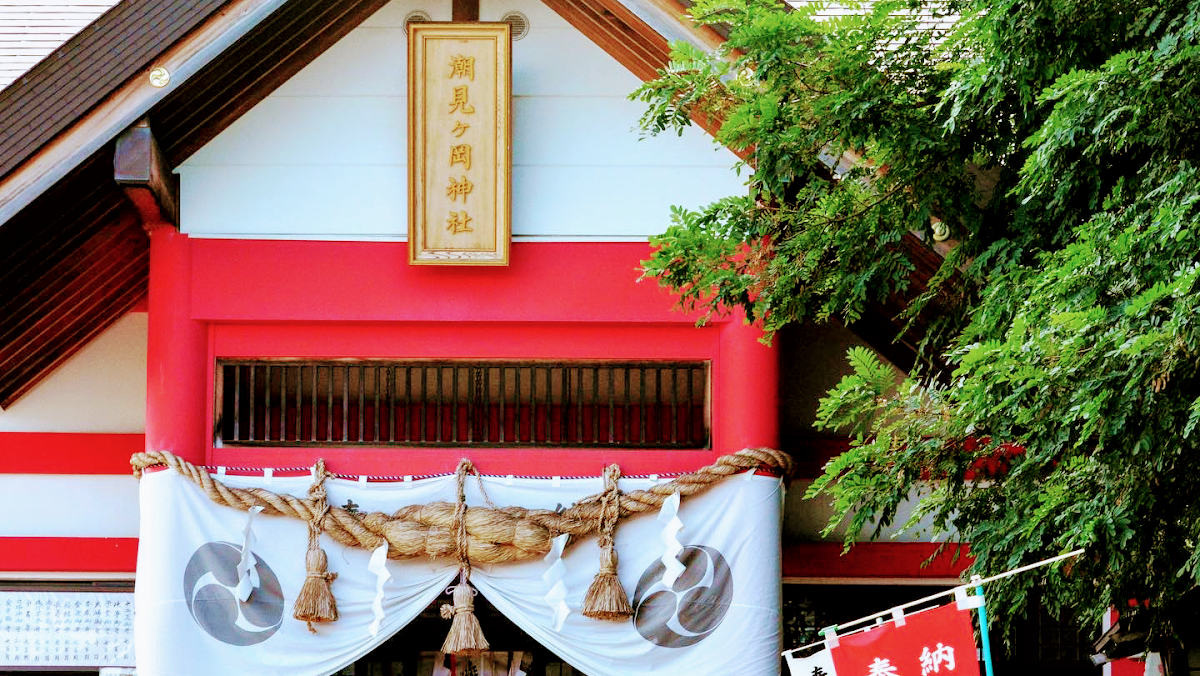
The shrine building, constructed in 1971, is not large, but it is carefully maintained and has a clean appearance. The grounds have a charming atmosphere, making it an ideal environment for quiet worship.
You can feel that it is carefully preserved by the local parishioners, conveying that it is a shrine deeply rooted in the community.
Annual Festival and Other Annual Events
Annual Festival (First Sunday of July)
The most important event at Kumausu Shrine is the Annual Festival, held on the first Sunday of July. On this day, the entire community is enveloped in a festive atmosphere, and it is bustling with many worshippers.
During the festival, stalls line the street from Sakura Rotary towards Kumausu Shrine, and a temporary stage is set up in an open space along the way. Karaoke contests and performances are held on the stage, providing a place for community interaction.
A procession of the portable shrine also takes place, making it an important opportunity to pass on the region’s traditional culture to the next generation.
Other Annual Events
Besides the Annual Festival, various Shinto rituals are held throughout the year, including the New Year’s Day visit, the Setsubun Festival, and the Autumn Festival. Local people visit Kumausu Shrine at important life events and seasonal changes, offering gratitude and prayers to the gods.
Goshuin Information
At Kumausu Shrine, you can receive a Goshuin (shrine stamp). Goshuin are popular among many visitors as a memento of their visit and as proof of their faith.
How to Receive a Goshuin
Goshuin can be received at the shrine office on the grounds, but they are not always available, so it is recommended to check in advance if you want to be sure to receive one. They are often available during events such as the annual festival.
If you bring your Goshuincho (stamp book) and politely request it, they will inscribe the shrine’s seal and the date. Remember that a Goshuin is not just a stamp rally, but proof of your visit, so the correct etiquette is to first pray at the main hall before receiving it.
Features of the Goshuin
The Goshuin at Kumausu Shrine includes the shrine’s name and the name of the enshrined deity. The simple yet powerful calligraphy conveys the history and prestige of the shrine.
Access Methods
Access by Public Transportation
Nearest Station: Approximately 25 minutes on foot from JR Hakodate Main Line “Otaru Chikko Station,” or approximately 10 minutes by car from “Otaru Station.”
Bus: Get off at the Hokkaido Chuo Bus “Sakuramachi” bus stop, then approximately 11 minutes on foot.
If taking a bus from Otaru Station, take a bus bound for Sakura. After getting off at the Sakuramachi bus stop, walk towards the Sakura Rotary, and then walk up the hill to the shrine.
Access by Car
Enter the Sakura area from National Route 5 and head towards the Sakura Rotary. Proceed along the road towards the mountain from the rotary, and you will find Kumausu Shrine at the end of the road.
Parking: There is some parking space on the shrine grounds, but during busy times such as the annual festival, it is recommended to use nearby public parking lots.
Nearby Tourist Attractions
The following tourist attractions are located near Kumausu Shrine:
- Ginrinso (Former Inomata Residence): A facility converted from a former herring fishing hut
- Otaru Aquarium: A popular aquarium located about 10 minutes away by car
- Otaru Canal: A representative tourist attraction of Otaru
- Tenguyama: An observation point offering panoramic views of Otaru city and Ishikari Bay
Why not visit the historic Kumausu Shrine during your Otaru sightseeing trip?
Manners and Etiquette for Visiting Shrines
When visiting a shrine, please observe the following basic etiquette.
Preparations Before Visiting the Shrine
- Bow before passing through the torii gate: This shows respect for entering the sacred area.
- Walk along the edge of the path: The center is considered the path of the gods.
- Purify yourself at the water basin: Purify your left hand, then your right hand, then your mouth.
Etiquette for Visiting the Shrine
- Place your offering: Do not throw it in; place it gently.
- Ring the bell: This signifies your arrival at the shrine.
- Two bows, two claps, one bow: Bow deeply twice, clap twice, and bow deeply once.
- State your wish specifically: Mentally recite your address and name, express your gratitude, and then state your wish.
After Visiting the Shrine
Bowing again as you leave the torii gate is considered more polite. Be grateful that the shrine grounds are maintained and cleaned by the volunteers of the parishioners and local community.
The History of Kumausu Shrine and Otaru
Herring Fishing and Otaru’s Prosperity
The history of Kumausu Shrine is deeply intertwined with the history of Otaru’s herring fishing. From the late Edo period to the early Showa period, massive schools of herring, known as “kuki,” swarmed the Otaru coast, resulting in bountiful catches so abundant that the sea turned white with fish.
During this period, luxurious fishing huts known as “herring palaces” were built one after another in Otaru, and the wealth gained from herring fishing supported the region’s development. Ginrinso (the former Inomata Residence) is one such example, located near the founding site of Kumausu Shrine.
A Place of Faith in the Pioneer Era
During the Meiji era’s development of Hokkaido, shrines became a spiritual support for settlers. In the midst of the harsh realities of life in an unfamiliar land, shrines served as a reminder of home and were the center of the community.
Kumausu Shrine, along with the establishment of Kumausu Village, was designated a village shrine and has played an important role as a place of faith and interaction for local residents.
Role in Modern Times
Even in modern times, with the decline of herring fishing, Kumausu Shrine continues to exist as a cultural heritage site that conveys the history of the region and as a spiritual anchor for the residents. Through events such as the annual festival, it fosters intergenerational interaction and strengthens community bonds.
Nearby Attractions and Tourist Information
Charms of the Sakura District
The Sakura district, where Kumausu Shrine is located, is situated in the eastern part of Otaru City and is a quiet area where residential areas and nature harmonize. From the hilltop, you can see Ishikari Bay, and it is also known as a beautiful spot for watching the sunset.
Seasonal Ways to Enjoy
Spring: In cherry blossom season, as the district name suggests, cherry blossoms bloom, and the area around the shrine feels like the arrival of spring.
Summer: The annual festival in July is a summer tradition. It is bustling with stalls and stage events.
Autumn: The autumn foliage along the approach to the shrine is beautiful, making it the perfect season for a quiet visit.
Winter: The shrine grounds, covered in snow, have a solemn atmosphere. Many worshippers visit for the New Year’s pilgrimage.
Combining with Otaru Sightseeing
Visiting Kumausu Shrine in conjunction with sightseeing in Otaru city allows you to experience not only Otaru as a tourist destination, but also a more deeply rooted, local side of the city. You’ll discover a local charm different from the typical spots like the Otaru Canal and Sakaimachi Street.
Summary: The Charm of Kumausu Shrine
Kumausu Shrine is a historic shrine that has watched over the sea and people of Otaru for over 200 years since its founding in 1815. Its origins, built to pray for abundant herring catches and maritime safety, convey the history of Hokkaido’s development and maritime culture to this day.
Kumausu Shrine offers many attractions, including a magnificent view of Ishikari Bay from its elevated grounds, a tranquil atmosphere, and a grand festival deeply rooted in the local community. When visiting Otaru, why not take a trip to this shrine, which tells the history of the region, in addition to the usual tourist spots?
The three deities enshrined here—Ukanomitama-no-Okami, Omononushi-no-Okami, and Sarutahiko-no-Okami—will warmly welcome your visit. Offer a quiet prayer at Kumausu Shrine, where you can receive various blessings such as maritime safety, business prosperity, traffic safety, and good fortune.
Kumausu Shrine has been loved and carefully preserved by the local people. Its history and traditions will continue to be passed down to future generations as a cultural heritage of Otaru.