Maeda Shrine (Kyowa-cho, Iwanai-gun, Hokkaido) Complete Guide | A Historic Shrine Dedicated to the Lord of the Kaga Domain
Maeda Shrine, located in the Maeda district of Kyowa-cho, Iwanai-gun, Hokkaido, is a rare shrine nationwide that enshrines Lord Maeda Toshiie, the lord of the Kaga Domain, as its main deity. This shrine, which strongly reflects the history of Hokkaido’s development during the Meiji era, was founded to foster a sense of local identity among the immigrants from Kaga. This article comprehensively introduces all the information you need to know before visiting Maeda Shrine, including its detailed history, enshrined deity, highlights of the grounds, and access methods.
Basic Information on Maeda Shrine
Maeda Shrine belongs to the Shiribeshi Branch of the Hokkaido Shrine Association, and its former shrine rank was Village Shrine. Surrounded by a dense forest in the middle of a rural area, the shrine exudes a tranquil atmosphere.
Location and Contact Information
- Address: 300 Maeda-ro, Kyowa-cho, Iwanai-gun, Hokkaido
- Phone Number: 0135-62-0143
- Shrine Rank: Former Village Shrine
- Annual Festival Date: September 8th
Shrine Building Overview
- Shrine Building Style: Shinmei-zukuri
- Shrine Building Area: 20 tsubo
- Shrine Grounds Area: 3,000 tsubo
- Number of Parishioner Households: 331 households
- Number of Worshippers: 1,013 people
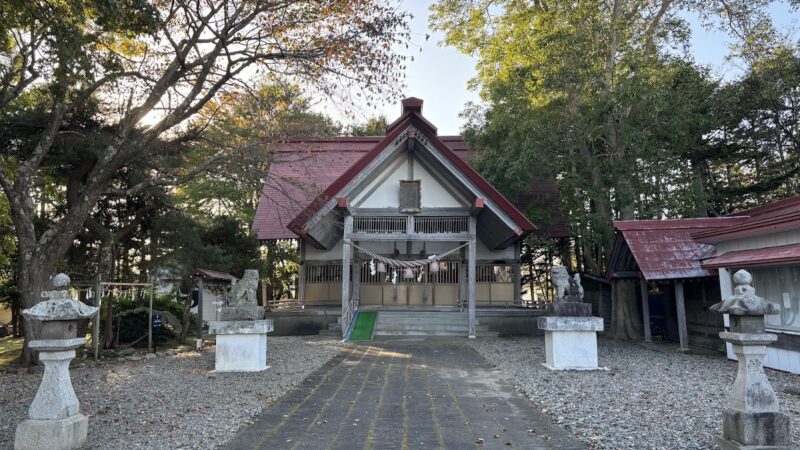
The shrine grounds are vast, covering approximately 3,000 tsubo, offering a spacious and open atmosphere typical of Hokkaido. The shrine building is constructed in the traditional Shinmei-zukuri style, possessing a simple yet dignified appearance.
Deities Enshrined at Maeda Shrine
Two deities are enshrined at Maeda Shrine.
Amaterasu Omikami
Amaterasu Omikami, known as the supreme deity of Japan, is the ancestral deity of the Imperial Family and revered as the tutelary deity of all Japanese people. She is a deified representation of the sun and is believed to bestow the divine virtues of life, abundant harvests, and national peace.
Maeda Toshiie
This shrine enshrines Maeda Toshiie, a Sengoku period warlord who laid the foundation for the Kaga domain of one million koku. Maeda Toshiie was a renowned general who served Oda Nobunaga and Toyotomi Hideyoshi, and is known as the first lord of the Kaga domain.
It is extremely rare for a shrine in Hokkaido to enshrine a Sengoku period warlord, making this a significant characteristic of Maeda Shrine. This is deeply connected to the history of its founding, which will be discussed later.
History and Founding of Maeda Shrine
The history of Maeda Shrine is closely linked to the development of Hokkaido during the Meiji era.
Preparations for Founding in 1886
In 1886, promoting the settlement of immigrants in Hokkaido, a newly developed area, was a crucial task. In the Maeda district, a plan was made to construct a small school building using timber transported from Otani, providing education to the children of immigrants, while simultaneously establishing a shrine to foster a sense of local identity among the immigrants.
By simultaneously providing a place of education and worship, it served as spiritual support for the immigrants as they left their hometowns and settled in their new land.
Formal Founding in 1887
In May 1887, Saburo Nishida and three others applied for permission to establish the shrine, and received approval on June 11th of the same year. A significant feature of Maeda Shrine is that it received a divided spirit from Oyama Shrine in Kanazawa City, Ishikawa Prefecture, at this time.
Oyama Shrine is dedicated to Lord Toshiie Maeda and his wife, Lady Omatsu, and was a spiritual anchor for immigrants from Kaga. It is believed that inviting the guardian deity of their hometown to a new land alleviated the anxieties of the settlers and increased their motivation for pioneering.
Ranked as a Village Shrine in 1891
In 1891 (Meiji 24), Maeda Shrine was ranked as a village shrine. This indicates that the shrine was officially recognized in the local community and played an important role.
The ranking as a village shrine is also evidence that the development of the Maeda area was progressing smoothly and that a community was being established.
Maeda Shrine Grounds and Highlights
The grounds of Maeda Shrine offer various points of interest that convey the pioneering spirit of the Meiji era.
Shrine Name Marker and Torii Gate
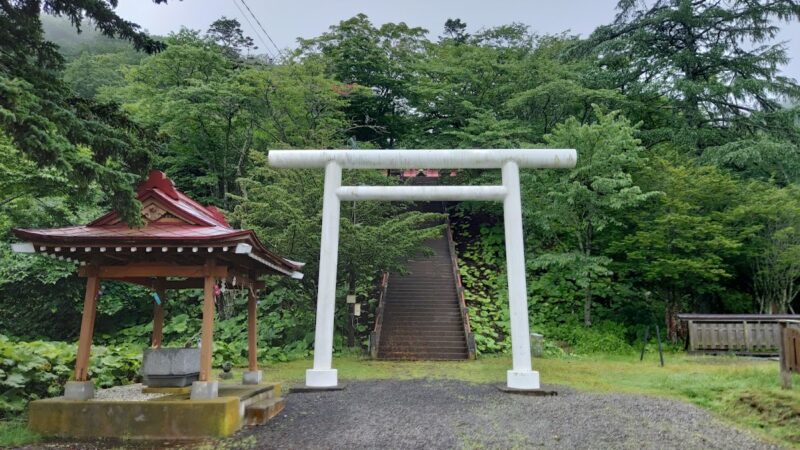
A shrine name marker stands a short distance from National Route 276. Further along, a magnificent torii gate appears. Walking along the path from the shrine name marker to the torii gate allows you to shift your mindset from everyday life to a sacred space.
Water Basin and Historical Record
The water basin displays the history of the shrine, allowing visitors to learn about the history of Maeda Shrine before praying. While purifying your body and mind at the water basin, consider reflecting on the hardships endured by the pioneers who settled this land.
Shrine Building
The Shinto shrine building, built in the Shinmei-zukuri style, possesses a simple yet dignified appearance. Surrounded by a dense forest, the shrine creates a sacred space within the rural landscape.
Monument to the Keibukan
Within the shrine grounds remains a stone monument called the “Keibukan Monument.” This commemorates the “Keibukan,” a kendo dojo built in 1886 by settlers from Kaga for the training of young men.
The Keibukan was destroyed by a typhoon in September 1944, but the monument remains, conveying the dedication to education during the pioneering era. This is a valuable historical site where you can feel the aspirations of our ancestors who sought to cultivate the mental strength necessary for life in a new land by training their minds and bodies through martial arts.
Shrine Grounds Surrounded by a Dense Grove
The most distinctive feature of Maeda Shrine is its grounds, surrounded by a dense grove of trees, in stark contrast to the surrounding rural landscape. Under the vast Hokkaido sky, the sight of only the area around the shrine enveloped in deep green creates a special atmosphere befitting a sacred place.
How to Access Maeda Shrine
Maeda Shrine is located on a hill approximately 300 meters south of National Route 276 in the Maeda district of Kyowa Town.
Access by Public Transportation
Using Chuo Bus
- Take a bus bound for Iwanai from Sapporo or Otaru
- Get off at the “Maeda Agricultural Cooperative” bus stop
- Approximately 20 minutes on foot from the bus stop
While access by public transportation is somewhat inconvenient, the walking route from the bus stop allows you to enjoy the rural scenery typical of Hokkaido.
Access by Car
Visiting by private car is the most convenient option. From National Route 276, enter the Maeda area and follow the signs to the shrine. There is parking available for visitors on the shrine grounds.
Estimated Travel Time from Major Cities
- From Sapporo: Approximately 2 hours
- From Otaru: Approximately 1 hour 15 minutes
- From Niseko: Approximately 30 minutes
Maeda Shrine’s Annual Festival and Events
Annual Festival (September 8th)
The Maeda Shrine’s annual festival is held every year on September 8th. This is the most important festival at the shrine, where gratitude is offered to the enshrined deity and prayers are offered for the peace and prosperity of the region and a bountiful harvest.
Local parishioners and devotees gather, and traditional Shinto rituals are solemnly performed. The tradition of this festival, which has continued since the pioneering era, plays an important role in strengthening the bonds of the local community even today.
Other Annual Events
In addition to the annual festival, Maeda Shrine holds various Shinto rituals throughout the year, including the New Year’s Day festival and the spring and autumn festivals. For detailed schedules, please contact the Hokkaido Shrine Association or the shrine directly.
Maeda Shrine and the Hokkaido Shrine Association
Maeda Shrine belongs to the Shiribeshi branch of the Hokkaido Shrine Association. The Hokkaido Shrine Association is an organization that oversees shrines throughout Hokkaido, responsible for shrine maintenance, training of Shinto priests, and promotion of Shinto culture.
The Hokkaido Shrine Association’s website publishes information on Maeda Shrine and other shrines throughout Hokkaido, which is useful for gathering information before visiting.
Points to Note When Visiting Maeda Shrine
About Unmanned Shrines
Maeda Shrine is basically an unmanned shrine. There are no permanent Shinto priests, and daily management is carried out by parishioners and local residents. Therefore, services such as the issuance of Goshuin (shrine stamps) and prayers may not be available.
Those wishing to visit are advised to contact the Hokkaido Shrine Association or the contact information provided in advance.
Attire and Manners for Visiting the Shrine
Maeda Shrine is located on a hill in a rural area, so we recommend wearing comfortable shoes. The ground can be particularly slippery during rainy weather and winter.
Please observe basic shrine etiquette (two bows, two claps, one bow, etc.) and pray quietly. The shrine grounds are a sacred place carefully protected by the local community.
Photography
Photography is generally permitted on the shrine grounds, but please refrain from taking pictures inside the shrine buildings or in sacred areas. Also, please be considerate of other visitors.
Attractions in the Maeda Area and Surroundings
When visiting Maeda Shrine, why not explore other tourist spots in Kyowa Town?
Nature of Kyowa Town
Kyowa Town is located in the inland part of the Shiribeshi region and is blessed with abundant nature. Agriculture is thriving, and it is particularly known for its production of potatoes and melons.
Nearby Shrines
Besides Maeda Shrine, Kyowa Town has other shrines such as Kamiegawa Shrine (Hatsusoku area). Visiting these shrines, which offer a glimpse into Hokkaido’s pioneering history, is one of the enjoyable activities.
Access to Niseko and Shakotan
Kyowa Town offers good access to popular tourist destinations like Niseko and the Shakotan Peninsula. You can enjoy sightseeing in the surrounding area in conjunction with a visit to Maeda Shrine.
The History of Pioneer Told by Maeda Shrine
Maeda Shrine is not merely a place of worship; it is also a valuable cultural asset that conveys the history of Hokkaido’s pioneering.
Kaga Immigrants and Hokkaido Development
During the Meiji era, many immigrants gathered from all over Japan for the development of Hokkaido. The Maeda area, in particular, had many immigrants from the Kaga region of Ishikawa Prefecture, and they enshrined Lord Maeda Toshiie, the guardian deity of their homeland, in their new land.
This history tells the story of how these immigrants faced the harsh pioneering life with their longing for their homeland in their hearts.
The Fusion of Education and Faith
The fact that a small school building was constructed and a kendo dojo, “Keibukan,” was established simultaneously with the founding of Maeda Shrine demonstrates the wisdom of our ancestors who sought to build a community based on both education and faith.
Even today, this spirit is carried on as the foundation of the local community.
The Present and Future of Maeda Shrine
Currently, Maeda Shrine is supported by 331 parishioners and approximately 1,000 worshippers. Although it operates as an unmanned shrine, it is carefully preserved by the local community.
Maintaining a shrine is a major challenge in rural areas facing population decline and depopulation. However, the historical value and cultural significance of Maeda Shrine are assets that should be passed on to many people in the future.
Each visitor learning about the shrine’s history and understanding its value will be the first step in passing on Maeda Shrine to future generations.
Summary
Maeda Shrine in Kyowa-cho, Iwanai-gun, Hokkaido, is a rare shrine nationwide dedicated to Lord Maeda Toshiie, the lord of the Kaga Domain. The shrine grounds, which convey the pioneering spirit of the Meiji era, contain valuable historical sites such as the Keibukan Monument.
The shrine enshrines Amaterasu Omikami and Lord Maeda Toshiie, and its annual festival is held on September 8th. Although it is an unmanned shrine, it belongs to the Shiribeshi branch of the Hokkaido Shrine Association and is carefully preserved by the local community.
While access by public transport is somewhat inconvenient, it is about a 20-minute walk from the Chuo Bus “Maeda Nokyo-mae” bus stop, or about a 2-hour drive from Sapporo.
Why not visit the tranquil grounds, surrounded by lush forests amidst a rural landscape, and reflect on the history of Hokkaido’s development? Maeda Shrine, a valuable cultural heritage connecting the past, present, and future, will undoubtedly continue to be cherished by many people.