Complete Guide to Iwamizawa Shrine | Thorough Explanation of History, Goshuin (Shrine Seals), Annual Festival, and Exorcism Information
What is Iwamizawa Shrine?
Iwamizawa Shrine is a shrine located at 1-3, 12-jo Nishi, Iwamizawa City, Hokkaido. It is a prestigious shrine formerly known as a prefectural shrine and the Ichinomiya (first-ranked shrine) of Ishikari (and Sorachi). Founded during the Hokkaido pioneering period of the Meiji era, it has been cherished by the citizens of Iwamizawa for nearly 140 years as a guardian deity of the region.
The vast grounds are surrounded by nature, making it a healing spot where visitors can enjoy the beautiful scenery of the four seasons. It serves as a place of relaxation not only for worshippers but also for local residents. Despite being in the city center, the tranquil grounds provide an ideal environment for peaceful worship.
History and Founding of Iwamizawa Shrine
Founding during the Pioneering Period (Meiji Era)
The history of Iwamizawa Shrine is deeply intertwined with the history of Hokkaido’s development. From 1884 (Meiji 17), 277 households of former samurai who had returned to farming from 12 prefectures, including Yamaguchi and Tottori, migrated to Iwamizawa. These former samurai who returned to farming were people who, after the Meiji Restoration, left their samurai status and engaged in agriculture.
In August 1885 (Meiji 18), a Shinto festival was held by villagers, including these migrants, marking the beginning of the Iwamizawa Shrine’s founding. The establishment of a shrine in Sorachi District, Ishikari Province, Hokkaido, held significant meaning as a spiritual anchor for the pioneers and as the center of the local community.
Changes in the Shrine Building
In 1886 (Meiji 19), a small shrine was built, and the shrine began to take shape. However, in 1896 (Meiji 29), a great fire struck Iwamizawa, destroying the shrine building.
The following year, in 1897 (Meiji 30), the shrine received a donation of land at its current location, constructed its second shrine building, and relocated the deity. This location remains the current site of Iwamizawa Shrine.
In 1932 (Showa 7), it was elevated to the rank of a prefectural shrine, and its fourth shrine building was constructed. This elevation to prefectural shrine status was proof that Iwamizawa Shrine was recognized as an important shrine in the region.
To the Present Day
Even after the war, it continued to attract worshippers as the guardian deity of the region, and continues to function as a spiritual pillar for the citizens of Iwamizawa to this day. The shrine grounds are designated by Hokkaido Prefecture as the “Iwamizawa Shrine Environmental Green Space Protection Area,” and consideration is given to the preservation of the natural environment.
Furthermore, the “Iwamizawa Monument,” commemorating the founding of the village, stands on the grounds, serving as a valuable cultural asset that conveys the history of Iwamizawa City to the present day.
Deities and Benefits
Main Deities
Iwamizawa Shrine enshrines two deities.
Amaterasu Omikami
The supreme deity in Japanese mythology and the ancestral deity of the Imperial family, she is the sun goddess. Known as the principal deity of Ise Grand Shrine, she is believed to bring blessings of national peace and security, abundant harvests, and good fortune.
Onamuchi no Kami
Another name for Okuninushi no Mikoto, she is the principal deity of Izumo Grand Shrine. Known as the god of nation-building, she is believed to bring blessings of matchmaking, business prosperity, family safety, and healing from illness.
Expected Benefits
- Good Fortune and Prosperity: For new beginnings and life milestones
- Family Safety: For the health and peaceful life of family members
- Business Prosperity: For those wishing for the development and prosperity of their business
- Matchmaking: For those seeking good relationships and wishing for smooth interpersonal relationships
- Protection from Misfortune: Protection from misfortune during unlucky years in life
- Abundant Harvest: For the prosperity of agricultural and food-related businesses
Highlights of the Shrine Grounds
Shrine Building
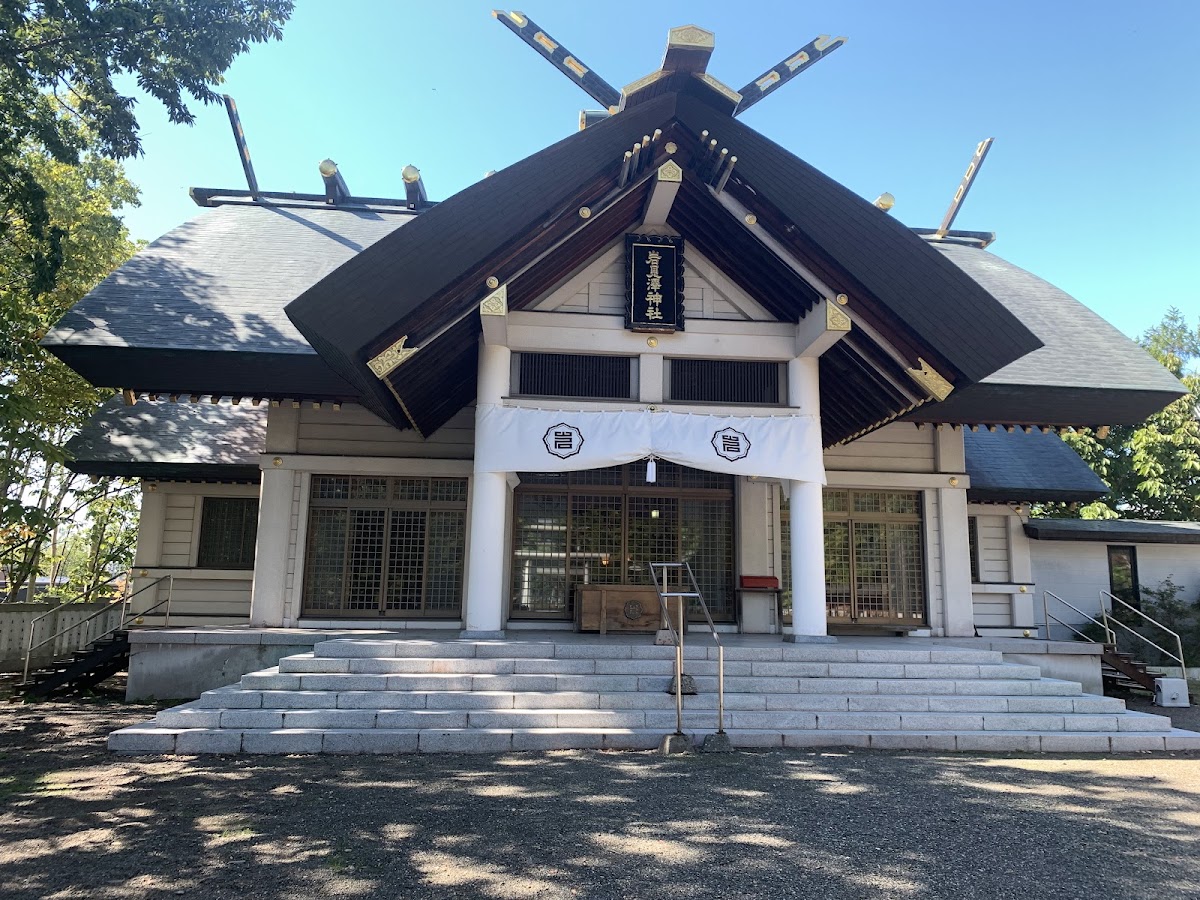
The current shrine building is the fourth generation, constructed in the early Showa period, and features traditional shrine architecture. Its dignified presence reflects its status as a prefectural shrine.
Environmental Green Space Protection Area
The shrine grounds are designated as an “Environmental Green Space Protection Area” by Hokkaido Prefecture, preserving its rich natural environment. You can enjoy the beautiful scenery of each season: fresh greenery in spring, deep green in summer, vibrant autumn leaves, and snowy landscapes in winter.
Iwamizawa Monument Commemorating the Founding of Iwamizawa
Within the shrine grounds stands the “Iwamizawa Monument,” commemorating the founding of Iwamizawa. This valuable stone monument conveys the history of development during the Meiji era and is a historical site of Iwamizawa City.
Sacred Treasures Discarded from Ise Grand Shrine
Sacred treasures that were discarded from Ise Grand Shrine during the 59th Shikinen Sengu (periodic rebuilding of the shrine) are enshrined at Iwamizawa Shrine. You can have the opportunity to view precious sacred treasures such as the Azusa no Oyumi (a sacred bow), the sacred mirror, and the leather quiver.
Annual Events and Festivals
Grand Festival (September 15th)
The annual festival of Iwamizawa Shrine is held on September 15th, and the grand festival is celebrated on this day every year. The annual festival is the most important festival for the shrine, a lively event involving the entire community.
During the festival, children can be seen carrying the portable shrine, strengthening the bonds of the local community. Stalls line the streets, and the area is bustling with many worshippers.
New Year’s Day Festival (January 1st)
The New Year’s Day Festival is held at midnight on January 1st, marking the arrival of the new year. As the first festival of the new year, it is an important Shinto ritual praying for peace and prosperity throughout the year. Many first-time visitors come to pray for happiness in the new year.
Exorcism Ceremony (January & February)
The exorcism ceremony for the 2026 fiscal year will be held on the following dates:
- January 10th (Sat)
- January 11th (Sun)
- January 12th (Mon/Holiday)
- February 3rd (Tue) Setsubun Festival
No reservation is required for the above four days. Prayers will be offered every 30 minutes from 10:00 AM to 4:00 PM. Those entering their unlucky year can receive the exorcism ceremony during this period.
The unlucky years are considered to be 25, 42, and 61 for men, and 19, 33, and 37 for women. The years before and after these are also considered unlucky years and require caution.
Dondo-yaki Festival (January 15th)
The Dondo-yaki Festival, held annually on January 15th, is a traditional event where New Year’s decorations, talismans, and amulets are burned. We send off the New Year’s deity with flames and pray for good health and protection from illness throughout the year.
Setsubun Festival (February 3rd)
This festival is held on Setsubun, the day before the beginning of spring. Through events such as bean-throwing, evil spirits are driven away and good fortune is invited in. Many worshippers visit as exorcism is also performed at the same time.
First Day Visit (1st of Every Month)
The “First Day Visit,” held on the 1st of each month, is a custom of visiting the shrine at the beginning of a new month to pray for peace throughout the month. Iwamizawa Shrine is characterized by its spacious grounds and beautiful nature, providing an ideal environment for quiet worship.
Visiting the shrine at the beginning of the month provides an opportunity to renew one’s spirit and express gratitude for daily life.
Goshuin (Shrine Seal) Information
About the Issuance of Goshuin
Iwamizawa Shrine offers Goshuin (shrine seals). A Goshuin (temple/shrine stamp) serves as proof of your visit and is an important symbol of your connection with the shrine.
Those wishing to receive a Goshuin should inquire at the shrine office. You can bring your Goshuincho (stamp book) or receive a pre-printed Goshuin.
Features of the Goshuin
The Goshuin of Iwamizawa Shrine features the shrine’s name and the date of visit written in ink, followed by a red stamp. Its simple yet dignified design makes it popular among Goshuin collectors.
Goshuin Issuance Hours
The shrine office is open from 9:00 AM to 5:00 PM. Goshuin can be obtained during these hours.
Etiquette and Manners for Visiting a Shrine
Basic Etiquette for Visiting a Shrine
- Bow before passing through the torii gate: This is a sign of respect before entering the sacred area.
- Walk along the edge of the path: The center is considered the path of the gods.
- Purify yourself at the water basin:
- Hold the ladle in your right hand and purify your left hand.
- Switch the ladle to your left hand and purify your right hand.
- Switch the ladle back to your right hand, receive water in your left hand, and rinse your mouth.
- Finally, stand the ladle upright to purify the handle.
- Worship at the main hall:
- Place your offering in the offering box.
- Ring the bell.
- Bow twice, clap twice, and bow once (bowing deeply twice, clapping twice, bowing deeply once).
- Bow once after leaving the torii gate
Attire for Visiting a Shrine
Everyday clothes are acceptable, but please dress neatly. If you are receiving a prayer, it is preferable to wear attire that is not too casual. ## Access and Parking Information
Location
1-3, 12-jo Nishi 1-chome, Iwamizawa City, Hokkaido 068-0032
Access by Train
Approximately 15 minutes on foot from JR Iwamizawa Station. Iwamizawa Station is a major station where the Hakodate Main Line and Muroran Main Line intersect. It is approximately 30 minutes from Sapporo by limited express train and approximately 50 minutes by local train.
From the station, head west, passing through the city center towards 12-jo Street. The roads are laid out in a grid pattern, making it a relatively easy route to follow.
Access by Car
- From Sapporo: Approximately 40 minutes via National Route 12 or the Hokkaido Expressway
- Using the Hokkaido Expressway: Approximately 10 minutes from the Iwamizawa Interchange
Parking
There is a parking lot for visitors on the temple grounds. It is free to use, but congestion is expected during events such as the annual festival, so it is recommended to visit with plenty of time to spare. ### Nearby Tourist Attractions
Iwamizawa City also has other points of interest:
- Iwamizawa Station: A beautiful station building featuring a glass pyramid
- Iwamizawa Park: A comprehensive park with a rose garden and amusement park on a vast site
- Iwamizawa Local History and Science Museum: A facility where you can learn about local history and science
Shrine Office and Contact Information
Opening Hours
9:00 AM – 5:00 PM
Phone Number
0126-22-0180
About Prayers
Those wishing to receive prayers are advised to inquire by phone in advance. Prayers are accepted at any time, even outside of the exorcism period.
Types of Prayers Offered:
- Exorcism/Protection from Evil Spirits
- Family Safety
- Business Prosperity
- Traffic Safety
- Prayer for Success in Exams
- Prayer for Safe Childbirth
- First Shrine Visit for a Newborn
- Shichi-Go-San (7-5-3 Festival)
- Other Various Prayers
The Charm of Iwamizawa Shrine
A Healing Space Surrounded by Nature
One of the greatest charms of Iwamizawa Shrine is its environment surrounded by abundant nature. Despite being located in the city, stepping onto the shrine grounds envelops you in tranquility, allowing you to forget the hustle and bustle of the city.
The scenery of each season captivates visitors and is a popular spot for photography. It shows a different face with each season: the fresh green of spring, the deep green of summer, the autumn leaves, and the snowy landscape of winter.
The Center of the Local Community
With a history of nearly 140 years, Iwamizawa Shrine is a spiritual anchor for local residents and a central presence in the community. Annual events, including the Grand Festival, provide a place for intergenerational exchange.
The sight of children carrying the portable shrine holds significant meaning in terms of the transmission of traditional culture.
Conveying the History of Hokkaido’s Development
Founded by samurai who returned to farming during the Meiji era, the shrine’s history is intertwined with the history of Hokkaido’s development. The shrine also houses cultural artifacts of high historical value, such as the “Iwamizawa Memorial Monument” and sacred treasures removed from Ise Grand Shrine.
Visiting Iwamizawa Shrine is an opportunity to learn about Hokkaido’s history.
Easy Access
Its convenient location, within walking distance of Iwamizawa Station, is another attractive feature. It’s possible to visit on a day trip from Sapporo, making it a great addition to sightseeing.
Recommended Time to Visit
New Year’s Visit (January 1st-3rd)
New Year’s visits are the busiest time of year. The shrine is especially crowded with worshippers celebrating the New Year at midnight on January 1st, when the New Year’s Day festival is held.
Period for Exorcising Evil Spirits (January 10th-12th, February 3rd)
Those entering their unlucky year are advised to undergo an exorcism during this period. No reservation is required, and prayers are offered every 30 minutes, allowing you to visit at your convenience.
Annual Grand Festival (Around September 15th)
The annual grand festival, the most important festival of Iwamizawa Shrine, is the time when you can best experience the atmosphere of the shrine. Enjoy the lively atmosphere of the festival, including the portable shrines and stalls.
First Day of the Month Visit (1st of each month)
Visiting the shrine during the quiet hours at the beginning of the month is ideal for calming your mind. Recommended for those who want to avoid crowds and visit in peace.
Autumn Foliage Season (Mid-October to Early November)
Autumn, when the trees on the shrine grounds change color, is one of the most beautiful seasons. Visiting the shrine while enjoying the autumn leaves will be a refreshing experience.
Snowy Season (December to March)
The snowy scenery unique to Hokkaido is a highlight. The tranquil shrine grounds covered in snow create an even more sacred atmosphere.
Summary
Iwamizawa Shrine is a historic shrine founded during the Meiji era’s Hokkaido development period, and holds a high status as a former prefectural shrine and Ishikari Ichinomiya (first shrine of Ishikari). It enshrines Amaterasu Omikami and Ōkuninushi-no-kami as its deities, and is believed to offer various blessings such as good fortune, family safety, business prosperity, and matchmaking.
The vast grounds are designated as an environmental green space protection area, making it a healing spot where you can enjoy the beautiful nature of each season. Various events are held throughout the year, including the annual festival on September 15th, the New Year’s Day festival, exorcism, Dondo-yaki (bonfire festival), and Setsubun festival.
Its convenient location, approximately a 15-minute walk from JR Iwamizawa Station, is also appealing, making it possible to visit on a day trip from Sapporo. Goshuin (temple/shrine stamps) are also available, making it a great place for those collecting them.
Iwamizawa Shrine has been cherished by the citizens of Iwamizawa for nearly 140 years as the guardian deity of the region. When visiting Hokkaido, why not pay a visit?
Frequently Asked Questions (FAQ)
Q1. What are the visiting hours for Iwamizawa Shrine?
A1. While entry to the shrine grounds is generally free, the shrine office is open from 9:00 AM to 5:00 PM. If you wish to receive a goshuin or receive prayers, it is recommended to visit within these hours.
Q2. Is a reservation required for exorcism/warding off evil?
A2. Reservations are not required during the exorcism/warding off evil period on January 10th, 11th, 12th, and February 3rd. Prayers are performed every 30 minutes from 10:00 AM to 4:00 PM. If you wish to have an exorcism performed on a day other than the designated day, we recommend contacting us in advance by phone (0126-22-0180).
Q3. Is there parking available?
A3. Yes, there is a free parking lot for visitors on the shrine grounds. However, congestion is expected during events such as the annual festival, so we recommend visiting with plenty of time to spare or using public transportation.
Q4. Can I get a Goshuin (shrine stamp)?
A4. Yes, Goshuin are available at the shrine office. You can bring your own Goshuincho (stamp book) or receive a pre-printed Goshuin. The hours for receiving Goshuin are from 9:00 AM to 5:00 PM.
Q5. How do I get to Iwamizawa Shrine from Sapporo?
A5. From JR Sapporo Station, take the Hakodate Main Line to Iwamizawa Station (approximately 30 minutes by express train), then it’s about a 15-minute walk from Iwamizawa Station. By car, it takes about 40 minutes via National Route 12 or the Hokkaido Expressway, and about 10 minutes from the Iwamizawa Interchange.
Q6. What is the First Day Shrine Visit?
A6. The First Day Shrine Visit is a custom of visiting a shrine on the 1st of each month to pray for peace in the new month. Many people practice this as an opportunity to compose themselves at the beginning of the month and to express gratitude for their daily lives. Iwamizawa Shrine is an ideal shrine for the First Day Shrine Visit due to its rich natural environment and tranquil surroundings.
Q7. When is the annual festival held?
A7. The annual festival of Iwamizawa Shrine is held annually on September 15th. The festival is centered around this day, and you can enjoy a lively atmosphere with portable shrines and stalls.
Q8. Can I have a Shichi-Go-San prayer ceremony?
A8. Yes, we accept Shichi-Go-San prayer ceremonies. We recommend contacting us in advance by phone (0126-22-0180) to discuss the date and time. Generally, October to November is the season for Shichi-Go-San (a traditional Japanese rite of passage for children), but we can accommodate other times of the year as well.
Q9. Who are the deities enshrined at Iwamizawa Shrine?
A9. The shrine enshrines two deities: Amaterasu Omikami and Onamuchi no Kami. Amaterasu Omikami is the supreme deity of Japanese mythology and the goddess of the sun, while Onamuchi no Kami is another name for Okuninushi no Mikoto and is known as the god of nation-building.
Q10. Are there any precautions to take when visiting in winter?
A10. Since there is snow in Hokkaido during winter, we recommend wearing non-slip shoes. Also, please dress warmly when visiting. The shrine grounds are cleared of snow, but please be careful of your footing when visiting. Visiting amidst a snowy landscape has a sacred atmosphere and is highly recommended.