Kashima Hachiman Shrine (Ibaraki Prefecture) Complete Guide: History, Goshuin (Shrine Seals), Access, and Highlights Explained in Detail
Kashima Hachiman Shrine, located in Omitama City, Ibaraki Prefecture, is a venerable shrine with a history of over 1200 years. Formerly known as “Baba no Miya,” it has been revered as the guardian shrine of the region. This article provides a detailed explanation of everything you need to know before visiting, from the history of Kashima Hachiman Shrine to information on its goshuin (shrine seals), access methods, and highlights within the shrine grounds.
What is Kashima Hachiman Shrine?
Kashima Hachiman Shrine is a shrine located in Shimobaba, Omitama City, Ibaraki Prefecture. It is a rare shrine that combines the worship of both Kashima Shrine and Hachiman Shrine. While its official name is sometimes “Kashima Shrine,” it is affectionately known as “Kashima Hachiman Shrine” in the local area.
Basic Information about the Shrine
Location: Shimobaba, Omitama City, Ibaraki Prefecture
Deities Enshrined: Takemikazuchi-no-Okami, Hondawake-no-Mikoto
Founded: 807 AD (Daido 2)
Former Shrine Rank: Gosha (Village Shrine)
Annual Festival Days: Multiple festivals are held throughout the year
History and Origins of Kashima Hachiman Shrine
Founding Legend
The history of Kashima Hachiman Shrine dates back to the early Heian period. According to legend, in 807 AD (Daido 2), the great deity of Kashima traveled from Lake Kasumigaura up the Sonobe River to this area and took up residence here. This mythical legend indicates a deep connection with Kashima Jingu Shrine, the Ichinomiya (first-ranked shrine) of Hitachi Province.
History as “Baba-no-Miya”
Kashima Hachiman Shrine, long known by the nickname “Baba-no-Miya,” has played an important role as the guardian shrine of the surrounding area. In particular, as the great guardian shrine of the twelve villages of Ogawa, it was revered by people from a wide area. The place name “Baba” is said to originate from the fact that horse training was once conducted in this area.
Merger of Kashima Shrine and Hachiman Shrine
The current name “Kashima Hachiman Shrine” originates from the merging of Kashima Shrine and Hachiman Shrine. By enshrining both Takemikazuchi-no-Okami, known as a god of war, and Hachiman-no-Kami, Homutawake-no-Mikoto (Emperor Ojin), the shrine gained a more powerful character as a guardian deity. There are various theories about when this merging took place, but it is thought to reflect the changes in local beliefs.
From the Edo Period to the Present
During the Edo period, the shrine received the patronage of influential local figures, and the shrine buildings were repaired and the grounds were maintained. During the Meiji era’s reform of the shrine system, it was designated a local shrine, officially recognizing its importance in the region. Even today, it remains a center of faith for local residents and is carefully preserved as a culturally valuable historical asset.
Deities and Divine Virtues
Takemikazuchi-no-Okami
Takemikazuchi-no-Okami, the principal deity of Kashima Shrine, is known as the strongest warrior god in Japanese mythology. He played a key role in the myth of the transfer of the land and is said to have contributed to the pacification of Japan.
Divine Virtues:
- Long-lasting military fortune
- Improved luck in competitions
- Protection from evil and disaster
- Traffic safety
- Improved decision-making ability
Hondawake-no-Mikoto
This is Hachiman, the deified form of Emperor Ojin, the 15th emperor. He is enshrined at Hachiman shrines throughout Japan and is revered not only as a warrior god but also as a god of culture and industry.
Divine Blessings:
- Long-lasting military fortune
- Protection of the nation
- Industrial development
- Prosperity of descendants
- Academic success
Highlights of the Shrine Grounds
Long Approach
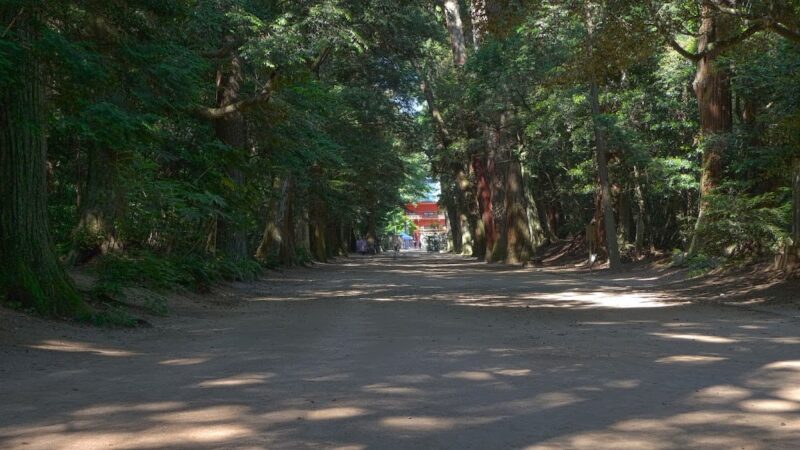
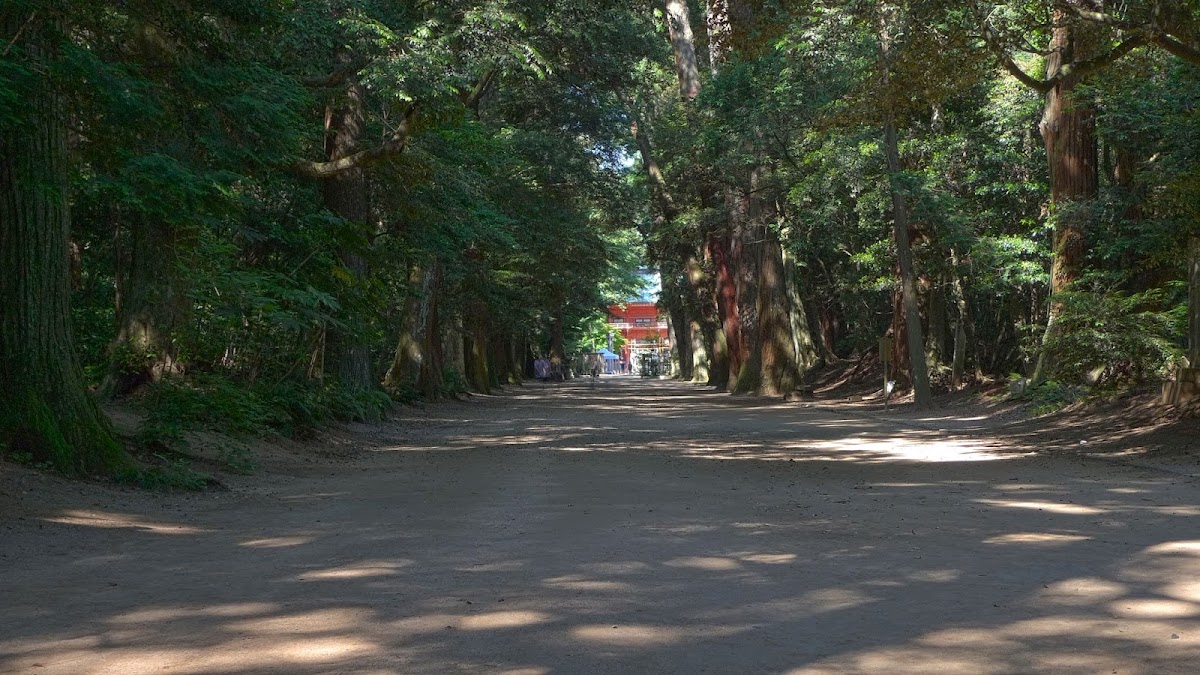
One of the most striking features of Kashima Hachiman Shrine is its impressively long approach. The path from the torii gate to the main shrine is enveloped in a tranquil atmosphere, allowing you to escape the hustle and bustle of the city and find peace of mind. Walking along the tree-lined path naturally prepares you for worship.
Ceramic Komainu (Guardian Lion-Dogs)
Welcoming visitors within the shrine grounds are the unusual ceramic komainu. Unlike the typical stone komainu, these ceramic komainu are rare even within Ibaraki Prefecture. Their unique texture and expressions attract the attention of many visitors. Their ceramic construction reveals the high level of craftsmanship from the era in which they were created.
Shrine Building
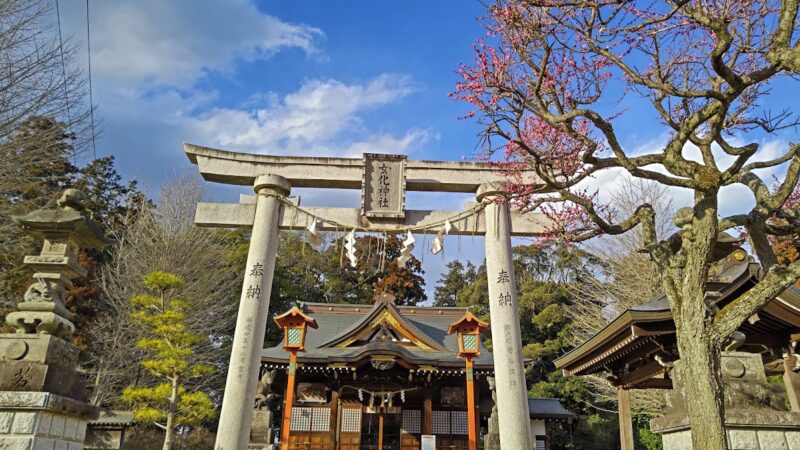
The shrine building, said to have been founded in 807 AD (Daido 2), possesses an appearance that evokes a long history. Despite undergoing several restorations, it maintains the traditional style of shrine architecture, and its solemn atmosphere deeply impresses visitors.
Natural Environment of the Shrine Grounds
The shrine grounds are surrounded by abundant nature, allowing visitors to enjoy the changing scenery of the four seasons. Fresh greenery in spring, deep green in summer, vibrant autumn leaves, and a tranquil landscape in winter—each season offers a different charm.
Goshuin (Shrine Seal) Information
Regarding the Receipt of Goshuin
Regarding the receipt of Goshuin at Kashima Hachiman Shrine, prior confirmation is necessary. In Omitama City, Soga Shrine sometimes manages the Goshuin for multiple shrines. If you wish to receive a Goshuin from Kashima Hachiman Shrine, please note the following points.
Important Notes:
- It is recommended to contact the shrine in advance, as it may be unattended.
- It may be possible to receive the goshuin (temple/shrine stamp) at the nearby Suga Shrine.
- Receiving hours are usually from 9:00 AM to around 5:00 PM.
- The offering fee is usually around 300 to 500 yen.
Features of the Goshuin
The goshuin at Kashima Hachiman Shrine features the shrine’s name and date of visit written in ink, and stamped with the shrine’s seal. This simple yet dignified goshuin is a valuable addition to any goshuin collection.
Access
Access by Car
From the Joban Expressway:
- Approximately 15 minutes from the Ishioka-Omitama Smart Interchange
- Approximately 20 minutes from the Chiyoda-Ishioka Interchange
Parking: There is parking space on the shrine grounds or nearby, but spaces are limited, so caution is advised during busy times.
Access by Public Transportation
Nearest Station:
- Approximately 20 minutes by taxi from JR Joban Line “Ishioka Station”
- Approximately 15 minutes by taxi from JR Joban Line “Hatori Station”
Bus: There is a community bus that circulates within Omitama City, but the number of services is limited, so it is recommended to check the timetable in advance.
Address and Navigation
Address: Shimobaba, Omitama City, Ibaraki Prefecture
If using car navigation, please search for “Kashima Shrine, Shimobaba, Omitama City” or “Kashima Hachiman Shrine.” There are few prominent landmarks in the surrounding area, so it is recommended to check a map beforehand.
Etiquette and Manners for Visiting a Shrine
Basic Etiquette for Visiting a Shrine
- Bow Before Passing Through the Torii Gate
- Show respect before entering the sacred area.
- Walk along the side of the path, as the center is considered the path of the gods.
- Purify at the Water Basin
- Purify your left hand, then your right hand.
- Rinse your mouth, and finally purify the handle of the ladle.
- Worship at the Main Hall
- The basic etiquette is two bows, two claps, and one bow.
- Quietly place your offering in the offering box, and ring the bell if there is one.
- Bow deeply twice.
- Clap your hands twice.
- Pray with all your heart.
- Finally, bow deeply once.
Precautions During Your Visit
- Maintain silence and refrain from loud conversations.
- Take photographs only in designated areas.
- Check in advance regarding bringing pets.
- Please refrain from touching the plants and buildings on the shrine grounds.
- Please take your trash with you.
Annual Events and Festivals
Kashima Hachiman Shrine holds various festivals and events throughout the year. Traditional festivals, in which local people participate, demonstrate the deep connection between the shrine and the local community.
Main Annual Events
New Year’s Day Festival (January 1st)
This festival celebrates the New Year and prays for peace throughout the year. It is bustling with many first-time visitors.
Grand Festival (Autumn)
This is the shrine’s most important festival, and may include a procession of portable shrines and dedication ceremonies.
Monthly Festival
This festival is held regularly every month, praying for the maintenance of the shrine and the peace of the community.
Nearby Tourist Attractions
Soga Shrine
Soga Shrine, located in Ogawa, Omitama City, is a historical shrine founded in 1529. It is also known for offering Goshuin (temple/shrine stamps) from multiple shrines within Omitama City. Visiting it along with Kashima Hachiman Shrine is highly recommended.
Hyakuri Shrine
This shrine, adjacent to the Japan Air Self-Defense Force Hyakuri Air Base, is known as the guardian deity of aviation safety. It’s a popular spot for aviation enthusiasts.
Lake Kasumigaura
This lake, the second largest in Japan, offers opportunities for cycling, birdwatching, and lakeside walks. Lake Kasumigaura, which appears in the founding legend of Kashima Hachiman Shrine, is a historically significant location.
Ibaraki Airport
Located in Omitama City, Ibaraki Airport is a spot where you can enjoy watching aircraft take off and land from its observation deck. The airport also has restaurants and shops where you can purchase Ibaraki’s local products.
Cultural Value of Kashima Hachiman Shrine
The main hall of Kashima Hachiman Shrine is recognized as a cultural property of Ibaraki Prefecture. It retains the characteristics of shrine architecture from the Edo to Meiji periods and is preserved as an important building that conveys the history of the region.
Architectural Features
The shrine building follows the traditional style of Shinto shrine architecture, showcasing elements that demonstrate the high level of craftsmanship of the time, such as the hip-and-gable roof and intricate carvings. Its beauty is maintained through regular restoration work.
Importance in Local History
Kashima Hachiman Shrine is an indispensable part of the history of Omitama City. Its history as the “Great Guardian Shrine of the Twelve Villages of Ogawa,” attracting widespread devotion, provides valuable clues to understanding the social structure of this region from the medieval to the early modern period.
Visiting Time and Crowds
Standard Visiting Time
Please allow the following times for visiting Kashima Hachiman Shrine:
- Normal Visit: 15-30 minutes
- Leisurely Strolling the Grounds: 30-45 minutes
- Including Photography: 45 minutes to 1 hour
We recommend taking a leisurely walk along the long approach to the shrine and enjoying the atmosphere of the grounds.
Busy Seasons
Expected Busy Seasons:
- The first three days of the New Year (January 1st-3rd)
- The day of the Grand Festival
- Saturday, Sunday, and public holiday mornings
Relatively Less Busy Seasons:
- Weekday mornings to early afternoons
- Weekdays in winter
For those who wish to visit in peace, we recommend visiting on weekdays.
Relationship with Kashima Shrine
Kashima Hachiman Shrine has a deep connection with Kashima Jingu, the Ichinomiya (first-ranked shrine) of Hitachi Province. The enshrined deity, Takemikazuchi-no-Okami, is the principal deity of Kashima Jingu, and the founding legend states that the great deity of Kashima arrived from Lake Kasumigaura.
Spread of Kashima Faith
From ancient to medieval times, the divine power of Kashima Jingu spread throughout the Kanto region, and many branch shrines and related shrines were established. Kashima Hachiman Shrine is one of them, and has functioned as a center of Kashima faith in the region.
The Lineage of War God Worship
Shrines dedicated to Takemikazuchi-no-Okami were particularly revered by the samurai class and attracted the faith of people seeking blessings for long-lasting military fortune and improved luck in battles. Kashima Hachiman Shrine also has a history of development under the patronage of local samurai and influential figures.
Visitor Voices and Experiences
Visitors to Kashima Hachiman Shrine have shared the following impressions:
“Walking along the long approach to the shrine, my mind naturally calms down. It’s a precious place where you can forget the hustle and bustle of the city.”
“The ceramic guardian lions are impressive, creating a unique atmosphere not seen at other shrines.”
“The shrine buildings, imbued with a sense of history, and the well-maintained grounds are wonderful.”
“You can pray attentively in a quiet and solemn atmosphere.”
Shrine Pilgrimage in Omitama City
Besides Kashima Hachiman Shrine, Omitama City has many other historical shrines. A “shrine pilgrimage,” visiting multiple shrines over a day, is also popular.
Recommended Pilgrimage Route
- Kashima Hachiman Shrine – Visit first thing in the morning
- Soga Shrine – Receive a Goshuin (shrine stamp) and offer prayers
- Hyakuri Shrine – Pray for aviation safety
- Mimimori Shrine – A rare shrine where you can pray for ear health
This route allows you to visit the main shrines of Omitama City in half a day to a full day.
Summary
Kashima Hachiman Shrine is an important shrine in Omitama City, Ibaraki Prefecture, with a history of over 1200 years. It enshrines Takemikazuchi-no-Okami and Homudawake-no-Mikoto, and is known for its diverse divine blessings, including long-lasting military fortune, improved luck in competitions, and protection from evil.
It boasts many attractions, including a long approach, unusual ceramic guardian lion-dogs, and a historic shrine building. Because you can pray slowly in a quiet environment, it is especially recommended for those who want to calm their minds and offer prayers.
When visiting Omitama City, be sure to visit Kashima Hachiman Shrine and experience its history and solemn atmosphere. Combining it with other nearby shrines and tourist spots will make your trip even more fulfilling.
When visiting, please remember that it is a sacred site and visit with respect and reverence. We hope that Kashima Hachiman Shrine will become a place of solace for you and a place where your wishes may come true.