Okubo-ji Temple (Temple No. 88) Complete Guide | History, Highlights, and Access Information for the Final Temple
Nestled in the mountainous region of Sanuki City, Kagawa Prefecture, Okubo-ji Temple is the 88th temple of the Shikoku 88 Temple Pilgrimage and is known as the “Temple of Completion,” the final destination of the long pilgrimage. Located at the foot of Mount Nyotai (774 meters above sea level), with the uniquely shaped rock formations of Mount Taizogamine as a backdrop, the temple grounds, enveloped in a tranquil atmosphere, have deeply moved pilgrims who have completed their journey.
This article comprehensively explains everything you need to know before visiting the Final Temple of Completion, from the history of Okubo-ji Temple to its highlights, how to worship, and access information.
Table of Contents
- Basic Information about Okubo-ji Temple
- History and Origin of Okubo-ji Temple
- Highlights of the Temple Grounds and Temple Layout
- Principal Image, Yakushi Nyorai, and its Benefits
- Meaning of Completing the Pilgrimage and the Dedication of the Kongo Staff and Straw Hat
- Sand-Stepping Ceremony and the Underground Sacred Site
- Cultural Properties and Temple Treasures
- Annual Events at Okubo-ji Temple
- Inner Sanctuary, Taizogamine Peak
- Surrounding Extra Sacred Sites and Preceding/Preceding Temples
- Etiquette for Visiting and Completion Certificate
- Access and Parking Information
- Temple Town and Surrounding Restaurants and Souvenirs
- Points to Note and Manners When Visiting
Basic Information about Okubo-ji Temple
Official Name: Iozan Henjokoin Okubo-ji Temple Okubo-ji Temple
Sect: Shingon-shu Daikaku-ji School
Principal Image: Yakushi Nyorai (Medicine Buddha)
Founder: Gyoki Bodhisattva
Founded: Traditionally in the first year of the Yoro era (717 AD)
Temple Number: Shikoku 88 Temple Pilgrimage, Temple No. 88 (Final Temple)
Address: 96 Tawakanewari, Sanuki City, Kagawa Prefecture 769-2306
Phone: 0879-56-2278
Temple Stamping Hours: 7:00 AM – 5:00 PM (May vary depending on the season)
Parking: Free (Approximately 100 regular cars)
Okubo-ji Temple is the final temple of the Shikoku Pilgrimage, and the stamp on the pilgrimage book is marked “Final Temple.” The temple issues completion certificates (award certificates) for a fee, and many pilgrims receive them as proof of having visited all 88 temples.
History and Origin of Okubo-ji Temple
Legend of its Founding
Okubo-ji Temple is said to have been founded in the first year of the Yōrō era (717 AD). It is believed that when Gyōki Bodhisattva visited this area, located on the east side of Yahazu-yama (788 meters above sea level), he received a divine vision of the Yakushi Nyorai (Medicine Buddha) and built a temple.
At that time, there was a large depression in the ground, and it is widely believed that the temple was named “Ōkubo-ji” (大底寺) because the temple was built there.
Relationship with Kōbō Daishi Kūkai
In the sixth year of the Kōnin era (815 AD), Kōbō Daishi Kūkai is said to have visited this temple and performed a Goma ritual for 17 days. Kūkai worshipped the principal image, Yakushi Nyorai, and developed the temple as a Shingon Esoteric Buddhism training ground. At this time, Kūkai is said to have permitted women to climb the mountain and worship, and Okubo-ji Temple came to be known as “Women’s Kōya.” This held significant meaning as a sacred site open to women during a time when Mount Koya was off-limits to them.
Transition from the Medieval to the Early Modern Period
Although the temple suffered devastation due to war during the medieval period, it was restored during the Edo period under the patronage of the Takamatsu domain lord. In particular, during the Kan’ei era (1624-1644), major temple buildings such as the main hall and the Daishi Hall were renovated, forming the basic layout of the temple grounds as it is today.
From the mid-Edo period onward, as the Shikoku Pilgrimage became popular among common people, Okubo-ji Temple welcomed many pilgrims as the final temple of the pilgrimage.
Highlights of the Temple Grounds and Temple Layout
Nitenmon Gate (Niomon Gate)
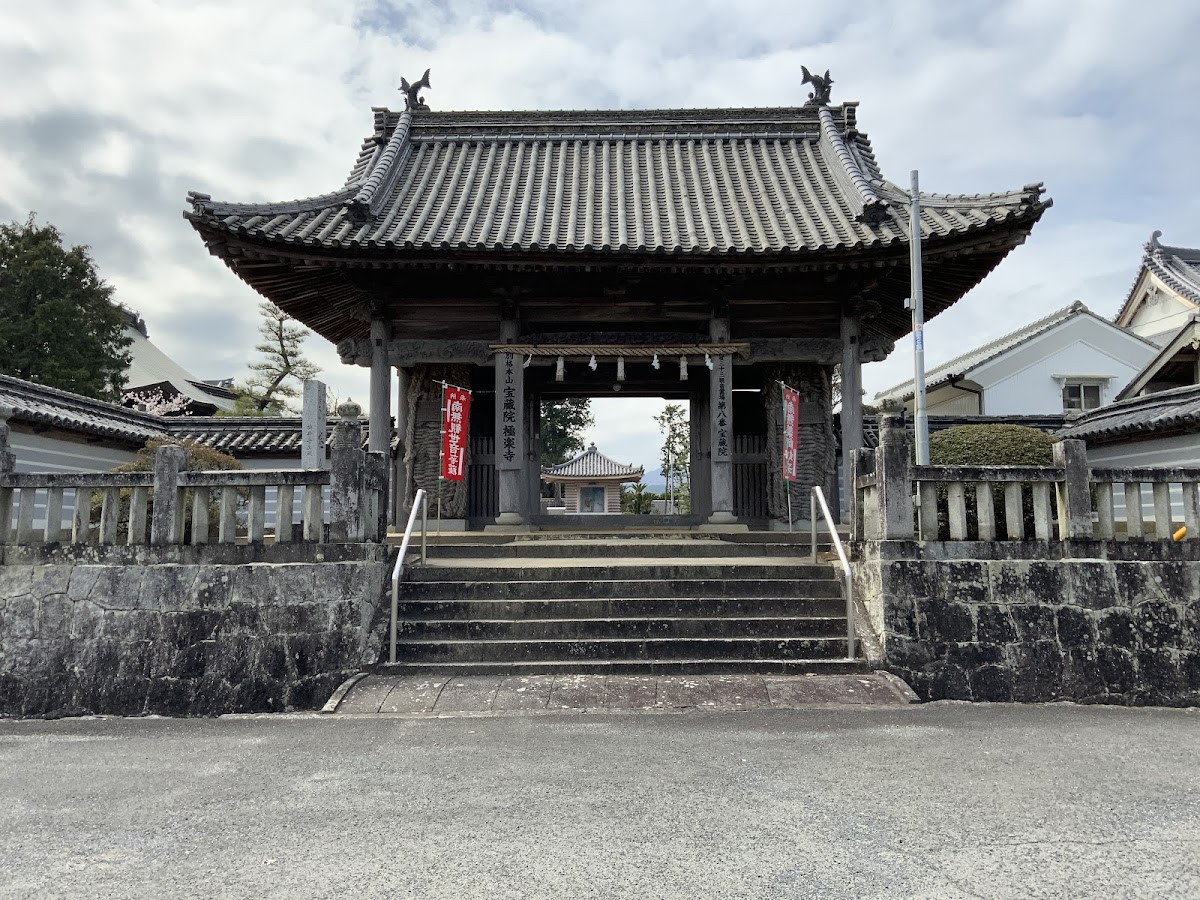
The Nitenmon Gate, which serves as the entrance to the temple grounds, is a magnificent gate standing at the top of the stone steps of the approach. On either side of the gate are statues of the two guardian deities, Jikokuten and Zochoten, who ward off evil spirits and protect worshippers. In front of the gate stands a stone monument marking the “88th and final temple,” evoking deep emotion in pilgrims who have completed their long journey.
Main Hall
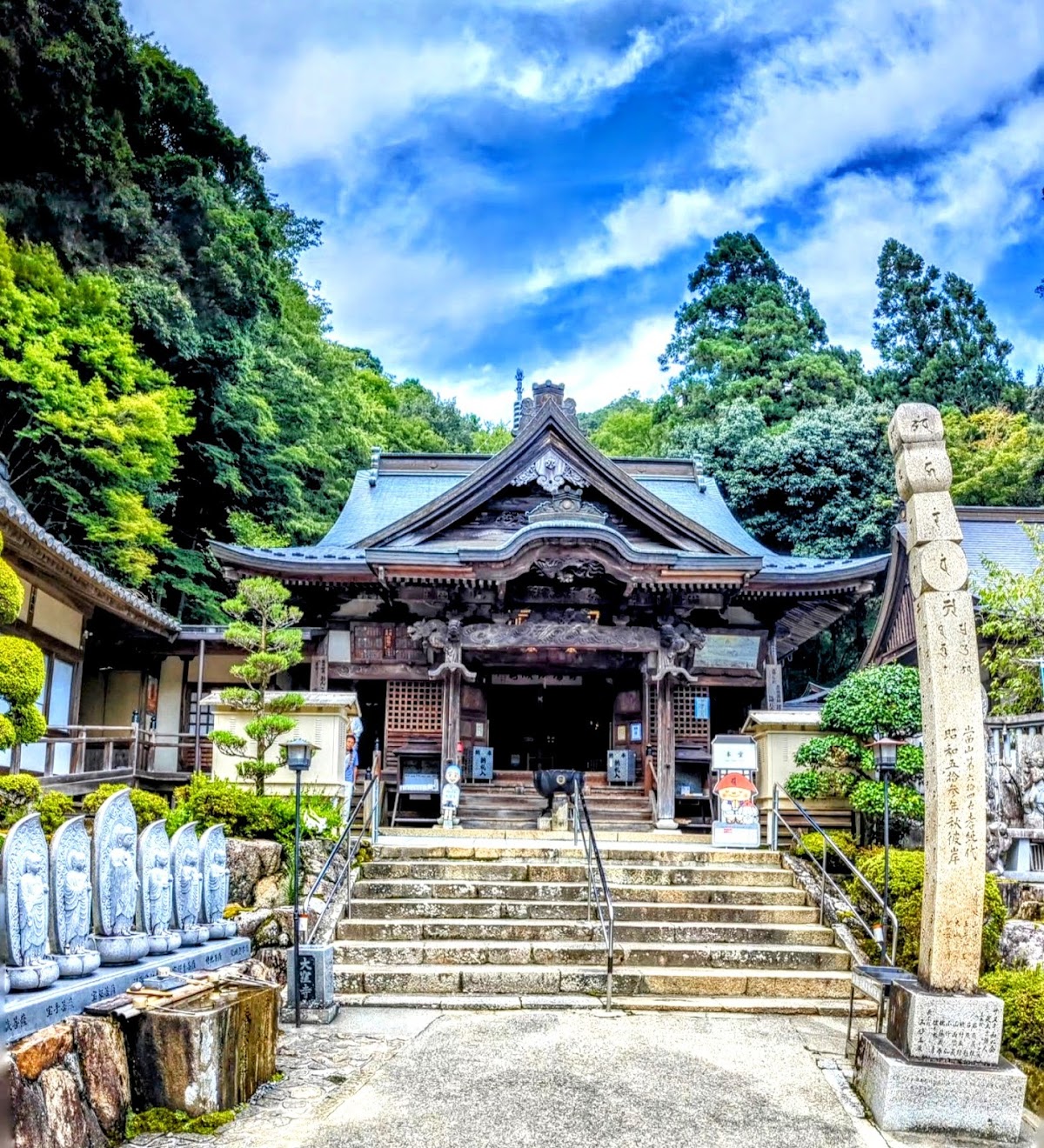
After passing through the Nitenmon Gate, the main hall is directly in front. It is a stately building with a hipped roof, and the principal image, Yakushi Nyorai (Medicine Buddha), is enshrined in the inner sanctuary. In the plaza in front of the main hall, many pilgrims can be seen chanting sutras and offering their sutras.
Beside the main hall, a large pile of Kongo staffs and straw hats donated by pilgrims who have completed their pilgrimage is stacked up—a sight unique to a temple marking the end of the pilgrimage. These offerings are an expression of gratitude for the tools that accompanied them on their long journey and the joy of safely completing their pilgrimage.
Daishi Hall
Located to the right of the main hall is the Daishi Hall, which houses a statue of Kobo Daishi Kukai. In the pilgrimage, it is believed that pilgrims walk with the Daishi at all times, based on the spirit of “two traveling together,” and visiting the Daishi Hall is just as important as visiting the main hall. A distinctive feature of the Daishido Hall is the passageway leading from the inner entrance to the underground. This underground space houses the principal images of all 88 temples of the Shikoku Pilgrimage, and visitors can participate in the “sand-treading” ritual.
Tahōtō Pagoda
A two-story Tahōtō pagoda stands quietly at the back of the temple grounds. The beautiful vermilion-painted pagoda harmonizes with the lush green mountains, making it one of the representative landscapes of Ōkubo-ji Temple. The Tahōtō pagoda is a symbol of esoteric Buddhist architecture and represents the world of Dainichi Nyorai (Vairocana Buddha).
Other Temple Buildings
Other temple buildings include the Yakushido Hall, Goma Hall, and Bell Tower. Stone Buddhas and monuments are scattered throughout the grounds, telling the story of its long history.
Principal Image: Yakushi Nyorai and its Benefits
The principal image of Ōkubo-ji Temple is Yakushi Nyorai (Medicine Buddha). Formally known as “Yakushi Rurikō Nyorai,” Yakushi Nyorai is worshipped as the principal deity of the Eastern Pure Land of Lapis Lazuli, a Buddha who heals people’s illnesses and suffering. The Yakushi Nyorai (Medicine Buddha) is often depicted holding a medicine jar in his left hand and forming the Abhaya Mudra (gesture of fearlessness) with his right hand. The principal image of Okubo-ji Temple is depicted in a similar pose. Yakushi Nyorai has made twelve great vows, including wishes for healing from illness, longevity, and good health.
Benefits
The Yakushi Nyorai of Okubo-ji Temple is believed to offer the following benefits:
- Healing from Illness: Heals all illnesses and mental suffering.
- Health and Longevity: Grants a healthy body and long life.
- Protection from Misfortune: Wards off disasters and misfortunes.
- Fulfillment of Pilgrimage: Ensures the safe completion of the pilgrimage and the fulfillment of wishes.
Especially as a temple marking the completion of the pilgrimage, it holds significant meaning as a place to pray for a new beginning in life, along with the sense of accomplishment after completing the 88-temple pilgrimage.
The Meaning of Completing the Pilgrimage and the Dedication of the Kongo Staff and Straw Hat
What is Completing the Pilgrimage?
“Completing the Pilgrimage” (kechigan) means successfully completing a pilgrimage that was started with a vow. In the Shikoku Pilgrimage, it refers to completing all 88 temples, starting from the first temple, Ryōzenji, and ending at the 88th temple, Ōkuboji.
For many pilgrims, the moment they stand before the main hall of Ōkuboji marks the end of a long journey spanning several weeks to months, and simultaneously the beginning of a new life.
Dedication of the Kongo Staff and Straw Hat
Beside the main hall of Ōkuboji, there is a mountain of Kongo staffs and straw hats dedicated by pilgrims. These are tools that accompanied them on their pilgrimage and symbolize “two traveling together.”
The Kongo staff is considered an incarnation of Kōbō Daishi and is treated with great care during the pilgrimage. It is placed in a place of honor at lodgings and is never stepped over or treated carelessly. After completing the pilgrimage, the pilgrim dedicates this staff to Okubo-ji Temple to express gratitude to Kobo Daishi and report the safe completion of their journey.
Similarly, the sedge hat is dedicated as an expression of gratitude for the tool that protected the pilgrim from rain and wind. The hat bears the inscription “Two Traveling Together,” a testament to walking alongside Kobo Daishi at all times.
Burning at the Saitō Goma Ceremony
These offerings are stored on the temple grounds and burned at the Saitō Goma Ceremony, held annually on the spring equinox and August 20th. This ceremony is believed to purify the offered items and deliver the pilgrims’ wishes to heaven.
The Saitō Goma Ceremony is an outdoor esoteric Buddhist ritual believed to burn away worldly desires through the flames and grant wishes.
Sand-Stepping and the Underground Sacred Site
Okubo-ji Temple’s Daishi Hall has a special facility not found at other temples: the sand-stepping ceremony in the underground sacred site.
What is Sand-Stepping?
Sand-stepping is a practice based on the belief that by stepping on the “sacred sand” of each pilgrimage site, one can gain the same merit as actually visiting that site. The underground pilgrimage site of Okubo-ji Temple enshrines the principal images of all 88 temples of the Shikoku Pilgrimage, and sand from each temple is laid out.
How to Visit the Underground Pilgrimage Site
Descending the stairs from the inner entrance of the Daishi Hall leads to a dimly lit passageway. On both sides of this passageway, the principal images of temples 1 through 88 are enshrined in order. Visitors proceed while bowing and clasping their hands together in front of each image.
The ground is covered with sand from each temple, and it is believed that by stepping on this sand, one can gain the same merit as having visited all 88 temples.
The Significance of the Sand-Stepping Ritual
- Allows those with weak legs to visit all 88 temples.
- Provides an alternative pilgrimage for those with time constraints.
- A place to reflect on memories of the pilgrimage once again.
- A pilgrimage expressing gratitude after completing the pilgrimage.
Even pilgrims who have actually visited all 88 temples can reflect on their journey and offer renewed gratitude to each temple by performing this sand-stepping ritual after completing the pilgrimage.
Cultural Properties and Temple Treasures
Okubo-ji Temple houses valuable cultural properties and temple treasures accumulated over its long history.
Important Cultural Properties
Some of the buildings and Buddhist statues on the temple grounds are designated as cultural properties. In particular, the main hall and the pagoda are valuable relics that convey the architectural style of the Edo period.
Ancient Documents and Records
Okubo-ji Temple preserves ancient documents and records related to the pilgrimage from the Edo period to the Meiji period. These are important materials for studying the history of the Shikoku pilgrimage.
Votive Offerings
Within the temple grounds, votive plaques, framed plaques, and Buddhist implements donated by successive generations of worshippers are stored. These are valuable historical materials that tell the story of popular faith.
Annual Events at Okubo-ji Temple
Okubo-ji Temple holds various Buddhist services and events throughout the year.
Main Annual Events
January 1st-3rd: Shushō-e (New Year’s Ceremony)
A Buddhist service to welcome the New Year and pray for peace throughout the year. It is bustling with many first-time visitors.
Spring Equinox: Spring Fire Ritual
An important event in which donated Kongo staffs and straw hats are burned.
April 8th: Hana Matsuri (Buddha’s Birthday)
A Buddhist service celebrating the birth of Buddha, where sweet tea is served.
August 20th: Summer Fire Ritual
Similar to the Spring Equinox, donated items are burned. December 31st: New Year’s Eve Bell
The New Year’s Eve bell is rung to dispel the year’s worldly desires.
Monthly Events
A special memorial service is held on the 21st of each month as a memorial day for Kobo Daishi.
Inner Sanctuary and Taizogamine
The inner sanctuary of Okubo-ji Temple is located on Taizogamine, which rises behind the temple grounds.
Origin of Taizogamine
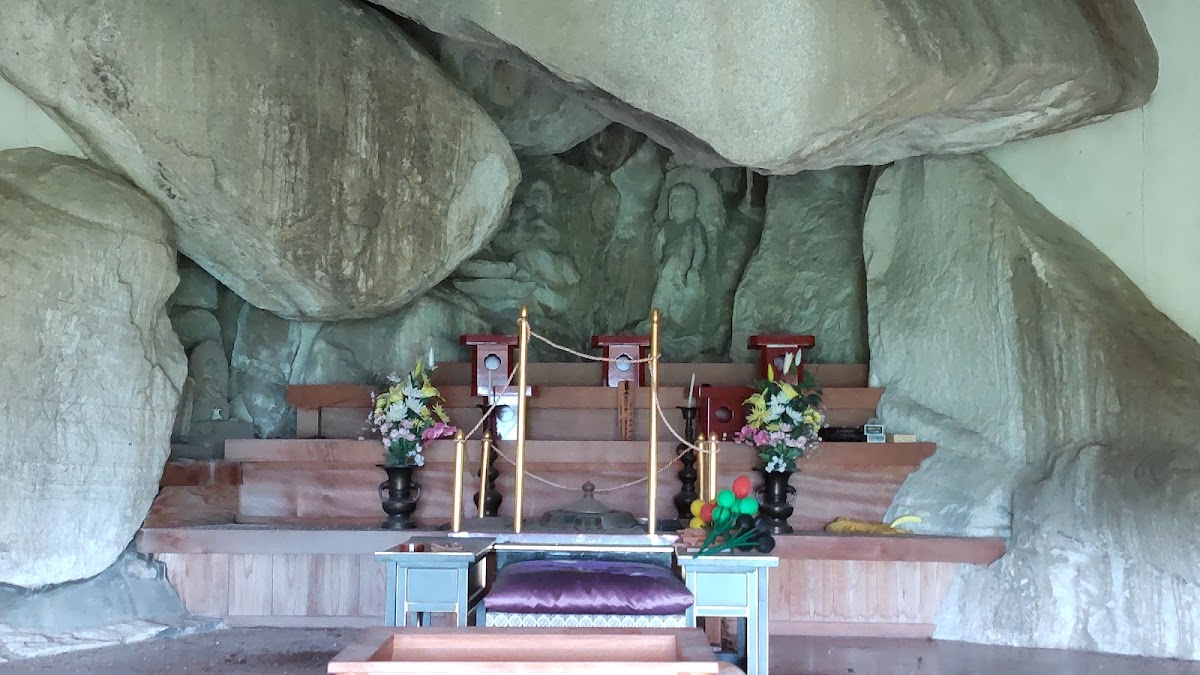
Taizogamine is a mystical mountain covered with strangely shaped rocks and boulders, and its name is derived from the Taizokai Mandala of Esoteric Buddhism. It is said that Kobo Daishi practiced asceticism in this area, and it has been revered as a sacred mountain since ancient times.
Visiting the Inner Sanctuary
A hiking trail leads from the temple grounds to the inner sanctuary, taking about 30 minutes on foot. Along the way, you’ll find numerous pilgrimage sites and stone Buddha statues, creating an atmosphere reminiscent of a place of ascetic training.
In the inner sanctuary, there’s a cave where Kobo Daishi is said to have meditated. From the cave, you can enjoy a panoramic view of the Sanuki Plain, and on clear days, you can even see the Seto Inland Sea.
Relationship with Mount Nyotai
Behind Okubo-ji Temple stands Mount Nyotai (776 meters above sea level). Mount Nyotai has long been known as a mountain where women were permitted to climb, which is the reason why Okubo-ji Temple is called “Women’s Koya.”
Surrounding Extra Pilgrimage Sites and Preceding/Preceding Temples
Preceding/Preceding Temples
Temple No. 87: Nagao-ji Temple
The temple before Okubo-ji Temple is Nagao-ji Temple. It’s located in Nagao, Sanuki City, about a 20-minute drive from Okubo-ji Temple.
Temple No. 1: Ryōzenji
After completing their pilgrimage, many pilgrims return to Ryōzenji, the first temple, as a “thank you pilgrimage.” This is called “uchimodoshi” (returning the pilgrimage) and signifies the completion of the pilgrimage. Ryōzenji is located in Naruto City, Tokushima Prefecture, about an hour and a half’s drive from Ōkuboji.
Nearby Extra-Official Pilgrimage Sites
Maeyama Ohenro Exchange Salon
In the Maeyama area, just before Ōkuboji, there is the “Maeyama Ohenro Exchange Salon,” which is used as a rest stop for pilgrims. You can also receive hospitality from local residents.
Nyotaisan
Nyotaisan, where the inner sanctuary of Ōkuboji is located, is also considered an extra-official pilgrimage site in a broader sense.
Etiquette for Visiting the Temple and Certificate of Completion
Basic Etiquette for Visiting the Temple
- Bow at the Temple Gate: Bow and clasp your hands together before entering the temple grounds.
- Purify yourself at the Water Basin: Purify your left hand, right hand, and mouth in that order.
- Ring the Bell at the Bell Tower: Ring it only once before visiting the temple (do not ring it on your way out).
- Visit the Main Hall: Offer a votive slip, make an offering, chant sutras, and bow and clasp your hands together.
- Visit the Daishi Hall: Follow the same etiquette as the Main Hall.
- Receive a Stamp at the Sutra Office: Receive a stamp in your pilgrimage book.
About the Certificate of Completion
Okubo-ji Temple issues a “Certificate of Completion” (in certificate format) as proof of having visited all 88 temples.
Issuance Requirements: The pilgrimage notebook or hanging scroll must contain all 88 temple stamps.
Fee: Approximately 3,000 yen (may vary depending on the time of year)
Application: Apply at the temple office; issuance takes approximately 30 minutes.
The completion certificate will include your name and completion date, along with the priest’s signature and temple seal. For many pilgrims, this certificate becomes a lifelong treasure.
Regarding the Thank-You Visit
After completing the pilgrimage, it is considered proper etiquette to visit the first temple, Ryōzenji, to offer thanks. It is also recommended to visit the mausoleum of Kōbō Daishi at the Okunoin of Kōyasan to express gratitude for safely completing the pilgrimage.
Transportation Access and Parking Information
Access by Public Transportation
By Train
- Take the Takamatsu Kotohira Electric Railway (Kotoden) Nagao Line and get off at “Nagao Station”
- Take a taxi from Nagao Station (approximately 30 minutes, about 5,000 yen)
- Take the community bus “Tawa Line” from Nagao Station and get off at “Okuboji” (infrequent service, so check in advance)
By Bus
- The Sanuki City Community Bus “Tawa Line” runs from Nagao Station to Okuboji (only a few buses per day)
- Check the operating days and times in advance
Note: Due to the limited number of public transportation options, taking a taxi is the most practical option.
Access by Private Car
From Takamatsu
- Approximately 40 minutes from Shido IC on the Takamatsu Expressway via Prefectural Road 3 and National Route 377
- Or, approximately 1 hour south from Takamatsu city on National Route 377
From Tokushima
- Approximately 1 hour from Itano IC on the Takamatsu Expressway via Prefectural Road 12 and National Route 377
Car Navigation Settings
- Address: 96 Tawakanewari, Sanuki City, Kagawa Prefecture
- Phone Number: 0879-56-2278
Parking Information
Temple Parking
- Regular Cars: Approximately 100 spaces (Free)
- Large Buses: Dedicated space available (Free)
- From Parking Lot to Main Hall: Approximately 5 minutes on foot (with stone steps)
Notes
- May be crowded during peak seasons (Golden Week, autumn sightseeing season)
- During winter, studded tires are recommended due to the possibility of icy roads.
- Due to the mountainous terrain, there are many curves and narrow sections of road.
Food and Souvenirs in the Temple Town and Surrounding Area
In front of the gate of Okubo-ji Temple, there are many restaurants and souvenir shops catering to pilgrims.
Restaurants in the Temple Town
Hachijuhachi-an
A restaurant serving meals to celebrate the completion of the pilgrimage. Sanuki udon and set meals are popular.
Tea House in the Temple Town
A rest stop where you can enjoy light meals and sweets. Zenzai (sweet red bean soup) and udon are highly regarded.
Local Ingredients
Some restaurants offer mountain vegetable dishes and home-style cooking using local vegetables.
Souvenir Shop
Pilgrimage Supplies
- Pilgrimage supplies such as Kongo-jo (staff), sedge hat, and white robe
- Sutra notebook, Buddhist stole, and prayer beads
- Amulets, talismans, and incense
Local Specialties
- Sanuki Udon (dried and fresh noodles)
- Wasanbon sugar sweets
- Local sake and local pickles
Commemorative Items for Completing the Pilgrimage
- Commemorative tenugui (hand towel) and T-shirt for completing the pilgrimage
- Okubo-ji Temple original goshuincho (stamp book)
- Commemorative medals and keychains
Nearby Tourist Facilities
Nature of Tawa
The area around Okubo-ji Temple is blessed with abundant nature, allowing visitors to enjoy the scenery of each season. The autumn foliage is particularly magnificent.
Roadside Station “Nagao”
A roadside station near Nagao Station where you can purchase local agricultural products and specialty goods.
Points to Note and Manners When Visiting the Temple
Regarding Attire
- Formal attire is preferable: Wearing a white robe is formal, but everyday clothes are also acceptable.
- Avoid revealing clothing: Wear clothing appropriate for visiting a temple.
- Comfortable shoes: As there are stone steps and slopes on the temple grounds, comfortable shoes such as sneakers are recommended.
Photography Manners
- Photography inside the main hall is generally prohibited: Exterior photography is permitted.
- Consideration for other worshippers: Do not disturb those chanting sutras.
- Donated Kongo staffs and straw hats: Photography is permitted, but do not touch or move them.
Regarding the Time of Visit
Crowded Periods
- Golden Week
- Autumn sightseeing season (October-November)
- New Year’s holidays
Relatively Less Crowded Periods
- Mid-winter (mid-January-February)
- Rainy season (June)
- Midsummer (August)
Recommendation for Early Morning Visits
Immediately after the temple opens at 7:00 AM, there are fewer visitors, allowing for a peaceful and tranquil visit.
Winter Precautions
Okubo-ji Temple is located in a high-altitude mountainous area, so there is a possibility of snow and icy roads during winter.
- Visiting from December to February: Check the weather forecast and prepare snow tires or chains.
- Cold Weather Protection: Temperatures are lower than in urban areas, so wear sufficient warm clothing.
- Early Visit: Sunset is early, so complete your visit while it’s still light.
A Moving Experience at Okubo-ji Temple
Okubo-ji Temple, the final temple of the pilgrimage, is not merely a tourist destination, but a special place that marks a turning point in the lives of many pilgrims.
Voices of Pilgrims
“When I stood before the main hall, tears welled up naturally. The journey of the past few months flashed before my eyes like a kaleidoscope, and I was filled with gratitude for having made it this far safely.”
“When I put away my walking stick, I felt truly sad. But there was also a sense of accomplishment, knowing that I had reached a milestone.”
“As I stepped on the sand, I remembered the events at each temple. The people I met at each temple, the hospitality I received—everything is a treasure.”
Life After Completing the Pilgrimage
Many pilgrims speak of the changes in their lives after completing the pilgrimage. The experiences and insights gained through the Shikoku pilgrimage have a profound impact on their lives afterward.
- Shift in Values: Emphasizing inner richness over material wealth
- Gratitude: Being able to appreciate even the small things in everyday life
- Connections with People: Maintaining connections with people met on the pilgrimage
- Re-pilgrimage: Many people repeat the Shikoku pilgrimage multiple times (“kasaneuchi”)
Summary: The Significance of Okubo-ji Temple, the Temple of Completion
Okubo-ji Temple is a venerable temple with a history of over 1200 years, serving as the 88th temple of the Shikoku 88 Temple Pilgrimage. Located in a mountainous area at a high altitude, its tranquil grounds have deeply moved pilgrims who have completed their long journey.
The piles of Kongo staffs and straw hats next to the main hall are a sight unique to the temple of completion, telling the stories of each pilgrim’s journey. The sand-treading area in the basement of the Daishi Hall offers a precious opportunity to reflect on all 88 temples.
Completion of the pilgrimage is not simply about visiting all 88 temples. It marks the completion of a journey of self-reflection and growth through encounters with many people, and simultaneously, the beginning of a new life.
When you visit Okubo-ji Temple, I hope you will reflect on the feelings of pilgrims reaching the end of their pilgrimage and feel the meaning of this special space. And if you have the opportunity, I encourage you to actually undertake the Shikoku Pilgrimage, climb the stone steps of Okubo-ji Temple on your own two feet, and experience the profound emotion of completion.
The spirit of “traveling together as two,” a teaching of Kobo Daishi, reaches a conclusion at Okubo-ji Temple, but its teachings continue to live on in the hearts of visitors. Okubo-ji Temple, the temple of completion, is a special sacred place that connects the past and the future.