Complete Guide to Iyadani-ji Temple | History, Highlights, and Visiting Information for Shikoku’s 71st Temple
Iyadani-ji Temple is the head temple of the Shingon sect, Zentsu-ji branch, located in Omi-Otsu, Mino-cho, Mitoyo City, Kagawa Prefecture. Known as the 71st temple of the Shikoku 88 Temple Pilgrimage, it is affectionately known as “Iyadani-san” by locals. Situated on the slopes of Mt. Iyadani (382m above sea level), at an altitude of approximately 200m, this temple has long been a place of deep faith, revered as a sacred site where Kobo Daishi Kukai trained in his childhood, and as one of Japan’s three great sacred mountains.
Overview and Basic Information of Iyadani-ji Temple
Basic Temple Data
Official Name: Kengozan Senjuin Iyadani-ji
Sect: Shingon-shu Zentsuji-ha
Temple Rank: Head Temple
Principal Image: Senju Kannon Bodhisattva
Pilgrimage Site Number: 71st Temple of the Shikoku 88 Temple Pilgrimage
Address: 70 Omi-Otsu, Mino-cho, Mitoyo City, Kagawa Prefecture 767-0031
Phone Number: 0875-72-3446
As its name suggests, Iyadani-ji Temple is located in a deep valley, and the entire Iyadani Mountain functions as a sacred site. Numerous rock-carved Buddhas and five-ringed stupas are scattered throughout the temple grounds, making it a treasure trove of Buddhist art.
Characteristics of Iyadani-ji Temple
The most distinctive features of Iyadani-ji Temple are its location and its character as a place of ascetic practice. From the Niomon Gate to the main hall, a steep stone staircase of 540 steps (262 + 108 + 170) continues, making it one of the most difficult sections of the Shikoku Pilgrimage. Numerous five-tiered stupas line both sides of these steps, giving the area an aspect of a place for mourning the souls of the dead.
The group of rock-carved Buddha images on the cliff face were carved between the Heian and Kamakura periods and are designated as a historical site of Kagawa Prefecture. There is a legend that these Buddha images were carved by Kobo Daishi, and the landscape of Buddha images and Sanskrit characters carved into every rock is breathtaking.
History of Miyatani-ji Temple
Founding and Ancient History
Miyatani-ji Temple was founded approximately 1300 years ago, during the Tenpyo era (729-749). It is said to have begun when Gyoki Bodhisattva built the temple buildings at the behest of Emperor Shomu. Initially, the temple housed two Buddha statues, Amida Buddha and Shakyamuni Buddha, and its history as a temple began when Empress Komyo offered the Avatamsaka Sutra in prayer for recovery from illness.
From the mountaintop, eight provinces (Sanuki, Awa, Iyo, Tosa, Bizen, Bitchu, Bingo, and Harima) can be seen, and it was initially named “Hakkoku-ji” (Eight Provinces Temple). This name indicates that Mount Yatani was an important lookout point and transportation hub in the Seto Inland Sea region.
Kobo Daishi and Yatani-ji Temple
The most important aspect of Yatani-ji Temple’s history is its deep connection with Kobo Daishi Kukai. It is said that in his childhood, the Great Master devoted himself to academic training in the “Shishi-no-Iwaya” (Lion’s Cave) on Mount Yatani. The legend that he studied by the light shining through the “Myojo-no-Mado” (Morning Star Window) at the back of the cave is a well-known episode illustrating the Great Master’s devotion to spiritual pursuit.
Later, after returning from Tang China, Kobo Daishi revisited this site, carved a statue of the Thousand-Armed Kannon Bodhisattva to serve as the principal image, and enshrined the “Gilt Bronze Four Heavenly Kings Five-Pronged Bell” that he had brought back from Tang China. This five-pronged bell is an esoteric Buddhist ritual implement used in Buddhist practices; its sound is believed to impress the Buddhas and ward off evil spirits that hinder spiritual practice. It is now designated a National Important Cultural Property and is highly valued as a precious esoteric Buddhist ritual implement cast during the Tang Dynasty.
At this time, it is said that the Daishi changed the temple’s name to “Kengozan Senjuin Miyatani-ji” and carved Buddhist statues and Sanskrit characters throughout Miyatani Mountain.
Development from the Medieval Period Onward
From the Heian period to the Kamakura period, Miyatani-ji developed as a center of sacred mountain worship. During this time, many rock-carved Buddha images were created, and the mountain became a popular site for folk belief as a gathering place for the souls of the dead. Mount Yatani, along with Mount Osore (Aomori Prefecture) and the Usuki Magaibutsu (Oita Prefecture), is considered one of Japan’s three great sacred sites, and has become a place of worship deeply connected to the afterlife.
During the Edo period, the Shikoku Pilgrimage became popular among common people, and Yatani-ji Temple, as the 71st temple on the pilgrimage, welcomed many pilgrims. The stone steps and approach to the temple, which were developed during this period, are still used by visitors today.
Yatani-ji Temple’s Buildings and Highlights
Niomon Gate
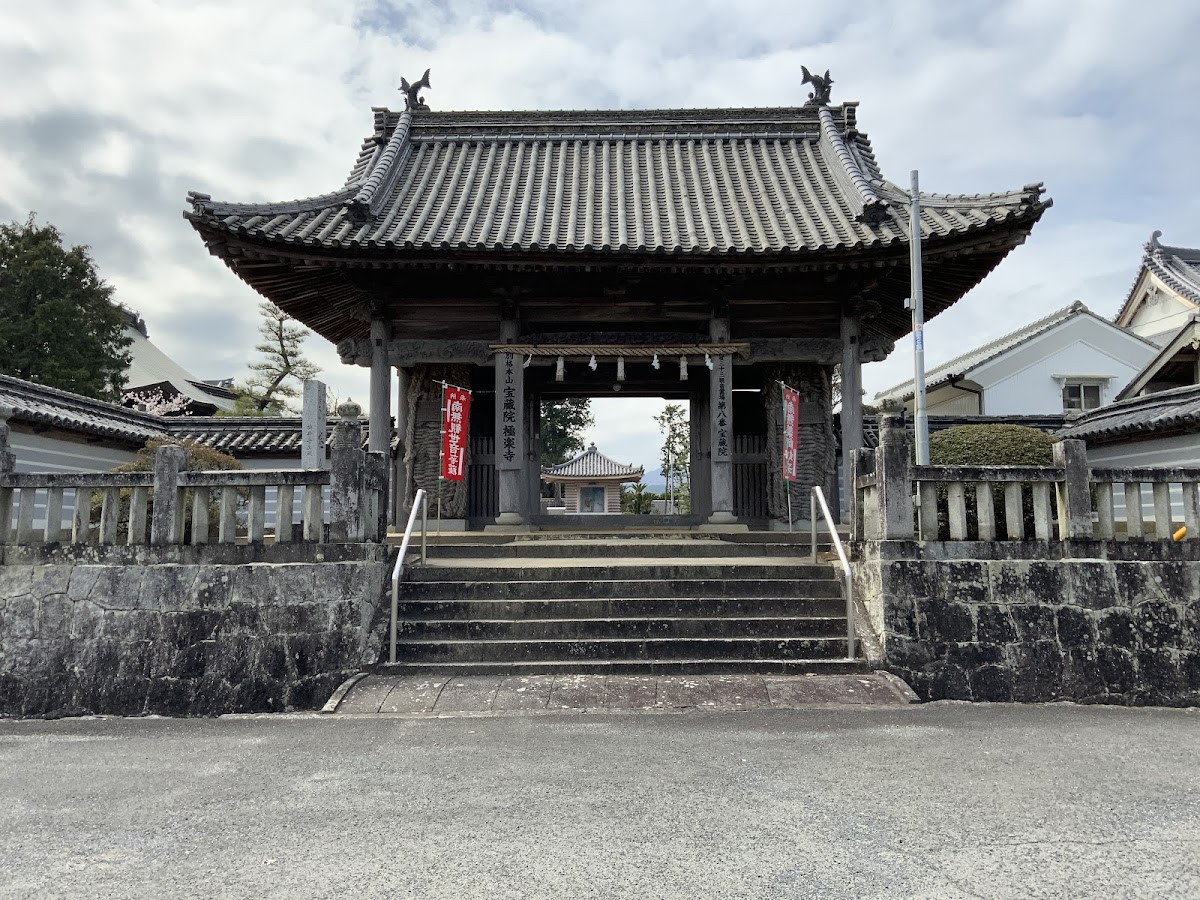
The Niomon Gate is the entrance to Yatani-ji Temple. From here, the 540 stone steps leading to the main hall begin. Powerful Nio statues are enshrined in the Niomon Gate, welcoming visitors. Immediately after passing through the gate, a steep stone staircase appears, giving a sense of the beginning of a rigorous spiritual journey.
Stone Steps and Five-Ring Pagodas
The stone steps of Yatani-ji Temple are known to be particularly challenging among the Shikoku Pilgrimage sites. You need to climb a total of 540 stone steps: 262 steps, 108 steps (representing the number of worldly desires), and the final 170 steps. Numerous five-tiered stupas line both sides of these steps, creating a unique atmosphere.
These stupas were erected to mourn the souls of the dead, demonstrating that Mount Yatani has been revered as “the mountain where the souls of the dead go.” Old graves are also lined up in the shade of the trees beside the steps, strongly reflecting its sacred nature.
As you climb the steps, pilgrims confront their own worldly desires, purifying their hearts with each step. This ascetic pilgrimage experience is a major characteristic of Yatani-ji Temple.
Cliffside Buddha Statues
Numerous cliffside Buddha statues, carved from the Heian to Kamakura periods, remain on the rock face of Yatani-ji Temple. These are designated as historical sites of Kagawa Prefecture, and there is a legend that they were carved by Kobo Daishi.
On the rock face in front of the main hall are particularly well-preserved rock-carved Buddha images, whose forms can be clearly seen. Not only are there Buddha images, but also Sanskrit characters and Buddhist scriptures are carved, creating a vast, mandala-like space across Mount Yatani.
These rock-carved Buddha images are carved into the natural rock face, and the images, integrated with the rock, exude a unique presence. The way the light hits them, changing their appearance, is one of the charms of these rock-carved Buddhas.
Main Hall
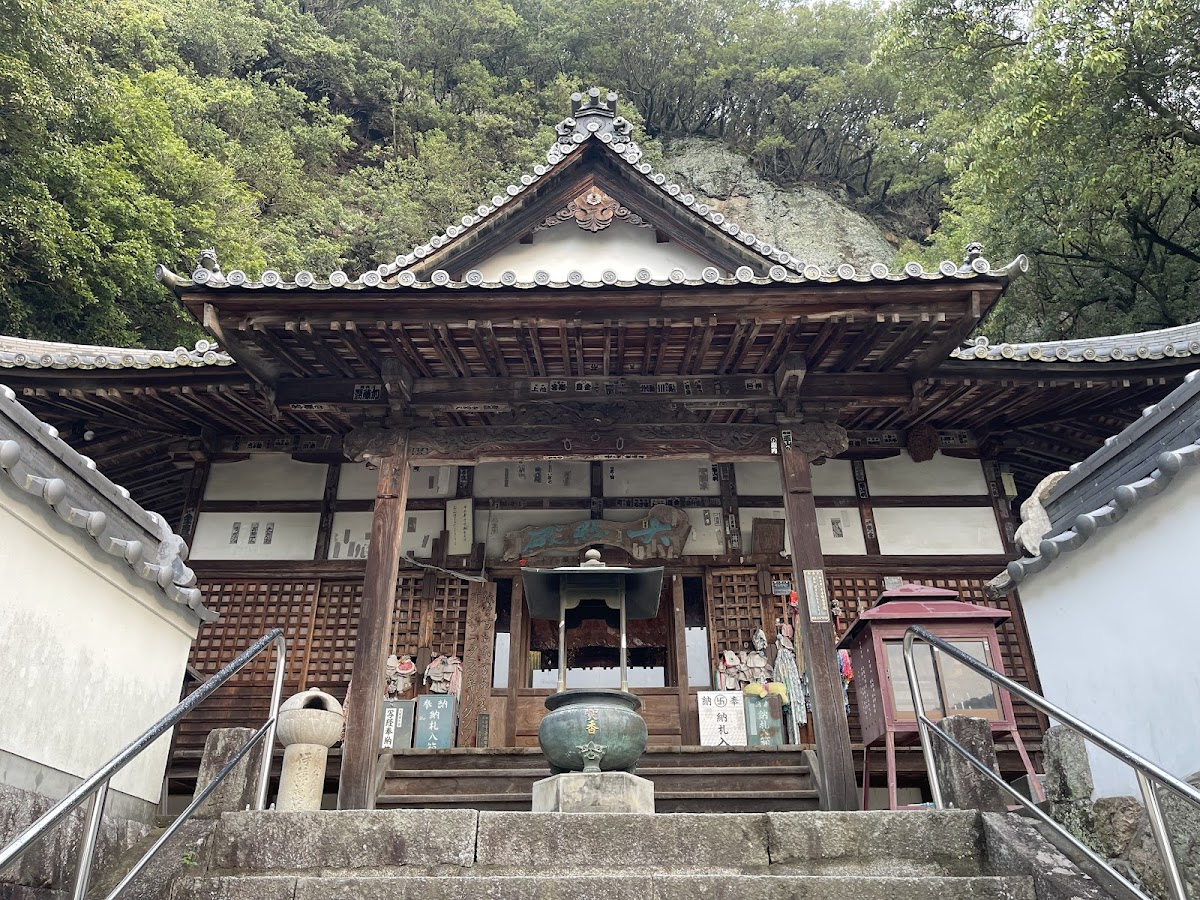
After climbing 540 stone steps, you reach the main hall. The main hall houses the principal image, the Thousand-Armed Kannon Bodhisattva. This Thousand-Armed Kannon is a hidden Buddha image said to have been carved by Kobo Daishi, and is only displayed on special occasions.
The view from the main hall is magnificent, offering a panoramic view of the Mitoyo Plain and the Seto Inland Sea. The scenery makes the legend that eight provinces could once be seen from here believable. Numerous rock-carved Buddha images are also carved into the rock face surrounding the main hall, creating an atmosphere truly befitting a mountain of Buddha.
Daishido Hall
Near the main hall is the Daishido Hall, dedicated to Kobo Daishi. In the Shikoku Pilgrimage, it is considered proper etiquette to visit both the main hall and the Daishido Hall at each temple, and this is also the case at Miyatani-ji Temple.
At the Daishido Hall, you can pray while remembering Kobo Daishi, who trained here in his childhood. Many visitors perform sutra copying and chanting here, deepening their connection with the Daishi.
Okunoin and Shishi-no-Iwaya Cave
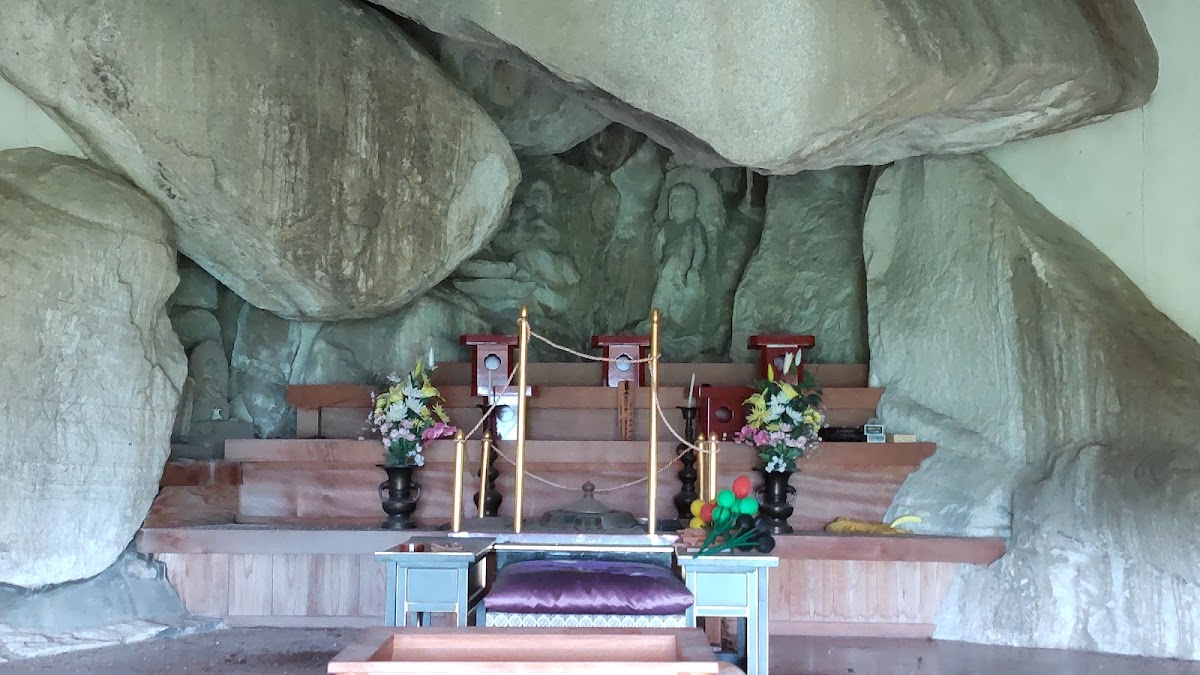
The most sacred place at Miyatani-ji Temple is the “Shishi-no-Iwaya Cave” (Lion’s Cave) in the Okunoin (inner sanctuary). This is known as the place where Kobo Daishi devoted himself to academic training in his childhood.
In the back right of the cave is an opening called “Myojo-no-Mado” (Morning Star Window), and legend remains that the Daishi studied using the light that shone through it. The interior of the cave is a natural cavern, enveloped in cool air and silence, conveying the rigorous atmosphere of a place of ascetic training.
In the back of the hall, the Vajra Fist Bodhisattva and other deities are enshrined, preserving its character as a training ground for esoteric Buddhism. Near the entrance to the cave, stone desks and chairs believed to have been used by the master remain, allowing us to imagine the training that took place over 1200 years ago.
Statue of the Exorcising Master
A statue of the Exorcising Master is enshrined on the temple grounds, attracting many worshippers who pray for protection from misfortune and the fulfillment of their wishes. Although this statue was created relatively recently, it is revered by the local people.
Sai no Kawara
Miyatani-yama also has a place called “Sai no Kawara” (the riverbed of souls). Known as a place to commemorate the souls of children, it enshrines many Jizo Bodhisattvas. It is one of the places that symbolizes Miyatani-yama’s character as a mountain where the souls of the dead gather.
Cultural Properties of Miyatani-ji Temple
Nationally Designated Important Cultural Property
Gilt Bronze Four Heavenly Kings and Five-Pronged Bell
The most important cultural property owned by Miyatani-ji Temple is the “Gilt Bronze Four Heavenly Kings and Five-Pronged Bell,” which is designated as a Nationally Important Cultural Property. This is a valuable esoteric Buddhist ritual implement said to have been brought back from Tang China by Kobo Daishi, and was cast during the Tang Dynasty.
The five-pronged bell is an esoteric Buddhist ritual implement used in rituals, and is a bell in the shape of a five-pronged vajra. It is believed that the sound of the bell will impress the Buddhas and have the power to ward off evil spirits that hinder spiritual practice. Because it is engraved with images of the Four Heavenly Kings, it is called the “Four Heavenly Kings and Five-Pronged Bell” and is highly regarded as a masterpiece of esoteric Buddhist art.
Kagawa Prefecture Designated Cultural Property
Cliffside Buddha Images
The cliffside Buddha images carved into the rock face of Mt. Miyatani are designated as a historical site of Kagawa Prefecture. These Buddhist statues, carved from the Heian to Kamakura periods, represent an important legacy of stone sculpture in the Sanuki region.
Not only are there Buddhist statues, but also numerous Sanskrit characters and Buddhist scriptures carved into the grounds, indicating that the entire Yataniyama mountain functioned as a vast religious space. Many of these are well-preserved, making them valuable cultural assets that convey the state of faith at that time.
Other Cultural Assets
Yatani-ji Temple also houses numerous other Buddhist statues, paintings, scriptures, and ritual implements. While many of these are not open to the public, they are sometimes displayed on special occasions. Among the temple’s treasures are valuable historical materials from the medieval to early modern periods, holding significant value for the study of Buddhist history and local history.
Visiting Information and Access
Visiting Hours and Sutra Copying Hours
Visiting Hours: Grounds are freely accessible (recommended from sunrise to sunset)
Sutra Copying Hours: 7:00 AM to 5:00 PM (may vary depending on the season)
Holidays: Open every day
Since you will need to climb stone steps, it is recommended to allow ample time for your visit. Allow approximately 30 minutes to 1 hour for the one-way trip to the main hall.
Admission Fee
Admission Fee: Free
Parking: Free (approximately 50 regular cars)
Access
By Car:
- Approximately 15 minutes from the Takamatsu Expressway “Mitoyo Torisaka IC”
- Approximately 20 minutes from the Takamatsu Expressway “Sanuki Toyonaka IC”
- Approximately 15 minutes from JR Takuma Station
Car Navigation Setting: Search for 70 Omi Otsu, Mino-cho, Mitoyo City, Kagawa Prefecture, or phone number 0875-72-3446
Parking Information: There is a free parking lot at the foot of the mountain at Yatani-ji Temple. There is space for approximately 50 regular cars, and large buses can also park. It’s a few minutes’ walk from the parking lot to the Niomon Gate.
For the elderly and those with mobility issues, there is a road that allows you to drive partway up the mountain, but the road is narrow and steep, so those who are not confident in their driving skills are advised to use the parking lot at the foot of the mountain. During certain periods, a shuttle bus may operate from the parking lot to the middle of the mountain.
Public Transportation
- Approximately 15 minutes by taxi from JR Takuma Station
- Community buses are also available, but service is infrequent, so prior confirmation is necessary.
Public transportation access is not convenient, so we recommend using a rental car or taxi.
Points to Note When Visiting
- Clothing and Equipment: Since you will be climbing 540 stone steps, comfortable shoes and clothing are essential. Particular caution is needed during rainy weather, as the steps can become slippery.
- Estimated Time: Allow approximately 1 to 1.5 hours for a round trip from the Niomon Gate to the main hall. Visiting the Okunoin (inner sanctuary) will require additional time.
- Physical Fitness: A certain level of physical fitness is required due to the steep stone steps. There are places to rest along the way, so please climb at your own pace without overexerting yourself.
- Hydration: Bring plenty of water, especially during the summer.
- Winter: During winter, the stone steps may freeze, so extra caution is necessary.
Attractions around Miyatani-ji Temple
Mandara-ji Temple (Temple No. 72)
Mandara-ji Temple, the next temple on the Shikoku 88 Temple Pilgrimage, is approximately 4km away, about a 10-minute drive. Mandara-ji Temple is also associated with Kobo Daishi and is known for its beautiful garden.
Extra Sacred Sites
Several extra sacred sites of the Shikoku 88 Temple Pilgrimage exist around Miyatani-ji Temple. Those with ample time can visit these sites as well for a deeper pilgrimage experience.
Tourist Attractions in Mitoyo City
Mitoyo City has many tourist attractions besides Miyatani-ji Temple. Chichibugahama Beach is a popular photo spot known as “Japan’s Uyuni Salt Flats,” and Shiunideyama Mountain is known for its spectacular views of cherry blossoms and the Seto Inland Sea.
Annual Events at Miyatani-ji Temple
Miyatani-ji Temple holds various Buddhist services and events throughout the year.
Main Annual Events:
- First three days of the New Year: Hatsumode (first shrine visit of the year), Shusho-e (New Year’s service)
- Spring and Autumn Equinox Services: Memorial services for ancestors
- April 21st: Kobo Daishi Mikage-ku (memorial service for the anniversary of Kobo Daishi’s death)
- August: Segaki-e (feeding of hungry ghosts), Urabon-e (Buddhist festival)
During these events, many worshippers visit, creating a lively atmosphere different from the usual.
Miyatani-ji Temple and the Shikoku Pilgrimage
Positioning as a Pilgrimage Route
Miyatani-ji Temple is the 71st temple of the Shikoku 88 Temple Pilgrimage, forming an important part of the Shikoku Pilgrimage. Located approximately 12km from Temple No. 70, Motoyama-ji, and approximately 4km from Temple No. 72, Mandara-ji, it is one of the most memorable temples on the pilgrimage route in Sanuki Province (Kagawa Prefecture).
Sutra Copying and Temple Seals
At the temple office of Yatani-ji, you can receive temple seals and images (Osugata) in your sutra book. The temple seal of Yatani-ji features the Sanskrit character “Kirīku,” representing the principal image, the Thousand-Armed Kannon.
Sutra Copying Fees:
- Sutra Book: 300 yen
- Hanging Scroll: 500 yen
- White Robe: 200 yen
Pilgrimage Supplies
The temple office also sells pilgrimage supplies such as sutra books, white robes, walking sticks, and prayer beads.
The Charm and Faith of Yatani-ji
Mount Yatani as a Sacred Mountain
Mount Yatani has been revered as a sacred mountain since ancient times. As a “mountain of Buddha” and a “mountain where the souls of the dead go,” it has a history as a center of folk belief. Its spiritual importance is evident from its inclusion as one of Japan’s three great sacred sites, alongside Mount Osore and the Usuki Cliff Buddhas.
The cliff Buddhas, five-ringed stupas, and tombstones lining the stone steps spread throughout the mountain tell the story of its function as a sacred place at the boundary between life and death.
Significance as a Place of Ascetic Practice
Shishi-no-Iwaya, where Kobo Daishi (Kukai) practiced asceticism in his childhood, still retains a strong atmosphere of a place of ascetic practice. Climbing the 540 steep stone steps is itself an ascetic practice, and visitors can experience spiritual purification through physical hardship.
This ascetic character makes Yatani-ji Temple a special place, not merely a tourist destination, but a true sacred site.
Connections to the Community
Iyadani-ji Temple, affectionately known as “Iyadani-san,” is a familiar place of worship for local residents. Local people visit for various prayers, including ancestral veneration, protection from evil, and the fulfillment of wishes.
Especially during the equinox and Obon seasons, many local residents visit to pay respects to their ancestors, transforming the entire Iyadani Mountain into a place of worship.
Summary
Iyadani-ji Temple, with its 1300-year history, is the 71st temple of the Shikoku 88 Temple Pilgrimage, a sacred site associated with Kobo Daishi, one of Japan’s three major sacred sites, and a place of ascetic training—a temple with multifaceted value.
There are many sights to see, including the 540 stone steps, the group of rock-carved Buddha images, the five-pronged bell (a nationally important cultural property), and the Shishi-no-Iwaya cave where Kobo Daishi practiced asceticism. Climbing the steep stone steps to the temple requires physical strength, but it is a form of spiritual training in itself, and the sense of accomplishment and the view upon reaching the main hall are exceptional.
For both pilgrims on the Shikoku Pilgrimage and general visitors, Miyatani-ji Temple will undoubtedly be a memorable and special sacred site. When visiting Mitoyo City in Kagawa Prefecture, please be sure to visit this historic sacred mountain.
We hope that your visit to Miyatani-ji Temple will be an opportunity for spiritual purification and new insights.