Complete Guide to Sanuki Kokubunji Temple: History and Highlights of the 80th Temple of the Shikoku 88 Temple Pilgrimage
What is Sanuki Kokubunji Temple?
Sanuki Kokubunji Temple is a Shingon sect Omuro school temple located in Kokubunji-cho, Takamatsu City, Kagawa Prefecture. Its formal name is Hakugyuzan Senjuin, and its principal image is the Eleven-Faced Thousand-Armed Kannon Bodhisattva. As the 80th temple of the Shikoku 88 Temple Pilgrimage, it attracts many pilgrims.
Of the Kokubunji temples established throughout Japan during the Nara period by order of Emperor Shomu, Sanuki Kokubunji Temple is the successor temple that has continued to uphold its religious traditions to this day. If you listen carefully, you can hear the sounds of 1300 years of history; it is truly a sacred site where you can feel the weight of time.
Basic Information on Sanuki Kokubunji Temple
- Location: 2065 Kokubunji-cho, Takamatsu City, Kagawa Prefecture
- Sect: Shingon-shu Omuro-ha
- Mountain Name: Hakugyuzan
- Temple Name: Senjuin
- Principal Image: Eleven-faced Thousand-armed Kannon Bodhisattva
- Pilgrimage Site: 80th Temple of the Shikoku 88 Temple Pilgrimage
- Founder: Gyoki Bodhisattva
- Parking: Free parking available
History of Sanuki Kokubunji Temple
Background of Founding and Emperor Shomu’s Imperial Edict
In 741 AD (Tenpyo 13), Emperor Shomu ordered the construction of Kokubunji and Kokubun-niji temples throughout the country to pray for national peace and the happiness of the people through the power of Buddhism. Based on this edict, a Kokubunji temple was also built in Sanuki Province.
Sanuki Kokubunji Temple is said to have been founded by Gyoki Bodhisattva, who enshrined an eleven-faced, thousand-armed Kannon Bodhisattva statue there. The temple complex at that time was magnificent, and its scale can still be seen from the current Sanuki Kokubunji Temple Ruins, a Special Historic Site.
Connection with Kukai (Kobo Daishi)
It is said that during the Konin era (810-823), Kukai visited this area, repairing the main image and expanding the temple buildings. Kukai was from Sanuki Province, and likely had a deep attachment to the temple in his hometown.
Currently, Sanuki Kokubunji Temple is undertaking a groundbreaking project in Japan to revive a statue of Dainichi Nyorai (Vairocana Buddha) in the unique style of Kobo Daishi, originally created in Heian-kyo (Kyoto), after 500 years. This Dainichi Nyorai revival project is attracting attention as a unique attempt in the world to recreate Kukai’s ideal, allowing visitors to see and worship it.
Changes Since the Middle Ages
From the late Heian period to the Kamakura period, Kokubunji temples experienced a period of decline, but were later restored. The current main hall retains the architectural style of the mid-Kamakura period and is designated as a National Important Cultural Property. This building is a valuable cultural asset that conveys the high level of architectural technology of that time.
During the Edo period, the Shikoku Pilgrimage became popular among the common people, and Sanuki Kokubunji Temple, as the 80th temple on the pilgrimage, welcomed many pilgrims. Despite being affected by the anti-Buddhist movement after the Meiji Restoration, it has continued to preserve its teachings to this day, supported by the faith of the local people.
Highlights of the Temple Grounds
Main Hall (Important Cultural Property)
The main hall of Sanuki Kokubunji Temple is a building from the mid-Kamakura period and is designated as a National Important Cultural Property. It is a magnificent building with a hipped roof and tiled roof, characterized by an architectural style that blends Japanese and Daibutsu styles. The inner sanctuary houses the principal image, the Eleven-Faced Thousand-Armed Kannon Bodhisattva, quietly watching over worshippers.
The pillars and beams inside the main hall exhibit Kamakura period architectural techniques, making it a historically significant building. The tranquil atmosphere within the hall soothes the hearts of visitors.
Daishido Hall
The Daishido Hall enshrines a statue of Kobo Daishi and is a place that pilgrims always visit. During the Shikoku 88 Temple Pilgrimage, it is customary to visit both the main hall and the Daishido Hall.
The Daishido Hall is constantly filled with worshippers offering sutras and chanting. It attracts many believers as a place to express gratitude and prayers to Kukai.
Dainichi Nyoraido Hall
The Dainichi Nyoraido Hall is a particularly noteworthy attraction of Sanuki Kokubunji Temple. Here, a statue of Dainichi Nyorai, a reproduction of Kukai’s ideal image, is enshrined and is always on display. This statue of Dainichi Nyorai is a reproduction of the style created by Kobo Daishi in Heian-kyo, the first such reproduction in 500 years, and is attracting attention as a unique attempt in the world.
Dainichi Nyorai is the fundamental Buddha of Esoteric Buddhism and represents the truth of the universe itself. This statue, which revives Kukai’s ideal in the modern age, deeply moves visitors.
Enma-do Hall
Within the temple grounds is the Enma-do Hall, where a statue of Enma Daio (King Yama) is enshrined. King Yama is worshipped as the judge of the deceased’s actions in life and is revered as a figure who encourages people to live righteously.
Benzaiten (Sanuki Seven Lucky Gods)
Sanuki Kokubunji Temple also enshrines a beautiful Benzaiten, one of the Sanuki Seven Lucky Gods. Benzaiten is worshipped as the goddess of learning, art, and wealth, and many visitors come to worship her. The Benzaiten Hall, nestled in a quiet corner of the temple grounds, is a place where one can find peace and tranquility during worship.
Nature and the Calico Cat on the Temple Grounds
The grounds of Sanuki Kokubunji Temple are spacious, allowing visitors to enjoy the changing seasons. In spring, you can admire the cherry blossoms; in summer, the lush greenery; in autumn, the vibrant autumn leaves; and in winter, the crisp, clean air.
Furthermore, a calico cat resides on the temple grounds, making it affectionately known as “the temple with the calico cat.” This cat is a comforting presence for visitors and is beloved by many.
Sanuki Kokubunji Temple Ruins, a Special Historic Site
Designated as a National Special Historic Site
The area encompassing the current grounds of Sanuki Kokubunji Temple, approximately 330m east-west and 240m north-south, was designated a National Historic Site in 1928 (Showa 3), and in 1952 (Showa 27), due to its excellent state of preservation, it was designated a Special Historic Site.
Special Historic Sites are among the most important historical sites designated by the Japanese government, and there are only 63 such sites nationwide. The Sanuki Kokubunji Temple Ruins are the only National Special Historic Site in Shikoku, recognizing their high historical value.
Results of Archaeological Excavations
Forty-two archaeological excavations have been conducted at the Sanuki Kokubunji Temple Ruins, revealing the layout of the temple complex and the scale of the buildings at the time of its founding.
The excavations have confirmed the remains of buildings such as the main hall, lecture hall, middle gate, south gate, and corridors, reconstructing the magnificent appearance of the Kokubunji Temple during the Nara period. In particular, numerous foundation stones remain, providing valuable clues to understanding the size and layout of the buildings at the time.
Excavated Artifacts
The excavations have yielded numerous artifacts, including roof tiles, pottery, and metal objects. Many of the roof tiles, in particular, exhibit characteristics of the Nara period, making them valuable resources for understanding the architectural techniques and culture of the time.
These excavated artifacts are on display at the Sanuki Kokubunji Temple Ruins Museum, and are open to the public.
Sanuki Kokubunji Temple Ruins Museum
Museum Overview
The Sanuki Kokubunji Temple Ruins Museum opened in 1993 as part of the preservation and development project for the Sanuki Kokubunji Temple Ruins, a Special Historic Site. Built approximately 50 meters east of the designated historic site, it serves as a facility to protect the Sanuki Kokubunji Temple Ruins and explain its historical significance.
Exhibits
The museum displays roof tiles, pottery, metal artifacts, and other items unearthed during archaeological excavations. Valuable materials that tell the history of Sanuki Kokubunji Temple are on display, including patterns and manufacturing techniques of roof tiles from the Nara period, and pottery that illustrates the lives of the people at that time.
Furthermore, models of the temple layout and reconstruction drawings are also on display, allowing visitors to visually understand the appearance of Sanuki Kokubunji Temple at the time of its founding. The museum also features comprehensive explanatory panels, making it enjoyable even for those unfamiliar with history.
Educational and Outreach Activities
In addition to exhibits, the museum also conducts educational and outreach activities. The museum collaborates with local schools and holds public lectures and tours, continuing its efforts to widely promote the value of the Sanuki Kokubunji Temple ruins.
Opening Information
- Opening Hours: 9:00 AM – 5:00 PM (Last entry at 4:30 PM)
- Closed Days: Mondays (or the following day if Monday is a public holiday), New Year holidays
- Admission Fee: Free
- Location: Kokubunji-cho, Takamatsu City, Kagawa Prefecture (East side of the Sanuki Kokubunji Temple ruins)
Cultural Properties
Nationally Designated Important Cultural Property
- Main Hall: Built in the mid-Kamakura period. Irimoya-zukuri style, tiled roof. A blend of Japanese and Daibutsu-style architecture.
Nationally Designated Special Historic Site
- Sanuki Kokubunji Temple Ruins: Ruins of a Kokubunji temple from the Nara period. A nationally valuable archaeological site with a well-preserved temple layout.
Other Cultural Properties
Many other cultural properties are preserved within the temple grounds, making it a temple of high historical value.
As the 80th Temple of the Shikoku 88 Temple Pilgrimage
Position on the Pilgrimage Route
Sanuki Kokubunji Temple is the 80th temple of the Shikoku 88 Temple Pilgrimage, and occupies an important position as it is the 9th temple remaining to complete the pilgrimage. It is approximately 7km from the 79th temple, Tennoji Temple, and approximately 9km from the 81st temple, Shiramineji Temple.
Proper Worship Procedure
Following the proper worship procedures of the Shikoku Pilgrimage, please worship in the following order:
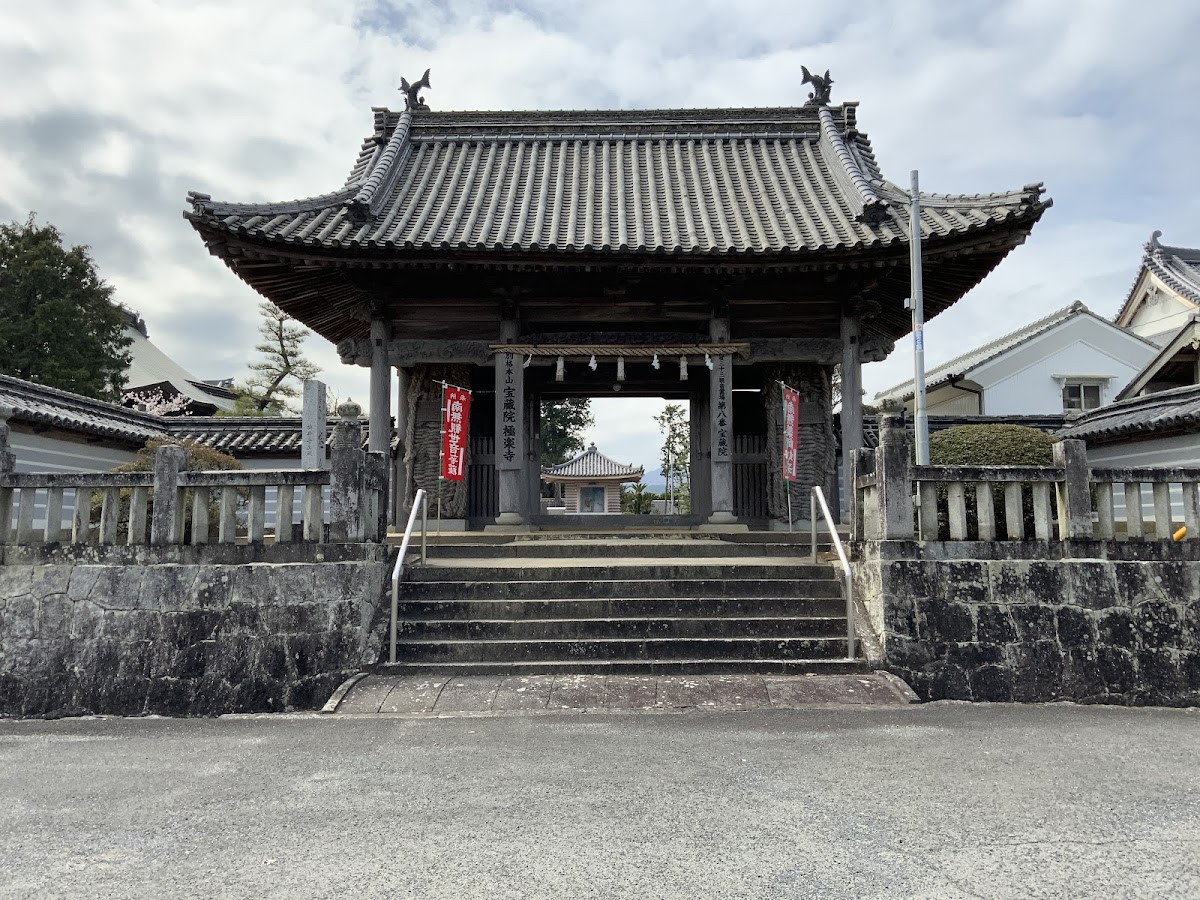
- Bow at the main gate
- Purify yourself at the water basin
- Ring the bell at the bell tower (refrain from doing so in the afternoon)
- Worship at the main hall (offer a votive slip, make a donation, and chant sutras)
- Worship at the Daishi Hall (offer a votive slip, make a donation, and chant sutras)
- Receive your temple stamp (Goshuin) at the temple office
- Bow at the main gate and exit
Temple Stamp Reception Hours
- Temple Stamp Reception Hours: 7:00 AM – 5:00 PM
- New Year’s Holidays: Reception as usual
Access
Access by Train
- JR Yosan Line: Get off at Kokubu Station, approximately 10 minutes on foot
- Kotoden Kotohira Line: Get off at Kokubu Station and walk for about 15 minutes.
The train ride from Takamatsu Station to Kokubu Station takes about 15 minutes. The path from the station to the temple is flat and easy to walk.
Access by Car
- Takamatsu Expressway: Approximately 10 minutes from Takamatsu-Nishi Interchange
- From Takamatsu City Center: Approximately 20 minutes via National Route 11
Parking
There is a free parking lot on the temple grounds, with space for approximately 30 regular cars. There is also space for large buses.
Distance to Nearby Temples
- Temple No. 79, Tennoji: Approximately 7km (approximately 15 minutes by car)
- Temple No. 81, Shiramineji: Approximately 9km (approximately 20 minutes by car)
Annual Events
Main Events
Sanuki Kokubunji Temple holds various Buddhist services and events throughout the year:
- New Year: First Shrine Visit of the Year, Shusho-e Ceremony
- Spring: Spring Equinox Ceremony
- Summer: Segaki Ceremony
- Autumn: Autumn Equinox Ceremony
- Year-End: New Year’s Eve Bell Ringing
Special Buddhist Services
A memorial service for Kobo Daishi is held every month on the 21st, the anniversary of his death. The spring Mikage-ku (March 21st) is particularly grand.
Points and Precautions for Visiting the Temple
Attire for Visiting
The formal attire for the Shikoku Pilgrimage is a white robe, straw hat, and walking stick, but visiting in everyday clothes is also acceptable. However, please avoid revealing clothing and dress modestly.
Photography
Photography is generally permitted on the temple grounds, but photography inside the main hall and of Buddha statues may be prohibited. Please check before taking photos or follow the signs.
Time Required
A typical visit takes about 30 minutes to 1 hour. If you want to explore the temple grounds thoroughly, allow 1.5 to 2 hours. If you also plan to visit the museum, please add another 30 minutes to 1 hour.
Goshuin (Temple Stamp)
You can receive a Goshuin (temple stamp) at the Nokyo-jo (temple stamp office). It can be written on your pilgrimage notebook, white robe, hanging scroll, etc. The fee is 300 yen.
Nearby Tourist Attractions
Sanuki Kokubun-niji Temple Ruins
The ruins of the Kokubun-niji Temple, built at the same time as the Sanuki Kokubun-ji Temple, are located nearby and are preserved as a historical site. Visiting both the Kokubun-ji Temple and the Kokubun-niji Temple will give you a deeper understanding of Buddhist culture during the Nara period.
Tourist Attractions in Takamatsu City
It takes about 20 minutes by car from Sanuki Kokubun-ji Temple to downtown Takamatsu. It also offers good access to representative tourist attractions of Kagawa Prefecture, such as Ritsurin Garden, Takamatsu Castle Ruins (Tamamo Park), and Yashima.
Sanuki Udon
Sanuki udon is a must-try in Kagawa Prefecture. There are many delicious udon restaurants around the Kokubun-ji Temple. Enjoying authentic Sanuki udon after your visit is highly recommended.
The Charm of Sanuki Kokubun-ji Temple
The greatest charm of Sanuki Kokubun-ji Temple is the opportunity to feel the weight of its long 1300-year history firsthand. Founded during the Nara period, with the involvement of Kukai, and featuring a main hall dating back to the Kamakura period, Sanuki Kokubunji Temple continues to attract the faith of many as a pilgrimage site on the Shikoku Pilgrimage. You can immerse yourself in this continuous flow of history.
The fact that a historical site designated as a Special Historic Site coexists with a currently active temple is also invaluable. Sanuki Kokubunji Temple is a place where the past and present coexist, where history lives on.
The modern undertaking of creating a statue of Dainichi Nyorai, recreating Kukai’s ideal, demonstrates Sanuki Kokubunji Temple’s attitude of embracing new things while preserving tradition. As a unique endeavor in the world, it has attracted the attention of many visitors.
The tranquil atmosphere that permeates the temple grounds, the beautiful nature, and the sight of a calico cat—all of these harmonize to heal the hearts of visitors and provide peace.
Summary
Sanuki Kokubunji Temple is the 80th temple of the Shikoku 88 Temple Pilgrimage, located in Takamatsu City, Kagawa Prefecture. Founded in 741 AD by the imperial decree of Emperor Shomu, this temple boasts a 1300-year history, with Gyoki as its founder and Kukai restoring the main image of worship.
The main hall, built in the mid-Kamakura period, is a nationally designated Important Cultural Property, and the vast area including the temple grounds is designated a nationally designated Special Historic Site, making it a nationally valuable site as the only Special Historic Site in Shikoku.
It offers numerous attractions, including the world’s only attempt to recreate Kukai’s ideal image of Dainichi Nyorai, a beautiful Benzaiten statue, and a calico cat roaming the grounds. At the adjacent Sanuki Kokubunji Ruins Museum, you can view valuable artifacts unearthed during archaeological excavations free of charge.
It’s easily accessible, about a 10-minute walk from JR Kokubun Station and about a 10-minute drive from Takamatsu-Nishi Interchange, and free parking is available. It’s a recommended spot not only for Shikoku pilgrims but also for those interested in history and cultural properties, and those seeking a peaceful retreat.
Why not visit Sanuki Kokubunji Temple, where 1300 years of history still thrive, and experience the profound depths of Japanese Buddhist culture in a peaceful setting?