Yoshinji Temple (Hioki City, Kagoshima Prefecture) Complete Guide | History, Access, and Goshuin Information
Yōshinji Temple, located in Yōbo, Higashiichiki-chō, Hioki City, Kagoshima Prefecture, is a historic temple belonging to the Jōdo Shinshū Honganji sect. It has a history of contributing to the local community during the turbulent post-war period and remains a beloved spiritual center for the local people. This article comprehensively introduces information you should know before visiting, including the history of Yoshinji Temple, highlights of the temple grounds, access methods, and annual events.
Basic Information about Yoshinji Temple
Yōshinji Temple is a Jōdo Shinshū Honganji sect temple located at 13245 Yōbo, Higashiichiki-chō, Hioki City, Kagoshima Prefecture.
Location: 13245 Yōbo, Higashiichiki-chō, Hioki City, Kagoshima Prefecture 899-2311
Phone Number: 099-274-9728
Sect: Jōdo Shinshū Honganji-ha
Affiliation: Kawauchi District, Kagoshima Diocese
The Jōdo Shinshū Honganji-ha is one of the largest Buddhist sects in Japan, with Shinran Shōnin as its founder and Nishi Honganji Temple in Kyoto as its head temple. It preaches salvation through the vow of Amida Buddha and is based on the chanting of “Namu Amida Butsu.”
History and Origins of Yōshinji Temple
Post-War Community Contribution Activities
A noteworthy aspect of Yōshinji Temple’s history is its activities in the immediate post-war period. The late Abbot Shinkai, who was homeless at the time, engaged in charitable activities that transcended sectarian boundaries.
Abbot Shinkai used alms he received to cook and provide meals to orphaned mothers and children in the region, which was still deeply scarred by war. This activity provided support to the local community during the chaotic post-war period, demonstrating that Yoshinji Temple was not merely a religious institution but played a central role in the local community.
Historical Background of the Jodo Shinshu Honganji School
The Jodo Shinshu Honganji School was founded by Shinran Shonin (1173-1263), a monk of the Kamakura period. Shinran Shonin studied the teachings of the Jodo sect as a disciple of Honen Shonin, and further deepened those teachings to establish Jodo Shinshu.
The propagation of Jodo Shinshu in Kagoshima Prefecture began in earnest during the Edo period. The Satsuma Domain, under the rule of the Shimazu clan, had developed its own unique culture, and Buddhist temples were also under the control of the domain. After the Meiji Restoration, many temples suffered damage due to the anti-Buddhist movement, but Jodo Shinshu temples were relatively unaffected and remained deeply rooted in the community.
Yoshinji Temple Grounds and Highlights
Main Hall
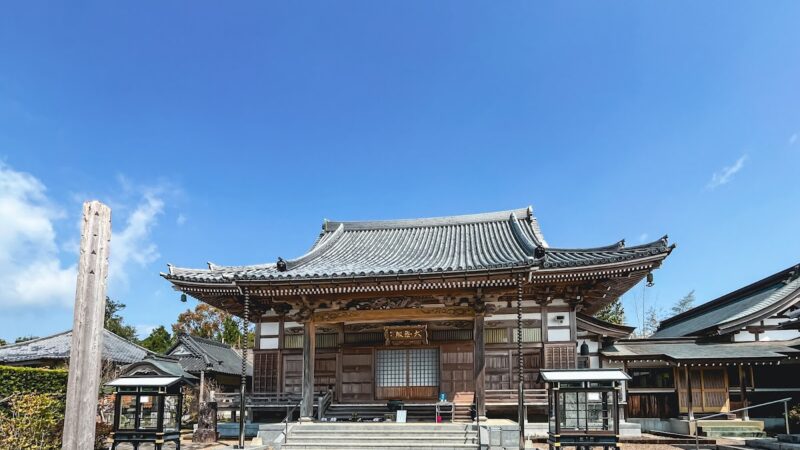
The main hall of Yoshinji Temple follows the traditional architectural style of the Jodo Shinshu Honganji sect. An Amida Buddha statue is enshrined inside, and daily services and ceremonies are held there.
The main hall of a Jodo Shinshu Honganji sect temple is generally divided into an inner and outer sanctuary. The inner sanctuary houses the principal image of Amida Buddha, a portrait of Shinran Shonin, and portraits of successive heads of the sect. The outer sanctuary is a space for worshippers to sit and is used for sermons and ceremonies.
Atmosphere of the Temple Grounds
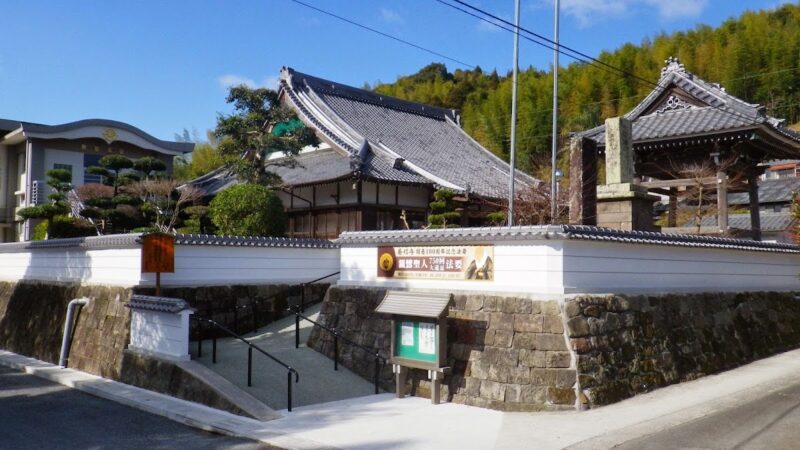
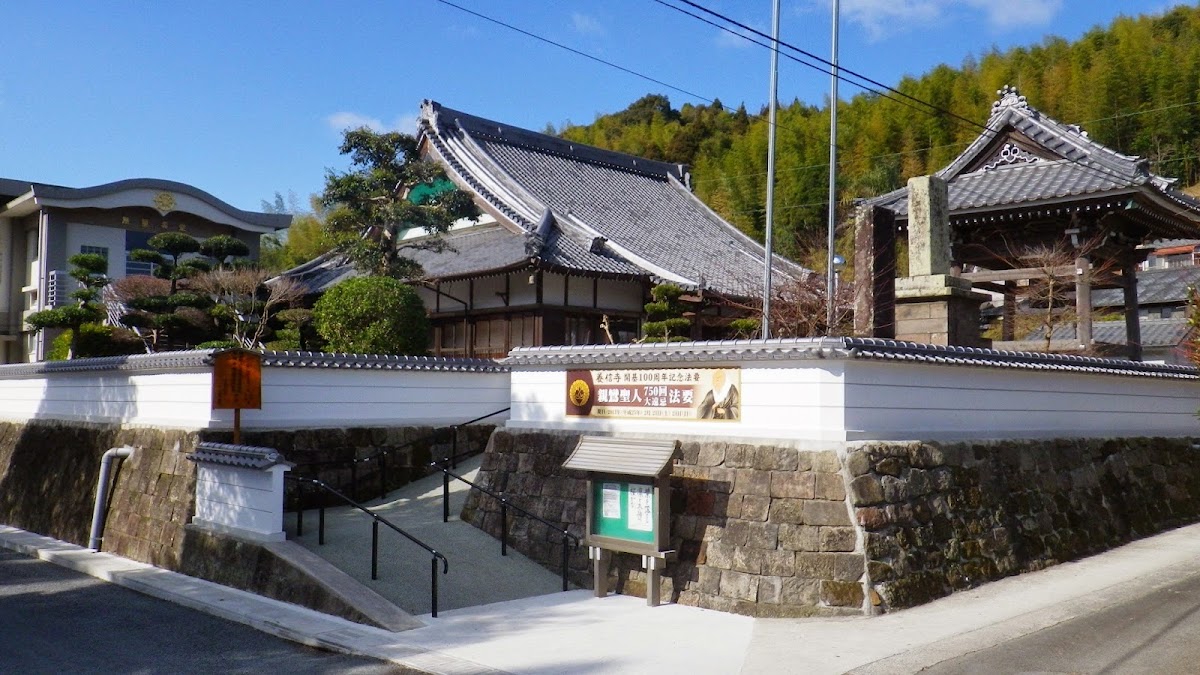
Yoshinji Temple is located in the Yobo district of Higashiichiki-cho, Hioki City, surrounded by a rich natural environment. A peaceful setting awaits visitors, providing a calm and peaceful space for worship. The temple grounds are adorned with various plants that change with the seasons, providing tranquility to visitors. The scenery is particularly beautiful during the cherry blossom season in spring and the autumn foliage season.
Access Methods
Access by Train
Nearest Station: JR Kagoshima Main Line “Higashiichiki Station”
Distance from Station: Approximately 5.3km
It takes about an hour to walk from Higashiichiki Station, so using a taxi or car is more convenient. There is a taxi stand in front of the station, and it takes about 10 minutes to reach Yoshinji Temple.
Access by Car
From Kagoshima City:
Head north on National Route 3 towards Hioki City. Enter Higashiichiki Town and take prefectural and municipal roads to Yoshinji Temple. The journey takes about 40 minutes.
If using the Minami-Kyushu Expressway:
Exit at the Miyama Interchange and take the prefectural road towards Higashiichiki Town. It takes approximately 15 minutes to arrive from the interchange.
Parking
Yōshinji Temple has parking spaces for visitors. It may get crowded during memorial services and events, so it is recommended to allow ample time for your visit.
Annual Events at Yōshinji Temple
Major Memorial Services
As a temple of the Jōdo Shinshū Honganji sect, Yōshinji Temple holds various memorial services throughout the year.
Spring Equinox Service (March)
This service, centered around the spring equinox, is an opportunity for ancestor worship and listening to Buddhist teachings. The equinox period signifies “reaching the other shore,” a time to pray for reaching the other shore of enlightenment from this shore of worldly desires.
Flower Festival (April 8th)
This service celebrates the birth of Shakyamuni Buddha. A ceremony of pouring sweet tea is held, praying for the healthy growth of children.
Obon (August)
During the Obon memorial service, the spirits of ancestors are welcomed and honored. In Jodo Shinshu Buddhism, this is called the “Kanki-e” (Joyful Gathering), emphasizing the joy of reuniting with those who have attained rebirth in the Pure Land.
Autumn Equinox Service (September)
This memorial service, held around the autumnal equinox, includes ancestral memorial services, similar to the spring equinox service.
Ho-on-ko (November-December)
This is the most important memorial service in Jodo Shinshu Buddhism, commemorating the virtues of the founder, Shinran Shonin, and expressing gratitude. It is held grandly at each temple, attracting many followers.
Monthly Events
Yoshinji Temple holds a regular monthly Dharma talk (sermon meeting). It provides an opportunity to listen to a Dharma talk by the head priest and learn about Buddhist teachings. Participation is free, and non-parishioners are also welcome.
Teachings and Characteristics of the Jodo Shinshu Honganji School
Basic Doctrines
The teachings of the Jodo Shinshu Honganji School center on salvation through the power of Amida Buddha’s original vow. Shinran Shonin expounded the “doctrine of salvation for the wicked,” teaching that ordinary people, who find self-effort in spiritual practice difficult, are precisely the ones who are the recipients of Amida Buddha’s salvation.
The chanting of “Namu Amida Butsu” is not for the purpose of spiritual practice or accumulating merit, but rather an expression of gratitude for Amida Buddha’s salvation. This concept of “reliance on the power of others” means entrusting oneself to the compassion of Amida Buddha rather than relying on one’s own strength.
Characteristics of Funerals and Memorial Services
Jodo Shinshu funerals are ceremonies to send the deceased to the Pure Land as a disciple of Buddha. Unlike other sects, a “Dharma name” is bestowed instead of a posthumous Buddhist name, and it is taught that rebirth in the Pure Land occurs not through attaining Buddhahood after death, but through the power of Amida Buddha’s original vow.
Instead of using memorial tablets, the posthumous Buddhist name is recorded in a family register. Furthermore, the concept of memorial services differs; instead of praying for the deceased’s peaceful repose, the service is considered an opportunity for the bereaved family to engage with Buddhist teachings and deepen their faith through their connection with the deceased.
History and Culture of Higashiichiki-cho, Hioki City
Overview of Higashiichiki-cho
Before the merger of four towns in the former Hioki County to form Hioki City in 2005, Higashiichiki-cho was an independent town. It has a long history as a transportation hub and a post town on the Satsuma Highway.
The place name “Yōbo” is an old place name in this area, indicating a rich natural environment and a thriving agricultural region.
Nearby Attractions
Miyama Tōyūkan
A facility where you can learn about the traditions of Satsuma ware, and pottery making experiences are also available. It is approximately a 20-minute drive from Yōshinji Temple.
The Path to Myoenji Temple
The Myoenji Temple pilgrimage, held every October, is one of Kagoshima’s three major events. This traditional event commemorates the “Shimazu Retreat,” where Shimazu Yoshihiro broke through enemy lines during the Battle of Sekigahara. Many participants walk towards Tokushige Shrine.
Fukiagehama Beach
Fukiagehama Beach, one of Japan’s three largest sand dunes, is about a 30-minute drive from Higashiichiki Town. Enjoy the beautiful coastline and sunset views.
Manners and Etiquette for Worship
Worship Etiquette in Jodo Shinshu Buddhism
Worship in Jodo Shinshu Buddhism differs slightly from other sects.
Gassho and Prostration:
Upon entering the main hall, perform gassho (palms together in prayer) and prostration towards the principal image of Amida Buddha. Do not clap your hands; simply place your hands together quietly.
Nembutsu (Buddhist chanting):
Recite “Namu Amida Butsu” silently or softly. This is not a spiritual practice, but an expression of gratitude to Amida Buddha.
Offering:
If there is an offering box, you can make an offering. There is no set amount; offer according to your feelings.
Clothing and Belongings
For regular visits, no special attire is required, but clean and subdued clothing is desirable. For memorial services, formal attire such as semi-formal wear or a black suit is appropriate.
While there are prayer beads for Jodo Shinshu Buddhism, it is not necessary to bring one. Taking photographs inside the main hall is discouraged, or permission should be obtained beforehand.
About Goshuin (temple stamps) and Nokyo (sutra offerings)
Jodo Shinshu Buddhism and Goshuin
Many temples of the Jodo Shinshu Honganji sect traditionally do not issue Goshuin. This is because the doctrines of Jodo Shinshu Buddhism are based on “reliance on the power of others,” and differ from the idea of leaving a tangible record of worship or merit.
Regarding the issuance of Goshuin (temple stamps) at Yoshinji Temple, it is recommended to check by phone in advance. However, some temples do offer commemorative stamps or certificates of worship.
Sutra Offering and Sutra Copying
While Jodo Shinshu Buddhism does not have the concept of accumulating merit through sutra copying, it is sometimes practiced as a means of learning Buddhist teachings. Please inquire directly with Yoshinji Temple to inquire about sutra copying sessions or other events held there.
About Graves and Interment
Yoshinji Temple Cemetery
Yoshinji Temple has a cemetery, which is used as a burial place for parishioners and those who wish to be interred there. There may be restrictions on cemetery use depending on the sect and region, so please inquire directly with the temple for details.
Interment and Perpetual Memorial Service
In recent years, due to the declining birthrate, aging population, and the rise of nuclear families, the inheritance of graves has become increasingly difficult. Yoshinji Temple may also offer consultations regarding columbariums and perpetual memorial graves.
Perpetual memorial services are a system where the temple takes responsibility for continuing memorial services, and are chosen by those who have no successors or who do not want to burden their descendants. Costs and conditions vary depending on the temple, so it is important to consult in advance.
How to Contact Yoshinji Temple
Inquiries by Phone
Phone Number: 099-274-9728
We handle various inquiries, including applications for memorial services, consultations regarding cemeteries, and confirmation of annual event schedules. When calling, it is appropriate to call between 9:00 AM and 5:00 PM on weekdays. Please avoid calling early in the morning, late at night, or during memorial services.
Visiting in Person
If it is your first visit or you have an important consultation, it is polite to inform us of your intention to visit by phone in advance. Since the head priest may be absent or unavailable due to memorial services, it is recommended to make an appointment.
Nearby Temples and Shrines
Major Temples in Hioki City
Myoenji Temple Ruins (Tokushige Shrine)
This shrine is dedicated to Shimazu Yoshihiro, who played an active role in the Battle of Sekigahara, and is famous for the annual Myoenji Pilgrimage in October. Approximately 15 minutes by car from Yoshinji Temple.
Takenouchi Cemetery
This is the burial site of the Shimazu family and a historically important place. Approximately 20 minutes by car from Yoshinji Temple.
Temples and Shrines in Ichikikushikino City
Kanmuri-dake Shrine
This shrine is known as a sacred site for Shugendo (mountain asceticism) and has a history of mountain worship. Approximately 25 minutes by car from Yoshinji Temple.
Terushima Shrine
This shrine is worshipped as the guardian deity of the sea and faces a beautiful coastline. Approximately 30 minutes by car from Yoshinji Temple.
Precautions When Visiting Yoshinji Temple
Mindset When Visiting
Temples are religious facilities and places of worship. Even when visiting for sightseeing purposes, it’s important to show respect. Please refrain from loud conversations and eating or drinking on the temple grounds.
Photography Etiquette
While taking photos of the temple grounds is generally acceptable, photography inside the main hall or of Buddha statues may be restricted. Always obtain permission beforehand. It’s also important to be considerate of the privacy of other visitors and those performing religious services.
Visiting with Children
Families with children are welcome, but it’s necessary to maintain a quiet environment. Parents should ensure their children do not run around or shout.
Characteristics of Jodo Shinshu Temples in Kagoshima Prefecture
Satsuma Domain and Buddhism
Throughout the Edo period, the Satsuma Domain pursued its own unique policies regarding Buddhism. While the Shimazu clan, the domain lords, protected the Soto and Rinzai sects, they also strictly controlled temples.
During the anti-Buddhist movement after the Meiji Restoration, Kagoshima Prefecture was one of the regions in Japan that suffered the most severe temple destruction. Many temples were abandoned, and Buddhist statues and scriptures were lost. However, Jodo Shinshu temples suffered relatively little damage and continued to support local faith.
Jodo Shinshu in Modern Kagoshima Prefecture
Currently, there are many Jodo Shinshu Honganji-ha temples in Kagoshima Prefecture, organized as the Kagoshima Diocese. The Sendai Group is one of them, comprising temples in the area centered around Satsumasendai City.
Yōshinji Temple also belongs to this Sendai Group and, in cooperation with local Jodo Shinshu temples, engages in missionary activities and social contribution.
Summary
Yōshinji Temple, a Jodo Shinshu Honganji-ha temple located in Higashiichiki-cho, Hioki City, Kagoshima Prefecture, has a history of community contribution after the war and continues to engage in activities rooted in the local community.
The post-war charitable activities of Abbot Shinkai represent a practice of human compassion that transcends sectarian boundaries and form the spiritual foundation of Yōshinji Temple. Based on the teachings of Jodo Shinshu Buddhism, Yoshinji Temple functions as a spiritual haven for the local community and is well worth a visit.
When visiting Hioki City, why not stop by Yoshinji Temple and spend some time finding peace in its tranquil grounds? Contacting the temple by phone in advance to inform them of your intention to visit will likely enhance your experience.
Exploring the teachings of Jodo Shinshu Buddhism and learning about the history of a temple that supported the community during the difficult post-war era will be a meaningful experience for us living in the present day.