Complete Guide to Kujoji Temple (Kamakura City, Kanagawa Prefecture) | History, Highlights, and Access Explained in Detail
Kujoji Temple, located in Ueki, Kamakura City, Kanagawa Prefecture, is a Nichiren Buddhist temple situated in the northwestern part of Kamakura. Located in a quiet environment away from the bustling tourist center of Kamakura, it is known as a historical temple with deep ties to the Tokugawa family. This article provides a detailed explanation of Kujoji Temple’s history, highlights within its grounds, and access methods.
Basic Information about Kyusei-ji Temple
Official Name: Kōenzan Kyusei-ji Temple
Sect: Nichiren Buddhism
Mountain Name: Kōenzan
Address: 494 Ueki, Kamakura City, Kanagawa Prefecture 247-0073
Phone Number: 0467-46-2837
Founded: 1520 (Eishō 17)
Founder: Umeda Hidenaga
First Abbot: Nisshun Shōnin
Kyusei-ji Temple is located in the northwestern part of Kamakura City, with part of its grounds bordering Fujisawa City. Because it is not frequently visited by tourists, it maintains a tranquil atmosphere, providing a peaceful environment for worship.
History of Kyusei-ji Temple
Circumstances of Founding
Kyusei-ji Temple was founded in 1520 (Eishō 17). The temple was founded by a man named Umeda Hidenaga, a samurai who served the Odawara Hojo clan. Umeda Hidenaga was a devout follower of the Nichiren sect of Buddhism, and he invited Nichishun Shonin to be the founding priest, establishing the temple in this location.
During the turbulent Sengoku period, it was not uncommon for samurai to rely on their faith and establish temples. Kyusei-ji Temple is one such temple that emerged during this period.
Connection with Tokugawa Ieyasu
A noteworthy aspect of Kyusei-ji Temple’s history is its deep connection with Tokugawa Ieyasu. It is said that during the Battle of Odawara in 1590 (Tensho 18), Tokugawa Ieyasu stopped by Kyusei-ji Temple while on a falconry expedition. Following this visit, Ieyasu bestowed a 3-koku (approximately 1000 koku) temple territory upon Kyusei-ji Temple.
This relationship with the Tokugawa family continued throughout the Edo period, and Kyusei-ji Temple still possesses a vermilion seal document from Tokugawa Tsunayoshi, the fifth Tokugawa shogun. The temple’s official seal document states “Three stones within Tamanawa-go, Kamakura-gun,” indicating that it received continuous patronage from the Tokugawa family.
The use of the three-leaf hollyhock as the temple crest also speaks to its close relationship with the Tokugawa family. The three-leaf hollyhock is known as the Tokugawa family crest, and permission to use it as the temple crest is evidence that Kyusei-ji Temple received special treatment from the Tokugawa family.
Relationship with the Nagao Sadakage Family
Within the grounds of Kyusei-ji Temple is the burial site of the Nagao Sadakage family. The Nagao clan was a powerful samurai family in the Kanto region from the Kamakura period to the Muromachi period, and Nagao Sadakage, in particular, is known as a powerful warlord of Sagami Province.
While detailed records of the relationship between the Nagao clan and Kyusei-ji Temple are not available, it is an important historical site demonstrating the Nagao clan’s significant influence in this region. The relationship between samurai families and temples is an essential element in understanding regional societies from the medieval to the early modern period, and Kyusei-ji Temple preserves a valuable example of this relationship.
Highlights of the Temple Grounds
Main Hall and Temple Crest
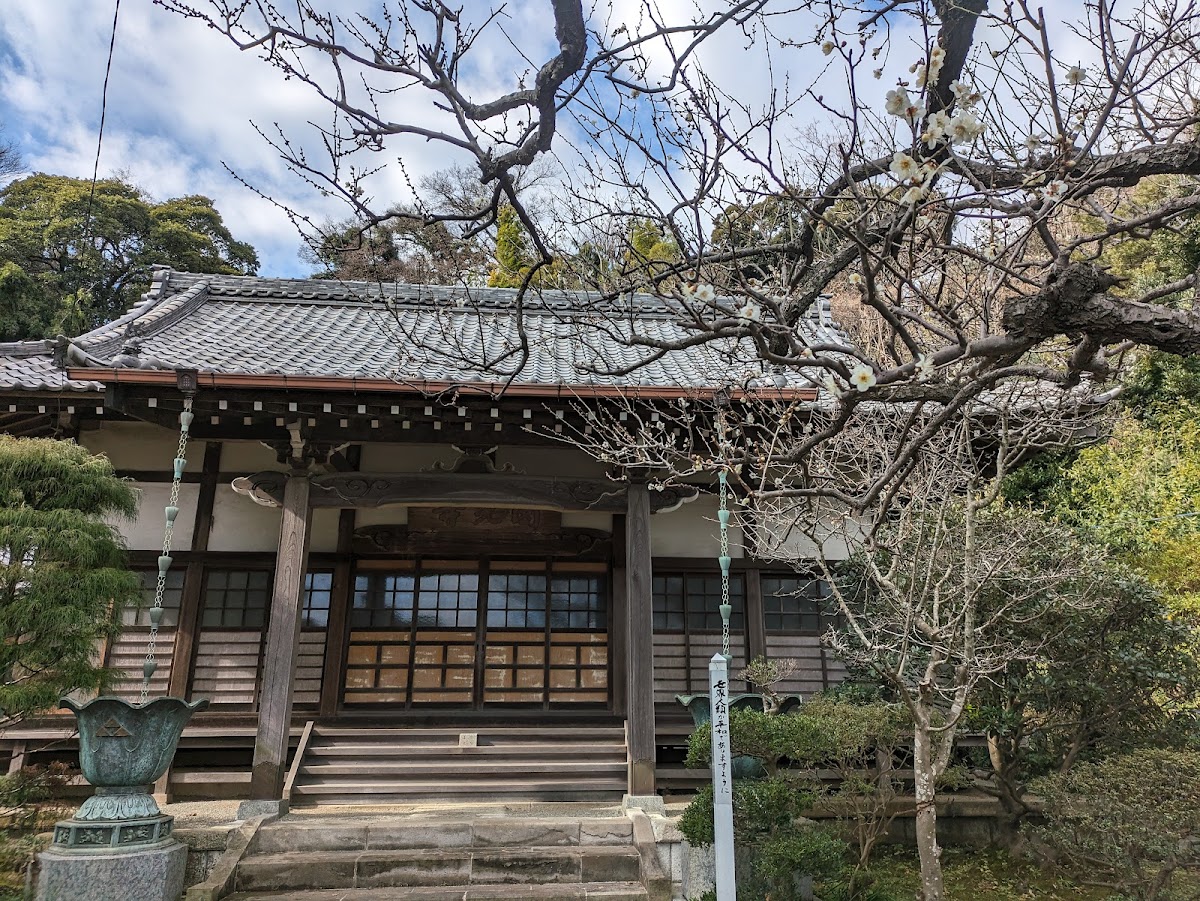
The main hall of Kyusei-ji Temple is an architectural masterpiece that exudes dignity within its tranquil atmosphere. The temple crest, a three-leaf hollyhock, seen throughout the hall, symbolizes its historical connection to the Tokugawa family.
As a Nichiren Buddhist temple, a statue of Nichiren Shonin is enshrined in the main hall, and daily religious services are held there. It is a space where one can pray in peace and tranquility.
Approach to the Temple and Seasonal Flowers
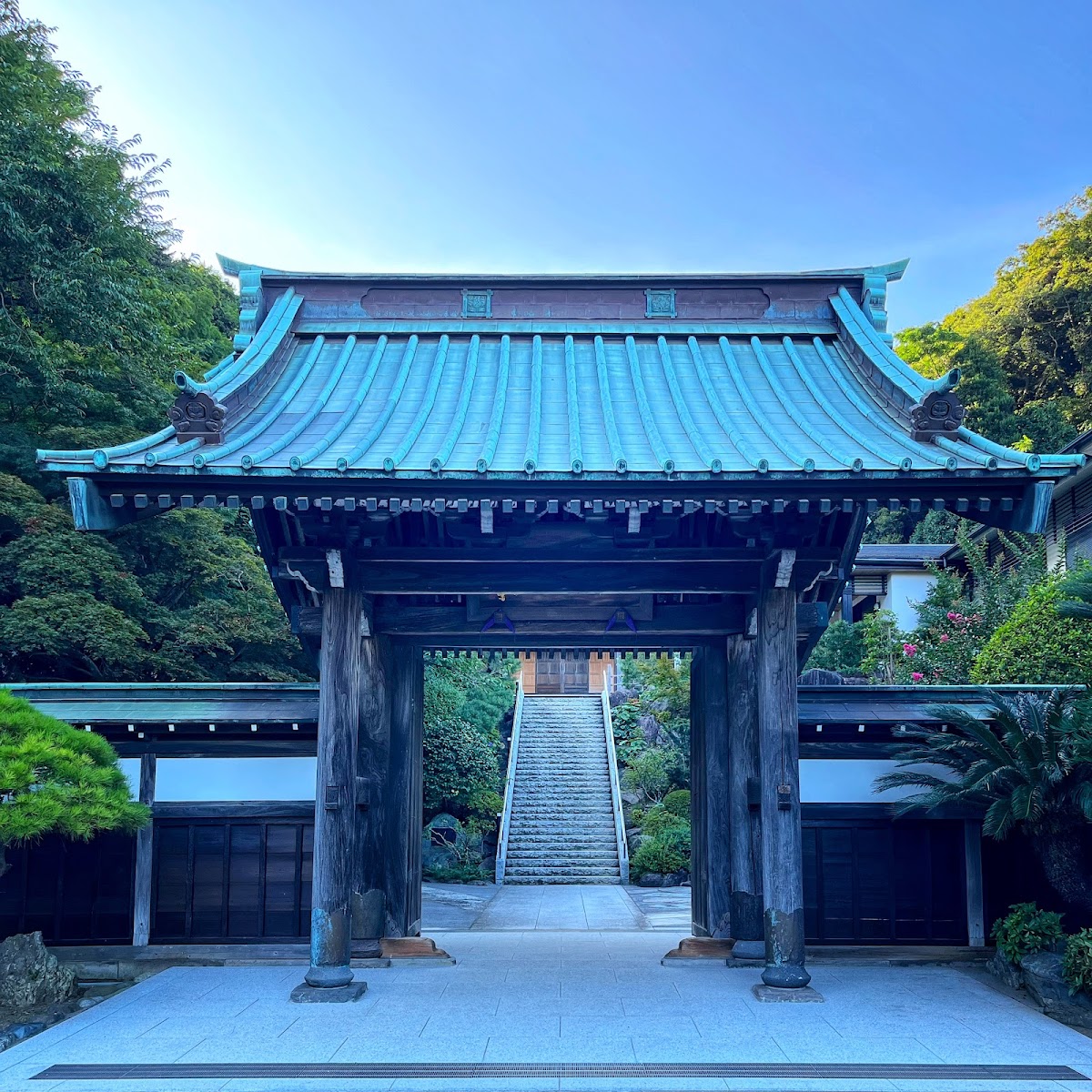
The approach to Kyusei-ji Temple shows a different face with each season. Especially during the rainy season, the hydrangeas planted along the approach bloom beautifully, delighting the eyes of visitors.
While Kamakura is known as a famous spot for hydrangeas, Kyusei-ji Temple, unlike the famous temples that are crowded with tourists, is a hidden gem cherished by locals for its quiet hydrangea viewing.
In addition, azaleas are planted on the temple grounds, blooming in vibrant colors in the spring. You can spend a relaxing time while enjoying the changing seasons.
Nagao Sadakage Family Mausoleum
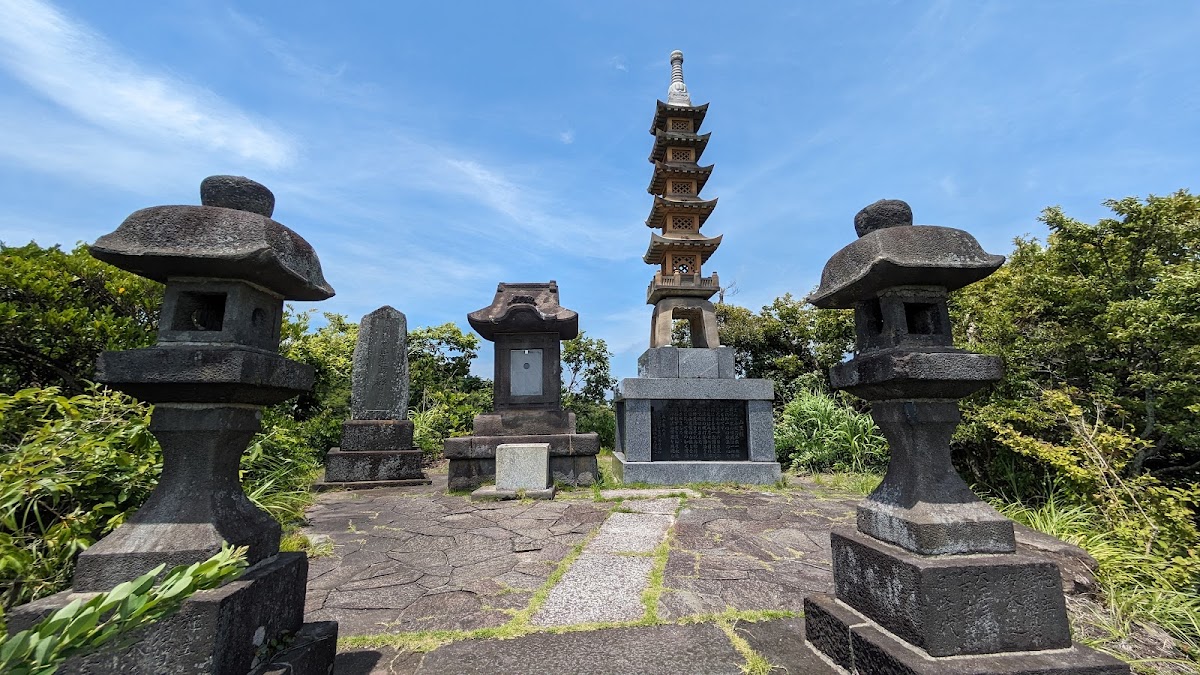
The Nagao Sadakage family mausoleum located within the temple grounds is a valuable historical site that tells the history of a samurai family from the Kamakura period to the Muromachi period. The weathered stone pagodas convey the weight of a long history.
For those interested in history, it is an important point where you can trace the footsteps of a medieval samurai family.
Temple Grounds Enveloped in Silence
It is no exaggeration to say that the greatest charm of Kyusei-ji Temple lies in its tranquility. Located in the northwestern part of Kamakura City and off the main tourist routes, the temple grounds are always enveloped in silence.
It is the perfect place for those who want to escape the hustle and bustle of the city, visit a temple in peace, and quietly feel the history. You can stroll slowly through the temple grounds while listening to the birdsong and the sound of the wind.
Attractions Around Kyusei-ji Temple
Fuan-zaka Slope
Near Kyusei-ji Temple is a slope called “Fuan-zaka Slope.” There are various theories about the origin of this unusual name, but it is a place where you can feel the history of the region.
Kamakura has many slopes, each with its own history and legends. When visiting Kyusei-ji Temple, exploring the surrounding slopes will be another enjoyable experience.
Exploring Temples and Shrines in Northwestern Kamakura
In the northwestern part of Kamakura City, where Kyusei-ji Temple is located, there are many other historical temples and shrines. You can enjoy visiting temples and shrines in a calm atmosphere, different from the bustling tourist center of Kamakura.
If you have time, we recommend taking a leisurely stroll through this area and discovering a different side of Kamakura.
How to Access Kyusei-ji Temple
Access by Train and Bus
Nearest Station: Shonan Monorail “Fujimicho Station”
- From JR Ofuna Station:
- Transfer to the Shonan Monorail and get off at “Fujimicho Station,” then walk for about 10 minutes.
- Alternatively, take the Kanagawa Chuo Kotsu bus and get off at the “Kyusei-ji-mae” bus stop.
- From JR Kamakura Station:
- Take the Kanagawa Chuo Kotsu bus and get off at the “Kyusei-ji-mae” bus stop.
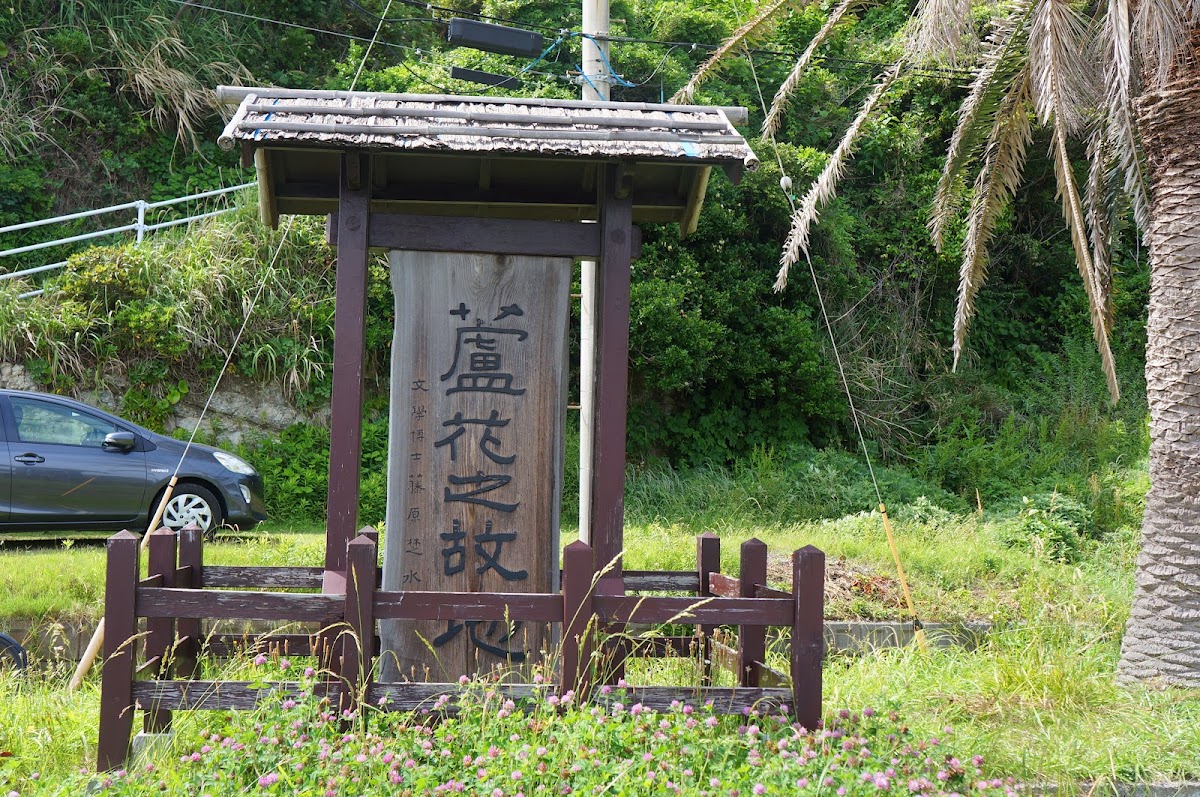
The Kanagawa Chuo Kotsu “Kyusei-ji-mae” bus stop is located directly in front of the entrance to Kyusei-ji Temple, making it very easily accessible. Upon alighting from the bus, you will immediately see a stone monument inscribed with the golden characters “Kōenzan Kyusei-ji.”
Access by Car
Address: 494 Ueki, Kamakura City, Kanagawa Prefecture 247-0073
If visiting by car, please enter the above address into your car navigation system. It is located in the northwestern part of Kamakura City, near the border with Fujisawa City.
It is recommended to check with the temple in advance regarding parking availability. Since the surrounding area is residential, please avoid street parking.
Notes on Access
Kyuseiji Temple is located away from the center of Kamakura, so it is more appropriate to visit it as a destination rather than stopping by as an afterthought to other temples and shrines around Kamakura Station.
Bus services are less frequent than in the city center, so it is recommended to check the timetable in advance. Knowing the return bus schedule is especially important.
Notes and Manners for Visiting
Visiting Hours
Kyuseiji Temple is generally open for daytime visits, but it is recommended to check the specific visiting hours in advance. It is best to avoid visiting early in the morning or after sunset. ### Temple Visiting Etiquette
- Maintain Silence: Kyusei-ji Temple is a temple that maintains a quiet environment. Please refrain from loud conversations and making noise.
- Photography: Photography is generally permitted on the temple grounds, but please refrain from taking pictures inside the main hall or during religious ceremonies. Also, please be considerate of other visitors.
- Behavior on Temple Grounds: Remember that the temple grounds are a place of worship, and please behave with moderation.
- Take Your Trash Home: Please take your trash home with you to help maintain the beauty of the temple grounds.
The Charm and Value of Visiting Kyusei-ji Temple
Value for History Enthusiasts
Kyusei-ji Temple is a valuable temple that conveys the history from the Sengoku period to the Edo period. Its relationship with the Tokugawa family, in particular, is an interesting example for understanding the relationship between the Edo Shogunate and temples.
With its many historical points of interest, including the temple’s crest of the three-leaf hollyhock, a vermilion seal document from Tokugawa Tsunayoshi, and the burial grounds of the Nagao Sadakage family, this temple is well worth a visit for history buffs.
Value for Those Seeking Tranquility
In contrast to the famous temples of Kamakura, which have become tourist destinations, Kyusei-ji Temple maintains an environment enveloped in tranquility. It is an ideal place for those who want to escape the hustle and bustle of the city, find peace of mind, and spend time in meditation.
Especially on weekday mornings, there are hardly any people, allowing you to fully appreciate its charm as a “hidden gem.”
Value for Enjoying Seasonal Flowers
The grounds of Kyusei-ji Temple, which show different expressions with each season, such as hydrangeas in the rainy season and azaleas in spring, are also attractive as a place to admire flowers.
A major advantage is that it is not crowded like the famous hydrangea temples, allowing you to enjoy the flowers at your leisure. For those who enjoy photography, the calm environment for taking pictures is invaluable.
Kamakura Sightseeing Plan Including Kyusei-ji Temple
Half-Day Course: A Quiet Tour of Temples and Shrines in Northwestern Kamakura
- Morning: Meet at Ofuna Station
- Visit Kyusei-ji Temple (1 hour)
- Visit nearby temples and shrines (2 hours)
- Lunch: Around Ofuna Station
This course is recommended for those who want to avoid the crowded central area of Kamakura and quietly experience its history.
Full-Day Course: Enjoying the Front and Back Sides of Kamakura
- Morning: Famous Temples and Shrines Around Kamakura Station
- Lunch: Around Kamakura Station
- Afternoon: Travel to Kyusei-ji Temple by bus
- Visit Kyusei-ji Temple
- Return: Depart from Ofuna Station
This course allows you to enjoy both sides of Kamakura: the bustling tourist destination and the quiet place of worship.
Frequently Asked Questions (FAQ)
Q1: Can I get a Goshuin (temple stamp) at Kyusei-ji Temple?
A1: You can receive a Goshuin (temple stamp) at Kyusei-ji Temple. However, the head priest may be absent, so if you want to be sure to receive a Goshuin, we recommend calling ahead to confirm.
Q2: Is there an entrance fee to Kyusei-ji Temple?
A2: Entry to the grounds of Kyusei-ji Temple is generally free. However, offerings and donations are optional.
Q3: Is Kyusei-ji Temple accessible by wheelchair?
A3: Some parts of the temple grounds have steps, so wheelchair access may be restricted. We recommend contacting the temple in advance to confirm accessibility.
Q4: Can I consult about memorial services or graves at Kyusei-ji Temple?
A4: Kyusei-ji Temple has its own temple cemetery, and consultations regarding graves and memorial services are available. For details, please contact the temple directly. The phone number is 0467-46-2837.
Q5: What is the best time to visit Kyusei-ji Temple?
A5: The hydrangeas are beautiful during the rainy season (June), and the azaleas are in full bloom in spring (April-May). However, the quiet temple grounds are charming throughout the year, and there is a unique atmosphere no matter when you visit. If you want to avoid crowds, we recommend visiting on a weekday outside of the tourist season.
Q6: Are there any places to eat near Kyusei-ji Temple?
A6: Since the area around Kyusei-ji Temple is residential, there are not many restaurants. We recommend eating near Ofuna Station or Kamakura Station.
Q7: Is the “Three-Leaf Aoi” crest of Kyusei-ji Temple unusual?
A7: The Three-Leaf Aoi is famous as the family crest of the Tokugawa family, and its use as a temple crest is very special. It is evidence of the special patronage received from the Tokugawa family and can be said to be a symbol of Kyusei-ji Temple’s historical importance.
Summary: Kyusei-ji Temple: A Hidden Historical Heritage of Kamakura
Kyusei-ji Temple, located in Ueki, Kamakura City, Kanagawa Prefecture, is a tranquil Nichiren Buddhist temple, far removed from the bustling tourist center of Kamakura. Founded in 1520 (Eisho 17), it boasts a history of over 500 years, and its deep connection to the Tokugawa family is still evident in its temple crest (three-leaf hollyhock) and official seal documents.
Within the temple grounds is the burial site of the Nagao Sadakage family, a valuable historical site that conveys the relationship between samurai and temples from the medieval to early modern periods. Seasonal flowers, such as hydrangeas in the rainy season and azaleas in spring, delight visitors.
While conveniently located just a short walk from the “Kyusei-ji-mae” bus stop on the Kanagawa Chuo Kotsu bus line, it remains largely unspoiled by tourists, maintaining a peaceful environment for worship. It is a temple of value for history buffs, those seeking tranquility, and those who appreciate seasonal flowers.
When visiting Kamakura, why not venture beyond the famous tourist spots and visit hidden gems like Kyusei-ji Temple? There, you’ll be able to experience the true essence of a temple, far removed from the hustle and bustle, and feel the weight of its deep history.