Complete Guide to Shugenji Temple | A Flower Temple in Hase, Kamakura, Built on the Site of Shijo Kingo’s Residence
Shugenji Temple, located in Hase, Kamakura, is a hidden gem that many tourists overlook, despite its convenient location just a one-minute walk from Hase Station on the Enoden Line. However, this small temple is packed with attractions worth visiting, including important historical significance of the Nichiren sect, beautiful flowers throughout the seasons, and a valuable stone monument inscribed by Admiral Togo Heihachiro, a hero of the Russo-Japanese War.
This article comprehensively introduces everything you need to know before visiting Shugenji Temple, from its historical background and highlights within the grounds to its deep connection with Shijo Kingo, how to enjoy the seasonal flowers, information on temple stamps, and even nearby tourist spots.
What is Shugenji Temple? | Basic Information on Kamakura’s Hidden Nichiren Sect Temple
Temple Overview and Basic Data
Shugenji Temple is a Nichiren sect temple located in Hase, Kamakura, Kanagawa Prefecture. The temple’s mountain name is Shijōsan, and its principal image is the Ten Realms Mandala. Its former head temple was Gyōjizan Kōsokuji, and it belongs to the Ikegami-Tsuchitomi lineage.
The founding priest is said to be Myōkei-ni, and the founder is Enshuin Nichiyū Shōnin. While Kamakura has many ancient temples founded during the Kamakura period, Shūgenji is classified as a relatively new temple, founded during the Bunsei era of the late Edo period (1818-1829, or according to one theory, 1830 (Bunsei 13)).
Location and Characteristics of Shūgenji
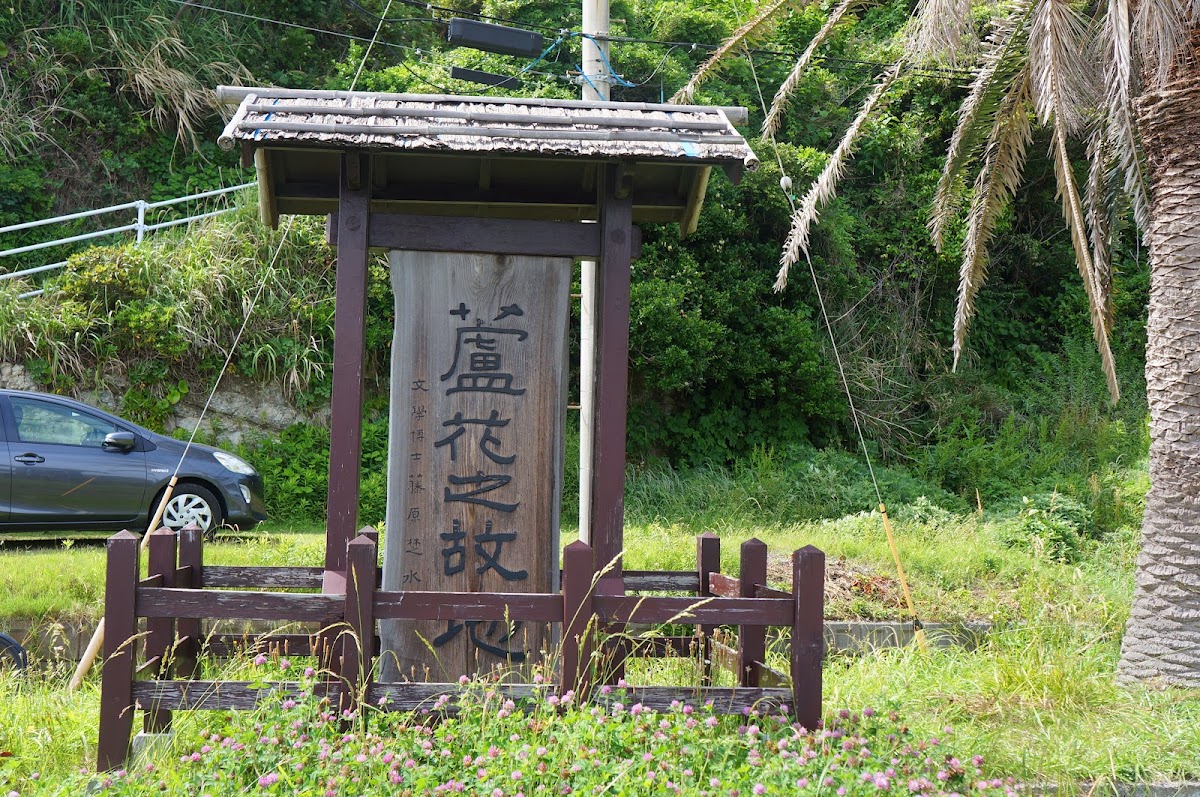
Located along the street leading from Enoden Hase Station to Hase-dera Temple and the Kamakura Daibutsu (Kōtoku-in), it is marked by a black gate and a stone monument marking the “Site of Shijō Kingo’s Residence.” The temple grounds are small, but a beautifully maintained garden and seasonal flowers welcome visitors. Many tourists heading to popular tourist spots like Hase-dera Temple and the Kamakura Great Buddha pass by Shugen-ji Temple without noticing it. However, if you stop and enter the temple grounds, you’ll find it’s a hidden gem where you can pray in a quiet and peaceful atmosphere.
The Deep Connection Between Shijo Kingo and Shugen-ji Temple | Historical Background
Who Was Shijo Kingo (Shijo Yorimoto)?
When discussing Shugen-ji Temple, it’s essential to mention Shijo Kingo, also known as Shijo Yorimoto (1224-1296). He was a samurai during the Kamakura period and a retainer of Ema Mitsutoki, the grandson of Hojo Yoshitoki (the second regent).
Shijo Kingo is known as one of Nichiren’s most loyal followers, and his Buddhist name was Shugen-in Nichirai. The deep religious bond between Shijo Kingo and Nichiren is evident from the numerous letters (Gosho) that Nichiren wrote to his followers, addressed to Shijo Kingo.
The Tatsunokuchi Persecution and Shijo Kingo’s Loyalty
An event symbolizing Shijo Kingo’s faith is the “Tatsunokuchi Persecution,” which occurred on September 12, 1271 (Bun’ei 8). This was a major incident, considered one of the four great persecutions of Nichiren, in which Nichiren was nearly executed at Tatsunokuchi in Kamakura (present-day Katase, Fujisawa City).
At this time, Shijo Kingo defied the orders of his lord, Ema Mitsutoki, and followed Nichiren to Tatsunokuchi, prepared to die alongside him. This selfless act is a beautiful story that has been passed down in the history of the Nichiren sect.
Historical Significance of Shijo Kingo’s Residence
The site where Shugenji Temple now stands is believed to be the very location of Shijo Kingo’s residence. During the Kamakura period, Shijo Kingo’s residence existed in this Hase area, and it is thought to have been the setting for his interactions with Nichiren.
Shijo Kingo received many writings from Nichiren, including not only guidance on faith but also advice on daily life and how to serve one’s lord. This residence is one of the sacred sites of great importance in the history of the Nichiren sect.
Founding and Historical Changes of Shugenji Temple
Founding in the Late Edo Period | From Shugen-an to Shugenji Temple
The origins of Shugenji Temple date back to the Bunsei era (1818-1829) of the late Edo period. It is believed to have begun with the construction of a small hermitage called “Shugen-an” on the site of Shijo Kingo’s residence. The name of this Shugen-an temple originates from the Buddhist name of Shijo Kingo, “Shugen-in Nichirai.”
Initially a small hermitage, it was built to honor Shijo Kingo, a loyal follower of Nichiren Buddhism. The late Edo period was a time when Nichiren Buddhism was widely practiced among the common people, and movements to commemorate historical believers like Shijo Kingo were seen throughout the country.
The Meiji Era’s Anti-Buddhist Movement and Temple Deterioration
With the arrival of the Meiji era, Shugen-ji Temple faced a major challenge. Amidst the Meiji government’s decree separating Shinto and Buddhism and the subsequent anti-Buddhist movement, many temples were destroyed or fell into disrepair.
Shugen-ji Temple was no exception; during this period, it lost its function as a temple and fell into a dilapidated state. It is believed that its small size made maintenance difficult.
Reconstruction in the Taisho Era | The Efforts of Abbot Nichiji of Kōtoku-ji Temple
Shugen-ji Temple, which had fallen into disrepair, revived during the Taisho era. Nichiji Shonin, the head priest of the nearby Kōtoku-ji Temple, also served as the head priest of Shūgen-ji Temple and dedicated himself to its reconstruction.
Kōtoku-ji Temple is one of the leading Nichiren Buddhist temples in Kamakura and is associated with Nichirō Shonin, a disciple of Nichiren. The fact that the head priest of Kōtoku-ji Temple was involved in the reconstruction of Shūgen-ji Temple speaks to the importance of Shijō Kingo in the Nichiren sect.
Thanks to Nichiji Shonin’s efforts, the main hall and other buildings of Shūgen-ji Temple were renovated, laying the foundation for its current appearance. A deep relationship between Shūgen-ji Temple and Kōtoku-ji Temple has continued ever since.
Highlights of Shūgen-ji Temple Grounds | Stone Monument with Calligraphy by Tōgō Heihachirō and the Beautiful Main Hall
Stone Monument Marking the “Site of Shijō Kingo’s Residence” | Calligraphy by Admiral Tōgō Heihachirō
The most striking feature of the Shūgen-ji Temple grounds is the large stone monument inscribed with “Site of Shijō Kingo’s Residence.” The inscription on this stone monument was written by Admiral Togo Heihachiro (1848-1934), who led the Combined Fleet to victory in the Battle of Tsushima during the Russo-Japanese War.
Togo Heihachiro was known as a devout follower of the Nichiren sect and held deep respect for Nichiren and Shijo Kingo. It is said that after the victory in the Battle of Tsushima, Admiral Togo stated that his faith in Nichiren had brought about that victory.
This stone monument is of great historical value because it was inscribed by a great military figure in modern Japanese history to honor a loyal follower from the Kamakura period. When you visit the temple grounds, please stop in front of this monument and appreciate its historical significance.
The Main Hall with its Beautiful Verdigris-Covered Copper Roof
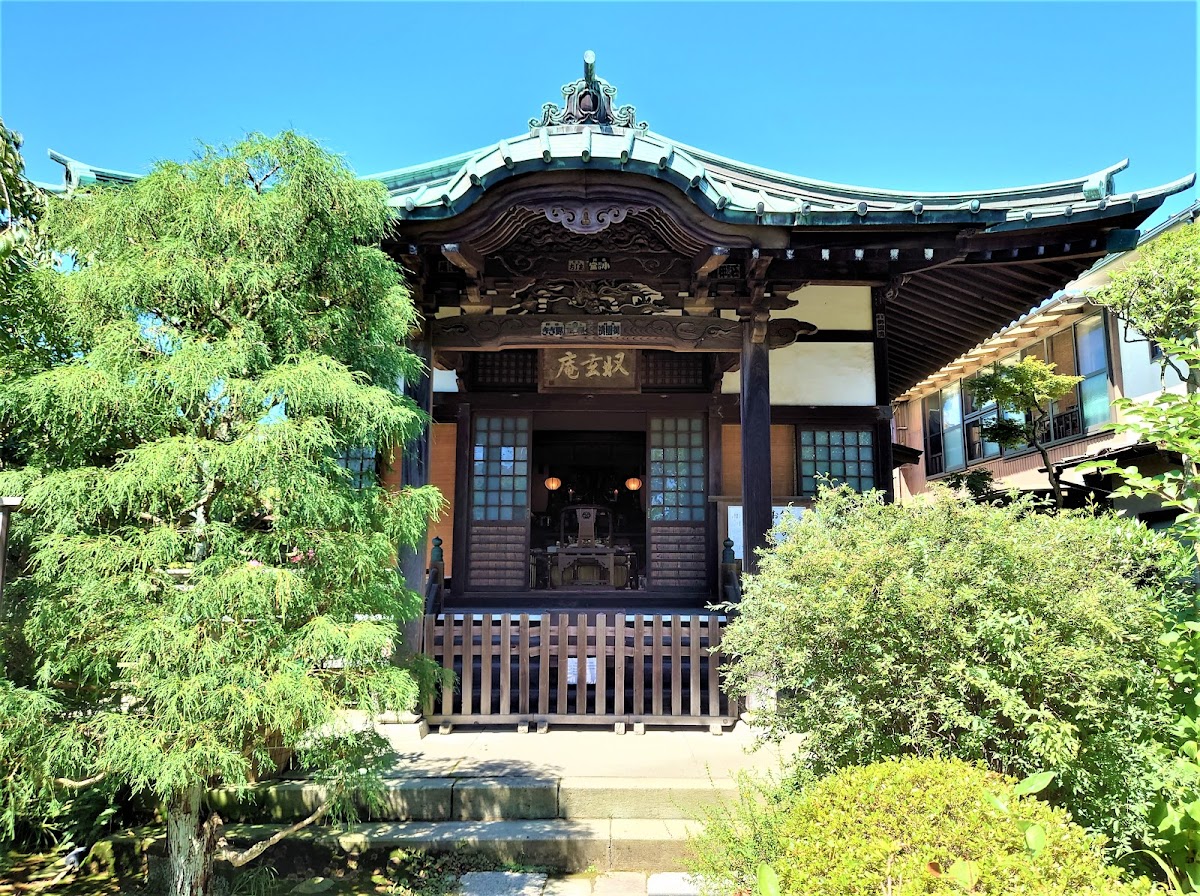
The main hall of Shugenji Temple is a beautiful building characterized by its copper roof covered in verdigris. Verdigris is a green rust that forms when copper oxidizes, developing a deeper hue over time.
Inside the main hall, along with the principal image, the Ten Realms Mandala, are enshrined statues of Nichiren Shonin and Shijo Kingo and his wife. The presence of the statues of Shijo Kingo and his wife is important evidence that this temple was built on the site of Shijo Kingo’s residence.
The main hall’s architectural style is relatively simple, but it is meticulously maintained, exuding a sense of cleanliness and tranquility. While it lacks the grandeur of large temples in Kamakura, it offers a peaceful space for worship.
The Charm of the Compact Temple Grounds
The grounds of Shugenji Temple are not particularly large, but the limited space is effectively utilized. Upon entering through the gate, the main hall is directly ahead, surrounded by a garden planted with seasonal flowers.
The grounds are always meticulously maintained, maintaining a clean state with not a single fallen leaf. It possesses an intimacy and warmth not found in large temples, and you can feel that it is a temple beloved by the local people.
One of its charms is that, because there are few visitors, you can pray quietly and at your own pace. It is an ideal place to quietly calm your mind, a little away from the hustle and bustle of Hase-dera Temple and the Great Buddha of Kamakura.
Flowers of Shugen-ji Temple | Enjoying the Beautiful Flowers of the Four Seasons
The Charm of a “Small Flower Temple”
Shugen-ji Temple is known locally as a “small flower temple.” Although the temple grounds are small, various kinds of flowers bloom throughout the four seasons, delighting the eyes of visitors.
Thanks to the careful maintenance by the temple staff, the grounds show a different face each season, making it a hidden photo spot for photography enthusiasts and flower lovers.
Spring Flowers | Cherry Blossoms, Camellias, and Plum Blossoms
In spring, the grounds of Shugen-ji Temple are adorned with colorful flowers. Plum blossoms begin to bloom in early spring, followed by camellias with their vibrant red and white flowers. During cherry blossom season, the cherry trees planted on the temple grounds bloom beautifully, announcing the arrival of spring.
While not a large-scale flower viewing spot like Hase-dera Temple, its small size allows for leisurely appreciation of each individual flower, which is part of its charm.
Early Summer to Summer Flowers | Hydrangeas, Azaleas
Kamakura is known as a famous spot for hydrangeas, and Shugen-ji Temple also boasts hydrangeas in early summer. While not on the same scale as Hase-dera Temple, the well-maintained hydrangeas are beautiful, making it ideal for those who want to enjoy hydrangeas while avoiding crowds.
Azaleas also bloom vibrantly in early summer, adding color to the temple grounds.
Autumn Flowers | Spider Lilies, Cosmos
In autumn, spider lilies bloom on the temple grounds, marking the changing of the seasons. Cosmos flowers are also planted, displaying their beautiful form in the soft autumn sunlight.
Winter Flowers | Camellias and Daffodils
In winter, camellias bloom, adding color to the cold season. In early spring, daffodils begin to bloom, foreshadowing the arrival of spring.
Tips for Enjoying the Flowers
To enjoy the flowers at Shugenji Temple, it’s recommended to visit in each season. Spring and early summer, in particular, offer the widest variety of flowers and are the most vibrant times. Because there are fewer visitors, you can enjoy taking photos at your leisure.
However, since the temple grounds are small, please be considerate of other visitors when using large tripods for photography.
Shugenji Temple’s Goshuin (Temple Stamp) Information | A Memento of Your Visit
Regarding the Issuance of Goshuin
Shugenji Temple offers Goshuin (temple stamps), but since there are no permanent staff members, prior confirmation may be necessary. Due to its close relationship with Kōtokuji Temple, Kōtokuji Temple may be able to assist you.
If you wish to receive a Goshuin, it is recommended to inquire by phone before your visit.
Design and Features of the Goshuin (Temple Seal)
The goshuin of Shugenji Temple typically features the mountain name “Shijo-yama” and the temple name “Shugenji” written in ink. As befits a Nichiren Buddhist temple, the mantra “Namu Myoho Renge Kyo” is sometimes also inscribed.
As a temple associated with Shijo Kingo, its historical significance is reflected in the goshuin.
Access to Shugenji Temple | Transportation and Surrounding Information
Access by Train | 1-Minute Walk from Enoden Hase Station
Access to Shugenji Temple is extremely convenient. It is conveniently located just a 1-minute walk from Hase Station on the Enoshima Electric Railway (Enoden).
Route from Enoden Hase Station:
- Exit the ticket gate at Hase Station.
- Turn right, keeping the railroad crossing on your left.
- Walk a short distance along the street towards the Great Buddha (Kotoku-in Temple).
- You will arrive at Shugenji Temple, where you will see a black gate and a stone monument marking the “Site of Shijo Kingo’s Residence” on your left.
Shugenji Temple is located on the way to Hase-dera Temple and the Kamakura Great Buddha, so it is efficient to visit them together with these other tourist spots.
Access by Car and Parking Information
Shugenji Temple does not have its own parking lot. If you are visiting by car, you will need to use a coin-operated parking lot around Hase.
However, the Hase area is extremely crowded during tourist season, so we strongly recommend using public transportation. Especially on weekends, holidays, and during hydrangea season, roads are congested and parking lots are often full.
Nearest Bus Stop
If using the bus, the nearest bus stop is “Hase Kannon.” It is about a 10-minute bus ride from Kamakura Station.
Tourist Attractions Around Shugenji Temple | Must-Visit Places
Hase-dera Temple | Kamakura’s Representative Flower Temple
Hase-dera Temple, located about a 3-minute walk from Shugenji Temple, is a representative tourist attraction of Kamakura. It boasts beautiful flowers throughout the seasons, and its hydrangeas in June are particularly famous nationwide. The 9.18-meter-tall Eleven-Headed Kannon Bodhisattva statue (Hase Kannon) is also a must-see.
It’s recommended to enjoy the contrast between the quiet atmosphere of Shugenji Temple and the vibrant grounds of Hase-dera Temple.
Kotoku-in Temple (Kamakura Daibutsu) | National Treasure Great Buddha
Kotoku-in Temple, located about a 7-minute walk from Shugenji Temple, houses the National Treasure Kamakura Daibutsu (Amida Buddha seated statue), a symbol of Kamakura. This bronze Buddha, approximately 11.3 meters tall and weighing approximately 121 tons, is a must-see for anyone visiting Kamakura.
Kōtoku-ji Temple | A Temple with Deep Connections to Shūgen-ji Temple
Kōtoku-ji Temple, which played a key role in the reconstruction of Shūgen-ji Temple, is located about a 6-minute walk from Hase Station. It is a temple associated with Nichirō Shōnin, a disciple of Nichiren, and is also known for its ancient crabapple tree (Kaido) over 200 years old.
Visiting with knowledge of its historical connection to Shūgen-ji Temple will allow for a deeper understanding.
Goryō Shrine | A Photo Spot for the Enoden Train and Hydrangeas
Goryo Shrine, about a 5-minute walk from Hase Station, is a unique shrine where the Enoden train passes right in front of the grounds. During hydrangea season, it becomes a popular spot for photographing the Enoden train and hydrangeas together.
Yuigahama Beach | A Beautiful Beach in Kamakura
About a 10-minute walk from the Hase area, you will arrive at Yuigahama Beach, one of Kamakura’s representative beaches. It is bustling with people enjoying swimming in the summer, and strolling and surfing in other seasons.
Kabura Coffee Cafe in the Grounds of Shugenji Temple | A Perfect Place to Relax After Visiting the Temple
The Charm of Kabura Coffee
Within the grounds of Shugenji Temple, there is sometimes a small cafe called “Kabura Coffee” (opening hours are irregular, so please check beforehand).
Its unusual location within the temple grounds allows you to enjoy coffee in a quiet atmosphere. It’s a hidden gem where you can spend a relaxing time while gazing at the well-maintained garden.
Business Hours and Precautions
Kabura Coffee is not always open, so it is recommended to check its opening hours on social media before visiting. On days when it is open, it’s a valuable opportunity to enjoy a break at the cafe in addition to visiting the temple.
Kamakura Tourism and Culture Examination Preparation | Knowledge about Shugenji Temple
Points Tested in the Examination
For those taking the Kamakura Tourism and Culture Examination (commonly known as the Kamakura Examination), Shugenji Temple is one of the temples you should know about. The following points are particularly important:
Basic Information:
- Mountain Name: Shijozan
- Sect: Nichiren Buddhism
- Principal Image: Ten Realms Mandala
- Founder: Myojo-ni
- Established: Late Edo Period (Bunsei Era)
Historical Points:
- Built on the site of Shijo Kingo’s (Shijo Yorimoto’s) residence
- Site of the residence of Shijo Kingo, who followed Nichiren, prepared to die with him during the Tatsunokuchi Persecution
- Dilapidated during the anti-Buddhist movement of the Meiji era, rebuilt in the Taisho era by Nichiji Shonin of Kōtoku-ji Temple
- There is a stone monument inscribed with “Site of Shijo Kingo’s Residence” by Admiral Togo Heihachiro
Other:
- Known as the “Small Flower Temple”
- Conveniently located a 1-minute walk from Enoden Hase Station
- Former head temple: Kōtoku-ji Temple
Knowledge about Shijo Kingo
The following knowledge about Shijo Kingo is also important:
- Real Name: Shijo Yorimoto
- Birth and Death Dates: 1224–1296
- Lord: Ema Mitsutoki (Grandson of Hojo Yoshitoki)
- Buddhist Name: Shugen-in Nichirai
- A loyal follower who received numerous letters from Nichiren
Model Course for Visiting Shugen-ji Temple | Efficient Kamakura Sightseeing
Half-Day Course in the Hase Area
Here is a model course for visiting the Hase area, including Shugen-ji Temple, in half a day:
Morning Start (Duration: Approx. 4 hours)
- Arrive at Enoden Hase Station (9:30)
- Visit Shugen-ji Temple (9:35-9:50): Visit in the quiet morning hours
- Visit Hase-dera Temple (10:00-11:00): Stroll through the temple grounds and view the Kannon statue
- Visit Kōsoku-ji Temple (11:10-11:40): Feel the historical connection with Shugen-ji Temple
- 6. Visit to Goryo Shrine (11:50-12:10): Enoden train photo spot
- Visit to Kotoku-in Temple (Kamakura Great Buddha) (12:20-12:50): Viewing the National Treasure Great Buddha
- Lunch in the Hase area (13:00-14:00)
Kamakura Nichiren Buddhist Temple Pilgrimage Course
A course focusing on Nichiren Buddhist temples:
- Myohonji Temple (Omachi)
- Ankokuronji Temple (Omachi)
- Choshoji Temple (Zaimokuza)
- Shugenji Temple (Hase)
- Kosokuji Temple (Hase)
This course allows you to feel the deep connection between Nichiren and Kamakura.
Etiquette and Manners for Visiting Shugenji Temple
Basic Manners for Visiting Temples
Shugenji Temple is a small temple, and a quiet environment is maintained. Please observe the following manners when visiting the temple:
Points to note when visiting:
- Bow when passing through the gate
- Walk quietly within the temple grounds (refrain from loud conversations)
- Photography is permitted, but permission is required before taking photos inside the main hall
- Do not touch flowers or plants
- Always take your trash with you
- Smoking is strictly prohibited
Appropriate attire and belongings for visiting the temple
No special attire is required, but modest and appropriate attire for visiting a temple is desirable.
What to Bring:
- Goshuincho (stamp book) (if you wish to receive a Goshuin stamp)
- Camera (if you want to enjoy photographing flowers)
- Hat/Parasol (summer)
- Drinks (especially summer)
Annual Events and Activities at Shugenji Temple
Main Annual Events
Shugenji Temple is a small temple, so there are not many large-scale events, but as a Nichiren Buddhist temple, the following events are held:
- Oeshiki: Memorial service for Nichiren Shonin (around October 13th)
- New Year’s Day: First shrine visit of the year
- Spring and Autumn Equinox Services
It is recommended to check in advance for specific dates and whether general participation is possible.
Best Season to Visit Shugenji Temple
Recommended Points by Season
Spring (March-May):
The season with the most variety of flowers. Plum blossoms, camellias, cherry blossoms, azaleas, etc. bloom in succession, making the temple grounds vibrant. The weather is mild, making it ideal for visiting the temple.
Early Summer (June):
Hydrangea season. It’s less crowded than Hase-dera Temple, allowing you to enjoy the hydrangeas in peace. However, rain gear is essential due to the rainy season.
Summer (July-August):
It’s a hot time of year, but the greenery is lush, and summer flowers bloom. Visiting in the early morning or evening is recommended.
Autumn (September-November):
Spider lilies and cosmos flowers bloom, creating an autumnal atmosphere. The weather is pleasant, making it a suitable season for sightseeing.
Winter (December-February):
There are fewer tourists, allowing for a peaceful visit. Camellias and early-blooming plum blossoms may also be visible.
Times to Avoid
There are no specific times to avoid, but please note the following:
- The entire Hase area is crowded during Golden Week and summer holidays.
- Hase-dera Temple is extremely crowded during hydrangea season (June), and surrounding roads are also congested.
- Opening hours may change during the New Year holidays.
Contact Information and Basic Information for Shugenji Temple
Basic Data
Official Name: Shijosan Shugenji Temple
Address: 2-chome, Hase, Kamakura City, Kanagawa Prefecture 248-0016
Sect: Nichiren Buddhism
Mountain Name: Shijosan
Principal Image: Ten Realms Mandala
Founder: Myojo-ni
Founder: Enshuin Nichiyu Shonin
Established: Late Edo period (Bunsei era)
Former Head Temple: Kosokuji Temple Access:
- 1-minute walk from Enoshima Electric Railway “Hase Station”
- Approximately 25-minute walk from JR Yokosuka Line/Enoshima Electric Railway “Kamakura Station”
- Approximately 3-minute walk from “Hase Kannon” bus stop
Visiting Hours: Daytime (Please check for details)
Admission Fee: Free
Parking: None (Please use nearby coin parking)
*For detailed contact information such as phone numbers, please inquire with Kōsoku-ji Temple or the Kamakura City Tourism Association.
Summary of Shūgen-ji Temple | A Small Temple in Hase with Hidden Charm
Shūgen-ji Temple, conveniently located just a 1-minute walk from Enoden Hase Station, is a hidden gem that many tourists overlook. However, its small grounds are filled with charm, including the historical value of being the site of the residence of Shijō Kingo, who holds significant importance in the history of Nichiren Buddhism, a precious stone monument inscribed by Admiral Tōgō Heihachirō, and beautiful flowers that bloom throughout the seasons.
Away from the hustle and bustle of popular tourist spots like Hase-dera Temple and the Great Buddha of Kamakura, Shugen-ji Temple offers a quiet and peaceful space for worship, adding a new dimension to your Kamakura experience.
For those interested in Nichiren Buddhism, those inspired by the life of the loyal follower Shijo Kingo, those who want to enjoy flowers in a tranquil temple, and those seeking a hidden gem in Kamakura, Shugen-ji Temple is definitely worth a visit.
When you visit the Hase area, be sure to step through the gates of Shugen-ji Temple and experience its serene charm. The history and beauty condensed within its small grounds will surely enrich your Kamakura sightseeing experience.