Hakone Shrine Complete Guide | A Thorough Explanation of History, Blessings, Worship Methods, and Visiting Both Shrines
Hakone Shrine, situated on the shores of Lake Ashi, is a historic shrine that has been revered since ancient times as the guardian shrine of the Kanto region. Since its founding in 757 AD, it has welcomed countless worshippers for over 1250 years, attracting a wide range of followers from samurai to commoners. This article comprehensively explains everything you need to know before visiting Hakone Shrine, including its history, divine virtues, highlights within the grounds, worship methods, and even visiting both Hakone Shrine and Kuzuryu Shrine.
What is Hakone Shrine?
Hakone Shrine, located in Motohakone, Hakone-machi, Ashigarashimo-gun, Kanagawa Prefecture, is one of the leading sacred sites of mountain worship in the Kanto region. The entire Hakone mountain range has been revered as a sacred place since ancient times, and Hakone Shrine has developed as the center of that faith. Currently, it is a power spot for matchmaking, good fortune, and the fulfillment of wishes, attracting many worshippers from both Japan and abroad every year.
History and Founding of Hakone Shrine
The history of Hakone Shrine dates back to the mid-Nara period. In 757 AD (Tenpyō Hōji 1), the monk Mangan, who had undergone rigorous ascetic training, received a divine oracle in a dream from the Hakone deity and founded the shrine at its current location on the shores of Lake Ashi. Monk Mangan was a highly respected priest known for establishing numerous shrines and temples throughout the area from Ibaraki Prefecture to Mie Prefecture, and he built Hakone Shrine as a shrine to enshrine Hakone Gongen.
However, the roots of Hakone Shrine are even older, dating back to before the Common Era. Before the current Hakone Shrine was built, Mount Kami was the object of worship, and this Mount Kami is considered the origin of Hakone Shrine. Hakone Motomiya, located on Mount Komagatake, is a place of worship where the deities are worshipped in close proximity to Mount Kami, and rituals are still performed there today.
Reverence of the Samurai Class and Hakone Gongen
During the Kamakura period, Minamoto no Yoritomo deeply revered Hakone Shrine and created the custom of “Nisho-mode” (visiting both Hakone Gongen and Izusan Gongen). Since then, it has flourished as a shrine deeply revered by the samurai class, including the Hojo regents and the Sengoku warlord Tokugawa Ieyasu. Hakone Shrine became renowned as a god of fulfilling wishes and victory, and has been revered as the guardian shrine of the Kanto region.
In 2007, a grand 1250th anniversary celebration was held, and it continues to attract unwavering devotion today.
Deities and Divine Virtues
Hakone Okami (Hakone Sansho Gongen)
Hakone Shrine enshrines Hakone Okami, which is a collective term for the following three deities.
- Ninigi-no-Mikoto: The grandson of Amaterasu-Omikami and the principal deity of the descent of the heavenly grandchild.
- Konohanasakuya-hime-no-Mikoto: The consort of Ninigi-no-Mikoto and the goddess of safe childbirth and child-rearing.
- Hikohodemi-no-Mikoto: The son of the two deities, also known as Yamasachihiko.
These three deities are also called the Hakone Sansho Gongen and have been worshipped since ancient times as the guardian deities of the entire Hakone mountain range.
Main Divine Virtues and Benefits
The divine virtues of Hakone Shrine are diverse, and in modern times, the following benefits are believed to be offered:
- Good Fortune and Prosperity: Enhances luck and attracts good fortune
- Fulfillment of Wishes: Grants wishes
- Luck in Competition: Due to its history of attracting the faith of samurai warriors, it is believed to bring good fortune in competitions
- Matchmaking: Helps to find good partners
- Traffic Safety: Due to its history of being a place of worship for safe travel along the Tokaido road
- Prayer for Safe Childbirth: The divine virtue of Konohanasakuya-hime
- Family Safety: Peace and safety in the home
Especially in recent years, it has attracted attention as a power spot for matchmaking and luck enhancement, especially when visited together with Kuzuryu Shrine.
Highlights of the Shrine Grounds
The grounds of Hakone Shrine have many points of interest that tell the story of its long history.
The Ancient Cedar Path
After passing through the fourth torii gate, a magnificent path lined with ancient cedar trees over 600 years old continues. This approach to the shrine is one of the iconic sights of Hakone Shrine. As you ascend the stone steps surrounded by giant trees, you are enveloped in a sacred atmosphere. Walking along the path lined with ancient cedars, you can escape the hustle and bustle of everyday life and cleanse your mind.
Peace Torii
The vermilion torii gate standing on Lake Ashi is called the “Peace Torii” and is the most famous symbol of Hakone Shrine. It was erected in 1952 to commemorate the signing of the San Francisco Peace Treaty and the investiture ceremony of then-Crown Prince Akihito (now Emperor Emeritus).
The plaque above the torii was added in 1964 to commemorate the Tokyo Olympics and the 1200th anniversary of the shrine’s founding. The word “Peace” on the plaque was calligraphed by former Prime Minister Shigeru Yoshida. The vermilion torii reflected on the surface of Lake Ashi is a perfect photo spot, and many visitors take commemorative photos there.
In Front of the Main Shrine
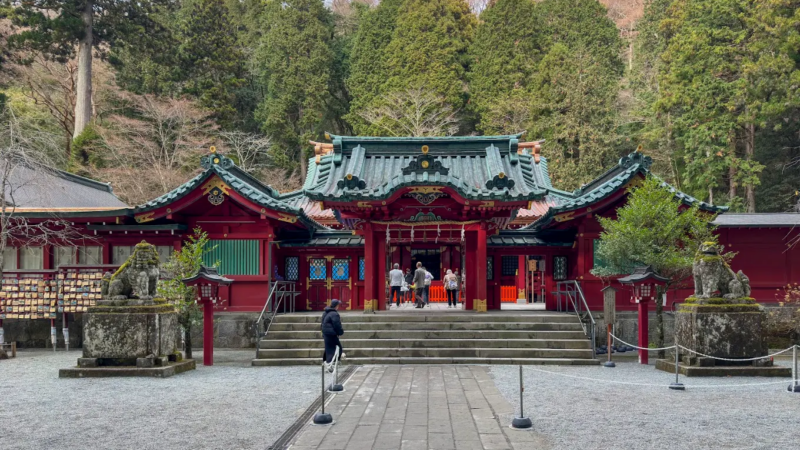
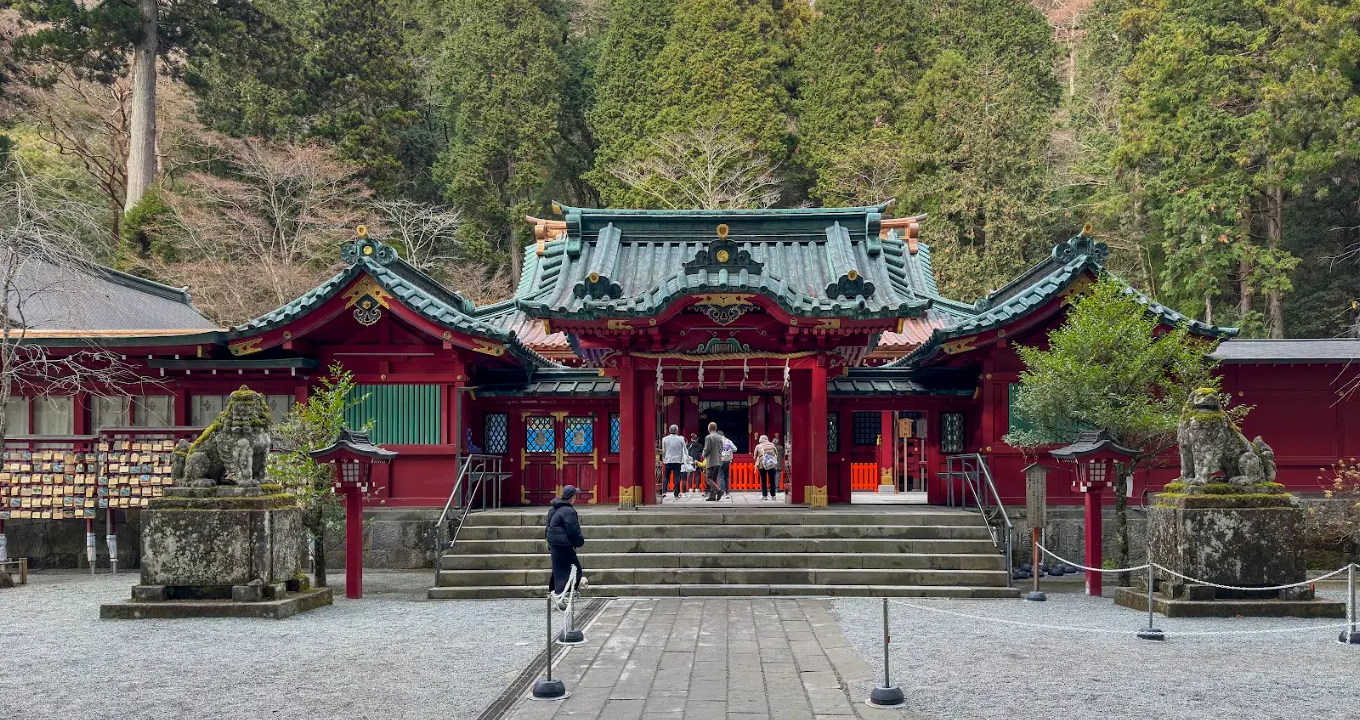
After ascending the path lined with ancient cedar trees, the majestic main shrine appears. The area in front of the main shrine is the center of worship, and here, worship is performed according to the ritual of two bows, two claps, and one bow. Various subsidiary shrines are also located around the main shrine, each with its own unique divine blessings.
Kuzuryu Shrine New Shrine
Within the grounds of Hakone Shrine, the new shrine of the original Kuzuryu Shrine, located on the shores of Lake Ashi, is enshrined. Kuzuryu Shrine is particularly popular with women as a deity of matchmaking, and visiting both Hakone Shrine and Kuzuryu Shrine (“Ryosha-mairi”) is recommended.
Treasure Hall
The Hakone Shrine Treasure Hall displays valuable treasures and cultural artifacts, including nationally designated Important Cultural Properties. Visiting hours are 9:00 AM to 4:00 PM, allowing visitors to admire items that tell the long history of Hakone Shrine.
Hakone Motomiya and the Three Shrine Pilgrimage
About Hakone Motomiya
Hakone Motomiya, located on the summit of Mt. Komagatake (1,356m above sea level), is the inner sanctuary of Hakone Shrine. It is a sacred site considered the root of Hakone Shrine, and has played an important role since ancient times as a place of worship where one can directly venerate the sacred mountain.
To reach Hakone Motomiya, take the Hakone Ropeway to the Komagatake summit station, and then walk from there. From the summit, you can enjoy a panoramic view of Lake Ashi and Mt. Fuji, a spectacular sight on a clear day.
Recommendation for the Three Shrine Pilgrimage
Visiting the three shrines—Hakone Shrine, Kuzuryu Shrine, and Hakone Motomiya—is believed to bestow even greater blessings. Since each shrine is located in a different place, careful planning is necessary to visit them all in one day, but it will be a fulfilling experience, allowing you to enjoy the natural beauty of Hakone while visiting the shrines.
Visiting both Kuzuryu Shrine and Hakone Shrine
About Kuzuryu Shrine
Kuzuryu Shrine is a shrine located on the shores of Lake Ashi, and its enshrined deity is Kuzuryu Okami (Nine-Headed Dragon God). Its origins are said to lie in the subjugation of a poisonous dragon residing in Lake Ashi by the monk Manmaki, who enshrined it as a dragon god. Kuzuryu Shrine is particularly known for its divine power in matchmaking, and many worshippers seeking good fortune in love visit the shrine.
Kuzuryu Shrine has a main shrine and a new shrine. The main shrine is located in the forest on the shores of Lake Ashi, while the new shrine is located within the grounds of Hakone Shrine.
How to Visit Both Shrines
Visiting both Hakone Shrine and Kuzuryu Shrine together, known as “Ryosha Mairi” (visiting both shrines), is considered highly effective for matchmaking and improving one’s luck. Visiting the Kuzuryu Shrine New Shrine within the Hakone Shrine grounds is the easiest method, but if you have time, it is recommended to extend your visit to the main shrine on the shores of Lake Ashi.
On the 13th of each month, a monthly festival is held at the main shrine of Kuzuryu Shrine, and a pilgrimage boat operates. Many worshippers visit on this day, and it is believed that they can receive powerful spiritual energy.
Monthly and Seasonal Festivals
Hakone Shrine holds various festivals throughout the year.
Monthly Festivals
- Hakone Shrine Monthly Festival: 1st of each month
- Ryosha-mairi Monthly Festival: 15th of each month
- Kuzuryu Shrine Main Shrine Monthly Festival: 13th of each month
These monthly festivals are held regularly each month, and worshippers can participate in the ceremonies.
Main Annual Festivals
- Setsubun Festival: February 3rd
- Showa Festival/Kuzuryu Shrine New Shrine Annual Festival: April 29th
- Grand Festival: August 1st
- Other Seasonal Festivals
Hakone Shrine holds various festivals throughout the four seasons, and visiting in each season allows you to discover different charms.
Proper Worship Etiquette and Amulet/Divine Seal
Correct Worship Etiquette
When visiting Hakone Shrine, please follow the etiquette below.
- Bow before passing through the torii gate
- Purify your hands and mouth at the water basin
- Walk on the path, avoiding the center
- Bow twice, clap twice, and bow once in front of the main shrine
- Bow again at the torii gate when leaving
Cherishing festivals at home and expressing daily gratitude is fundamental to building a good relationship with the gods.
Reception Hours for Amulets and Divine Seals
- Reception Hours: 8:15 AM – 5:00 PM
- Prayer Reception Hours: 8:30 AM – 4:00 PM
At the amulet office, you can receive amulets and divine seals (Goshuin). Hakone Shrine offers a wide variety of amulets, each with different divine virtues. Divine seals are popular as mementos of your visit and are inscribed in beautiful calligraphy.
Access and Surrounding Area Information
Access to Hakone Shrine
Location: 80-1 Motohakone, Hakone-machi, Ashigarashimo-gun, Kanagawa Prefecture
Phone: 0460-83-7123
Access by Public Transportation
- From Hakone-Yumoto Station: Hakone Tozan Bus (H or K route) approximately 30 minutes, get off at “Hakone Shrine Entrance” bus stop, approximately 10 minutes on foot.
- *Please note that buses do not stop at “Hakone Shrine Entrance” between 10:00 AM and 4:00 PM. Please use the “Motohakone Port” bus stop instead.*
- From Motohakone Port bus stop: Approximately 10 minutes on foot.
Access by Car
Hakone Shrine has a parking lot for visitors, but it is expected to be crowded on holidays and during peak tourist seasons. We recommend using public transportation.
Nearby Attractions
The following are some of the tourist attractions near Hakone Shrine:
- Lake Ashi: Enjoy sightseeing boats, boating, and fishing.
- Hakone Checkpoint: A historical site that recreates the checkpoint from the Edo period.
- Hakone Pirate Ship: A sightseeing boat that cruises around Lake Ashi.
- Hakone-en: A comprehensive leisure facility with an aquarium and ropeway.
- Old Highway Cedar Avenue: A cedar avenue that retains the atmosphere of the Tokaido road.
After visiting Hakone Shrine, you can further enhance your Hakone sightseeing by visiting these surrounding spots.
Grounds Guide and Map
The grounds of Hakone Shrine are extensive, with various points of interest scattered throughout. We recommend checking the grounds map in advance for efficient sightseeing.
Main Shrine Facilities:
- First Torii Gate: An iconic torii gate spanning National Route 1 (familiar from the New Year’s Ekiden relay race)
- Fourth Torii Gate: The entrance to the ancient cedar-lined approach
- Water Basin: A place for purification
- Main Shrine: The center of worship
- Kuzuryu Shrine New Shrine: The god of matchmaking
- Safe Childbirth Cedar: A sacred tree for prayers for safe childbirth
- Treasure Hall: Exhibits important cultural properties, etc.
- Peace Torii Gate: A vermilion torii gate on Lake Ashi
The shrine grounds also contain many other subsidiary shrines and historical sites, allowing you to deeply appreciate the charm of Hakone Shrine by taking a leisurely stroll.
Prayers and Amulets
About Prayers
Hakone Shrine accepts various types of prayers.
- Reception Hours: 8:30 AM – 4:00 PM
- Main Prayers: Traffic safety, family safety, business prosperity, fulfillment of wishes, safe childbirth, protection from evil, etc.
If you wish to receive a prayer, please apply at the shrine office during reception hours. Reservations are not required, but for groups, it is recommended to contact us by phone in advance.
Popular Amulets
Hakone Shrine offers a wide variety of amulets, each with its own unique divine blessings.
- Matchmaking Amulet: For finding a good partner
- Good Fortune Amulet: To improve your luck
- Traffic Safety Amulet: To ensure safe travel
- Safe Childbirth Amulet: For praying for a safe delivery
- Victory Amulet: To improve your luck in competitions
These amulets are perfect for personal use or as souvenirs.
Shinto Wedding Ceremonies and Groundbreaking Ceremonies
Hakone Shrine offers Shinto wedding ceremonies in a solemn atmosphere. A wedding ceremony held in the beautiful grounds overlooking Lake Ashi will be a lifelong memory.
Furthermore, the shrine also fulfills its role as a community-based shrine, conducting ground-breaking ceremonies before construction and martial arts training sessions in the dojo.
For details, please inquire via the official Hakone Shrine website or by phone.
To fully enjoy the charm of Hakone Shrine
Best season to visit
Hakone Shrine is beautiful in every season, but the best times to visit are:
- Spring: Beautiful fresh greenery, making for a refreshing visit
- Autumn: Autumn leaves color the grounds, creating a spectacular view
- Winter: The snow-covered grounds are magical
Summer offers a pleasant, cool approach with lush greenery, but it gets crowded during the tourist season.
Points to Note When Visiting
- Attire: The approach to the shrine consists of many stone steps, so comfortable walking shoes are recommended.
- Time: Allow 1-2 hours for a leisurely visit.
- Photography: The Peace Torii Gate is a popular spot, so early mornings or weekdays are recommended.
- Goshuin (Shrine Stamp): Waiting times may occur during busy periods.
Dining and Accommodation in the Surrounding Area
There are restaurants and tea houses by Lake Ashi near Hakone Shrine, making it convenient for meals after your visit. Hakone is also a hot spring resort, so there are plenty of day-trip hot springs and accommodations. A travel plan combining a visit to Hakone Shrine with a hot spring visit is also recommended.
Summary
Hakone Shrine is one of the most sacred shrines in the Kanto region, with a history of over 1250 years. It boasts a history of attracting a wide range of followers, from samurai to commoners, the divine virtues of Hakone Okami, its magnificent grounds, and the opportunity to visit both Hakone Shrine and Kuzuryu Shrine, among many other attractions.
Nestled amidst the beautiful nature of Lake Ashi, Hakone Shrine is a power spot where you can purify your soul and gain renewed vitality. Why not visit and receive various divine blessings, such as good fortune, fulfillment of wishes, and matchmaking?
When visiting, it is important to observe proper etiquette and approach the deities with gratitude. We hope your visit to Hakone Shrine will be a fruitful experience.
Hakone Shrine Official Information
- Location: 80-1 Motohakone, Hakone-machi, Ashigarashimo-gun, Kanagawa Prefecture
- Phone: 0460-83-7123
- Amulet and Divine Seal Reception: 8:15 AM – 5:00 PM
- Prayer Reception: 8:30 AM – 4:00 PM
- Treasure Hall Visit: 9:00 AM – 4:00 PM
When visiting Hakone, please be sure to include a visit to Hakone Shrine in your travel plans.