Complete Guide to Shinshoji Temple | History, Highlights, and Visiting Information for the 25th Temple of the Shikoku 88 Temple Pilgrimage
About Shinshoji Temple
Shinshoji Temple is a Shingon sect (Toyozan branch) temple located in Murotsu, Muroto City, Kochi Prefecture. Its formal name is Hoshuzan Shingon-in, and as the 25th temple of the Shikoku 88 Temple Pilgrimage, it attracts many pilgrims. Locally, it is affectionately called “Tsudera,” and its presence on a small hill overlooking Murotsu Port has become a symbol of this fishing town.
The principal image is the Kajitori Enmei Jizo Bodhisattva, revered as the guardian deity of maritime safety and abundant catches, attracting the faith of many people, including those involved in the fishing industry. Tsushōji Temple occupies an important position as a stopover point on the pilgrimage around Cape Muroto and is one of the most impressive temples among the pilgrimage sites of Tosa, a training ground for asceticism.
History of Tsushōji Temple
Founded by Kōbō Daishi Kūkai
Tsushōji Temple’s founding dates back to 807 AD. While on a pilgrimage in Shikoku, Kōbō Daishi Kūkai visited this area and recognized it as a sacred place because a small hill in Murotsu resembled the jewel held by Jizō Bodhisattva. It is said that the Great Master prayed for fishing and safety at sea, carved a statue of Enmei Jizō Bodhisattva, approximately 1 meter tall, and erected a temple building.
The temple’s mountain name, “Hōjuzan” (Jewel Mountain), derives from the fact that the shape of the mountain resembles a jewel. Kōbō Daishi, wishing for the safety of those working at sea and a bountiful catch, named this Jizō Bodhisattva “Kajitori” (helmsman). Kaji refers to a ship’s rudder, and the deity came to be worshipped as a Buddha who presides over safe voyages.
Legend of Yamauchi Kazutoyo
Tsushōji Temple has a legend related to Yamauchi Kazutoyo, the lord of the Tosa Domain. The legend tells of a miraculous event when Kazutoyo was nearly shipwrecked at sea. The principal image, Enmei Jizō Bodhisattva, appeared, took the rudder of his ship, and guided him safely to port. This miracle further enhanced the reputation of Kajitori Jizō, establishing its faith as a guardian deity of maritime safety.
This legend is not merely a folktale; it reflects the deep faith that fishermen in the Muroto sea, where maritime accidents were frequent, held in the Jizō Bodhisattva of Tsushōji Temple.
Temple History
Throughout the Edo period, Tsushōji Temple received protection from the Tosa Domain and welcomed many pilgrims as a pilgrimage site on the Shikoku Pilgrimage. Although affected by the anti-Buddhist movement of the Meiji era, it survived thanks to the fervent faith of the local people.
During the Showa era, the main hall and the Daishi Hall were restored and rebuilt, resulting in their current appearance. The temple gate, in particular, was rebuilt in the late Showa period, and its unique architectural style attracts the attention of visitors.
Highlights of the Temple Grounds
Steep Stone Staircase and Temple Gate
The first thing visitors to Tsushōji Temple will see is the steep stone staircase leading to the main hall. This staircase has approximately 120 steps and is sometimes called the “Staircase to Heaven” due to its steepness. Handrails are installed along the staircase for the safety of visitors, but those who are not confident in their physical strength are advised to climb slowly and carefully.
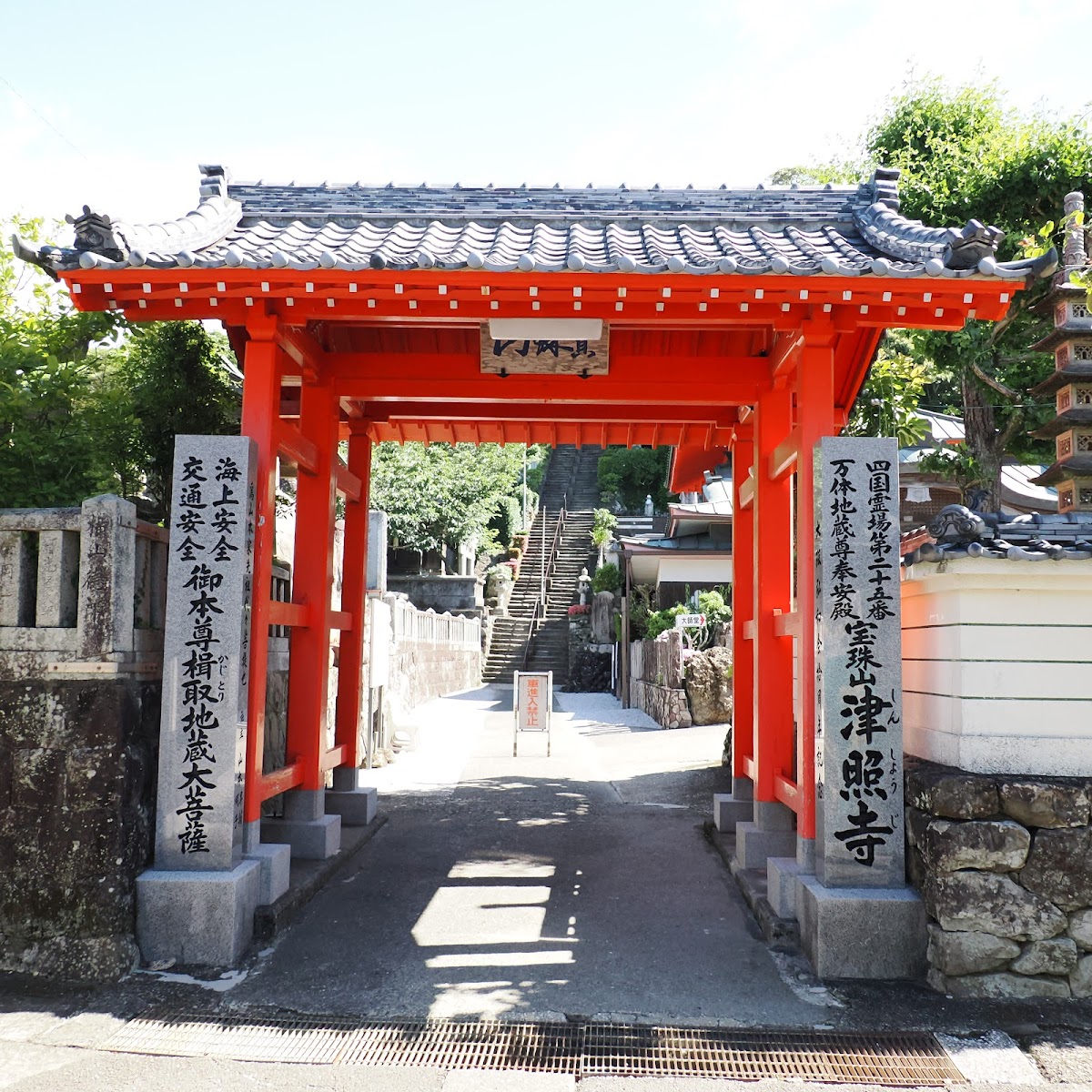
Partway up the staircase is the bell tower gate, and further up is the Niomon (Guardian Gate). This temple gate is a beautiful vermilion-painted structure reminiscent of Ryugu-jō (the Dragon Palace), a design befitting its location facing the sea. Passing through the temple gate, the main hall unfolds before you, with the magnificent view of Murotsu Port and the Pacific Ocean behind it.
Main Hall
The main hall is situated on a cliff overlooking Murotsu Port, allowing visitors to pray while listening to the sound of the Pacific Ocean waves. Inside the hall is enshrined the principal image, the Kajitori Enmei Jizo Bodhisattva, believed to grant blessings for maritime safety, abundant catches, longevity, fertility, and safe childbirth.
From the front of the main hall, one can enjoy a panoramic view of Murotsu town and port, and on clear days, the horizon of the Pacific Ocean can be seen in the distance. This view truly conveys the presence of the Jizo Bodhisattva watching over the fishing town.
Daishi Hall
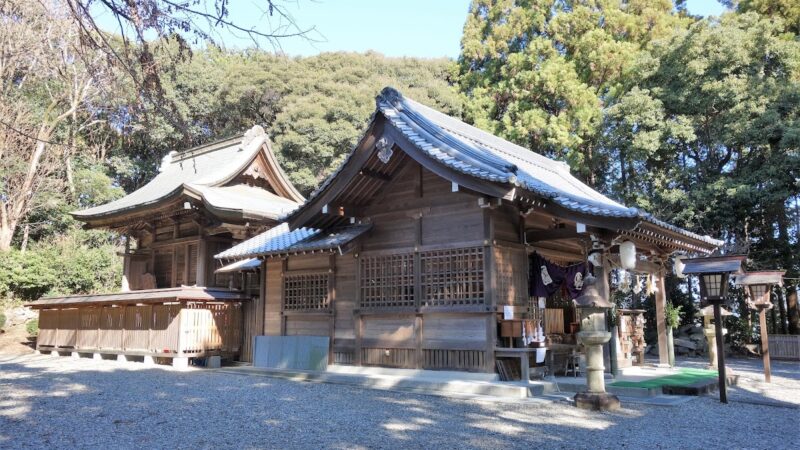
To the right of the main hall is the Daishi Hall, where a statue of Kobo Daishi is enshrined. In the Shikoku Pilgrimage, it is customary to chant sutras and offer prayers at both the main hall and the Daishi Hall, and many pilgrims at Tsushōji Temple visit both halls.
At the Daishi Hall, pilgrims pray with gratitude to Kobo Daishi and pray for safety during their pilgrimage. The temple grounds are enveloped in a serene atmosphere, allowing for peaceful prayer.
View from the Temple Grounds
The view from the grounds of Tsushōji Temple is exceptional. The sight of fishing boats anchored in Murotsu Port, the rows of houses in the fishing town, and the vast Pacific Ocean all come together to create a truly fitting location for a sacred site praying for safety at sea.
Especially at sunset, the setting sun over the Pacific Ocean paints the temple grounds red, creating a fantastical atmosphere. Those with ample time are recommended to visit at this time.
Principal Image and Belief
Kajitori Enmei Jizō Bodhisattva
The principal image of Tsushōji Temple, the Kajitori Enmei Jizō Bodhisattva, is a hidden Buddha said to have been carved by Kōbō Daishi himself. It is a standing statue approximately 1 meter tall, usually enshrined in a shrine, and cannot be viewed directly.
The name “Kajitori” (捫取) means “to steer a ship” or “to protect the sea,” and this Jizo Bodhisattva has long been revered as a deity of maritime safety. For the fishermen working in the rough seas of Muroto, this Jizo Bodhisattva is still deeply revered as a protector of their lives.
Benefits
The principal image of Tsushōji Temple is believed to bestow the following benefits:
- Safety at Sea and Navigation: This is the most representative benefit, and the temple is worshipped as the guardian deity of fishermen and sailors.
- Prayer for Abundant Fishing: People visit the temple to pray for success in fishing and a bountiful harvest.
- Longevity: As the name Enmei Jizō (Longevity Jizo) suggests, there is a belief in praying for longevity.
- Childbearing and Safe Childbirth: Jizō Bodhisattva is also known as the guardian deity of children.
- Traffic Safety: Nowadays, people visit not only for maritime safety but also to pray for traffic safety on land.
Visiting Information
Visiting Hours and Sutra Copying Hours
- Visiting Hours: 7:00~17:00 (The temple grounds are generally open for free worship)
- Sutra Copying Office Hours: 7:00~17:00
- Open 365 days a year
Those wishing to receive a temple stamp (Goshuin) should visit the temple office during reception hours. We offer stamping services for Shikoku pilgrimage stamp books and hanging scrolls, as well as for Goshuin stamp books.
Proper Etiquette for Visiting the Temple
- Bow at the Temple Gate: Before starting to climb the stone steps, bow towards the temple gate.
- Climbing the Stone Steps: The steps are steep, so please use the handrail to climb safely.
- Purifying at the Water Basin: Purify your hands and mouth before entering the temple grounds.
- Visiting the Main Hall: Pay your respects to the principal image, the Kajitori Enmei Jizo Bodhisattva.
- Visiting the Daishi Hall: Offer your respects to Kobo Daishi with gratitude.
- Nokyo-jo (Temple Stamp Office): Have your Nokyo-cho (temple stamp book) or Goshuin-cho (temple stamp book) stamped here.
Points to Note When Visiting the Temple
- Slope of the Stone Steps: The steps are very steep, so please watch your step carefully. The grounds become especially slippery in rainy weather.
- Energy Management: Consider the distances between the temples, please visit at a comfortable pace.
- Attire: We recommend wearing comfortable, non-slip shoes.
- Photography: Photography is permitted on the temple grounds, but please be considerate of those inside the temple and other visitors.
Access
Public Transportation
Train and Bus:
- From Nahari Station on the Tosa Kuroshio Railway, take the Kochi Eastern Transportation bus bound for Kannoura (approximately 40 minutes), get off at the Muroto bus stop, and walk for approximately 4 minutes.
- It’s about a 2-hour and 30-minute drive from Kochi City.
Public transportation is limited, so we recommend checking the bus timetable in advance.
By Car
From Kochi City:
- From the Nankoku Interchange on the Kochi Expressway, take National Route 55 towards Muroto for approximately 100 minutes.
- Parking: There is a parking space for visitors near the temple (free, approximately 10 cars).
From Tokushima:
- Head south on National Route 55 towards Muroto city. Follow the signs for the Murotsu area.
Temples before and after this one on the pilgrimage route
- Temple No. 24, Hotsumisaki-ji: Approximately 6km, about 1 hour 30 minutes on foot
- Temple No. 26, Kongōchō-ji: Approximately 28km, about 7 hours on foot
The distance from Temple No. 24 to No. 25 is relatively short, but the distance from Temple No. 25 to No. 26 is long, and it is common for walking pilgrims to stay overnight along the way.
Nearby Attractions
Cape Muroto
Located approximately 10km south of Tsushōji Temple, Cape Muroto is the southernmost scenic spot in Shikoku. It features unique rock formations and coastal terraces sculpted by the rough waves of the Pacific Ocean and is a UNESCO Global Geopark. Mikurodo Cave, where Kōbō Daishi (Kukai) practiced asceticism, and Saigōji Temple (the 24th temple on the Shikoku Pilgrimage) are also located in this area.
Murotsu Port
Murotsu Port, spread out below Tsushōji Temple, is an ancient fishing port where fresh seafood is landed. There are fish shops and restaurants around the port where you can enjoy Muroto’s seafood.
Muroto Town
Muroto town is home to shops, restaurants, and accommodations, making it convenient for pilgrims to rest or stay overnight. There are also facilities where you can learn about Muroto’s history and culture.
Positioning within the Shikoku Pilgrimage
Tosa: A Training Ground
The Shikoku 88 Temple Pilgrimage is divided into four areas: the training ground for awakening (Awa/Tokushima), the training ground for ascetic practice (Tosa/Kochi), the training ground for enlightenment (Iyo/Ehime), and the training ground for nirvana (Sanuki/Kagawa). Tsushōji Temple is one of the training ground temples and is an important sacred site in the Muroto area among the 23rd to 37th temples in Tosa.
The Three Muroto Temples
Tsushōji Temple, along with temples 24 (Saikoji) and 26 (Kongōchōji), is sometimes referred to as the “Three Muroto Temples.” These three temples are located around the Muroto Peninsula and are known as a group of sacred sites that strongly reflect the footsteps of Kōbō Daishi’s ascetic practice.
Annual Events at Tsushōji Temple
Spring Grand Festival
In spring, a grand festival is held to coincide with the principal deity’s auspicious day. A Buddhist service is held to pray for maritime safety and a bountiful catch. Many worshippers, including local fishermen, visit the temple.
Summer Segaki Ceremony
In summer, a Segaki ceremony is held to commemorate those who have died at sea. This ceremony is a tribute to the victims of maritime accidents and a prayer for maritime safety.
Kōbō Daishi Memorial Service
The 21st of each month is considered the auspicious day of Kōbō Daishi, and many worshippers visit the memorial service on March 21st (Spring Equinox).
Visitor Feedback
The following are some comments from pilgrims and tourists who have visited Tsushōji Temple:
- “The steep stone steps were challenging, but the sense of accomplishment and the magnificent view upon reaching the top were exceptional.”
- “The temple gate, resembling a dragon palace, was impressive, and I felt the atmosphere of a guardian deity of the sea.”
- “The view of Murotsu Port from the temple grounds was beautiful, and I understood the meaning of this temple as a watchful guardian of a fishing town.”
- “It was a warm and welcoming temple, conveying the deep faith of the local people.”
Guidelines for Visiting Tsushōji Temple
When visiting Tsushōji Temple, it is important to treat it not merely as a tourist spot, but as a sacred site with over 1200 years of history, and to worship with respect. Climbing the steep stone steps is itself part of the spiritual practice, and one should compose their mind as they take each step.
The view of the Pacific Ocean from the main hall evokes the compassion of Jizo Bodhisattva, who has continuously prayed for the safety of those working at sea. In Muroto, where fishing remains a thriving industry even today, Shinshōji Temple continues to be a spiritual haven for the local people.
On the Shikoku Pilgrimage, Shinshōji Temple is one of the important temples in the Muroto area. Following in the footsteps of Kōbō Daishi’s training at the previous temple, Saikōji Temple, pilgrims offer prayers for maritime safety at Shinshōji Temple, and then proceed to the next temple, Kongōchōji Temple. In this sequence, pilgrims can experience the harsh yet beautiful nature of Tosa and the faith of the people who live there.
Summary
Shinshōji Temple is the 25th temple of the Shikoku 88 Temple Pilgrimage, located in Muroto City, Kochi Prefecture. Founded in 807 by Kōbō Daishi Kūkai, this temple enshrines the Kajitori Enmei Jizō Bodhisattva as its principal image and has been revered for over 1200 years as a guardian deity of maritime safety and abundant fishing.
The steep stone steps, the temple gate reminiscent of Ryugu-jo (the Dragon Palace), and the breathtaking view of Murotsu Port from the temple grounds leave a deep impression on visitors. Affectionately known locally as “Tsudera,” it continues to watch over the fishing town.
On the Shikoku Pilgrimage, a journey visiting various training grounds, Tsutera-ji Temple is a special sacred site imbued with the prayers of people who live in harmony with the sea. When visiting Muroto, be sure to stop by this historic temple and offer a peaceful prayer while enjoying the magnificent view of the Pacific Ocean.