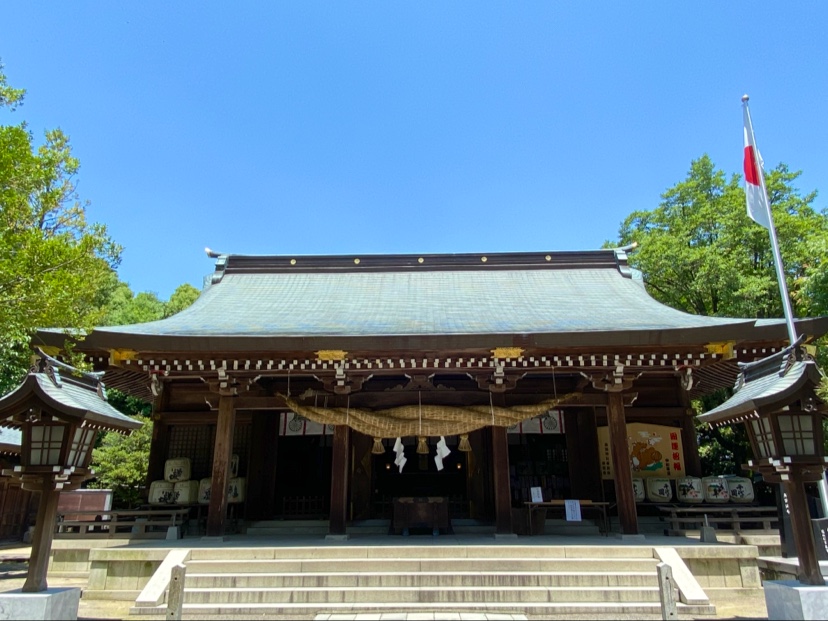
Complete Guide to Aso Shrine: The Charm and Visiting Information of the 2000-Year-Old Ichinomiya of Higo Province
What is Aso Shrine?
Aso Shrine, located in Ichinomiya-machi, Aso City, Kumamoto Prefecture, is one of Japan’s most historically significant and prestigious shrines. As the head shrine of approximately 500 Aso Shrines nationwide, it has been revered as the Ichinomiya of Higo Province for over 2000 years.
With Takeiwatatsu-no-Mikoto, the ancestral deity of Aso’s development, as its main deity, and enshrining twelve gods including his family, it serves as a spiritual pillar of the Aso region. A key characteristic is its unique development of a distinctive form of worship, fused with volcanic worship that has long regarded the Aso volcano crater as its sacred object.
It holds the high rank of Shikinaisha (one Myojin Taisha and one Shosha), and was formerly a Kanpei Taisha, and is currently designated as a Beppyo Jinja (special shrine) by the Association of Shinto Shrines. Located in the eastern part of the Aso Valley, with the Aso volcanic crater to the south and the Kokuzo Shrine and numerous ancient burial mounds to the north, Aso Shrine sits at the heart of a historically and culturally significant region.
History of Aso Shrine
Founding and Ancient History
Aso Shrine is said to have been founded in the 9th year of Emperor Korei’s reign (282 BC), giving it a history of over 2000 years. According to the *Nihon Shoki* and *Aso Shrine Documents*, it was founded to commemorate the achievements of Takeiwatatsu-no-Mikoto, a grandson of Emperor Jimmu, who pioneered the Aso region.
Takeiwatatsu-no-Mikoto is known for the “Kick-Through Legend,” in which he kicked through a part of the Aso caldera, causing water to flow and creating vast farmlands in the Aso Valley. This legend mythologizes the pioneering history of the Aso region, demonstrating that Aso Shrine is not merely a religious facility but also a historical symbol of regional development.
From the Medieval to the Early Modern Period
During the Heian period, the shrine was listed in the “Engishiki Jinmyocho” (a list of shrines compiled in the Heian period) and received reverence from the imperial court as a prestigious shrine. In the medieval period, it received protection from the shugo daimyo (provincial governors) of Higo Province and the Sengoku daimyo (feudal lords), and the Aso clan, a family of Shinto priests, served as chief priests for generations. While the Aso clan were Shinto priests, they also had samurai characteristics and were involved in the governance of the Aso region.
During the Edo period, it received protection from the Kumamoto Domain and garnered the deep faith of the Hosokawa family, the domain’s lords. The current shrine buildings were rebuilt between 1835 (Tenpo 6) and 1850 (Kaei 3) through donations from the Kumamoto Domain. The architecture from this period represents the pinnacle of Higo’s master carpenters’ techniques and is highly regarded as a masterpiece of early modern shrine and temple architecture.
Changes Since the Modern Period
With the Meiji-era separation of Shinto and Buddhism, Aso Shrine, which had previously been a syncretic blend of Shinto and Buddhism, was reorganized as a purely Shinto shrine. In 1871 (Meiji 4), it was ranked as a National Shrine of the second rank, and in 1914 (Taisho 3), it was elevated to a Grand Imperial Shrine.
After World War II, it continued to be a central center of local faith as a special shrine of the Association of Shinto Shrines. Although it suffered extensive damage in the 2016 Kumamoto earthquake, restoration work progressed thanks to widespread support, and steady recovery is underway, including the completion of the gatehouse restoration in 2023.
About the Aso Shrine’s Main Buildings
Six National Important Cultural Properties
Six buildings of the Aso Shrine’s main buildings were designated as National Important Cultural Properties in 2007 (Heisei 19). These are valuable cultural heritage sites that preserve the architectural style of the late Edo period.
The Six Designated Buildings:
- First Shrine – The central shrine dedicated to the principal deity
- Second Shrine – Occupies an important position as the second shrine
- Third Shrine – A unique arrangement of three shrines side by side
- Romon Gate – One of Japan’s three greatest romon gates
- Shinko-mon Gate – A gate located to the left of the romon gate
- Kan-go-mon Gate – A gate located to the right of the romon gate
These shrine buildings were rebuilt between 1835 (Tenpo 6) and 1850 (Kaei 3) with the full support of the Kumamoto Domain. The exceptional skills of the Higo shrine carpenters are embodied in these buildings, boasting high artistic quality in all aspects, from carving and coloring to architectural structure.
One of Japan’s Three Great Romon Gates
The romon gate of Aso Shrine, with its height of approximately 18 meters and width of approximately 13 meters, is the largest in Kyushu and is counted as one of Japan’s three greatest romon gates. It is a two-story hip-and-gable roof structure, and the carvings throughout demonstrate magnificent craftsmanship.
The defining characteristic of the Rōmon gate lies in its solemnity and beauty, transcending its mere function as a gate. The curve of the roof, the overhang of the eaves, the placement of the pillars—everything is a masterpiece of calculated beauty. Unfortunately, it collapsed in the 2016 Kumamoto earthquake, but restoration work was completed in October 2023, restoring it to its former glory.
Layout and Architectural Beauty of the Shrine Grounds
The grounds of Aso Shrine are beautifully symmetrical, centered around the Rōmon gate. The Shinkōmon and Kangomon gates are positioned on either side of the Rōmon gate, with three shrine buildings lined up behind them—a unique configuration.
This layout balances the solemnity of a place where gods gather with the openness to welcome worshippers. Hundreds of years old trees surround the shrine buildings, creating a sacred atmosphere befitting a divine site.
The approximately 100-meter-long approach known as the Yokosandō (side approach) is lined with souvenir shops and restaurants, creating a lively temple town atmosphere. This approach to the shrine forms a cultural landscape integrated with the worship of Aso Shrine, allowing visitors to experience a historical townscape.
Deities and Beliefs
Takeiwatatsu-no-Mikoto and the Twelve Gods
The main deity enshrined at Aso Shrine is Takeiwatatsu-no-Mikoto. He is the grandson of Emperor Jimmu and is revered as the god who pioneered the Aso region. Takeiwatatsu-no-Mikoto is not merely a mythical figure, but is considered to reflect the actual history of Aso’s development.
The twelve deities enshrined alongside Takeiwatatsu-no-Mikoto are deities centered around his family:
- Asotsuhime-no-Mikoto – Consort of Takeiwatatsu-no-Mikoto
- Kunitatsu-no-Kami
- Himemiko-no-Kami
- Nihiko-no-Kami
- Wakahiko-no-Kami
- Hikomiko-no-Kami
- Nihime-no-Kami
- Yahime-no-Kami
- Wakahime-no-Kami
- Kanakori-no-Kami
- Kuninomiyatsukohayamikatama-no-Mikoto
These deities have been worshipped as guardian deities of agriculture, water management, and industry in the Aso region.
Fusion with Aso Volcano Crater Worship
A distinctive feature of Aso Shrine’s faith is its fusion with volcanic worship, where the Aso volcano crater is considered the sacred object of worship. Aso volcano has long been revered as a symbol of the “Land of Fire.”
At Aso Shrine, the Aso volcano crater is called “Shinrei-no-ike” (Divine Spirit Pond) and is considered sacred. Volcanic activity is thought to be a manifestation of the gods’ will, and natural phenomena such as eruptions and earthquakes have been closely linked to the shrine’s rituals.
Relationship with Aso Sanjo Shrine
Near the Aso volcano crater lies Aso Sanjo Shrine. This shrine holds a position similar to an inner sanctuary of Aso Shrine, and enshrines Takeiwatatsu-no-Mikoto and Asotsuhime-no-Mikoto.
Aso Sanjo Shrine is located near the crater at an altitude of approximately 1,200 meters and can be considered the origin of volcanic worship. The priests of Aso Shrine regularly perform rituals at Yamagami Shrine, maintaining the relationship between the two shrines. Many worshippers visit both Aso Shrine and Yamagami Shrine, which is considered the complete form of Aso faith.
Annual Events and Festivals
Major Festivals
Aso Shrine holds many festivals throughout the year.
Fire-Swinging Ritual (Mid-March)
One of Aso Shrine’s most famous rituals, this is a magnificent festival where participants swing giant torches. It prays for safety in agriculture and a bountiful harvest, and strongly reflects the remnants of volcanic worship.
Rice Planting Procession Ceremony (July 28th)
Also known as the “Onda Festival,” this ritual imitates the rice planting procession. It is an important festival praying for a bountiful harvest, with priests and parishioners participating in traditional attire.
Annual Grand Festival (September 25th-27th)
This is the most important festival of Aso Shrine, with various Shinto rituals performed over three days. A diverse program is planned, including a procession of portable shrines and dedication ceremonies.
Niiname-sai Festival (November 23rd)
This is a harvest thanksgiving festival where new grains are offered to the gods. It is a particularly important festival in Aso, an agricultural region.
Daily Rituals
Daily morning and evening offerings (Nikkusai) are performed to express daily gratitude to the gods. Individual prayers and purification rituals are also accepted at any time, making it deeply connected to the daily lives of local residents.
Recovery from the Kumamoto Earthquake
Damage from the 2016 Kumamoto Earthquake
The Kumamoto earthquakes that occurred on April 14th and 16th, 2016 (Heisei 28), caused extensive damage to Aso Shrine. Particularly symbolic was the collapse of the gate tower, one of Japan’s three greatest gate towers.
Of the six buildings designated as National Important Cultural Properties, the gate tower and the worship hall collapsed, and three other shrine buildings also suffered significant damage. This damage shocked not only Aso Shrine but also local residents and worshippers nationwide.
Restoration Efforts
Immediately after the earthquake, efforts to restore Aso Shrine began. With support from the Agency for Cultural Affairs, Kumamoto Prefecture, Aso City, and from across the country, full-scale restoration work proceeded.
The restoration work decided to rebuild the gate tower using traditional methods, reusing as many of the collapsed components as possible. Each component was carefully repaired and assembled by skilled carpenters.
In October 2023, after approximately seven and a half years, the restoration of the gate tower was completed. The gate tower, having regained its former magnificent appearance, serves as a symbol of Aso’s recovery, giving hope to many people.
Current Situation
Even after the completion of the gate tower’s restoration, repair work on other shrine buildings continues. Reconstruction work on the worship hall is also progressing, and efforts toward complete restoration continue.
Worship remains possible since the earthquake, and after worshipping at a temporary worship hall, worship is now taking place at the restored facility. The process of reconstruction itself is becoming a new page in the history of Aso Shrine.
Visiting Information
Basic Information
Location: 3083-1 Miyaji, Ichinomiya-machi, Aso City, Kumamoto Prefecture
Visiting Hours: 9:00 AM – 5:00 PM (Open year-round)
Prayer Reception Hours: 9:00 AM – 4:30 PM
Telephone: 0967-22-0064
FAX: 0967-22-3463
Access
Access by Train:
Get off at Miyaji Station on the JR Hohi Line, then walk for approximately 15 minutes (about 1.2 kilometers). The walk from the station to the shrine offers a pleasant stroll through the charming temple town.
Access by Car:
- Approximately 50 minutes from Kumamoto IC on the Kyushu Expressway via National Route 57
- Approximately 1 hour 30 minutes from Hita IC on the Oita Expressway via National Route 212 and Prefectural Route 11
- Approximately 40 minutes by car from Aso Kumamoto Airport
Parking:
There are several parking lots around the shrine. In addition to the free parking lot for visitors, paid parking lots in the temple town are also available. Due to expected congestion during peak seasons, early arrival is recommended.
Points for Visiting
Etiquette for Visiting:
- Bow before passing through the torii gate
- Cleanse your hands and mouth at the water basin
- Bow twice, clap twice, and bow once in front of the main hall
- Make your wish quietly in your heart
Recommended Time for Visiting:
Visiting in the early morning, when the atmosphere is peaceful, is recommended. Especially on weekday mornings, there are fewer visitors, allowing you to leisurely explore the grounds. ### Goshuin (Shrine Seals) and Amulets
At Aso Shrine, you can receive beautiful goshuin (shrine seals). In addition to regular goshuin, limited edition goshuin are also given out during special festivals.
A variety of amulets are available, including those for traffic safety, family safety, and academic success. The Aso Shrine original amulets, in particular, are popular for their designs inspired by Aso’s nature and mythology.
Nearby Tourist Attractions
Monzen-machi “Mizuki Tour”
In the town in front of Aso Shrine, there are numerous spring water spots called “mizuki.” These springs, fed by Aso’s underground water, each have their own name, allowing visitors to enjoy comparing the tastes of the water.
Along the side approach to the shrine, souvenir shops and restaurants line the street for about 100 meters, offering Aso’s local specialties and regional cuisine. Regional dishes such as “Ikinari Dango” and “Takana Meshi” are especially recommended.
Mount Aso
Mount Aso, located about 30 minutes by car from Aso Shrine, is an active volcano with one of the world’s largest calderas. At the Nakadake crater, you can see the volcanic plume up close and experience the power of nature.
Kokuzo Shrine
Kokuzo Shrine, located about 2 kilometers north of Aso Shrine, is a shrine dedicated to the ancestral deity of the Aso clan. It is famous for its giant cedar tree, “Teno no Osugi,” said to be 2000 years old, and is known as a power spot.
Nakadori Kofun Cluster
North of Aso Shrine are scattered burial mounds (kofun) built around the 5th and 6th centuries. These are important historical sites that tell the story of the ancient history of the Aso region and are interesting places to understand the historical background of Aso Shrine.
Summary
Aso Shrine, with a history of over 2000 years, is the Ichinomiya (first-ranked shrine) of Higo Province and the head shrine of approximately 500 Aso Shrines nationwide. With Takeiwatatsu-no-Mikoto as its principal deity, Aso Shrine has developed a unique form of worship that blends with the worship of the Aso volcano crater.
The shrine buildings, rebuilt between 1835 and 1850 through donations from the Kumamoto Domain, are a valuable cultural heritage designated as a National Important Cultural Property. In particular, the gate tower, considered one of Japan’s three greatest gate towers, boasts the largest scale in Kyushu and is a symbol of Aso Shrine.
Although it suffered extensive damage in the 2016 Kumamoto earthquake, restoration work progressed thanks to widespread support, and the gate tower was restored to its former glory in 2023. This restoration process is etched as a new page in Aso Shrine’s history.
A visit to Aso Shrine is not merely sightseeing; it will be a valuable experience that allows you to feel a sense of awe towards Japanese history, culture, and nature. Enjoy the charm of Aso to the fullest by strolling through the temple town and visiting surrounding tourist spots.