Rokuoin Temple (Kyoto Prefecture) Complete Guide: Autumn Foliage Spot and Highlights Associated with Ashikaga Yoshimitsu, and Visiting Information
Rokuoin Temple, located in Sagano, Ukyo-ku, Kyoto City, is a historic Zen temple founded by Ashikaga Yoshimitsu, the third shogun of the Muromachi shogunate. While within walking distance of Arashiyama, it enjoys a quiet environment slightly removed from the bustling city center, and is known as a famous spot for autumn foliage. This article comprehensively introduces everything you need to know before visiting Rokuoin Temple, from its history and highlights to visiting information and access methods.
History of Rokuoin Temple: An Ancient Temple Born from Ashikaga Yoshimitsu’s Wishes
Circumstances of Founding and Ashikaga Yoshimitsu
Rokuoin Temple was founded in 1379 (Koryaku 1) by Ashikaga Yoshimitsu at the age of 24, following a dream he had at the age of 23. Wishing to extend his own life, Yoshimitsu established a large temple called Hōdōji, with Fumyo Kokushi (Shun’oku Myōha) as its founding abbot. Rokuōin was established as a sub-temple of Hōdōji.
Hōdōji was a large Zen temple with a status second only to the Five Mountains and Ten Temples, but many of its buildings were destroyed in the Ōnin War (1467-1477), and it was abandoned. However, only Rokuōin, as a sub-temple, escaped the ravages of war and remains to this day.
Origin of the Mountain Name “Kakuyūzan”
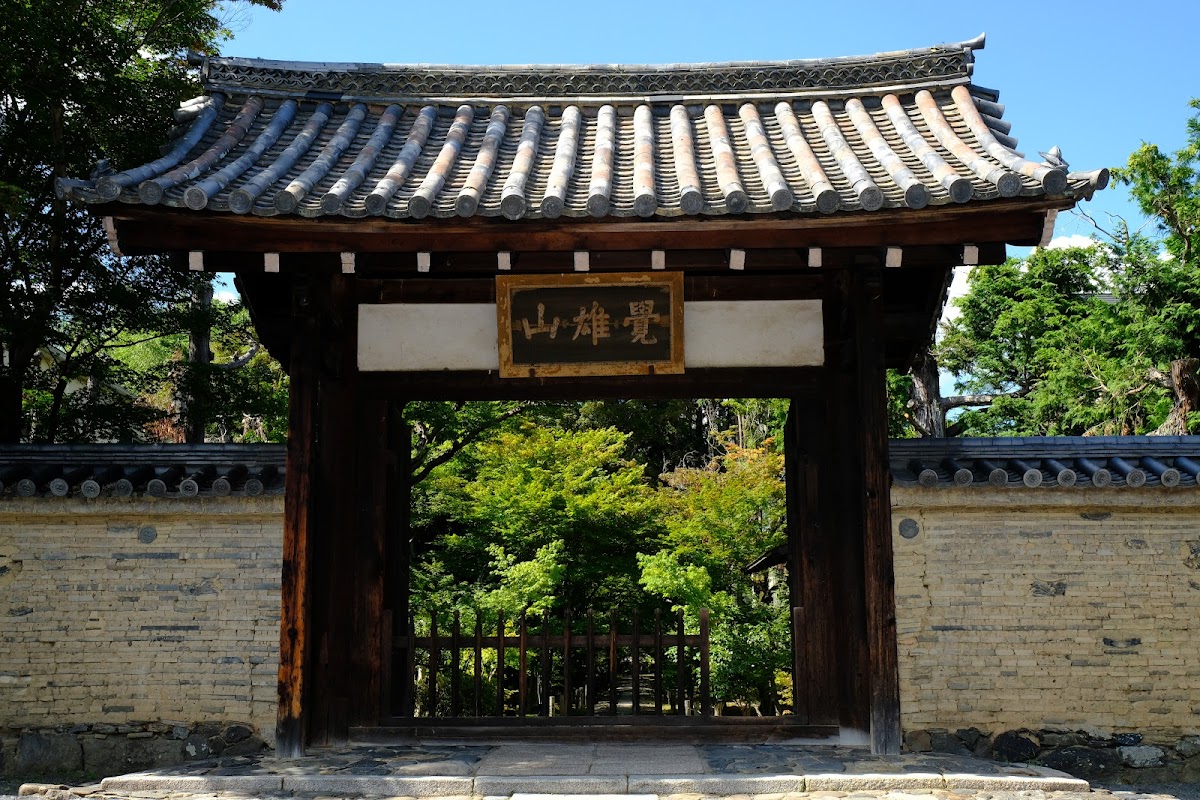
The mountain name of Rokuōin is “Kakuyūzan.” The plaque bearing “Kakuyūzan” displayed on the temple gate is said to have been inscribed by Ashikaga Yoshimitsu himself when he was 24 years old, and it is a valuable relic that has been displayed since the temple’s founding. This plaque conveys the young shogun’s deep devotion to Zen and his feelings for this temple.
Restoration in the Edo Period
After the Ōnin War, Rokuōin Temple, which had fallen into decline, was restored in 1667 (Kanbun 7). The current buildings, including the main hall and guest hall, are based on those constructed during this Edo period restoration. While it belonged to the Rinzai sect, it now operates independently as a Rinzai sect temple.
Highlights of Rokuōin Temple: The Garden, Buddhist Statues, and Approach
Temple Gate and Approach: A Tunnel of Autumn Leaves
One of Rokuōin Temple’s greatest attractions is the long approach leading from the temple gate. Lined with maple trees on both sides, this approach becomes a tunnel of vibrant red autumn leaves in the fall, captivating visitors. It is also beautiful in the season of fresh greenery, allowing visitors to enjoy its seasonal beauty.
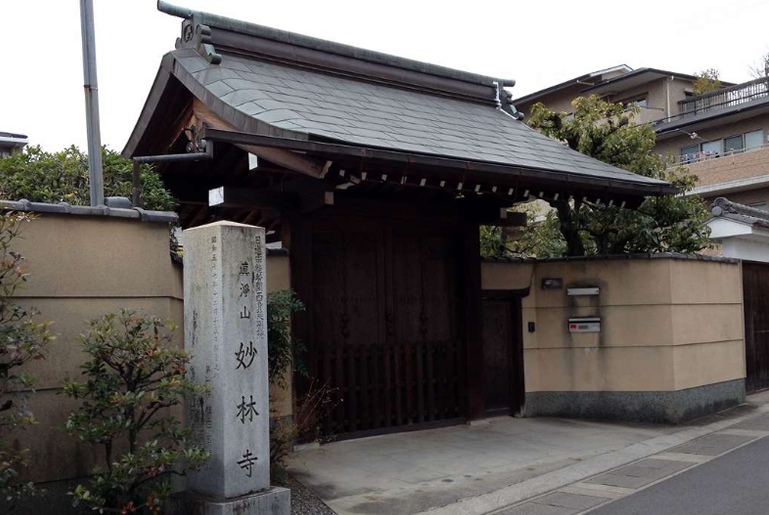
An old earthen wall continues beside the temple gate, creating a tranquil atmosphere befitting a Zen temple. Located just a six-minute walk from the bustling tourist area of Arashiyama, Rokuoin Temple boasts a tranquil atmosphere that feels like a world apart.
Main Garden: A Flat-Style Dry Landscape Garden
Viewed from the guest hall, the main garden is a flat-style dry landscape garden created in the early Edo period. While its simple composition of stones placed on a moss-covered ground is striking, it boasts magnificent aesthetic beauty, incorporating the Arashiyama mountains as borrowed scenery.
The beauty of the moss covering the entire garden is exceptional; the moss garden, spreading like a green carpet, soothes the soul of the viewer. With the gently sloping ridges of Arashiyama visible in the background, it is highly regarded as a garden that beautifully harmonizes nature and artificiality.
Shariden and Principal Image
The principal image of Rokuoin Temple is Shakyamuni Buddha. The Shariden houses genuine Buddha relics (the remains of Shakyamuni), which can be viewed up close. This is extremely valuable and one of the important highlights of a visit to Rokuoin Temple. ### Cultural Treasures in the Guest Hall
The guest hall houses valuable cultural treasures, including a wooden statue of Ashikaga Yoshimitsu and a painting of the Buddha’s Nirvana. These can be viewed up close during regular visits and are invaluable resources for understanding the culture and beliefs of the Muromachi period.
The Nirvana painting depicts the Buddha’s passing, and viewing this meticulously detailed work will be a special experience for anyone interested in Buddhist art.
Temple Lodging Experience: Women-Only Accommodation and Zen Meditation
Rokuoin Temple operates a women-only temple lodging, where guests can participate in a Zen meditation experience. The capacity is approximately 15 people, and advance reservations are required. Participation in morning services and Zen meditation is mandatory, allowing for an authentic Zen temple training experience.
Staying during the autumn foliage season allows you to enjoy the quiet temple grounds all to yourself after the crowds have left, and the next morning you can meditate in silence, with only the sounds of birdsong to be heard. Conveniently located as a base for Arashiyama sightseeing, it’s recommended for those who want to spend a quiet evening in Kyoto.
Rokuoin Temple Visiting Information
Visiting Hours and Admission Fee
- Visiting Hours: 9:00 AM – 5:00 PM (Gate closes at 5:00 PM)
- Admission Fee: 600 yen for adults
- Holidays: None in particular (Open year-round)
Visiting hours are from 9:00 AM to 5:00 PM, allowing for a relatively relaxed visit. Considering the closing time, it is recommended to arrive no later than 4:45 PM.
Best Season
Rokuoin Temple is beautiful throughout the four seasons, but the following seasons are especially recommended:
Autumn Foliage Season (Mid-November to Early December)
This is the time when the tunnel of autumn leaves along the approach to the temple is at its most beautiful. Looking up, the bright red leaves cover the sky, creating a breathtaking view. Among Kyoto’s famous autumn foliage spots, this one is relatively less crowded, making it an attractive place to enjoy the scenery at a leisurely pace.
Season of Fresh Greenery (Late April to June)
From spring to early summer, when the young leaves sprout, the approach to the temple becomes a vibrant green tunnel. The moss garden is also beautiful, and you can enjoy the temple in a refreshing atmosphere.
Winter Serenity (December to February)
The snow-covered garden and approach also have a charming atmosphere. With fewer tourists, you can experience the atmosphere of a Zen temple in a quieter environment.
Access Methods: From Kyoto Station to Rokuoin Temple
Access by Train
Using the JR Sagano Line (San’in Main Line)
- From Kyoto Station, take the JR Sagano Line and get off at “Saga-Arashiyama Station”
- Travel time: Approximately 15 minutes
- Approximately 6 minutes on foot from Saga-Arashiyama Station
From Saga-Arashiyama Station to Rokuoin Temple, it’s about a 6-minute walk north. Exit the station and head right (north). After passing through the residential area, you’ll see the main gate of Rokuoin Temple.
Using the Randen (Keifuku Electric Railway)
- From Shijo-Omiya Station, take the Randen Arashiyama Main Line and get off at “Rokuoin Station”
- Approximately 3 minutes on foot from Rokuoin Station
Rokuoin Station on the Randen line is named after the temple and is the closest station. It’s just a short walk north from the station.
Access by Bus
If using Kyoto City Buses or Kyoto Buses, the nearest bus stop is “Shimosaga.” It’s approximately a 5-minute walk from the bus stop.
Access by Car and Parking
There is no dedicated parking lot at Rokuoin Temple, so we recommend using public transportation. If you visit by car, you will need to use a nearby coin-operated parking lot or park in a parking lot around Arashiyama and walk.
Nearby Tourist Attractions
Rokuoin Temple is located in the Sagano area, so there are many tourist attractions nearby.
Arashiyama/Togetsukyo Bridge (approximately 15-minute walk)
Arashiyama, a representative tourist destination of Kyoto, is within walking distance of Rokuoin Temple. It serves as a starting point for exploring Sagano, offering views from Togetsukyo Bridge and the bamboo grove path.
Tenryuji Temple (approximately 10-minute walk)
The head temple of the Tenryuji branch of the Rinzai school of Zen Buddhism, registered as a World Heritage Site. Sogenchi Garden is designated a Special Place of Scenic Beauty and boasts a magnificent garden that incorporates Arashiyama as a borrowed landscape.
Daikaku-ji Temple (approx. 20-minute walk)
A monzeki temple, converted from Emperor Saga’s detached palace. The vast grounds centered around Osawa Pond convey the elegant atmosphere of the Heian period.
Adashino Nenbutsu-ji Temple (approx. 25-minute walk)
A temple known for its Saiin no Kawara, where approximately 8,000 stone Buddhas and stone pagodas line the riverbank. Located deep in Sagano, it exudes a tranquil atmosphere.
Guidelines and Manners for Visiting Rokuoin Temple
Maintain Silence
Rokuoin Temple is a Zen temple and a place of training. Please refrain from loud conversations and observe quietly. Extra consideration is especially necessary if there are guests staying at the temple lodgings.
Photography
Photography is generally permitted on the temple grounds, but there may be restrictions on photographing inside halls and of Buddha statues. Please check before taking photos or follow the instructions. Using tripods is discouraged as it may inconvenience other visitors, so it’s best to avoid them.
Garden Protection
The moss garden in this temple is a precious creation cultivated over many years. Entering the garden is prohibited, so please view it from the designated area.
The Charm of Rokuoin Temple: Why You Should Visit
Enjoy Kyoto’s Autumn While Avoiding Crowds
Many famous spots in Kyoto are crowded during the autumn foliage season, but Rokuoin Temple is a relatively tranquil hidden gem. Despite being close to Arashiyama, the number of visitors is limited, allowing for a relaxed experience.
Historical Value Associated with Ashikaga Yoshimitsu
As a temple founded by Ashikaga Yoshimitsu, who built the golden age of the Muromachi Shogunate, it holds great historical value. You can see relics that evoke the era up close, such as a plaque and wooden statue written by Yoshimitsu himself.
Authentic Zen Temple Experience
While this is for women only, staying at a temple lodging and experiencing Zen meditation offers a valuable opportunity to escape the hustle and bustle of modern life and confront oneself. Even a day trip allows you to find peace of mind in the tranquil temple grounds.
The Beauty of the Borrowed Landscape Garden
The dry landscape garden, using Arashiyama as a borrowed landscape, is a magnificent work embodying the aesthetics of Japanese gardens. The beauty of the moss, the arrangement of the stones, and the mountains in the background create a landscape that is so captivating you’ll want to gaze at it for hours.
Points to Note and Advice for Visitors
Estimated Time Required
For a leisurely visit to Rokuoin Temple, allow approximately 30 minutes to 1 hour. If you plan to carefully appreciate the garden or enjoy the autumn foliage along the approach to the temple, it is recommended to allow a little more time.
Clothing Recommendations
Since there are tatami-matted rooms within the temple, shoes that are easy to take off and put on are convenient. Also, since you may be sitting to appreciate the garden, comfortable clothing is appropriate.
Seasonal Preparations
- Summer: Although there is plenty of shade in the temple grounds, Kyoto summers are hot, so don’t forget to stay hydrated.
- Winter: Kyoto winters are bitterly cold, so be sure to dress warmly.
- Rainy Days: The moss garden is beautiful even on rainy days, but be careful as the paths become slippery.
Cultural Properties and Treasures of Rokuoin Temple
Important Cultural Properties
Rokuoin Temple houses the following valuable cultural properties:
- Wooden Statue of Ashikaga Yoshimitsu: A valuable sculpture that conveys the appearance of Yoshimitsu, the founder.
- Buddha’s Relics: Sacred relics believed to be the actual remains of Shakyamuni Buddha.
- Nirvana Painting: A Buddhist painting depicting the death of Shakyamuni Buddha.
- Gate Plaque “Kakuyuzan”: Calligraphy said to be in Yoshimitsu’s own handwriting.
Some of these can be seen during regular visits, while others are only displayed during special exhibitions.
Gourmet Information Around Rokuoin Temple
After visiting Rokuoin Temple, you can enjoy meals in the Sagano/Arashiyama area.
Shojin Ryori (Vegetarian Buddhist Cuisine) and Tofu Dishes
The Sagano area has many restaurants serving Kyoto-style shojin ryori (vegetarian Buddhist cuisine) and yudofu (boiled tofu). Cleansing your mind and body with shojin ryori after visiting a Zen temple is a wonderful experience.
Arashiyama Gourmet
Around Togetsukyo Bridge, you’ll find a variety of restaurants, from Kyoto cuisine to casual cafes. You can enjoy Kyoto’s unique flavors, such as dishes using seasonal Kyoto vegetables and matcha sweets.
Summary: Experiencing Kyoto’s Tranquility at Rokuoin Temple
Rokuoin Temple is a historic Zen temple founded by Ashikaga Yoshimitsu, yet it retains a calm atmosphere that hasn’t been overly commercialized. With its autumn foliage-lined approach, moss-covered dry landscape garden, and authentic Buddha relics, it offers plenty to see and is an essential spot for a Kyoto temple tour.
Conveniently located within walking distance of Arashiyama, this temple offers a tranquil retreat where you can find peace of mind—a truly precious experience for modern people. It’s a temple where you can discover beauty in every season, from the vibrant autumn foliage to the fresh greenery of spring and the quiet of winter.
When you visit Kyoto, be sure to stop by Rokuoin Temple and experience the world of peace and tranquility that Ashikaga Yoshimitsu envisioned. A little distance from the hustle and bustle of Arashiyama, you’ll discover the true charm of Kyoto.