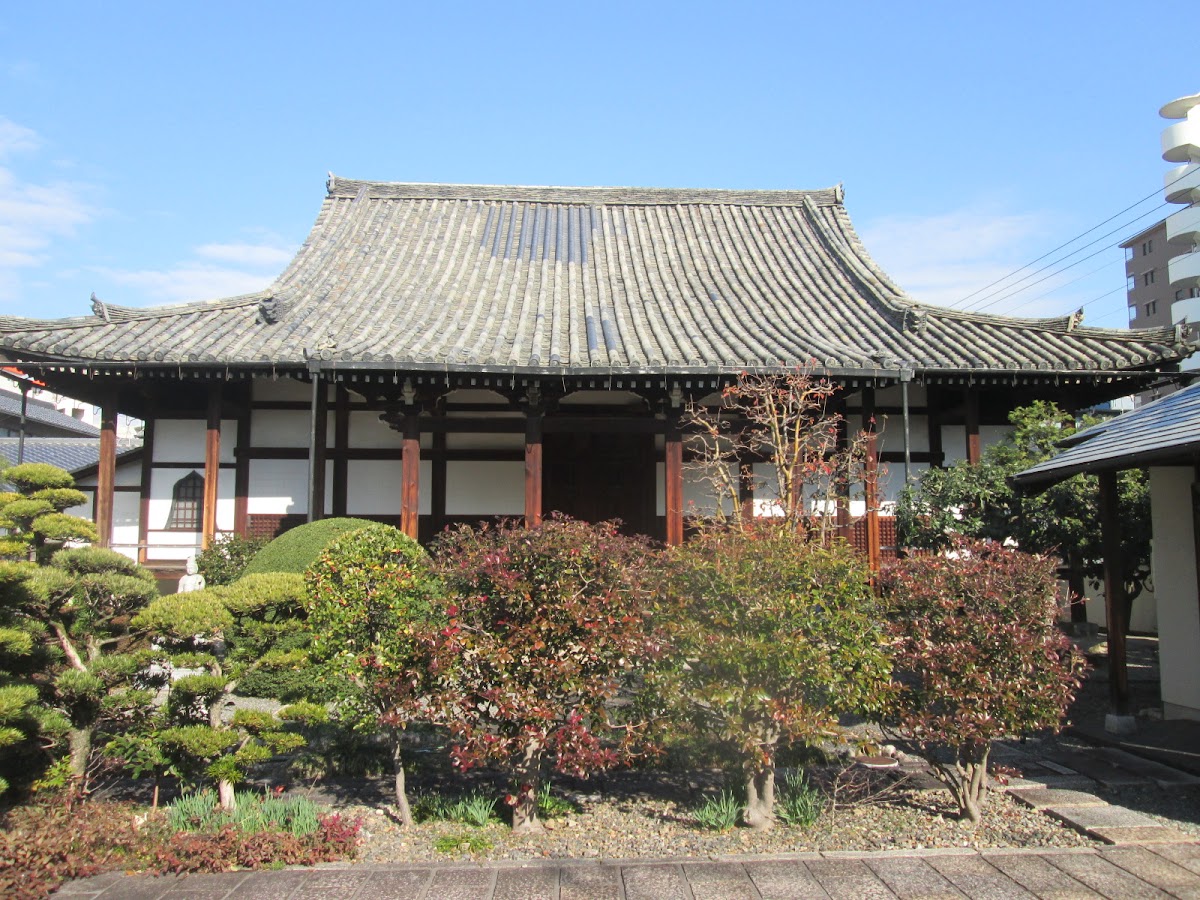
Omine-ji Temple (Kyoto Prefecture) | A Thorough Explanation of the History and Ruins of the Legendary Shugendo Training Ground Near Ichijo Modoribashi Bridge
Near Ichijo Modoribashi Bridge in Kamigyo Ward, Kyoto City, there once stood an important training ground for Shugendo called “Omine-ji Temple.” While it no longer exists as a temple, with only a stone monument and place name remaining, it flourished during the Heian period as a major center of mountain worship in Kyoto, attracting many Shugendo practitioners. This article will provide a detailed explanation of the history, role, and current state of the ruins of this legendary temple, Omine-ji.
What is Omine-ji Temple? | The Site of a Shugendo Training Ground in Kamigyo Ward, Kyoto City
Omine-ji Temple was a temple located near Ichijo Modoribashi Bridge in Kamigyo Ward, Kyoto City. Currently, only a few stone monuments remain as the “Omine-ji Temple Ruins,” but it functioned as an important center of Shugendo from the Heian period to the medieval period.
Names and Alternate Names of Omine-ji Temple
Omine-ji Temple was also known as “Omine-den.” This name is derived from Mount Ōmine in Yoshino, Yamato Province, Nara Prefecture. Mount Ōmine is known as a sacred site of Shugendō (mountain asceticism) and is a spiritual place said to have been founded by En no Gyōja. Ōmine-ji Temple in Kyoto, by bearing the name of Mount Ōmine, demonstrated its deep connection to Shugendō.
Location and Surrounding Environment
The area where Ōmine-ji Temple once stood was formerly called “Ōmine-no.” It is currently located north of Ichijō Modoribashi Bridge in Kamigyo Ward, Kyoto City. Ichijō Modoribashi Bridge has been known since the Heian period for its legends involving the Onmyōji (diviner) Abe no Seimei and has been considered a place imbued with spiritual power. The fact that Ōmine-ji Temple was built in this vicinity is an interesting point when considering the layout of sacred sites and Shugendō training grounds in Kyoto at that time.
The History of Omine-ji Temple | A Center for Shugendo Since the Heian Period
Founding and Flourishing in the Heian Period
While the exact founding date of Omine-ji Temple is unclear, historical records confirm its existence during the Heian period. At that time, many Shugendo practitioners were active in Kyoto, and Omine-ji Temple played a crucial role as a training ground.
In Heian-period Kyoto, esoteric Buddhism and Shugendo flourished, particularly within the aristocratic society. Shugendo practitioners sought spiritual enlightenment through mountain asceticism, establishing training halls both within and outside the capital. Despite its proximity to the city center, Omine-ji Temple, bearing the name of Mount Omine, a sacred site of Shugendo, served as an important link between the city and mountain worship.
Temple Grounds and Monastery Structure
According to historical records, Omine-ji Temple possessed extensive grounds, within which numerous monasteries (buildings where monks and Shugendo practitioners resided) were constructed. Many Shugendo practitioners dedicated themselves to their training here, and the temple is said to have always been vibrant and bustling. It is believed that rigorous training took place at Omine-ji Temple, a training ground for Shugendo (mountain asceticism). Various ascetic practices, such as waterfall meditation, fasting, and fire rituals, were performed, with the ascetics aiming to enhance their spiritual power. Furthermore, due to its proximity to the capital, it is likely that members of the nobility and samurai classes also visited for prayers and blessings.
Changes and Decline from the Medieval Period Onward
With the arrival of the medieval period, the political and religious environment of Kyoto underwent significant changes. Many temples and shrines in Kyoto were destroyed or declined due to wars, including the Onin War (1467-1477). It is presumed that Omine-ji Temple was also swept up in these tides of the times, gradually losing its influence.
From the Edo period onward, the name of Omine-ji Temple almost completely disappeared from historical records, and its existence as a temple was lost. However, its name continues to survive in place names and legends, conveying to the present day that an important Shugendo training ground once existed in this area.
Mount Omine Faith and Shugendo | Relationship with Yoshino, Nara
What is Mount Omine?
Mount Omine is a general term for the mountainous region stretching from Yoshino to Kumano in Nara Prefecture, and specifically refers to the sacred mountain centered around Mount Sanjogatake (elevation 1,719m). It is said to have been founded by En no Gyoja in the 7th century and remains a sacred site visited by many Shugendo practitioners as a fundamental training ground.
Mount Omine is home to Omine-dera Temple (on the summit of Mount Sanjogatake), which accepts pilgrims from the opening ceremony on May 3rd to the closing ceremony on September 23rd each year. This mountain still maintains a strict ban on women, preserving the traditions of Shugendo.
Relationship between Kyoto’s Omine-ji Temple and Mount Omine in Nara
It is believed that Kyoto’s Omine-ji Temple was a training ground established by mountain ascetics and Shugendo practitioners who trained on Mount Omine in Nara, serving as a base of operations in the capital. After completing their rigorous training on Mount Omine, the ascetic monks returned to the capital with their spiritual power and performed prayers and blessings for nobles and commoners alike.
The name Omine-ji itself directly indicates its connection to the Omine-san faith. For the ascetic monks, Mount Omine was a source of spiritual power, and the temple bearing its name was a place to practice the spirit of mountain asceticism within the capital.
Differences from Kita-Omine and Bujo-ji
Within Kyoto Prefecture, separate from Omine-ji, there is another Shugendo temple called Bujo-ji. Bujo-ji is located on the slopes of Mount Daihi in Hanase, Sakyo-ku, Kyoto City, and is also known as “Kita-Omine.”
Bujo-ji was founded in 1154 (Kyuju 1) by Kanku Seinen and is a mountain temple belonging to the Honzan Shugendo sect. Its main hall (an Important Cultural Property), built in the stage style, is considered the oldest in Japan, and there is a legend that Taira no Kiyomori supervised its construction. It is also known for its beautiful rhododendrons in spring and autumn foliage.
While Omine-ji Temple was a Shugendo training ground located in an urban area, Minejo-ji Temple was a full-fledged Shugendo training ground located in a mountainous area, each serving a different role. Although their names are similar, they existed as separate temples.
Current Status of Omine-ji Temple Site | Ruins and Stone Monument
Current Situation
Currently, the temple buildings of Omine-ji Temple have been completely lost, and a stone monument has been erected on the site. It is introduced as “Omine-ji Temple Site” in Kyoto City’s tourist guide, and is a valuable historical site indicating the former existence of an important Shugendo training ground in this area.
The area around Ichijo Modoribashi Bridge is now a residential and commercial area, making it difficult to sense the atmosphere of the Heian period. However, the names Omine-no and Omine-ji Temple continue to remain in place names and legends, providing clues to the history of the region.
Access Information
The Omine-ji Temple Site is located in Kamigyo-ku, Kyoto City, near Ichijo Modoribashi Bridge. If using public transportation, the site is within walking distance of Imadegawa Station on the Kyoto Municipal Subway Karasuma Line. Alternatively, you can take a Kyoto City Bus and alight at a bus stop near Ichijo Modoribashi.
While the site itself is small and not developed as a tourist facility, it is worth visiting for those interested in Kyoto’s history and Shugendo (mountain asceticism). Nearby, there are numerous historical sites related to Onmyodo (Japanese esoteric cosmology) and spiritual traditions, such as Seimei Shrine. Visiting these sites together will allow for a deeper understanding of the spiritual worldview of Heian-kyo (ancient Kyoto).
Stone Monuments and Information Boards
At the site of Omine-ji Temple, there are stone monuments and information boards explaining its history. These describe how Omine-ji Temple flourished as a Shugendo training ground during the Heian period, the origin of the place name Omine-no, and the many Shugendo practitioners who trained there.
Visiting the stone monuments allows you to feel the traces of history buried within the modern urban landscape. Information is also available on the Kyoto City official tourism website, “Kyoto Tourism Navi,” so it is recommended to research beforehand.
The History and Culture of Shugendo in Kyoto
Heian-kyo and Shugendo
After the construction of Heian-kyo in 794, Kyoto became the political and cultural center of Japan. During this period, Esoteric Buddhism and Shugendo were widely accepted, mainly within the aristocratic society, and many Shugendo practitioners were active.
Shugendo is a unique Japanese mountain worship that fuses Buddhism (especially Esoteric Buddhism), Shinto, and Taoism. Shugendo practitioners (yamabushi) sought to gain supernatural powers through rigorous training in the mountains, and used these powers for prayers, incantations, and healing.
A Network Connecting the City and the Mountains
Kyoto is surrounded by mountains deeply associated with Shugendo, such as Mount Hiei, Mount Atago, and Mount Kurama. Within the network connecting these mountains to the urban area, dojos within the city, such as Omine-ji Temple, played an important role.
Shugendo practitioners repeatedly practiced training in the mountains and activities in the capital, enhancing their spiritual power while responding to the faith of the people. Omine-ji Temple served as a base for the activities of these Shugendo practitioners, playing a vital role in supporting Kyoto’s religious culture.
The Tradition of Shugendo Remaining in the Modern Age
Even today, Shugendo temples, including Minejo-ji Temple, exist in Kyoto Prefecture, where traditional training and rituals continue. Furthermore, Shugendo events are held annually in the autumn on Mount Atago and Mount Hiei, allowing many participants to experience the tradition of mountain asceticism.
Although Omine-ji Temple is gone, understanding its history allows us to appreciate the rich tradition of Shugendo in Kyoto and the world of faith woven from the urban and mountainous regions.
Historical Sites and Points of Interest Around Ichijo Modoribashi Bridge
The Legend of Ichijo Modoribashi Bridge
Ichijo Modoribashi Bridge, located near the ruins of Omine-ji Temple, is a place where numerous legends have been passed down since the Heian period. The most famous is the legend that when the Onmyoji (diviner) Abe no Seimei’s father died, Seimei used his magic to temporarily revive his father, and they said their final farewells at this bridge.
Furthermore, there is a legend that Watanabe no Tsuna, one of Minamoto no Yorimitsu’s Four Heavenly Kings, cut off a demon’s arm on this bridge. Thus, Ichijo Modoribashi has long been revered as a place imbued with spiritual power.
Seimei Shrine
Within walking distance of Ichijo Modoribashi is Seimei Shrine, dedicated to Abe no Seimei. Built on the site of the residence of Abe no Seimei, a Heian period onmyoji (diviner), Seimei Shrine remains a popular spot visited by many worshippers.
Within the shrine grounds, you can see a well said to have been used by Seimei, and the pentagram (Seimei Kikyo), a symbol of Onmyodo (Japanese esoteric cosmology), can be seen everywhere. Visiting it in conjunction with the Omine-ji Temple ruins allows you to experience the spiritual worldview of Heian-kyo more deeply.
Historical Walking Route in the Surrounding Area
A recommended historical walking route starts at the Omine-ji Temple ruins and includes Ichijo Modoribashi, Seimei Shrine, and then visits Kitano Tenmangu Shrine and Kamishichiken. This area is rich in Kyoto’s history, which dates back to the Heian period, and many sights are concentrated within walking distance.
In particular, it will be a very fulfilling walking course for those interested in Japanese spiritual culture, such as Shugendo and Onmyodo.
Omine-ji Temple and Kyoto’s Mountain Worship | Comparison with Mount Hiei and Mount Atago
Enryaku-ji Temple on Mount Hiei
Mount Hiei, located east of Kyoto, is known for Enryaku-ji Temple, the head temple of the Tendai sect founded by Saicho. Mount Hiei is also a sacred mountain with deep ties to Shugendo, and many Shugendo practitioners have trained there.
Mount Hiei is also called the “mother mountain of Japanese Buddhism” and is famous as a place where the founders of Kamakura Buddhism, such as Honen, Shinran, Eisai, Dogen, and Nichiren, trained. While Omine-ji Temple served as a training ground for Shugendo practitioners in urban areas, Mount Hiei functioned as a place for full-fledged mountain asceticism.
Mount Atago and Atago Faith
Mount Atago (elevation 924m), located northwest of Kyoto, is a sacred mountain dedicated to Atago Gongen, the god of fire prevention. Mount Atago is also known as a training ground for Shugendo practitioners, and many hikers and pilgrims still visit it today.
At the summit of Mount Atago is Atago Shrine, and the “Hino Youjin” (fire prevention) amulet is still cherished in homes and restaurants throughout Kyoto. Omine-ji Temple and Mount Atago have both developed in close connection with each other as important centers of Shugendo in Kyoto.
Mount Kurama and Kurama-dera Temple
Mount Kurama, located north of Kyoto, is home to Kurama-dera Temple. Kurama-dera Temple is known for the legend that Ushiwakamaru (Minamoto no Yoshitsune) trained there, and it is a temple with a unique worldview based on its beliefs.
Mount Kurama is also a sacred mountain deeply connected to Shugendo (mountain asceticism), and is cherished by many as a sacred site of mountain worship. The sacred mountains around Kyoto, such as Omine-ji Temple, Mount Hiei, Mount Atago, and Mount Kurama, each possess their own unique characteristics, but they were connected by the common faith foundation of Shugendo.
Current Status and Future Challenges of Omine-ji Temple Research
Historical Materials and Archaeological Investigations
Historical materials concerning Omine-ji Temple are limited, making it difficult to unravel its detailed history. While there are fragmentary mentions in Heian period documents and medieval records, systematic research is currently insufficient.
Future archaeological excavations could potentially reveal more about the true nature of Omine-ji Temple. The extent of the temple grounds, the layout of the buildings, and the excavated artifacts may allow for a concrete reconstruction of the Shugendo training grounds of the time.
Position in the History of Shugendo
Ōmine-ji Temple holds significant importance in the history of Japanese Shugendō as a typical example of a Shugendō training ground in an urban area. Research on Ōmine-ji Temple provides valuable clues for understanding how Shugendō, based on mountain asceticism, interacted with urban society and what role it played.
Further comparative research between Ōmine-ji Temple and other Shugendō training grounds, as well as analysis of Shugendō practitioner networks, will provide a clearer overall picture of religious culture in Heian-kyō.
Preservation as a Local History and Cultural Property
It is desirable that the Ōmine-ji Temple site be appropriately preserved and utilized as a cultural property of Kyoto City. Currently, only a stone monument remains, but improving information boards and developing tourist routes linked to surrounding historical sites would allow more people to understand its historical value.
Furthermore, historical preservation activities by local residents and its use as teaching material for local history in school education are also important initiatives.
Summary | The Spiritual Culture of Kyoto as Told by Omine-ji Temple
Omine-ji Temple was an important training ground for Shugendo (mountain asceticism) that existed in Kyoto from the Heian period to the medieval period. Although it no longer exists as a temple and only a stone monument remains, its history conveys the richness of Shugendo culture in Kyoto.
Located near Ichijo Modoribashi, a place believed to possess spiritual power, and bearing the name of Mount Omine in Nara, Omine-ji Temple was an important junction connecting mountain worship and urban culture. Many Shugendo practitioners trained here, responding to the faith of the people with their spiritual power.
Visiting the ruins of Omine-ji Temple allows you to feel the traces of history buried in the modern urban landscape. Furthermore, visiting the nearby Seimei Shrine and Ichijo Modoribashi Bridge together will allow you to gain a deeper understanding of the spiritual worldview of Heian-kyo (Kyoto).
Besides Omine-ji Temple, Kyoto has many other sacred mountains and temples deeply connected to Shugendo, such as Minejo-ji Temple, Mount Hiei, Mount Atago, and Mount Kurama. Visiting these places and learning about their history allows you to experience the profound depths of Japanese mountain worship and Shugendo culture.
Although Omine-ji Temple is a lost temple, its name and history are firmly etched in Kyoto’s cultural memory. By listening to the story told by this small stone monument, we can contemplate the faith of people from over a thousand years ago and the spiritual world they sought.