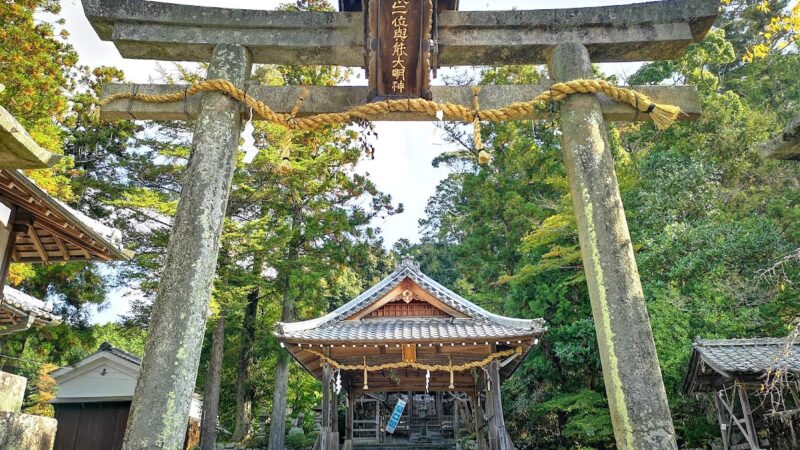
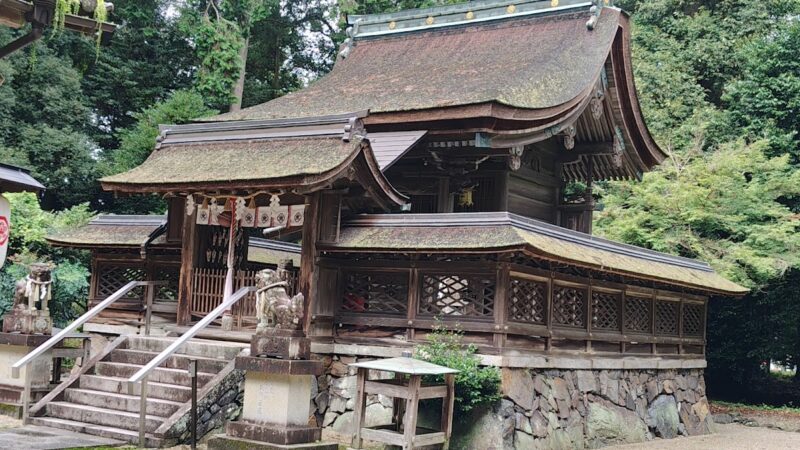
Kannonji Temple (Kamigyo Ward, Kyoto Prefecture) Complete Guide: The Gate of 100 Blows and the Depths of its History
Located in Sanbancho, Shichihonmatsu-dori, Kamigyo Ward, Kyoto City, Kannonji Temple is a Jodo sect temple known for its “Gate of 100 Blows” and “Night-Weeping Jizo.” It has been selected as one of Kamigyo Ward’s 100 Historical Sites and is beloved by the local community as one of the Seven Wonders of Izumi. This article provides a detailed explanation of Kannonji Temple’s history, highlights, legends, and access information.
Basic Information on Kannonji Temple
Kannonji Temple, also known as Jigenzan, is a temple belonging to the Jodo sect. It is located in a quiet residential area on Shichihonmatsu-dori, Izumi-sagaru, Kamigyo Ward, Kyoto City.
Location: 3-bancho, Shichihonmatsu Izumi-sagaru, Kamigyo-ku, Kyoto City
Sect: Jodo-shu (Pure Land Buddhism)
Mountain Name: Jigenzan
Principal Image: Eleven-faced Kannon (Kannon Hall)
Pilgrimage Site: Rakuyo Kannon No. 27
Selected as one of Kamigyo-ku’s 100 Historic Sites, the temple grounds also contain a hemlock tree designated as a “tree of pride for the ward’s residents.” It is a beloved temple among Kyoto citizens, conveying the history and culture of the region to the present day.
History and Founding of Kannonji Temple
Founded during the Keicho Era
Kannonji Temple was founded in 1607 (Keicho 12) by Abbot Bairin in Ichijo Muromachi. This was shortly after the establishment of the Edo Shogunate, a time when Kyoto’s temple culture was being revived. Many accurate records and temple histories from the time of its founding were lost in the Great Fire of Tenmei, which will be discussed later.
The Great Tenmei Fire and the Loss of Temple History
The Great Tenmei Fire of Kyoto in 1788 (Tenmei 8) was a major disaster that devastated most of Kyoto city. Kannonji Temple was also affected by this fire, losing its buildings, as well as valuable records and documents. Therefore, it is difficult to trace the accurate history of the temple from its founding to the Great Tenmei Fire, a period of approximately 180 years.
The temple history that exists today is a reconstruction based on oral traditions and fragmentary materials, and primarily consists of information passed down through oral tradition.
Relocation to the Current Location
After the Great Tenmei Fire, Kannonji Temple relocated to its current location in Shichihonmatsu Izumi. This area is slightly northwest of central Kyoto and has developed into a quiet residential area. Even after the relocation, it has continued to attract many worshippers as a center of local faith.
The Gate of the Hundred Lashes: Remains of the Former Momoyama Castle
Origin and Legend of the Temple Gate
The temple gate of Kannonji Temple is widely known as the “Gate of the Hundred Lashes.” According to legend, this gate was relocated from the prison gate of the former Momoyama Castle. It is a historical fact that remnants of Fushimi Castle (Momoyama Castle), built by Toyotomi Hideyoshi, were relocated to various locations within Kyoto City, and the temple gate of Kannonji Temple is believed to be one of them.
Origin of the Hundred Lashes
The name “Hundred Lashes” originates from a ceremony used when releasing criminals. It is said that criminals released from prison were struck 100 times in front of this gate. This was not merely a punishment, but rather a ritualistic act of cleansing oneself of sins and allowing reintegration into society.
Due to this legend, the gate came to be called the “Gate of the Hundred Lashes,” and it has been passed down as one of Kyoto’s folk traditions.
The Single-Plank Camphor Wood Door
The gate doors of the temple are made from a single plank of camphor wood, and their size and exquisite craftsmanship have earned them the title of one of the “Seven Wonders of Izumi.” Camphor wood is highly durable and resistant to insect damage, making it a long-standing material used in temple and shrine architecture.
The single-plank doors demonstrate the high level of wood procurement and processing techniques, and are a valuable cultural asset that conveys the pinnacle of Momoyama period architectural technology. Even today, these doors retain their original appearance, continuing to welcome visitors.
The Legend of the Kannon Hall and the Senjin Hall
The Principal Image of the Kannon Hall
The Kannon Hall within the grounds of Kannon-ji Temple houses an eleven-faced Kannon as its principal image. This Kannon statue is said to have been created by An’ami, a disciple of Unkei. Unkei was a leading Buddhist sculptor of the Kamakura period, and his disciples also possessed exceptional skills.
This Kannon statue, attributed to An’ami, is known for its compassionate expression and exquisite carving, and has attracted many worshippers since ancient times.
The Miracle of Epidemics and Resurrection
The history of the Kannon Hall includes a legend related to an epidemic. In 1390 (Meitoku 1), an epidemic swept through Kyoto, causing many deaths near Horikawa Ichijo. Many abandoned the corpses, and the situation remained tragic.
At this time, Yamana Shigeuji prayed for the cessation of the epidemic at the Kannon Hall, and it is said that, through a miraculous intervention, the corpses were revived. Because of this miracle, the Kannon statue in the Kannon Hall became a place of strong devotion.
The Legend of Miyoshi Kiyoyuki and Jōzō
Another legend from the Heian period is also associated with the Kannon Hall. This legend tells of the resurrection of Miyoshi Kiyoyuki, who died in 918 AD. During his funeral, his son, the monk Jōzō, prayed to the Buddha and the gods, and his father was resurrected.
This event is also linked to the legend of the “Returning Bridge.” Ichijō Modoribashi is a real bridge still existing in Kamigyo-ku, Kyoto City, and it is called “Returning Bridge” because of the legend of the dead being resurrected.
Origin of Senjindō
Due to the miracle of resurrection, many worshippers began to visit the Kannon-dō (Kannon Hall), and it came to be known as “Senjindō” (Hall of a Thousand People). It is said that this name was given because as many as a thousand people visited to worship.
During the Keichō era, the Kannon-dō was moved to its current location within the grounds of Kannon-ji Temple, and it continues to welcome many pilgrims as the 27th stop on the Rakuyō Kannon Pilgrimage.
Yonaki Jizo: A Belief in Stopping Night Crying
The Origin of Yonaki Jizo
Within the grounds of Kannonji Temple, there is a Jizo Bodhisattva known as “Yonaki Jizo” (Night Crying Jizo). This Jizo has attracted fervent devotion from parents of children suffering from night crying.
From the Edo period to the Showa era, night crying in infants was a major source of worry for parents. In an era before advanced medicine, the cause of night crying was unknown, and many parents relied on folk beliefs.
How to Worship for Night Crying
Parents troubled by night crying would visit Yonaki Jizo and pray for their child’s crying to stop. It was customary to return to the temple to give thanks when their wish was granted.
Even today, visits to Yonaki Jizo continue, with parents struggling with child-rearing coming to the temple. This faith continues to be passed down as a source of spiritual support alongside medical treatment.
A Faith Rooted in the Community
The Yonaki Jizo (night-crying Jizo) is a symbol of Kannonji Temple’s deep roots in the community. It clearly reflects Kannonji Temple’s character as a place of daily faith for local residents, rather than a large-scale tourist temple.
One of Kamigyo Ward’s 100 Historic Sites and the Tree of Pride for the Ward Residents
Selection as One of the 100 Historic Sites
Kannonji Temple is one of the “One of Kamigyo Ward’s 100 Historic Sites” selected by Kamigyo Ward, Kyoto City. This selection of 100 Historic Sites represents historical sites and buildings that symbolize the history and culture of Kamigyo Ward, and is part of an effort to preserve and pass on the region’s historical identity.
Kannonji Temple was selected as one of the 100 Historic Sites because it possesses many elements of historical and cultural value, including the Hyakutaki Gate, Kannon Hall, and the Yonaki Jizo.
The Tree of Pride for the Ward Residents: Tsuga (Japanese Hemlock)
Within the grounds of Kannonji Temple stands a tsuga tree designated as the “Tree of Pride for the Ward Residents.” The Japanese hemlock (Tsuga) is an evergreen conifer belonging to the pine family, native to the mountainous regions of Japan.
In Kamigyo Ward, Kyoto City, trees symbolizing the local natural environment and history are designated as “trees of pride for the ward residents.” The Tsuga tree at Kannonji Temple was designated due to its long lifespan and the important role it plays in the temple grounds’ landscape.
Preservation of Local Culture
The designation of the 100 Historic Sites and the trees of pride for the ward residents are not merely commemorations, but rather initiatives to preserve the historical and cultural resources of the region and pass them on to future generations. Kannonji Temple plays a crucial role in this preservation of local culture.
The Seven Wonders of Izumi
The Tradition of Seven Wonders
In Kyoto, legends and mysterious phenomena known as “seven wonders” are passed down in various regions. The Izumi area (around Izumi-dori in Kamigyo Ward) also has its own “seven wonders,” and the single-plank camphor wood door at Kannonji Temple is one of them.
The Reason Why the Kannonji Temple Gate is Considered One of the Seven Wonders
The reason why the temple gate’s door, made from a single plank of camphor wood, is considered one of the seven wonders lies in its size and the rarity of being made from a single plank. Cutting a single plank from a large tree is difficult due to the difficulty of sourcing the wood and the high level of skill required for its processing.
Furthermore, the legend that it was relocated from the prison gate of the former Momoyama Castle adds to its mysterious appeal. While the relocation of historical buildings is not uncommon, the unique origin of it being a prison gate is a factor in its being passed down as a folk tale.
Other Seven Wonders of Izumi
The Seven Wonders of Izumi include various legends besides the Kannonji Temple door. These reflect the history and culture of the region and demonstrate the richness of Kyoto’s folk culture.
The 27th Temple of the Rakuyo Kannon Pilgrimage
The 33 Kannon Pilgrimage Sites of Rakuyo
Kannonji Temple is positioned as the 27th temple of the 33 Kannon Pilgrimage Sites of Rakuyo. The Rakuyo Thirty-Three Kannon Pilgrimage is a pilgrimage route visiting temples dedicated to Kannon Bodhisattva within Kyoto City, a traditional pilgrimage course that has continued since the Edo period.
The Tradition of Kannon Worship
Kannon Bodhisattva is one of the most widely worshipped Buddhas in Japan, revered as a compassionate deity who relieves the suffering of all sentient beings. The belief that Kannon Bodhisattva transforms into thirty-three different forms to save people led to the development of the thirty-three pilgrimage sites.
The Kannon Hall at Kannonji Temple has long attracted strong devotion due to its miraculous powers of resurrection and protection against epidemics. As one of the Rakuyo Thirty-Three Pilgrimage sites, it continues to attract many pilgrims today.
The Significance of the Pilgrimage
The pilgrimage to the Kannon pilgrimage sites is not merely sightseeing, but an opportunity for spiritual training and self-reflection. The purpose is to experience the compassion of Kannon Bodhisattva and attain inner peace by visiting each temple.
Pilgrims visiting Kannonji Temple pass through the Hyakutaki Gate, clasp their hands together in prayer at the Kannon Hall, and offer prayers to the Yonaki Jizo. Through this series of visits, one can experience the depth of history and faith.
Access to Kannonji Temple
Access by Public Transportation
Kannonji Temple is located on Shichihonmatsu-dori, Izumi-sagaru, Kamigyo-ku, Kyoto City. The following access methods are convenient when using public transportation:
By City Bus:
- Get off at the “Shichihonmatsu Izumi” bus stop (Kyoto City Bus), approximately 3 minutes on foot.
- Get off at the “Senbon Izumi” bus stop (Kyoto City Bus), approximately 5 minutes on foot.
Nearest Station:
- Approximately 15 minutes on foot from JR Sagano Line “Nijo Station”.
- Approximately 20 minutes on foot from Kyoto Municipal Subway Tozai Line “Nijojo-mae Station”.
Access by Private Car
If visiting by private car, head northwest from the center of Kyoto City. However, the area around Kannonji Temple is a residential area, and there may not be a dedicated parking lot. We recommend using nearby coin-operated parking lots or public transportation.
Nearby Tourist Attractions
There are other historical temples, shrines, and tourist attractions scattered around Kannonji Temple.
- Kitano Tenmangu Shrine: A shrine dedicated to Sugawara no Michizane, the god of learning (approx. 15-minute walk)
- Senbon Shakado (Daihoonji Temple): An ancient temple founded during the Kamakura period (approx. 10-minute walk)
- Seimei Shrine: A shrine dedicated to Abe no Seimei, the Onmyoji (diviner) (approx. 20-minute walk)
You can enjoy a historical walk through Kamigyo Ward in conjunction with your visit to Kannonji Temple.
Manners and Precautions for Visiting Temples
Basic Manners for Visiting Temples
Kannonji Temple is located in a quiet residential area. Please observe the following manners when visiting.
- Bow when passing through the temple gate.
- Behave quietly within the temple grounds.
- Take photographs only in designated areas.
- Do not touch buildings or cultural artifacts.
- Take your trash with you.
Visiting Hours and Admission Fee
It is recommended to check the visiting hours and admission fee for Kannonji Temple in advance. Generally, you can visit the temple grounds during the daytime, but there may be restrictions on viewing the interior of the Kannon Hall.
About Goshuin (Temple Seals)
As a pilgrimage site of the Rakuyo Thirty-Three Kannon Pilgrimage, you can receive a Goshuin (temple seal). Bring your Goshuincho (seal book) and politely request one at the Nokyo-sho (seal office). A Goshuin is not merely a commemorative stamp, but should be treated with care as proof of your visit.
Cultural Value of Kannonji Temple
Value as a Historical Building
The temple gate of Kannonji Temple is a valuable historical structure that conveys the architectural style of the Momoyama period. If the legend that the gate was relocated from the prison of the former Momoyama Castle is true, then it can be considered an important cultural asset that conveys the architectural techniques of the time of Toyotomi Hideyoshi.
The door, made from a single plank of camphor wood, demonstrates the high level of woodworking skill of the time and has architectural historical value.
Value as a Folk Cultural Asset
Kannonji Temple is also important as a folk cultural asset. It preserves Kyoto’s folk beliefs and traditions, such as the worship of the Night-Crying Jizo, the legend of the Hundred-Beaten Gate, and the legend of the Kannon Hall’s resurrection.
These legends and beliefs have been passed down to local residents not only through written records but also through oral tradition. Preserving such intangible cultural assets contributes to protecting the region’s identity.
Resources for Local History Research
The history of Kannonji Temple is also important material for local history research in Kamigyo Ward. While the loss of records due to the Great Fire of Tenmei is regrettable, the existing buildings and traditions allow us to understand the popular beliefs and local communities of Kyoto during the Edo period.
The Position of Kannonji Temple in Kyoto’s Temple Culture
Large Temples and Small Temples
Kyoto is home to both large tourist temples like Kiyomizu-dera and Kinkaku-ji, and smaller, community-based temples like Kannonji. While large temples support Kyoto’s tourism culture, smaller temples function as places of daily worship for local residents.
Kannonji is a prime example of the latter, more familiar to local residents and pilgrims than to tourists. The existence of such temples contributes to Kyoto’s multi-layered culture.
Characteristics as a Jodo Sect Temple
Kannonji belongs to the Jodo sect. Founded by Honen Shonin, the Jodo sect preaches rebirth in paradise through chanting the Buddha’s name. Kyoto has many Jodo sect temples, each supporting local faith.
The Kannon Hall worship at Kannonji can be described as a fusion of Jodo sect doctrine and Kannon worship. The coexistence of chanting the Buddha’s name and prayers to Kannon Bodhisattva demonstrates the flexibility of Japanese folk belief. ### The Role of Temples in Modern Times
In modern society, the role of temples is changing. Beyond being places for traditional religious rituals, they are expected to serve diverse functions such as community hubs, historical and cultural preservation facilities, and places of spiritual healing.
Kannonji Temple maintains its role as a traditional place of worship while responding to these modern demands. The continued practice of visiting the Yonaki Jizo (night-crying Jizo) is a prime example of the coexistence of tradition and modernity.
Summary: The Charm and Significance of Visiting Kannonji Temple
Kannonji Temple, located in Kamigyo Ward, Kyoto City, is a temple with a rich history and many legends, including the Hyakutaki Gate, the Yonaki Jizo, and the legend of the resurrection of the Kannon Hall. Although many records were lost in the Great Fire of Tenmei, its history is passed down through oral tradition and existing buildings.
Selected as one of Kamigyo Ward’s 100 Historic Sites and a pilgrimage site of the Rakuyo Thirty-Three Kannon Pilgrimage, it continues to be a central figure in the region’s history and faith. Unlike large, touristy temples, Kannonji Temple offers a quiet and peaceful atmosphere where you can experience Kyoto’s deep history and culture.
Visiting Kannonji Temple is not merely sightseeing; it’s a valuable opportunity to connect with the essence of Kyoto’s regional culture and folk beliefs. Passing through the Hyakutaki Gate, offering prayers at the Kannon Hall, and praying to the Yonaki Jizo statue, you’ll feel the weight of history and the profound faith of the people.
When visiting Kyoto, be sure to visit not only famous tourist spots but also locally rooted temples like Kannonji Temple. There, you’ll find the true face of Kyoto, one you won’t find in guidebooks.