Complete Guide to San’eji Temple (Kyoto Prefecture): History, Access, and Highlights
Located in Kamigyo-ku, Kyoto City, San’eji Temple is a historic temple belonging to the Nichiren sect. Despite its central location in Kyoto, this temple maintains a tranquil atmosphere and has a long history as a center of local faith. This article provides detailed information useful for those considering a visit, from the historical background of San’eji Temple to specific access methods and highlights.
Basic Information about San’eji Temple
San’eji Temple is a Nichiren sect temple located at 72 Furoya-cho, Senbon-nishi-iru, Gojoji-dori, Kamigyo-ku, Kyoto City, Kyoto Prefecture. It is situated in the area where Senbon-dori and Gojoji-dori intersect, in an area where Kyoto’s historical townscape remains.
Location and Contact Information
Address: 72 Furoya-cho, Senbon-nishi-iru, Gojoji-dori, Kamigyo-ku, Kyoto City, Kyoto Prefecture 602-8435
Sect: Nichiren Buddhism
Area: Kamigyo-ku, Kyoto City
This area has long developed as a residential area of Kyoto, and many temples and shrines are scattered throughout the surrounding area. San’e-ji Temple is one of them, attracting the faith of local residents.
History and Origin of San’e-ji Temple
Establishment as a Nichiren Buddhist Temple
San’e-ji Temple is a temple operated based on the teachings of Nichiren Buddhism. Nichiren Buddhism is a Buddhist sect founded by Nichiren Shonin during the Kamakura period, with the Lotus Sutra as its fundamental scripture and emphasizing the chanting of the title “Namu Myoho Renge Kyo.”
Many Nichiren Buddhist temples in Kyoto were built from the Muromachi period to the Edo period. Sankaiji Temple is also believed to have been founded during this period and has functioned as one of the centers of Nichiren Buddhism’s missionary activities in Kyoto.
Meaning of the Temple Name
The name “Sankai” embodies an important Buddhist concept. In Buddhism, there is a term called “Ryūge San’e,” which refers to the teaching that Maitreya Bodhisattva will preach three times in the future, saving many people. The name Sankaiji Temple is highly likely to originate from this Buddhist thought, and is thought to represent the temple’s philosophy of wishing for the salvation of many people.
Historical Background of Kamigyo Ward, Kyoto City
Kamigyo Ward, Kyoto City, where Sankaiji Temple is located, is a historical area that has existed since the Heian period. This area contains numerous important historical sites, including the Kyoto Imperial Palace, and was lined with the residences of court nobles and samurai.
The area where Gojoji Street and Senbon Street intersect was once a major transportation route in Kyoto, a place where many people came and went. Due to its location, San’eji Temple has become an important place of worship not only for local residents but also for visitors to Kyoto.
Access: How to get to San’eji Temple
This section provides detailed information on how to access San’eji Temple. Access from Kyoto city center is relatively easy, and using public transportation is convenient.
Access by Public Transportation
Access by Bus
If using Kyoto City Buses, the nearest bus stops are “Senbon Nakatachiuri” or “Senbon Imadegawa.”
From Kyoto Station:
- Take Kyoto City Bus Route 206 or 50
- Get off at the “Senbon Imadegawa” bus stop and walk for approximately 5 minutes
- Travel time: Approximately 30 minutes
From Shijo Kawaramachi:
- Take Kyoto City Bus Route 10 or 46
- Get off at the “Senbon Nakatachiuri” bus stop and walk for approximately 3 minutes
- Travel time: Approximately 25 minutes
From the bus stop, you can access the temple by walking west along Gojoji Street or along Senbon Street. The surrounding area is residential, so you can enjoy a quiet stroll while visiting.
Access by Train
The nearest stations are as follows:
Keifuku Electric Railway Kitano Line “Kitano Hakubaicho Station”:
- Approximately 15 minutes on foot from the station
- Route south along Senbon-dori Street
JR Sagano Line “Enmachi Station”:
- Approximately 20 minutes on foot from the station
- Or transfer to a bus from the station
If using the train, you will need to transfer to a bus from the station or walk. Walking while enjoying the Kyoto streetscape is also recommended.
Access by Private Car
If visiting by private car, it is approximately 30 minutes from the Meishin Expressway “Kyoto Minami IC” and approximately 25 minutes from the “Kyoto Higashi IC”.
Parking Information:
It is recommended to inquire with the temple in advance regarding the availability of a temple-specific parking lot. There are several coin-operated parking lots in the surrounding area, but the number of spaces is limited, so using public transportation is recommended.
Access by Foot or Bicycle
Access by bicycle is also convenient from the central part of Kyoto city. Located approximately 2km from the Kyoto Imperial Palace and 1.5km from Kitano Tenmangu Shrine, it’s ideally situated for a visit as part of a Kyoto sightseeing trip.
Renting a bicycle allows you to create a sightseeing route that combines visits to other nearby temples and shrines.
Highlights and Features of San’e-ji Temple
Atmosphere of the Main Hall and Grounds
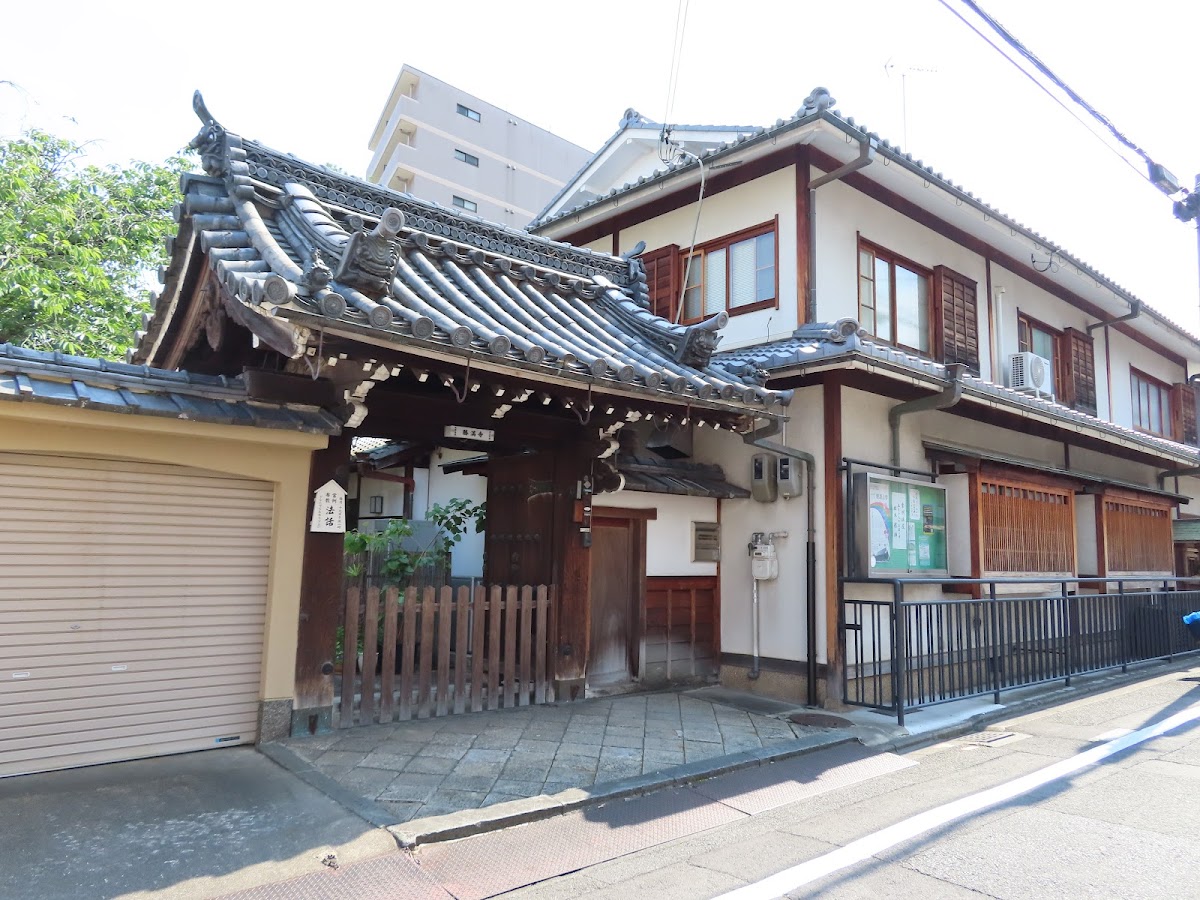
San’e-ji Temple’s grounds blend seamlessly into Kyoto’s residential area. Unlike large tourist temples, it boasts a tranquil atmosphere characteristic of a temple deeply rooted in the community.
The main hall houses the mandala, the principal object of worship for the Nichiren sect, and daily services are performed there. Visitors can find peace and tranquility in this peaceful environment.
Faith and Practice of the Nichiren Sect
San’e-ji Temple conducts religious activities based on the teachings of the Nichiren sect. The chanting of the mantra “Namu Myoho Renge Kyo,” a characteristic of the Nichiren sect, is highly valued at this temple.
Main Characteristics of the Nichiren Sect:
- Considers the Lotus Sutra as the supreme scripture
- Chants the mantra “Namu Myoho Renge Kyo”
- Aims for worldly benefits and enlightenment
- Emphasizes social practice
Connection with the Community
Sankaiji Temple is a temple with strong ties to the local community. Various memorial services and events are held throughout the year, making it a spiritual haven for the local people.
Main Annual Events:
- New Year’s Shusho-e (New Year’s service)
- Obon (Buddhist festival) Segaki (feeding of hungry ghosts) service
- Higan (autumn equinox) service
- Memorial service for the anniversary of Nichiren Shonin’s death
These events are open not only to local parishioners but also to the general public.
Nearby Temples and Tourist Spots
When visiting Sankaiji Temple, you can enjoy a more fulfilling Kyoto sightseeing experience by also visiting other nearby temples, shrines, and tourist spots.
Kitano Tenmangu Shrine (approx. 15-minute walk)
This shrine is dedicated to Sugawara no Michizane, known as the god of learning. It’s also famous for its plum blossoms, and the shrine is bustling with visitors on the 25th of each month.
Senbon Shakado Temple (Daihoonji Temple) (approx. 10-minute walk)
This ancient temple, founded during the Kamakura period, still retains its main hall, a national treasure. It’s also known for the “Okame Legend” and is believed to bring blessings for matchmaking and marital harmony.
Kamishichiken (approx. 12-minute walk)
This area is known as Kyoto’s oldest geisha district. Traditional townhouses line the streets, offering a distinctly Kyoto atmosphere.
Kyoto Imperial Palace (approx. 20-minute walk)
This palace, formerly the residence of the emperor, is now open to the public. Beautiful gardens and historical buildings are scattered throughout the vast grounds.
Etiquette and Manners for Visiting a Temple
How to Visit a Nichiren Buddhist Temple
When visiting Sankaiji Temple, it is helpful to be familiar with the proper etiquette for visiting a Nichiren Buddhist temple.
Basic Visiting Procedure:
- Bow at the Temple Gate: Bow at the temple gate before entering the temple grounds.
- Purification at the Water Basin: If there is a water basin, purify your hands and mouth.
- Visiting the Main Hall: Join your hands in prayer in front of the main hall and sincerely chant “Namu Myoho Renge Kyo.”
- Offering a Coin: If offering a coin, do so quietly.
- Bow Upon Exit: Bow again at the temple gate when leaving the temple grounds.
Points to Note During Your Visit
Regarding Clothing:
There are no specific dress code requirements, but considering that a temple is a sacred place, it is advisable to avoid revealing clothing.
Regarding Photography:
We recommend obtaining permission before taking photographs on the temple grounds. Please note that photography is often prohibited inside the main hall and of Buddhist statues.
Maintaining Silence:
Temples are places of prayer and meditation. Please refrain from loud conversations and noisy behavior, and worship quietly.
Temple Culture in Kamigyo Ward, Kyoto City
History of Temples in Kamigyo Ward
Kamigyo Ward in Kyoto City is a historical area dating back to the Heian period, and is home to numerous temples. While the temples in this area belong to different sects, they are important elements in shaping Kyoto’s religious culture.
Distribution of Major Buddhist Sects in Kamigyo Ward:
- Nichiren Buddhism: Multiple temples, including San’e-ji Temple
- Shingon Buddhism: Esoteric Buddhist temples
- Tendai Buddhism: Temples descended from Enryaku-ji Temple on Mount Hiei
- Jodo Buddhism/Jodo Shinshu Buddhism: Temples of the Nembutsu (chanting of Amida Buddha’s name) style
- Rinzai Buddhism/Soto Buddhism: Zen Buddhist temples
The coexistence of temples of such diverse sects forms Kyoto’s unique religious diversity.
The Role of Local Temples
Temples rooted in the community, such as San’e-ji Temple, have functioned not only as places of worship but also as centers of local communities.
Main Roles of Local Temples:
- Performance of Religious Rituals: Conducting funerals, memorial services, and annual events.
- Educational Institutions: Formerly providing educational opportunities as temple schools.
- Social Welfare: Providing support and counseling for those in need.
- Preservation of Culture: Storing Buddhist art and ancient documents.
- Spiritual Support: Providing spiritual support to those suffering from worries and pain.
Even in modern times, these roles continue, albeit in different forms, and temples remain indispensable to the local community.
Deeper Understanding of Nichiren Buddhism
Doctrines and Characteristics of Nichiren Buddhism
A deeper understanding of Nichiren Buddhism, to which Sankaiji Temple belongs, will deepen the significance of your temple visit.
Basic Doctrines of Nichiren Buddhism:
Nichiren Buddhism is a sect founded by Nichiren Shonin (1222-1282), a monk of the Kamakura period. Our mission is to spread the teachings of the Lotus Sutra (Myoho Renge Kyo), which we consider to be the supreme scripture.
Emphasis on the Lotus Sutra:
Nichiren Shonin was convinced that among the many scriptures expounded by Shakyamuni Buddha, the Lotus Sutra was the most superior teaching. The Lotus Sutra expounds the universal idea of salvation that “all people can become Buddhas,” and practicing this teaching is the core of Nichiren Buddhism.
How to Chant the Title:
The title “Namu Myoho Renge Kyo” expresses devotion to the Lotus Sutra. It is believed that by chanting these seven characters, one can obtain the merits of the Lotus Sutra.
- “Namu”: Meaning to take refuge in, to believe
- “Myoho Renge Kyo”: The formal name of the Lotus Sutra
History of Nichiren Buddhism
Establishment in the Kamakura Period:
Nichiren Shonin was born in Awa Province (present-day Chiba Prefecture). After studying Tendai Buddhism at Mount Hiei, he became convinced that the Lotus Sutra was the only teaching that could save the Latter Day of the Law. In 1253, he declared the establishment of the Nichiren sect, and it began.
Expansion to Kyoto:
Nichiren Buddhism developed mainly in Kamakura, but during the Muromachi period, many temples were also built in Kyoto. It was widely practiced among the townspeople (merchants and artisans) of Kyoto, forming a strong faith community called the “Hokke-shu” (Lotus Sutra Group).
Modern Nichiren Buddhism:
Currently, Nichiren Buddhism has approximately 5,000 temples nationwide and is one of the traditional Buddhist sects with many followers. It actively engages in social activities, playing a role for Buddhism in modern society.
Best Time and Season for Visiting
The Charm of Visiting Throughout the Year
Sankaiji Temple is open for visits throughout the year, but each season offers its own unique charm.
Spring (March-May):
Spring in Kyoto is cherry blossom season. Cherry blossoms bloom around Sankaiji Temple, and the fresh greenery is beautiful. The weather is mild, making it ideal for visiting.
Summer (June-August):
During the Obon period, memorial services such as the Segaki ceremony are held. Kyoto summers are hot, but early morning or evening visits are recommended.
Autumn (September-November):
This is Kyoto’s autumn foliage season. The surrounding temples and shrines are beautifully colored, making it the best season for Kyoto sightseeing.
Winter (December-February):
This is a time to visit in a tranquil atmosphere, allowing for peaceful contemplation. The temple becomes bustling with visitors during the New Year’s pilgrimage.
Visiting Hours
We recommend checking the temple’s opening hours and service times in advance. Generally, temples are open for visits from 9:00 AM to around 5:00 PM, but this varies by temple.
Recommended Visiting Times:
- Early Morning: Enjoy a peaceful atmosphere
- Weekday Mornings: Relatively uncrowded, allowing for a more relaxed visit
- Evening: Enjoy the beauty of the temple grounds illuminated by the setting sun
Kyoto Temple Tour and San’e-ji Temple
Kamigyo Ward Temple Tour Course
We introduce a temple tour course in Kamigyo Ward, including San’e-ji Temple.
Half-Day Course (approx. 3-4 hours):
- Kitano Tenmangu Shrine (60 min)
- Senbon Shakado Temple (40 min)
- San’eji Temple (30 min)
- Stroll through Kamishichiken (30 min)
Full-Day Course (approx. 6-7 hours):
- Kyoto Imperial Palace (90 min)
- Shokokuji Temple (60 min)
- Kitano Tenmangu Shrine (60 min)
- Lunch Break (60 min)
- Senbon Shakado Temple (40 min)
- San’eji Temple (30 min)
- Stroll through Kamishichiken (40 min)
Nichiren Buddhist Temple Tour
Kyoto has many important Nichiren Buddhist temples. Visiting them together with San’eji Temple will allow you to gain a deeper understanding of the history and culture of Nichiren Buddhism.
Major Nichiren Buddhist Temples in Kyoto:
- Honpoji Temple (Kamigyo Ward): Known for its fusuma (sliding door) paintings by Hasegawa Tohaku
- Myokenji Temple (Kamigyo Ward): The head temple of the Nichiren sect
- Myokakuji Temple (Kamigyo Ward): A temple associated with Oda Nobunaga
- Honmanji Temple (Kamigyo Ward): A famous spot for weeping cherry blossoms
Visiting these temples allows you to learn about the diverse aspects of the Nichiren sect.
Significance and Mindset for Temple Visits
Why Visit Temples?
In modern society, the significance of visiting temples has diversified. More and more people are visiting not only for sightseeing purposes, but also to seek peace of mind or to learn about history and culture.
The Significance of Visiting a Temple:
- Spiritual Peace: Away from the hustle and bustle of everyday life, and calm the mind.
- Opportunity for Self-Reflection: Having time to confront oneself.
- Learning History and Culture: Experiencing traditional Japanese culture.
- Practicing Faith: Deepening religious beliefs.
- Understanding the Region: Learning about the history and culture of the area.
Heartfelt Worship
When visiting San’eji Temple, it is important to focus not only on formal worship, but also on heartfelt worship.
Points for Heartfelt Worship:
- Gratitude: Being grateful for daily life.
- Humility: Acknowledging one’s own shortcomings.
- Compassion for Others: Wishing for the happiness of family, friends, and all people.
- Quiet Meditation: Calming the mind and confronting one’s inner self.
Practical Information for Visiting San’eji Temple
Estimated Time Required
The time required for visiting San’eji Temple varies depending on your purpose.
- Simple Visit: 15-20 minutes
- Detailed Visit: 30-40 minutes
- Including a Stroll Around the Temple: 1-2 hours
About Admission Fees
While entry to the grounds is often free at most local temples, there may be fees for special viewings or participation in events. Please contact the temple directly for details.
Accessibility Information
For wheelchair users and elderly visitors, we recommend checking with the temple in advance. You can obtain specific information about the temple’s structure and facilities.
Nearby Rest and Dining Spots
There are restaurants and cafes near Sankaiji Temple that you can visit after your visit.
Recommended Areas:
- Kamishichiken: Restaurants with a distinctly Kyoto atmosphere
- Senbon Imadegawa Area: Local eateries and cafes loved by locals
- Kitano Tenmangu Shrine Area: Tea houses and souvenir shops along the approach to the shrine
Summary: The Charm and Value of Visiting San’eji Temple
San’eji Temple, located in Kamigyo Ward, Kyoto City, is a Nichiren Buddhist temple that continues to be a place of faith deeply rooted in the community. Its greatest charm lies in the quiet and peaceful atmosphere, unlike large tourist temples, where one can offer heartfelt prayers.
The Value of Visiting San’eji Temple:
- Experiencing Nichiren Buddhism: You can experience the teachings of the Lotus Sutra and the practice of chanting the mantra.
- Learning Local History: You can understand the historical background of Kamigyo Ward in Kyoto City.
- A Quiet Worship Environment: You can worship peacefully without the crowds of tourists.
- Combining with Nearby Sightseeing: You can visit it together with nearby attractions such as Kitano Tenmangu Shrine and Senbon Shakado Temple.
- Understanding Kyoto’s Temple Culture: You can learn about Kyoto’s religious culture, where diverse sects coexist.
When visiting Kyoto, visiting not only famous tourist temples but also locally rooted temples like San’eji Temple will give you a deeper understanding of Kyoto and a more fulfilling travel experience.
The time spent calming your mind in the quiet temple grounds while chanting the mantra “Namu Myoho Renge Kyo,” a teaching of Nichiren Buddhism, will be a valuable experience in today’s busy life.
If you have the opportunity to visit Kamigyo Ward in Kyoto City, be sure to stop by San’eji Temple and experience its tranquil atmosphere and the weight of its history. This temple, which has been cherished by the local community for generations, will surely bring peace of mind and new insights to those who visit.