Jonan-gu Shrine (Kyoto Prefecture) Complete Guide | From the History, Garden, and Annual Events of the Grand Shrine for Protection Against Evil to Surrounding Area Information
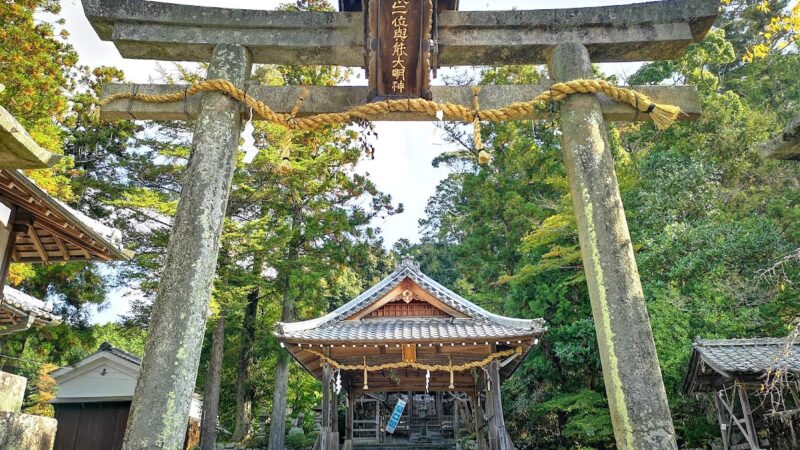
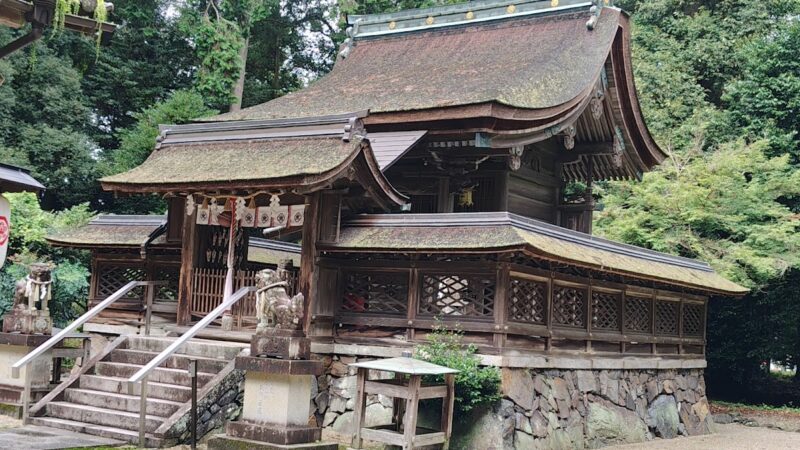
Located in Fushimi Ward, Kyoto City, Jonan-gu Shrine is a historic shrine founded at the same time as the relocation of the capital to Heian-kyo. It attracts worshippers from all over Japan as a “grand shrine for protection against evil,” and is known for its garden, “Rakusui-en,” which expresses the world of The Tale of Genji, and the elegant “Kyokusui no En” (winding stream banquet) held twice a year. This article comprehensively introduces information you should know before visiting Jonan-gu Shrine, including its history, highlights, annual events, and access information.
What is Jonan-gu Shrine? | A Grand Shrine for Protection Against Evil Founded at the Time of the Relocation of the Capital to Heian-kyo
Jonan-gu Shrine was founded in 794 AD (Enryaku 13) at the time of the relocation of the capital to Heian-kyo, as a guardian deity of the country located south of the capital. This shrine enshrines Kunitokotachi-no-Mikoto, Yachihoko-no-Kami, and Empress Jingu, and for over 1200 years, it has been revered as a guardian shrine of the nation, situated south of the capital.
Formerly a prefectural shrine, it is now deeply revered as a “Great Shrine for Protection Against Directional Misfortunes.” Protection against directional misfortunes is a belief in warding off calamities related to house layout, land features, and directions, and is believed to protect against all kinds of misfortunes related to directions, including those related to construction, building, construction, moving, travel, and traffic safety.
The subsidiary shrine, Mahataki Shrine, has been known since ancient times as a Shikinaisha (a shrine listed in the Engishiki, an ancient Japanese legal text), illustrating the deep history of Jonan-gu Shrine.
History of Jonan-gu Shrine | Emperor Shirakawa, Emperor Toba, and the Toba Imperial Villa
An essential part of understanding the history of Jonan-gu Shrine is its deep connection with Emperor Shirakawa and Emperor Toba during the late Heian period’s Insei (cloistered rule) era. During the late Heian period, Emperor Shirakawa constructed the magnificent Toba Imperial Villa on this site. The Toba Imperial Villa boasted a vast area spanning approximately 1.5 km east-west and 1 km north-south, featuring an elegant garden centered around a pond, and served as the base for the cloistered government. Jōnan-gū Shrine was positioned as part of this Toba Imperial Villa and played an important role as its guardian deity.
Emperor Toba also loved this villa and developed a garden where seasonal flowers bloomed, reflecting the worldview of “The Tale of Genji.” The vibrant culture of this era formed the basis for the current Rakusui-en Garden at Jōnan-gū Shrine.
Although the Toba Imperial Villa was later lost due to warfare, including the Ōnin War, Jōnan-gū Shrine continued to attract the faith of the common people as a deity of protection against misfortune. During the Edo period, it flourished as a place for travelers to pray for safety along the highways.
Rakusui-en Garden | A Tour of the Flower Gardens of The Tale of Genji
A must-see when visiting Jonan-gu Shrine is the Rakusui-en Garden. After World War II, the renowned landscape architect Kinsaku Nakane rearranged the rock formations of the pond from the Toba Imperial Villa era, creating an elegant garden also known as the “Flower Garden of The Tale of Genji.”
Rakusui-en Garden is composed of five sections: Spring Mountain, Heian Garden, Muromachi Garden, Momoyama Garden, and Jonan Imperial Villa Garden, each showcasing the style of a different era.
Spring Mountain (Famous for Weeping Plum and Camellias)
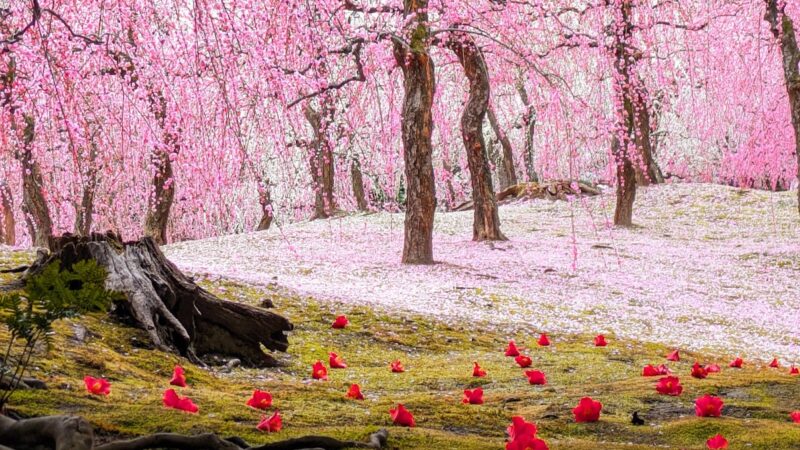
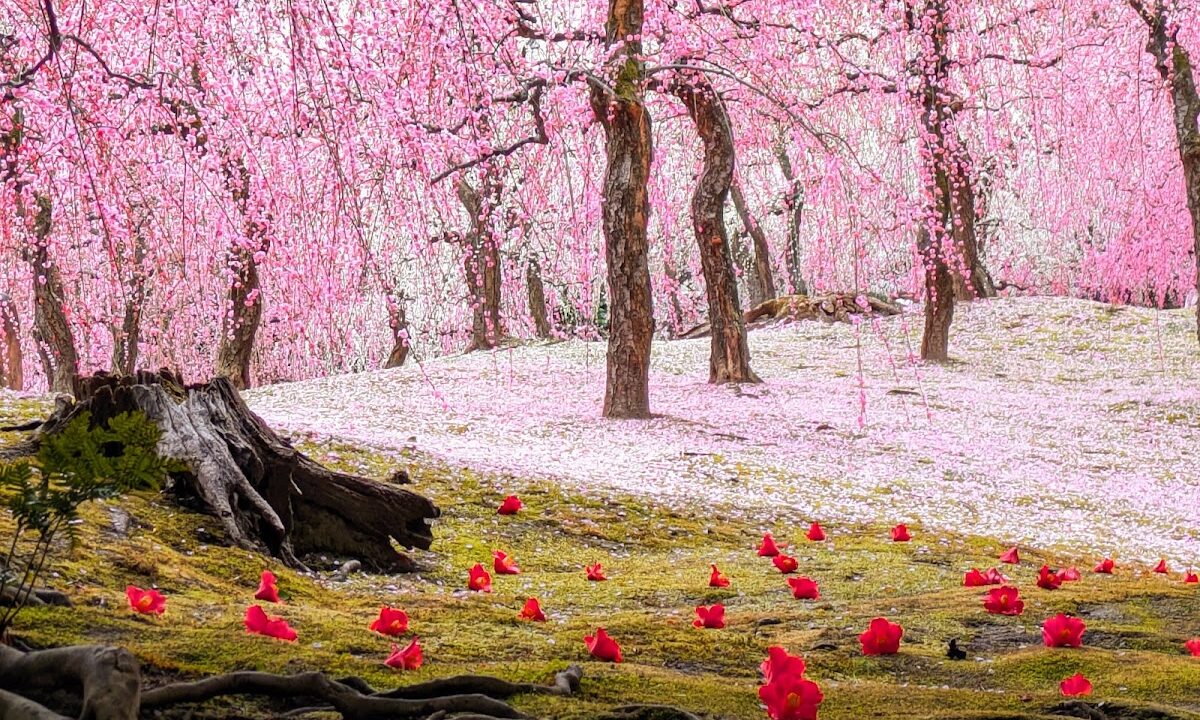
Spring Mountain is the most famous garden area at Jonan-gu Shrine. Approximately 150 weeping plum trees are planted here, and from late February to mid-March, the red and white plum blossoms bloom simultaneously. About 300 camellia trees are planted beneath the plum trees, creating a luxurious space where you can enjoy both plums and camellias at the same time.
During the peak blooming season, the “Weeping Plum and Camellia Festival” is held, attracting many tourists and photography enthusiasts. The sight of the plum branches hanging down like a waterfall is breathtaking and is known as one of Kyoto’s representative early spring landscapes.
Heian Garden (The Stage for the Kyokusui no Utage)
The Heian Garden is a garden that recreates the aristocratic culture of the Heian period. Its greatest highlight is the “Kyokusui no Utage” (winding stream banquet), held twice a year (spring and autumn).
The Kyokusui no Utage recreates a court ceremony from the Heian period, where poets dressed in Heian-era attire compose waka poems by a winding stream. A cup is floated down the stream, and participants compose a waka poem and drink the sake before the cup passes them—a refined and elegant pastime.
This event is one of the most important annual events at Jonan-gu Shrine and a valuable cultural event that conveys the elegance of the Heian period to the present day.
Muromachi Garden, Momoyama Garden, and Jonan Imperial Villa Garden
The Muromachi Garden is a tranquil space based on a dry landscape garden, evoking the spirit of Zen. The Momoyama Garden is characterized by its magnificent stone arrangements and vibrant plantings, expressing the strength of Momoyama culture.
The Jonan Imperial Villa Garden is a pond-centered strolling garden that retains the atmosphere of the Toba Imperial Villa, planted with seasonal flowering trees and shrubs. Especially during the autumn foliage season, the reflection of the autumn leaves in the pond creates a magnificent landscape.
Annual Events and Festivals | From the Kyokusui-no-En (Winding Stream Banquet) to the Nanakusa-gayu (Seven Herb Rice Porridge)
Jonan-gu Shrine hosts various traditional events and festivals throughout the year.
Kyokusui-no-En (Winding Stream Banquet) (April 29th and November 3rd)
As mentioned above, this is an elegant event that recreates a court ceremony from the Heian period. Held amidst the fresh greenery of spring and the vibrant autumn leaves, each offers a different charm. The sight of poets dressed in Heian period attire is like something out of a historical picture scroll.
Weeping Plum and Camellia Festival (Late February to Late March)
This festival is held during the most beautiful season of spring in the mountains. During the festival, the shrine garden is specially opened to the public, and amulets bearing plum blossoms are distributed. Various dedication ceremonies are also held on weekends.
Seven-Herb Rice Porridge Day (January 7th)
Seven-herb rice porridge is served to worshippers as a prayer for good health and protection from illness. By eating porridge made with the seven spring herbs, one prays for good health throughout the year.
Yudate Kagura (First Sunday of each month, etc.)
This is a Shinto ritual in which shrine maidens sprinkle boiling water from a large cauldron around the area using bamboo leaves, praying for good health and protection from illness. It is believed that being doused in the boiling water wards off evil.
Summer Purification Ceremony and Cool-Down Gathering (Late June to Early July)
This is a Shinto ritual to purify oneself of sins and impurities accumulated over the past six months. A ritual called “Chino-wa Kuguri” (passing through a ring of reeds) is performed, with worshippers passing through the ring three times to pray for protection from misfortune.
Autumn Grand Festival (Mid-October)
One of the most important festivals at Jonan-gu Shrine, featuring a portable shrine procession and various offerings.
Benefits and Faith | Protection from Evil, Traffic Safety, Construction Safety
Jonan-gu Shrine is known as a “Grand Shrine for Protection from Evil,” and is believed to offer the following benefits:
- Protection from Misfortune: Removal of misfortunes related to house layout, land layout, and direction.
- Safety During Relocation: Protection from misfortune when moving to a new home.
- Construction Safety: Prayers for safety during construction and civil engineering work.
- Traffic Safety: Blessing of automobiles and safe travel.
- Protection from Misfortune: Protection from misfortune at important life milestones.
Many worshippers visit, especially when building a new house, moving, or purchasing a car. Individual prayers are also accepted at the main hall, and prayers are offered with care and respect.
Basic Information about Jonan-gu Shrine | Opening Hours, Fees, and Access
Opening Hours and Holidays
- Reception for Prayers and Traffic Safety Prayers: 9:00 AM – 4:30 PM
- Issuance of Amulets, Talismans, and Goshuin (Shrine Seals): 9:00 AM – 5:00 PM
- Viewing of the Shrine Garden: 9:00 AM – 4:30 PM (Last entry 4:00 PM)
- Closed Days: Open every day (year-round)
Admission Fees
- Visiting the Shrine Grounds: Free
- Admission Fee for the Shrine Garden “Rakusui-en”: Adults 800 yen, Elementary and Junior High School Students 500 yen
- Fees may differ during special opening periods (such as the Weeping Plum and Camellia Festival)
- There are also periods when only the North Shrine Garden is open, in which case the fees will change.
Address
**〒612-8459 7 Nakajima Toba Rikyu-cho, Fushimi-ku, Kyoto City, Kyoto Prefecture
Access Methods
Access by Train and Bus
- Kyoto Municipal Subway/Kintetsu Railway: Get off at “Takeda Station,” approximately 15 minutes on foot
- City Bus: Get off at “Jonangu” or “Jonangu Higashiguchi,” short walk
- Rakunan Bus: Get off at “Jonangu,” short walk
- From Kyoto Station: Approximately 30 minutes by City Bus Route 19
Access by Car
- Meishin Expressway: Approximately 5 minutes from Kyoto Minami IC
- Hanshin Expressway: Approximately 10 minutes from Kamitoba Exit
Parking Information
- Parking Capacity: Approximately 200 cars
- Parking Fee: Free (However, there may be a charge during the New Year period or special events)
- Large Buses: Parking Available (Advance Notice Required)
Conveniently located for car access, this tourist spot in Kyoto boasts ample parking.
Recommended Spots Around Jonan-gu Shrine
Here are some nearby spots you might want to visit when you come to Jonan-gu Shrine.
Fushimi Inari Taisha Shrine
Located about 15 minutes by car and 20 minutes by train from Jonan-gu Shrine, this is the head shrine of approximately 30,000 Inari shrines nationwide. Famous for its thousands of torii gates, it’s a representative Kyoto tourist spot and very popular with foreign tourists.
Toji Temple (Kyo-o-gokoku-ji)
A temple built at the same time as the relocation of the capital to Heian-kyo, its five-story pagoda is one of Kyoto’s symbols. Located about 10 minutes by car from Jonan-gu Shrine, it is also a World Heritage Site.
Toba Water Environment Conservation Center (Toba Wisteria)
This spot features a magnificent wisteria trellis, open to the public annually from late April to early May. Located very close to Jonan-gu Shrine, it is bustling with visitors during wisteria season.
Katsuragawa PA (Upbound/Downbound)
The Katsuragawa Parking Area on the Meishin Expressway is a convenient spot for purchasing Kyoto souvenirs and taking a break. It is also recommended as a stopover point when visiting Jonan-gu Shrine by car.
Recommended Restaurants near Jonan-gu Shrine
Steakhouse Nakahara
This is an authentic steakhouse located about 10 minutes by car from Jonan-gu Shrine. The steaks, made with carefully selected Japanese Black beef, are exquisite and recommended for special occasions like lunch or dinner.
Handmade Hamburg Steak Restaurant Tokura Shinborikawa Branch
This Western-style restaurant is popular for its handmade hamburg steaks. The generously portioned hamburg steaks will satisfy your tired body after sightseeing. It is about 8 minutes by car from Jonan-gu Shrine.
Kyoto-Style Japanese Restaurants
The Fushimi area also has many restaurants where you can enjoy Kyoto-style Japanese cuisine and Yudofu (boiled tofu). Before or after visiting Jonan-gu Shrine, we recommend enjoying Kyoto’s local cuisine.
Hotels and Accommodations near Jonan-gu Shrine
There are many convenient accommodations for sightseeing in Kyoto around Jonan-gu Shrine.
Hotels near Kyoto Station
The closest major station to Jonan-gu Shrine is Kyoto Station, approximately 15 minutes by car and 30 minutes by bus. A variety of hotels of different grades are available around Kyoto Station, making it an ideal base for sightseeing.
Accommodations in the Fushimi Area
The Fushimi area boasts a charming streetscape lined with sake breweries, and in recent years, the number of small guesthouses and traditional townhouse stays has increased. It also offers good access to Jonan-gu Shrine.
Central Kyoto Area
Staying in central Kyoto areas such as Gion or Kawaramachi and enjoying sightseeing in Kyoto, including Jonan-gu Shrine, is another option. Using public transportation, you can access Jonan-gu Shrine relatively smoothly.
Jonan-gu Shrine Highlights | Seasonal Ways to Enjoy
Spring (Late February – May)
This is the most beautiful season for the “Spring Mountain,” when weeping plums and camellias are in full bloom. The Kyokusui-no-en (winding stream banquet) on April 29th is also a must-see. A stroll through the lush green garden is refreshing and pleasant.
Summer (June – August)
At the Natsukoshi-no-harae (summer purification ritual) in late June to early July, you can ward off evil spirits by passing through a ring of reeds. The lush green garden is cool and refreshing, making it a recommended hidden gem for summer sightseeing in Kyoto.
Autumn (September – November)
The Kyokusui-no-en (winding stream banquet) on November 3rd is held amidst the autumn foliage, offering a different atmosphere from spring. The autumn leaves in the garden are magnificent, and the reflection of the leaves in the pond is particularly picturesque.
Winter (December – February)
You can experience winter-specific Shinto rituals, such as the Seven Herbs Rice Porridge Day on January 7th and the Yudate Kagura (hot spring ritual) on the first Sunday of each month. From late February, early-blooming plum blossoms begin to appear, giving a sense of the early arrival of spring.
Editor’s Recommendations
The greatest charm of Jonan-gu Shrine is that you can experience its history and culture, which has continued since the Heian period, even in modern times. The following points are especially recommended:
- The Elegance of the Winding Stream Banquet: A must-see scene reminiscent of a Heian-era picture scroll, visible only twice a year.
- The Overwhelming Beauty of the Weeping Plum Blossoms: Kyoto’s premier spot for weeping plum blossoms.
- The World of The Tale of Genji: Experience the aesthetic sensibilities of Heian aristocrats in the Rakusui-en Garden.
- The Blessing of Protection Against Evil: A sacred site for protection against evil, perfect for important life events.
- Easy Access: Easily accessible from both Kyoto city center and the expressway.
Its slightly secluded location away from the bustling city center of Kyoto allows for a relatively relaxed visit. The garden, with its beauty in every season, offers new discoveries with every visit.
Summary | Heian Elegance and the Divine Blessing of Protection Against Evil at Jonan-gu Shrine
Jonan-gu Shrine, with its history of over 1200 years, continues to attract the faith of many people as a “grand shrine for protection against evil.” The elegant culture of the Heian period is conveyed to the present day through the Kyokusui-no-en (winding stream banquet), the Rakusui-en garden, which depicts the world of The Tale of Genji, and the beautiful scenery woven by seasonal flowers offer a special experience even among Kyoto’s tourist attractions.
Jōnan-gū Shrine can be visited for a variety of purposes, from praying for safety before moving, building a new house, or traveling, to strolling to admire seasonal flowers and observing traditional events. When you visit Kyoto, be sure to stop by. The elegance of the Heian period and the divine blessings of protection against misfortune will surely welcome you.