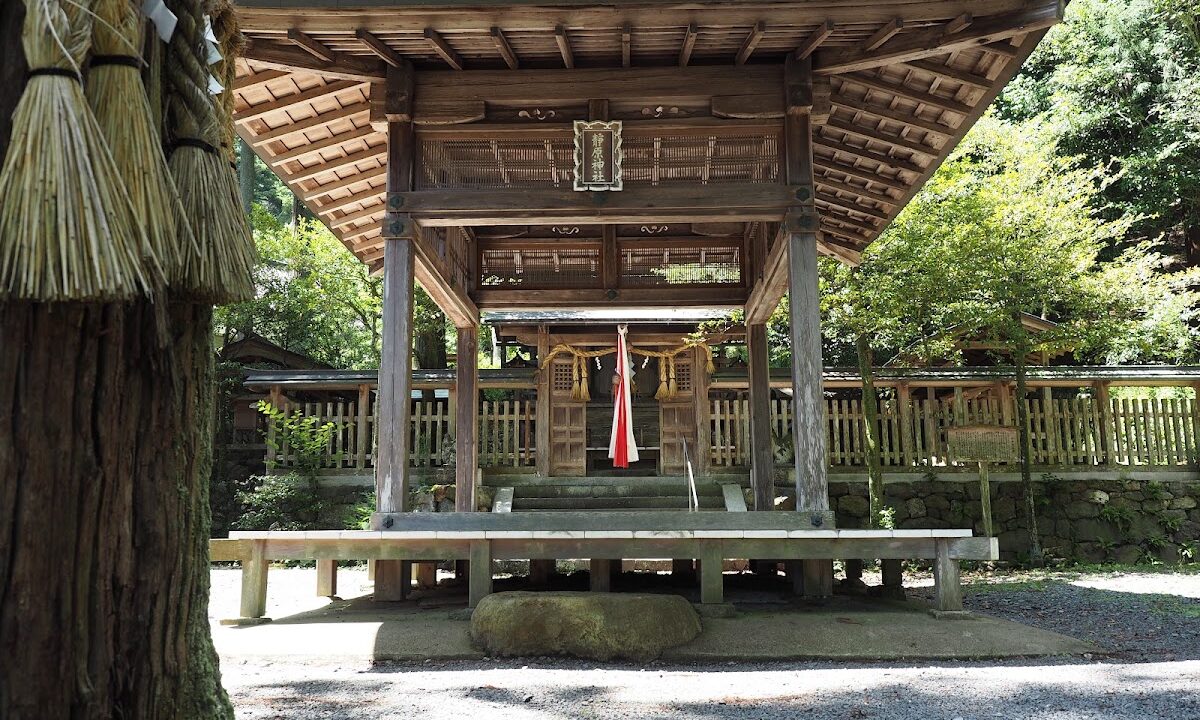
Shizuhara Shrine (Sakyo-ku, Kyoto City, Kyoto Prefecture) Complete Guide | History, Deities, Access, and Highlights Explained in Detail
Shizuhara Shrine, located in Shizuhara-cho in the northern part of Sakyo-ku, Kyoto City, is an ancient shrine said to have been founded during the reign of Emperor Seimu. Situated in a quiet mountain village about 15 kilometers north of central Kyoto, east of the Kurama Road, this shrine has a history of over 1500 years as a center of local faith. This article comprehensively explains everything you need to know before visiting Shizuhara Shrine, including its detailed history, enshrined deities, highlights within the grounds, access methods, and information on surrounding facilities.
Basic Information about Shizuhara Shrine
Location: 1351 Shizuhara-cho, Shizuichi, Sakyo-ku, Kyoto City, Kyoto Prefecture
Shrine Rank: Former Village Shrine, Candidate for the Shikinaisha “Suwa Shrine”
Deities Enshrined:
- Izanagi-no-Mikoto
- Ninigi-no-Mikoto
Alternate Name: Ninomiya
Annual Festival Date: Second Sunday of October
Shizuhara Shrine is also known as “Ninomiya” because it enshrines two deities, and has long been affectionately known as “Shizuhara’s Ninomiya-san” in the region. It is located in the northern mountainous area of Sakyo-ku, Kyoto City, surrounded by the lush natural environment of the Shizuhara town settlement.
History and Origins of Shizuhara Shrine
Founding and Ancient History
According to shrine tradition, Shizuhara Shrine was founded in the 12th year of Emperor Seimu’s reign (around 142 AD). Initially, it was not located at its current site, but rather in a place called “Kawaida-no-Omiwaragawa,” upstream of the Shizuhara Narakogawa River. While the exact location of Kawaida-no-Omiwaragawa is difficult to pinpoint now, it is presumed to have been in the upper reaches of the Shizuhara area.
There is a theory that this shrine is the same as the “Suwa Shrine,” a shrine listed in the Engishiki Jinmyocho (a list of shrines compiled in the Heian period) that belonged to Atago District, Yamashiro Province since ancient times. However, there are multiple theories regarding the location of Suwa Shrine, and it is not definitive. Nevertheless, it is undeniable that it has been revered as a prominent shrine in this region since ancient times.
Medieval Warfare and Shizuhara Castle
A notable aspect of Shizuhara Shrine’s history is the damage caused by war during the Meio era (1492-1502). During this period, Yamamoto Tsushima-no-kami, a powerful local lord of Iwakura, built Shizuhara Castle in the Shizuhara area. Yamamoto Tsushima-no-kami clashed with Hosokawa Masamoto, a powerful figure in Kyoto at the time, and engaged in battles.
During this war, Shizuhara Shrine was destroyed by fire, and valuable documents such as ancient records and historical documents were lost along with the shrine buildings. Therefore, many details of its history prior to this period remain unclear. Shizuhara Castle now exists as a castle ruin, a local historical site closely connected to the history of the shrine.
From Early Modern to Modern Periods
After its reconstruction from the war, Shizuhara Shrine was rebuilt as the local tutelary shrine and functioned as the center of faith for Shizuhara Village throughout the Edo period. With the Meiji-era reform of the shrine system, it was ranked as a village shrine and positioned as an important facility in the local community.
While the current shrine buildings were constructed in modern times, ancient stone structures and subsidiary shrines remain on the grounds, preserving traces of its long history.
Deities and Divine Virtues
Izanagi-no-Mikoto
In Japanese mythology, Izanagi-no-Mikoto is the creator god who gave birth to the land and the gods. Along with Izanami-no-Mikoto, he is one of the supreme gods who created the Japanese archipelago and many other deities. It is said that after returning from the underworld and performing a purification ritual, he gave birth to the three noble children: Amaterasu-Omikami, Tsukuyomi-no-Mikoto, and Susanoo-no-Mikoto.
Divine Virtues:
- National Peace and Security
- Good Fortune and Prosperity
- Matchmaking
- Protection from Evil
- Longevity
Ninigi-no-Mikoto
The grandson of Amaterasu-Omikami, and the main character in the myth of the descent of the heavenly grandchild, he descended from Takamagahara to the earthly realm (Ashihara-no-Nakatsukuni). He descended to Takachiho in Hyuga Province carrying the Three Sacred Treasures and is considered the ancestral deity of the Imperial family.
Divine Virtues:
- Abundant Harvest
- Industrial Development
- Family Prosperity
- Prosperity of Descendants
Because Shizuhara Shrine enshrines these two deities, it is called “Ninomiya” (Two Shrines) and has been revered by the local people as gods of creation and prosperity.
Highlights of the Shrine Grounds
Main Hall and Worship Hall
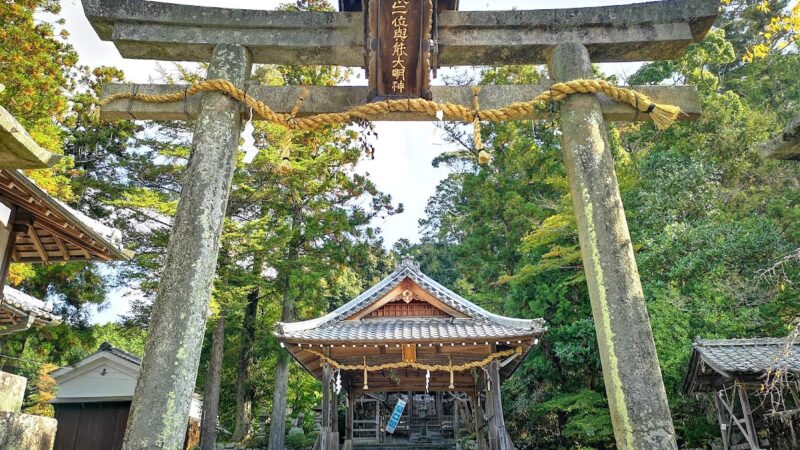
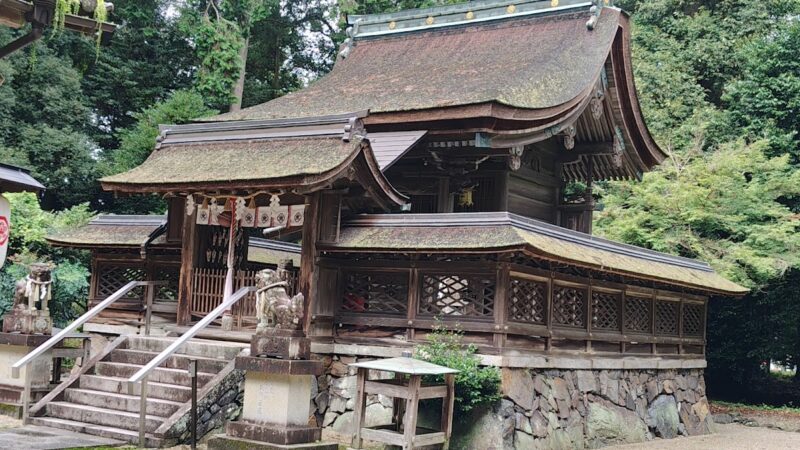
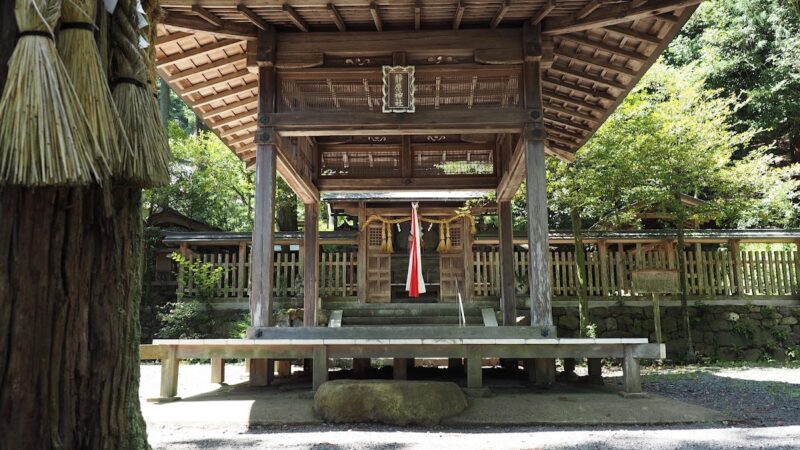
The shrine buildings of Shizuhara Shrine have a simple yet charming appearance, befitting a shrine located in the mountainous area of northern Kyoto. The layout, from the worship hall to the main shrine, maintains the traditional form of Shinto shrine architecture, creating an atmosphere befitting a local place of worship.
Subsidiary Shrines and Stone Sculptures
Several subsidiary shrines are enshrined within the grounds, reflecting the diverse beliefs of the region. Furthermore, old stone lanterns and guardian lion-dogs are placed throughout, telling the story of the shrine’s long history.
Natural Environment
One of the greatest attractions of Shizuhara Shrine is its rich surrounding natural environment. Situated in a quiet mountain village landscape, distinct from the central Kyoto city, it allows visitors to experience the changing seasons. Especially during the autumn foliage season, the surrounding mountains are ablaze with color, offering a beautiful spectacle.
Landscape of Shizuhara Village
Shizuhara Town, where the shrine is located, is a mountain village in the northernmost part of Sakyo Ward, Kyoto City. It retains a quintessential Japanese landscape with terraced rice paddies and farmlands, and visitors to the shrine can also enjoy this beautiful rural scenery.
Access and Transportation Information
Access by Public Transportation
Using Kyoto Bus:
- From central Kyoto (Kyoto Station, Shijo Kawaramachi, etc.), take a Kyoto Bus bound for “Hirogawara” or “Shizuhara/Ichihara.”
- Get off at the “Shizuhara” bus stop and walk for approximately 1 minute.
Kyoto Bus services are limited, so it is recommended to check the timetable in advance. Service may be reduced, especially on holidays and during winter.
Access from the Nearest Station:
The nearest stations are Eizan Electric Railway’s “Ichihara Station” or “Ninose Station,” but the distance from the station to the shrine is considerable on foot, so using a bus or taxi is more practical.
Access by Car
From Kyoto City Center:
- Head east on Kitaoji Street to Kurama Kaido (Prefectural Road 38)
- Head north on Kurama Kaido, passing through Ichihara
- Follow the signs towards Shizuhara and turn east
- Travel Time: Approximately 40-50 minutes from Kyoto City Center
Parking: There is limited space around the shrine, but there are no large parking facilities. Please be considerate of local residents when visiting.
Important Notes Regarding Access
- The Shizuhara area is mountainous, so there is a possibility of snow and icy roads during winter.
- When searching with a car navigation system, please search for “1351 Shizuhara-cho, Shizuichi, Sakyo-ku, Kyoto City”.
- Cell phone reception may be unstable in some areas, so it is recommended to check a map in advance.
Annual Events and Festival
Annual Festival (Autumn Grand Festival)
The annual festival of Shizuhara Shrine is held every year on the second Sunday of October. Local parishioners gather, and a solemn Shinto ritual is performed. It is an important event for preserving local traditions.
Other Events
As it is a small local shrine, there are not many large-scale festivals, but annual events such as New Year’s Day visits, Setsubun (bean-throwing festival), and summer purification rituals are observed by the local people.
Nearby Facilities and Attractions
Shizuhara Dormitory Special Nursing Home
Located in the same Shizuhara town as Shizuhara Shrine (582-1 Shizuhara-cho, Sakyo-ku, Kyoto City), is the Shizuhara Dormitory Special Nursing Home. This facility functions as a local welfare hub and is an important facility supporting the Shizuhara community.
Shizuhara Castle Ruins
As mentioned above, the ruins of Shizuhara Castle, built by Yamamoto Tsushima-no-kami during the Meio era, remain in the surrounding area. While only a portion of the remains can be seen today, it is worth a visit for those interested in history.
Natural Environment of the Surrounding Area
The Shizuhara area is located in the northernmost part of Kyoto City and is blessed with abundant nature.
- Towards Ohara: Heading west from Shizuhara will take you to the Ohara area, famous for Sanzen-in Temple (approximately 15 minutes by car).
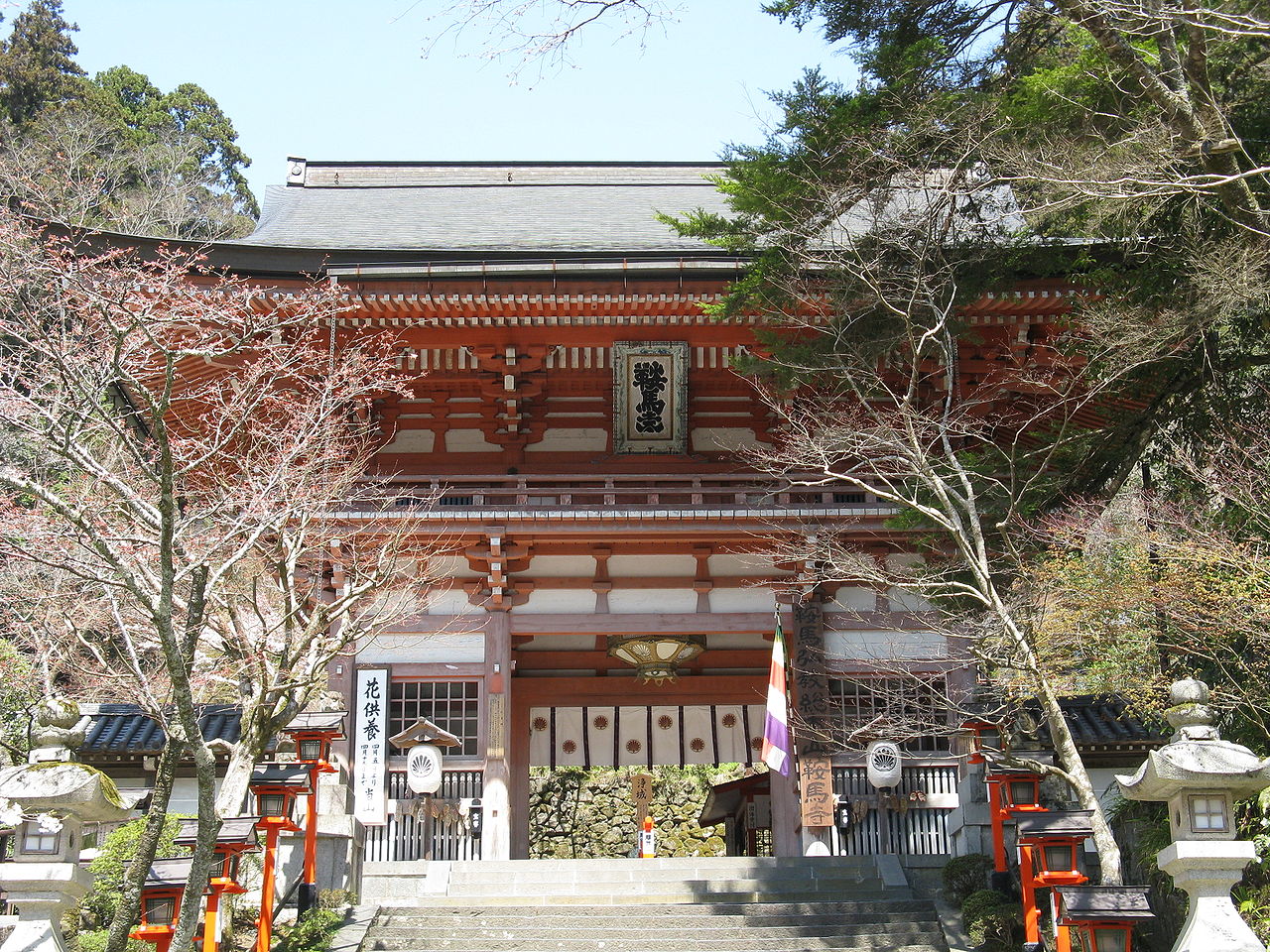
- Towards Kurama/Kifune: To the southwest are Kurama-dera Temple and Kifune Shrine (approximately 20-30 minutes by car).
- Towards Hanase/Hirogawara: Heading north will take you to a series of settlements in deeper mountainous areas.
Ichihara Area
Descending south from Shizuhara lies the Ichihara area, where historical temples and shrines and rural landscapes unfold.
History and Culture of the Shizuhara Area
Origin of the Name Shizuhara
There are several theories about the origin of the name “Shizuhara,” but the most likely explanation is that it means a quiet field or plain. It is thought to be a place name that reflects the geographical characteristic of a quiet mountain village away from the hustle and bustle of central Kyoto.
History of Atago District, Yamashiro Province
In ancient times, Shizuhara belonged to Atago District, Yamashiro Province. Atago District encompassed a wide area from the northern part of present-day Kyoto City to the northern part of Sakyo Ward, and was a region deeply intertwined with mountain worship centered around Mount Atago.
Rural Culture and Tradition
Shizuhara is a typical rural settlement in northern Kyoto, where agriculture, primarily rice cultivation, has been practiced. Traditional agricultural landscapes, such as terraced rice paddies and irrigation canals, still remain, allowing visitors to experience a quintessential Japanese landscape.
Manners and Precautions for Visiting a Shrine
Basic Worship Etiquette
- Bow Before Passing Through the Torii Gate: Bow lightly before entering the sacred area.
- Purify at the Water Basin: Purify your hands and mouth (water may not be available in winter).
- Walking Along the Path: The center of the path is considered the path of the gods, so walk along the sides.
- Etiquette at the Worship Hall: The basic etiquette is two bows, two claps, one bow (two bows, two claps, one bow).
Photography
Photography is generally permitted on the shrine grounds, but please note the following:
- Refrain from photographing sacred areas such as the interior of the main hall.
- Refrain from photographing during festivals or obtain permission.
- Be considerate of other worshippers.
Consideration for the Community
Shizuhara is a small settlement and a place where residents live:
- Do not make noise.
- Always take your trash with you.
- Do not trespass on private property
- Do not damage farmland or crops
- Avoid parking on the street
Recommended points when visiting Shizuhara Shrine
Seasonal attractions
Spring (March-May):
- A beautiful season of fresh greenery
- Experience spring in a mountain village, such as gathering wild vegetables
Summer (June-August):
- Cool mountain climate
- Temperatures are several degrees lower and more comfortable than in central Kyoto
Autumn (September-November):
- A beautiful season of autumn leaves (late October to mid-November is the best time to see them)
- The time when the annual festival is held
- Autumn scenery of a rural village, such as rice harvesting
Winter (December-February):
- Shizuhara in a snowy landscape (especially beautiful when covered in snow)
- A mountain village enveloped in silence during winter
Combined sightseeing plan
Ohara/Shizuhara Course:
- Morning: Visit Ohara Sanzen-in Temple, Jakko-in Temple, etc.
- Afternoon: Visit Shizuhara Shrine
- Duration: Half a day to a full day
Northern Kyoto Mountain Sightseeing Course:
- Kifune Shrine and Kurama-dera Temple
- Shizuhara Shrine
- Towards Hanase and Hirogawara
- Duration: A full day
Photo Spots
- Shrine main hall and surrounding nature
- Terraced rice fields of Shizuhara
- Autumn foliage and shrine buildings
- Winter snowscape
Social Role of Shizuhara Shrine
Center of the Local Community
Shizuhara Shrine is not merely a religious facility, but functions as a nexus of the local community. Through festivals and cleaning activities, it serves as a place for local residents to interact, playing a valuable role in maintaining community in a mountain village facing depopulation.
Value as a Cultural Property
With a history of over 1500 years, Shizuhara Shrine is a valuable cultural property that conveys the history of the region. Although ancient records were lost in the wars of the Meio era, these records themselves are important historical facts that tell the story of the Kyoto area during the Sengoku period.
Preservation of the Natural Environment
The shrine grounds and surrounding area are a valuable natural environment protected from development, contributing to the preservation of biodiversity.
Summary: The Charm of Shizuhara Shrine
Shizuhara Shrine possesses a different charm from the famous temples and shrines in central Kyoto. Its unpretentious atmosphere, rich natural environment, over 1500 years of history, and role as a place of worship deeply rooted in the community—all of these provide visitors with a quiet sense of awe.
For those who want to venture a little beyond the standard Kyoto sightseeing routes and experience Kyoto’s profound history and nature, this is a place you should definitely visit. While access by public transport is somewhat inconvenient, this is precisely why it retains its tranquility and beautiful scenery.
Through a visit to Shizuhara Shrine, why not experience a different side of Kyoto—the faith and culture thriving in a mountain village, and the quintessential Japanese landscape?
Reference Information and Inquiries
Location: 1351 Shizuhara-cho, Shizuichi, Sakyo-ku, Kyoto City, Kyoto Prefecture 601-1123
Access: Approximately 1 minute walk from the Kyoto Bus “Shizuhara” bus stop
Visiting Hours: Grounds are freely accessible (the shrine office may not always be staffed)
Admission Fee: Free
Parking: Limited (please be considerate of local residents)
We recommend checking the latest traffic information and bus timetables before visiting. Please pay particular attention to road conditions, especially during snowy winters or in bad weather.
Shizuhara Shrine is a small local shrine, but its history and environment are well worth a visit. Please visit as part of your journey to experience the depth of Kyoto.