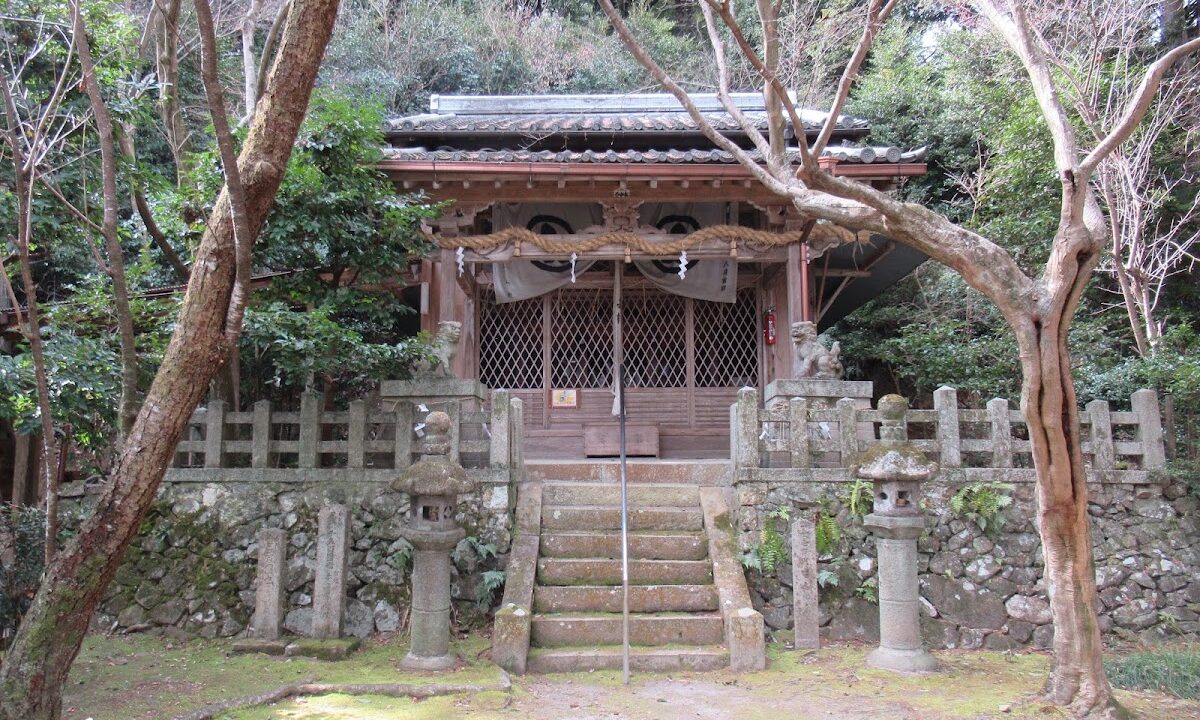
Complete Guide to Komori Katte Shrine (Nagaokakyo City, Kyoto Prefecture) | Thorough Explanation of Goshuin, Access, and History
Komori Katte Shrine, located south of Komyoji Temple in the Ao district of Nagaokakyo City, Kyoto Prefecture, is a historical shrine listed in the Engishiki Jinmyocho (a historical record of shrines). Locally, it is affectionately known as the “God of Water,” and visitors come to pray for safe childbirth and prosperity of descendants. This article will introduce the charm of Komori Katte Shrine in its entirety, from its history and enshrined deities to information on goshuin (shrine stamps) and access methods.
What is Komori Katte Shrine?
Komori Katte Shrine is a shrine located in Ao Shimizuya, Nagaokakyo City, Kyoto Prefecture, and is currently a shrine under the jurisdiction of Mukai Shrine. Its grounds are parallel to Aoyama Kannonji Temple, and it is located south of Hokokuzan Nenbutsu Sanmaiin Komyoji Temple.
The exact founding date is unknown, but since it is listed in the “Engishiki Jinmyocho” (a list of shrines compiled in 927, the mid-Heian period), it is believed to have been established at least by the mid-Heian period. As a shrine listed in the Engishiki, it is a highly prestigious shrine and has long been revered by the local people as the tutelary deity of Awa Village.
A shrine consisting of two shrines: Komori-sha and Katte-sha
Komori-Katte Shrine, as its name suggests, consists of two shrines: “Komori-sha” and “Katte-sha.” Each enshrines a different deity and has been the object of different worship.
Komori-sha enshrines Mikumari-no-kami, the water god who presides over irrigation water essential for agriculture. It is said that “Mikumari” transformed into “Mikomori” (meaning “guardian of children”), and the deity has been worshipped not only as a water god but also as a god who protects children.
Katte Shrine enshrines deities such as Amanoshihomimi-no-Mikoto and Oyamazumi-no-Mikoto, and is revered as a god who opens up the land, protects the nation, and subdues demons.
Deities and Divine Virtues
The deities enshrined at Komori Katte Shrine are as follows:
Deities Enshrined at Komori Shrine
- Mikumari-no-Kami: A god who controls water, worshipped for managing agricultural water and protecting water sources.
Deities enshrined at Katsute Shrine
- Amanoshihomimi-no-Mikoto: A child deity of Amaterasu-Omikami, god of land development and national protection
- Oyamazumi-no-Mikoto: God of mountains, guardian deity of agriculture and fishing
Divine Virtues (Benefits)
The main divine virtues of Komori Katsute Shrine are as follows:
- Prayers for Safe Childbirth and Fertility: As the name “Komori-sha” (child-guardian shrine) suggests, it is worshipped as a guardian deity for safe childbirth and prosperity of descendants.
- Protection of Child-Rearing: It is cherished by local people as a deity that watches over the healthy growth of children.
- Blessings of Water: It is revered as a deity that bestows blessings related to water, such as water for agriculture and daily life.
- National Peace and Protection from Evil: The deity enshrined at Katsute-sha is believed to have the power to ward off evil and protect the nation.
Especially locally, it is affectionately known as the “God of Water,” and the belief in it as a guardian deity of water sources continues to this day.
History of Komori Katsute Shrine
Status as an Engishiki-listed Shrine
Komori Katsute Shrine is an Engishiki-listed shrine, listed in the “Engishiki Jinmyocho” (a list of shrines compiled in 927, the 5th year of the Engi era) during the mid-Heian period. The Engishiki Jinmyocho (a list of shrines compiled in the Heian period) lists major shrines throughout Japan recognized by the imperial court at the time, indicating that Komori Katsute Shrine was a highly prestigious shrine from ancient times.
While several Shikinaisha (shrines listed in the Engishiki) existed in Otokuni District (present-day Nagaokakyo City and Muko City area), Komori Katsute Shrine played a particularly important role as the local tutelary deity.
As the Tutelary Deity of Ao Village
During the Edo period, it served as the tutelary deity of Ao Village, deeply intertwined with the lives of the villagers. In an era when agriculture was the main industry, devotion to Komori Shrine, the god of water, was particularly strong, and it is believed that rituals for bountiful harvests and rain-making were performed there.
Changes in the Modern Era
Even after the Meiji-era separation of Shinto and Buddhism, Komori Katsute Shrine continued to exist as a local shrine. Currently, it is a shrine managed by Muko Shrine, and its Goshuin (shrine seal) is also issued at Muko Shrine.
Its close relationship with the adjacent Aoyama Kannonji Temple reflects the lingering influence of Shinto-Buddhist syncretism.
Highlights of the Shrine Grounds
Main Hall and Shrine Buildings
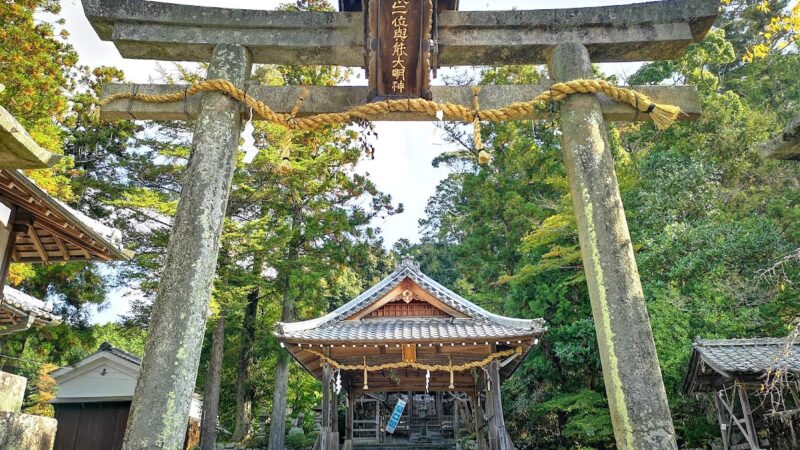
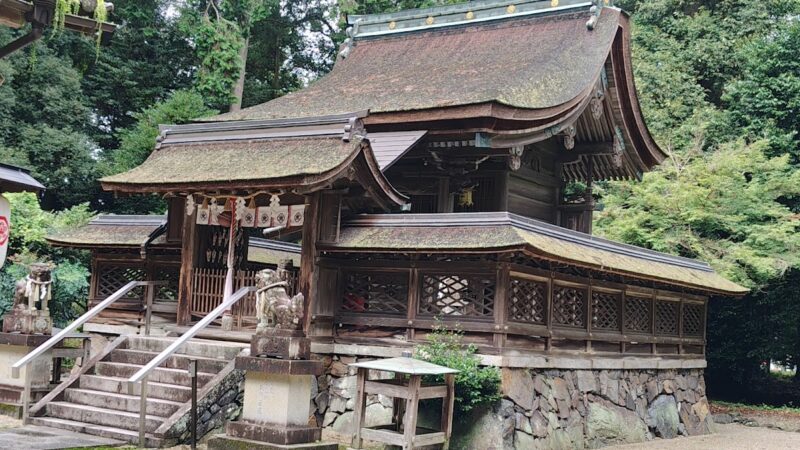
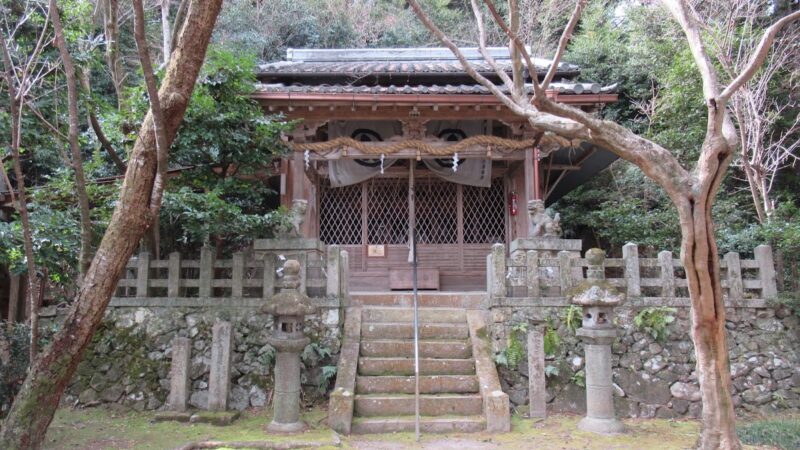
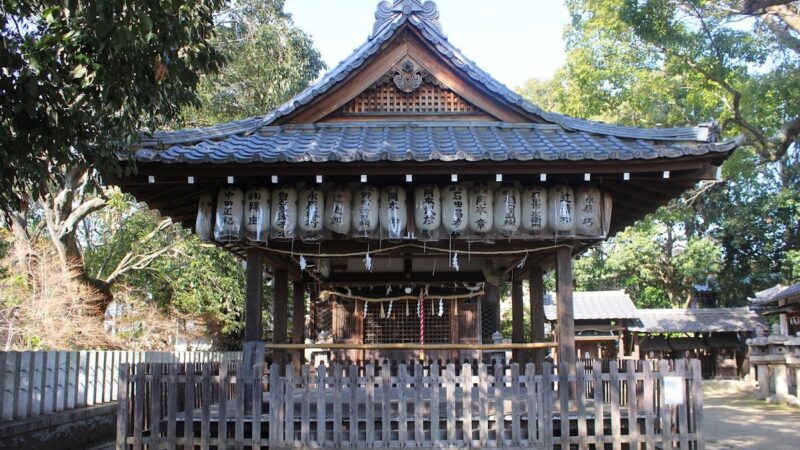
The grounds of Komori Katsute Shrine are situated parallel to those of Aoyama Kannonji Temple. The main hall is relatively small, but it maintains a dignified, ancient appearance.
The style of the shrine buildings exhibits characteristics of traditional local shrine architecture, giving it a historical and charming feel.
Atmosphere of the Shrine Grounds
The shrine grounds are enveloped in a tranquil atmosphere. While few visitors come, this creates an environment conducive to peaceful worship. Surrounded by greenery, visitors can enjoy the changing seasons while praying.
Visiting Komori Katsute Shrine in conjunction with Komyoji Temple and Kannonji Temple will allow you to truly appreciate the depth of the religious culture in this region.
Relationship with Aoyama Kannonji Temple
Komori Katsute Shrine is located on the same grounds as Aoyama Kannonji Temple. Kannonji Temple is a Shingon Buddhist temple and has had a close relationship with Komori Katsute Shrine since the era of syncretism of Shinto and Buddhism.
Even today, the two are adjacent, allowing visitors to pay their respects at both the shrine and the temple. This arrangement is a valuable example that tells the story of the history of Japanese religious culture.
About Goshuin (Shrine Seals) and Goshuincho (Shrine Seal Books)
Where to Obtain Goshuin
The goshuin of Komori Katsute Shrine is issued at Mukou Shrine. This is because Komori Katsute Shrine itself does not have a shrine office and is currently managed by Mukou Shrine.
Mukou Shrine is a Shikinaisha (a shrine listed in the Engishiki, an ancient Japanese legal code) located about a 10-minute walk from Hankyu Higashi-Mukou Station, and is one of the representative shrines of the Otokuni region.
Characteristics of the Goshuin
The goshuin of Komori Katsute Shrine features the shrine’s name written in ink and stamped with the seal of Mukou Shrine. It is a goshuin that reflects its status as a Shikinaisha.
Those wishing to obtain a goshuin are advised to check Mukou Shrine’s hours of operation (usually 9:00 AM to 5:00 PM) before visiting.
About Goshuincho (Stamp Books)
While there are currently no known goshuincho exclusive to Komori Katsute Shrine, Mukai Shrine offers its own original goshuincho.
Access Information
Basic Information
- Location: Ao Shimizuya, Nagaokakyo City, Kyoto Prefecture
- Nearest Station: Hankyu Kyoto Line “Nagaoka Tenjin Station”
- Parking: Parking is available at the nearby Komyoji Temple parking lot (may be charged)
Access by Train
From Hankyu Kyoto Line “Nagaoka Tenjin Station”
- Approximately 3km northeast from Nagaoka Tenjin Station
- Approximately 40 minutes on foot
- Taxi is convenient (approximately 10 minutes)
From JR Kyoto Line “Nagaokakyo Station”
- Take the Hankyu Bus bound for “Komyoji” from Nagaokakyo Station
- Get off at the last stop “Komyoji” and walk for approximately 5 minutes
Access by Bus
Using Hankyu Bus
- Take the Hankyu Bus bound for “Komyoji” from Hankyu “Nagaoka Tenjin Station” or JR “Nagaokakyo Station”
- Get off at the “Asahigaoka Home-mae” or “Komyoji” bus stop.
- Proceed towards Komyoji Temple; Komori Katsute Shrine is located to the south of it.
Access by Car
From the Kyoto Jukan Expressway
- Approximately 15 minutes from “Nagaokakyo IC”
- Setting your navigation system to Komyoji Temple is convenient.
Parking Information
There is no dedicated parking lot for Komori Katsute Shrine, but there is a parking lot for visitors at the nearby Komyoji Temple. Parking may be charged during peak seasons such as autumn foliage season.
Geography of the Surrounding Area
Komori Katsute Shrine is located on a small hill, with Komyoji Temple, the head temple of the Jodo-shu Seizan sect, situated to the south. This area is called “Awo” and is a cultural area with many historical temples and shrines.
Nearby Tourist Attractions
Komyoji Temple (Hokokuzan Nenbutsu Sanmai-in)
The head temple of the Jodo-shu Seizan sect, located just south of Komori Katsute Shrine. Known as a famous spot for autumn foliage, the “Maple Path” is particularly beautiful in autumn, attracting many tourists. It is also famous as the temple where Kumagai Naozane, a disciple of Honen Shonin, became a monk.
Aoyama Kannonji Temple
This is a Shingon Buddhist temple located on the same grounds as Komori Katte Shrine. The layout reflects the history of Shinto-Buddhist syncretism, and visiting both allows for a deeper understanding of the region’s religious culture.
Mukai Shrine
This shrine, which issues the Goshuin (seal) of Komori Katte Shrine, is a representative Shikinaisha (shrine listed in the Engishiki) of the Otokuni region. It is an ancient shrine said to have been founded in 718 AD, and its main hall is designated as an Important Cultural Property.
Nagaoka Tenmangu Shrine
This Tenmangu shrine is located about a 10-minute walk from Hankyu Nagaoka Tenjin Station. It enshrines Sugawara no Michizane and is visited by many students as the god of learning. In spring, the Kirishima azaleas bloom beautifully. ### Otokuni-ji Temple
This temple belongs to the Buzan branch of the Shingon sect and is known for its beautiful peonies. It is also historically significant as the place where Prince Sawara (Emperor Sudo) was imprisoned.
Points and Manners for Visiting
Etiquette for Visiting
- Bow before passing through the torii gate: As a sign of respect before entering the sacred area, bow before the torii gate.
- Purify yourself at the water basin: If there is a water basin, purify your hands and mouth.
- Two bows, two claps, one bow: In front of the main hall, bow twice, clap twice, and finally bow once.
- Worship quietly: Be quiet within the temple grounds and be considerate of other visitors.
Best Time to Visit
While Komori Katsute Shrine is open for visits throughout the year, the following times are particularly recommended.
- Spring (March-May): Beautiful fresh greenery and pleasant weather.
- Autumn (October-November): Autumn foliage season; a visit to the nearby Komyoji Temple is also recommended.
- Prayer for Safe Childbirth: It is customary to visit the shrine on the Day of the Dog in the fifth month of pregnancy.
Regarding Photography
Photography is generally permitted on the shrine grounds, but please note the following:
- Refrain from taking photos inside the main hall.
- Be considerate of other worshippers in your photos.
- Use a tripod only after assessing the surrounding environment.
- When posting on social media, be careful not to damage the dignity of the place or the shrine.
Cultural Value of Komori Katsute Shrine
Historical Importance as an Engishiki Shrine
Shrines listed in the Engishiki Jinmyocho (Engishiki Shrine Register) are high-ranking shrines officially recognized by the imperial court during the Heian period. Approximately 3,000 shrines are listed nationwide, and Komori Katsute Shrine is one of them, a significant shrine with a history of over a thousand years.
Worship of the Water God
In agricultural societies, water was one of the most important resources. The worship of the water god at Komori Katsute Shrine is closely linked to the agricultural development of this region and has functioned as a faith supporting the foundation of the local community.
Even today, it is revered as the “water god,” reminding us of the importance of water resources.
History of Shinto-Buddhist Syncretism
The parallel arrangement of Komori Katsute Shrine and Aoyama Kannonji Temple is a valuable example that conveys the history of Shinto-Buddhist syncretism. While many shrines and temples were separated by the Meiji-era Shinto-Buddhist Separation Order, the two have continued to coexist adjacent to each other in this area, demonstrating the diversity of Japanese religious culture.
Annual Events and Festivals
While there are few detailed records of specific annual events at Komori Katsute Shrine, it is believed that the following festivals are held, similar to those of typical shrines.
Annual Festival
An annual festival as the local tutelary deity is held once a year, praying for peace and prosperity in the region and a bountiful harvest.
New Year’s Festival
A festival is held to pray for peace throughout the year as we welcome the new year.
For detailed dates and content, we recommend contacting Mukai Shrine.
Frequently Asked Questions (FAQ)
Q1: Where can I get the Goshuin (seal) of Komori Katsute Shrine?
A1: You can get the Goshuin of Komori Katsute Shrine at Mukai Shrine. Since Komori Katsute Shrine is currently managed by Mukai Shrine, the Goshuin is issued at Mukai Shrine. Mukai Shrine is about a 10-minute walk from Hankyu Higashi-Mukai Station. The hours for issuing the Goshuin are usually from 9:00 to 17:00, but we recommend checking in advance.
Q2: How do I get to Komori Katsute Shrine?
A2: The nearest station is Hankyu Kyoto Line’s “Nagaoka Tenjin Station,” and the shrine is about 3km northeast from the station. It takes about 40 minutes on foot, so taking a taxi is more convenient (about 10 minutes). Alternatively, you can take the Hankyu Bus bound for “Komyoji” and get off at the “Komyoji” bus stop; it’s about a 5-minute walk from there. If traveling by car, it’s about a 15-minute drive from the Nagaokakyo Interchange on the Kyoto Expressway, and you can use the Komyoji parking lot.
Q3: What deities are enshrined at Komori Katte Shrine?
A3: Komori Katte Shrine consists of two shrines: “Komori-sha” and “Katte-sha.” Komori-sha enshrines Mikumari-no-kami, the deity who governs water, while Katte-sha enshrines Amanoshihomimi-no-mikoto and Oyamazumi-no-mikoto. The shrine is believed to bestow blessings for safe childbirth, prosperity of descendants, the blessing of water, and national peace.
Q4: Can I visit Komori Katte Shrine to pray for safe childbirth?
A4: Yes, Komori Katsute Shrine is worshipped as the guardian deity of safe childbirth and prosperity of descendants, making it a suitable shrine for prayers for safe delivery. It is especially customary to visit on the Day of the Dog in the fifth month of pregnancy. However, since there is no permanent staff at the shrine office, if you wish to receive formal prayers, it is recommended that you consult with Mukai Shrine, which is also managed by the shrine, in advance.
Q5: How long does it take to visit Komori Katsute Shrine?
A5: Komori Katsute Shrine itself is a relatively small shrine, so 15-20 minutes is sufficient for just a visit. However, if you also plan to visit the adjacent Aoyama Kannonji Temple or the nearby Komyoji Temple, it is advisable to allow 1-2 hours. Especially if you visit Komyoji Temple during the autumn foliage season, it is recommended to allow even more time.
Q6: Is there parking at Komori Katsute Shrine?
A6: There is no dedicated parking lot for Komori Katsute Shrine, but there is a parking lot for visitors at the nearby Komyoji Temple, which you can use. Normally, parking is free, but it may be charged during busy periods such as the autumn foliage season. Also, the parking lot may be unavailable due to events at Komyoji Temple, so it is recommended to check in advance.
Q7: I understand that Komori Katsute Shrine is an Engishiki-listed shrine. What does that mean?
A7: An Engishiki-listed shrine is a shrine listed in the “Engishiki Jinmyocho,” a compilation of shrines from 927 (Engi 5) during the mid-Heian period. These were high-ranking shrines officially recognized by the imperial court at the time, and approximately 3,000 such shrines were listed nationwide. The fact that Komori Katsute Shrine is an Engishiki-listed shrine indicates that it has existed for over a thousand years and is a historically significant shrine recognized by the imperial court.
Q8: What is the relationship between Komori Katsute Shrine and Aoyama Kannonji Temple?
A8: Komori Katsute Shrine and Aoyama Kannonji Temple are located side-by-side on the same grounds. This arrangement dates back to the era of syncretism between Shinto and Buddhism, and has continued to exist adjacent to each other even after the Meiji-era separation of Shinto and Buddhism. The two have a close historical relationship, and this arrangement is a valuable example of the diversity of Japanese religious culture. Visitors can pay their respects at both the shrine and the temple.
Summary
Komori Katsute Shrine is a venerable shrine with over a thousand years of history, located in the Aō district of Nagaokakyō City, Kyoto Prefecture. It consists of two shrines: Komori Shrine, which enshrines the water deity, and Katsute Shrine, which enshrines Amenoshihomimi-no-Mikoto and Ōyamatsumi-no-Mikoto. It is believed to offer divine blessings for safe childbirth, prosperity of descendants, and the blessing of water.
Currently, it is a shrine managed by Mukai Shrine, and its goshuin (shrine seal) is also issued at Mukai Shrine. The shrine grounds are parallel to Aōyama Kannon-ji Temple, a valuable arrangement that conveys the history of Shinto-Buddhist syncretism.
Access is convenient by bus or taxi from Hankyu Nagaoka-Tenjin Station. Many historical temples and shrines, such as Komyoji Temple, Mukai Shrine, and Nagaoka Tenmangu Shrine, are located nearby. Especially during the autumn foliage season, visiting Komyoji Temple along with the shrine will allow you to fully appreciate the rich culture of this region.
Komori Katsute Shrine, where you can pray in a tranquil atmosphere, is a hidden gem in Kyoto and a recommended spot for those interested in history and culture. Why not pay a visit sometime?