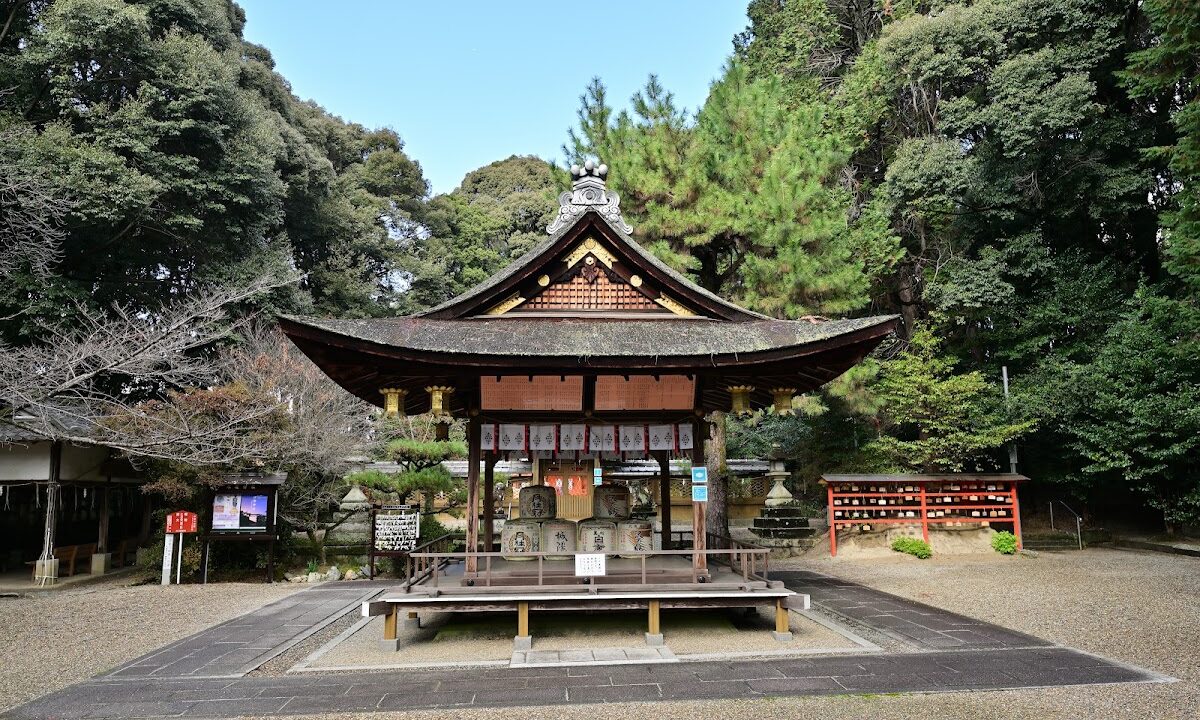
Mito Shrine (Joyo City, Kyoto Prefecture) Complete Guide | The Charm of the Important Cultural Property Main Hall and the Historic Shrine
Mitō Shrine, located in Terada Mitosaka, Joyo City, Kyoto Prefecture, is a historic shrine with a history dating back to the Nara period. Situated at the foot of Mt. Kōnosu, it is known for its main hall, designated as an Important Cultural Property, and its beautiful pine-lined approach. This article provides detailed information you should know before visiting, including the history of Mito Shrine, highlights of the grounds, access methods, and information on Goshuin (shrine stamps).
History and Origins of Mito Shrine
An Ancient Shrine Dating Back to the Nara Period
The exact founding date of Mito Shrine is unclear, but according to shrine tradition, it dates to the early Heian period. However, since the shrine is mentioned in the surviving fragments of the “Yamashiro no Kuni Fudoki” (a historical and geographical record of Yamashiro Province), it is believed to be an ancient shrine that actually existed during the Nara period. Furthermore, it is a Shikinaisha (a shrine listed in the Engishiki Jinmyōchō, a list of shrines compiled in the Heian period) and has been revered by the local people since ancient times.
History of Relocation
Mizudo Shrine was originally located on Mt. Ogamiyama, but it was relocated to its current location in 1286 (Koan 9). Since this relocation, it has been the central object of worship for the former Terada Village, serving as its tutelary deity. Even today, it remains a beloved local shrine for the Terada district of Joyo City.
Deities Enshrined
The deities enshrined at Mizudo Shrine are the following three:
- Amaterasu Omikami
- Takamimusubi no Kami
- Watatsumi Toyotamahime no Mikoto
These deities are believed to bestow blessings such as national peace and security, abundant harvests, and maritime safety.
Important Cultural Property: Main Hall and Shrine Grounds Architecture
Main Hall Built in Bun’an 5 (1448)
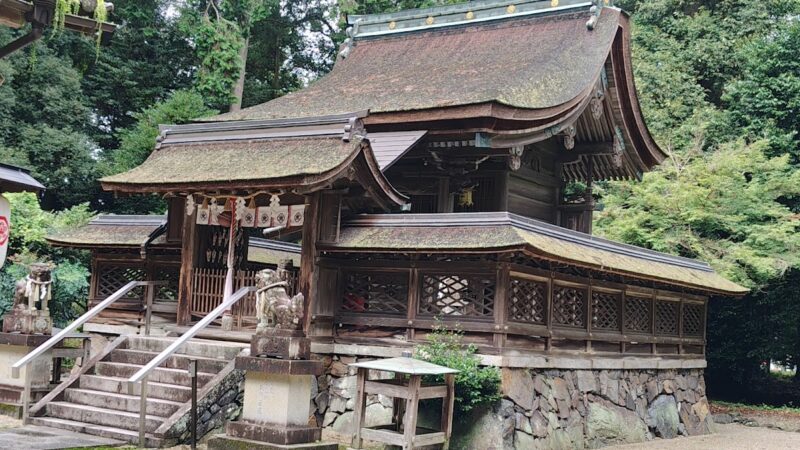
The greatest highlight of Mizudo Shrine is the main hall, built in Bun’an 5 (1448). This main hall is known as the oldest building in Joyo City and is designated as a National Important Cultural Property.
The architectural style features a cypress bark roof, and the south-facing facade is adorned with a chidori-hafu (a type of gable), creating a distinctive and varied design. It is a valuable building that preserves the style of shrine architecture from the mid-Muromachi period and holds high architectural historical value.
Architectural Features of the Main Hall
The main hall is built in the Ikkensha Nagare-zukuri style, with a cypress bark roof. The chidori-hafu on the facade accentuates the beautiful curves of the roof, giving it an elegant impression. Furthermore, the high level of craftsmanship of the Muromachi period can be seen in the detailed carvings and decorations.
Worship Hall and Shrine Office
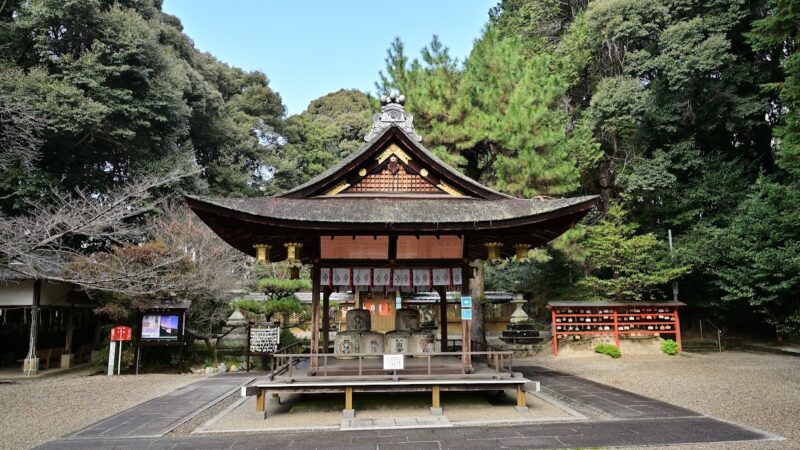
In front of the main shrine stands the worship hall, a place where worshippers offer their prayers. The worship hall and shrine office also exude a sense of history, and the entire shrine grounds are enveloped in a solemn atmosphere.
Pine-lined approach selected as one of Kyoto’s 200 Natural Wonders
Beautiful Ancient Pine Trees
The first thing that greets visitors to Mizudo Shrine is the beautiful approach lined with ancient pine trees. This pine-lined approach has been selected as one of “Kyoto’s 200 Natural Wonders,” captivating visitors throughout the seasons.
Walking along the approach, you’ll find yourself in a green tunnel created by the ancient pine trees, a tranquil space that makes you forget the hustle and bustle of the city. Walking along the approach in the refreshing morning air is especially wonderful, offering a truly refreshing experience.
Located at the Foot of Mt. Kounosu
Mizudo Shrine is located at the foot of Mt. Kounosu. With the mountain’s greenery as a backdrop, the shrine’s harmonious natural surroundings offer a sense of peace to visitors. From the shrine grounds, you can also enjoy panoramic views of Joyo City, a view unique to a shrine situated on a hilltop.
Cultural Assets and Votive Offerings
Votive Tablets from the Bunsei Era
Mizudo Shrine preserves votive tablets (ema) dedicated during the Bunsei era (1818-1830). These tablets, dedicated by local people during the late Edo period’s Bunsei era (1818-1830), are valuable historical documents that convey the faith and local culture of the time.
The tablets contain various wishes, depicting people’s heartfelt prayers for a bountiful harvest, family safety, business prosperity, and more.
Other Cultural Assets
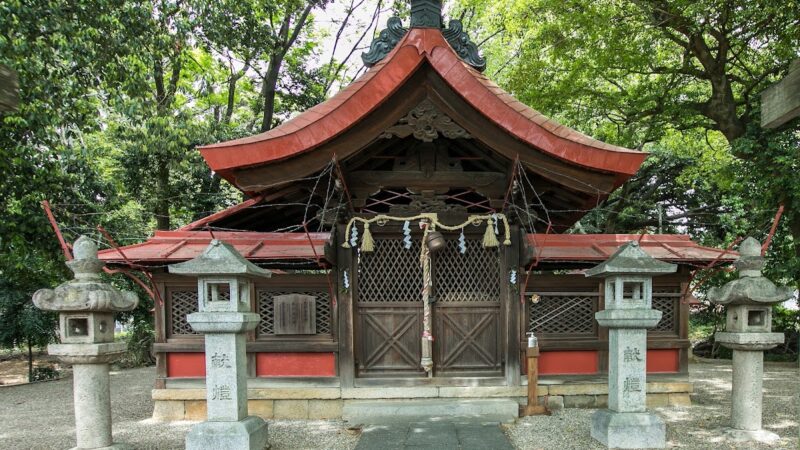
Besides the main shrine building, the grounds are dotted with historically valuable stone structures and lanterns. These were donated by parishioners and devotees over a long history, testifying to the deep faith of the local people.
Goshuin (Shrine Seals) and Goshuincho (Shrine Seal Books)
About Goshuin
Goshuin (shrine seals) are available at Mizudo Shrine. Goshuin are popular among many visitors as proof of worship and as a memento of their trip.
To receive a goshuin, please speak to a staff member at the shrine office. However, since the shrine priest may not always be present, it is recommended to call ahead to confirm availability if you wish to be sure to receive a goshuin.
Goshuincho (Shrine Seal Books)
Please check with the shrine office upon your visit to see if Mizudo Shrine has its own original goshuincho. Many shrines offer goshuincho with unique designs, which are popular as souvenirs of worship.
Annual Events and the Annual Festival
Annual Festival (September 30th)
The annual festival of Mizudo Shrine is held every year on September 30th. This is the most important festival for the shrine, where gratitude for the past year is offered to the gods and prayers are offered for peace and prosperity in the community.
On the day of the festival, the Shinto rituals are solemnly performed, and many local parishioners and devotees attend. As an important event that preserves local traditions, it is held grandly every year.
Other Annual Events
In addition to the annual festival, Mizudo Shrine holds various festivals throughout the year. Traditional Japanese annual events such as Hatsumode (first shrine visit of the year), Setsubun Festival, and Natsukoshi no Harae (summer purification ritual) are preserved and are deeply intertwined with the lives of the local people.
Access Information
Access by Train
Mizudo Shrine can be accessed by public transportation.
If using the JR Nara Line:
- Get off at “Joyo Station” on the JR Nara Line, approximately 15 minutes on foot.
- Head southeast from the station, and you will arrive at the shrine after passing through a residential area.
If using the Kintetsu Kyoto Line:
- Get off at “Terada Station” on the Kintetsu Kyoto Line, approximately 25 minutes on foot.
- It’s a bit of a distance from the station, but you can enjoy the scenery as you walk.
Access by Car and Parking
If visiting by car, it’s about 10 minutes from the “Joyo IC” on the Keina-Wa Expressway. The shrine has parking spaces for visitors, but the number is limited, so during busy times such as New Year’s visits and festivals, we recommend using public transportation.
Location
Address: 89 Terada Mizudosaka, Joyo City, Kyoto Prefecture (some sources list it as 87)
Visiting Information
Visiting Hours and Admission Fee
The grounds of Mizudo Shrine are generally open to visitors. Admission is free. However, the shrine office has limited operating hours, so if you wish to receive a Goshuin (shrine stamp) or other items, it is recommended to visit during daytime hours.
Etiquette for Visiting Shrines
When visiting a shrine, please observe the following basic etiquette:
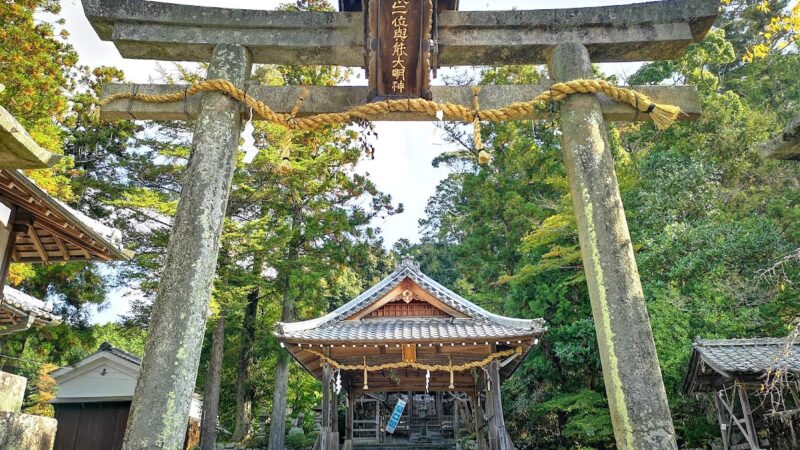
- Bow before passing through the torii gate.
- Walk along the sides of the path, as the center is the path for the gods.
- Cleanse your hands and mouth at the temizuya (water basin).
- At the haiden (main hall), perform the “two bows, two claps, one bow” ritual.
- Be quiet within the shrine grounds and avoid disturbing other visitors.
Nearby Tourist Attractions
Attractions in Joyo City
When visiting Mizudo Shrine, why not explore other tourist attractions in Joyo City?
Kounosuyama Mountain: This mountain rises behind Mizudo Shrine and is a popular hiking destination. From the summit, you can enjoy panoramic views of Joyo city and southern Kyoto.
Joyo City Historical and Folk Museum: This facility allows visitors to learn about the history and culture of Joyo City, and also exhibits materials related to Mizudo Shrine.
Kyoto Tea Area
Joyo City is located within the “Kyoto Tea” area and is known as a production area for Uji tea. Tea plantations spread throughout the surrounding area, and there are numerous tourist facilities and cafes related to tea. After visiting Mizudo Shrine, enjoying local tea is highly recommended.
Summary of Mizudo Shrine’s Charms
Mizudo Shrine is a representative ancient shrine in southern Kyoto Prefecture, boasting a main hall designated as an Important Cultural Property, a beautiful pine-lined approach, and a deep history dating back to the Nara period. Its charm lies in its tranquil atmosphere, allowing for a peaceful visit away from the hustle and bustle of the city.
When visiting Joyo City, be sure to visit Mizudo Shrine. By experiencing its historical architecture, lush grounds, and the place of worship preserved by the local people, you are sure to rediscover the beauty of traditional Japanese culture.
Why not experience the unique charm of a local shrine, unlike the famous tourist spots in Kyoto City, at Mizudo Shrine? It’s a shrine where you can discover something new every time you visit, as nature changes with the seasons.