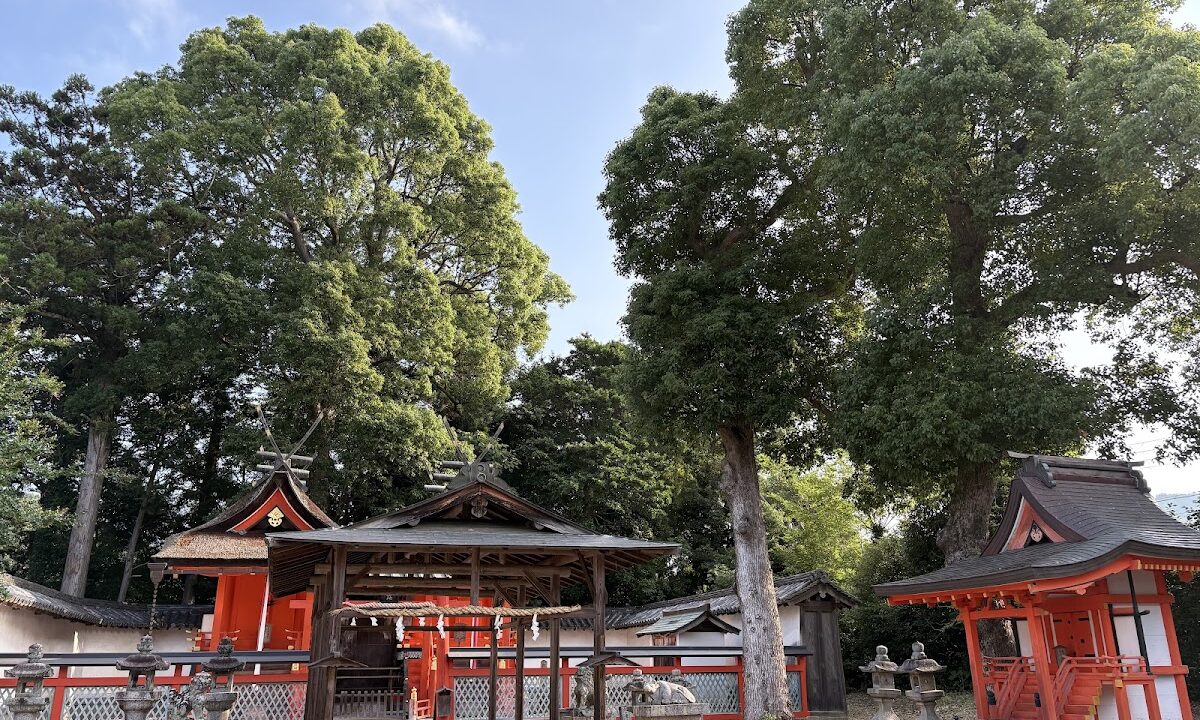
Okada Kamo Shrine (Kyoto Prefecture) Complete Guide: History, Benefits, and Access Information
Located in Kizugawa City, Kyoto Prefecture, Okada Kamo Shrine is a historically significant shrine with deep ties to the ancient Kamo clan. While not as well-known as some of the more famous shrines in Kyoto City, its historical value and tranquil atmosphere captivate visitors. This article provides a detailed explanation of Okada Kamo Shrine’s history, enshrined deities, benefits, highlights within the grounds, worship methods, and access information.
What is Okada Kamo Shrine?
Okada Kamo Shrine (Okada Kamo Jinja) is a shrine located in Kitakamo-mura, Kamo-cho, Kizugawa City, Kyoto Prefecture, and is considered one of the shrines associated with the ancient Kamo clan. While several shrines bearing the name “Kamo” exist, primarily in Kyoto, with Kamigamo Shrine (Kamo Wakeikazuchi Shrine) and Shimogamo Shrine (Kamo Mioya Shrine) being well-known, Okada Kamo Shrine is also an important shrine connected to the Kamo clan’s lineage of faith.
Kamo-cho in Kizugawa City is believed to be an area where the Kamo clan resided since ancient times, and the place name itself is thought to originate from the Kamo clan. Okada Kamo Shrine has long been revered as the local tutelary deity.
History of Okada Kamo Shrine
Founding and History
The exact founding date of Okada Kamo Shrine is unclear, but it is presumed to have existed since ancient times. The Kamo clan was one of Japan’s ancient powerful families, based in Yamashiro Province (present-day southern Kyoto Prefecture). The Kamo clan possessed expertise in agriculture and water management, and was also known as a clan that presided over religious ceremonies.
The Engishiki Jinmyocho (a list of shrines compiled in the Heian period) lists several shrines in Sagara District, and it has been suggested that Okada Kamo Shrine may be part of that lineage. From the medieval period onward, the shrine was revered as the local tutelary deity, and during the Edo period, it was maintained by the local villages.
Relationship with the Kamo Clan
The Kamo clan is believed to have originated in the Katsuragi region of Yamato Province (Nara Prefecture), with some of them migrating to Yamashiro Province. The Kamo clan, who moved to Yamashiro Province, expanded their influence mainly in the Kamo River basin and came to be responsible for the rituals of Kamigamo Shrine and Shimogamo Shrine.
The area around Kamo-cho in Kizugawa City is thought to have been inhabited by another branch of the Kamo clan, and Okada Kamo Shrine may be a shrine where this branch of the Kamo clan enshrined their ancestral deity. Thus, Okada Kamo Shrine is an important historical site for understanding the history of the Kamo clan.
Changes since the Modern Era
Due to the reform of the shrine system during the Meiji era, Okada Kamo Shrine was designated a village shrine. It has since been maintained as a center of local faith and continues to this day. Even after the turmoil of the post-war period, it has been carefully preserved by local parishioners.
In recent years, researchers and history enthusiasts interested in ancient history and shrine history have begun to visit, and it is attracting attention as an important base for Kamo clan research.
Deities and Benefits
Main Deity
The main deity of Okada Kamo Shrine is said to be Kamotaketsunumi-no-Mikoto. Kamo Taketsunumi no Mikoto is the ancestral deity of the Kamo clan and is the same deity as Kamo Taketsunumi no Mikoto, the enshrined deity of Shimogamo Shrine.
There is a legend that Kamo Taketsunumi no Mikoto transformed into a Yatagarasu (three-legged crow) and guided Emperor Jimmu during his eastern expedition. For this reason, he is worshipped as a god of guidance and protection against misfortune. He has also been revered as a god who presides over agriculture and water management.
Enshrined Deities
Depending on the shrine, the following deities may be enshrined alongside Kamo Taketsunumi no Mikoto:
- Tamayorihime no Mikoto: Daughter of Kamo Taketsunumi no Mikoto and mother of Kamo Wakeikazuchi no Okami
- Kamo Wakeikazuchi no Okami: Main deity of Kamigamo Shrine
- Kotoshironushi no Kami: God of business prosperity
Benefits
The main benefits you can expect at Okada Kamo Shrine are as follows:
- Protection from Misfortune and Evil: As Kamo Taketsunumi no Mikoto is a god of guidance, he is believed to ensure safe travels and guide you correctly on the path of life.
- Agriculture and Abundant Harvest: Due to the Kamo clan’s superior agricultural skills, he is revered by those involved in agriculture.
- Protection from Water Disasters: As a god related to water management, he is believed to have the power to protect against water-related disasters.
- Family Safety: As the local guardian deity, it is worshipped as a god that protects the health and safety of families.
- Academic Success: Due to its connection to the Kamo clan, an ancient intellectual class, some worshippers pray for academic advancement.
Highlights of the Shrine Grounds
Main Hall and Worship Hall
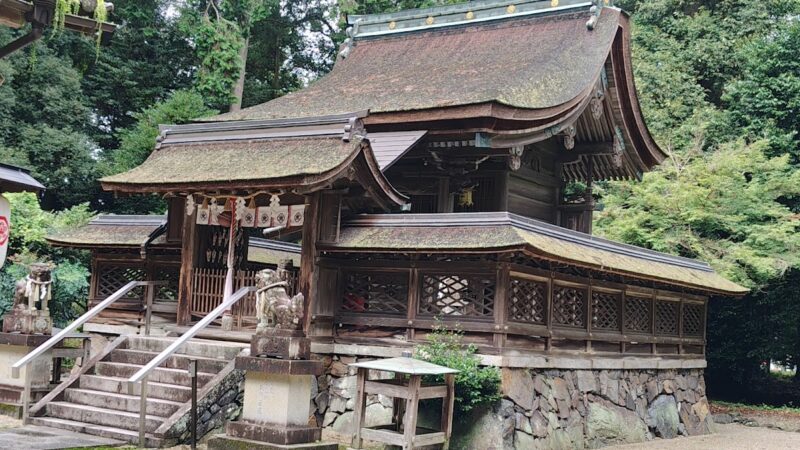
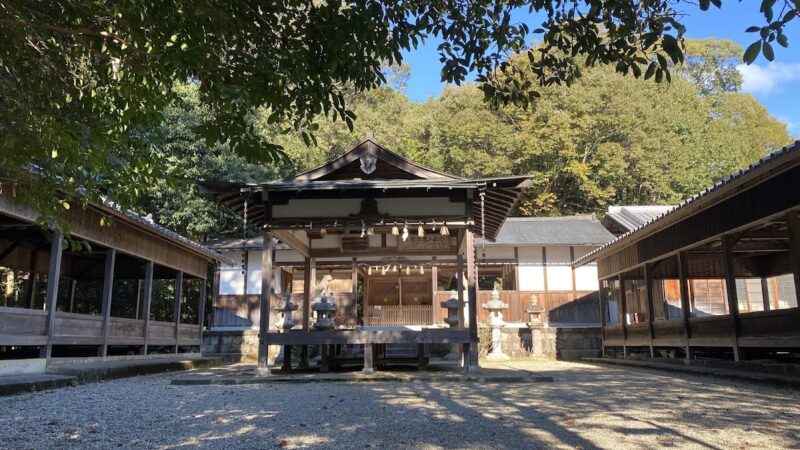
The main hall of Okada Kamo Shrine is built in the traditional style of shrine architecture. Although not large in scale, it is carefully maintained, reflecting the deep faith of the local people. From the worship hall, one can worship the main hall, and worshippers can pray peacefully in a quiet environment.
Torii Gate and Approach
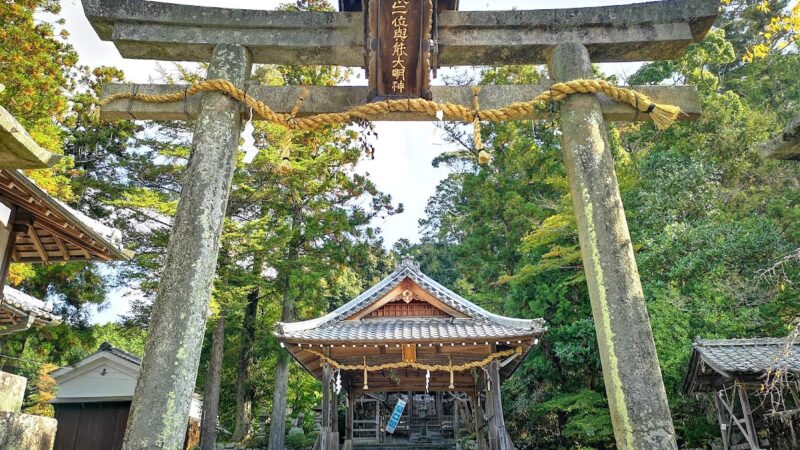
A torii gate stands at the entrance to the shrine, and from there, an approach leads to the main hall. The approach is surrounded by trees, allowing visitors to enjoy the changing seasons as they walk. The scenery is particularly beautiful during the fresh greenery of spring and the autumn foliage.
Nature on the Shrine Grounds
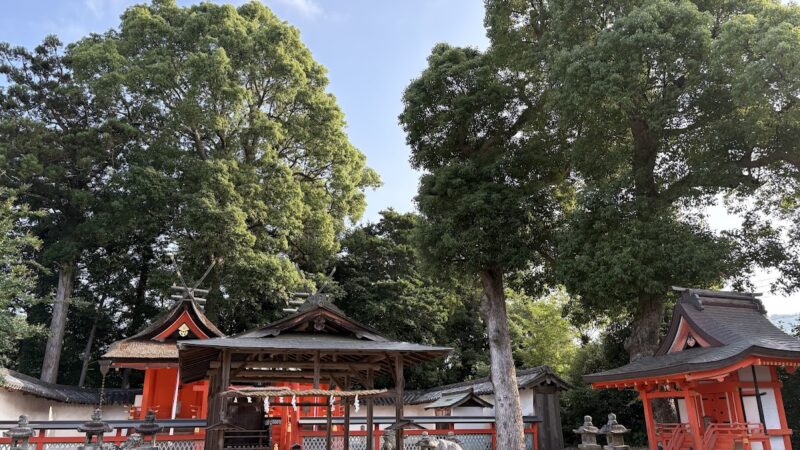
The shrine grounds are home to ancient trees and seasonal flowers, maintaining a rich natural environment. It is a quiet place away from the hustle and bustle of the city, where one can pray with a calm heart. Visiting the shrine while listening to the birdsong is perfect for refreshing your mind and body.
Stone Monuments and Memorials
Within the shrine grounds, you may find stone monuments and other memorials that record the history of the shrine and the origins of the region. These inscriptions reveal the historical connection between the shrine and the local area.
Annual Events and Festivals
Okada Kamo Shrine holds various Shinto rituals and festivals throughout the year. The main events are as follows:
Annual Festival (Autumn Festival)
The annual festival, held every autumn, is the most important festival of the shrine. Local people gather to pray for a bountiful harvest and the safety of the community. A portable shrine may be carried, and it is a traditional event passed down through generations.
New Year’s Day Festival
On New Year’s Day, many worshippers visit the shrine for their first shrine visit of the year. It is bustling with people praying for a safe year and the safety of their families. It is not as crowded as large shrines in cities, allowing for a peaceful New Year’s prayer.
Monthly Festival
At the monthly festival, held on a fixed day each month, Shinto priests recite prayers before the altar and pray for the peace and prosperity of the community.
Other Events
General shrine events such as the Setsubun Festival, Summer Purification Ceremony, and Shichi-Go-San (7-5-3) Festival are also held. For detailed dates, it is recommended to inquire with the shrine or the local parishioners’ association in advance.
Etiquette and Manners for Visiting the Shrine
Here are some basic etiquette guidelines for visiting Okada Kamo Shrine.
Procedure for Worship
- Bow before passing through the torii gate: Before entering the sacred area, bow before the torii gate.
- Walk along the edge of the path: The center of the path is considered the path of the gods, so walk along the edge.
- Purify yourself at the water basin: If there is a water basin, purify yourself in the following order:
- Hold the ladle in your right hand and wash your left hand.
- Switch the ladle to your left hand and wash your right hand.
- Switch the ladle back to your right hand, receive water in your left hand, and rinse your mouth.
- Wash your left hand again.
- Hold the ladle upright and rinse the handle.
- Worship at the main hall: Worship using the two bows, two claps, and one bow method.
- Bow deeply twice.
- Clap your hands twice at chest height.
- Recite your wish silently.
- Bow deeply once.
- Bow at the Torii Gate on Your Way Out: When leaving the shrine, turn around and bow after passing through the torii gate.
Attire for Visiting the Shrine
Unless you are participating in a special festival, everyday clothing is acceptable for visiting the shrine. However, it is advisable to be mindful of the sacred nature of the place and avoid overly revealing or flashy clothing.
Photography
Photography is generally permitted within the shrine grounds, but photography inside the main hall or during religious ceremonies should be avoided. If unsure, please check with a Shinto priest or administrator. It is also important to be considerate of other visitors.
Access Information
Location
Address: Kitakamo-mura, Kamo-cho, Kizugawa City, Kyoto Prefecture (Please confirm the exact address in advance)
Access by Public Transportation
By JR:
- Get off at Kamo Station on the JR Yamatoji Line (Kansai Main Line)
- Approximately 10-15 minutes on foot or by taxi from the station (may vary depending on distance and exact location)
- If a community bus is available, you can also use that.
By Kintetsu:
- Take the Kintetsu Kyoto Line towards Nara, then transfer to the JR Line to Kamo Station.
Access by Car
From Kyoto City:
- Head south on National Route 24 towards Kizugawa City
- Approximately 40-60 minutes (may vary depending on traffic conditions)
From Nara:
- Head north on National Route 24 towards Kamo-cho, Kizugawa City
- The estimated time required is approximately 30-40 minutes.
Parking:
We recommend checking in advance whether there is a dedicated parking lot for the shrine. Smaller shrines may not have a dedicated parking lot, so please consider using nearby public parking or public transportation.
Nearby Tourist Attractions
When visiting Okada Kamo Shrine, you can also visit nearby tourist attractions:
Jōruri-ji Temple:
- An ancient temple known for its National Treasure, the Nine Amida Buddha statues.
- Approximately 15 minutes by car from Okada Kamo Shrine.
Iwafune-ji Temple:
- A temple known for its hydrangeas and autumn leaves.
- Near Jōruri-ji Temple.
Tōno Stone Buddha Group:
- A historical area with scattered stone Buddha statues from the Kamakura period.
- A popular hiking course.
Kizugawa City Burial Mounds:
- Multiple ruins offering a glimpse into ancient history.
Nearby Kamo Clan Related Shrines
There are several shrines related to the Kamo clan within Kyoto Prefecture. Visiting them along with Okada Kamo Shrine will allow you to gain a deeper understanding of the Kamo clan’s history. ### Kamo Wakeikazuchi Shrine (Kamigamo Shrine)
A World Heritage shrine located in Kita-ku, Kyoto City. It enshrines Kamo Wakeikazuchi no Okami and is considered one of Kyoto’s oldest shrines. It is famous for the Aoi Festival.
Kamo Mioya Shrine (Shimogamo Shrine)
A World Heritage shrine located in Sakyo-ku, Kyoto City. It enshrines Kamo Taketsunumi no Mikoto and Tamayorihime no Mikoto. It is known for the Tadasu no Mori forest and the Yabusame (mounted archery) ritual.
Other Kamo Shrines
In southern Kyoto Prefecture, there are several other small shrines related to the Kamo clan. A “Kamo Clan Pilgrimage” visiting these sites would be an interesting trip for history buffs.
Points to Note When Visiting
Visiting Hours
Okada Kamo Shrine is often open for worship at any time, but the opening hours of the shrine office may be limited. If you wish to obtain a Goshuin (shrine stamp) or amulet, it is recommended to contact the shrine in advance to confirm.
Seasonal Precautions
- Summer: It’s a good idea to bring insect repellent and a hat. Don’t forget to stay hydrated.
- Winter: The shrine grounds can get cold, so dress warmly.
- Rainy Days: The path to the shrine may become slippery, so watch your step.
Manners and Etiquette
- Maintain silence on the shrine grounds and refrain from loud conversations.
- Always take your trash with you.
- Take care of the shrine’s facilities and nature.
- Be considerate of other visitors.
The Charm of Okada Kamo Shrine
The greatest charm of Okada Kamo Shrine is that it is a precious place that conveys the history of the ancient Kamo clan. While it lacks the glamour of famous tourist spots, you can reflect on history in a quiet environment.
It is a shrine that has been carefully preserved by the local people, and visitors can feel the warmth of the local community and the traditional form of Japanese faith. This shrine is worth visiting not only for history researchers, but also for anyone seeking a peaceful retreat and those interested in ancient history.
Summary
Okada Kamo Shrine is an ancient shrine associated with the Kamo clan, located in Kizugawa City, Kyoto Prefecture. It enshrines Kamo Taketsunomi-no-Mikoto as its main deity and is believed to offer blessings for protection against evil, agriculture, and water-related disasters. It is an important historical site connected to the same Kamo clan lineage as the famous Kamigamo Shrine and Shimogamo Shrine, making it a valuable place of worship for those interested in ancient history.
Access is within walking distance from JR Kamo Station, and there are also tourist attractions nearby such as Jōruri-ji Temple and Iwashifune-ji Temple. Why not take some time to pray in this tranquil environment and reflect on the history from ancient times?
When visiting, please observe proper shrine etiquette and be considerate of the local residents. We hope your visit to Okada Kamo Shrine will be a peaceful and relaxing experience.