Higashibata Shrine (Seika-cho, Kyoto Prefecture) Complete Guide | History, Access, and Highlights Explained in Detail
Higashibata Shrine, located in Higashibata, Seika-cho, Soraku-gun, Kyoto Prefecture, is a shrine that preserves ancient local beliefs despite being close to Keihanna Plaza, a core facility of the Keihanna Science City. This article will introduce the charm of Higashibata Shrine in its entirety, from its historical background and enshrined deities to its highlights within the grounds and how to access it.
Overview and Location of Higashibata Shrine
Higashibata Shrine is located in Higashibata, Seika-cho, Soraku-gun, Kyoto Prefecture, and is a central place of worship for the local residents of the Higashibata area. Seika-cho is located in the southern part of Kyoto Prefecture, close to the border with Nara Prefecture, and is known as the center of the Kansai Science City (Keihanna Science City).
The Higashihata district is one of the oldest settlements in Seika Town, situated in a scenic location at the foot of Mt. Dakeyama. The shrine, located in the heart of the settlement, symbolizes the history and culture of the Higashihata district, along with Senkoji Temple.
Amidst the ongoing development of a modern academic research city, the area around Higashihata Shrine retains the traditional settlement landscape, creating a unique atmosphere where old and new harmonize.
History of Higashihata Shrine
Founding and History
Unfortunately, there are no clear records regarding the exact founding date and history of Higashihata Shrine, and the details remain unknown. However, we can glean some insights from existing cultural properties and the history of the surrounding area.
Since Senkoji Temple, the only temple in the Higashihata district, is believed to have been founded in the medieval period (late Heian period), it is thought that the Higashihata settlement was also formed around that time. It is highly probable that the shrine was founded at the same time as the settlement, or shortly thereafter.
Records from the Edo Period
The following cultural artifacts are surviving as reliable records concerning Higashihata Shrine:
Ridgepole Inscription
A ridgepole inscription indicating the completion of the building’s framework in Bunsei 3 (1820) remains, indicating that the shrine building was constructed or underwent major renovations around this time. The Bunsei era falls in the late Edo period, suggesting that the Higashihata settlement had stabilized and the shrine was established as a center of local faith.
Stone Lantern
Within the shrine grounds is a stone lantern bearing the inscription of Meiwa 4 (1767), indicating that the shrine existed and attracted worshippers more than half a century before the Bunsei inscription. The Meiwa era falls in the mid-Edo period, suggesting that the stone lantern was donated by parishioners or believers during this time.
From these cultural artifacts, it can be confirmed that Higashihata Shrine was established as a place of local faith at least by the mid-18th century, and that the shrine building was completed by the early 19th century.
Changes Since the Modern Era
Through the Meiji-era separation of Shinto and Buddhism and the post-war reconstruction period of the Showa era, Higashihata Shrine has been protected as the local tutelary shrine. Since the period of rapid economic growth, southern Kyoto Prefecture has undergone significant urbanization, and the surrounding environment has changed dramatically, particularly with the development of the Kansai Culture and Academic Research City (Keihanna Science City) since the 1980s.
However, even amidst the wave of development, the Higashihata district has relatively well preserved its traditional settlement appearance, and Higashihata Shrine has been maintained to this day as the center of the local community.
Deities and Beliefs
Regarding the deities enshrined at Higashihata Shrine, there are no reliable records due to the unknown history. However, based on the characteristics of shrines commonly found in the Yamashiro region of southern Kyoto Prefecture, it is possible that the following deities are enshrined here:
- Ubusunagami: A local guardian deity, an object of worship rooted in the land.
- Agricultural Deity: As a farming community in the Yamashiro region, it is a place of worship praying for abundant harvests.
- Mountain God: Located at the foot of Mt. Takeyama, it is associated with mountain worship.
As the local tutelary shrine, Higashihata Shrine has been a place of worship for generations, where people pray for the safety and prosperity of the community, bountiful harvests, and family safety.
Higashihata Shrine Grounds and Highlights
Shrine Building
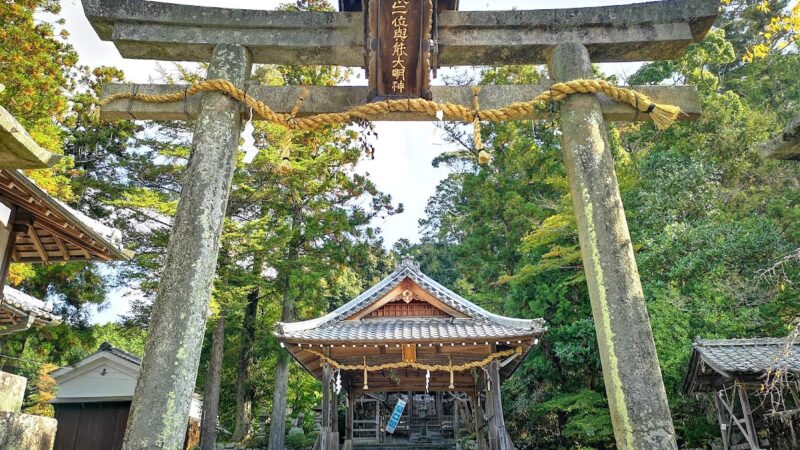
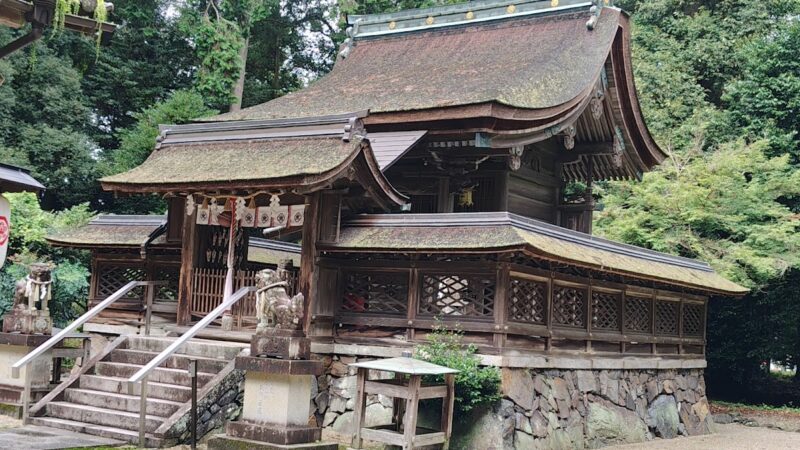
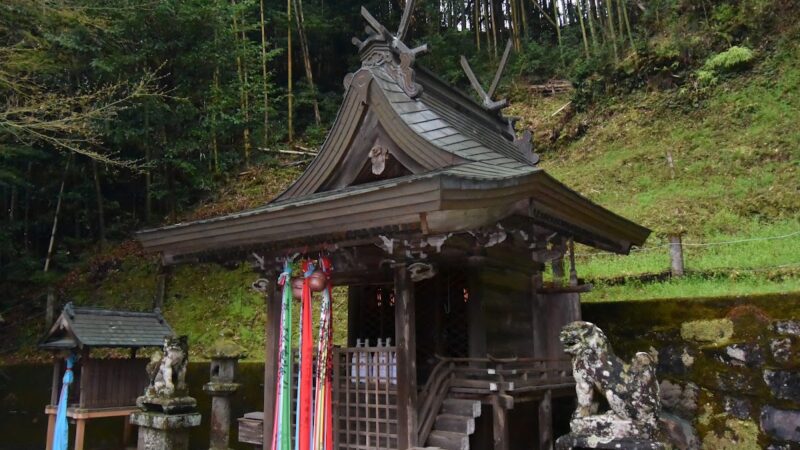
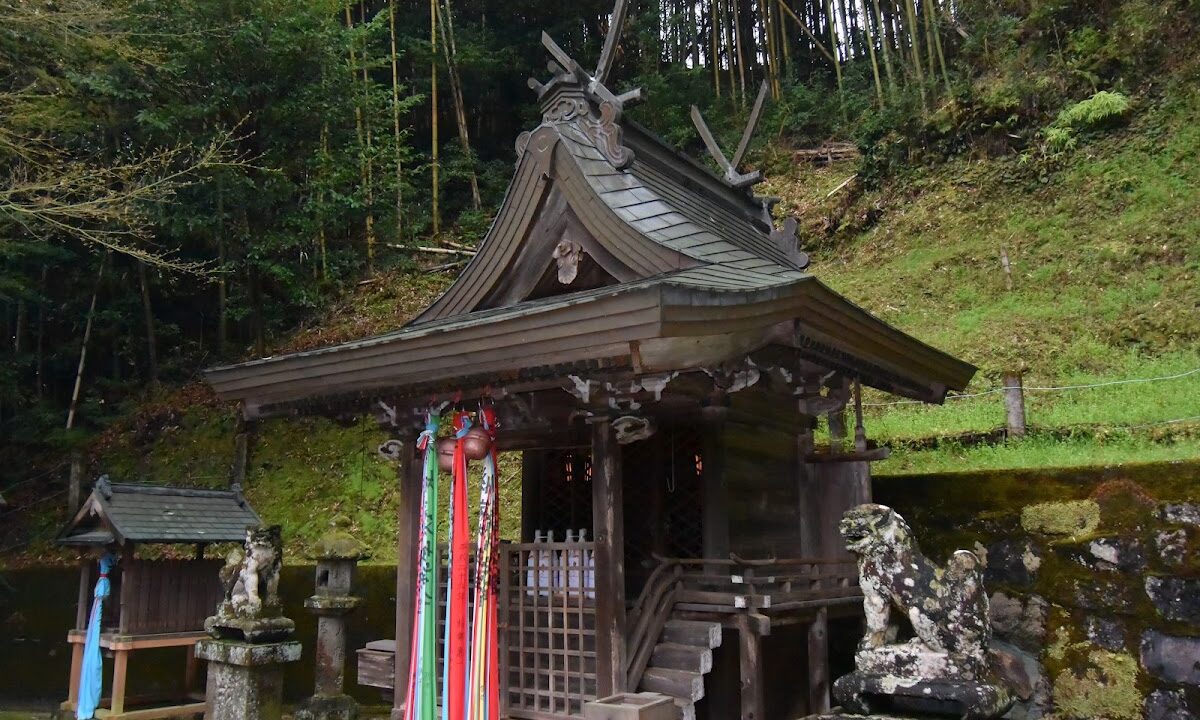
The shrine building, with a ridge beam inscription dating back to 1820 (Bunsei 3), is a valuable structure that conveys the architectural style of the late Edo period. Although small in scale, it is carefully maintained as the center of local faith.
The shrine’s architectural style is typical of the rural areas of southern Kyoto, characterized by its simple yet sturdy construction. While the decoration is understated, it showcases the skill of local carpenters.
Stone Lantern
The stone lantern, bearing an inscription from 1767 (Meiwa 4), is an important cultural asset that tells the history of Higashihata Shrine. It demonstrates the stonemasonry techniques of the mid-Edo period and conveys the deep faith of the parishioners and believers of that time.
The style of the stone lantern and the inscription offer insights into the local community and the nature of faith at that time.
Atmosphere of the Shrine Grounds
Located at the foot of Mt. Takeyama, Higashihata Shrine offers excellent views of the townscape of Seika and the distant mountains. Ancient trees can be seen within the grounds, creating a quiet and peaceful atmosphere.
Despite its location in the heart of the settlement, stepping onto the shrine grounds offers a stark contrast to the urbanizing surroundings, allowing one to experience a traditional, quintessential Japanese landscape.
History and Culture of the Higashihata District
Relationship with Senkoji Temple
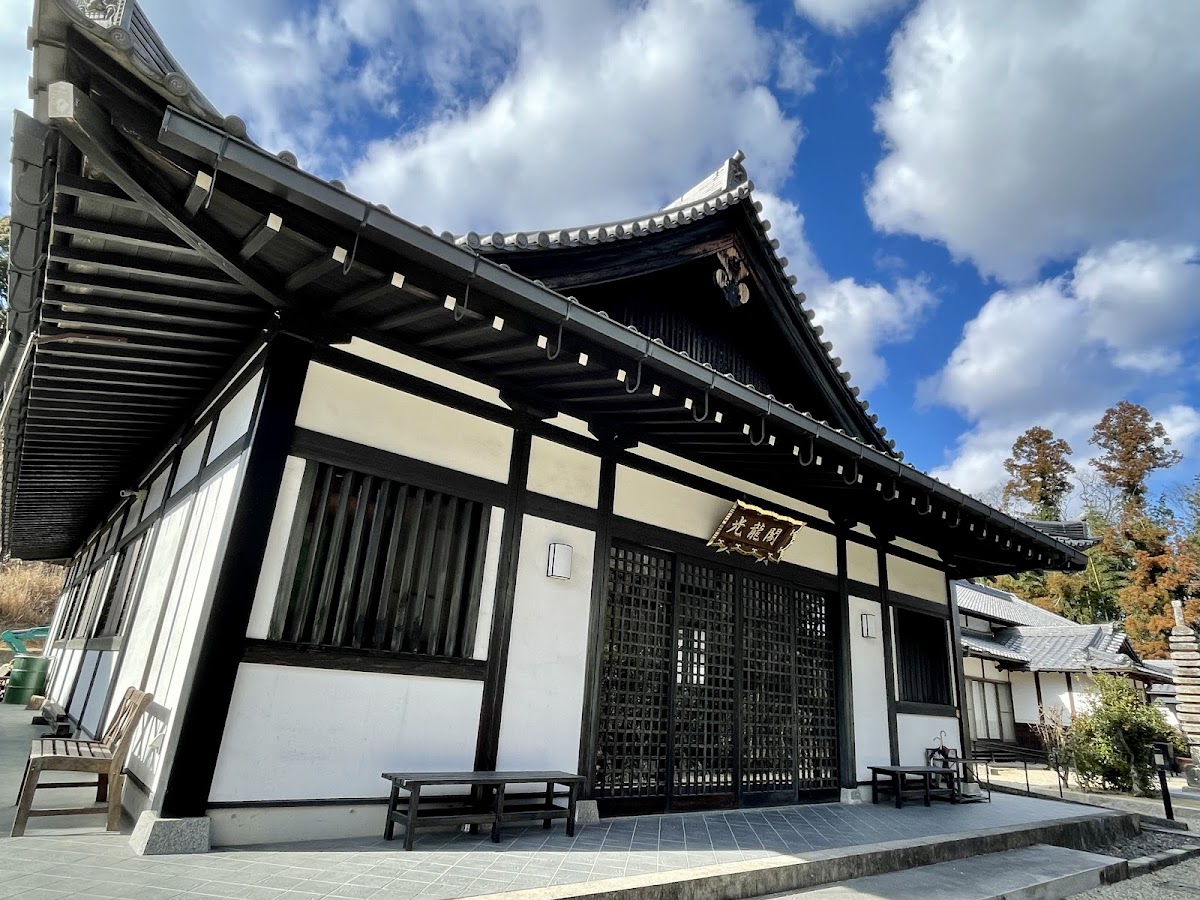
Besides Higashihata Shrine, the Higashihata district also has a temple called Senkoji. Senkoji Temple is located just below Mt. Takeyama and is known as the only temple in the Higashihata district.
Senkoji Temple is said to have been founded in the medieval period (late Heian period), and the Higashihata settlement is thought to have been formed around this time. During the era of syncretism of Shinto and Buddhism, it is presumed that Senkoji Temple and Higashihata Shrine had a close relationship, and both played complementary roles in the region’s religious life.
Even after the separation of Shinto and Buddhism in the Meiji era, both have continued to play their respective roles as spiritual pillars of the Higashihata district to this day.
Mt. Takeyama and the Higashihata Settlement
The Higashihata settlement spreads out at the foot of Mt. Takeyama, built on a steep slope utilizing the mountain’s terrain. Climbing the mountain path leads to a place with a good view, where people once lived a life of agriculture while also utilizing the blessings of the mountain.
In the area around Mt. Takeyama, mountain climbing and harvest festivals are still held as local events, demonstrating the continued connection between the mountains and the lives of the people.
Coexistence with Keihanna Science City
Since the 1980s, Seika Town has developed significantly as a core part of the Kansai Science City (Keihanna Science City). Cutting-edge research facilities and companies, including “Keihanna Plaza,” have concentrated there, making it an international hub for academic research.
Tohata Shrine, while located very close to Keihanna Plaza, has preserved its old settlement and traditions. It forms a unique cultural landscape characteristic of Seika Town, where cutting-edge science and technology coexist with ancient beliefs.
Access and Transportation Information
Access by Public Transportation
Nearest Station
- Approximately 3km from JR Gakken Toshi Line (Katacho Line) “Hosono Station” or Kintetsu Kyoto Line “Shin-Hosono Station”
- Take a bus or taxi from the station
Using the Bus
- Get off at Nara Kotsu Bus “Seika Town Hall” or “Keihanna Plaza” and walk for approximately 10-15 minutes
- Community bus “Kururin Bus” is also available (check the Seika Town official website for routes and timetables)
Access by Car
From Major Roads
- Approximately 5 minutes from Keina-Wa Expressway “Seika Gakken IC”
- From National Route 163 towards Seika Town
Parking
- Since the shrine’s dedicated parking is limited, the use of nearby public parking lots is recommended
- Access is possible on foot from the Keihanna Plaza parking lot
Address and Location Information
Location
Higashihata, Seika-cho, Soraku-gun, Kyoto Prefecture
Higashihata Shrine is located in a residential area. Therefore, when visiting, please pray quietly and be considerate of the lives of the local residents.
Manners and Precautions for Visiting the Shrine
Proper Way to Visit
As Higashihata Shrine is the local guardian shrine, visits should be conducted according to traditional Shinto customs:
- Bow before passing through the torii gate
- Avoid walking in the center of the approach to the shrine
- If there is a water basin, purify your hands and mouth
- Bow twice, clap twice, and bow once in front of the main hall
Precautions When Visiting
- Maintain Silence: As the shrine is located in a residential area, please refrain from loud conversations.
- Photography Manners: Photography is permitted on the shrine grounds, but please be considerate of the privacy of local residents.
- Take Your Trash Home: Keep the shrine grounds and surrounding area clean.
- No Trespassing on Private Property: As the area around the shrine is residential, please be careful not to enter areas outside the shrine grounds.
Best Time to Visit
Higashihata Shrine is open for visits year-round, but the following times are especially recommended:
- Spring: The cherry blossom season and the beautiful time of fresh greenery
- Autumn: Season of autumn leaves, harvest festival time
- New Year: Time for Hatsumode (first shrine visit of the year) (local events may also be held)
Nearby Attractions
Senkoji Temple
The only temple in the Higashihata area, a must-visit spot along with Higashihata Shrine. Said to have been founded at the end of the Heian period, it is an important temple for understanding the history of the Higashihata area.
Keihanna Plaza
A core facility of the Kansai Culture and Science City, it houses state-of-the-art research facilities, international conference centers, hotels, and more. It’s close to Higashihata Shrine, allowing visitors to enjoy the contrast between the old settlement and cutting-edge science and technology.
Takeyama Mountain
A mountain towering behind the Higashihata area, popular as a hiking course. From the summit, you can enjoy a panoramic view of Seika Town and the Nara Basin, and appreciate the changing natural scenery with each season.
Other Cultural Properties in Seika Town
In addition to Higashihata Shrine, Seika Town has many other historical shrines, temples, and cultural properties. It’s recommended to gather information at the Seika Town Hall or tourist information center and enjoy a historical walk through the entire town.
Cultural Value of Higashibata Shrine
Resources for Local History Research
The ridgepole inscriptions and stone lanterns remaining at Higashibata Shrine are valuable primary sources for the study of Seika Town’s local history. They provide clues to the socio-economic conditions, religious life, and architectural techniques of the Higashibata area from the mid to late Edo period.
Role as a Community Core
Even today, Higashibata Shrine functions as a central presence in the local community. Through local festivals and events, it deepens the bonds between residents and contributes to the transmission of traditional culture.
In the midst of increasing urbanization, the social role played by such local shrines is attracting renewed attention.
Symbol of Landscape Preservation
Amidst the cutting-edge urban development of Keihanna Science City, Higashibata Shrine and the surrounding old settlements demonstrate the importance of preserving historical landscapes. In Seika Town’s unique cultural landscape, where old and new harmonize, Higashihata Shrine is an indispensable element.
History of Seika Town and Higashihata Shrine
Origins of Seika Town
Seika Town was formed in 1955 (Showa 30) through the merger of Kawanishi Village, Higashihata Village, and Yamada Village. Located at the southern tip of Kyoto Prefecture, bordering Nara Prefecture, it has long been a vital transportation hub connecting Kyoto and Nara.
Development of the Science City
In 1987 (Showa 62), the Kansai Cultural and Academic Research City Construction Promotion Act was enacted, and Seika Town was selected as the core of the Science City. Since then, research institutions and companies from both Japan and abroad have gathered, and the population has increased. It has transformed from a traditional rural village into a cutting-edge academic research city.
Amidst these rapid changes, historical sites like Higashihata Shrine play a crucial role in maintaining the region’s identity.
Summary
Higashibata Shrine, located in Higashibata, Seika-cho, Kyoto Prefecture, is a shrine that conveys the history and faith of the region to the present day. While the details of its founding are unknown, the presence of a stone lantern from the mid-Edo period and a ridge beam inscription from the later period indicates that it was a center of local faith at least from the mid-18th century.
Despite being in close proximity to the cutting-edge facilities of Keihanna Science City, Higashibata Shrine, along with Senkoji Temple, plays an important role as a spiritual pillar of the community in the Higashibata district, which retains the landscape of a traditional village.
Located at the foot of the scenic Mt. Takeyama, the quiet and peaceful grounds offer solace to visitors. When visiting Seika-cho, be sure to visit Higashibata Shrine as part of its unique cultural landscape where cutting-edge science and technology coexist with ancient faith.
Higashibata Shrine quietly watches over Seika-cho as it cherishes its local history and culture while forging a new era.