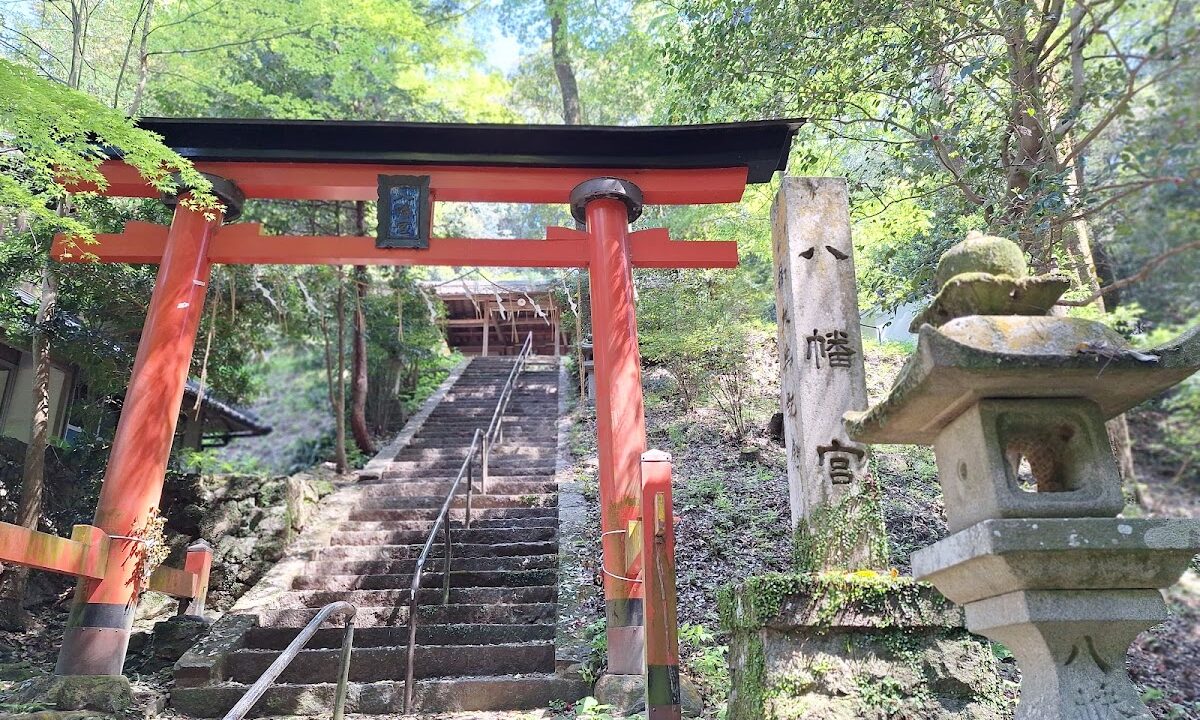
Complete Guide to Mori Hachimangu Shrine (Kizugawa City, Kyoto Prefecture) | The Engraved Fudo Myoo and the Entire History
Mori Hachimangu Shrine, located in Mori Darani-da, Kamo-cho, Kizugawa City, Kyoto Prefecture, is a historic shrine affectionately known locally as “Mori no Hachiman-san.” It is said to have been established during the Nara period following Emperor Shomu’s relocation of the capital to Kuni-kyo, and is still known today as an important shrine possessing valuable cultural assets. This article provides a detailed explanation of Mori Hachimangu Shrine’s history, enshrined deities, the notable engraved Fudo Myoo and Bishamonten, access methods, and surrounding area information.
Basic Information on Mori Hachimangu Shrine
Mori Hachimangu Shrine is located in the Kamo area of Kizugawa City, in southern Kyoto Prefecture. Nestled in a quiet mountain village, it has long been a center of local faith.
Location: Mori Darani-da, Kamo-cho, Kizugawa City, Kyoto Prefecture
Common Name: Mori no Hachiman-san
Deities Enshrined:
- Okinagatarashihime-no-mikoto (Empress Jingu)
- Hondawake-no-mikoto (Emperor Ojin)
Founding: Said to be in the 12th year of the Tenpyo era (740 AD)
Main Cultural Properties: Line-engraved Fudo Myoo, Line-engraved Bishamonten (Late Kamakura period, 3rd year of the Shochu era [1326 AD])
History and Origins of Mori Hachiman Shrine
Emperor Shomu and the Relocation of the Capital to Kuni-kyo
The founding of Mori Hachiman Shrine dates back to the 12th year of the Tenpyo era (740 AD) during the Nara period. According to shrine tradition, it began when Emperor Shomu invited the Hachiman deity to this location when he moved from Heijo-kyo to Kuni-kyo.
Kuni-kyo was a capital city built primarily in the Kamo area of present-day Kizugawa City. It served as Japan’s capital for a short period, from Tenpyo 12 to Tenpyo 16 (744 AD). Emperor Shomu frequently relocated the capital for political and religious reasons, and Kuni-kyo was one such example. Mori Hachimangu Shrine was established within this historical context of capital relocation and is believed to have played a crucial role as the guardian deity of the capital.
The Spread of Hachiman Worship
Hachiman, with Emperor Ojin as its principal deity, has been worshipped since ancient times as a god of military fortune and national protection. During the Nara period, Usa Hachimangu Shrine (present-day Oita Prefecture) received the reverence of the imperial court, and Hachiman worship spread throughout the country. Mori Hachimangu Shrine is one of the shrines established within this Hachiman worship trend.
The founding of Mori Hachimangu Shrine, linked to the historical event of the relocation of the capital to Kuni-kyo, demonstrates the importance the imperial court placed on the divine power of Hachiman at the time.
History since the Edo Period
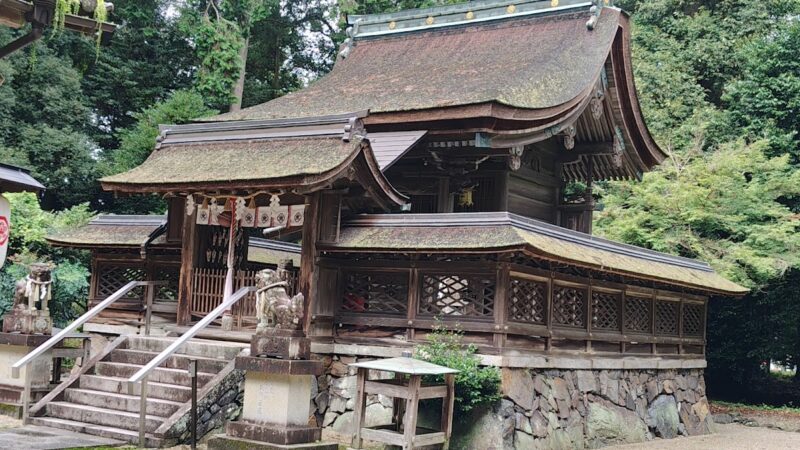
The main hall of Mori Hachimangu Shrine is believed to have been built in the early Edo period and still retains its original form today. Throughout the Edo period, it was revered as the local guardian deity, attracting the faith of people in the Mori settlement and surrounding areas.
Even after the Meiji-era separation of Shinto and Buddhism, Mori Hachimangu Shrine continued to exist as a spiritual pillar of the region and has been carefully preserved to this day.
Deities enshrined at Mori Hachimangu Shrine
Empress Jingu (Kinagatarashihime-no-Mikoto)
Kinagatarashihime-no-Mikoto was the empress of the 14th Emperor Chuai and the mother of the later Emperor Ojin. Known as Empress Jingu, she is famous for the legend of her conquest of the Three Kingdoms of Korea. She is also worshipped as the goddess of safe childbirth and child-rearing.
Emperor Ojin (Homudawake-no-Mikoto)
Homudawake-no-Mikoto is Emperor Ojin, considered the 15th emperor, and is the central deity of Hachiman. He is widely worshipped as the god of military fortune, victory in competitions, and national peace. Furthermore, these deities also have aspects of being gods of culture and learning, and are believed to offer a variety of blessings.
These two enshrined deities are related as parent and child, and are worshipped as mother and child gods, revered as guardians of family bonds, prosperity of descendants, and peace in the region.
The Greatest Highlight of Mori Hachimangu Shrine: Line-Engraved Fudo Myoo and Bishamonten
The most noteworthy feature when visiting Mori Hachimangu Shrine is the line-engraved Buddha images carved into two large rocks located to the right of the shrine building.
Line-Engraved Fudo Myoo
One of the large rocks is engraved with an image of Fudo Myoo. Fudo Myoo is an important deity in Esoteric Buddhism, a deity who cuts off worldly desires and saves all sentient beings. The line-engraved Fudo Myoo at Mori Hachimangu Shrine bears an inscription from the third year of Shochu (1326) in the late Kamakura period, making it a valuable cultural asset with a clearly defined date of creation.
The technique of line engraving involves carving lines into the surface of stone to represent Buddhist images, possessing a unique beauty distinct from three-dimensional sculpture. The Fudo Myoo carved into a large natural rock is an important legacy that conveys the form of faith from the era of syncretism between Shinto and Buddhism.
Line Engraved Bishamonten
Another large rock bears a line engraving of Bishamonten. Bishamonten is another name for Tamonten, one of the Four Heavenly Kings, and is worshipped as the god of military fortune, wealth, and good fortune. Like the Fudo Myoo, this was also created in the third year of Shochu (1326).
Evidence of Shinto-Buddhist Syncretism
These line-engraved Buddhist images were created as the honji-butsu (original Buddha) of a subsidiary shrine of Hachiman Shrine. Honji-butsu is based on the idea in Shinto-Buddhist syncretism that the original form (honji) of a god is actually a Buddha.
While Amida Buddha is generally considered the principal deity of Hachiman shrines, Mori Hachimangu Shrine enshrines Fudo Myoo and Bishamonten as the principal deities of its subsidiary shrines. This indicates that these deities were chosen as protectors of the shrine and to bestow spiritual blessings upon worshippers.
During the Meiji era’s separation of Shinto and Buddhism, many shrines removed Buddhist elements. However, the engraved Buddhist images at Mori Hachimangu Shrine, carved into a large rock, escaped destruction and remain today as a valuable legacy of the syncretic Shinto-Buddhist era.
How to Access Mori Hachimangu Shrine
Access to Mori Hachimangu Shrine is somewhat limited by public transportation, so it is recommended to plan your trip in advance.
Access by Train and Bus
If using the JR Yamatoji Line:
- Get off at JR Kamo Station
- Approximately 30 minutes on foot from the station, or take a taxi (approximately 10 minutes)
- Community buses may also be operating, so it is recommended to check the official Kizugawa City website in advance.
If using the Kintetsu Kyoto Line:
- Get off at Kintetsu Takanohara Station
- Take a taxi or bus towards Kamo (approximately 20 minutes)
Access by Car
From Kyoto City:
- Head south on National Route 24 towards Kizugawa City
- Travel time: Approximately 50 minutes to 1 hour
From Nara City:
- Head north on National Route 24 towards Kamo
- Travel time: Approximately 30 minutes
Parking: There are some parking spaces around the shrine, but they are limited, so caution is advised depending on the time of year.
Important Notes Regarding Access
Mori Hachimangu Shrine is located in a mountain village, so some roads are narrow. When visiting by car, please be careful of oncoming traffic and drive safely. If accessing on foot, we recommend wearing comfortable walking shoes.
Points of Worship and Highlights of the Shrine Grounds
Main Hall
The main hall of Mori Hachimangu Shrine is a valuable building that preserves the architectural style of the early Edo period. Its simple wooden appearance evokes a long history. Quietly clasp your hands together in front of the main hall and offer your gratitude and prayers to the enshrined deity.
Appreciation of the Line-Engraved Buddhas
The line-engraved Fudo Myoo and Bishamonten carved into the large rock to the right of the shrine are the greatest highlight of Mori Hachimangu Shrine. The delicate lines carved into the natural stone remain clearly visible even after nearly 700 years. You can feel the stonemasonry skills and deep faith of the Kamakura period.
The appearance changes depending on how the light hits it, so visiting at different times of day may give you a different impression. ### A Tranquil Precinct
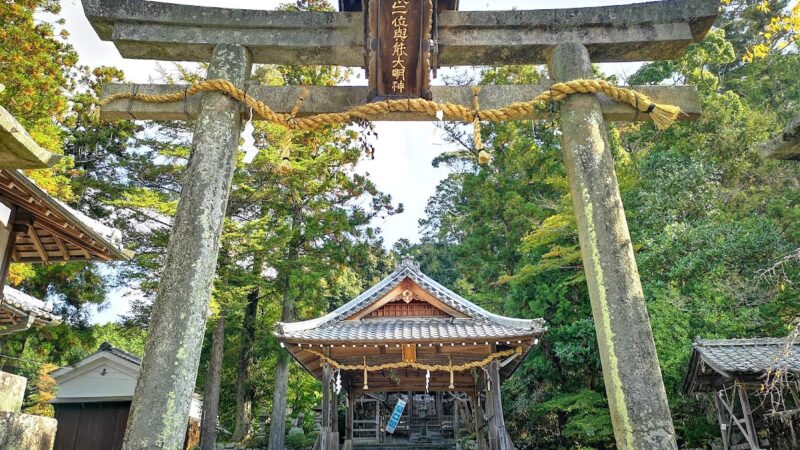
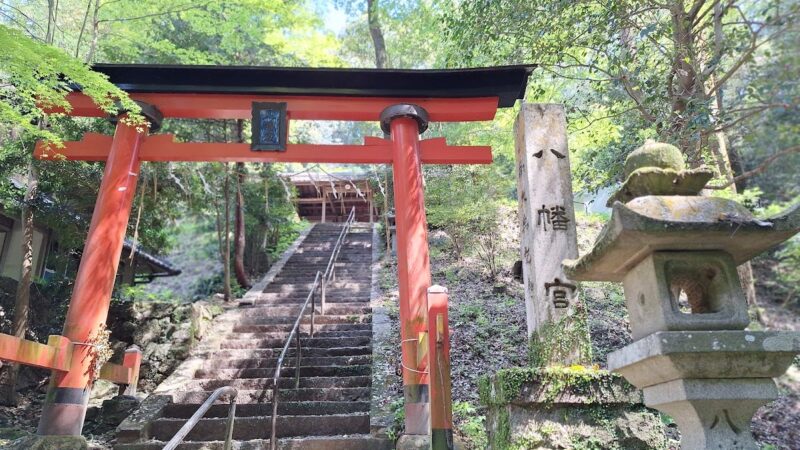
The grounds of Mori Hachimangu Shrine are surrounded by trees, creating a tranquil environment. It’s a precious place to escape the hustle and bustle of the city and offer a peaceful retreat for worship. You can also enjoy the changing natural scenery with each season.
Nearby Tourist Attractions
When visiting Mori Hachimangu Shrine, we recommend also visiting other tourist attractions around Kizugawa City.
Kuni Palace Site (Yamashiro Kokubunji Temple Site)
This is the site of the Kuni Palace, deeply connected to the founding of Mori Hachimangu Shrine. Currently, it’s maintained as a historical park, where you can view the foundation stones and remains. It’s an important historical site that allows you to reflect on the era of Emperor Shomu.
Joruri-ji Temple
Located in Kamo-cho, Kizugawa City, this Shingon Ritsu sect temple is known for its National Treasure, the Nine Amida Buddha seated statues, and its three-story pagoda. Its Heian period Pure Land style garden is also beautiful, making it a representative ancient temple of southern Kyoto Prefecture.
Iwafune-ji Temple
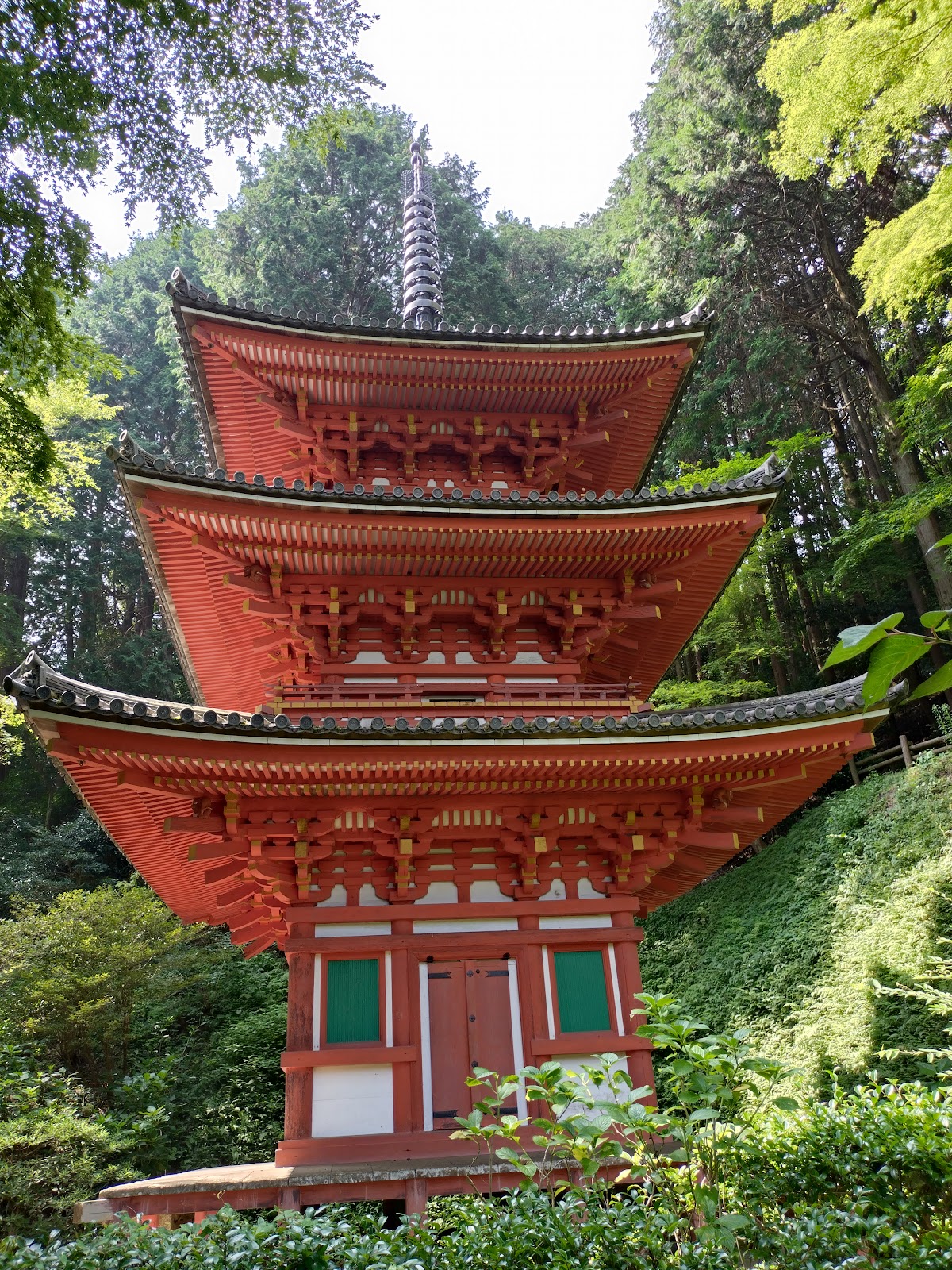
Located in Kamo-cho, this Shingon Ritsu sect temple is famous for its three-story pagoda (an Important Cultural Property) and its group of stone Buddha statues. It is also known as a spot for hydrangeas and autumn foliage.
Stone Buddha Statues of Tono
In Tono, in the Kamo region, numerous stone Buddha statues created from the Kamakura to Muromachi periods are scattered throughout the area. You can visit cultural artifacts that share the same historical background as the line-engraved Buddha statues at Mori Hachimangu Shrine.
Annual Events at Mori Hachimangu Shrine
Mori Hachimangu Shrine, as the local guardian shrine, holds various festivals throughout the year.
Annual Festival
The annual festival is held every autumn, with local residents gathering for a portable shrine procession and Shinto rituals. The exact dates may vary from year to year, so it is recommended to check before visiting.
New Year’s Visit
At the start of the new year, local people visit the shrine for their first shrine visit of the year, praying for peace and the health of their families. You can welcome the new year in a peaceful atmosphere.
Guidelines for Visiting Mori Hachimangu Shrine
Shrine Visit Manners
Please observe basic shrine visit manners:
- When passing through the torii gate: Bow before entering the shrine grounds.
- Purification at the water basin: If there is a water basin, purify your hands and mouth.
- Worship etiquette: Two bows, two claps, and one bow are the basic forms of worship.
- Respect: Be quiet within the shrine grounds and be considerate of other visitors.
Photography
Photography of the engraved Buddha images and the shrine grounds is generally permitted, but please remember that this is a sacred place and act with moderation. It is advisable to refrain from using flash photography from the perspective of cultural property preservation.
Attire
There are no specific dress code requirements, but please wear clean clothing appropriate for visiting a shrine. Also, since the shrine grounds may have natural ground and stone steps, comfortable walking shoes are recommended.
Cultural Value of Mori Hachimangu Shrine
Rarity of Line-Engraved Buddhist Images
The line-engraved Fudo Myoo and Bishamonten at Mori Hachimangu Shrine possess high cultural value for the following reasons:
- Clear Date: Inscribed with the date of Shochu 3 (1326), the creation period can be identified.
- Example of Shinto-Buddhist Syncretism: Valuable material that concretely demonstrates the concept of Honji-butsu (original Buddha).
- Preservation Condition: Despite being nearly 700 years old, the line engravings remain clearly visible.
- Regional Relevance: A part of the stone Buddha culture of the Tono region.
Historical Background
The shrine’s founding history, linked to the historical event of Emperor Shomu’s relocation of the capital to Kuni-kyo, provides important clues for understanding the political and religious situation of the Nara period. Furthermore, the line-engraved Buddhist images, which demonstrate the reality of Shinto-Buddhist syncretism during the Kamakura period, are valuable materials for the study of Japanese religious history.
The Significance of Visiting Mori Hachimangu Shrine
Mori Hachimangu Shrine is not a large-scale tourist destination, but precisely because of this, it is a place where you can quietly contemplate history. It is especially recommended for the following people:
- History Enthusiasts: Those interested in the history from the Nara period to the Kamakura period
- Buddhist Art Fans: Those interested in engraved Buddhist images and stone Buddha statues
- Those Seeking Quiet Worship: Those who want to leave the hustle and bustle behind and worship in peace
- Local Culture Explorers: Those who want to explore the hidden cultural treasures of southern Kyoto Prefecture
Summary: The Charm of Mori Hachimangu Shrine
Mori Hachimangu Shrine is a historically significant shrine located in Kamo-cho, Kizugawa City, Kyoto Prefecture. It is said to have been established in 740 AD (Tenpyo 12) following Emperor Shomu’s relocation of the capital to Kuni-kyo, and boasts a history of nearly 1300 years.
The enshrined deities are Kinagatarashihime-no-Mikoto and Homutawake-no-Mikoto, who have been revered as guardian deities of the region. Of particular note are the line-engraved Fudo Myoo and Bishamonten carved into the large rock to the right of the shrine, which are valuable cultural artifacts bearing an inscription from the third year of Shochu (1326). These were created as honji-butsu (original Buddhas) during the syncretic period of Shinto and Buddhism, and their forms remain clearly visible today.
Access is approximately a 30-minute walk from JR Kamo Station, or by car. The surrounding area is dotted with historically valuable tourist spots such as the Kuni Palace ruins, Joruri-ji Temple, Iwashifune-ji Temple, and the Tono Stone Buddha group, allowing visitors to fully appreciate Kizugawa City’s rich cultural heritage by visiting them together.
Mori Hachimangu Shrine, precisely because it is not a large-scale tourist destination, is a precious place where one can quietly contemplate history and offer prayers in peace. It is a hidden gem of Kyoto that we highly recommend visiting.
For telephone inquiries and the latest information, we recommend checking with the Kizugawa City Tourist Information Center or the official website. Spend a special time reflecting on the long history at Mori Hachimangu Shrine, surrounded by nature in every season.