Yono Shrine (Kameoka City, Kyoto Prefecture) Complete Guide | History, Deities, Access, and Highlights Explained in Detail
What is Yono Shrine?
Yono Shrine is a historical shrine located in Terajidani, Sogabe-cho, Kameoka City, Kyoto Prefecture. Situated on the tip of a hill at the western foot of Mt. Ryugao in the southwestern part of Kameoka City, it has long been a center of local worship.
Surrounded by a rich forest selected as one of Kyoto Prefecture’s 200 Natural Wonders, it is known as a shrine where visitors can worship in a tranquil atmosphere. It is located approximately 5.5 km southwest of Kameoka Station and can be accessed via National Route 423 and Prefectural Route 407.
History and Origins of Yono Shrine
A Place of Worship from Ancient Times
The exact founding date of Yono Shrine is unclear, but it has been revered in the Tanba Province region since ancient times. This region was developed in ancient times and is known as a place where agricultural culture flourished. Yono Shrine has been a central place of worship for local residents, serving as a shrine where prayers for national peace and protection are offered.
Relationship with Jinguji Temple
In the Middle Ages, it took the form of a syncretic Shinto-Buddhist temple called “Yono Jinguji Temple,” with a complex of temple buildings including a Mandala Hall. As a temple attached to a shrine, it played a role in combining Shinto rituals and Buddhist ceremonies under the syncretic belief of Shinto and Buddhism.
Yono Shrine is also mentioned in the Edo period document “Shokoku Chinza Shinpi Sho,” suggesting that it was a widely known shrine even then. It also had deep ties to the Imperial family and is said to have received reverence from the Imperial Court.
History since the Meiji Era
With the Meiji-era separation of Shinto and Buddhism, the Jinguji Temple was abolished, and it became a purely Shinto shrine. Since then, it has continued to attract worshippers as the local tutelary deity and an important shrine in the Tanba region.
In recent years, efforts have been made to preserve the shrine as a cultural asset, including restoration work on the main hall in May 2017.
Deities and Benefits
Deities
The deities enshrined at Yono Shrine are primarily those who have been worshipped since ancient times as guardian deities of the region. They have a history of being revered as gods of national security and peace, and are worshipped as protectors of the peace and tranquility of the region.
Benefits
Yono Shrine is believed to offer the following benefits:
- Abundant Harvest and Agricultural Prosperity: Located in an agricultural area, it has long been revered as a shrine for praying for a bountiful harvest.
- Family Safety: As the local guardian deity, it protects the health and safety of families.
- Protection from Misfortune and Good Fortune: It wards off disasters and improves luck.
- Regional Peace and Security: As a shrine for national peace and security, it prays for peace throughout the region.
Highlights of the Shrine Grounds
Shrine Forest (One of Kyoto’s 200 Natural Wonders)
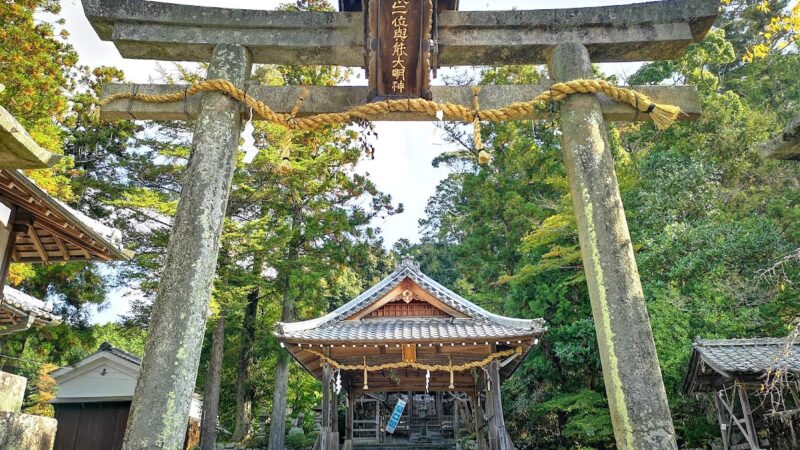
The most distinctive feature of Yono Shrine is its rich shrine forest, selected as one of Kyoto Prefecture’s 200 Natural Wonders. The forest surrounding the shrine grounds has been protected for many years, maintaining a state close to a primeval forest, and exhibits diverse vegetation.
Various trees grow in the shrine forest, allowing visitors to enjoy the changing seasons. Especially during the seasons of fresh greenery and autumn leaves, deep green and vibrant autumn colors welcome visitors. This rich natural environment preserves a valuable ecosystem in today’s increasingly urbanized world, making it an important location from an environmental conservation perspective.
Main Shrine
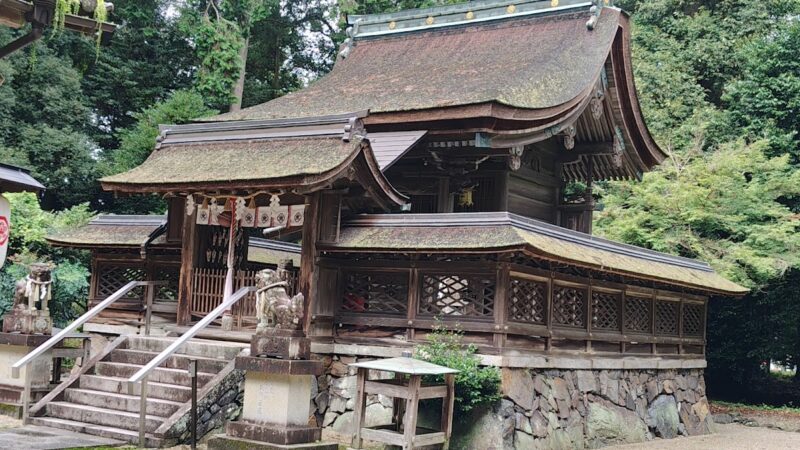
The main shrine of Yono Shrine is a building with traditional shrine architecture, and restoration work was carried out in 2017. This restoration revived the beauty of the building and preserved its value as a cultural asset.
The architectural style of the main shrine reflects the characteristics of the region, and it is a valuable building that conveys the features of shrine architecture in the Tanba region. The detailed carvings and decorations are also a highlight.
Worship Hall and Torii Gate
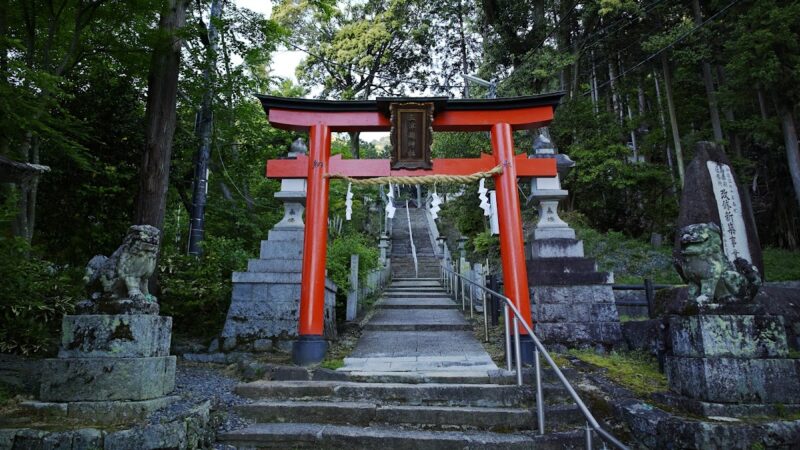
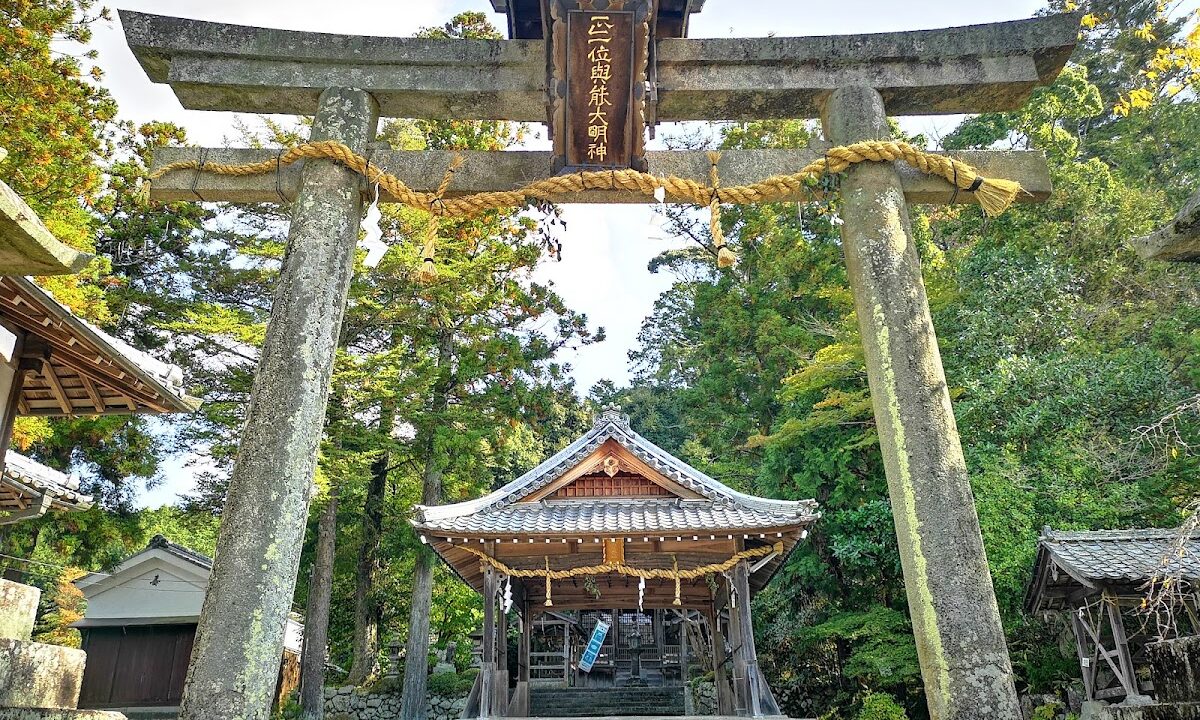
As you proceed along the approach to the shrine, a magnificent torii gate welcomes visitors. Passing through the torii gate, a tranquil shrine grounds unfolds. The worship hall is located in front of the main shrine and is a place where worshippers offer prayers to the gods.
From the worship hall, you can see the main shrine and feel the sacred atmosphere. The entire shrine grounds are enveloped in silence, creating an environment where you can pray with a calm heart.
Cultural Assets on the Shrine Grounds
The shrine grounds contain various cultural assets that evoke a sense of history. Many stone structures, such as stone lanterns and guardian lion-dogs, date back to the Edo period. Each has the date of its dedication and the name of the donor inscribed on it, providing clues to the region’s history.
Access Information
Location
Address: 1 Terajidani, Sogabe-cho, Kameoka City, Kyoto Prefecture
Access by Train and Bus
Nearest Station: Kameoka Station, JR Sagano Line
The distance from Kameoka Station to Yono Shrine is approximately 5.5 km. Public transportation access is limited, so the following methods are recommended:
- Taxi: Approximately 15 minutes by taxi from Kameoka Station
- Bus + Walk: If using the Kameoka City Community Bus, access is on foot from the nearest bus stop (it is recommended to check the service status in advance)
Access by Car
Access by car is the most convenient:
- From Kameoka Station, head southwest on National Route 423 for approximately 4 km
- Turn onto Prefectural Route 407 and head south
- Follow the signs to arrive at the grounds of Yono Shrine
Parking: There is parking space for visitors on the shrine grounds
Access from Kyoto City
- From Kyoto Station: Approximately 25 minutes on the JR Sagano Line to Kameoka Station, then approximately 15 minutes by taxi or car
- By Car: Approximately 20 minutes from Kameoka IC on the Kyoto Jukan Expressway
Visiting Information
Visiting Hours
Yono Shrine is generally open for free visits. While the shrine grounds are accessible throughout the day, the shrine office’s operating hours may be limited.
Goshuin (Shrine Seal)
Those wishing to receive a Goshuin (shrine seal) are advised to contact the shrine in advance. Since the shrine office may not always be staffed, prior inquiry is necessary to ensure you receive one.
Annual Festivals and Events
Yono Shrine holds various festivals and events throughout the year. The autumn festival, in particular, is an important local event, attracting many visitors. As a festival preserving local traditions, Shinto rituals are performed to pray for a bountiful harvest and the peace and prosperity of the region.
Nearby Attractions
Historical Spots in Sogabe Town
Sogabe Town, where Yono Shrine is located, has many other historical spots. It boasts the characteristic rural landscape of the Tanba region and retains its old townscape.
Tourist Attractions in Kameoka City
When visiting Yono Shrine, you can also visit other tourist attractions in Kameoka City:
- Izumo Grand Shrine: An ancient shrine known as the Ichinomiya (first-ranked shrine) of Tanba Province
- Hozugawa River Boat Ride: A popular tourist experience where you boat down a 16km river from Kameoka to Arashiyama
- Kameoka Castle Ruins: The ruins of a castle associated with Akechi Mitsuhide
- Yunohana Onsen: One of Kyoto Prefecture’s leading hot spring resorts
Enjoying Nature
The area around Mt. Ryugao is blessed with abundant nature and is suitable for hiking and nature observation. The natural environment of this region, including the sacred grove of Yono Shrine, is a valuable asset of Kyoto Prefecture.
The Charm of Yono Shrine
A Serene Worship Space
The greatest charm of Yono Shrine is its tranquil environment surrounded by abundant nature. A space where you can escape the hustle and bustle of the city and worship in peace is a precious place in modern society.
Walking through the shrine’s grove, you can hear the birds singing and the rustling of the trees, feeling a sense of oneness with nature. The beauty of the changing seasons is also evident, offering a different view each time you visit.
Inheritance of History and Culture
Yono Shrine preserves layers of history from various eras, including a history of faith dating back to ancient times, traces of syncretism of Shinto and Buddhism, and cultural artifacts from the Edo period. These historical legacies are carefully preserved by the local people and passed down to future generations.
Value as one of Kyoto’s 200 Natural Wonders
The shrine’s grove, selected as one of Kyoto Prefecture’s 200 Natural Wonders, is not merely a tourist spot but also an important location from the perspective of ecosystem conservation. The forest, protected for many years, serves as a habitat for diverse organisms and also has value as a place for environmental education.
Manners and Points for Visiting a Shrine
Basic Worship Etiquette
- Bow before passing through the torii gate: This is a sign of respect before entering the sacred area.
- Walk along the edge of the path: The center is considered the path of the gods.
- Purify yourself at the water basin: If there is a water basin, purify your hands and mouth.
- Etiquette at the main hall: Two bows, two claps, and one bow is the basic ritual.
Photography
Photography is generally permitted on the shrine grounds, but remember that it is a sacred place and be considerate of other worshippers. Note that photography is prohibited in some areas, such as inside the main hall.
Clothing and Belongings
No special clothing is required for visiting a shrine, but it is advisable to avoid revealing clothing and wear clean attire. Also, since the shrine is located in a natural setting, comfortable walking shoes are recommended.
Points to Note When Visiting Yono Shrine
Seasonal Precautions
- Spring/Autumn: This is the most suitable season for visiting. The fresh greenery and autumn leaves are beautiful, and the weather is mild.
- Summer: The greenery is lush and the air is cool, but insect repellent is recommended.
- Winter: Snow can accumulate, so caution is needed when accessing by car.
Access Precautions
Public transportation is limited, so visiting by car is convenient. However, Prefectural Road 407 has some relatively narrow sections, so driving requires caution. When using a car navigation system, entering the address “1 Terajidani, Sogabe-cho, Kameoka City, Kyoto Prefecture” will provide accurate directions.
Inquiries
Since the shrine office may not always be staffed, it is recommended to inquire in advance if you wish to receive a Goshuin (shrine stamp) or special prayers. The shrine may be managed by a local parishioner organization; contact information can be found at the Kameoka City Tourism Association, etc.
The Connection Between Yono Shrine and the Local Community
The Center of the Local Community
Yono Shrine, as the tutelary shrine of Sogabe-cho, serves as a spiritual pillar for the local community. Events such as the annual festival are prepared by the entire community, creating a place for intergenerational exchange.
Cultural Property Preservation Activities
As seen in the restoration work on the main hall, the community continues its activities to protect the shrine as a cultural property. This is not simply about preserving the building, but also about protecting the history and identity of the region.
Contribution to Environmental Conservation
Protecting the shrine’s forest contributes to the conservation of the local ecosystem. Maintaining such a natural environment amidst ongoing development is an important legacy for future generations.
Summary
Yono Shrine is a historic shrine located in Sogabe-cho, Kameoka City, Kyoto Prefecture. Surrounded by a rich shrine forest selected as one of Kyoto’s 200 Natural Wonders, it is a precious place where visitors can worship in a tranquil atmosphere.
This shrine is important for understanding the history of the Tanba region, as it preserves a history of faith that has continued since ancient times, traces of syncretism of Shinto and Buddhism, and cultural artifacts from the Edo period. It continues to attract worshippers as a shrine for national peace and protection, and as the guardian deity of the region.
While access is somewhat inconvenient by public transport, about a 15-minute drive from Kameoka Station, this allows for a quiet and peaceful visit. The shrine grounds, surrounded by abundant nature, offer a healing space that allows you to forget the hustle and bustle of city life.
When visiting Kameoka City, be sure to visit Yono Shrine. The time spent quietly praying in its grounds, where history and nature harmonize, will surely be a special experience.