Complete Guide to Sakajishi Shrine (Kyotamba Town, Kyoto Prefecture) | The History of the Shikinaisha Shrine and the Charm of its Sacred Trees
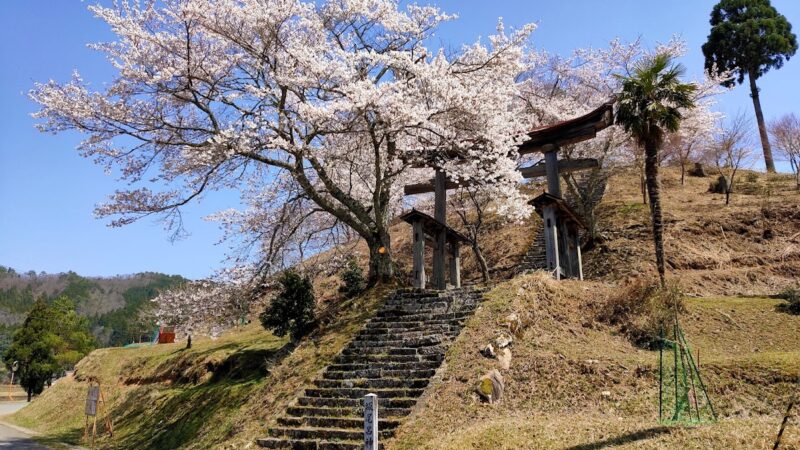
Nestled quietly at the foot of Miyayama Mountain in the Sannomiya district of Kyotamba Town, Funai District, Kyoto Prefecture, Sakajishi Shrine is a venerable Shikinaisha shrine dating back to the Heian period. Within its grounds, surrounded by a sacred forest, stand towering trees hundreds of years old, and it has been protected for over a thousand years as a spiritual center for the local people. This article provides a detailed introduction to Sakajishi Shrine, including its history, enshrined deities, highlights, and access information.
What is Sakajishi Shrine?
Sakajishi Shrine is an ancient shrine located in Kyotamba Town, Funai District, Kyoto Prefecture, and is known as a Shikinaisha shrine listed in the Engishiki Jinmyocho (a list of shrines compiled in the Heian period). The discovery of an imperial decree from January of the 4th year of the Konin era (813 AD) led to its formal identification as a Shikinaisha shrine, and it has a long history as one of the centers of faith in the Tanba region.
Revered by the people of the Sannomiya district as the local guardian deity, the shrine’s rich natural environment surrounding its grounds has been selected as one of “Kyoto’s 200 Best Natural Sites.” In particular, the two giant cedar trees standing in front of the shrine and the ancient maple tree that maintains life only through its bark, displaying magnificent autumn foliage every year, deeply impress visitors.
History of Sakajishi Shrine
Founded in the Heian Period
Sakajishi Shrine is said to have been founded during the Heian period. The discovery of an imperial decree from January of the 4th year of the Konin era (813 AD) proved that this shrine was officially recognized as a Shikinaisha (a shrine listed in the Engishiki) by the imperial court. The early Heian period was immediately after Emperor Kanmu opened Heian-kyo (Kyoto), and it was also a time when shrine development progressed throughout Kyoto Prefecture.
Status as a Shikinaisha
Shikinaisha, listed in the Engishiki Jinmyocho (a list of shrines compiled in the Heian period), are shrines that were granted special status by the imperial court. The fact that Sakajishi Shrine is listed as a Shikinaisha (a shrine listed in the Engishiki, an ancient Japanese legal code) indicates that it has been an important place of worship in this region since ancient times. There are only a limited number of Shikinaisha in Tanba Province, and Sakajishi Shrine, one of them, has functioned as a center of the region’s spiritual culture.
As a Center of Regional Worship
Since its founding, Sakajishi Shrine has been closely intertwined with the lives of people in the surrounding areas, including the Sannomiya district, as the tutelary shrine. In times when agriculture was central, it served as a place to pray for abundant harvests and protection from disease and disaster, becoming a spiritual pillar of the local community.
Deities Enshrined
While detailed records regarding the deities enshrined at Sakajishi Shrine are limited, based on local traditions and its status as a Shikinaisha, it is believed that deities with characteristics of guardian deities of the land and agricultural gods are enshrined there. The name “Sakajishi” suggests a connection to sake brewing and water deities, which may be related to the fact that the Tanba region has long been blessed with high-quality water and a thriving agricultural industry.
Many Shikinaisha shrines enshrine the ancestral deities of clans involved in the development and cultivation of the region, or the gods who govern the land’s natural environment. Sakajishi Shrine is also believed to enshrine deities deeply connected to the region’s history.
Highlights of the Shrine Grounds
Giant Sacred Cedar Trees
The first thing that catches the eye upon visiting Sakajishi Shrine are the two giant cedar trees standing in front of the shrine building. Estimated to be several hundred years old, their majestic presence speaks volumes about the shrine’s long history. With trunks several meters in circumference and reaching straight towards the sky, they possess a dignity truly befitting the title of sacred trees.
These cedars are not merely trees; they are living witnesses that have watched over the shrine’s history and are objects of worship for the local people. They display different appearances in each season, and their beauty is particularly striking in the fresh green season and when covered in snow during winter.
The Miraculous Maple
Another highlight of Sakajishi Shrine is the ancient maple tree that stands tall within its grounds. This maple possesses an astonishing vitality, surviving solely through its bark, despite the absence of a core.
Every spring, it sprouts vibrant green leaves, and in autumn, its leaves turn a magnificent crimson. Even with a hollow trunk, it continues to absorb nutrients through its outer bark, spreading its branches, inspiring visitors with the mystery and power of life. It has also been featured as one of Kyoto Prefecture’s Model Forests, a “Heavenly Tree,” and serves as a valuable example of the remarkable vitality of trees.
The Guardian Forest
The guardian forest surrounding the shrine grounds maintains a rich natural environment, so much so that it has been selected as one of “Kyoto’s 200 Best Natural Landscapes.” It contains not only cedars and maples, but also a variety of other trees, displaying diverse expressions throughout the seasons.
This forest is not merely a natural forest, but also a cultural landscape that has been carefully preserved by local people for many years. The chirping of birds, the rustling of trees, and the blooming of seasonal flowers—this is a precious space where you can experience a connection with nature that is gradually disappearing in urban areas.
Shrine Building
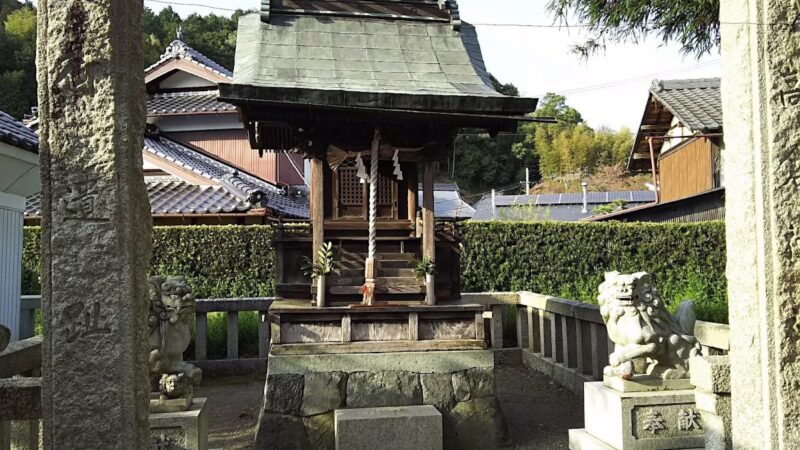
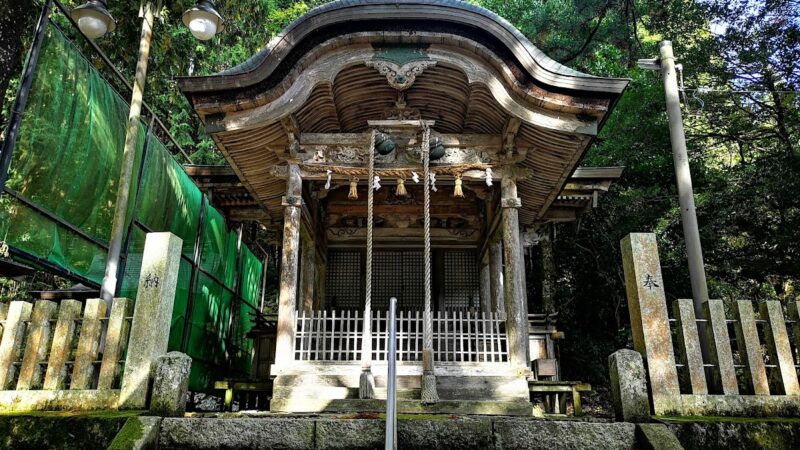
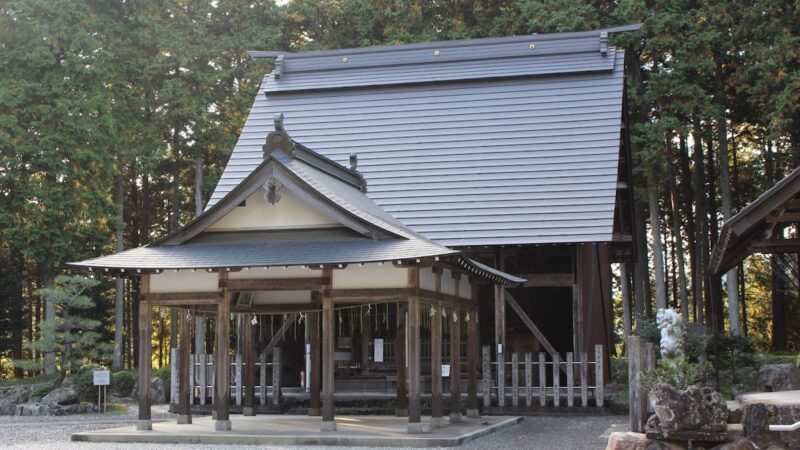
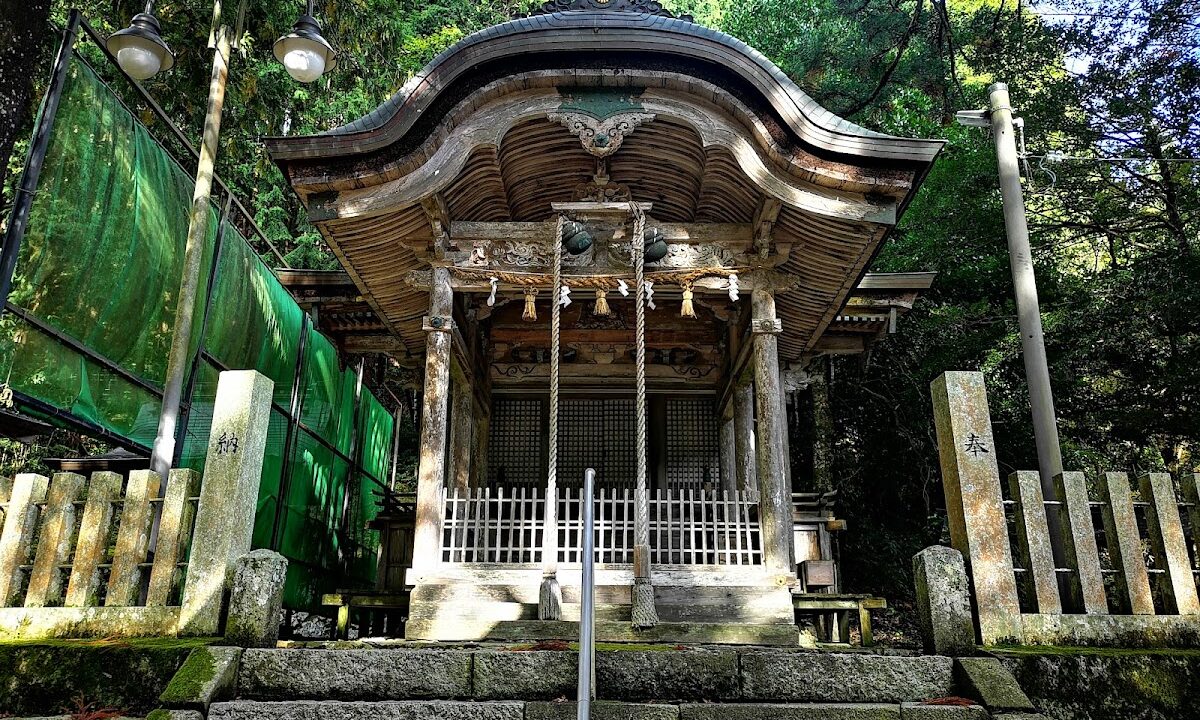
The shrine building of Sakajishi Shrine is thought to have been rebuilt several times throughout its long history, but the current building maintains the traditional style of shrine architecture. Although not large in scale, it is carefully maintained, reflecting the deep faith of the local people.
Standing before the shrine building, one can feel the ancient people’s view of nature and their faith, as seen in its harmonious placement with the Miyayama mountain behind it and its sense of unity with the surrounding nature.
Seasonal Scenery
Spring at Sakajishi Shrine
In spring, when the maple trees in the shrine grounds sprout vibrant green leaves, Sakajishi Shrine is enveloped in fresh greenery. The giant cedar trees also sprout new leaves, and the entire forest is filled with an atmosphere of vitality. Wildflowers announcing the arrival of spring also appear, ushering in a quiet yet magnificent season.
Deep Green of Summer
In summer, the shrine’s forest is covered in deep green. The shade provided by the trees is cool, offering a comfortable space even during the hot season. Amidst the sound of cicadas, the quietly standing shrine becomes a place of healing that allows you to forget the hustle and bustle of everyday life.
Autumn Foliage
Sakajishi Shrine is at its most beautiful during the autumn foliage season. The autumn colors of the ancient maple trees, especially those without cores, are breathtaking. Their vibrant colors, even as they survive with only their bark remaining, deeply move many. The contrast between the green of the giant cedar trees and the autumn leaves is also beautiful, making it a hidden gem for viewing autumn foliage in Kyoto Prefecture.
Silence of Winter
In winter, when snow falls, Sakajishi Shrine is enveloped in silence. The snow-covered giant cedar trees and the white-covered grounds further enhance the sacred atmosphere. With few visitors in winter, the shrine becomes a special space that evokes a deep sense of spirituality.
Location
Location: Sannomiya, Kyotamba-cho, Funai-gun, Kyoto Prefecture
Sakajishi Shrine is located in the Sannomiya area of Kyotamba-cho, at the foot of Mt. Miyayama. Kyotamba-cho is located in the central part of Kyoto Prefecture and is blessed with abundant nature. The surrounding area is a rural landscape, preserving the good old rural scenery of Japan.
Access Method
Nearest Station/Line
The following is how to access Sakajishi Shrine by public transport:
JR Sanin Main Line
- Nearest Station: Wachi Station or Shimoyama Station
- Approximately 15-20 minutes by car from the station
From Kyoto city, take the JR Sanin Main Line (Sagano Line), transfer to the Sanin Main Line at Sonobe Station, and get off at Wachi Station or Shimoyama Station. From the station, it is convenient to use a taxi or rental car.
Nearest Bus Stops and Routes
Kyotamba Town Bus
- There is a bus route to Sannomiya, but the number of buses is limited, so it is necessary to check the timetable in advance.
- We recommend checking the latest service information at the Kyotamba Town Hall or the Tourist Association.
Access by Car
Access by car is the most convenient.
Kyoto Expressway
- Approximately 20 minutes from Tanba IC via National Route 9 and the Prefectural Road
- Accessible in about the same amount of time from Kyotamba Wachi IC
National Route 9
- From National Route 9, turn onto the Prefectural Road and head towards Sannomiya
There is some parking space near the shrine grounds, but large vehicles may not be able to enter. We recommend checking before visiting.
Manners and Precautions for Visiting
Etiquette for Visiting
When visiting Sakajishi Shrine, please follow the general etiquette for visiting shrines.
- Bow before passing through the torii gate.
- Walk along the approach to the shrine, avoiding the center.
- Cleanse your hands and mouth at the purification fountain (this step can be omitted if there is no purification fountain).
- Bow twice, clap twice, and bow once in front of the shrine building.
Precautions
- The shrine grounds are a place of worship for the local people. Please worship quietly and respectfully.
- Please be careful not to damage the sacred trees or plants.
- Please take all your trash with you.
- Photography is permitted, but please be considerate of other worshippers.
- Please refrain from eating and drinking on the shrine grounds.
Best Time to Visit
Sakajishi Shrine can be visited throughout the year, but the following times are especially recommended.
- Spring (April-May): A time when the fresh greenery is beautiful.
- Autumn (November): A time when the autumn leaves are at their peak.
- Winter (January-February): A time when the snowy scenery is beautiful (depending on snow conditions).
Nearby Tourist Spots
Highlights of Kyotamba Town
When visiting Sakajishi Shrine, we recommend also visiting other tourist spots in Kyotamba Town.
Michi-no-Eki Tamba Marques
- You can purchase fresh local agricultural products and specialty goods.
- A variety of famous products such as Tamba chestnuts and Tamba black beans are available.
Shitsumi Hachimangu Shrine
- Another ancient shrine in Kyotamba Town, also a historical shrine.
Kototaki Waterfall
- A beautiful waterfall 43 meters high, selected as one of Kyoto Prefecture’s 200 Natural Wonders.
Charms of the Tamba Region
The Tamba region, including Kyotamba Town, is a region where rich nature and historical culture are in harmony. Tamba is a region famous nationwide for its local specialties such as Tamba chestnuts, Tamba black beans, and Tamba matsutake mushrooms, and boasts a rich food culture. Visiting Sakajishi Shrine allows you to enjoy the local food and culture.
Similar Shrines in Kyoto Prefecture
Kyoto Prefecture has many Shikinaisha (shrines listed in the Engishiki) nestled in rich natural environments, similar to Sakajishi Shrine.
Jitamate Matsuri Sakatoki Shrine (Oyamazaki Town)
- A Shikinaisha located near the summit of Mt. Tenno
- Shares the name “Sakatoki” with Sakajishi Shrine
- Considered the oldest shrine in the Otokuni region
Sakaya Shrine (Kyotanabe City)
- Also a Shikinaisha containing the character for “sake”
- An ancient shrine associated with the legend of Empress Jingu
Visiting these shrines in comparison will deepen your understanding of Kyoto Prefecture’s shrine culture.
Cultural Value of Sakajishi Shrine
One of Kyoto’s 200 Best Natural Sites
The inclusion of Sakajishi Shrine in “Kyoto’s 200 Best Natural Sites” signifies the official recognition of the value of its natural environment. Kyoto Prefecture possesses not only rich history and culture but also a rich natural environment, making its preservation and utilization crucial issues. The sacred grove of Sakajishi Shrine is one of Kyoto Prefecture’s natural heritage sites, a valuable asset that should be passed on to future generations.
Core of the Local Community
Sakajishi Shrine is not merely a tourist spot; it continues to function as a spiritual core of the local community. The way it is carefully protected, cleaned, and maintained by local people demonstrates the important role shrines play in the community even today.
Symbol of Vitality
The ancient maple tree, in particular, without a core, symbolizes the vitality of life that persists even in difficult circumstances, giving courage and hope to many. The existence of this tree teaches us about the mystery and strength of nature, and the importance of coexistence between humans and nature.
List of Festivals and Events (2026)
Regarding the annual events of Sakajishi Shrine, it is believed that traditional festivals are held as the local tutelary shrine. However, for detailed dates and content, please contact the Kyotamba Town Hall or the local parishioner organization.
The following are some examples of typical annual events at a shrine:
- New Year’s Day Festival (January 1st): A festival celebrating the New Year
- Spring Festival: A festival praying for a bountiful harvest
- Autumn Festival: A festival giving thanks for the harvest
- Great Purification Ceremony (June and December): A Shinto ritual to purify oneself of the impurities accumulated over the past six months
It is recommended to check specific dates and participation methods before visiting.
Summary
Sakajishi Shrine is a historical shrine located in Kyotamba Town, Kyoto Prefecture. Since its founding in the Heian period, it has attracted the faith of local people for over a thousand years and has been carefully preserved as the local tutelary shrine. The centuries-old cedar trees that adorn the shrine grounds, and the ancient maple trees that display beautiful autumn foliage every year despite losing their core, deeply move visitors. The shrine’s sacred grove, selected as one of “Kyoto’s 200 Best Natural Sites,” preserves a rich natural environment that is disappearing in urban areas, offering a peaceful and tranquil space.
While access by public transport is somewhat inconvenient, this allows for a quiet and peaceful visit. Access by car is convenient, and with the opening of the Kyoto Expressway, it has become easier to visit from Kyoto City and Osaka.
Sakajishi Shrine displays different expressions in each of the four seasons: the fresh green of spring, the deep green of summer, the vibrant autumn leaves, and the snowy landscape of winter. It is a hidden gem in Kyoto Prefecture where you can feel the history while experiencing the beauty and vitality of nature. When you visit Kyotamba Town, be sure to stop by.