Complete Guide to Chigo Shrine (Kyoto Prefecture) | An Ancient Shrine Conveying the Tragic Story of Abbot Kanchō and His Attendant, Located on the West Bank of Hirosawa Pond in Ukyo Ward, Kyoto City, Chigo Shrine is a small shrine that quietly tells a sad story from the Heian period. This shrine, which enshrines the spirit of an attendant who served Abbot Kanchō, the renowned monk who founded Henjō-ji Temple, has long been revered as the local tutelary deity. This article provides a detailed explanation of everything you need to know before visiting Chigo Shrine, including its history, enshrined deities, access methods, and nearby tourist spots.
History and Origins of Chigo Shrine
Background of its Founding and Abbot Kanchō
The founding of Chigo Shrine dates back to the mid-Heian period. To understand the origins of this shrine, it is necessary to first learn about Abbot Kanchō (916-998).
High Priest Kanchō was a renowned monk of noble birth, a grandson of Emperor Uda, and is known as a high-ranking priest of the Shingon sect. In 989 (Eiso 1), he established Henshōji Temple on the shores of Hirosawa Pond, making it the center of Buddhist culture in the region. Henshōji Temple was a magnificent temple complex at the time, but only the Kannon Hall remains today.
The Tragic Story of the Attendant and the Founding of the Shrine
The story of the founding of Koji Shrine is based on a sad legend surrounding the death of High Priest Kanchō. When High Priest Kanchō passed away in 998 at the age of 83, his attendant, who had served him for many years, grieved deeply over his master’s death. It is said that, overwhelmed by grief, the attendant threw himself into Hirosawa Pond, following his master in death.
The local people, saddened by the attendant’s loyalty and tragic end, founded Koji Shrine to comfort his spirit. Also written as “兒神社,” “兒社,” or “児社 (Chigo no Yashiro),” it came to be revered as the tutelary deity of the Ikeura Village area.
Deity and Worship
Deity Enshrined
The deity enshrined at Chigo Shrine is the attendant boy who served the high priest Kanchō. While the attendant boy’s name is not clearly recorded in historical documents, his deep loyalty and devotion to his lord led to his deification and enshrinement.
An attendant boy was a young servant who served nobles and high-ranking priests during the Heian period, responsible for personal care and miscellaneous tasks. It is likely that the attendant boy who served High Priest Kanchō grew up under his care from a young age, building a deep relationship of trust.
Regional Belief and Role
Chigo Shrine has gathered the faith of local residents as the tutelary deity of the former Ikeura Village area. A tutelary deity is a god who protects the people born in a particular land, serving as a spiritual anchor for the local community. Despite its small size, Kojinja Shrine has been carefully preserved by the local community and continues to be a quiet reminder of a part of Kyoto’s history, passed down to this day.
Highlights of the Shrine Grounds
Atmosphere of the Shrine and Grounds
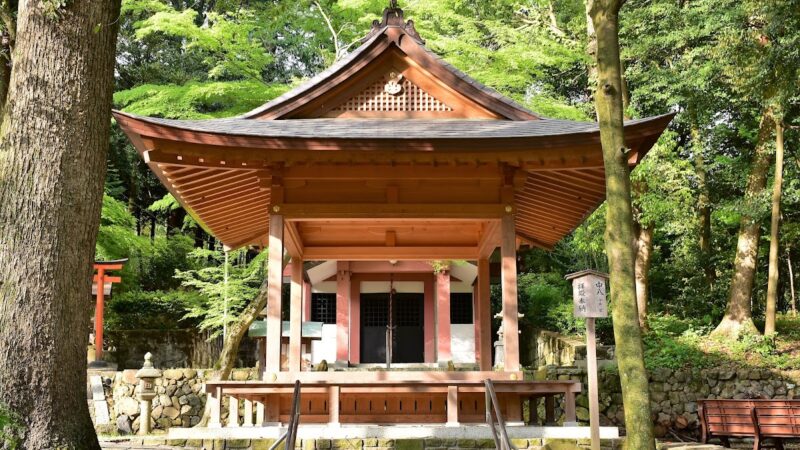
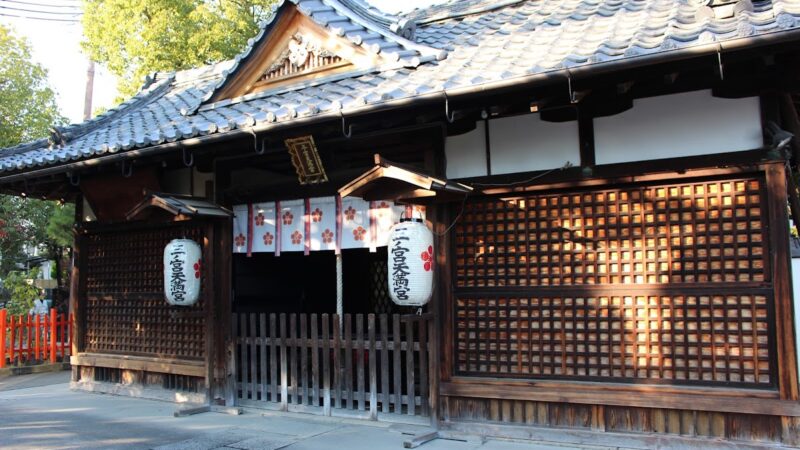
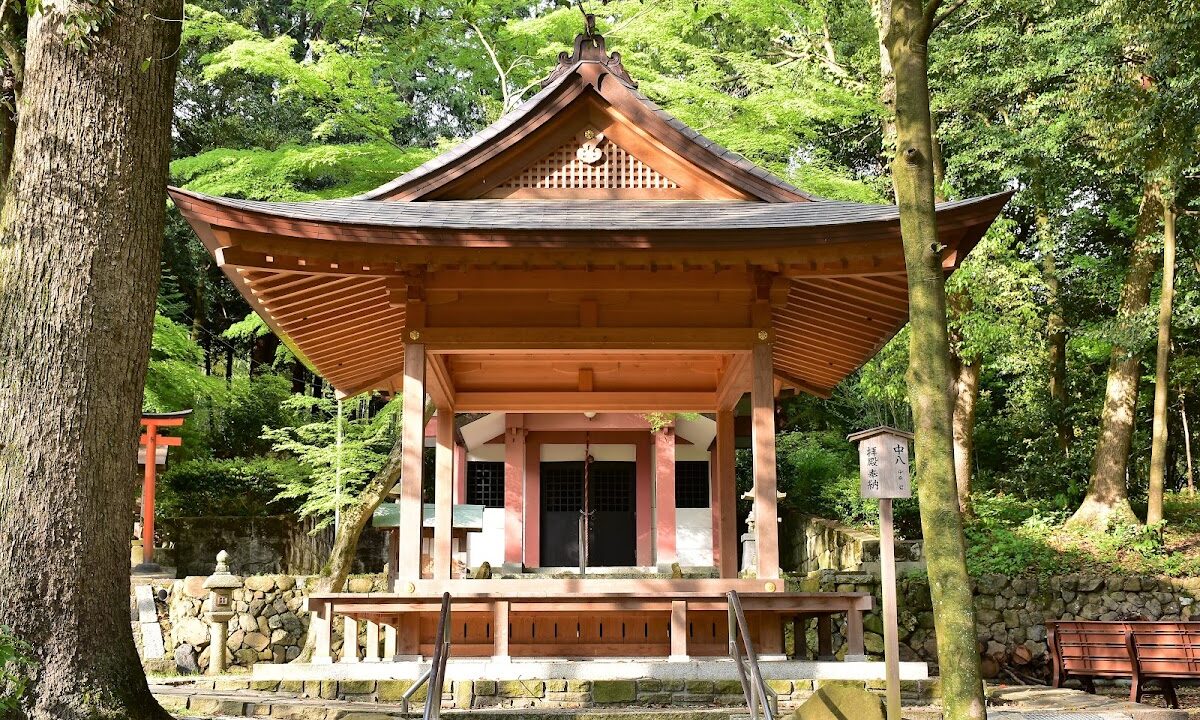
Kojinja Shrine is a small shrine located on the western shore of Hirosawa Pond. The grounds are very compact and not ornate, but are enveloped in a tranquil atmosphere.
The shrine building is simply constructed and surrounded by trees. Its location overlooking Hirosawa Pond, surrounded by the pond’s surface and greenery, evokes a sense of the Heian period for visitors.
Relationship with Hirosawa Pond
Indispensable to understanding Kojinja Shrine is Hirosawa Pond, which stretches out right in front of it. This pond is an artificial pond created around the same time as the construction of Henjo-ji Temple during the Heian period, and boasts a circumference of approximately 1.3 kilometers.
Hirosawa Pond is a historical scenic spot that also appears in “The Tale of Genji,” and offers beautiful scenery throughout the seasons. The area attracts many tourists, especially during the autumn foliage season and the winter Koiage (a traditional event where the pond is drained to catch carp).
Lantern Floating and Memorial Service
Every year on August 16th, the day of the Gozan no Okuribi (Five Mountains Bonfire Festival), a summer tradition in Kyoto, a lantern floating ceremony is held on Hirosawa Pond. During this event, a memorial service is held at Koji Shrine, after which five-colored lanterns are floated across Hirosawa Pond.
The countless lanterns adorning the water create a fantastical scene, offering solace to the spirits of the deceased and providing an opportunity to reflect on the spirits of the children who served at the shrine. This event is still passed down today as an important local tradition.
Access and Basic Information
Address and Location
Address: Saga Hirosawaikeura-cho, Ukyo-ku, Kyoto City, Kyoto Prefecture
Koji Shrine is located on the west bank of Hirosawa Pond, near the Kannon Hall of Henjo-ji Temple. Located in the northern part of the Sagano area, this is a quiet place surrounded by rural scenery.
Access by Train
Nearest Station:
- Approximately 15-20 minutes on foot from “Randen Saga Station” or “Kurumazaki Shrine Station” on the Keifuku Electric Railway Arashiyama Line
- Approximately 25 minutes on foot from “Saga-Arashiyama Station” on the JR Sagano Line
When accessing by train, using the Keifuku Electric Railway (Randen) is the most convenient. However, since you will need to walk from the station to the shrine, it is recommended to allow ample time for your visit.
Access by Bus
Nearest Bus Stop:
- Approximately 5 minutes on foot from the “Hirosawaike-mae” bus stop (Kyoto City Bus/Kyoto Bus)
- Approximately 10 minutes on foot from the “Yamagoe” bus stop (Kyoto City Bus)
When using the bus, it is convenient to take a bus bound for Arashiyama from Kyoto Station or Shijo Kawaramachi and get off at “Hirosawaike-mae”. Walking along Hirosawa Pond from the bus stop will take you to Kojinja Shrine.
Access by Car and Parking
If traveling by car, it’s approximately 40 minutes from the Kyoto Minami Interchange on the Meishin Expressway. However, there is no dedicated parking lot for Kojinja Shrine, so we recommend using nearby paid parking lots or public transportation.
The roads around Hirosawa Pond are narrow in some places, so please drive carefully.
Nearby Tourist Attractions
Henjoji Kannon-do Hall
Located very close to Kojinja Shrine, Henjoji Kannon-do Hall is the only remaining structure of the once magnificent Henjoji Temple. It is a valuable building that conveys the atmosphere of the temple built by the Great Abbot Kancho, and houses the principal image, a statue of the Thousand-Armed Kannon Bodhisattva.
The Kannon-do Hall is usually closed to the public, but there are occasional special viewing opportunities. It’s a spot you should definitely visit when you come to Kojinja Shrine.
Daikaku-ji Temple
Located approximately 1.5 kilometers south of Kojinja Shrine, Daikaku-ji Temple is the head temple of the Daikaku-ji branch of the Shingon sect, originally a detached palace of Emperor Saga. It boasts a beautiful garden pond called Osawa Pond and is also known as the head temple of the Saga-ryu school of flower arrangement.
The vast grounds contain numerous buildings designated as Important Cultural Properties and are famous as a filming location for historical dramas. A walking course encompassing both Hirosawa Pond and Osawa Pond is highly recommended.
Chokushi-an Temple
North of Hirosawa Pond, nestled in a quiet bamboo grove, Chokushi-an Temple is a hidden gem. It is famous for its “Omoidegusa Notebook,” a notebook where visitors can freely write their thoughts, making it a spiritual haven for many.
It is also known as a famous spot for autumn foliage, offering beautiful scenery in the fall. Since it is within walking distance of Kojinja Shrine, visiting both together is recommended.
A Stroll Around Hirosawa Pond
A walking path is maintained around Hirosawa Pond, allowing you to enjoy a leisurely stroll. A walk around the pond takes about 30-40 minutes, allowing you to fully appreciate the changing seasons.
With cherry blossoms in spring, lush greenery in summer, vibrant autumn leaves, and snowscapes in winter, Hirosawa Pond displays a different face in each season, making it an increasingly popular hidden gem for Kyoto sightseeing.
Best Season to Visit
Spring (March-May)
In spring, cherry blossoms bloom around Hirosawa Pond, and you can enjoy a stroll in the mild weather. In the season of fresh greenery, the trees around the pond turn a vibrant green, creating a refreshing atmosphere.
Summer (June-August)
Summer is a beautiful season with lush greenery and stunning reflections on the surface of Hirosawa Pond. The lantern floating ceremony on August 16th is a particularly excellent opportunity to visit Kojinja Shrine. From dusk to night, a fantastical scene unfolds.
Autumn (September-November)
Autumn is the most beautiful season, as the area around Hirosawa Pond is adorned with autumn leaves. The trees around the pond turn red and yellow, and the reflection of the leaves on the water’s surface is a breathtaking sight. There are relatively few tourists, allowing you to enjoy the scenery in peace.
Winter (December-February)
In winter, a traditional event called “Koiage” (carp harvesting) takes place at Hirosawa Pond in mid-December. This event, where the pond’s water is drained and carp are caught, is a well-known winter tradition in Kyoto. On snowy days, a fantastical scene unfolds, enveloped in silence.
Manners and Precautions for Visiting Kojinja Shrine
Basic Manners for Visiting Shrines
Kojinja Shrine is a small shrine, but please observe basic shrine manners when visiting. Bow before passing through the torii gate, and walk along the edge of the path, as the center is considered the path of the gods.
At the shrine, worship is performed using the proper etiquette of two bows, two claps, and one bow. To maintain a peaceful environment, please refrain from loud conversations.
Photography
Photography is generally permitted on the shrine grounds, but consideration should be given to avoiding disturbing other worshippers. Especially when local residents are visiting, please be mindful of their privacy.
Photographing the scenery including Hirosawa Pond is a popular spot for photography enthusiasts, as beautiful photos can be taken throughout the seasons.
Clothing and Items to Bring
Since some paths around Kojinja Shrine are unpaved, comfortable walking shoes are recommended. In summer, the sun is strong, so a hat or parasol is useful. In winter, the area around the pond gets cold, so be sure to dress warmly.
Kojinja Shrine and Kyoto’s History and Culture
Heian Period Aristocratic Culture and Jijō (Attendants)
The story of Kojinja Shrine is an interesting subject for understanding Heian period aristocratic and Buddhist culture. Jijō played an important role in the society of that time.
The attendants serving nobles and high-ranking priests were not merely servants; they were raised under their masters from a young age, fostering deep bonds of trust. The relationship between Grand Abbot Kanchō and his attendant exemplifies this profound bond.
Connection to The Tale of Genji
Hirozawa Pond is known as a location featured in the “Illusion” chapter of *The Tale of Genji*. The scene depicts Hikaru Genji visiting Hirozawa Pond on the first anniversary of Murasaki no Ue’s death, indicating its recognition as a scenic spot since the Heian period.
Visiting Koji Shrine allows one to imagine the world of *The Tale of Genji* and the landscapes of the Heian period.
The Value of Small Shrines in Kyoto
Kyoto boasts numerous small shrines like Koji Shrine, in addition to famous temples and shrines such as Kiyomizu-dera and Kinkaku-ji. These small shrines are invaluable for preserving the history and culture of the region.
The opportunity to experience Kyoto’s profound history in a quiet, unspoiled environment is a unique charm of these small shrines.
The Charm of the Sagano Area
Historical Background of Sagano
The Sagano area, where Kojinja Shrine is located, flourished as a villa area for aristocrats from the Heian period. Emperor Saga established a detached palace here, and many aristocrats built villas in the area, making it a place for cultural activities.
Even today, Sagano, with its remaining rural landscapes and bamboo groves, is a popular area in Kyoto known for its particularly charming atmosphere.
Recommended Sightseeing in Sagano
The Sagano area is ideal for exploring on foot or by bicycle. A recommended walking course starts at Kojinja Shrine and includes visits to Daikaku-ji Temple, Chokushi-an Temple, the Sagano Bamboo Grove, and Tenryu-ji Temple.
Unlike the touristy Arashiyama, Sagano’s charm lies in its quiet and tranquil atmosphere. Taking your time to stroll slowly will allow you to discover a different side of Kyoto.
Summary
Kojinja Shrine is a hidden historical spot in Kyoto, preserving the story of the loyalty and tragic tale of a young attendant who served the high priest Kancho. This small shrine, quietly nestled on the western shore of Hirosawa Pond, offers a glimpse into Kyoto’s profound history and culture, distinct from the more glamorous tourist destinations.
Visiting the shrine alongside the beautiful scenery of Hirosawa Pond allows you to experience a peaceful time while feeling the atmosphere of the Heian period. The lantern-floating ceremony on August 16th and the autumn foliage season offer particularly special experiences.
When visiting Arashiyama or Sagano, why not extend your trip a little and visit Kojinja Shrine? The story hidden within this small shrine and the beautiful scenery of Hirosawa Pond are sure to create lasting memories.
For those who want to delve deeper into Kyoto’s history, seek tranquility in a quiet place, and are interested in Heian period culture, Kojinja Shrine is a place well worth visiting. Using a map, be sure to visit this historic shrine.