Moriya Shrine (Kyoto Prefecture) Complete Guide: History and Access Information for the Ancient Shrine in Ninose Dedicated to Prince Korechika
Located in the Kurama area of Sakyo Ward, Kyoto City, near Ninose Station on the Eizan Electric Railway, Moriya Shrine (also known as Moriya Jinja or Moritani Jinja) is a historical shrine dedicated to Prince Korechika, a tragic prince of the Heian period. Currently merged with Fuji Shrine, this shrine has a unique structure with two main halls side-by-side under a single protective structure. This guide provides a detailed explanation of its history, enshrined deities, and access methods.
Basic Information on Moriya Shrine
Moriya Shrine is pronounced “Moriya Jinja” or “Moritani Jinja” and is also written as Moriya Shrine. Located in Kurama Ninose-cho, Sakyo Ward, Kyoto City, it is a small, ancient shrine situated on the pilgrimage route to Kurama-dera Temple and Kifune Shrine.
Location: 252 Kurama Ninose-cho, Sakyo-ku, Kyoto City, Kyoto Prefecture 601-1113
Access: Approximately 7 minutes on foot north from Ninose Station on the Eizan Electric Railway Kurama Line
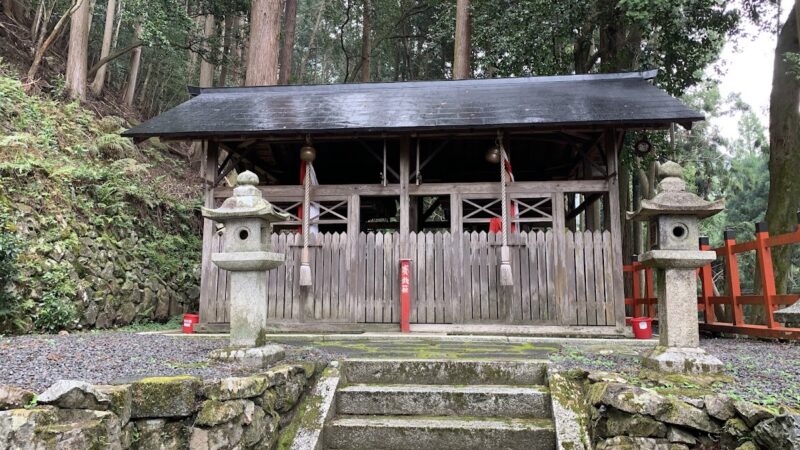
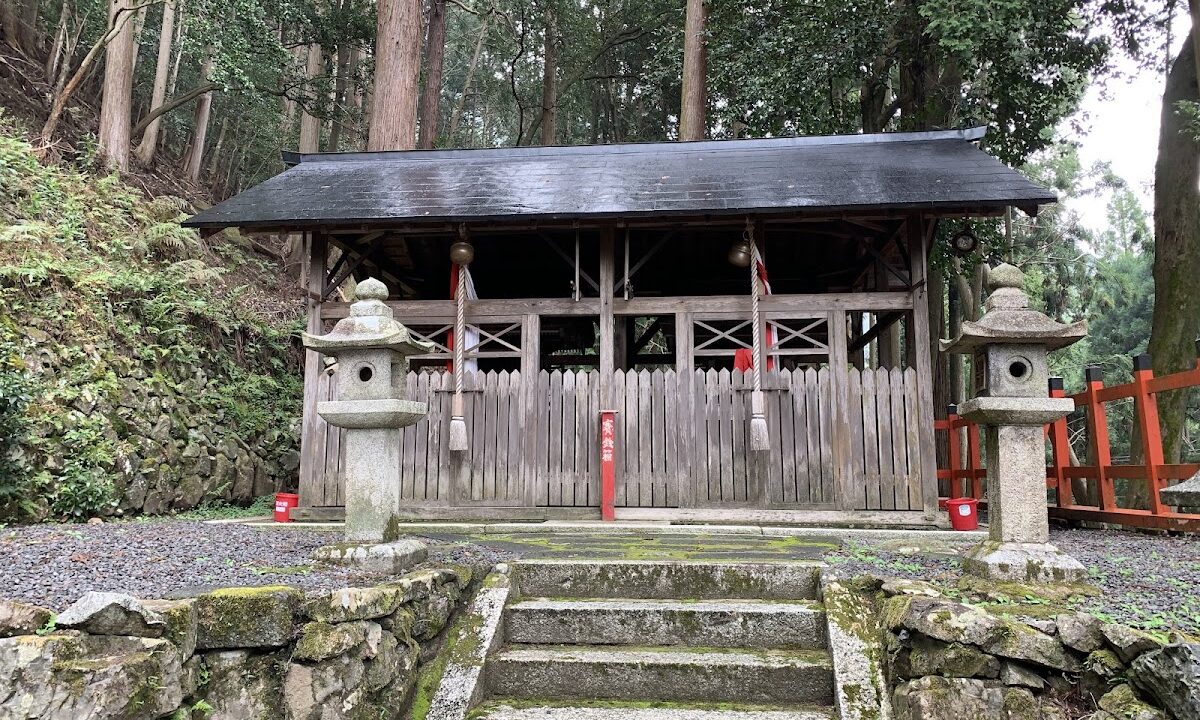
Currently, the shrine grounds house two shrines, Moriya Shrine and Fuji Shrine, under a single protective structure. The main halls of Moriya Shrine are located on the right and Fuji Shrine on the left.
Deities Enshrined: Prince Korechika and Ki no Shizuko
Deity Enshrined at Moriya Shrine: Prince Korechika
The deity enshrined at Moriya Shrine is Prince Korechika, the first son of Emperor Montoku, the 55th emperor. Prince Korechika was a member of the imperial family during the early Heian period. He was originally the strongest candidate for the throne, but due to political pressure from the Fujiwara clan, he was forced to relinquish the throne to his half-brother, Prince Korehito (later Emperor Seiwa). He is known as a tragic prince.
Prince Korechika was born as the eldest son of Emperor Montoku, but because the political power of the Ki clan, his mother Ki no Shizuko’s family, was inferior to that of the Fujiwara clan, Prince Korehito, whose mother was Fujiwara no Yoshifusa’s daughter Akiko, was appointed Crown Prince. Having lost his hopes of inheriting the throne, Prince Korechika became a monk and lived in seclusion in Ono (present-day Sakyo-ku, Kyoto City), where he came to be revered as the founder of the woodturning artisan.
The prince is believed to have died in either 872 (Jōgan 14) or 880 (Genkei 4), and it is said that the Moriya Shrine originated when his retainers, mourning his death, built a shrine on a site associated with him.
Deity enshrined at Fuji Shrine: Ki no Shizuko
Fuji Shrine enshrines Ki no Shizuko, the mother of Prince Korechika. Ki no Shizuko was the daughter of Ki no Natora and gave birth to Prince Korechika as a consort of Emperor Montoku. During the height of the Fujiwara clan’s power, Shizuko, being from the Ki clan, was at a political disadvantage and was unable to realize her son’s succession to the throne.
Fuji Shrine, pronounced “Fuji Jinja” or “Buji Jinja,” is a shrine that, along with Moriya Shrine, attracts worshippers as a place to remember the love of a mother who continuously supported the prince.
The Founding and History of Moriya Shrine
Origin of the Founding
There are several theories regarding the founding date of Moriya Shrine.
Theory of 872 AD (Jōgan 14): According to one theory, it was founded in February of the 14th year of Jōgan (872 AD) while Prince Korechika was still alive.
Theory of 877 AD (Gangyō 1): According to the “Kyoto Prefecture Geography,” in March of the first year of Gangyō (877 AD), retainers mourning the death of the prince built a shrine on a site associated with him. This theory is generally widely known.
In any case, it is an ancient shrine believed to have been founded in the early Heian period, and boasts a history of over a thousand years.
Relocation from East to West of the Kurama River
Moriya Shrine was originally located in the mountains east of the Kurama River. However, due to damage to the shrine buildings from a typhoon-induced flood, it was relocated to its current location on the western foot of the mountain, across the Kurama River, near Fuji Shrine. This relocation resulted in the current configuration of two shrines, one dedicated to the prince and the other to his mother, standing side by side.
While the exact date of the relocation is not recorded, the fact that it was due to typhoon damage makes it a noteworthy and unusual case in the history of Kyoto’s shrines. Currently, the shrine features a unique layout with two main halls side-by-side under a single protective structure, a configuration that deeply resonates with worshippers as a symbol of the bond between parent and child.
Shrine Grounds and Cultural Assets
Shrine Grounds Layout
The grounds of Moriya Shrine and Fuji Shrine are located in the quiet village of Ninose along the Kurama River. They are situated west of the Kurama Road, on the path to Yonaki Pass leading to Kibune.
Although small, the grounds possess a sacred atmosphere enveloped in the tranquility of the mountains. Under a single protective structure, the main hall of Moriya Shrine is located on the right (east side), and the main hall of Fuji Shrine is on the left (west side). This arrangement clearly demonstrates the intention to enshrine the prince and his mother side by side.
Features of the Shrine
The current shrine building is in the style of a “honden-kakoya” (main hall covering), where two main halls are housed under one large covering. This style is thought to have been adopted when the two shrines were merged after being relocated due to a typhoon.
The covering is a simple wooden structure, but it is a tasteful building that harmonizes with the mountainous environment. Although the main hall is small, it is a valuable cultural asset that conveys the faith from the Heian period and is cherished by the local people.
Access and Visiting Information
Access by Train
Using the Eizan Electric Railway Kurama Line:
- Take the Eizan Electric Railway Kurama Line from Demachiyanagi Station
- Get off at “Ninose Station” (approximately 20 minutes from Demachiyanagi Station)
- Walk north from the station for approximately 7 minutes
Ninose Station is an unmanned station and is the station before Kurama Station. From the station to the shrine, head north along the road beside the Kurama River. The journey offers beautiful natural scenery, but be aware that bears have been sighted, especially during early morning and evening visits.
Access by Car
From central Kyoto, head north on National Route 367 (Kurama Kaido) towards the Ninose area. However, there is no dedicated parking lot on the shrine grounds, so it is recommended to use nearby parking spaces or public transportation.
Points to Note When Visiting
- Opening Hours: There are no specific opening hours, but daytime visits are recommended.
- Shrine Office: There are no resident priests, and services such as issuing Goshuin (shrine stamps) are not available.
- Bear Sighting Warning: Multiple bear sightings have been reported in the surrounding area. When visiting, we recommend taking precautions against bears, such as carrying a bell.
- Winter Visits: During snowy periods, the ground can be slippery, so appropriate equipment is necessary.
Nearby Tourist Attractions
Kurama-dera Temple
Heading north along the Kurama Road from Moriya Shrine, you will arrive at Kurama-dera Temple, known for its Tengu legend. It’s one station away from Ninose Station to Kurama Station, or about a 20-minute walk. Kurama-dera Temple is famous as the place where Ushiwakamaru (Minamoto no Yoshitsune) trained, and boasts many attractions, including the main hall and the inner sanctuary.
Kifune Shrine
Crossing the Yonaki Pass near Moriya Shrine will take you to Kifune Shrine, known for matchmaking and as the god of water. Kifune Shrine is famous for its water fortune-telling and riverside dining, and is especially crowded with visitors in the summer. Visiting both Moriya Shrine and Kifune Shrine allows you to fully appreciate the rich history and nature of the Kurama and Kifune area.
The Nature of Ninose
The Ninose area is blessed with the clear waters of the Kurama River and abundant forests. You can enjoy the beautiful natural scenery of each season: the fresh greenery of spring, the coolness of summer, the vibrant autumn leaves, and the snowy landscapes of winter. Along with a visit to Moriya Shrine, you can fully appreciate the natural environment, which can be described as Kyoto’s inner sanctuary.
The Faith and Blessings of Moriya Shrine
Guardian Deity of Woodworkers
Prince Korechika is revered as the founder of woodworking techniques, especially woodworkers (craftsmen who use a lathe to make bowls, trays, etc.). There is a legend that the prince taught woodworking techniques to the people in the Ono area, and he has been revered by woodworkers throughout Japan.
Moriya Shrine also has a history of being revered by woodworkers and craftsmen as part of this Prince Korechika worship.
God of Learning and the Arts
Prince Korechika was known as a prince of outstanding learning and culture. Therefore, he is believed to grant blessings for academic success and artistic improvement. In particular, the prince’s life, marked by his unwavering love for learning and the arts even in the face of adversity, has deeply impressed many.
The Bond Between Parent and Child
The current arrangement of Moriya Shrine and Fuji Shrine standing side-by-side symbolizes the deep bond between parent and child. Visitors come to remember the love of his mother, Ki no Shizuko, and Prince Korechika’s filial piety in response, praying for family bonds and harmonious parent-child relationships.
Annual Events at Moriya Shrine
Moriya Shrine is a small shrine with no resident priests, and therefore does not hold large-scale festivals or annual events. However, it is quietly maintained by the local community, and daily faith continues.
On the anniversary of Prince Korechika’s death and during the spring and autumn equinoxes, local volunteers sometimes visit the shrine and conduct cleaning activities.
The Relationship Between Moriya Shrine and Touhou Project
Moriya Shrine is sometimes known as a “holy site” among fans of the popular game “Touhou Project.” This is because its name is similar to “Moriya Shrine,” which appears in the game.
However, Moriya Shrine is pronounced “Moriya” or “Moritani,” and has no direct connection to the “Moriya Shrine” in the game. Furthermore, the Moriya Shrine in the game is modeled after Suwa Grand Shrine in Nagano Prefecture, and its history and enshrined deities are different from those of Moriya Shrine in Kyoto.
Nevertheless, some fans visit due to the similarity in name, creating a new flow of visitors to the otherwise quiet shrine.
The Charm of Visiting Moriya Shrine
Visiting in a Tranquil Environment
The greatest charm of Moriya Shrine lies in its tranquility. Unlike famous tourist spots like Kurama-dera Temple and Kifune Shrine, this shrine is less crowded, allowing for a peaceful and tranquil visit amidst the mountain tranquility. It’s a precious space to escape the hustle and bustle of the city, find peace of mind, and reflect on history.
The Tragic Story of the Prince
The life of Prince Korechika, a tragic tale of a victim of political struggles during the Heian period, touches the hearts of many. Despite having his hopes of succession dashed, his love of learning and art, and his dedication to sharing his skills with others, carries a universal message that resonates even today.
By visiting Moriya Shrine, you can experience a human drama from the Heian period that you won’t find in textbooks.
A Symbol of Parental Love
The two main halls, standing side-by-side beneath a single roof, quietly tell the story of parental love and bond. Despite their politically unfortunate circumstances, the relationship between the prince and his mother, filled with mutual affection, resonates across generations.
Natural Environment and Precautions Around Moriya Shrine
Abundant Natural Environment
The area around Moriya Shrine, while located within Kyoto City, is blessed with abundant nature. The clear waters of the Kurama River, the surrounding forests, and the chirping of wild birds create a natural environment rarely found in urban areas.
Especially during the autumn foliage season, the autumn leaves along the Kurama Road are beautiful, making the journey to Moriya Shrine enjoyable.
Caution Regarding Bear Sightings
In recent years, multiple bear sightings have been reported around Moriya Shrine. Please note the following points when visiting the shrine:
- Carry a bell or radio: Making noise will alert bears to your presence.
- Avoid traveling alone in the early morning or evening: Special caution is needed when visiting during times when bears are most active.
- Manage your food: The smell of food may attract bears.
- Check the latest bear sighting information: It is recommended to check the Kyoto City and local bear sighting information before visiting.
Road Conditions
The Ninose area is located in a mountainous region, so there is a possibility of snow and icy roads in winter. Also, be aware of rising water levels in the Kurama River during typhoons and heavy rains. It is recommended to check road conditions in advance when visiting during periods of unstable weather.
Summary: The Significance of Visiting Moriya Shrine
Moriya Shrine is a shrine full of history and stories, dedicated to Prince Korechika, a tragic prince of the Heian period, and his mother, Ki no Shizuko. Having been relocated due to a typhoon, it now has a unique form with two shrines standing side-by-side under a single protective structure. While it may lack the glamour of famous tourist spots, this is a precious place where you can reflect on history in a tranquil environment and connect with themes of parental love and resilience in the face of adversity. Visiting it in conjunction with a visit to Kurama-dera Temple or Kifune Shrine will allow you to gain a deeper understanding of Kyoto’s profound history and culture.
Its convenient location, approximately a 7-minute walk from Ninose Station on the Eizan Electric Railway, is also a major draw. We recommend a visit to Moriya Shrine for those seeking solace in the quiet of the mountains, those interested in Heian period history, and those contemplating the bonds between parents and children.
However, please be aware of bear sightings and take all necessary safety precautions before visiting. Because it is such a peaceful shrine, each visitor is expected to show respect for the shrine and its natural environment.