Awajinja Shrine (Joyo City, Kyoto Prefecture) Complete Guide | History, Deities, and Access Details of this Shikinaisha Shrine
Awajinja Shrine, located in Ichibe Otani, Joyo City, Kyoto Prefecture, is a historically significant Shikinaisha shrine listed in the Engishiki Jinmyocho (a list of shrines compiled during the Heian period). This article provides a detailed overview of Awajinja Shrine, including its history, enshrined deities, blessings, annual festival, highlights of the grounds, and access information.
Basic Information about Awajinja Shrine
Awajinja Shrine is located in the Ichibe district, in the southern part of Joyo City, Kyoto Prefecture. It is a Shikinaisha (minor shrine) listed in the Engishiki Jinmyocho as “Awajinja Shrine, Tsuzuki District, Yamashiro Province,” and has been revered in this region since ancient times.
Location and Access
Address: 68 Ichibe Otani, Joyo City, Kyoto Prefecture
Nearest Station: Approximately 1.5 km east from Yamashiro Aotani Station on the JR Nara Line (approximately 19 minutes on foot)
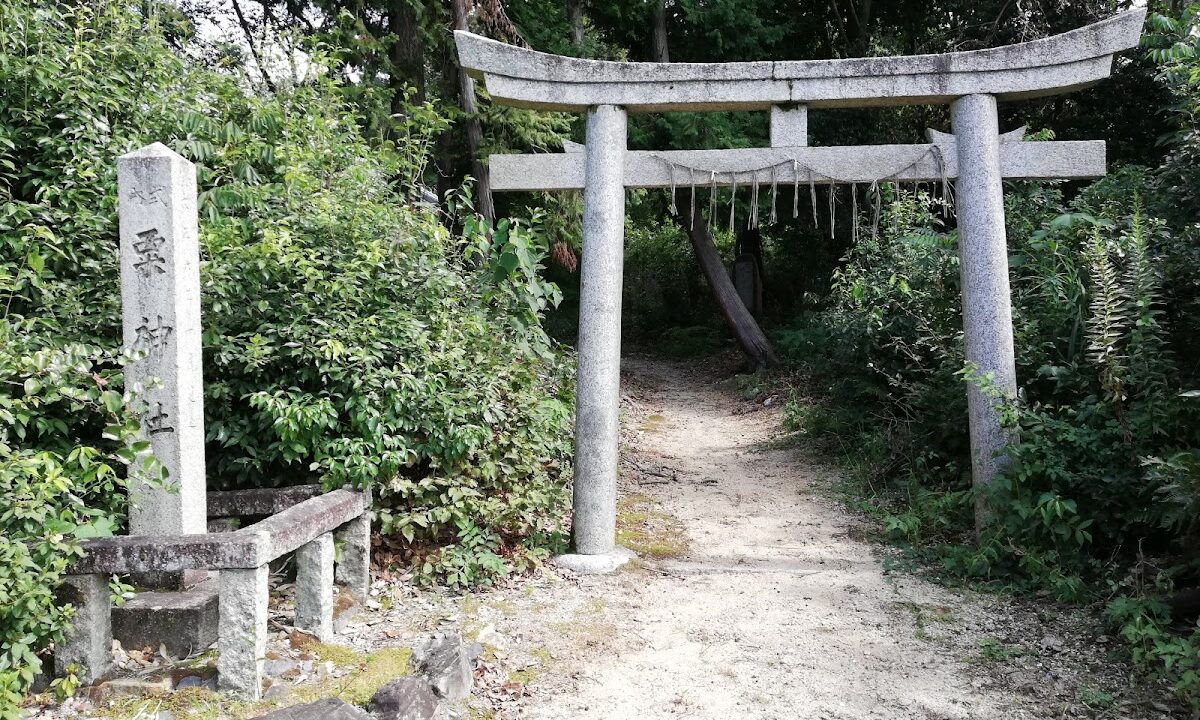
Awa Shrine is located along the road leading to Ujitawara, and currently a stone torii gate stands facing the bypass road. It is also accessible by car, and the surrounding area is relatively quiet.
History and Origins of Awa Shrine
Listed in the Engishiki Jinmyocho (a list of shrines compiled in the Heian period)
Awa Shrine is listed as “Awa Shrine, Tsuzuki District, Yamashiro Province” in the Engishiki Jinmyocho, compiled in the 5th year of the Engi era (927 AD). This indicates that it was a shrine officially recognized by the imperial court at the time, and that it was an important place of worship in this region.
Founding Legend and the Site of the Deity’s Descent
According to legend, the origins of Awa Shrine date back to the reign of Emperor Kōan, the 6th emperor. There is a legend that a deity descended upon Mozugahara, at the foot of Mt. Hirama, and this is considered the origin of Awa Shrine’s founding. This legend indicates that this area was considered sacred from ancient times.
Relationship between Place Name and Shrine
The name “Awa” (灟) is thought to originate from the fact that millet cultivation was thriving in this region in ancient times, or from the worship of a deity who presided over millet. Tsuzuki District in Yamashiro Province was a region where agriculture flourished from ancient times, and a belief in praying for a bountiful harvest was deeply rooted.
Deities and Benefits
Main Deity
There are slight differences in the descriptions of the deity enshrined at Awa Shrine depending on the document.
Sukunahikona-no-Mikoto: Many sources identify him as the principal deity. Known as a god who worked alongside Ōkuninushi-no-Mikoto in nation-building, he is worshipped as the god of medicine, hot springs, and sake brewing.
Takamimusubi-no-Kami: One of the three creation gods, presiding over creation and generation.
Awagami: The *Jinja Kakuroku* (Records of Shrines) states “Awagami, perhaps the ancestral god of the Awagami clan,” suggesting it enshrines the ancestral god of the Awagami clan.
Awamyojin/Inaawamyojin: Records indicate that it was formerly known as “Awamyojin” or “Inaawamyojin.”
Benefits
The following benefits are believed to be offered at Awagami Shrine:
- Abundant Harvest: As the god of agriculture, prayers are offered for a bountiful harvest.
- Healing from Illness: Because Sukunahikona-no-Mikoto is the god of medicine.
- Family Safety: As the guardian deity of the region.
- Business Prosperity: Prayers are offered for the development of industry.
Annual Festival and Regular Events
Annual Festival (April 8th)
The annual festival of Awa Shrine is held every year on April 8th. It is an important festival to celebrate the arrival of spring and pray for a bountiful harvest and peace in the region. Local parishioners and devotees attend, and traditional Shinto rituals are solemnly performed.
Other Festivals
Besides the annual festival, it is believed that various festivals are held throughout the year, such as the New Year’s Day Festival and the Autumn Harvest Thanksgiving Festival. However, it is recommended to check with the Kyoto Prefectural Shrine Association or local information for details.
Highlights of the Shrine Grounds
Stone Torii Gate
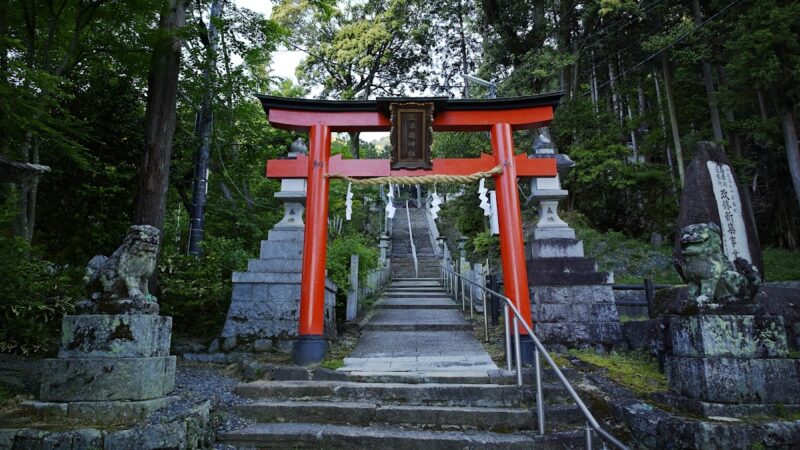
A stone torii gate stands at the entrance to Awa Shrine. This torii gate, built facing the bypass road, welcomes worshippers as the entrance to the sacred grounds. While retaining its ancient style, it symbolizes the presence of the shrine amidst the modern traffic environment.
Main Hall and Worship Hall
The shrine grounds are relatively small, but the main hall and worship hall are neatly arranged. While maintaining the formality of a Shikinaisha (a shrine listed in the Engishiki), it possesses a simple, community-rooted atmosphere.
Tranquil Shrine Environment
Awa Shrine is located at the southern edge of Joyo City, in a quiet environment surrounded by rural areas. In the increasingly urbanized southern part of Kyoto Prefecture, it still conveys the atmosphere of an ancient place of worship.
Shrine Culture of Joyo City and Awa Shrine
Shikinaisha in Joyo City
Besides Awa Shrine, there are several other Shikinaisha in Joyo City. According to records of the Kyoto Prefectural Shrine Association, Joyo City is home to numerous historical shrines, preserving the faith culture of the ancient Yamashiro Province.
Awa Shrine is positioned as one of the most important shrines in Tsuzuki District.
Historical Background of Tsuzuki District
Ancient Tsuzuki District encompassed the area of present-day Joyo City, Ujitawara Town, and Ide Town. Due to the fertile land of the Kizu River basin, development progressed early, and many shrines were founded. It is believed that Awa Shrine also gained followers while closely involved in this regional development.
Nearby Attractions and Access Information
Around Yamashiro-Aotani Station
Around Yamashiro-Aotani Station, the nearest station to Awa Shrine, there are many other historical shrines and sites. This area is attractive for those who enjoy visiting shrines.
Access by Car
Awa Shrine is located along the bypass road leading to Ujitawara, making it easily accessible by car. It is also relatively easy to access from Kyoto City and the Uji area.
Access from Major Roads:
- From Kyoto City: Approximately 30 minutes via National Route 24
- From Uji area: Approximately 20 minutes via Prefectural Road Ujitawara-Oishi-Higashi Line
Access by Public Transportation
Train: Get off at Yamashiro-Aotani Station on the JR Nara Line, then walk east for approximately 19 minutes (approximately 1.5 km)
Bus: Community buses operated by Joyo City may be available, but it is recommended to check timetables and routes in advance.
Etiquette and Manners for Worship
Basic Worship Etiquette
When visiting Awa Shrine, please observe the following basic etiquette.
- Bow before passing through the torii gate: This is a courtesy before entering the sacred area.
- Purify yourself at the water basin: If there is a water basin, purify your hands and mouth.
- Avoid walking in the center of the approach: The center is considered the path of the gods.
- Worship in front of the main hall: Follow the ritual of two bows, two claps, and one bow.
Regarding Photography
Photography is generally permitted on the shrine grounds, but there may be restrictions, such as inside the main hall or during Shinto rituals. Please take photographs with respect and be considerate of other worshippers.
The Modern Significance of Awajinja Shrine
Center of the Local Community
Awajinja Shrine continues to function as a spiritual pillar of the local community even today. Through events such as the annual festival, it serves as a place to deepen the bonds among local residents.
Inheritance of History and Culture
As a shrine listed in the Engishiki Jinmyocho (a list of shrines compiled in the Heian period), Awajinja Shrine is a valuable cultural heritage with a history of over a thousand years. Protecting this shrine and passing it on to future generations is of great importance in preserving Japan’s history and culture.
A Place of Peace of Mind
In today’s increasingly urbanized society, historical shrines like Awa Shrine are precious spaces that offer people peace of mind. Spending time in the tranquil grounds provides an opportunity to escape the hustle and bustle of everyday life and reflect on oneself.
Resources for Researching Awa Shrine
Key Literature
The following are key literatures that are useful when researching Awa Shrine:
- Engishiki Jinmyocho: A register of shrines compiled by the government during the Heian period
- Jinja Kakuroku: A shrine research book from the Edo period
- Tsuzuki-gunshi: A county history summarizing the history of Tsuzuki-gun
- Kyoto Prefecture Shrine Association Records: Modern shrine information
Position in the Study of Shikinaisha Shrines
Awa Shrine is one of the important shrines in the study of Shikinaisha shrines in Yamashiro Province, for understanding the religious practices of Tsuzuki-gun. Although small in scale, it holds academic value as an example of a continuously continuing ancient faith.
Notes on Visiting
Visiting Hours
Awa Shrine is generally open for worship all day, but the hours of the shrine office may be limited. Those wishing to receive a Goshuin (shrine stamp) or amulet are advised to check in advance.
Parking
Parking spaces within the shrine grounds and surrounding area vary depending on the local situation. Please be considerate of nearby residents when visiting.
Clothing and Belongings
There are no specific dress code requirements, but please wear clean clothing appropriate for visiting a shrine. Remember to take precautions against the sun in summer and warm clothing in winter.
Connections to Other Shrines in Joyo City
Tsuzuki District Shrine Network
Awa Shrine is positioned within the local faith network as one of the shrines in Tsuzuki District. Within Joyo City, there are other historical shrines such as Tenman Shrine and Danmuku Shrine, each conveying the history and culture of the region.
Shrine Pilgrimage Route
When planning a route to visit shrines in Joyo City and the surrounding areas, including Awa Shrine will allow you to experience the region’s history and culture more deeply. Starting from Yamashiro-Aotani Station, you can visit multiple shrines on foot, by bicycle, or by car.
Summary
Awa Shrine (Joyo City, Kyoto Prefecture) is a historical shrine listed in the Engishiki Jinmyocho (a list of shrines compiled in the Heian period), and is a venerable shrine that enshrines Sukunahikona-no-Mikoto as its main deity. It has a legend that the god descended during the reign of Emperor Kōan, the 6th emperor, and has attracted the faith of the region for over a thousand years.
It is located in Ichibe-Ōtani, Joyo City, approximately a 19-minute walk from JR Yamashiro-Aotani Station. The annual grand festival is held on April 8th, and it is believed to bring blessings such as a bountiful harvest and healing from illness.
Awa Shrine (Joyo City, Kyoto Prefecture) is a historical shrine listed in the Engishiki Jinmyōchō (a list of shrines compiled in the Heian period), and is a venerable shrine. Although small in scale, the shrine grounds, with their neatly arranged stone torii gate, main hall, and worship hall, maintain a tranquil atmosphere, offering peace of mind to visitors. Maintaining its status as a Shikinaisha (a shrine listed in the Engishiki, an ancient Japanese legal code), it continues to fulfill its role as a place of worship deeply rooted in the community.
When planning a historical exploration or shrine visit in southern Kyoto Prefecture, be sure to visit Awajinja Shrine and experience the spirit of ancient faith. Despite its modern location along a bypass road, Awajinja Shrine, with its history spanning over a thousand years, is a precious place that conveys the timeless transmission of faith.