Okazaki Shrine (Kyoto Prefecture) Complete Guide | Prayers for Conception and Safe Childbirth at the Rabbit Shrine
Okazaki Shrine, located in the Okazaki area of Sakyo Ward, Kyoto City, is also known as “Higashi Tenno Okazaki Shrine” and is an ancient shrine with a history of over 1200 years as a guardian deity of Heian-kyo (Kyoto). In recent years, the rabbit statues placed throughout the shrine grounds have become a popular attraction, drawing visitors praying for conception and safe childbirth, as well as tourists who want to meet the adorable rabbits.
This article comprehensively introduces information you should know before visiting Okazaki Shrine, including its history, blessings, highlights, access methods, and information on Goshuin (shrine stamps).
History and Origins of Okazaki Shrine
Founded as “Higashi Tenno,” Protecting the East of Heian-kyo
Okazaki Shrine’s founding dates back to 794 (Enryaku 13), during the relocation of the capital to Heian-kyo by Emperor Kanmu. Emperor Kanmu prayed for the peace and security of Heian-kyo (Kyoto) and erected shrines to enshrine guardian deities in the four directions of the capital. Okazaki Shrine, located in the east of the capital, was called “Eastern Heavenly King” and has been revered as a god of protection against misfortune.
Kamigoryo Shrine was located to the north, Fujimori Shrine to the south, and Daishogun Hachijinja Shrine to the west. These shrines played a role in protecting Heian-kyo from all four directions.
Reconstruction of the Shrine and Enshrinement of Deities by Emperor Seiwa
In 869 (Jogan 11), the shrine buildings were reconstructed by imperial decree of Emperor Seiwa. At this time, deities were again invited from Harima Province (present-day Hyogo Prefecture), further enhancing the shrine’s status.
Repairs and Development during the Muromachi Period
During the Muromachi period, the shrine buildings were repaired under the patronage of the shogunate, including Ashikaga Yoshimasa. During this period, the foundation of the shrine was established, and it developed into a center of local faith. ### The Beginning of the Worship of Okazaki Shrine as a God of Safe Childbirth
In 1178 (Jisho 2), when the Empress (the Emperor’s principal wife) gave birth, Okazaki Shrine received offerings from the Imperial Court. This marked the beginning of its widespread worship as a god of safe childbirth. This tradition continues to this day, with many pregnant women and their families visiting the shrine to pray for a safe delivery.
The Beginning of the Worship of Okazaki Shrine as a God of Safe Childbirth
In 1178 (Jisho 2), Okazaki Shrine received offerings from the Imperial Court during the childbirth of the Empress (the Emperor’s principal wife). ## Deities and Benefits
Main Deities
The following deities are enshrined at Okazaki Shrine:
- Susanoo-no-Mikoto: God of protection against misfortune and disaster
- Kushiinadahime-no-Mikoto: Wife of Susanoo-no-Mikoto, goddess of marital harmony
- Yahashira-no-Mikogami (Eight Children): Three daughters, five sons: Children of Susanoo-no-Mikoto and Kushinadahime-no-Mikoto
Because these deities are a married couple and their many children, they are believed to offer benefits such as matchmaking, marital harmony, fertility, and safe childbirth.
Main Benefits
- Prayers for Conception and Fertility: Associated with rabbits, symbols of fertility, many people pray here for the blessing of children.
- Prayers for Safe Childbirth: A center of safe childbirth worship that has continued since the Heian period.
- Protection from Evil: Believed in as the guardian of the eastern part of Heian-kyo (Kyoto) for protection from evil.
- Matchmaking and Marital Harmony: As it enshrines a married couple of deities, it also offers blessings for successful relationships.
The Deep Connection Between Rabbits and Okazaki Shrine
Why is it called the “Rabbit Shrine”?
The reason Okazaki Shrine is known as the “Rabbit Shrine” stems from the fact that this area has long been a habitat for wild rabbits. Because rabbits are prolific breeders, they have been considered messengers of the gods as symbols of conception and safe childbirth.
During the Heian period, the Okazaki area was home to many wild rabbits, and people revered rabbits as sacred beings. This belief has been passed down to the present day, and various rabbit statues are placed throughout the temple grounds.
Rabbit Spots on the Temple Grounds
Fertility Rabbit (Water Basin)
At the water basin, there is a statue of a fertility rabbit made of black granite. It is believed that pouring water on it and stroking its belly will bring blessings of fertility, and many worshippers offer prayers to this rabbit. It is a particularly popular spot for those trying to conceive or those hoping to start a family.
Guardian Rabbits (In Front of the Main Hall)
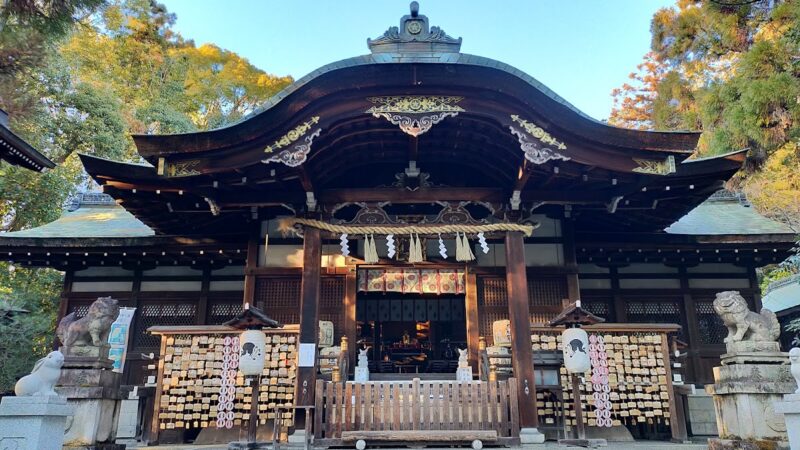
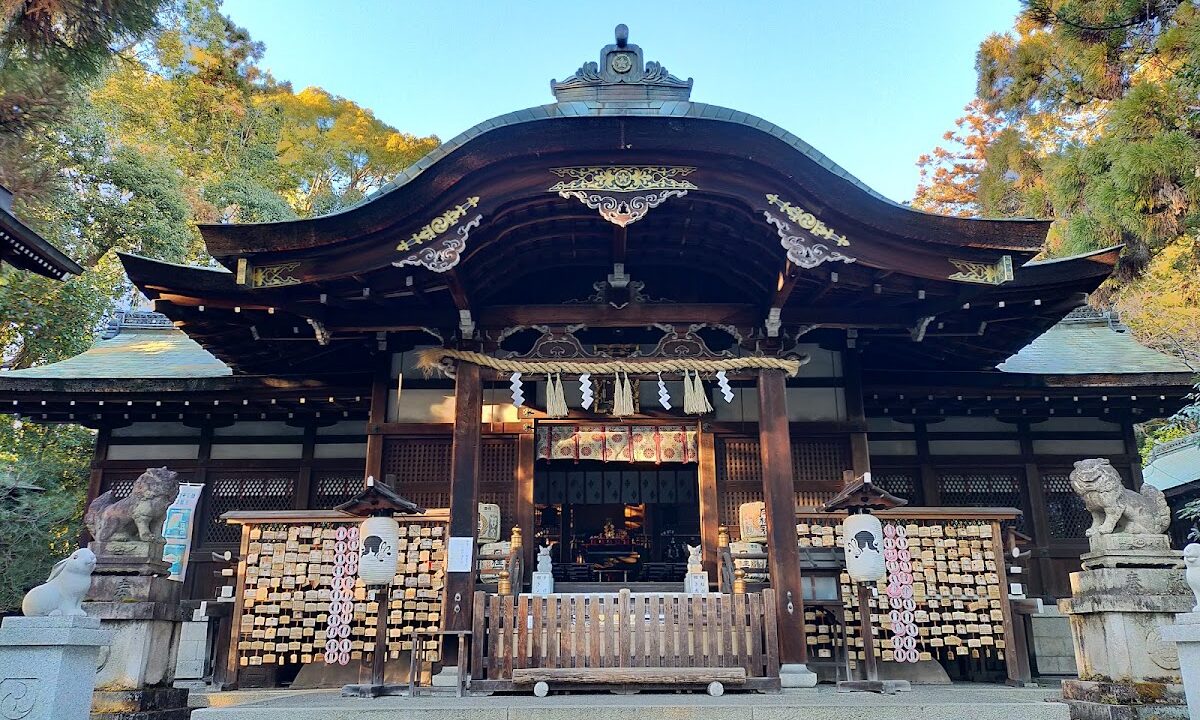
In front of the main hall, where guardian dogs (komainu) are usually placed, there is a pair of guardian rabbits. The rabbit on the right is male, and the one on the left is female, and they are believed to bring blessings for matchmaking.
It is said that stroking their heads will grant wishes for matchmaking, making it popular with couples and worshippers seeking good fortune in love.
Lucky Rabbit (Fortune Slip)
Within the shrine grounds, adorable rabbit fortune slips are available. The fortune slips are inside white and pink ceramic rabbits, and after reading the fortune, you can take the rabbit figurine home.
The sight of many visitors lining up these rabbit fortune slips within the shrine grounds is a uniquely photogenic spot at Okazaki Shrine.
Other Rabbits
Throughout the shrine grounds, you’ll find statues and decorations of rabbits with various expressions. Even the lanterns are adorned with rabbit illustrations, creating a healing space enveloped in rabbits.
Shrine Highlights
Main Hall
The main hall is built in the traditional shrine architectural style, exuding a solemn atmosphere. Be sure to offer your prayers in front of the main hall to receive blessings.
Ema (Votive Tablets)
Of course, the ema at Okazaki Shrine are shaped like rabbits. Numerous ema (votive tablets) inscribed with prayers for conception and safe childbirth are offered here, allowing visitors to feel the sincere wishes of those who come.
Water Basin
The water basin, where the aforementioned rabbit for conception is located, is a must-visit spot during your visit. Cleanse your hands and mouth using the correct etiquette, and offer your prayers to the rabbit.
Gift Shop
The gift shop offers amulets, goshuin (temple/shrine stamps), and rabbit fortune slips. Various amulets are available to suit different purposes, such as safe childbirth amulets and conception amulets.
Goshuin Information
Types of Goshuin
Okazaki Shrine offers standard goshuin. The goshuin features the calligraphy “Higashi Tenno Okazaki Shrine” and the shrine’s seal.
Hours of Offering
9:00 AM – 5:00 PM
You can receive a goshuin during the hours the gift shop is open. During busy times, there may be a waiting time, so we recommend visiting with plenty of time to spare.
Offering Fee
The offering fee for a Goshuin (temple/shrine stamp) is generally around 300 to 500 yen (this may change, so please check at the shrine).
Goshuincho (Stamp Book)
Okazaki Shrine also offers its own original Goshuincho. The cute stamp book, featuring a rabbit design, makes a wonderful souvenir.
About Prayers and Rituals
Various Prayers
Okazaki Shrine accepts the following types of prayers:
- Prayer for Safe Childbirth: Generally performed on the Day of the Dog in the fifth month of pregnancy
- Prayer for Conception: For those who wish to be blessed with children
- First Shrine Visit (Omiyamairi): Prayers for the healthy growth of the baby
- Prayer for Protection from Evil: For those in their unlucky year
- Other: Shichi-Go-San (7-5-3) ceremony, traffic safety, etc.
How to Apply for Prayers
Prayers can be requested on the day without prior reservation, but if you wish to guarantee a prayer or wish to request a group prayer, we recommend contacting us by phone in advance.
Phone Number: 075-771-1963
Off-Site Rituals
We also accept off-site ceremonies such as ground-breaking ceremonies and purification ceremonies. Please contact the shrine directly for details.
Shinto Wedding Ceremony
Okazaki Shrine offers traditional Shinto wedding ceremonies. A ceremony watched over by the god of matchmaking and adorable guardian rabbits will create a lifelong memory.
You can hold a peaceful Shinto wedding ceremony in a quiet environment away from the hustle and bustle of tourist areas. If you are considering a wedding ceremony, please inquire with the shrine or its affiliated wedding venues.
Access and Basic Information
Location
51 Okazaki Higashi Tennocho, Sakyo-ku, Kyoto City, Kyoto Prefecture 606-8332
Phone Number
075-771-1963
Visiting Hours
While the shrine grounds are generally open for free visits, the shrine office is open from 9:00 AM to 5:00 PM.
Admission Fee
Free
Access by Public Transportation
By City Bus
- Get off at “Okazaki Shrine” bus stop (routes 32, 203, 93, and 204).
- From Kyoto Station, take city bus route 206 and get off at “Higashiyama Nijo” bus stop. Approximately 5-minute walk.
By Subway
- Approximately 15-minute walk from Keage Station on the Tozai Subway Line.
Access by Car
Approximately 20 minutes from Kyoto East Interchange on the Meishin Expressway.
Parking
There is parking space for visitors on the shrine grounds, but the number of spaces is limited. Due to expected congestion on holidays and the Day of the Dog (Inu no Hi), we recommend using public transportation.
Nearby Tourist Attractions
There are many of Kyoto’s representative tourist attractions around Okazaki Shrine.
Heian Shrine
Approximately 10-minute walk from Okazaki Shrine. This shrine, founded during the Meiji era, symbolizes Heian-kyo (Kyoto) and is famous for its vast sacred garden.
Nanzen-ji Temple
Approximately 15 minutes on foot. A major temple of the Rinzai sect, known as a special temple among the Five Great Zen Temples of Kyoto. The aqueduct and the main gate are highlights.
Kyoto City Zoo
Approximately 10 minutes on foot. The second oldest zoo in Japan, recommended for families.
Kyoto National Museum of Modern Art
Approximately 12 minutes on foot. A museum primarily exhibiting modern Japanese art.
Philosopher’s Path
Approximately 15 minutes on foot. A walking path known for its cherry blossoms and autumn leaves, offering beautiful scenery throughout the seasons.
Best Season for Visiting
Day of the Dog (Prayer for Safe Childbirth)
The Day of the Dog in the fifth month of pregnancy is especially crowded with people praying for safe childbirth. Since dogs are considered symbols of safe childbirth, it is customary to pray for safe childbirth on this day. For those who wish to visit the shrine at a leisurely pace, it is recommended to avoid the Day of the Dog (Inu no Hi) or visit early in the morning.
Spring (Cherry Blossom Season)
Late March to early April is the season when cherry blossoms are at their most beautiful. The surrounding Okazaki area also boasts many famous cherry blossom viewing spots, making it a great time to combine a visit with cherry blossom viewing.
Autumn (Autumn Foliage Season)
Mid-to-late November is the peak season for autumn foliage. Enjoy viewing the autumn leaves in conjunction with nearby Nanzenji Temple and the Philosopher’s Path.
New Year’s Visit
The shrine is also bustling with many visitors for the New Year’s visit. Many come to pray for protection from evil and for the safety of their families.
Manners and Precautions When Visiting a Shrine
Basic Etiquette for Visiting a Shrine
- Bow before passing through the torii gate.
- Purify your hands and mouth at the water basin. Hold the ladle in your right hand, purify your left hand, switch to your left hand and purify your right hand, then switch back to your right hand, receive water in your left hand, and rinse your mouth.
- Bow twice, clap twice, and bow once in front of the main shrine.
Photography
Photography is generally permitted on the shrine grounds, but please refrain from taking pictures during prayers or Shinto rituals. Also, please be considerate of other visitors.
Attire
Casual clothing is acceptable, but if you are receiving a prayer, somewhat formal attire is preferable. Especially for prayers for safe childbirth or a baby’s first shrine visit, please dress appropriately.
Summary of Okazaki Shrine’s Charms
Okazaki Shrine boasts a history of over 1200 years, yet its presence of adorable rabbits gives it a friendly and approachable atmosphere. This temple is recommended not only for those seeking blessings for conception and safe childbirth, but also for rabbit lovers, those collecting temple stamps, and those looking for hidden gems in Kyoto.
Its convenient location, close to famous tourist spots such as Heian Shrine and Nanzen-ji Temple, makes it easy to incorporate into your Kyoto sightseeing route. You can enjoy a peaceful visit in a quiet environment, slightly removed from the hustle and bustle of the tourist areas.
Why not offer a calm prayer in this healing space surrounded by rabbits? Surely, the gods and rabbits will gently watch over your wishes.