Agata Shrine Complete Guide | History of the Guardian Shrine of Byodo-in, the Mysterious Night Festival, Goshuin (Shrine Seal), and Access Information
Agata Shrine, located in Uji City, Kyoto Prefecture, is an ancient shrine situated just south of the World Heritage site, Byodo-in Temple. With a history spanning over a thousand years as the guardian shrine of Byodo-in, it is beloved by many worshippers for its blessings of safe childbirth, good relationships, and fertility. The “Agata Festival,” held every June, is nationally known as the “Mysterious Night Festival,” attracting over 100,000 visitors.
This article comprehensively explains everything you need to know before visiting Agata Shrine, including its history, enshrined deities, cultural properties, annual events, and access information.
What is Agata Shrine?
Agata Shrine is located in Uji Renge, Uji City, Kyoto Prefecture, approximately 100 meters west of the south gate of Byodo-in Temple. In 1052 (Eisho 7), during the mid-Heian period, when Fujiwara no Michinaga’s villa became Byodo-in Temple, this shrine played an important role as its guardian deity.
Locally known as “Agata no Mori” (Agata Forest), it is a historical shrine that has been revered as the guardian deity of Uji since ancient times. Located in the northeast (the “demon’s gate”) of Byodo-in Temple, it has played a role in protecting Byodo-in since the Heian period.
Origin of the Name of Agata Shrine
The name “Agata” has several origins.
Firstly, it is said to derive from “Agatatsuhime,” another name for the enshrined deity, Konohanasakuya-hime. This theory has a mythological background and has been passed down since ancient times.
Secondly, during the Yamato period, this area was called “Uji Agata,” a farm directly managed by the imperial court, and the shrine was founded as its guardian deity. In ancient times, “agata” (県) referred to territories directly controlled by the imperial court, and it is believed that Agata Shrine played a role in protecting the important region of Uji.
Deity and Benefits
Konohanasakuya-hime no Mikoto
The deity enshrined at Agata Shrine is Konohanasakuya-hime no Mikoto. In Japanese mythology, she is a goddess known as the consort of Ninigi no Mikoto, who descended to earth during the Tenson Kōrin (descent of the heavenly grandchild).
As her name suggests, Konohanasakuya-hime no Mikoto is considered a goddess as beautiful as a cherry blossom, and plays a particularly important role in Japanese mythology. From the myth that she conceived with Ninigi no Mikoto overnight, set fire to the birthing hut, and safely gave birth to three gods, she is widely worshipped as a goddess of safe childbirth.
Divine Blessings
Agata Shrine is known for the following blessings:
- Prayer for Safe Childbirth: The most representative blessing based on the myth of Konohanasakuya-hime no Mikoto.
- Good Matchmaking: As a beautiful goddess, she is worshipped for granting good relationships.
- Childbearing: Many worshippers pray for blessings of children, alongside safe childbirth.
- Child Rearing: As a deity who watches over the healthy growth of children.
Even today, the shrine continues to attract pregnant women and young people seeking good relationships. Especially for prayers for safe childbirth, specific forms of worship, such as the use of water from the “Agata Well” (described later) as bathwater for newborns, have been passed down to this day.
History of Agata Shrine
Founding and Ancient Times
The exact founding date of Agata Shrine is unknown, but it is believed to have existed since ancient times as a shrine related to the Agata district under the Yamato regime. Uji has long been a key transportation hub and an important area for the imperial court.
In ancient times, Uji County functioned as a farm directly managed by the imperial court, and Agata Shrine was revered by the local people as its guardian deity. The name Uji itself derives from the word “uji” (clan), suggesting a connection to powerful clans.
Relationship between the Heian Period and Byodo-in Temple
1052 (Eisho 7), during the mid-Heian period, marked a significant turning point in the history of Agata Shrine. In this year, Fujiwara no Yorimichi, son of Fujiwara no Michinaga, converted his father’s villa into a temple, founding Byodo-in Temple.
At this time, Agata Shrine was positioned as the guardian shrine of Byodo-in Temple, taking on the role of a shrine protecting Byodo-in. Its location in the northeast (demon’s gate) of Byodo-in Temple further supports this protective role.
From the Heian period onward, Agata Shrine developed in close relation to Byodo-in Temple. The “Agata-i” well within the shrine grounds was even mentioned in Heian-period waka poetry, becoming known to the people of the capital.
Syncretism of Shinto and Buddhism and the Edo Period
Until the end of the Edo period, Agata Shrine was under the influence of syncretism of Shinto and Buddhism and was under the control of Mii-dera Temple (Onjo-ji Temple). This was a common practice in Japan at the time, indicating that shrines and temples were worshipped together as one.
During the period of syncretism, Buddhist and Shinto elements were mixed, forming a complex form of worship. With the Meiji-era separation of Shinto and Buddhism, Agata Shrine established its independence as a shrine.
Modern Era
Since the Meiji era, Agata Shrine has maintained its presence as the local tutelary shrine and as a shrine visited by tourists visiting Byodo-in Temple. Even after the war, it continued to preserve traditional events such as the “Agata Festival,” and remains one of Uji’s representative shrines to this day.
Highlights and Cultural Assets on the Shrine Grounds
Agata Well
The “Agata Well” on the shrine grounds is an important cultural asset indispensable when discussing Agata Shrine. This well is known for its high-quality water and has been celebrated in numerous waka poems since the Heian period.
The most famous waka poem is by Tachibana no Kōkei no Onna: “Even people from the capital will come and pick the kerria flowers from Agata’s well, where the frogs croak.” This poem describes the beautiful scenery of Agata’s well, so much so that people from the capital would visit to pick the kerria flowers, indicating that Agata’s well was well-known among Heian-era aristocrats.
The water from Agata’s well was considered sacred and was used in the shrine’s tea ceremony, and it is said to have been used for the first bath of imperial women after childbirth. During the Edo period, the belief spread that this well water was effective for safe childbirth and ailments of the lower body, attracting many worshippers to draw water.
Today, Agata’s well remains on the shrine grounds, a valuable legacy that conveys the history and faith of Agata Shrine.
The Hackberry Tree
Within the shrine grounds stands a magnificent hackberry tree, said to be over 500 years old. This giant tree is a symbol of Agata Shrine, having watched over the grounds for centuries.
The hackberry tree exudes a sacred atmosphere within the grounds, leaving a deep impression on visitors. This centuries-old tree is a living witness to the long history of Agata Shrine.
Main Hall and Worship Hall
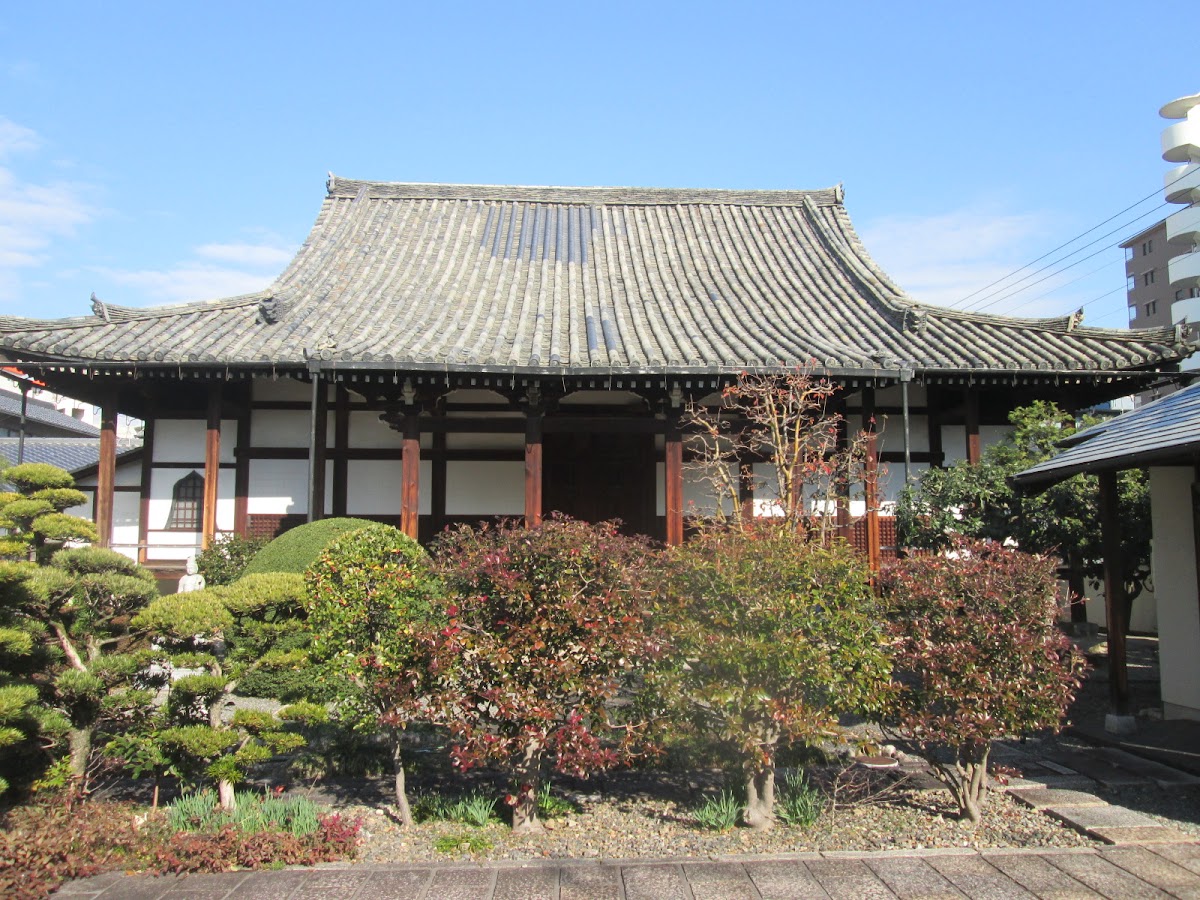
The main hall of Agata Shrine preserves the traditional style of shrine architecture. Located about 100 meters west of Byodo-in Temple, it presents a tranquil presence.
While the grounds are not vast, the neatly arranged shrine buildings and subsidiary shrines convey a sense of historical dignity. Its location, slightly removed from the hustle and bustle of Byodo-in Temple, maintains a peaceful environment for worship.
Agata Festival – A Mysterious Festival in the Dark of Night
Festival Overview
The Agata Festival, held annually at Agata Shrine from late night on June 5th to the early morning of June 6th, is a representative festival of Uji, known nationwide as a “mysterious festival in the dark of night.” It attracts over 100,000 people and is the largest event that colors early summer in Uji.
The most distinctive feature of the Agata Festival is that the festival’s climax, the “Bonten Togyo” (procession of the Bonten), takes place in complete darkness at night, with all surrounding lights extinguished. This unique format has earned it the name “mysterious festival in the dark of night.”
Festival History and Origin
The origins of the Agata Festival are ancient, believed to date back to the Heian period. There are various theories as to why it is held in darkness, including the theory that it is a remnant of ancient Shinto rituals performed at night, and the theory that it is based on the belief that gods prefer darkness.
Records of the prefectural festival remain in Edo period documents, indicating that it has been a festival cherished and preserved by the local people throughout its long history.
Festival Schedule
The prefectural festival begins around noon on June 5th. From early morning, stalls line Ujibashi Street, creating a festive atmosphere. As evening approaches, the number of worshippers increases, and the temple grounds become bustling with people.
The climax of the festival is the “Bonten Procession,” which takes place late at night. Around 1 AM, all the surrounding streetlights are turned off, and a procession carrying decorative objects called Bonten moves through the pitch darkness. The fantastical scene, with only the shouts echoing in the darkness, creates a unique atmosphere unlike anywhere else.
During the Bonten Procession, there is a legend that touching the Bonten in the darkness brings happiness, and many worshippers reach out their hands to touch it.
The Modern Ken-matsuri
Even today, the Ken-matsuri (Prefectural Festival) continues to be a vital cultural event in Uji. Not only locals, but also many tourists from all over Japan visit to witness this “mysterious festival of the dark night.”
During the festival, the area from Uji Station to Ken-jinja Shrine becomes a pedestrian zone, filled with lively stalls and a vibrant atmosphere. While preserving its traditions, the Ken-matsuri continues today as a festival beloved by many.
Annual Events
Besides the Ken-matsuri, various Shinto rituals are performed at Ken-jinja Shrine throughout the year.
Main Annual Events
- New Year’s Day Festival: A Shinto ritual celebrating the New Year
- Setsubun Festival: Bean-throwing and other events held on Setsubun in February
- Spring Festival: A festival celebrating the arrival of spring
- Prefectural Festival: Late night on June 5th to early morning on June 6th (the largest festival)
- Autumn Festival: A festival giving thanks for the harvest
- Shichi-Go-San: A visit to celebrate the growth of children in November
These events are closely intertwined with the lives of the local people and play an important role in marking the turning points of the seasons.
Goshuin (Shrine Seal) Information
Agata Shrine offers Goshuin. Many visitors receive the Goshuin at Agata Shrine in conjunction with a visit to Byodo-in Temple, making it a popular souvenir of a Uji pilgrimage.
You can receive the Goshuin at the shrine office, but since staff may be absent, it is recommended to call ahead to confirm if you want to be sure to receive one. Please bring your Goshuin book and make your request politely.
The goshuin (temple/shrine stamp) at Agata Shrine features the shrine’s name and the date of visit written in ink, followed by a red seal. Its simple yet dignified design is highly regarded by goshuin collectors.
Access and Visiting Information
Basic Information
Address: 116 Uji Renge, Uji City, Kyoto Prefecture
Phone Number: 0774-21-3014 (Confirmable via Uji City Tourism Association)
Visiting Hours: Grounds are freely accessible
Admission Fee: Free
Parking: No dedicated parking (Use nearby paid parking)
Access by Train
From JR Nara Line “Uji Station”:
Approximately 10 minutes on foot. Exit Uji Station and head towards Uji Bridge, aiming for the South Gate of Byodo-in Temple. Proceed approximately 100 meters west from the South Gate of Byodo-in Temple to reach Agata Shrine.
From Keihan Railway “Uji Station”:
Approximately 8 minutes on foot. From Keihan Uji Station, cross Uji Bridge and head towards Byodo-in Temple. Walk south of Byodo-in Temple to reach Agata Shrine.
From Kyoto Station, take the JR Nara Line to Uji Station (approximately 20 minutes), or take the Keihan Railway with a transfer at Chushojima (approximately 40 minutes).
Access by Car
From Keiji Bypass “Uji-Nishi IC”:
Approximately 10 minutes. Exit the IC and head towards Uji city center, aiming for the area around Byodo-in Temple.
From Meishin Expressway “Kyoto-Minami IC”:
Approximately 20 minutes. Take National Route 1 towards Uji.
Agata Shrine does not have its own parking lot, so you will need to use nearby paid parking lots. There are several paid parking lots around Byodo-in Temple, but they can get crowded during tourist season and the Agata Festival, so using public transportation is recommended.
Nearby Tourist Attractions
Agata Shrine is located just south of Byodo-in Temple, so it’s common to visit both together.
Byodo-in Temple: A temple associated with the Fujiwara clan, registered as a World Heritage Site. The Phoenix Hall, featured on the 10-yen coin, is a must-see.
Ujigami Shrine: A shrine with the oldest shrine architecture in Japan, also registered as a World Heritage Site. Approximately a 15-minute walk from Agata Shrine.
Uji River: A river where you can enjoy beautiful scenery throughout the seasons. The view from Uji Bridge is exceptional.
Long-established Uji Tea Shops: Uji is one of Japan’s leading tea-producing regions. There are many long-established tea shops in the area, where you can also enjoy matcha sweets.
Points and Manners for Visiting
Visiting Etiquette
When visiting Agata Shrine, follow the general etiquette of a shrine.
- Bow before passing through the torii gate.
- Cleanse your hands and mouth at the water basin.
- Place your offering in front of the main hall.
- Pray with two bows, two claps, and one bow.
- Stroll quietly around the shrine grounds.
Photography
Photography is generally permitted on the shrine grounds, but consideration is needed when religious ceremonies are taking place. Please be considerate of other worshippers and remember that this is a sacred place.
Recommended Time to Visit
While Agata Shrine can be visited throughout the year, the following times are particularly recommended:
- Early June: During the Agata Festival. A unique opportunity to experience this unusual festival held in the dark of night.
- Spring (Late March to April): Cherry blossom season. The area around the Uji River is also beautiful.
- Autumn (November): Autumn foliage season. Enjoy viewing the autumn leaves in conjunction with Byodo-in Temple.
- New Year’s Visit (January): A visit for the New Year. Bustling with locals
While weekdays offer a relatively quiet experience for worshippers, weekends and peak tourist seasons see many visitors, including those visiting Byodo-in Temple.
The Charm of Agata Shrine
The greatest charm of Agata Shrine lies in its history of over a thousand years, making it a “living shrine” deeply intertwined with the lives of the local people.
Its history as the guardian shrine of the World Heritage site Byodo-in Temple, its devotion to Konohanasakuya-hime for safe childbirth and good fortune in relationships, and the Agata Festival, known as the “mysterious festival of the dark night”—these elements combine to form the unique charm of Agata Shrine.
Despite being located in Uji, a bustling area with many tourists visiting Byodo-in Temple, Agata Shrine maintains a tranquil atmosphere. The peaceful grounds, a stark contrast to the splendor of Byodo-in, allow for peaceful worship, which is another of Agata Shrine’s charms.
Don’t miss the cultural treasures within the grounds, such as the hackberry tree over 500 years old and the Agata Well, which has been celebrated in waka poetry since the Heian period. These are not merely tourist attractions, but evidence of their long history of supporting people’s faith and lives.
Summary
Agata Shrine is a historic shrine located in Uji, Kyoto, with a history of over a thousand years as the guardian shrine of Byodo-in Temple. The enshrined deity, Konohanasakuya-hime, is widely worshipped as the goddess of safe childbirth, good relationships, and fertility, and many worshippers still visit today.
The Agata Festival, held annually from midnight on June 5th, is nationally known as the “Mysterious Festival of the Dark Night” and is Uji’s largest festival, attracting over 100,000 people. The Bonten procession, held in darkness, creates a unique atmosphere unlike anything else.
Despite being just a short walk from Byodo-in Temple, it maintains a peaceful environment for worship, making it a must-visit spot when sightseeing in Uji. It’s also easily accessible, about a 10-minute walk from JR and Keihan Uji Station.
A history dating back to the Heian period, deeply rooted local faith, and the unique culture of the “Mysterious Festival of the Dark Night.” Agata Shrine, where these elements are fused together, is a fascinating shrine that is a must-see when visiting Uji in Kyoto. Be sure to visit Agata Shrine along with Byodo-in Temple.