About Gokonomiya Shrine
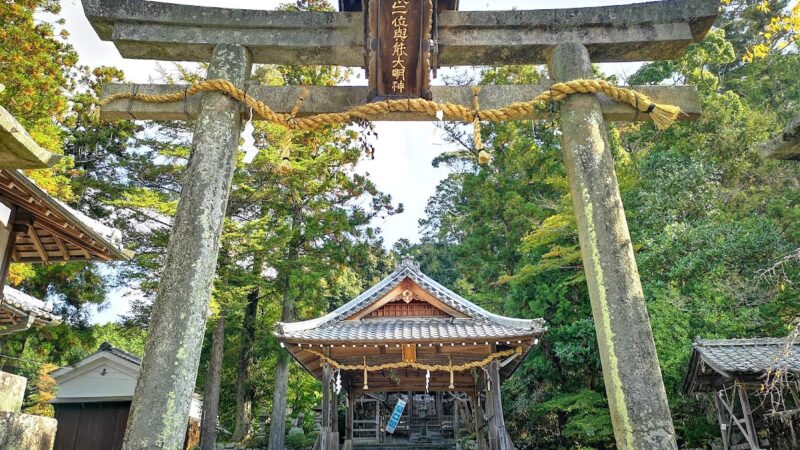
Gokonomiya Shrine is an ancient shrine located in Fushimi Ward, Kyoto City, with a history of over 1,000 years. It is said that in the fourth year of the Jogan era (862 AD) during the Heian period, a fragrant spring gushed forth from the shrine grounds, giving rise to the name “Gokonomiya” (fragrant shrine).
The main deity enshrined here is Empress Jingu, and the shrine has long been revered as a guardian deity of safe childbirth and child-rearing. Toyotomi Hideyoshi deeply revered the shrine when building Fushimi Castle, and Tokugawa Ieyasu also prayed here for victory before the Battle of Sekigahara.
Points to Note During Your Visit
Gokonomiya Spring Water (One of Japan’s 100 Best Waters)
The most famous feature of the shrine grounds is “Gokonomiya Spring Water.” It is one of the “100 Best Waters of Japan” selected by the Ministry of the Environment, and it continues to flow without drying up. It is free to draw water, and locals and visitors from afar regularly come to collect it. You are free to take home any items if you bring your own plastic bottles or containers.
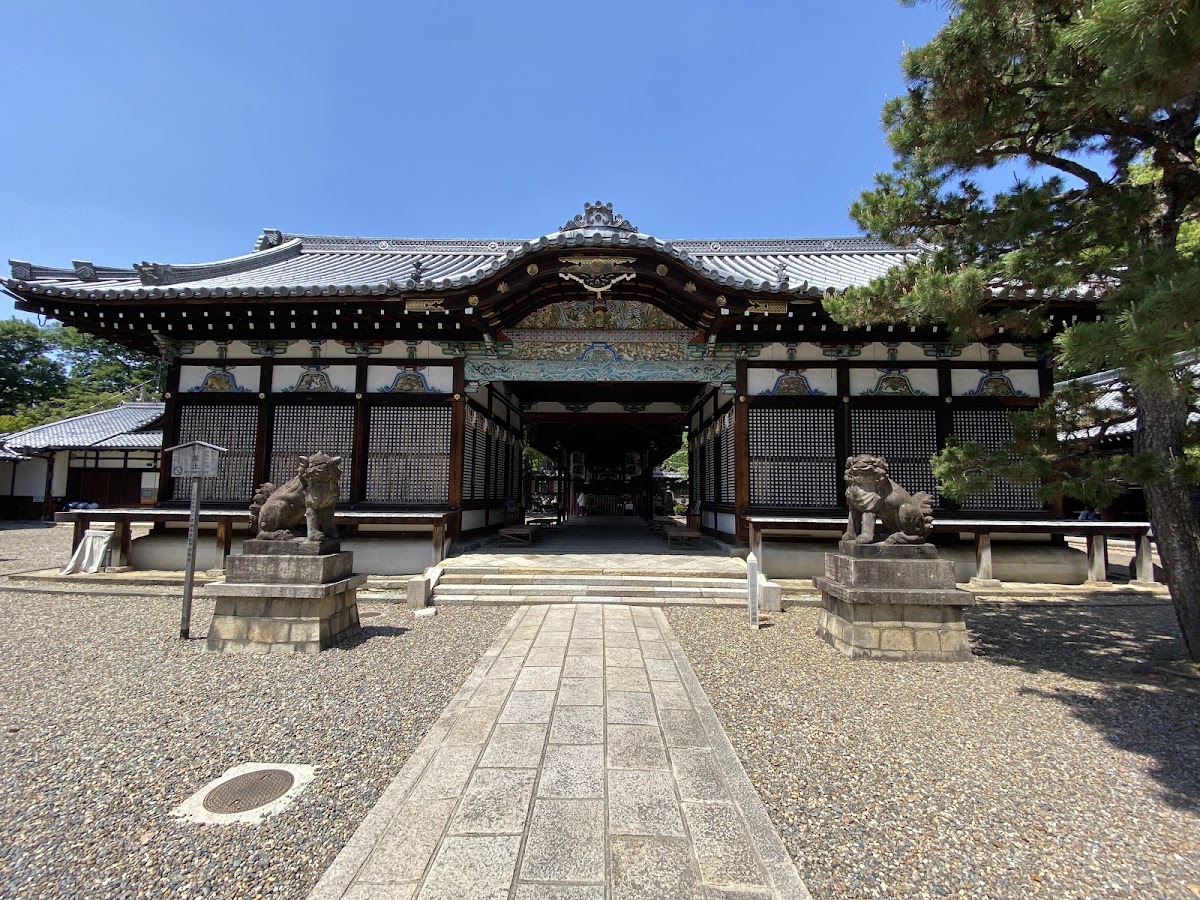
Main Gate (Important Cultural Property)
The magnificent main gate, said to have been relocated from Fushimi Castle, is an Important Cultural Property that preserves the architectural style of the Momoyama period. Adorned with vividly colored carvings, it allows you to experience the splendor of the Momoyama culture of that era.
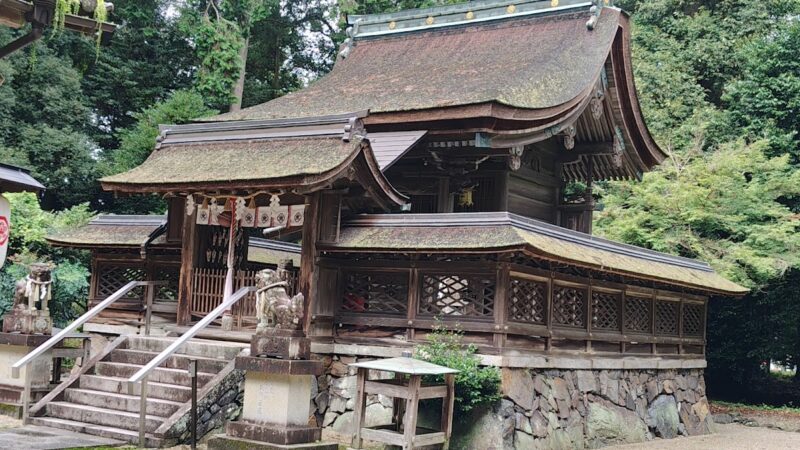
Main Hall (Important Cultural Property)
The main hall, built in 1605 by order of Tokugawa Ieyasu, is also designated as an Important Cultural Property. It features magnificent Momoyama-style decorations, with exquisite carvings and coloring.
Stone Garden “Designed by Kobori Enshu”
Behind the main hall is a dry landscape stone garden said to have been designed by Kobori Enshu, a landscape gardener from the early Edo period. It’s a hidden gem where you can find peace of mind in a tranquil space.
Fushimi Battle Site
Within the temple grounds, you’ll find a stone monument bearing bullet holes from the Battle of Toba-Fushimi (1868), as well as historical traces of the Satsuma Domain’s encampment, making it a must-see for fans of the late Edo period.
Benefits
- Prayers for Safe Childbirth and Conception: Based on the legend that Empress Jingu achieved the conquest of the Three Kingdoms of Korea while pregnant, the shrine is deeply revered as a god of safe childbirth.
- Child Rearing and Child-rearing: Following in the footsteps of Empress Jingu, who safely gave birth to and raised Emperor Ojin, one can pray for the healthy growth of their children.
- Protection from Evil and Good Fortune: This shrine has protected the region as the tutelary deity of Fushimi since ancient times.
- Healing from Illness: The sacred water is believed to bring benefits of health and longevity.
Annual Events
- Shinko-sai Festival (Early October): As the guardian shrine of the nine villages of Fushimi, this is the largest festival in Fushimi, continuing since the Muromachi period. The highlight is the magnificent procession of portable shrines.
- Meisui Festival (late September): A festival to express gratitude for the sacred water.
- Gokogu Plum Blossom Festival (late February to early March): Approximately 200 plum trees bloom in the plum garden on the temple grounds.
Access
Access by Train
- Keihan Railway: Get off at Fushimi-Momoyama Station on the Keihan Main Line, approximately 5 minutes on foot.
- Kintetsu Railway: Get off at Momoyama-Goryomae Station on the Kintetsu Kyoto Line, approximately 5 minutes on foot.
- JR: Get off at Momoyama Station on the JR Nara Line, approximately 7 minutes on foot.
It’s about 15-20 minutes by train from Kyoto Station, and easily accessible from the Osaka area.
Access by Car
- Approximately 20 minutes from the Kyoto Minami Interchange on the Meishin Expressway
- Parking: Free parking available on the temple grounds (approximately 50 cars; may be unavailable during festivals)
Nearby Tourist Attractions
Within walking distance are Teradaya, Gekkeikan Okura Memorial Museum, and Fushimi Inari Taisha Shrine (20-minute walk), making it an ideal base for sightseeing in Fushimi.
Visiting Information
- Visiting Hours: Grounds are freely accessible (Shrine office is open from approximately 9:00 to 16:00)
- Admission Fee: Free
- Address: 174 Gokonomiya Monzen-cho, Fushimi-ku, Kyoto City, Kyoto Prefecture 612-8039
- Phone: 075-611-0559
When drawing sacred water, it is recommended to bring your own container. The temple grounds have a quiet atmosphere, allowing you to visit and reflect on history at your leisure.