Complete Guide to Chishakuji Temples: History and Highlights of the Three Chishakuji Temples in Awaji Island, Tottori, and Kyoto
There are several temples named “Chishakuji” throughout Japan. Each has a different history and characteristics, and has played an important role as a center of local faith. This article provides a comprehensive explanation of the history, cultural assets, and visiting information for Chishakuji Temple in Minamiawaji City, Hyogo Prefecture, Chishakuji Temple in Kotoura Town, Tottori Prefecture, and Chishakuin Temple in Kyoto.
What is Chishakuji Temple?: Origin of the Name and its Meaning in Buddhism
The name Chishakuji means “accumulation of wisdom” in Buddhism. Wisdom (chie) in Buddhism refers to deep insight that discerns the truth, and the teaching is that by accumulating this wisdom, one can reach enlightenment. This name is often found in temples of the Shingon and Tendai sects, reflecting the character of temples that emphasize ascetic practice and learning.
Throughout Japan, there are multiple temples with the same or similar names, each deeply intertwined with the history and culture of its region. Particularly famous are Chishaku-ji Temple on Awaji Island in Hyogo Prefecture, Chishaku-ji Temple in Kotoura Town, Tottori Prefecture, and Chishaku-in Temple in Kyoto (the head temple of the Chizan branch of Shingon Buddhism).
Chishaku-ji Temple on Awaji Island (Minami-Awaji City, Hyogo Prefecture)
Basic Information and Location
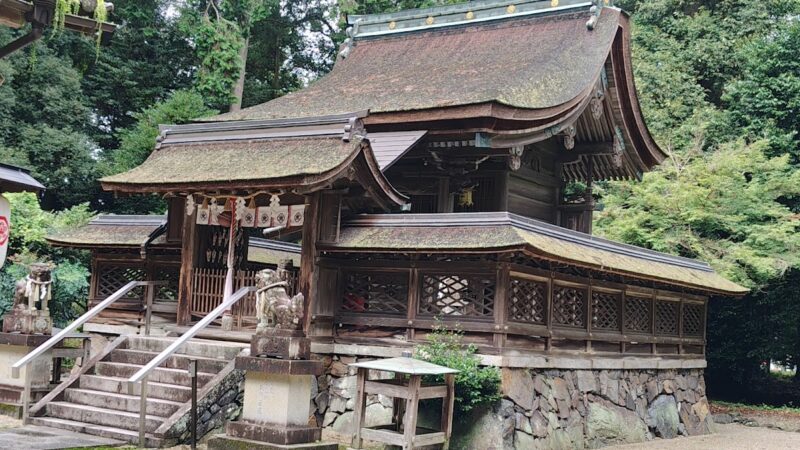
Located in Minato, Minami-Awaji City, Hyogo Prefecture, Chishaku-ji Temple belongs to the Koyasan Shingon sect. Its mountain name is Ryuhōzan, and its principal image is Dainichi Nyorai. Built on a small hill, the temple offers a spectacular panoramic view of the Mihara Plain and Minato Port, and is known as the “Temple of Views.”
History and Origins
Chishaku-ji Temple on Awaji Island was founded during the Genroku era (1688-1704). During this period, six small temples scattered throughout the port area merged to form a single temple, giving it a unique history. With a history spanning over 300 years, this temple has played a crucial role in the development of Buddhist culture on Awaji Island.
The Genroku era, the mid-Edo period, was a time of economic and cultural stability. The establishment of Chishakuji Temple, unifying local faiths within this historical context, demonstrates the spread of Buddhist belief on Awaji Island at that time.
Role as a Pilgrimage Site
Chishakuji Temple is an important pilgrimage site in several sacred sites:
Awaji Island Thirteen Buddhas Pilgrimage Site, No. 7
Enshrining Yakushi Nyorai (Medicine Buddha) as its principal deity, it is an important center of the Thirteen Buddhas faith. Yakushi Nyorai is widely worshipped as a Buddha of healing and longevity.
Awaji Shikoku 88 Temple Pilgrimage, Temple No. 32
Many pilgrims visit this temple as part of the Awaji Island pilgrimage, which is modeled after the 88 temples of Shikoku.
Yakushi Pilgrimage, Temple No. 9
The Yakushi Hall within the temple grounds is a pilgrimage site for Yakushi Nyorai (Medicine Buddha), and is a central place of worship for Yakushi Nyorai.
Mind and Body Pilgrimage, Temple of the Body
In a unique pilgrimage that prays for the health of both mind and body, this temple is positioned as a temple for praying for physical health.
Characteristic Prayers and Events
Gold Leaf Prayer
One of the characteristic prayers at Chishakuji Temple is the gold leaf prayer, where gold leaf is applied to the medicine pot (made of stone) held by Yakushi Nyorai. This prayer is for health and recovery from illness, and by applying the gold leaf themselves, worshippers can offer a deeper prayer.
Prayer for Cyclists
In recent years, as Awaji Island has gained popularity as a cycling mecca, Chishakuji Temple offers a “Prayer for Cyclists” to pray for the safety of cyclists. This requires a reservation and is attracting attention as a unique prayer for the safe riding and accident-free experiences of cyclists.
Prayer for Protection Against Misfortune
With the power of Yakushi Nyorai (Medicine Buddha), prayers are also offered for protection against misfortune and disasters during unlucky years.
Perpetual Memorial Services and Modern Approaches
Chishakuji Temple also accepts consultations regarding perpetual memorial services, offering memorial service forms that meet modern needs. Amidst the declining birthrate and aging population, perpetual memorial services are gaining support from many people who have no successors to their graves or who do not want to burden their descendants.
Access and Visiting Information
Located approximately 15 minutes by car from the center of Minamiawaji City, the temple has ample parking. Located on a small hill, visitors need to climb stairs to reach the temple, but the view from the grounds is exceptional.
Chishaku-ji Temple, Kotoura-cho, Tottori Prefecture
Basic Information and Historical Background
Chishaku-ji Temple, located in Takeuchi, Kotoura-cho, Tohaku-gun, Tottori Prefecture, is a temple belonging to the Tendai sect. Its mountain name is Senjōzan, and its principal image is Jizo Bodhisattva. The history of this temple is very old; a Buddhist temple existed in this area even before the current Chishaku-ji Temple was founded.
From Konjaku-ji Temple to Chishaku-ji Temple: Temple Transformation
The current Chishaku-ji Temple was founded in 1530 (Kyoroku 3), but it is believed that a temple called “Konjaku-ji” existed near the summit of Senjōzan Mountain before that. Konjaku-ji was a mountain temple deeply connected to the faith of Senjōzan Mountain.
In 1530, at the end of the Muromachi period, Kinseki-ji Temple was relocated to the foot of the mountain and re-established as Chishaku-ji Temple. It is believed that this relocation was driven by practical reasons, such as the decline of mountain asceticism and the need to move to a more accessible location for worshippers.
It was formerly known as Senjō-ji Temple, Chishaku-in Temple, and Hōzō-in Temple, and its name has changed over time.
Emperor Go-Daigo and the Battle of Senjō-yama
An essential aspect of Chishaku-ji Temple’s history is its connection to Emperor Go-Daigo and the Battle of Senjō-yama. The Battle of Senjō-yama, which occurred in 1333, was a historical event in which Emperor Go-Daigo, aiming to overthrow the Kamakura Shogunate, barricaded himself on Senjō-yama Mountain.
The main hall of Kinseki-ji Temple is said to be where Emperor Go-Daigo took refuge during this Battle of Senjō-yama. After escaping from Oki Island, Emperor Go-Daigo took refuge on Senjōzan Mountain in Hōki Province (present-day central-western Tottori Prefecture), where, with the support of figures like Nawa Nagatoshi, he raised an army to overthrow the shogunate. The temple on Senjōzan Mountain, the stage for this historical event, was later inherited as Chishaku-ji Temple.
Valuable Cultural Property: A Temple Bell with a Jōwa 3 Inscription
The temple bell at Chishaku-ji Temple, bearing a Jōwa 3 (1347) inscription, is a Tottori Prefecture designated cultural property. Cast during the Nanboku-chō period, this bell is a valuable cultural asset with a history of over 670 years.
The inscription on the bell is an important historical document for understanding the temple’s appearance and religious practices at the time. The continued existence of a temple bell created during the turbulent Nanboku-chō period is also evidence of the continuity of Buddhist faith in this region.
Relationship with Senjōzan Mountain and Local Beliefs
The mountain name of Chishaku-ji Temple, “Senjōzan,” indicates a deep connection between the temple and Senjōzan Mountain. Senjōzan, a mountain with an elevation of 615 meters, has long been an object of mountain worship. Near the summit is a sheer cliff called Byōbu-iwa (Folding Screen Rock), and its magnificent scenery has captivated many.
Chishaku-ji Temple, as a base at the foot of Senjōzan Mountain, has supported the faith of mountain ascetics and ordinary believers. It played a role in connecting the rigorous training on the mountain with the daily religious activities below.
History of Decline and Revival
The history of Chishaku-ji Temple has been a cycle of decline and revival. Due to the turmoil of the Sengoku period and the economic difficulties of the Edo period, the temple faced crises of decline several times. However, each time, it was revived through the support of local people and the efforts of the monks, and has continued to uphold its religious traditions to this day.
The Current Chishaku-ji Temple
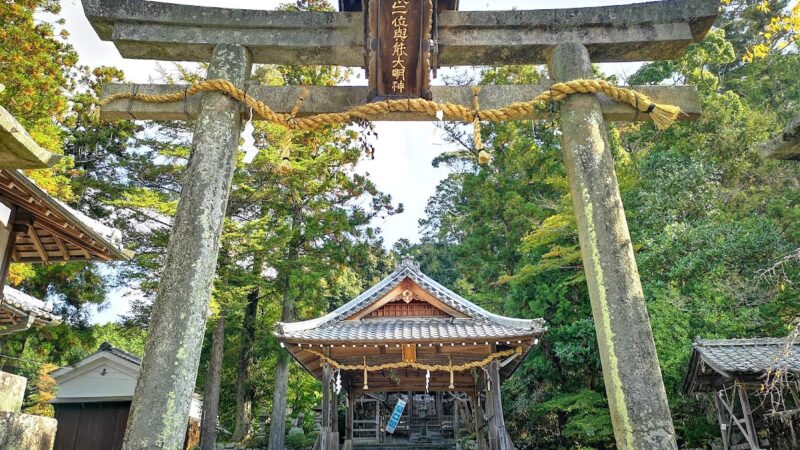
The current Chishaku-ji Temple is located in the northeastern part of the Takeuchi settlement in Kotoura Town and continues to serve as a center of local faith. The temple grounds include buildings such as the main hall and the priest’s quarters, and enshrine Jizo Bodhisattva as its principal deity. It is a place visited not only by locals but also by tourists interested in history due to its connection to Emperor Go-Daigo.
Chishaku-in Temple in Kyoto (Head Temple of the Shingon Chizan School)
Overview of Chishaku-in Temple
Located in Higashiyama Ward, Kyoto City, Chishaku-in Temple is the head temple of the Shingon Chizan School and a major temple with approximately 3,000 branch temples nationwide. Its mountain name is Gohyakubutsuzan, and it is also known as Negoro-ji Temple. With its vast grounds in Higashiyama Shichijo, it is known as one of Kyoto’s leading Shingon Buddhist temples.
Complex Historical Origins
The history of Chishaku-in Temple is extremely complex, deeply intertwined with two other temples: Daidenpo-in Temple, located on Mount Negoro in Kishu (Wakayama Prefecture), and Shoun-ji Temple, built by Toyotomi Hideyoshi for his beloved son, Tsurumatsu.
History of Negoro-san Daidenpo-in Temple
The origins of Chishaku-in Temple can be traced back to Daidenpo-in Temple, built on Mount Koya by Kogyo Daishi Kakuban (1095-1143). Kakuban was a high-ranking monk who deepened his understanding of Shingon Buddhism and dedicated himself to the revival of Esoteric Buddhism.
Daidenpo-in Temple later moved to Mount Negoro (Iwade City, Wakayama Prefecture) and developed as the fundamental training ground of Shingon Buddhism. It is said that at its peak, it formed a major religious city with approximately 6,000 scholar-monks. Chishaku-in Temple was one of the sub-temples (tatchu: small temples within the grounds of a large temple) of this Daidenpo-in Temple. Abolition by Toyotomi Hideyoshi
In 1585, during Toyotomi Hideyoshi’s conquest of Kishu, Mount Negoro was burned down, and many temple buildings, including Daidenpoin, were destroyed. This brought Chishakuin Temple to the brink of extinction.
Restoration by Tokugawa Ieyasu
In the Edo period, in 1601, Tokugawa Ieyasu donated land in Higashiyama to Genyu, a monk of Chishakuin Temple. This land was originally the site of Shounji Temple, built by Toyotomi Hideyoshi to commemorate his beloved son, Tsurumatsu (who died at the age of three).
After Hideyoshi’s death, Shounji Temple was abandoned, and Ieyasu, by giving this land to Chishakuin Temple, allowed it to be restored as a base for the Chizan branch of the Shingon sect. It is believed that this also had a political intention to reduce the influence of the Toyotomi family.
Origin of the Bellflower Crest
Chishakuin Temple and the Chizan school of Buddhism use the bellflower crest as their symbol. This crest was originally used at Negorosan Daidenboin Temple, signifying that Chishakuin Temple inherited its lineage. The bellflower, with its pure and dignified appearance, was chosen as a symbol of purity in Buddhism.
National Treasures and Important Cultural Properties
Chishakuin Temple possesses many valuable cultural properties.
Screen Paintings by Hasegawa Tohaku and His School (National Treasure)
The most famous cultural property owned by Chishakuin Temple are the screen paintings by Hasegawa Tohaku and his school. The gold-leaf screen paintings, such as “Maple Tree Painting” and “Cherry Blossom Painting,” are considered the pinnacle of Momoyama period painting and are designated as National Treasures.
These screen paintings are thought to have originally been painted for Shounji Temple and are valuable works that convey the splendor of the Momoyama culture to the present day. Currently, for preservation purposes, the original is stored in a repository, and a replica is displayed in the main hall.
Scenic Garden
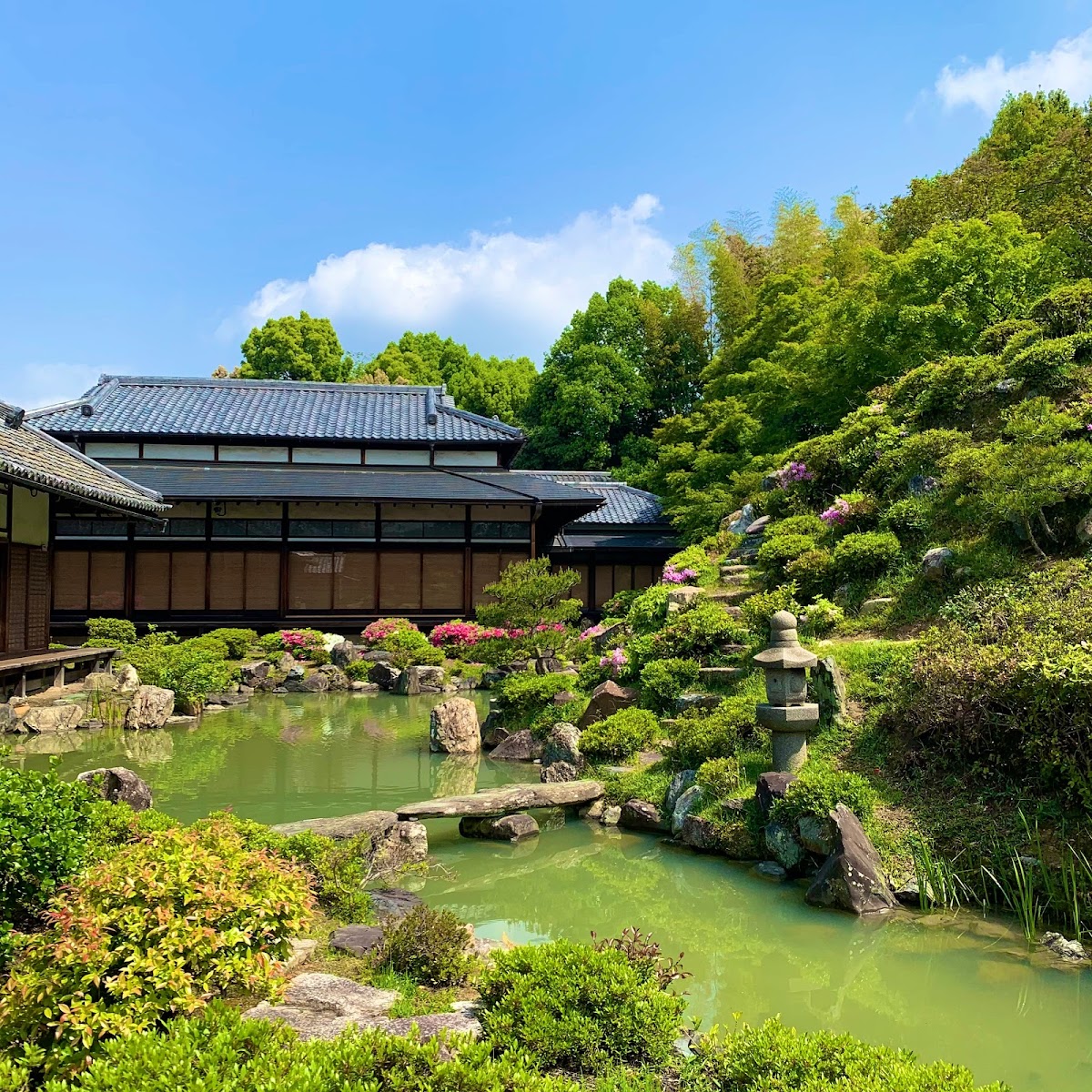
The garden of Chishaku-in Temple is designated as a national scenic spot and is a beautiful pond garden that incorporates the Higashiyama mountains as a borrowed landscape. It is believed to have been created in the early Edo period, and visitors can enjoy the scenery of each season.
Chishaku-in Kaikan (Temple Lodging)
Chishaku-in Temple has a temple lodging, “Chishaku-in Kaikan,” where general visitors can stay. The hall, which operated for approximately 50 years from 1966, was rebuilt due to aging and reborn as a comfortable temple lodging with modern facilities.
There are various room types, including Western-style rooms and Japanese-Western style rooms, and it is used as a base for sightseeing in Kyoto and as a place to calm the mind in a quiet environment. Visitors can also participate in morning services, offering a unique temple experience.
Chishakuin Saryo Kikyo
Within the temple grounds is Chishakuin Saryo Kikyo, a Japanese restaurant where you can enjoy vegetarian cuisine and dishes made with seasonal Kyoto ingredients. It’s a popular spot for worshippers and tourists, offering a rare opportunity to dine while experiencing the atmosphere of a temple.
As the Center of the Shingon Chizan School
Chishakuin is the head temple of the Shingon Chizan school, overseeing approximately 3,000 branch temples nationwide. It also houses the Chizan Senshu Gakuin, a training institution for monks, playing a central role in the study and practice of Shingon Buddhism.
Various memorial services and events are held throughout the year, attracting many monks and believers. In particular, the memorial service held on the anniversary of the death of Kōgyō Daishi Kakuban is one of the most important events for the Chizan school.
Similarities and Differences of the Three Chishakuji Temples
Similarities
- Shingon and Tendai Esoteric Buddhism Sects: Awaji Island’s Chishakuji belongs to the Koyasan Shingon sect, Tottori’s Chishakuji to the Tendai sect, and Kyoto’s Chishakuin to the Shingon Chizan sect. All belong to sects that stem from Esoteric Buddhism.
- Emphasis on Learning and Practice: As the name “Chishaku” suggests, these temples emphasize the accumulation of wisdom.
- Centers of Regional Faith: Each has functioned as an important center of faith in its respective region.
- Historical Transformation: All have experienced various transformations from their founding to the present day, in accordance with the changing times.
Differences
- Scale and Influence: Kyoto’s Chishakuin is a head temple with branch temples throughout Japan, while Awaji Island and Tottori’s Chishakuji operate as regional temples.
- Historical Background: Kyoto’s Chishaku-in has a complex history, having been relocated from Negoro-san, while Tottori’s Chishaku-ji is characterized by its relationship with Emperor Go-Daigo. Awaji Island’s Chishaku-ji has a unique origin, having been formed through the integration of several smaller temples.
- Cultural Properties: Kyoto’s Chishaku-in possesses numerous national treasure-class cultural properties, Tottori’s Chishaku-ji has a temple bell designated as a prefectural cultural property, and Awaji Island’s Chishaku-ji has a strong character as a sacred site.
- Modern Initiatives: Awaji Island’s Chishaku-ji has undertaken unique initiatives to meet modern needs, such as prayer services for cyclists.
Significance of Visiting Chishaku-ji and its Role in Modern Times
Value as Historical Heritage
Each Chishaku-ji is an important historical heritage site in the history of Japanese Buddhism. They convey the history of various eras, including Emperor Go-Daigo’s movement to overthrow the shogunate, the eras of Toyotomi Hideyoshi and Tokugawa Ieyasu, and the faith of the Edo period.
Continuity as a Place of Worship
Even in modern times, these temples function not merely as historical buildings, but as living places of worship. Regular memorial services, prayers, and memorial services are held, serving as a spiritual anchor for people.
Preservation and Dissemination of Regional Culture
Each Chishaku-ji temple plays a role in preserving and passing on the culture and traditions of its region to future generations. Through festivals, events, and the public display of cultural properties, they are important entities for maintaining regional identity.
Aspect as a Tourism Resource
Chishaku-in in Kyoto, in particular, functions as a tourist spot attracting many visitors from both within Japan and internationally. Its beautiful gardens and valuable cultural properties serve as a window to show the splendor of Japanese culture to the world.
Summary: The Spirit Embodied in the Name “Chishaku-ji”
Temples bearing the name “Chishaku-ji” have each cultivated their own unique history and culture throughout Japan. Chishaku-ji Temple on Awaji Island serves as a base for pilgrimages to sacred sites, Chishaku-ji Temple in Tottori Prefecture is a historical temple associated with Emperor Go-Daigo, and Chishaku-in Temple in Kyoto is the head temple of the Chizan branch of Shingon Buddhism. Each plays a significant role.
Embodying the Buddhist teaching of “accumulating wisdom,” these temples not only preserve historical legacies but also continue to provide peace of mind and spiritual support to people in modern society. By visiting each of these Chishaku-ji temples while reflecting on their history, you can experience the depth and diversity of Japanese Buddhist culture.
When planning your visit, we recommend checking the official information of each temple and visiting in appropriate attire and manners. Find peace of mind in the tranquil grounds and feel the breath of wisdom and faith cultivated over a long history.