Complete Guide to Hozanji Temple: A Thorough Explanation of the History, Benefits, and Visiting Methods of Ikoma Shōten
Hozanji Temple, located on the slopes of Mount Ikoma in Ikoma City, Nara Prefecture, is a major head temple of the Shingon Ritsu sect, affectionately known as “Ikoma Shōten.” It is counted as one of Japan’s three great Shōten temples and is known as a sacred site visited by worshippers from all over the country seeking business prosperity and increased wealth. This article thoroughly explains the charm of this historic temple, from its history and highlights within the grounds to how to visit and access.
What is Hozanji Temple?: A Center of Shōten Worship with Miraculous Powers, Nestled on Mount Ikoma
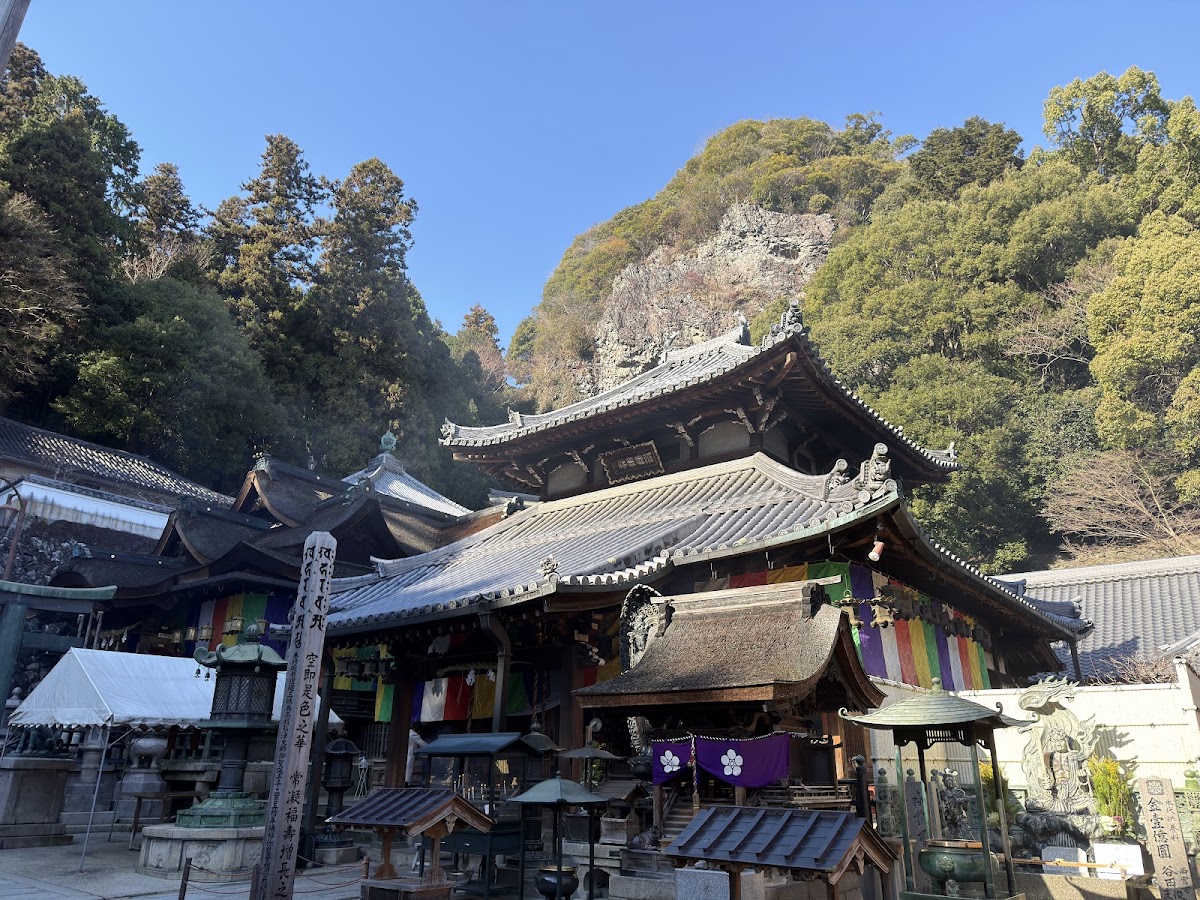
Hozanji Temple is a major head temple of the Shingon Ritsu sect, located at 1-1 Monzen-cho, Ikoma City, Nara Prefecture. While the principal deity is Fudo Myoo, the temple is widely known for its devotion to Daishokangiten, enshrined in the Shōtendo hall, and is also called “Ikoma Shōten” or “Ikoma no Shōten-san.” Mount Ikoma has flourished as a sacred site for Shugendō (mountain asceticism) since ancient times, and is said to be the place where En no Gyōja and Kūkai (Kūkai, the founder of Shingon Buddhism) practiced asceticism.
The temple grounds, spread across the middle of Mount Ikoma at an altitude of approximately 500 meters, offer a spectacular view of the Nara Basin, creating a unique atmosphere where nature and faith harmonize. It is also open 24 hours a day, and many devout believers visit in the early morning and late at night.
Position as a Head Temple of the Shingon Ritsu Sect
Hōzanji Temple is a head temple of the Shingon Ritsu sect and one of the important temples within that sect. The Shingon Ritsu sect is a Buddhist sect that combines the doctrines of the Shingon sect with the precepts of the Ritsu sect, and its founder was Eison during the Kamakura period. Hozanji Temple was founded by Hozan Tankai during the Edo period and has since developed as a center of Shingon Ritsu faith.
History of Hozanji Temple: From En no Gyoja to Hozan Tankai
The history of Hozanji Temple begins with the fact that Mount Ikoma has been revered as a sacred mountain since ancient times.
Ancient Times: Training Ground for En no Gyoja and Kukai
Mount Ikoma has been known as a sacred site for Shugendo (mountain asceticism) since the Asuka period. According to tradition, En no Gyoja, considered the founder of Shugendo, trained in this area and is said to have had a vision of Maitreya Bodhisattva in a cave called Hannyakutsu. Furthermore, it is said that Kobo Daishi Kukai also trained on this mountain in the early Heian period, making Mount Ikoma a sacred site for Buddhist practice since ancient times.
Enpo Era: Founded by Hozan Tankai
The current Hozanji Temple was founded in the 6th year of the Enpo era (1678) during the Edo period. Hozan Tankai, a Shingon Ritsu sect monk, experienced a divine manifestation of Daishō Kangiten while training in the Hannya Cave on Mount Ikoma, and founded the temple in this location. Tankai was from Hozan Village in Yamato Province (present-day Ikoma City, Nara Prefecture), and was a highly educated monk who entered the Buddhist priesthood at a young age and underwent rigorous training.
Initially, Hozanji Temple, founded by Tankai, was a small training hall, but as the faith in Daishō Kangiten spread, it began to attract many worshippers.
Edo Period: Attracting the Devotion of Osaka Merchants
From the mid to late Edo period, Hozanji Temple attracted the fervent devotion of merchants in Osaka (present-day Osaka). Daishō Kangiten was believed to bring prosperity in business and increased wealth, and people running businesses in the commercial capital of Osaka flocked to the temple for worship.
At that time, worshippers ascended the mountain path from the foot of Mount Ikoma to reach Hozanji Temple. Tea houses and lodgings lined the approach, creating a bustling temple town. Successful merchants made donations to the temple, contributing to the construction and repair of its buildings. Thus, Hozanji Temple developed as a center of popular faith seeking worldly benefits.
Meiji Era and Beyond: Modernization and the Continuation of Faith
While the Meiji-era separation of Shinto and Buddhism had a significant impact on temples throughout Japan, Hozanji Temple continued to maintain its faith as a center of Shōten worship. From the late Meiji period to the Taisho period, the Ikoma Cable Car (Japan’s first cable car) opened, greatly improving the convenience of visiting the temple.
Even as times changed through the Showa, Heisei, and Reiwa eras, faith in Hozanji Temple has never ceased, and many worshippers still visit today. Many buildings constructed from the Edo period to the early Showa period remain on the temple grounds, preserved as cultural assets of high historical value.
Hozanji Temple’s Principal Deity and Faith: Fudo Myoo and Daishō Kangiten
The central figures in the faith of Hozanji Temple are the principal deity, Fudo Myoo, and Daishō Kangiten, enshrined in the Shōtendō (hall dedicated to the deity).
Principal Deity: Fudo Myoo
The official principal deity of Hozanji Temple is Fudo Myoo. Fudo Myoo is the central figure of the Five Great Wisdom Kings in Shingon Esoteric Buddhism, and is believed to possess the power to sever worldly desires and subdue evil. The Fudo Myoo statue at Hozanji Temple is said to have been placed there by Hozan Tankai when the temple was founded, and it is carefully preserved as a hidden Buddha image.
Fudo Myoo is depicted in a wrathful form, holding a sword in his right hand and a lasso (kensaku) in his left, with flames behind him. This form is believed to represent his stern demeanor in order to save all sentient beings, and he is revered as a protector of practitioners and believers.
Daishō Kangiten (Shōten-sama)
The reason Hozanji Temple is widely known as “Ikoma Shōten” is due to the worship of Daishō Kangiten enshrined in the Shōtendō (Shōten Hall). Daishō Kangiten is a hidden Buddha image depicted as two deities, a man and a woman, with elephant heads, embracing each other. It is a Buddhist adaptation of the Indian god Ganesha.
Kankiten is known as a deity that brings powerful worldly benefits, and is particularly believed to grant the following blessings:
- Business Prosperity: Success in business, successful transactions
- Increased Financial Fortune: Increased wealth, financial stability
- Marital Harmony: Harmonious family life, successful relationships
- Good Fortune and Prosperity: Fulfillment of all wishes
- Protection from Misfortune: Protection from calamities
The worship of Kankiten spread particularly among merchants, and Osaka merchants during the Edo period devoutly worshipped Hozanji Temple as the “god of business.” Even today, many business owners and self-employed individuals visit the temple, and there is a constant stream of worshippers praying for the prosperity of their businesses.
Five Great Wisdom Kings Statues and Buddhist Art
Hozanji Temple houses statues of the Five Great Wisdom Kings, centered around the principal image, Fudō Myōō. The Five Great Wisdom Kings are Fudo Myoo, Gosanze Myoo, Gundari Myoo, Daiitoku Myoo, and Kongoyasha Myoo, and are important deities in Esoteric Buddhism. These statues are believed to be from the Edo period and are recognized as valuable works of excellent Buddhist art.
Highlights of the Temple Grounds: Historical Buildings and Sacred Atmosphere
The grounds of Hozanji Temple spread across the slopes of Mount Ikoma, with numerous temple buildings and cultural artifacts scattered throughout.
Main Hall (Fudo Hall)
The Main Hall is the central building of Hozanji Temple, housing the principal image of Fudo Myoo. It retains the architectural style of the late Edo period, and its imposing structure is impressive. Goma fire rituals are regularly held in the Main Hall, and worshippers can write their wishes on goma wood and offer it. The sight of the rising flames of the goma ritual is solemn, allowing visitors to experience the unique atmosphere of an Esoteric Buddhist temple.
Shōtendō (Worship Hall)
The Shōtendō is one of the most important buildings at Hōzanji Temple, dedicated to Daishō Kangiten. The worship hall is where worshippers offer their prayers, and many believers visit daily. In front of the Shōtendō is a unique form of worship called “yokuyu,” where oil is offered; worshippers believe their wishes will be granted by offering oil.
The Shōtendō was built in the late Edo period and features intricate carvings and decorations. The carvings on the transoms of the worship hall are particularly magnificent, demonstrating the high level of craftsmanship of the time.
Shishikaku (Important Cultural Property)
The Shishikaku is a Western-style building constructed in 1884 (Meiji 17) and designated as a National Important Cultural Property. Designed by Japanese carpenters under the guidance of foreign engineers, it is a rare example of a three-story wooden building in a pseudo-Western style.
The Shishikaku was initially used as a resting place and lodging for worshippers. Currently, it is usually closed to the public, but during special openings, you can tour the interior. Its unique architectural style, a blend of Japanese and Western elements, is a valuable cultural asset that conveys the atmosphere of the Meiji era’s modernization.
Hannya Cave
The Hannya Cave is a cave where En no Gyoja is said to have practiced asceticism, and it can be considered the origin of Hozanji Temple’s faith. Hozan Tankai is also said to have experienced the divine power of Daisho Kangiten while practicing asceticism in this cave. It is still used as a place of asceticism today, and a solemn atmosphere permeates the area.
A statue of Maitreya Bodhisattva is enshrined inside the Hannya Cave, making it a unique sacred site where Shugendo and Buddhist faith are fused.
Tahōtō Pagoda and Guardian Shrine
Various structures, including a Tahōtō pagoda and a guardian shrine, are scattered throughout the temple grounds. The Tahōtō pagoda is a type of tower unique to esoteric Buddhist temples, characterized by its elegant double-roofed structure. The guardian shrine is a shrine dedicated to the gods who protect the temple, preserving the tradition of syncretism between Shinto and Buddhism.
As you explore the temple grounds, you can see architectural styles from various periods, from the Edo period to the early Showa period, allowing you to experience the evolution of Japanese temple architecture.
Atmosphere of the Approach and Temple Town
The approach to Hozanji Temple, from Hozanji Station on the Ikoma Cable Car, is a charming path lined with stone steps. Lanterns line the path, and souvenir shops and restaurants line both sides. The local specialties, “yomogi mochi” (mugwort rice cakes) and “kusa mochi” (mugwort rice cakes), are particularly popular as souvenirs of your visit.
The temple town retains the atmosphere of the Edo period, making it enjoyable to simply stroll around. Old inns and restaurants remain, allowing you to feel the remnants of the former pilgrimage culture.
How to Visit Hozanji Temple: Etiquette and Manners
There are several etiquette and manners to observe when visiting Hozanji Temple. ### Basic Worship Procedure
- Bow at the Temple Gate: Bow at the temple gate before entering the temple grounds.
- Purify at the Water Basin: Purify your hands and mouth at the water basin.
- Visit the Main Hall: First, pay your respects to the principal image, Fudo Myoo, in the main hall.
- Visit the Shōtendō Hall: Next, pay your respects to Daishō Kangiten in the Shōtendō Hall.
- Other Halls: Visit the other halls on the temple grounds in order.
Special Customs for Shōten Worship
There are unique customs for worshipping Daishō Kangiten:
- Oil Offering: In the Shōtendō Hall, there is an offering called “oil offering.” The oil is placed in a special container and offered.
- Radish Offering: It is customary to offer radishes to Kangiten. This is because radishes are considered Kangiten’s favorite food. – Respect for the Hidden Buddha: The Daishō Kangiten is a hidden Buddha and cannot be viewed directly. Prayers are offered from the worship hall.
Goma Prayer Ceremony
Hōzanji Temple regularly holds Goma prayer ceremonies. Those wishing to participate in a Goma prayer can apply in advance or at the reception desk on the day of their visit. Participants write their wishes on wooden prayer sticks and offer them, which are then burned while monks chant sutras.
Goshuin (Temple Seals) and Amulets
Hōzanji Temple offers several types of Goshuin. There are separate Goshuin for the main hall and the Shōtendo (Holy Heaven Hall), and you can choose between pre-printed and handwritten stamps. Many amulets for business prosperity and financial luck are also available and are popular as souvenirs of your visit.
Annual Events and Special Days
Hōzanji Temple holds various events throughout the year.
Main Annual Events
- First Three Days of the New Year: The shrine is extremely crowded with worshippers visiting for the first time of the year. Many business owners visit to pray for business prosperity.
- Setsubun Festival (February 3rd): Bean-throwing and Goma fire rituals are held.
- Spring Grand Festival (April): A grand festival held to coincide with the auspicious day of the principal deity, Fudo Myoo.
- Obon Festival (August): Memorial services for ancestors are held.
- Autumn Grand Festival (October): A memorial service and Goma fire ritual are held to give thanks for the harvest.
- Kankiten Festival Days (1st and 16th of each month): A special Goma fire ritual is held on the auspicious day of Daisho Kankiten.
Special Public Openings
The Shishikaku and some cultural properties, which are usually closed to the public, can be viewed on special opening days several times a year. The dates for special openings can be found on the official website of Hozanji Temple.
Access and Visiting Information
Location
1-1 Monzen-cho, Ikoma City, Nara Prefecture 630-0266
Access Methods
Train and Cable Car
- Get off at Ikoma Station on the Kintetsu Nara Line or Keihanna Line
- Take the Ikoma Cable Car (approximately 6 minutes from Torii-mae Station to Hozanji Station)
- Approximately 10 minutes on foot from Hozanji Station
The Ikoma Cable Car is Japan’s first cable car, and you can enjoy the experience of riding in a retro vehicle.
Car
- Approximately 15 minutes from Ichibu IC on the Daini-Hanna Expressway
- Parking available on the temple grounds (paid)
The mountain road is narrow and has many sharp curves, so caution is required when driving.
Visiting Hours
Hozanji Temple is open for worship 24 hours a day. However, the reception hours for the gift shop and temple office are generally from 8:00 AM to 5:00 PM. ### Admission Fee
Entry to the temple grounds is free. However, some facilities may require a separate admission fee during special openings.
Nearby Tourist Attractions
- Ikoma Sanjo Amusement Park: An amusement park is located at the top of the mountain, accessible by cable car.
- Ikoma Sanroku Park: A park rich in nature, perfect for hiking and picnics.
- Kuragari Pass: A historical mountain pass connecting Nara and Osaka, retaining the atmosphere of an old highway.
The Benefits and Power Spot Appeal of Hozanji Temple
Hozanji Temple is particularly known as a power spot for business prosperity and improved financial luck. From the Edo period to the present day, many merchants and business owners have visited the temple to pray for business success. There are many anecdotes of businesses prospering after visiting, and the faith has spread through word of mouth.
Faith in Worldly Benefits
A distinctive feature of Hozanji Temple’s faith in Daishō Kangiten is its emphasis on worldly benefits. The form of faith that prayed not only for salvation in the afterlife but also for the fulfillment of specific wishes in present life resonated with the pragmatic temperament of Osaka merchants and was widely accepted.
The Sacred Atmosphere of Mount Ikoma
Mount Ikoma has been revered as a sacred mountain since ancient times. The sacred atmosphere that permeates the entire mountain and the view from an altitude of 500 meters bring spiritual purity to visitors. The environment, where nature and faith are fused, is ideal for escaping the hustle and bustle of the city and finding peace of mind.
Summary: The Significance of Visiting Hozanji Temple
Hozanji Temple is a head temple of the Shingon Ritsu sect, founded in the Edo period by Hozan Tankai on the sacred site of Mount Ikoma, which has a history of over 1300 years. The faith in the principal deities, Fudo Myoo and Daishō Kangiten, is supported by people praying for business prosperity and improved financial fortune, and many worshippers still visit today.
Within the temple grounds, valuable cultural assets such as the Shishikaku remain, allowing visitors to experience the layered nature of history and faith. The fact that it’s open 24 hours a day is also appealing to modern visitors.
When visiting Nara Prefecture, why not visit not only the temples and shrines of the ancient capital, but also Hozanji Temple on Mount Ikoma? Whether you’re praying for business prosperity, interested in history and architecture, or simply seeking tranquility in a peaceful sacred space, Hozanji Temple is a special place well worth visiting. Combined with a mountain climb on the Ikoma Cable Car, it will be a fulfilling pilgrimage experience where you can enjoy both Japanese religious culture and the beauty of nature.