Daishinji Temple (Kashihara City, Nara Prefecture) Complete Guide | A Historic Temple of the Jodo Shinshu Honganji School
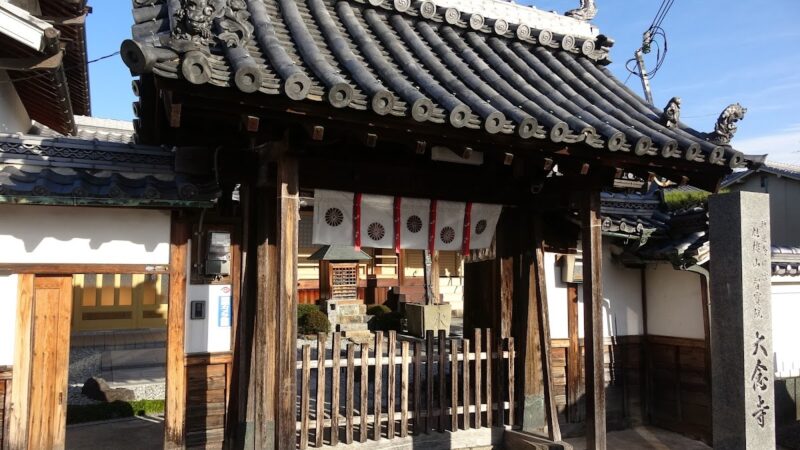
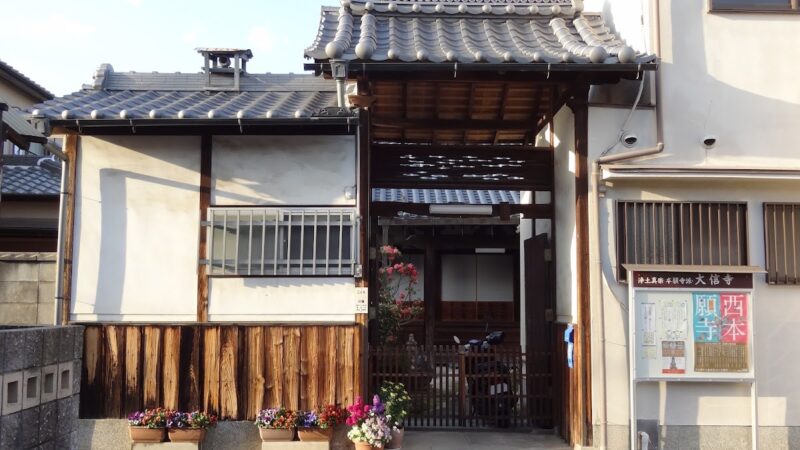
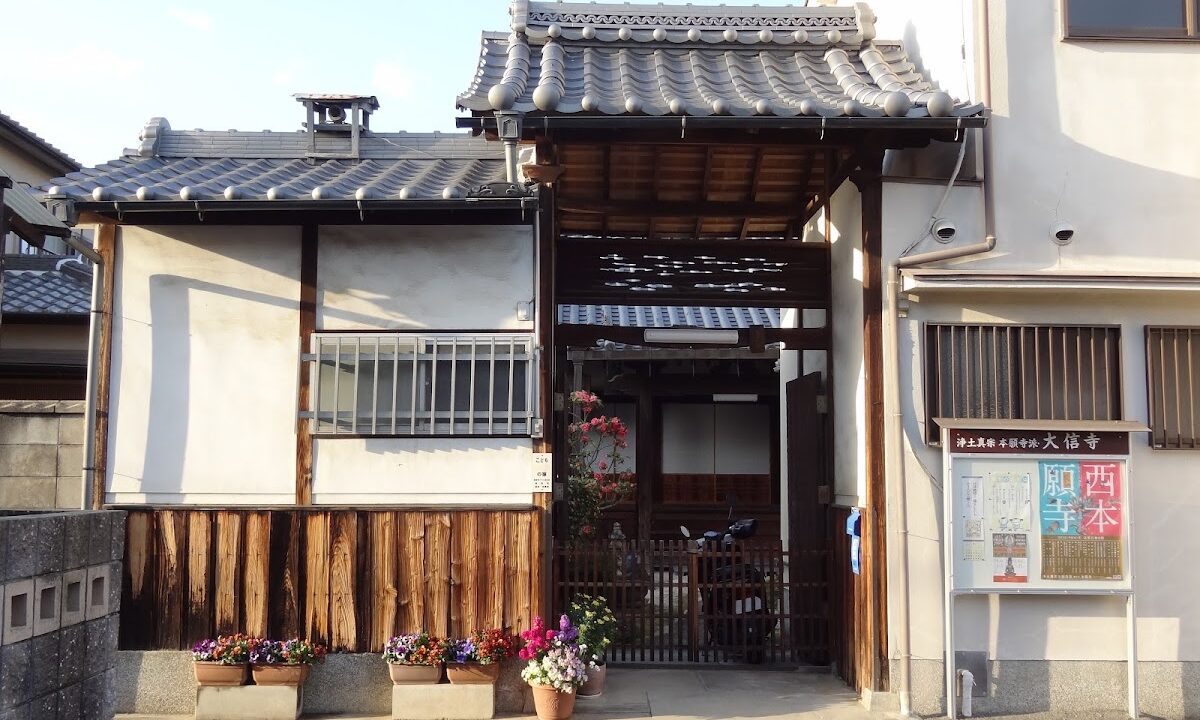
Located in Jiko-cho, Kashihara City, Nara Prefecture, Daishinji Temple is a historic temple belonging to the Jodo Shinshu Honganji School. This article provides comprehensive information for those considering a visit or who want to learn more about the temple, from basic information to the surrounding environment and knowledge about Buddhist services and rituals.
Basic Information on Daishinji Temple
Daishinji Temple, located in Kashihara City, Nara Prefecture, is a temple of the Jodo Shinshu Honganji School and serves as a center of faith in the region. Below is detailed basic information.
Location and Contact Information
Address: 454 Jio-cho, Kashihara City, Nara Prefecture 634-0805
Phone Number: 0744-24-7478
Corporate Number: 3150005005076
Jio-cho, Kashihara City, is located in the northern part of Kashihara City, an area where old residential areas and rural landscapes harmonize. Daishinji Temple has served as a spiritual center for the local residents for many years.
About the Sect
Daishinji Temple belongs to the Jodo Shinshu Honganji-ha (Nishi Honganji-ha). The Jodo Shinshu Honganji-ha is one of the major sects of Japanese Buddhism, with Shinran Shonin as its founder, preaching salvation through the vow of Amida Buddha.
The following are characteristics of the Jodo Shinshu Honganji sect:
- Head Temple: Ryukoku-zan Honganji (Nishi Honganji, Shimogyo-ku, Kyoto)
- Principal Image: Amida Buddha
- Teaching: Rebirth in the Pure Land through the power of others
- Chanting the Nembutsu: The chanting of “Namu Amida Butsu”
Jodo Shinshu sect cherishes the teaching that all people are equally saved by believing in the original vow of Amida Buddha and chanting the Nembutsu.
Access Information
Nearest Station: Kintetsu Yamato-Yagi Station
Distance from Station: Approximately 7 minutes on foot (approximately 535m)
Yamato-Yagi Station is a major station where the Kintetsu Osaka Line and Kintetsu Kashihara Line intersect, providing good access from Osaka and Kyoto. The convenient location within walking distance of the station is another characteristic of Daishinji Temple.
Access by Public Transportation:
- Get off at Yamato-Yagi Station on the Kintetsu Osaka Line or Kashihara Line, and walk approximately 7 minutes northwest.
- The route from the station is relatively flat; you can arrive without getting lost by following the directions.
Access by Car:
- Accessible from National Route 24.
- Parking spaces may be available nearby, but it is recommended to check with the temple in advance.
About the Temple Name “Daishinji”
The name “Daishinji” has been confirmed to exist for 27 temples nationwide. This indicates that it has been widely used as a temple name representing “great faith” in various Buddhist sects, including Jodo Shinshu.
In Nara Prefecture, this Daishinji in Kashihara City is a representative example and functions as a center of faith for the Jodo Shinshu Honganji sect in the region.
Aerial Photograph of Daishinji Temple (454 Jikocho, Kashihara City, Nara Prefecture)
An aerial photograph of Daishinji Temple reveals its location within the urban area of Kashihara City. The surrounding area is a mix of residential and commercial facilities, conveniently located near Kintetsu Yamato-Yagi Station.
The following features can be observed from the aerial photograph:
- Urban Location: Close to the central urban area of Kashihara City, with good access.
- Surrounding Environment: Located within a residential area, suggesting it is a temple deeply rooted in the community.
- Transportation Accessible: Easily accessible from major roads, making it a convenient location for visitors.
Jikocho is an old place name; formerly a farmland area, it has now developed into a livable residential area with significant urbanization.
Map of the Area Around Daishinji Temple
Major facilities of Kashihara City and other temples and shrines are scattered around Daishinji Temple. ### Major Facilities in the Surrounding Area
Around Kintetsu Yamato-Yagi Station:
- The area around the station is home to numerous commercial facilities and restaurants, making it the commercial center of Kashihara City.
- Large commercial facilities such as Aeon Mall Kashihara are also nearby, making it convenient to visit before or after your visit to the shrine.
Historical Sites:
- Kashihara City is known as the “Birthplace of Japan,” and Kashihara Shrine is famous.
- Kashihara Shrine is approximately a 10-minute drive from Daishinji Temple.
- There are also many other historical sites, such as the Fujiwara Palace Ruins and Imai-cho.
Regional Characteristics
Kashihara City is located in the south-central part of Nara Prefecture and is a historical region where the ancient Fujiwara-kyo was located. Currently, it has developed into the second largest city in Nara Prefecture, characterized by an attractive cityscape where history and modernity harmonize.
The area around Jio-cho:
- A developed residential area with a calm atmosphere
- A comfortable living environment with all the necessary facilities
- A cultural atmosphere remains, with numerous historical temples and shrines scattered throughout the area
List of nearby temples
Kashihara City has many temples, each with its own unique history and characteristics. Here are some of the main temples around Daishinji Temple.
Major Temples in Kashihara City
Kume-dera Temple:
- A temple of the Omuro branch of the Shingon sect
- An ancient temple said to have been founded by Prince Kume, the younger brother of Prince Shotoku
- Famous for its Tahoto pagoda (Important Cultural Property)
- Address: 502 Kume-cho, Kashihara City
Ofusa Kannon (Kannon-ji Temple):
- A temple of the Koyasan Shingon sect
- A temple famous for its roses and wind chimes
- Popular for its rose festivals in spring and autumn, and its wind chime festival in summer
- Address: 6-22 Ofusa-cho, Kashihara City
Hon-Yakushi-ji Temple Ruins:
- Temple ruins from the Fujiwara-kyo period
- Known as a famous spot for water hyacinths
- Currently, only the foundation stones remain as a historical site
- Address: Jōden-chō, Kashihara City
Jōdo Shinshū Temples in Kashihara City:
Besides Daishinji Temple, several other Jōdo Shinshū temples exist in Kashihara City, each supporting the local faith. As temples of the same sect, they also interact through memorial services and events.
Relationships with Surrounding Temples
Kashihara City in Nara Prefecture is a historical region with a long history dating back to ancient times, and temples of various sects coexist. Daishinji Temple, as a Jōdo Shinshū Honganji-ha temple, maintains good relationships with temples of other sects and plays a part in the local Buddhist culture.
Teachings and Practices of Jōdo Shinshū Honganji-ha
This section provides a more detailed explanation of the teachings of the Jōdo Shinshū Honganji-ha, to which Daishinji Temple belongs.
Teachings of Shinran Shōnin
Shinran Shōnin (1173-1263), the founder of Jōdo Shinshū, inherited and further developed the teachings of his teacher, Hōnen Shōnin. At its core lies the philosophy of “absolute reliance on external forces.”
The True Meaning of Other-Power Reliance:
- Salvation is not achieved through one’s own power (self-power), but through the power of Amida Buddha’s vow (other-power).
- By chanting “Namu Amida Butsu,” one receives the salvation of Amida Buddha.
- The idea of equality, where all people are equally saved.
Characteristics of Jodo Shinshu Buddhism
Differences from Other Buddhist Sects:
- No Precepts: Emphasis on faith over strict precepts.
- Marriage for Monks: Shinran Shonin himself married and recognized the right of monks to marry.
- Eating Meat and Marrying: Affirmation of living the same life as ordinary people.
- The Significance of Funerals: Not sending the deceased to the Pure Land, but providing an opportunity for those left behind to encounter the Dharma.
Daily Practice
Things valued by followers of Jodo Shinshu Buddhism:
- Morning and Evening Service: Reading scriptures and chanting the Nembutsu in front of the Buddhist altar.
- Ho-on-ko: Memorial service for Shinran Shonin on the anniversary of his death (the most important annual event)
- Monpo: Listening to Dharma talks and learning the teachings
- Nembutsu Life: Chanting the Nembutsu in daily life
Kashihara City “Buddhist Memorial Service/Funeral Ceremony” Schedule Automatic Calculation & Quick Reference Chart
This provides a clear explanation of the timing of important Buddhist memorial services and ceremonies.
Main Types and Timings of Memorial Services
First Seven Days (Shonanoka): 7th day after death
Second Seven Days (Futanoka): 14th day after death
Third Seven Days (Minanoka): 21st day after death
Fourth Seven Days (Yonanoka): 28th day after death
Fifth Seven Days (Itsunoka): 35th day after death
Sixth Seven Days (Munanoka): 42nd day after death
Seventh Seven Days/Forty-Ninth Days (Shijukunichi): 49th day after death (Most important)
One Hundredth Day (Hyakkanichi): 100th day after death
First Anniversary (Isshuki): 1st year after death
Third Anniversary (Sankaiki): 2nd year after death
Seventh Anniversary (Nanakaiki): 6th year after death
Thirteenth Anniversary (Jusankaiki): 12th year after death
Seventeenth Anniversary (Jushichikaiki): 16th year after death
Twenty-Third Anniversary (Nijusankaiki): 22 years since the date of death
27th anniversary: 26 years since the date of death
33rd anniversary: 32 years since the date of death
50th anniversary: 49 years since the date of death
Points to consider when calculating the date of the memorial service
How to count the date of death:
- From the 7th day to the 49th day, the date of death is included in the count.
- For memorial services after the first anniversary, the date is counted “full,” so it actually falls in the year before the date of death.
Adjusting the date of the memorial service:
- Ideally, it should be held on the exact date, but it is possible to bring it forward to consider the convenience of the attendees.
- However, it is generally considered best to avoid shifting it backward.
- It is common to hold it on a Saturday, Sunday, or public holiday.
Characteristics of memorial services in Jodo Shinshu Buddhism
Jodo Shinshu Buddhism has its own interpretation of the significance of memorial services:
- Not a memorial service for the deceased: Rather than accumulating merit for the deceased, it is an opportunity to encounter Buddhist teachings using the date of the deceased’s death as a connection.
- Memorial Service of Gratitude: A place to hear Buddhist teachings through the deceased and express gratitude for the teachings of Amida Buddha.
- Memorial Service for Bereaved Families: Regular memorial services provide an opportunity for bereaved families to overcome their grief and move forward.
What is a Columbarium?
This section explains columbariums, which have seen increasing demand in recent years, particularly in urban areas.
Basics of Columbariums
A columbarium is a building or facility for housing cremated remains. Unlike traditional cemeteries, it is characterized by the indoor storage of remains.
Advantages of Columbariums:
- Visits can be made regardless of the weather.
- No need to erect a tombstone, reducing costs.
- Perpetual memorial services are possible even without successors.
- Many are located in easily accessible locations, even in urban areas.
- Well-maintained and kept clean.
History of Columbariums
The origins of columbariums are ancient, dating back to ossuary facilities established within temple grounds. Initially, these facilities served as temporary storage for cremated remains, but in modern times, they have evolved to function as permanent burial sites.
Historical Changes:
- Ancient and Medieval: The custom of placing cremated remains inside temple halls or underground.
- Modern Era: Developed as a solution to the shortage of cemeteries due to urbanization.
- Contemporary: Various forms of columbariums have emerged to meet diverse needs.
Forms of Columbariums
Modern columbariums come in various types:
Locker Type:
- The most common type.
- Cremated remains are placed in individual lockers.
- Relatively low cost.
Altar Type:
- An altar on the upper level, space for cremated remains on the lower level.
- Allows for individual visits.
- Larger space than the locker type.
Automated Transport (Mechanical) Type:
- Cremated remains are automatically transported using IC cards, etc.
- Cremated remains are brought to the visitation space.
- Common in large facilities in urban areas.
Tombstone Type:
- A tombstone is installed indoors.
- A form similar to traditional cemeteries.
- High degree of individuality.
Communal Burial Type:
- Storing multiple sets of remains in one place
- Lowest cost
- No individual worship space
Classification by Columbarium Management Model
Temple-Operated:
- Managed and operated by a temple
- Memorial services based on the teachings of the sect
- May have a danka (parishioner) system
Publicly Operated:
- Operated by a local government
- Open to all religions and sects
- Relatively inexpensive
Privately Operated:
- Operated by a private company
- Well-equipped facilities and services
- Often open to all religions and sects
Columbarium Situation in and around Kashihara City
In and around Kashihara City, Nara Prefecture, the demand for columbariums and perpetual memorial graves is increasing. Temples such as Daishinji Temple offer various options to meet the diverse memorial needs of their parishioners and local residents.
When considering columbarium or perpetual memorial services, we recommend contacting the temple directly.
History and Culture of Kashihara City
Understanding the historical background of Kashihara City, where Daishinji Temple is located, will allow for a deeper understanding of the temple’s significance.
Kashihara: The Founding Place of Japan
Kashihara City is known as the “founding place of Japan.” According to the *Nihon Shoki* (Chronicles of Japan), Emperor Jimmu, the first emperor, was enthroned at Kashihara Palace, making this place a starting point for Japanese history.
Kashihara Shrine:
- A shrine dedicated to Emperor Jimmu
- Founded in 1890 (Meiji 23)
- Vast grounds and magnificent shrine buildings
- A popular spot for New Year’s visits and weddings
The Capital of Fujiwara-kyo
Kashihara City was home to Fujiwara-kyo, Japan’s first full-fledged capital city (694-710).
Fujiwara Palace Site:
- Designated as a Special Historic Site
- A vast palace site is preserved
- Beautiful flowers are planted in each season, making it a tourist attraction
- Famous for its cosmos and lotus flowers
Imai Townscape
Imai Town in Kashihara City is a historical townscape designated as an Important Preservation District for Groups of Traditional Buildings.
Characteristics of Imai Town:
- Approximately 500 Edo-period townhouses still exist
- A prosperous commercial city, once said to have “seven-tenths of Yamato’s wealth in Imai”
- Developed as a temple town of the Jodo Shinshu sect
- An autonomous city centered around Shonenji Temple
The existence of Imai Town, which has deep ties to the Jodo Shinshu sect, speaks to the historical importance of Jodo Shinshu in Kashihara City.
Etiquette for Visiting Daishinji Temple
We will introduce the basic etiquette for visiting Daishinji Temple, a temple of the Jodo Shinshu Honganji sect.
Basic Principles of Worship
Attire:
- For memorial services, mourning attire or semi-formal attire is appropriate.
- For regular visits, clean and subdued clothing is acceptable.
Items to Bring:
- Prayer beads (rosary): While not mandatory in Jodo Shinshu Buddhism, it is desirable to bring them.
- Offerings or donations (if necessary)
How to Hold Prayer Beads in Jodo Shinshu Buddhism
Prayer beads in Jodo Shinshu Buddhism differ slightly from those of other sects:
- Place the beads on both hands and join your hands in prayer.
- Let the tassels hang down.
- Place them between your thumb and index finger.
Procedure for Worship
- Bow at the Temple Gate: Bow before entering the temple grounds.
- Water Purification: Cleanse your hands and mouth (if there is a water basin).
- Proceed to the Main Hall: Proceed quietly to the main hall.
- Pray and Bow: Facing the principal image of Amida Buddha, join your hands in prayer and chant “Namu Amida Butsu.”
- Worship: Quietly join your hands and express your gratitude.
Characteristic practices of Jodo Shinshu Buddhism
No clapping:
- Unlike Shinto shrines, clapping is not done at temples.
- Only quietly join your hands in prayer.
Number of incense sticks:
- In Jodo Shinshu Buddhism, “lying incense sticks,” where the stick is broken and laid flat, is the formal practice.
- There is no set number of sticks.
Number of times incense is offered:
- In the Honganji sect, once is the basic number.
- However, this is not a strict rule; what is important is to do it with sincerity.
Frequently asked questions about Daishinji Temple in Kashihara City, Nara Prefecture
Q1: What sect does Daishinji Temple belong to?
A1: Daishinji Temple is a temple of the Jodo Shinshu Honganji sect (Nishi Honganji sect). This sect considers Shinran Shonin as its founder and preaches salvation through the power of Amida Buddha’s original vow.
Q2: How do I get to Daishinji Temple?
A2: It’s about a 7-minute walk (approximately 535m) from Kintetsu Yamato-Yagi Station. Head northwest from the station; the route is relatively flat. The address is 454 Jio-cho, Kashihara City, Nara Prefecture.
Q3: Can I hold a memorial service at Daishinji Temple?
A3: Yes, you can. If you wish to hold a memorial service, we recommend contacting the temple in advance to discuss the date and details. The phone number is 0744-24-7478.
Q4: Are there other temples named “Daishinji”?
A4: Yes, there are 27 Daishinji temples throughout Japan. Daishinji Temple in Kashihara City, Nara Prefecture, is one such temple, deeply rooted in the community as a Jodo Shinshu Honganji-ha temple.
Q5: What are the characteristics of the Jodo Shinshu Honganji-ha?
A5: The main characteristics of the Jodo Shinshu Honganji-ha include the teaching of salvation through the power of others, the acceptance of marriage for monks, the absence of strict precepts, and the emphasis on the recitation of “Namu Amida Butsu.”
Q6: Please tell me about other temples around Kashihara City.
A6: Kashihara City has historical temples such as Kume-dera Temple (Shingon-shu Omuro-ha) and Ofusa Kannon (Koyasan Shingon-shu). Also, in Imai-cho, there is Shonenji Temple of the Jodo Shinshu sect, which has a history of flourishing as the center of a temple town.
Q7: I’m visiting a Jodo Shinshu temple for the first time. Are there any points I should be aware of?
A7: There are no special rituals, but the basic custom is to quietly join your hands in prayer and recite “Namu Amida Butsu.” Do not clap your hands, and offer incense once. Clean and subdued attire is acceptable.
Q8: Can I consult about interment or perpetual memorial services?
A8: Please contact the temple directly regarding interment and perpetual memorial services. Since procedures vary by temple, we recommend contacting them by phone or in person for detailed consultation.
Q9: Could you also tell me about the historical sights of Kashihara City?
A9: Kashihara City has many historical sites where you can experience Japanese history, such as Kashihara Shrine, the Fujiwara Palace ruins, and the townscape of Imai-cho. Visiting these sites in conjunction with a visit to Daishinji Temple will allow you to gain a deeper understanding of the region’s history and culture.
Q10: How should I decide on the date for a memorial service?
A10: Ideally, memorial services should be held on the original anniversary of death, but it is possible to hold them earlier to accommodate the schedules of attendees. It is common to hold them on weekends or public holidays. For detailed scheduling, it is recommended to consult with the temple.
Summary
Daishinji Temple, located in Jiko-cho, Kashihara City, Nara Prefecture, is a Jodo Shinshu Honganji-ha temple and a center of local faith. It is conveniently located about a 7-minute walk from Kintetsu Yamato-Yagi Station, making it easily accessible.
The teachings of the Jodo Shinshu Honganji-ha preach salvation through the vow of Amida Buddha, and are based on the profound compassion of Shinran Shonin, who believed that all people are equally saved through the nembutsu, “Namu Amida Butsu.”
Kashihara City is known as the birthplace of Japan and boasts numerous historical sites such as Fujiwara-kyo and Imai-cho. Visiting these historical sites in conjunction with a visit to Daishinji Temple will allow you to gain a deeper understanding of Japanese history and Buddhist culture. For consultations regarding Buddhist services such as memorial services, interment, and perpetual memorial services, please contact Daishinji Temple directly. As a temple deeply rooted in the community, we hope to be a source of comfort and support for everyone.