Tenpōrinji Temple (Gojō City, Nara Prefecture) Complete Guide: The History and Charm of a Sacred Site Connecting Kōbō Daishi Kūkai and Mount Kōya
What is Tenpōrinji Temple?: An Ancient Temple Associated with Kūkai, Located in Gojō City, Nara Prefecture
Tenpōrinji Temple is a Shingon Buddhist temple of the Kōyasan sect, located in Inukai-chō, Gojō City, Nara Prefecture. Built on the slopes of Mount Inukai, this temple is known as an important sacred site where Kōbō Daishi Kūkai, the founder of the Shingon sect, was guided to the founding of Mount Kōya.
With a history of over 1200 years, Tenpōrinji Temple is not merely a local temple, but a place that played an extremely important role in the history of Japanese Buddhism. It is said that when Kūkai was traveling in search of a place to practice Zen meditation, he had a mystical encounter in this place, which led to the founding of Mount Kōya.
Even today, Tenborinji Temple, nestled in a quiet mountain valley, is a hidden gem that attracts attention from history buffs, Shingon Buddhist followers, and collectors of temple stamps.
History of Tenborinji Temple: The Encounter Between Kobo Daishi Kukai and Kariba Myojin
815 AD: Kukai’s Departure
The history of Tenborinji Temple dates back to 815 AD. Kobo Daishi Kukai, then 42 years old, left Heian-kyo (the capital) and embarked on a journey with the desire to “find a training ground for Zen practice.” For Kukai, who had returned from Tang China and was seeking the best place to practice and spread the teachings of Shingon Esoteric Buddhism, this journey was a crucial turning point in his life.
Kukai traveled around various regions in search of an ideal training ground in a mountainous area far removed from the secular world. In the process, he visited Inukai-cho, Gojo City, Nara Prefecture.
A Fateful Encounter: Kariba Myojin and Niutsuhime Okami
According to temple tradition, when Kukai was passing through the area where Tenborin-ji Temple now stands, he became lost. Suddenly, a god appeared in the form of a hunter, accompanied by two dogs, one black and one white. This god was Kariba Myojin, also known as Koya Miko Okami.
Kariba Myojin is said to have kindly guided Kukai and, together with Niutsuhime Okami, led him to Mount Koya. This mystical encounter is so significant that without it, the founding of Mount Koya might never have happened, making this land an extremely important sacred site for Shingon Buddhism.
816 AD (Kōnin 7): Establishment of Tenpōrin-ji Temple
The year after his encounter with Kariba Myōjin, in 816 AD (Kōnin 7), Kūkai received the grant of Mount Kōya from the imperial court and began the founding of Mount Kōya. It is said that he then established Tenpōrin-ji Temple on Mount Inukai, the place where he had encountered the gods, as a token of gratitude.
The temple name “Tenpōrin” is a Buddhist term meaning “to spread the teachings of Buddha.” It can be said that this name represents Kūkai’s determination to spread the teachings of Shingon Esoteric Buddhism from this place.
History from the Edo Period Onward
From the medieval to the early modern period, Tenpōrin-ji Temple functioned as a center of local faith, maintaining deep ties with Mount Kōya. During the Edo period, it was a branch temple of the Kōyasan Shingon sect, attracting the faith of the local people.
Despite being affected by the anti-Buddhist movement of the Meiji era, it survived as a sacred site associated with Kūkai and has been carefully preserved to this day.
Tenpōrin-ji Temple Grounds and Highlights
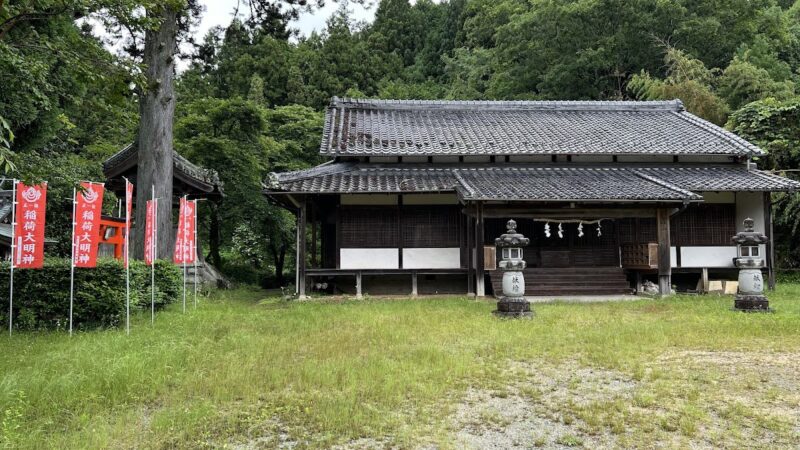
Main Hall: The Central Facility Dedicated to Kōbō Daishi Kūkai
The main hall of Tenpōrin-ji Temple enshrines Kōbō Daishi Kūkai as its principal deity. While many Shingon Buddhist temples enshrine Dainichi Nyorai or other deities as their principal deity, the fact that Kūkai himself is the principal deity is evidence of the temple’s direct connection to Kūkai.
Inside the main hall, statues and portraits of Kūkai are enshrined, allowing visitors to quietly offer their prayers. The hall is enveloped in a solemn atmosphere, allowing one to feel the weight of 1200 years of history.
Niukariba Myōjin Shrine: Evidence of Shinto-Buddhist Syncretism
Within the temple grounds stands the Niukariba Myōjin Shrine. This shrine enshrines Kariba Myōjin and Niutsuhime Ōkami, who guided Kūkai to Mount Kōya.
This shrine, which preserves the tradition of syncretism between Shinto and Buddhism, embodies a unique Japanese religious culture where a Shinto shrine coexists within the grounds of a Buddhist temple. The fact that this form has been maintained even after the Meiji-era separation of Shinto and Buddhism speaks to the importance of the auspicious encounter between Kukai and the gods.
Japan’s Oldest Gohogo Stone Monument
A notable cultural asset of Tenborinji Temple is a stone monument inscribed with what is considered to be the oldest Gohogo in Japan. The Gohogo is “Namu Daishi Henjo Kongo,” a fundamental invocation of Kobo Daishi Kukai in Shingon Buddhism.
This monument is valuable evidence that faith in Kukai has been deeply rooted in this area since ancient times, and it is an important resource in the study of Shingon Buddhist history.
The Natural Environment of Inukaiyama Mountain
Inukaiyama Mountain, where Tenborinji Temple is located, is a quiet mountain blessed with abundant nature. The temple grounds are surrounded by ancient trees, offering beautiful scenery throughout the seasons.
In spring, cherry blossoms and fresh greenery; in summer, deep green; in autumn, vibrant autumn leaves; and in winter, a serene snowscape – each season offers a different face. The tranquil atmosphere, unique to a temple nestled in the mountains far from the hustle and bustle of the city, brings deep peace to visitors.
About Kobo Daishi Kukai: His Connection to Tenborinji Temple
The Life and Achievements of Kukai
Kobo Daishi Kukai (774-835) was a leading Buddhist monk of the early Heian period and the founder of the Shingon sect, leaving a great mark on the history of Japanese Buddhism. Born in Sanuki Province (present-day Kagawa Prefecture), Kukai developed a deep interest in Buddhism from a young age and traveled to Tang China as part of a Japanese envoy in 804.
In Tang China, Kukai studied the profound teachings of esoteric Buddhism under Master Huiguo at Qinglong Temple in Chang’an, mastering all aspects of esoteric Buddhism in just two years before returning to Japan. After his return, he dedicated himself to spreading Shingon esoteric Buddhism, founding Kongobu-ji Temple on Mount Koya and establishing To-ji Temple in Kyoto as the fundamental training ground for Shingon Buddhism.
Kukai was not only a religious figure but also a calligrapher, educator, and civil engineer, demonstrating exceptional talent and earning him the reputation of the proverb, “Even Kobo Daishi makes mistakes with his brush.”
Kukai’s Journey at 42 and Tenborin-ji Temple
Tenborin-ji Temple holds significant meaning in Kukai’s life because, at the age of 42—a time considered unlucky—he had a pivotal encounter that marked a major turning point in his life.
After returning from Tang China, Kukai, feeling limitations in his activities in the capital, sought a place suitable for the practice and training of Shingon esoteric Buddhism. During his exploration, Kukai’s mystical experience at Mount Inukai led him to the ideal location of Mount Koya, laying the foundation for the subsequent development of Shingon Buddhism.
Tenborinji Temple remains a revered “guiding place” in Kukai’s life and is still worshipped by many believers today.
Information on Tenborinji Temple’s Goshuin (Temple Seal)
Features of the Goshuin
Tenborinji Temple offers Goshuin to visitors. The Goshuin features the words “Mount Inukai” and “Tenborinji Temple” written in ink, and the temple’s seal is stamped on it.
The Goshuin of this temple, with its special history as a sacred site associated with Kukai, holds special value for Shingon Buddhist believers and those on pilgrimage to sacred sites related to Kukai.
How to Receive a Goshuin
Goshuin can be received at the main hall or the temple office. However, as it is a small temple, the head priest may not always be present. If you want to be sure to receive a Goshuin (temple/shrine stamp), it is recommended to call ahead to confirm.
It is proper etiquette to bring your Goshuincho (stamp book), offer your prayers respectfully, and then request the stamp. A Goshuin is not merely a commemorative stamp; it should be received with sincerity as proof of your visit.
Access and Visiting Information for Tenpōrinji Temple
Basic Information
- Official Name: Inukaisan Tenpōrinji Temple
- Sect: Kōyasan Shingon Buddhism
- Location: 124 Inukai-cho, Gojō City, Nara Prefecture
- Principal Image: Kōbō Daishi Kūkai
- Founded: Kōnin 7 (816)
- Founder: Kōbō Daishi Kūkai
Access Methods
Access by Train/Bus
- Approximately 15 minutes by car from JR Wakayama Line “Gojō Station”
- Taking a taxi from Gojō Station is convenient
Access by Car
- Approximately 10 minutes from Keina-Wa Expressway “Gojō IC”
- Accessible via Prefectural Road from National Route 24
- Parking: Several parking spaces available on the temple grounds (free)
Points to Note When Visiting Tenpōrin-ji Temple
Tenpōrin-ji Temple is a small temple located in a mountainous area. Please note the following points when visiting:
- Advance Contact Recommended: The head priest may be absent, so it is recommended to call in advance, especially if you wish to receive a Goshuin (temple stamp).
- Clothing and Equipment: You may be walking on mountain paths, so please wear comfortable shoes and clothing.
- Consider the Season: There is a possibility of snow in winter, and insect repellent is necessary in summer.
- Visiting Hours: There are no set visiting hours, but daytime visits are preferable.
- Admission Fee: It is basically free, but please prepare an offering or a fee for the Goshuin.
Tourist Spots Around Tenpōrin-ji Temple
Historical Charm of Gojō City
Gojō City in Nara Prefecture, where Tenpōrin-ji Temple is located, is a historic town that has flourished as a transportation hub since ancient times. The Gojo Shinmachi Street, which retains the streetscape of the Edo period, has been designated as an Important Preservation District for Groups of Traditional Buildings and is well worth visiting along with Tenborinji Temple.
Pilgrimage Route to Koyasan
Tenborinji Temple can be considered part of the pilgrimage route to Koyasan, as it was a stop for Kukai on his way there. After visiting Tenborinji Temple, extending your trip to Koyasan and following in Kukai’s footsteps would be a meaningful journey.
Koyasan is about an hour’s drive from Gojo City, making it possible to visit both in one day.
Yoshino/Omine Area
Gojo City is close to sacred sites such as Yoshino Mountain and Omine Mountain, and is a region where the culture of Shugendo (mountain asceticism), which has continued since ancient times, remains strong. A trip exploring the rich religious culture of southern Nara Prefecture, starting from Tenborinji Temple, is also recommended.
Annual Events and Ceremonies at Tenpōrin-ji Temple
Kōbō Daishi Miekū (Memorial Service for Kōbō Daishi)
The 21st of each month is considered the anniversary of Kōbō Daishi’s passing, and Shingon Buddhist temples hold a memorial service called Miekū. Tenpōrin-ji Temple also sometimes holds special services on this day.
Especially around the Spring Grand Festival on March 21st and the period close to the 21st of the third month of the lunar calendar, when Kūkai entered eternal meditation, many believers visit the temple.
Other Events
Tenpōrin-ji Temple holds various Buddhist events and prayer services throughout the year. For detailed schedules, please contact the temple directly.
The Teachings of Shingon Esoteric Buddhism as Presented by Tenpōrin-ji Temple
The Concept of Instantaneous Buddhahood
“Instantaneous Buddhahood,” a fundamental concept of Shingon Esoteric Buddhism, is the teaching that one can become a Buddha in this very body. The story of Kukai’s encounter with the gods at Tenpōrin-ji Temple, which led to the founding of Mount Kōya, symbolizes the esoteric Buddhist worldview where humans, Buddhas, and gods are united.
The Tradition of Shinto-Buddhist Syncretism
The presence of the Niu Kariba Myōjin Shrine within the grounds of Tenpōrin-ji Temple preserves Japan’s unique tradition of Shinto-Buddhist syncretism. The harmonious coexistence of Buddhism and Shinto can be said to represent the essence of the Japanese religious perspective.
Kukai himself positioned Japanese gods as guardian deities of Buddhism, emphasizing the harmony between gods and Buddhas. Tenpōrin-ji Temple is a living example embodying this philosophy.
The Significance of Visiting Tenpōrin-ji Temple: Its Value in the Modern Age
An Invitation to Historical Romance
Visiting Tenpōrin-ji Temple is like a time-traveling experience, tracing the footsteps of Kukai 1200 years ago. What did Kukai feel and think in this place? Standing in the quiet temple grounds, you can feel the breath of history. ### A Place for Healing and Introspection
Spending time at a quiet temple nestled in the mountains, away from the hustle and bustle of modern society, brings healing to the soul. Tenpōrin-ji Temple offers an ideal environment for self-reflection and introspection.
A Deeper Understanding of Japanese Culture
Tenpōrin-ji Temple encapsulates the multifaceted aspects of Japanese culture, including the syncretism of Shinto and Buddhism, mountain worship, and esoteric Buddhist thought. Visiting this temple and learning about its history and culture is a valuable opportunity to deepen your understanding of Japanese culture.
Summary: Tenpōrin-ji Temple is a Sacred Bridge Connecting Kūkai and Mount Kōya
Located in Inukai-chō, Gojō City, Nara Prefecture, Tenpōrin-ji Temple holds an extremely important position in the history of Shingon Buddhism as the place where Kūkai, the founder of Kōyasan, had a fateful encounter that led him to establish Mount Kōya.
This ancient temple, with a history of over 1200 years, may not be large in scale, but its profound history and spiritual value make it a brilliant presence in the history of Japanese Buddhism. Tenborinji Temple offers numerous attractions, including the enshrined Kobo Daishi Kukai in the main hall, the Niu Kariba Myojin Shrine on the temple grounds, and Japan’s oldest sacred inscription stone monument.
When you visit Gojo City, be sure to stop by Tenborinji Temple, follow the path Kukai walked, and quietly offer your prayers at this mystical place of encounter. There, you will find a universal spirituality and historical weight that resonates with us living in the modern age.
Tenborinji Temple is a sacred place that embodies the essence of Japanese culture, where past and present, gods and Buddhas, and people and nature harmonize.