About Tanzan Shrine
Tanzan Shrine is a shrine located on the mountainside of Tōnomine in Sakurai City, Nara Prefecture. It enshrines Fujiwara no Kamatari, known for the Taika Reforms, and is known as an ancient shrine that preserves the history of the Asuka period.
Origin of the Name
The name “Tanzan” originates from the story that Prince Naka no Ōe (later Emperor Tenji) and Nakatomi no Kamatari (later Fujiwara no Kamatari) held secret discussions about the Taika Reforms on this mountain. Because it was the site of this historical “discussion,” it was called “Kataraiyama” (discussion mountain), and later became Tanzan Shrine.
Highlights
Wooden Thirteen-Story Pagoda (Important Cultural Property)
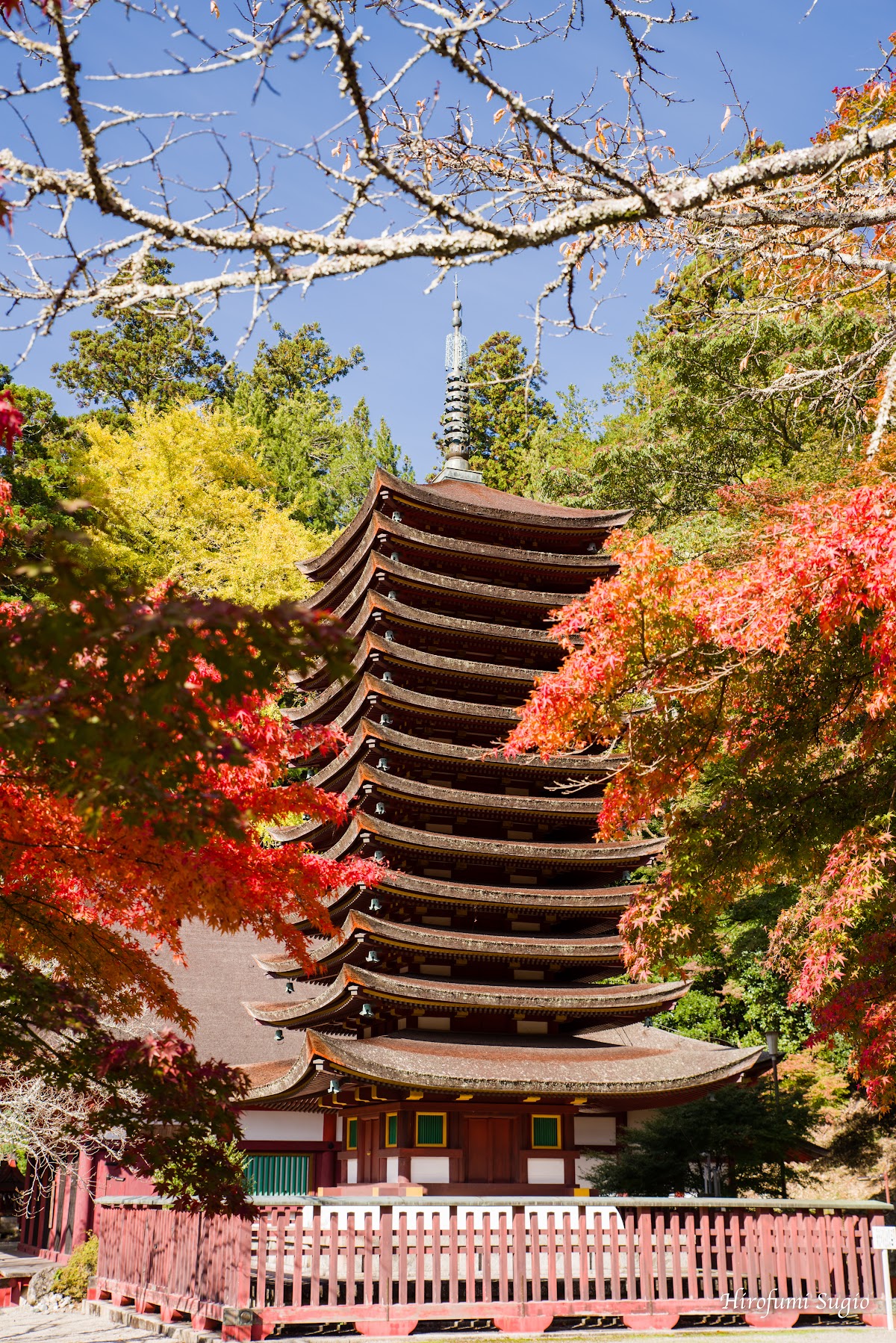
The biggest highlight of Tanzan Shrine is the 17-meter-tall wooden thirteen-story pagoda. This is the only existing wooden thirteen-story pagoda in the world, rebuilt in 1532. The intricate construction from the first to the thirteenth story, harmonizing beautifully with the changing seasons, is truly breathtaking.
Main Hall and Worship Hall (Important Cultural Property)
The main hall, built in the Gongen-zukuri style and considered the prototype of Nikko Toshogu Shrine, was constructed in 1612. It features vibrant, colorful decorations and strongly retains the architectural style of the Momoyama period.
Seasonal Scenery
Spring (Early to Mid-April)
Approximately 500 cherry trees adorn the grounds, creating a magnificent spectacle alongside the thirteen-story pagoda.
Autumn (Mid to Late November)
A famous spot for autumn foliage, often referred to as “Nikko of Kansai.” Approximately 3,000 maple trees dye the entire mountain crimson, and the autumn foliage surrounding the thirteen-story pagoda is particularly renowned as a spectacular sight. There are also periods when the trees are illuminated at night.
Points to Note During Your Visit
Main Places to Visit
- Haiden: First, pay your respects to Fujiwara no Kamatari at the main hall and worship hall.
- Thirteen-Story Pagoda: Walk around the pagoda and view it from various angles.
- Koijinja: A subsidiary shrine dedicated to Kagami-no-Ojo, known as the goddess of matchmaking.
- Kemari Festival: Traditional kemari (traditional Japanese football) is performed annually on April 29th and November 3rd.
Time Required
Allow approximately 60-90 minutes to visit the temple grounds. During the autumn foliage season, it gets crowded, so early morning is recommended.
Benefits
- Academic Success/Prayer for Passing Exams: Benefit from the wisdom of Fujiwara no Kamatari
- Career Advancement and Good Fortune: As the ancestral deity of the Fujiwara clan’s prosperity
- Matchmaking: Pray for a good match at this shrine for love
- Exorcism: Benefit from the miraculous power that brought about the national reform of the Taika Reforms
Access
By Train/Bus
- Approximately 25 minutes by Nara Kotsu bus bound for “Danzan Shrine” from Kintetsu Osaka Line/Sakurai Line “Sakurai Station”, get off at the last stop.
- Buses run approximately once an hour (more frequent during autumn foliage season)
- Approximately 20 minutes by taxi from Sakurai Station
By Car
- Approximately 40 minutes via National Route 169 from Nishimeihan Expressway “Tenri IC”
- Parking: Free (approximately 200 cars), crowded during autumn foliage season
Important Notes
Because the shrine is located in the mountains, the road is narrow and has many sharp curves. Those unfamiliar with driving in these conditions are advised to use public transportation.
Basic Information
- Address: 319 Tawamine, Sakurai City, Nara Prefecture
- Visiting Hours: 8:30 AM – 4:30 PM (Last entry 4:00 PM)
- Admission Fee: Adults 600 yen, Children 300 yen
- Closed Days: None
- Inquiries: 0744-49-0001
- Official Website: http://www.tanzan.or.jp/