About Hase-dera Temple
Hase-dera Temple is the head temple of the Buzan branch of the Shingon sect, located in Hatsuse, Sakurai City, Nara Prefecture. Founded in the 8th century (Tenpyo 7, 735 AD) by Tokudo Shonin, it is known as an ancient temple that has attracted the faith of both aristocrats and commoners since the Heian period.
History and Origins
The founding of Hase-dera Temple dates back to the Nara period. It is said to have begun when Tokudo Shonin enshrined the copper plate Lotus Sutra illustration (a national treasure) on the western hill. Later, in Jinki 4 (727 AD), at the request of Emperor Shomu, Tokudo Shonin enshrined the principal image, the Eleven-faced Kannon statue, on the eastern hill.
During the Heian period, pilgrimages by aristocrats became popular, and the temple appears in classical literature such as “The Tale of Genji,” “The Pillow Book,” and “The Sarashina Diary.” Although it was destroyed by fire during the Sengoku period, it was rebuilt with the support of Tokugawa Ieyasu, and the current main hall was constructed in 1645.
Main Highlights
Main Hall (National Treasure)
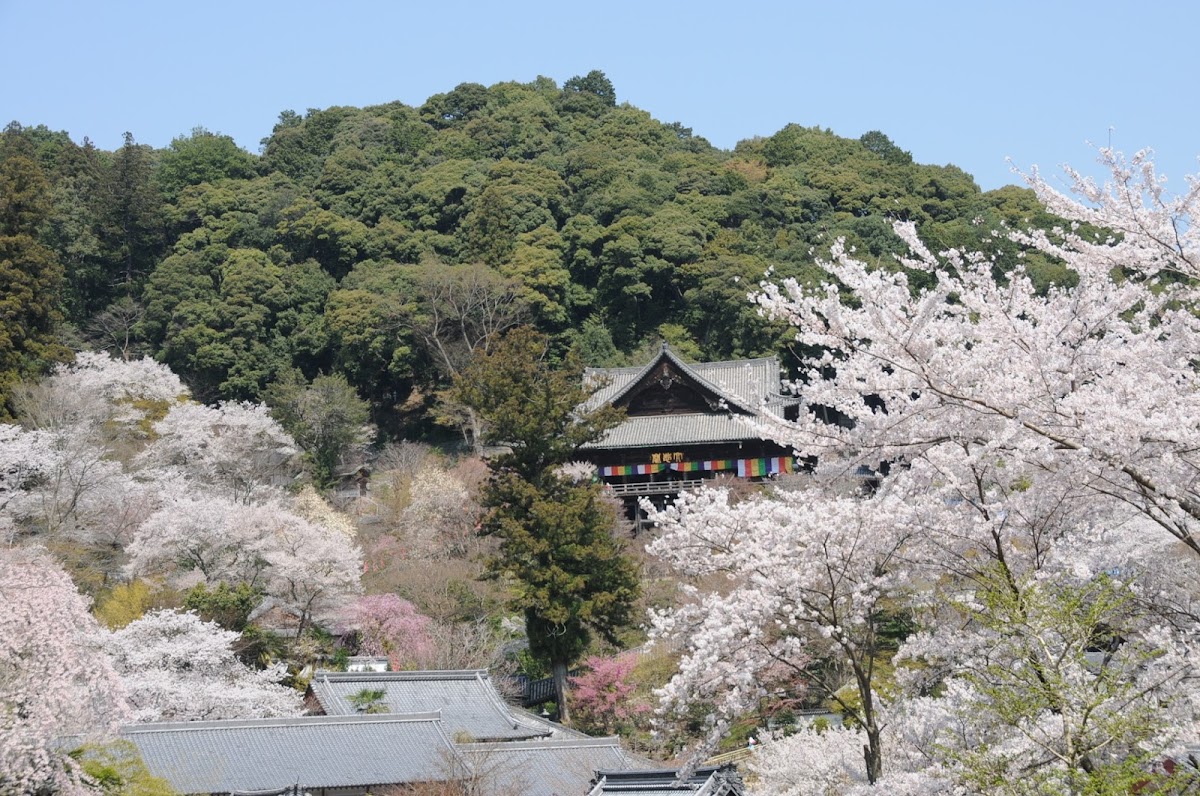
The main hall, built in the kakezukuri (suspended structure) style, has a similar structure to Kiyomizu-dera Temple. It is a magnificent building, approximately 17 meters wide and 10 meters deep, and the inner sanctuary houses the principal image, a standing statue of the Eleven-Headed Kannon.
Eleven-Headed Kannon Statue (Important Cultural Property)
This is one of the largest wooden Buddha statues in Japan, standing over 10 meters tall, and is characterized by its unique posture, holding a staff in its right hand and a water vase in its left. The original statue, created during the Heian period, was destroyed by fire, and the current statue was reconstructed in 1538.
Climbing Corridor (Important Cultural Property)
This covered staircase, consisting of 399 steps, leads from the Niomon Gate to the main hall and is divided into three corridors: the upper, middle, and lower corridors. Peonies and hydrangeas are planted on both sides, offering beautiful scenery throughout the seasons.
Five-Storied Pagoda
This pagoda, approximately 31 meters tall, was built in 1954 to commemorate those who died in the war. The view of the five-storied pagoda and the Hatsuse mountain range from the stage of the main hall is spectacular.
Points to Note During Your Visit
Special Viewing of Kannon
Every spring (March-June) and autumn (October-November), a “special viewing” is held, allowing visitors to directly touch the feet of the principal image, the Eleven-Faced Kannon statue. This is a rare opportunity to get close to the Kannon’s feet and experience its size and grandeur firsthand.
The Charm of the Temple as a Flower Temple
- Peonies (Mid-April to Early May): Approximately 150 varieties and 7,000 peony plants adorn the temple grounds, and the “Peony Festival” is held.
- Hydrangeas (June to July): Approximately 3,000 hydrangea plants bloom, mainly along the covered walkway.
- Cherry Blossoms and Autumn Leaves: The cherry blossoms in spring and the autumn leaves are magnificent, delighting visitors throughout the four seasons.
Recommended Visiting Route
- Enter through the Niomon Gate
- Enjoy the seasonal flowers while climbing the covered walkway (399 steps)
- Pay respects to the principal image at the main hall
- Enjoy the view of the five-story pagoda and Hatsuse from the main hall stage
- Visit the various halls and buildings within the temple grounds.
Benefits
The principal image of Hase-dera Temple, the Eleven-Faced Kannon Bodhisattva, is said to offer the following benefits:
- Protection from Evil and Misfortune: Revered as a Kannon (Goddess of Mercy) for warding off evil since ancient times.
- Matchmaking and Successful Relationships: Known as a place of prayer for successful love since the Heian period, Tamakazura from “The Tale of Genji” also visited.
- Healing from Illness and Good Health: Prayers for physical and mental health are offered through the compassion of Kannon.
- Good Fortune and Prosperity: As the eighth temple on the Saigoku Thirty-Three Kannon Pilgrimage, it guides pilgrims toward good fortune.
Access Information
Access by Train
- Approximately 15 minutes on foot (approx. 1.2 km) from Kintetsu Osaka Line “Hase-dera Station”
- A gently sloping path leads from the station to the Niomon Gate.
- Easily accessible from Osaka and Nagoya.
Access by Car
- Approximately 40 minutes via National Route 169 from Nishi-Meihan Expressway “Tenri IC”
- Approximately 30 minutes from the Hari Interchange on the Meihan Expressway via National Routes 165 and 166.
- Parking: Accommodates 70 regular cars (fee: 500 yen)
Visiting Hours and Admission Fees
- Visiting Hours: 8:30 AM – 5:00 PM (April – September), 9:00 AM – 5:00 PM (October – November & March), 9:00 AM – 4:30 PM (December – February)
- Entrance Fee: Adults 500 yen, Junior/Senior High School Students 500 yen, Elementary School Students 250 yen
- Special Admission Fee: 1,000 yen extra (during special viewing periods in spring and autumn)
Surrounding Area Information
The temple town in front of Hase-dera Temple is lined with shops selling local specialties such as kusamochi (rice cakes with mugwort) and kakinoha-zushi (sushi wrapped in persimmon leaves). Furthermore, there are famous temples nearby, such as Murō-ji Temple (about 20 minutes away) and Tanzan Shrine (about 15 minutes away), making it an ideal base for touring Nara’s ancient temples.