Complete Guide to Ogata Shrine (Higashi-ku, Niigata City, Niigata Prefecture) | History, Goshuin (Shrine Seal), and Access Information
Ogata Shrine, located in Kawato Honmachi, Higashi-ku, Niigata City, Niigata Prefecture, is a venerable shrine with a history of over 1200 years. As an ancient shrine listed in the Engishiki Jinmyocho (a list of shrines compiled in the Heian period), it is cherished by the local people and continues to be revered as the tutelary deity of the Kawato area. This article provides a detailed introduction to Ogata Shrine, including its history, highlights within the grounds, goshuin information, and access methods.
Overview of Ogata Shrine
Ogata Shrine is located at 19-25 Kawato Honmachi, Higashi-ku, Niigata City, Niigata Prefecture, and enshrines Ōnamuchi-no-kami as its main deity. Ōnamuchi-no-kami is known as another name for Ōkuninushi-no-mikoto and is widely worshipped as the god of nation-building and matchmaking.
The current Oogata Shrine is located approximately 2-3 kilometers south of Niigata Airport, situated in a historically significant area formerly known as Numata-gun Numata-go. This region was an important strategic point in ancient Japan and is believed to be the site of the first fortified settlement in Japanese history, known as Nutari-no-saku.
Basic Information
- Location: 19-25 Kawato Honmachi, Higashi-ku, Niigata City, Niigata Prefecture
- Main Deity: Ōnamuchi-no-kami
- Shrine Rank: Shikinaisha (listed in the Engishiki Jinmyōchō)
- Founding: Daidō era (806-810)
- Alternate Name: Hakusan Gongen (former name)
History of Oogata Shrine
Founding and Ancient Records
Oogata Shrine is said to have been founded during the Daidō era (806-810) of the Heian period. This period coincided with the reign of Emperor Saga, a time when Japan’s Ritsuryo legal system was being established. The Engishiki Jinmyocho, compiled in 927 AD (Encho 5), approximately 120 years after its founding, lists the shrine as “Numata-gun Oogata Shrine,” one of the five shrines in Numata-gun, indicating its long-standing recognition by the imperial court.
Shrines listed in the Engishiki Jinmyocho are called “Shikinaisha,” and approximately 3,000 such shrines are listed nationwide. Within Niigata Prefecture, only a limited number of shrines are recorded in this prestigious record, and Oogata Shrine was one of the most important shrines in Numata-gun.
Transition from the Medieval to the Early Modern Period
From the medieval period onward, Oogata Shrine was also known as Hakusan Gongen. Hakusan worship was a mountain worship practice that spread mainly in the Hokuriku region, and it is clear that it was revered as Hakusan Gongen under the influence of syncretism of Shinto and Buddhism. While detailed records from this period are limited, it is certain that the shrine continued to attract the faith of the people as the local tutelary deity.
During the Edo period, it served as the village shrine of the Kawato district, playing a central role in local religious ceremonies. In a community centered on agriculture, it held an important position as a place to pray for abundant harvests and family safety.
Development since the Modern Era
Following the Meiji-era separation of Shinto and Buddhism, the shrine was renamed from Hakusan Gongen to Oogata Shrine. This renaming was part of the Meiji government’s religious policy, aimed at clearly distinguishing between shrines and temples.
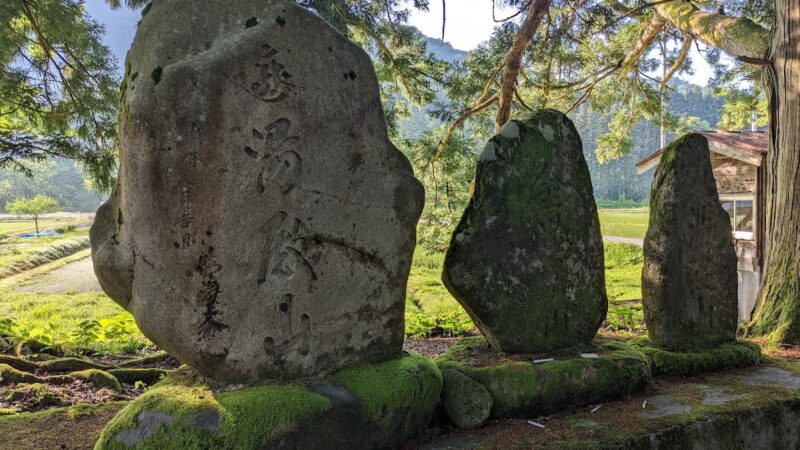
In the Showa era, the shrine buildings were renovated and the grounds were improved, resulting in its current form. Items donated during this period, such as Showa-era votive tablets and sacred mirrors, remain on the grounds, conveying the deep faith of the local people.
After the war, it continued to develop alongside the region, and today, as the tutelary shrine of the Kawato district and a representative historical shrine of Higashi Ward, Niigata City, it welcomes many worshippers.
Highlights of the Shrine Grounds
Torii Gate and Approach
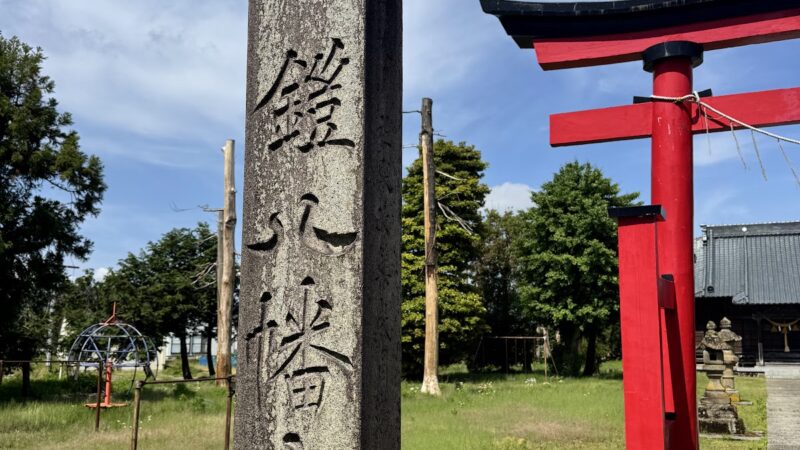
The grounds of Oogata Shrine begin with a magnificent torii gate. Passing through the torii gate, a path enveloped in pure air leads to the main shrine. Trees line both sides of the path, maintaining a tranquil atmosphere despite its urban location.
Komainu (Guardian Dogs)
Along the path, there are guardian dogs (komainu) that evoke a sense of history. Komainu have been placed as sacred beasts protecting shrines since ancient times, and the komainu of Oogata Shrine have watched over the grounds for many years. Their expressions and forms reveal the style of the era in which they were dedicated.
Haiden (Worship Hall) and Honden (Main Shrine)
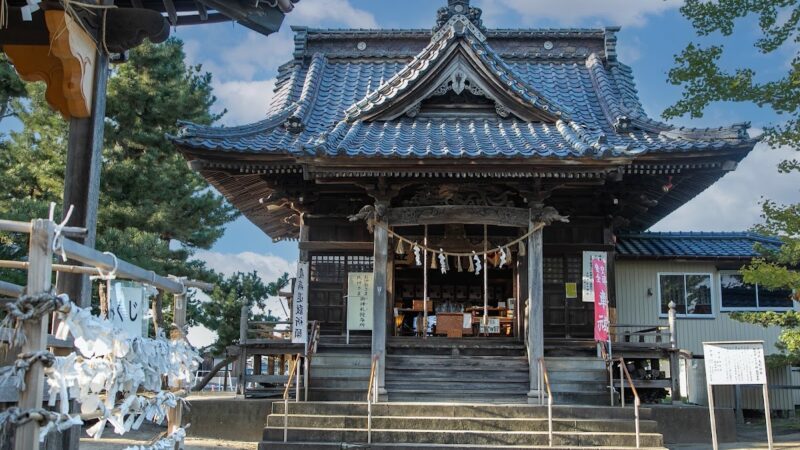
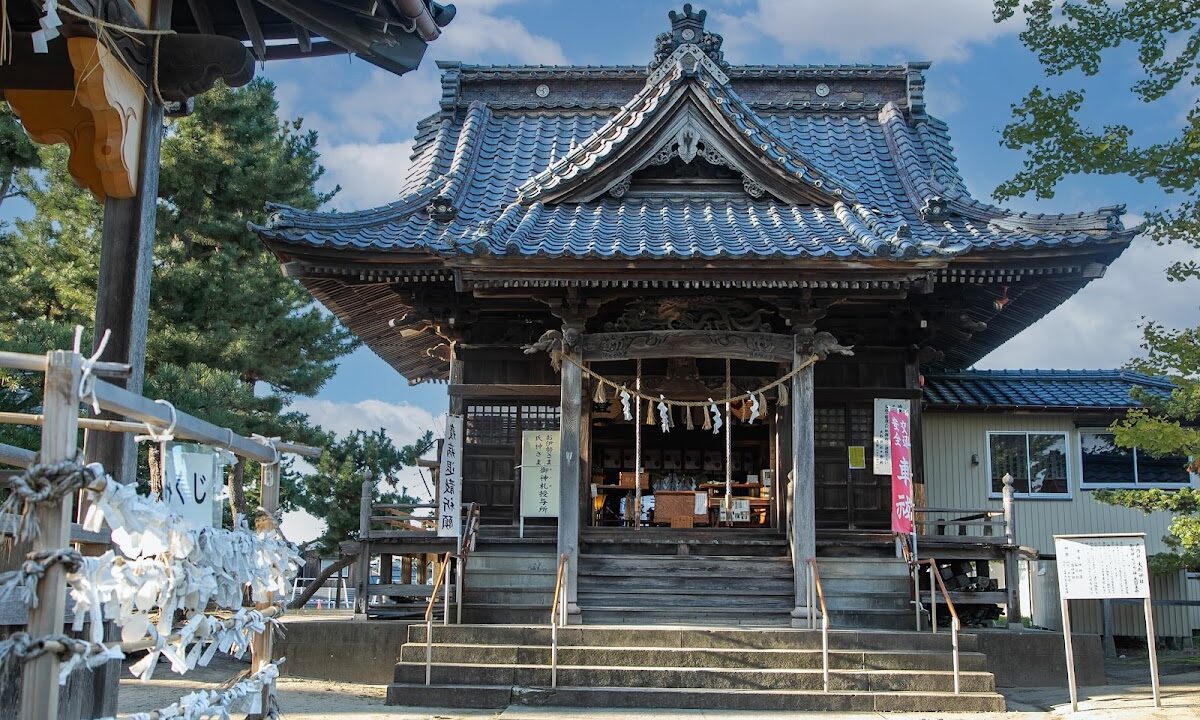
The Haiden is a place where worshippers offer prayers and is carefully maintained. Behind the Haiden sits the Honden, where the principal deity, Ōkuninushi-no-kami, is enshrined. The architectural style of the Honden exhibits characteristics of traditional shrine architecture, conveying the dignity of a historical shrine.
Inside the Haiden, a sacred mirror is enshrined, and a sacred atmosphere permeates the space. Furthermore, votive offerings from the Showa era are displayed, telling the story of the long history of faith among the local people.
Kagura Hall
A Kagura Hall is also located within the shrine grounds. The Kagura Hall is used as a place for offering Kagura (sacred dance and music) during festivals, and is an important facility for preserving the region’s traditional culture.
Subsidiary Shrines and Shrines within the Precincts
Several subsidiary shrines are enshrined within the grounds of Ogata Shrine.
Inari Shrine
The Inari Shrine enshrines Inari, the god worshipped for business prosperity and abundant harvests. It is characterized by its vermilion torii gate and attracts many worshippers.
Shinmei Shrine
The Shinmei Shrine enshrines Amaterasu Omikami and is revered as the ancestral deity of the Imperial Family. It sits quietly in a corner of the grounds, purifying the hearts of worshippers.
Shrines Outside the Precincts
Ogata Shrine also has an external shrine, Kamimichi Shrine. A “Kyogaisha” refers to a related shrine located separately from the main shrine. Kamimichi Shrine is known for its deep connection to Ogata Shrine.
Relationship between Ogata Shrine and the District Name
In Niigata City’s Higashi Ward, there is a district name called “Ogata.” While there are various theories regarding the relationship between this district name and Ogata Shrine, it is believed that there was a reciprocal relationship, either the shrine’s name being the origin of the district name, or the district name influencing the shrine’s name.
From ancient to medieval times, shrines were central to local communities, and settlements often formed around them. Ogata Shrine, too, played a crucial role in shaping the local identity as a center of faith in the Kawato district.
Even today, the place name “Ogata” remains within Niigata City’s Higashi Ward, conveying the historical importance of Ogata Shrine. For the local people, Ogata Shrine is not merely a religious facility, but a beloved symbol of the region’s history and culture.
Festivals and Events
Ogata Shrine holds various festivals and events throughout the year.
Annual Grand Festival
The annual grand festival, held at a fixed time each year, is the most important festival at Ogata Shrine. Local people gather for events such as the procession of the portable shrine and the performance of sacred dances, providing an opportunity to deepen community bonds.
New Year’s Visit
Many worshippers visit the shrine for their first shrine visit of the new year. The shrine is bustling with people praying for various things, such as family safety, business prosperity, and academic success.
Monthly Festival
The monthly festival, held regularly each month, is a time to pray for the peace and prosperity of the community and its parishioners.
Goshuin (Shrine Seal) Information
Ogata Shrine offers goshuin. Goshuin are popular among worshippers as proof of their visit and as a way to forge a connection with the shrine.
How to Obtain a Goshuin
Goshuin are available as pre-written seals at the main hall of Ogata Shrine. These pre-written seals can be received at any time during your visit. Furthermore, you can also obtain the Goshuin (seal) of Ogata Shrine at Terayama Fudōson and Homusubi Shrine. These shrines have close ties to Ogata Shrine and are managed as affiliated shrines, hence the issuance of Goshuin.
Features of the Goshuin
The Goshuin of Ogata Shrine includes the shrine’s name and the date of visit, along with the shrine’s seal. It also features a description indicating its status as a Shikinaisha (a shrine listed in the Engishiki), giving it a sense of historical significance.
For those collecting Goshuin, the Goshuin of a Shikinaisha listed in the Engishiki Jinmyōchō (a list of shrines compiled in the Heian period) holds special value. When visiting Shikinaisha in Niigata Prefecture, be sure to visit Ogata Shrine.
Access
Access by Public Transportation
Bus
If using Niigata Kotsu buses, get off at the “Kawato Higashi” bus stop and it’s about a 3-minute walk. If you’re traveling by bus from Niigata Station, the journey takes approximately 30 minutes, although this may vary depending on traffic.
The route from the bus stop to the shrine is flat and well-marked, making it easy to find even for first-time visitors.
Railway
The nearest station is Higashi-Niigata Station on the JR Hakushin Line. The shrine is not within walking distance of the station, so we recommend taking a taxi or bus.
Access by Car
If traveling by car, the shrine is approximately 2-3 kilometers south of Niigata Airport, about a 10-minute drive. From central Niigata City, it takes about 20 minutes via National Route 7.
Parking
Parking is available on the shrine grounds for visitors. It is free of charge, but it can get crowded during festivals such as the annual grand festival, so we recommend visiting with plenty of time to spare.
Nearby Attractions
When visiting Oogata Shrine, we recommend also visiting the nearby historical sites.
- Terayama Fudo-son: A temple that also offers Goshuin (temple/shrine seals) from Ogata Shrine.
- Homusubi Shrine: A shrine deeply connected to Ogata Shrine.
- Nutari-saku Ruins: A historical site believed to be the site of Japan’s first fortified settlement.
Visiting these spots will allow you to gain a deeper understanding of the history and culture of Higashi Ward, Niigata City.
Manners and Precautions for Visiting Shrines
Etiquette for Visiting Shrines
The basic etiquette for visiting a shrine is as follows:
- When passing through the torii gate: Bow before entering the shrine grounds.
- Purification at the water basin: Purify your left hand, right hand, and mouth in that order.
- Worship at the main hall: Worship using the two bows, two claps, and one bow method.
Regarding Photography
Photography is generally permitted on the shrine grounds, but please refrain from taking photos inside the main hall or in sacred areas. Also, please be considerate of other visitors.
Visiting Hours
Oogata Shrine is generally open for daytime visits. It is recommended to visit between early morning and evening. Avoid visiting at night; please visit during daylight hours.
The Charm and Value of Oogata Shrine
Historical Value
Oogata Shrine is one of the most prestigious shrines in Niigata Prefecture, boasting a history of over 1200 years as a Shikinaisha (a shrine listed in the Engishiki Jinmyocho). Shrines listed in the Engishiki Jinmyocho were important shrines recognized by the state under the ancient Ritsuryo system, and their historical value is immeasurable.
As a center of faith in the ancient Numata District, and situated on the historical site where the Nutari Fort was built, it holds significant meaning in the study of Japanese history.
Cultural Value
Oogata Shrine has functioned as the core of the region’s cultural identity. Traditional events such as festivals and Kagura (sacred dances) have been passed down through generations, strengthening the bonds of the local community.
Cultural artifacts such as framed pictures and sacred mirrors donated during the Showa era are also preserved, serving as valuable historical materials that pass on the region’s history to future generations.
Value as a Place of Worship
Even today, the shrine continues to attract fervent devotion from the local people as the tutelary deity of the Kawato district. Many worshippers visit during the New Year’s pilgrimage and the annual festival, offering prayers for family safety, business prosperity, academic success, and more.
As the main deity is Ōkuninushi-no-Mikoto (Ōnamuchi-no-Kami), the shrine is also worshipped as a god of matchmaking and good fortune, attracting worshippers with various wishes.
History of Higashi Ward, Niigata City and Ōgata Shrine
Higashi Ward in Niigata City has flourished as a transportation hub since ancient times. Located between the Agano River and the Shinano River, this area was a politically and militarily important base in ancient times, with the construction of the Nutari Fort.
The Kawato district, where Ōgata Shrine is located, was formerly known as Nuttari-gō in Nuttari County, and has been a place where people have lived since ancient times. Ogata Shrine has watched over the history of this region for over 1200 years, and can be said to be the history of the region itself.
Currently, Higashi Ward in Niigata City is a transportation hub with Niigata Airport, and continues to develop as a residential and commercial area. Amidst this development, Ogata Shrine continues to exist as a spiritual anchor for the people of the region, while preserving its history and traditions.
Summary
Ogata Shrine is a Shikinaisha (a shrine listed in the Engishiki) with a history of over 1200 years, located in Kawato Honmachi, Higashi Ward, Niigata City, Niigata Prefecture. It is said to have been founded during the Daido era (806-810), and as a prestigious shrine listed in the Engishiki Jinmyocho (a list of shrines compiled in the Heian period), it has attracted the faith of the local people for many years.
The main deity enshrined is Ōkuninushi-no-kami, and after a period of being revered as Hakusan Gongen, it was renamed Ogata Shrine during the Meiji era. The shrine grounds include a worship hall, main hall, and Kagura hall, as well as subsidiary shrines such as Inari Shrine and Shinmei Shrine, offering plenty to see.
You can receive a pre-printed Goshuin (temple/shrine stamp) at the main hall, or you can have one written for you at Terayama Fudōson and Homusubi Shrine. Access is approximately a 3-minute walk from the Niigata Kotsu bus stop “Kawato Higashi,” and free parking is available for those traveling by car.
When visiting Higashi Ward in Niigata City, be sure to visit Ōgata Shrine and experience the sacred atmosphere steeped in over 1200 years of history. Combining the prestige of a Shikinaisha (a shrine listed in the Engishiki, an ancient Japanese legal code) with the warmth of a local tutelary deity, Ōgata Shrine is sure to leave a lasting impression on visitors.