
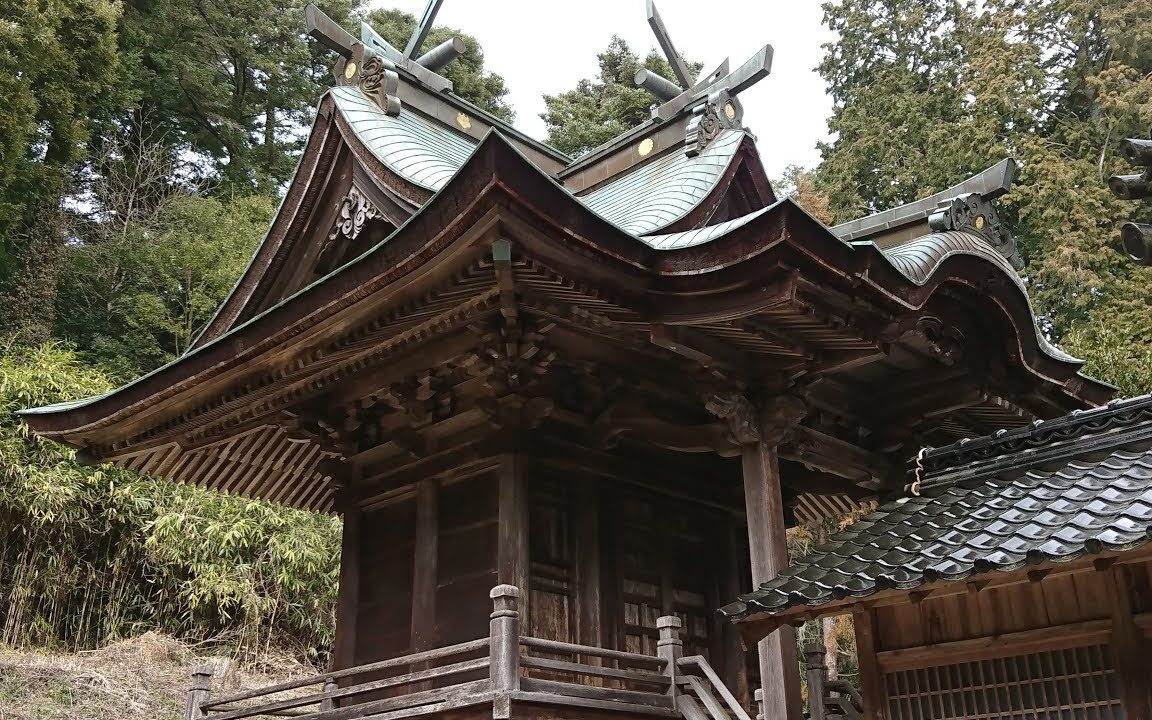
Yagura Shrine (Kibichuo-cho, Kaga-gun, Okayama Prefecture) Complete Guide: History, Deities, and Access Information
Located in Nouchi, Kibichuo-cho, Kaga-gun, Okayama Prefecture, Yagura Shrine is a historic shrine founded in 1205 during the early Kamakura period. This shrine, where the deity Murono Myojin from Murotsu in Banshu was invited by Takei Masahiro, the lord of Yagura Aze Castle, has attracted the faith of local people for over 800 years. This article comprehensively introduces information useful for visiting Yagura Shrine, including its detailed history, enshrined deities, highlights within the grounds, annual events, and access methods.
Basic Information about Yagura Shrine
Location: Nochi (Murono area), Kibichuo-cho, Kaga-gun, Okayama Prefecture
Main Deity: Murono Myojin
Shrine Rank: Former Village Shrine, Shrine Receiving Offerings of Sacred Food and Teachings
Parish Area: Nochi, Muronno, Kibichuo-cho, Kaga-gun
Annual Festival Date: September 17th (Originating from the anniversary of the shrine’s founding)
Yagura Shrine is located in the Nochi area, in the southwestern part of Kibichuo-cho. This area is surrounded by forests and boasts a rich natural environment, with a typical Kibi Plateau landscape dotted with fields and farmlands.
Detailed History and Origins of Yagura Shrine
Founding History (Genkyu 2nd year, 1205)
The history of Yagura Shrine dates back to the early Kamakura period, in Genkyu 2nd year (1205). The origin of the shrine dates back to September 17th of that year, when Takei Masahiro, the lord of Yagura-aze Castle, invited Murono Myojin, a deity enshrined in Murotsu, Harima Province (present-day Hyogo Prefecture), to Yagura Castle.
Murono Myojin is known as the guardian deity of Murotsu in Harima Province, a strategic point for maritime traffic, and was worshipped as a god of safe voyages and business prosperity. It is believed that Takei Masahiro’s intention in inviting this deity was to pray for the protection of Yagura-aze Castle and the peace and well-being of his people.
Construction of the Shrine and Relocation (Ken’ei 1, 1206)
In April of Ken’ei 1 (1206), the year after the initial enshrinement, Takei Masahiro selected a suitable site in Yagura-aze, built a formal shrine, and relocated the deity. This established the shrine as an independent entity from the temporary shrine within the castle, solidifying its position as the guardian deity of the region.
Reconstruction during the Edo Period
Yagura Shrine underwent two large-scale reconstructions during the Edo period.
Reconstruction in Genroku 15 (1702): Approximately 500 years had passed since its founding, and due to the aging of the shrine buildings, a large-scale renovation was carried out.
Reconstruction in Bunka 7 (1810): Approximately 100 years after the reconstruction during the Genroku period, the shrine buildings were restored again, preserving the shrine’s grandeur.
These reconstructions demonstrate the deep faith of the local people and the important role Yagura Shrine played in the community.
Fire and Reconstruction during the Meiji Era
In Meiji 30 (1897), Yagura Shrine suffered a major disaster when a fire destroyed its buildings. However, thanks to the enthusiasm of the parishioners, reconstruction work progressed, and a new shrine building was completed in January Meiji 42 (1909), followed by a relocation ceremony. In May 1912 (Meiji 45), the shrine was designated a shrine eligible to receive offerings from the government. This meant that the shrine was recognized as having the right to receive special offerings from the state, and it served as official recognition of the shrine’s status and importance in the region.
Shrine Consolidation in the Taisho Era
On December 9, 1914 (Taisho 3), in accordance with the Meiji government’s policy of shrine consolidation, Yagura Shrine merged with three surrounding shrines.
- Ishisuna Shrine
- Shimano Shrine
- Tamayorihime Shrine
By merging the deities of these shrines into Yagura Shrine, it became an object of worship for a wider audience, strengthening its character as the guardian shrine of the region.
Deities and Divine Virtues
Main Deity: Murono Myojin
Murono Myojin, the main deity of Yagura Shrine, is a god originating from Murotsu in Harima Province. Murotsu flourished as an important port town on the Seto Inland Sea from ancient times, and was a key point for maritime traffic. Murono Myojin is believed to possess the following divine virtues:
- Safe Navigation: As a guardian deity of maritime traffic
- Business Prosperity: As a god who supported the prosperity of the port town
- Family Safety: Guardian of peace and tranquility in the region
- Abundant Harvest: As a guardian deity of agriculture
Deities Enshrined Together
The deities of the three shrines that were merged in 1914 (Taisho 3) are also enshrined at Yagura Shrine.
Deity of Ishisuna Shrine: Believed to be a local land god and guardian deity of agriculture.
Deity of Shimano Shrine: Presumed to have the characteristics of a water god or local tutelary deity. **Deity enshrined at Tamayorihime Shrine: Tamayorihime-no-Mikoto is known as the mother goddess of Emperor Jimmu and is worshipped as the goddess of safe childbirth and child-rearing.
With these deities enshrined together, Yagura Shrine has become a comprehensive guardian shrine possessing diverse divine virtues.
Highlights of the Shrine Grounds
Shrine Architecture
The current shrine building was rebuilt in 1909 (Meiji 42), giving it a history of over 100 years. Having been rebuilt after a fire, this shrine is a testament to the faith of the local people.
The architectural style is thought to be traditional Shinmei-zukuri or Nagare-zukuri, exhibiting characteristics typical of wooden architecture found in local shrines in Okayama Prefecture.
Natural Environment of the Shrine Grounds
The Nochi area where Yagura Shrine is located is blessed with the rich natural environment of the Kibi Plateau. The shrine grounds are surrounded by forests, allowing visitors to enjoy the changing seasons.
- Spring: The shrine grounds are beautiful with fresh greenery and filled with refreshing air.
- Summer: A cool atmosphere enveloped in deep green.
- Autumn: Autumn leaves color the shrine grounds, and it is the season for the annual festival.
- Winter: A tranquil atmosphere, and sometimes a snowy landscape can be seen.
Stone Structures and Monuments
As a shrine with a long history, it is believed that various stone structures remain on the grounds. Komainu (guardian lion-dogs), lanterns, water basins, and monuments likely exist as evidence of faith throughout different eras.
Annual Events and Festivals
Annual Festival (September 17th)
The annual festival, the most important festival of Yagura Shrine, is held every year on September 17th. This date originates from the day when Murono Myojin was enshrined in the second year of Genkyu (1205), and is an important day commemorating the shrine’s founding.
At the annual festival, people from the parish area of Nochi and Murono gather, and the Shinto rituals are solemnly performed. Traditional local performing arts and dedication ceremonies may be held, making it an important opportunity to reaffirm the unity of the local community.
Other Annual Events
The following festivals are generally considered to be held as annual events at shrines:
- New Year’s Day Festival (January 1st): A festival celebrating the New Year
- Spring Festival: A prayer for a bountiful harvest
- Summer Purification Ceremony (end of June): A Shinto ritual to purify oneself of the impurities accumulated over the past six months
- Autumn Festival: A festival to give thanks for the harvest
- Monthly Festival: A regular monthly festival
About Kibi-Chuo Town and the Nochi Area
Overview of Kibi-Chuo Town
Kibi-Chuo Town is located almost in the center of Okayama Prefecture, on the Kibi Plateau. It was formed on October 1, 2004 (Heisei 16) through the merger of Kayo Town in Kaga District and Kamogawa Town in Kamifusa District.
- Population: Approximately 10,000 (as of 2024)
- Area: Approximately 268 square kilometers
- Elevation: Plateau area with an average elevation of 300-400 meters
- Climate: Cooler than the southern part of the prefecture, pleasant summers, and snowy winters
Kibichuo Town is known for its thriving agriculture, taking advantage of its rich natural environment, and is particularly renowned for its grape cultivation (such as Pione). In recent years, it has also attracted attention as a potential workation destination.
Characteristics of the Nochi Area
The Nochi area, where Yagura Shrine is located, is situated in the southwestern part of Kibichuo Town and has the following characteristics:
- Topography: Mostly covered by forest, with scattered fields and farmlands.
- Adjacent Areas: Borders town areas such as Kamitake and Kita.
- Major Facilities: Yagura Shrine, Kibichuo Town Nochi Community Center, Murono Public Hall, etc.
- Settlements: Consists of two main settlements: Nochi and Murono.
The Nochi area is a typical mountainous region, preserving a traditional rural landscape. Although the area is experiencing depopulation, the community ties centered around Yagura Shrine remain strong.
Access Information
Access by Car
Access to Yagura Shrine is most convenient by car.
From Okayama City:
- Take National Route 53 or the Okayama Expressway
- Travel time: Approximately 60 minutes
- Approximately 15-20 minutes from the Okayama Expressway “Kayo IC”
From Okayama Airport:
- Accessible in approximately 30-40 minutes
- Convenient access from the airport is a characteristic of Kibi-Chuo Town
Parking: Parking spaces for visitors are likely available on the temple grounds or nearby.
Access by Public Transportation
Kibi-Chuo Town has limited public transportation, so access by car is recommended.
Nearest Station: JR Tsuyama Line “Fukuto Station” or “Kanagawa Station”
Bus: Kibi-Chuo Town Community Bus operates, but the number of services is limited, so it is recommended to check the timetable in advance.
Taxi: If using a taxi from the nearest station, it is recommended to book a taxi in advance.
Nearby Tourist Attractions
Major Tourist Attractions in Kibi-Chuo Town
When visiting Yagura Shrine, we recommend also visiting other tourist attractions in Kibi-Chuo Town.
Kibi Highlands Nature Park:
A vast nature park where you can enjoy hiking and camping. A popular spot where you can enjoy nature in all four seasons.
Kibi Plaza:
Kibi-Chuo Town’s tourist information center where you can purchase local specialties. Fruits such as Pione grapes and processed goods are popular.
Yoshikawa Historical and Folk Museum:
A two-story wooden building with a tiled roof in a Western style, the exterior of which has been preserved as it was when it was built. A facility where you can learn about the history and culture of the region.
Omura-ji Temple:
An ancient temple said to have been founded during the Tenpyo era as a place of prayer for Emperor Shomu. The pine trees on the temple grounds are a beloved symbol of the town.
Ukai Valley: Located in the southern part of Kibichuo Town, this scenic spot is known for its beautiful autumn foliage. It’s a stunning valley where clear streams and unique rock formations intertwine.
Horse Riding Facility
Kibi Highlands also offers horse riding experiences, providing a valuable opportunity to interact with horses in a natural setting. This is a popular activity for families.
Manners and Precautions for Visiting Shrines
Basic Shrine Etiquette
When visiting Yagura Shrine, please observe the following basic etiquette:
- Bow before passing through the torii gate: This shows respect for entering the sacred area.
- Avoid walking in the center of the path: The center is considered the path of the gods.
- Purify yourself at the water basin: Purify your left hand, right hand, and mouth in that order.
- Etiquette at the main hall: Two bows, two claps, and one bow are the basic rituals.
Photography
Photography is generally permitted on the shrine grounds, but please note the following points.
- Refrain from taking photos during Shinto rituals.
- Avoid taking photos in restricted areas such as inside the main shrine.
- Be considerate of the privacy of other worshippers.
Clothing and Belongings
- Clothing: No special formal attire is required, but please dress cleanly and modestly.
- Seasonal attire: As Kibi Plateau is at a high altitude, please prepare clothing appropriate for the season.
- Belongings: Offering money (money), Goshuincho (stamp book) (if desired), etc.
About Goshuin (Shrine Stamps)
Regarding the issuance of Goshuin at Yagura Shrine, it is recommended to check with the Okayama Prefectural Shrine Association or the Kibi-Chuo Town Tourism Association in advance. For smaller shrines, there may not be a resident priest, so prior contact is especially important if you wish to receive a Goshuin.
The Contemporary Significance of Yagura Shrine
Center of the Local Community
For over 800 years, Yagura Shrine has functioned as a spiritual pillar of the Nochi and Murono areas. In mountainous and rural areas experiencing depopulation, shrines remain important places where local residents gather and reaffirm their community bonds.
Annual festivals and events provide opportunities for intergenerational exchange and contribute to the transmission of traditional culture.
Historical Value
Yagura Shrine, with its long history dating back to the Kamakura period, is a valuable cultural heritage site that conveys the history of the region. The shrine’s history is etched with events from each era, including its enshrinement by Takei Masahiro, lord of Yagura Aze Castle, its reconstruction during the Edo period, its fire and subsequent reconstruction in the Meiji era, and the consolidation of shrines in the Taisho era.
This history tells not only the story of the shrine itself, but also the history of the Nochi region of Kibi-Chuo Town.
Preservation of the Natural Environment
The shrine grounds and surrounding forests also play a role in preserving the region’s natural environment. In today’s rapidly developing world, shrine forests are valuable spaces that contribute to the protection of biodiversity and landscape preservation.
Summary
Yagura Shrine is a historic shrine located in Nouchi, Kibichuo-cho, Kaga-gun, Okayama Prefecture, founded in 1205. Since the enshrinement of Murono Myojin from Murotsu in Banshu by Takei Masahiro, the lord of Yagura Aze Castle, it has been a center of faith for the local people for over 800 years.
Having survived a fire in the Meiji era, and with the merger of three surrounding shrines in the Taisho era, Yagura Shrine has developed into the guardian shrine of the region and continues to play an important role as the center of the Nouchi/Murono community.
Nearby surrounded by the rich nature of the Kibi Plateau, Yagura Shrine offers a tranquil environment where visitors can feel the history and tradition. When visiting Kibichuo-cho, located in the heart of Okayama Prefecture, we highly recommend a visit. You will be able to experience the story woven from the region’s history and the faith of its people.
Inquiries about visiting the shrine: For detailed information about visiting the shrine and the schedule of annual events, please contact the Okayama Prefectural Shrine Association (Tel: 086-270-2122) or the Kibi-Chuo Town Hall.


