Complete Guide to Kyuyo-ji Temple (Okinawa Prefecture) | History, Goshuin (Temple Seal), Columbarium, and Access Information
About Kyuyo-ji Temple
Kyuyo-ji Temple is a Jodo Shinshu Honganji-ha temple located in Yamasato, Okinawa City, Okinawa Prefecture. Its official name is “Koza-san Ryūkamu-in Kyuyo-ji,” and it is also known as “Koza Honganji.” Founded in Kyoto in 1258 (Shōka 2), and relocated to Okinawa in 1961 (Shōwa 36), it is a venerable temple with over 800 years of history.
It is affectionately known by many names, including “Okinawa Prefecture’s Largest Stone Statue Temple,” “Koza’s Oldest Buddhist Temple,” “Chura-dera (Beautiful Temple),” “Silk Road Temple,” “Resort Temple,” and “Eisa Temple,” and is beloved by local residents and visitors alike.
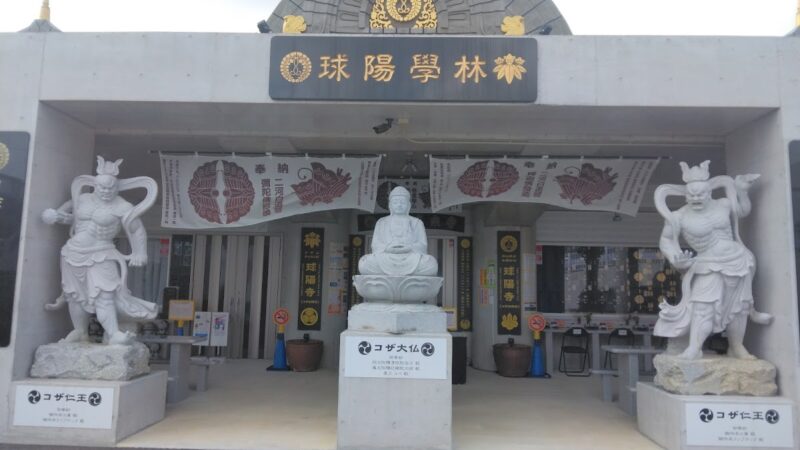
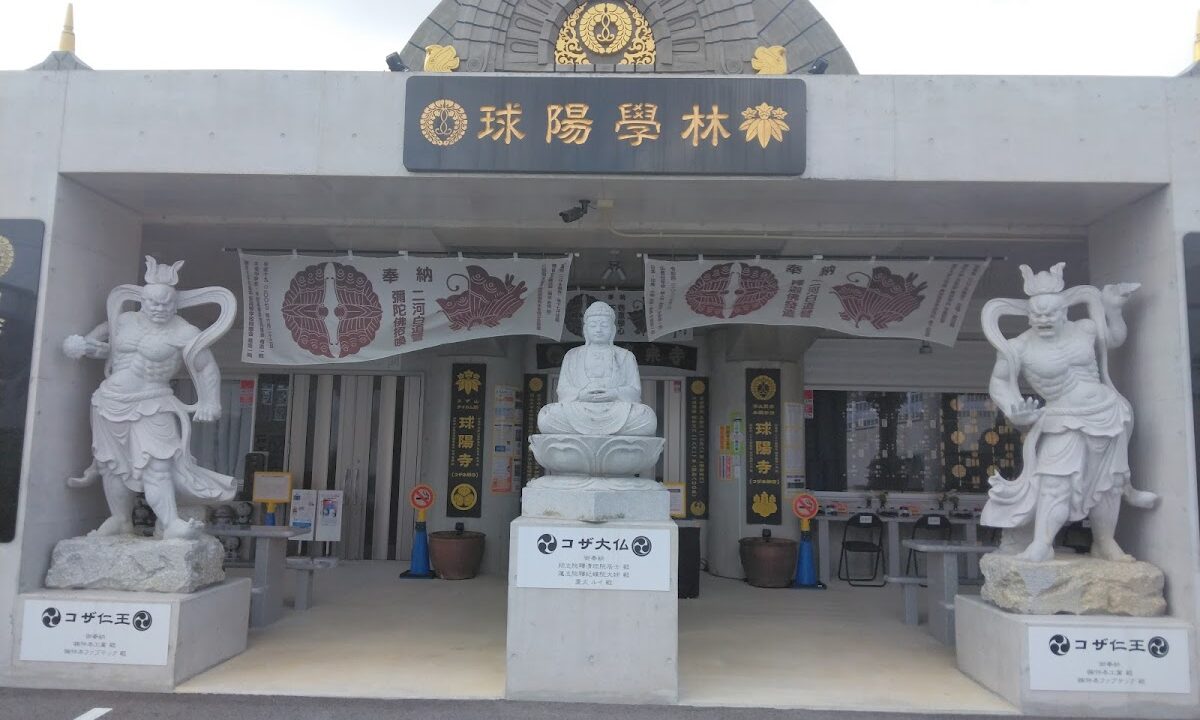
Large stone statues such as “Koza Daibutsu (Great Buddha of Koza),” “Koza Nio (Guardian Guardians),” and “Koza Chōrō (Elder of Koza)” are placed within the temple grounds, creating a unique landscape. It has also been used as a filming location for movies and dramas, and is known as a site for historical research on Okinawa.
History of Kyuyo-ji Temple
Founding in Kyoto (Kamakura Period)
The origins of Kyuyo-ji Temple can be traced back to its founding in Kyoto in 1258 during the Kamakura period. As a temple of the Jodo Shinshu Honganji sect, it has attracted many followers throughout its long history.
Relocation to Okinawa (Showa Era)
Approximately 700 years after its founding, in 1961 or 1962 (Showa 36), Kyuyo-ji Temple was relocated to Okinawa. This relocation was carried out with the aim of spreading Buddhist culture in Okinawa and providing a spiritual pillar in the post-war period. By establishing its base in Okinawa City (then Koza City), it developed as a temple deeply rooted in the community.
Modern Kyuyo-ji Temple
Currently, Kyuyo-ji Temple is located in the Gakuen Toshi (Academic City) area of Yamasato, Okinawa City, adjacent to a combined junior and senior high school. The temple grounds are being continuously improved, creating a more comfortable environment for visitors. The temple is open year-round (opening at 10:00 AM and closing at 5:00 PM), welcoming many visitors.
Highlights of Kyuyo-ji Temple
Koza Great Buddha
The Koza Great Buddha is the symbolic presence of Kyuyo-ji Temple. This large stone Buddha, enshrined on the temple grounds, leaves a deep impression on visitors. While it may be temporarily stored in front of the main hall during periods of grounds maintenance, its presence remains unchanged.
Koza Nio Statues
The Koza Nio statues, guarding the temple gate, are imposing stone statues that welcome visitors. Nio statues have been placed at temple entrances since ancient times as protectors of Buddhist teachings. The Nio statues at Kyuyo-ji Temple continue this tradition.
Main Hall and Amida Hall
The Main Hall enshrines Amida Buddha and is the central place of the teachings of Jodo Shinshu Buddhism. In this tranquil space, visitors can calm their minds and offer prayers. The Amida Hall is the core building of faith in Jodo Shinshu Buddhism, and many religious services and ceremonies are held there.
Stone Statues
Living up to its reputation as “Okinawa Prefecture’s largest stone statue temple,” numerous stone statues are placed throughout the grounds. Various Buddhist statues, including Jizo Bodhisattva and Kannon Bodhisattva, watch over visitors. These stone statues exude a unique atmosphere that also reflects the influence of Silk Road culture.
Koza Elder
The stone statue known as “Koza Elder” is another distinctive feature of Kyuyo-ji Temple. The figure of the elder symbolizes Buddhist wisdom and compassion.
Kyuyo-ji Temple’s Goshuin (Temple Seal) Information
You can receive a Goshuin at Kyuyo-ji Temple. Many visitors come to the temple seeking a Goshuin (temple stamp) as a memento of their visit and as proof of their faith.
How to Obtain a Goshuin
Goshuin are available at the main hall or the administration building. If you wish to have your Goshuin book inscribed, it is recommended to visit during reception hours.
Characteristics of the Goshuin
The Goshuin of Kyuyo-ji Temple includes the temple’s official name and calligraphy related to the principal image, Amida Buddha. It features a meticulous brushwork that reflects the temple’s status as a Jodo Shinshu Honganji-ha temple.
About Kyuyo-byo (Columbarium)
Kyuyo-ji Temple has a columbarium called “Kyuyo-byo” which offers perpetual memorial services.
Characteristics of Kyuyo-byo
Kyuyo-byo is a columbarium designed to meet modern needs. It features barrier-free design, ensuring a safe and accessible environment for the elderly and wheelchair users.
Facilities and Equipment
Kyuyo-byo Temple has the following facilities:
- Columbarium: Clean and well-maintained ossuary space
- Memorial Service Facility/Multipurpose Hall: Facility for holding memorial services and Buddhist rituals
- Dining Facility: Space available for meals after memorial services
- Administrative Building/Shop: Administrative procedures and purchase of Buddhist altar items are available
- Parking: A total of 100 parking spaces across four lots
About Perpetual Memorial Services
Kyuyo-byo Temple offers perpetual memorial graves. Perpetual memorial services are a system where the temple takes responsibility for providing memorial services in perpetuity, making it a suitable option for those without successors or those who do not wish to burden their descendants.
Costs and Pricing
Individual consultation is required regarding columbarium usage fees and perpetual memorial service costs. For details, we recommend contacting Kyuyo-ji Temple directly or requesting information through a cemetery information website.
Access to Kyuyo-ji Temple
Location
Address: 3-7-1 Yamasato, Okinawa City, Okinawa Prefecture 904-2151
Access by Car
- Approximately 5 minutes by car from Okinawa Expressway “Okinawa Minami IC”
- Parking available (100 cars total across four parking lots)
If using a car navigation system, please enter the address or phone number. Located in the Gakuen Toshi area and adjacent to a combined junior and senior high school, it is relatively easy to find.
Access by Public Transportation
The nearest station is “Tedako Ura-Nishi Station” on the Okinawa Urban Monorail (Yui Rail), but it is a distance from the station, so we recommend using a taxi or bus.
If accessing from Naha City, you can also take a local bus towards Okinawa City and walk from the nearest bus stop.
Opening Hours
- Opening Hours: 10:00 AM
- Closing Hours: 5:00 PM
- Closed Days: Open all year round
If you wish to visit for worship or to tour the ossuary, please visit during opening hours. If you require a reservation for a memorial service or other event, it is recommended to contact us in advance.
Cultural Significance of Kyuyo-ji Temple
Aspect as an Eisa Temple
Kyuyo-ji Temple is also known as the “Eisa Temple” or “Eisa Shoja,” and has deep ties to Eisa, a traditional Okinawan performing art. Eisa is a dance performed during the Obon festival to welcome and send off the spirits of ancestors, and is an indispensable part of Okinawan culture. Kyuyo-ji Temple also contributes to the inheritance and development of this Eisa culture.
Characteristics as a Silk Road Temple
The nickname “Silk Road Temple” reflects the international cultural background of the stone statues at Kyuyo-ji Temple. Buddhism spread to East Asia via the Silk Road, and the stone statues at Kyuyo-ji Temple contain elements that evoke the history of this cultural exchange. ### Film and Drama Location
Kyuyo-ji Temple, with its unique scenery, is frequently used as a filming location for movies and dramas. It is also known as a site for Okinawan historical research, making it an important location for accurately depicting Okinawan history and culture.
Kyuyo University
The nickname “Kyuyo University” indicates that Kyuyo-ji Temple is not merely a religious facility, but also functions as a place of learning. Opportunities to learn about Buddhist teachings and Okinawan culture are provided.
Manners and Precautions for Visiting a Temple
Basic Manners for Visiting a Temple
- Attire: Please wear clean clothing appropriate for visiting a temple.
- Photography: Photography is permitted on the temple grounds, but please be considerate of other visitors.
- Quietness: Please behave quietly on the temple grounds and avoid disturbing those offering prayers.
- Smoking: Please refrain from smoking outside of designated areas.
Precautions for Visiting the Columbarium
If you wish to visit the columbarium, it is recommended to contact the temple in advance. Especially if you would like a detailed explanation or wish to discuss costs, it is advisable to make a reservation before visiting.
Nearby Attractions
Kyuyo-ji Temple is located in Okinawa City, in an area known as Koza, where a unique culture thrives.
Koza City
Koza is characterized by its internationally diverse streetscape influenced by the US military base, and boasts a vibrant music and art culture. After visiting Kyuyo-ji Temple, we recommend strolling around the town of Koza.
Aeon Mall Okinawa Rycom
This large shopping mall was built on the site of the former Ryukyu Command, which gave Kyuyo-ji Temple its name “Rycom-in.” You can stop by before or after your visit to the temple.
Annual Events at Kyuyo-ji Temple
As a temple of the Jodo Shinshu Honganji sect, Kyuyo-ji Temple holds various Buddhist services and events throughout the year.
Annual Events at Kyuyo-ji Temple ### Main Annual Events
- Shōshō-e (January): A memorial service to welcome the New Year
- Shunki Higan-e (March): A memorial service for the spring equinox
- Hanamatsuri (April): A memorial service celebrating the birth of Buddha
- Urabon-e (July or August): A memorial service for the Obon festival, including Eisa dance performance
- Shūki Higan-e (September): A memorial service for the autumn equinox
- Hōon-kō (November): A memorial service commemorating the death anniversary of Shinran Shōnin
- Joya no Kane (December 31st): A memorial service at the end of the year
For specific dates and participation details, please contact Kyuyōji Temple directly.
Reviews and Reputation of Kyuyo-ji Temple
Visitors to Kyuyo-ji Temple have shared the following comments:
- “I didn’t know there was such a magnificent temple in Okinawa.”
- “I was overwhelmed by the power of the stone statues.”
- “The grounds were spacious, allowing for a leisurely visit.”
- “The parking lot was large and convenient.”
- “The facilities of the ossuary were well-equipped, which gave me peace of mind.”
- “The temple stamp was carefully and beautifully done.”
On the other hand, some visitors have mentioned that “some areas were inaccessible due to ongoing maintenance.” It is recommended to check the latest information before visiting.
Request for Information and Inquiries
If you would like to learn more about using the Kyuyo Mausoleum (ossuary) or perpetual memorial services, you can request free information. You can inquire using the following methods:
- Direct Visit: Visit Kyuyo-ji Temple during opening hours and consult at the management building.
- Telephone: Inquire by phone in advance.
- Cemetery Information Website: Request information from websites such as “Okinawa no Reien.com” and “Ii Ohaka.”
You can also tour the ossuary, allowing you to see the facilities before making a decision. ## Summary
Kyuyo-ji Temple (Okinawa City, Okinawa Prefecture) is a Jodo Shinshu Honganji sect temple with a history of over 800 years since its founding in Kyoto. It relocated to Okinawa in 1961 and continues its community-based activities as “Koza Honganji.”
As “Okinawa Prefecture’s largest stone statue temple,” it features a collection of stone statues including the Koza Great Buddha, Koza Nio, and Koza Elder, and is affectionately known by many names such as “Chura-dera” (Beautiful Temple), “Silk Road Temple,” and “Eisa Temple.”
The temple grounds include the Kyuyo Mausoleum (columbarium), and perpetual memorial service services are also offered. The temple boasts excellent facilities, including barrier-free design, memorial service facilities, dining facilities, and a parking lot with a capacity of 100 cars.
Access is approximately 5 minutes by car from the Okinawa South Interchange on the Okinawa Expressway. It is open year-round (10:00 AM to 5:00 PM). Temple stamps are available, making it a memorable souvenir of your visit.
Kyuyo-ji Temple, where Okinawan history and culture blend with Buddhist teachings, is a precious place that offers visitors peace of mind and learning. When you visit Okinawa, be sure to stop by.